
Lifestyle Eat: Your Practical Guide to Building Sustainable Eating Habits That Fit Real Life
Learn sustainable eating habits that support energy, healthy aging, and retirement wellness—lifestyle eat without restrictive diets or unrealistic routines.
If restrictive diets start whispering guilt into your ear every time you eat a slice of pepperoni pizza, I need you to know something right away: you are not the problem. Most diet plans are. They’re built for imaginary people with endless time, unlimited motivation, and refrigerators stocked like luxury wellness retreats. Real life? Real life is busy. Sometimes exhausting. Occasionally held together by coffee and whatever snack is closest to your car keys.
That’s why sustainable eating habits matter so much—especially as we move into a stage of life where health, energy, mobility, and long-term wellness become less about appearance and more about freedom. Freedom to travel comfortably. Freedom to stay active in retirement. Freedom to enjoy dinners with family without obsessing over every bite.
I didn’t arrive at this realization gracefully. I stumbled into it after years of chaotic eating patterns, “healthy” grocery hauls that rotted untouched in my fridge, and one particularly humbling moment where I hid an empty family-sized chip bag under paper towels before guests arrived. A true low point for both nutrition and dignity.
What finally worked wasn’t stricter discipline. It was building sustainable eating habits around the life I actually live.
And honestly? That changed everything.
This guide is practical, flexible, and refreshingly non-preachy. We’re going to talk about creating rhythms instead of rigid rules, planning meals without turning your kitchen into a military operation, and eating in ways that support your health now and decades from now.
Because retirement wellness isn’t built in one perfect week. It’s built in ordinary Tuesdays.
Lifestyle Eats: Why Sustainable Eating Habits Matter More as You Get Older
When we’re younger, our bodies tend to forgive us for nutritional chaos. Late-night fast food? Fine. Three coffees and zero vegetables? Somehow survivable. But over time, the stakes shift.
Energy matters more. Sleep matters more. Heart health, bone density, digestion, inflammation, blood sugar stability—suddenly all of these things quietly move into the foreground.
The good news is that sustainable eating habits don’t require perfection to make a meaningful difference.
According to the U.S. Department of Health and Human Services Dietary Guidelines, long-term healthy eating patterns consistently outperform restrictive short-term dieting. Variety, consistency, and moderation tend to produce better health outcomes than extreme elimination plans people abandon after three stressful weeks and one birthday party.
That’s especially important in retirement years, when maintaining muscle mass, cognitive function, and cardiovascular health becomes closely tied to daily nutrition choices.
And no, this doesn’t mean giving up dessert forever. Whoever invented that idea clearly never experienced the emotional healing powers of warm chocolate chip cookies.
The Real Secret: Build a Rhythm, Not a Rulebook
The people I know with the healthiest relationships to food usually aren’t obsessively tracking every calorie. They simply have rhythms that support them automatically.
That’s what sustainable eating habits really are: small routines that quietly reduce friction.
For me, mornings changed dramatically once I stopped treating breakfast like an optional personality trait.
I used to survive on coffee until noon, which felt efficient until I realized I became deeply unreasonable by 2 PM. Tiny inconveniences felt catastrophic. Emails offended me personally. A delayed package could ruin my mood for hours.
Adding protein in the morning helped stabilize my energy almost immediately.
Some mornings it’s Greek yogurt with berries, walnuts, and honey. Other days I scramble eggs with spinach and leftover roasted vegetables. And when I know the day will get hectic, overnight oats with almond butter and chia seeds save me from making desperate snack decisions later.
None of this is fancy. That’s the point.
Retirement wellness thrives on repeatable systems, not heroic effort.
Why Simpler Meals Usually Work Better
There’s a strange pressure in wellness culture to make every meal look like it belongs in a magazine spread. Meanwhile, some of the healthiest people I know are just consistently eating balanced meals without turning lunch into performance art.
You do not need twelve ingredients and edible flowers to nourish yourself well.
A turkey sandwich with sliced cucumbers and fruit? Excellent.
Soup with whole-grain toast? Wonderful.
Rotisserie chicken, roasted vegetables, and rice? Perfectly respectable dinner.
One of the biggest mindset shifts for sustainable eating habits is understanding that consistency beats complexity almost every time.
In fact, research published through Harvard T.H. Chan School of Public Health emphasizes that balanced dietary patterns built around vegetables, lean proteins, healthy fats, and whole grains support long-term cardiovascular and metabolic health far more effectively than restrictive dieting cycles.
In plain English: your body likes stability.
The 30-Minute Weekly Habit That Makes Healthy Eating Easier
If there’s one habit that consistently reduces stress around food, it’s this: planning before hunger enters the chat.
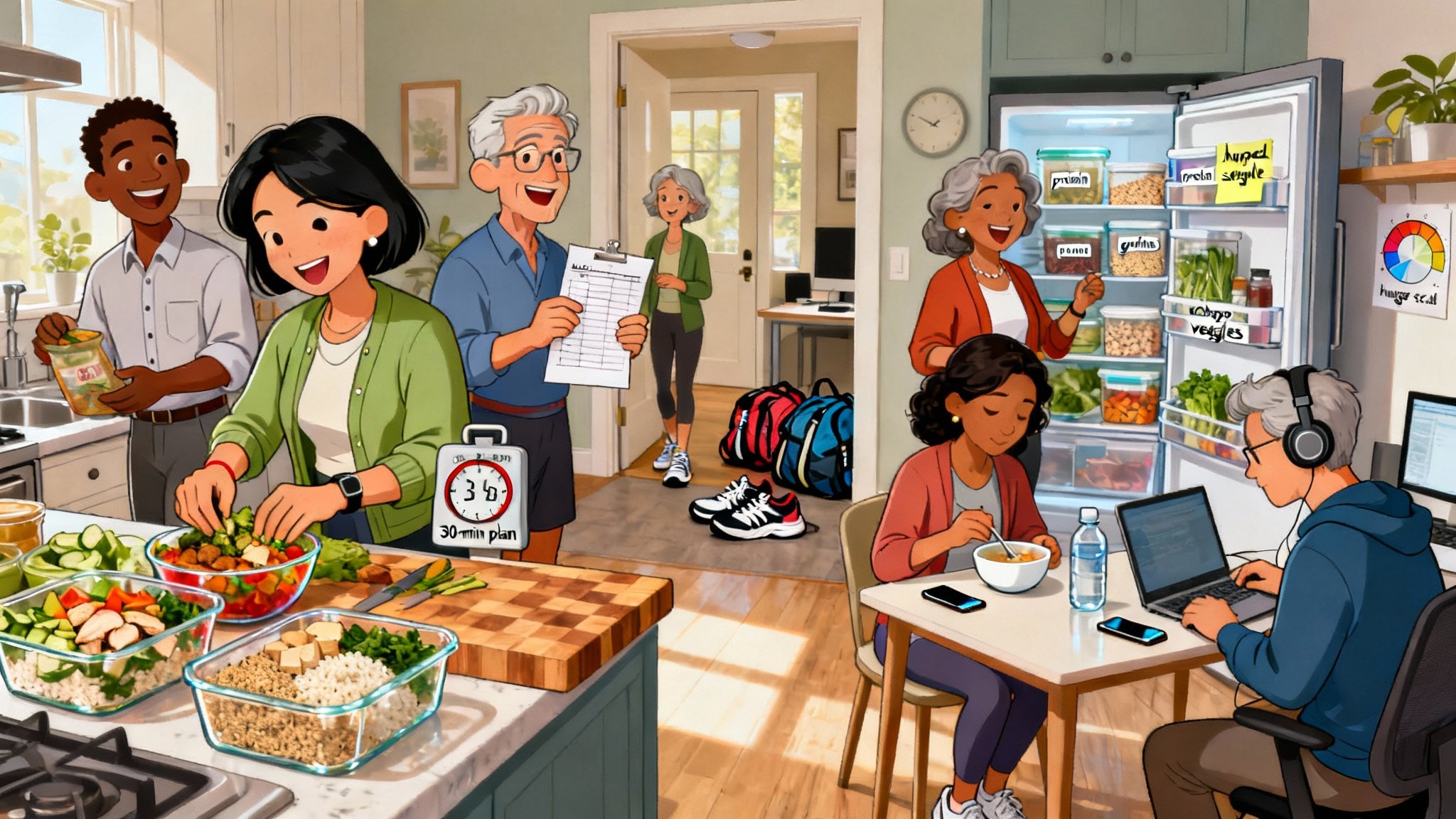
I spend about 30 minutes each weekend loosely planning meals for the week ahead. Not aggressively meal prepping seventeen identical containers of chicken and broccoli like I’m training for a bodybuilding competition. Just creating enough structure so Future Me doesn’t panic-order takeout because the fridge contains only condiments and vague optimism.
Usually I choose:
- 2 breakfast options
- 2 lunch ideas
- 3 dinners
- 1 “use leftovers” night
That’s it.
I also keep a few “emergency meals” available because life has a habit of surprising people right around dinnertime.
Frozen shrimp tacos.
Soup and toast.
Eggs with roasted vegetables.
Pasta with olive oil, garlic, spinach, and parmesan.
Simple meals remove decision fatigue, which matters more than most people realize.
Especially in retirement, reducing daily stress around food can improve consistency dramatically.
Sustainable Eating Habits for Retirement Energy and Longevity
One thing nobody really explains about healthy eating is how much it affects your day-to-day quality of life—not just your future lab results.
When I eat well consistently, I sleep better. My energy stabilizes. My mood improves. Even my patience expands slightly, which honestly deserves scientific recognition.
And there’s real evidence behind this.
Research published through The National Institute on Aging highlights how balanced nutrition supports healthy aging by helping maintain muscle strength, cognitive health, immune function, and mobility.
That matters because retirement isn’t simply about living longer. It’s about preserving independence and enjoyment while you live.
Food becomes less about restriction and more about support.
Support for:
- traveling comfortably
- staying active
- keeping energy stable
- reducing inflammation
- protecting heart health
- maintaining strength and balance
That’s a much more motivating goal than chasing arbitrary perfection.
Mindful Eating Without Becoming Weird About It
Mindful eating has terrible branding.
People hear the phrase and imagine chewing almonds silently while sitting cross-legged near candles.
In reality, mindful eating just means paying enough attention to notice your hunger, fullness, and enjoyment before your body hits the “why did I eat all of that?” stage.
One of the simplest changes I made was eating at least one meal a day without scrolling my phone.
At first, I resisted this like a toddler being asked to wear socks.
But after a few days, something surprising happened: I enjoyed food more. I ate slower naturally. I noticed fullness earlier.
Turns out your brain does a much better job regulating appetite when it’s actually included in the meal.
According to Harvard Health Publishing, mindful eating practices may help reduce overeating and improve satisfaction with meals by increasing awareness around hunger and satiety cues.
Or, translated into normal-person language: paying attention helps.
The “Good Enough” Rule That Keeps People Consistent
This may be the most important thing in the entire article.
Sustainable eating habits are not destroyed by one indulgent meal.
They’re destroyed by the “well, I already messed up” mindset afterward.
One restaurant dinner doesn’t undo healthy habits.
One vacation doesn’t ruin progress.
One slice of cake isn’t a personal failure.
I’ve noticed people who maintain healthy lifestyles long term tend to recover quickly instead of spiraling dramatically after imperfect days.
They simply return to normal eating at the next meal.
No punishment cleanses.
No starvation days.
No declarations that “Monday is the restart.”
Just consistency.
And honestly, that mindset becomes even more valuable in retirement years because flexibility matters. Life should still feel enjoyable.
You should absolutely go out for dinner.
Celebrate birthdays.
Eat dessert on vacation.
Enjoy wine with friends.
The healthiest lifestyle is the one you can emotionally sustain.
Smart Grocery Habits That Make Healthy Eating Easier
One thing I’ve learned the hard way: environment quietly shapes behavior.
If healthy options are visible and convenient, you’ll eat them more often almost accidentally.
My refrigerator now contains:
- washed fruit
- cut vegetables
- yogurt
- hummus
- cooked grains
- boiled eggs
- leftovers that are actually visible instead of hidden behind mysterious jars
Meanwhile, foods I tend to overeat impulsively simply aren’t stocked in large quantities anymore.
Not because they’re “bad.”
Because I know myself.
That’s not restriction. That’s strategy.
And frankly, retirement wellness benefits enormously from making healthy choices easier instead of relying on endless willpower.
Hydration: The Most Boring Advice That Secretly Changes Everything
Hydration advice feels aggressively unexciting until you realize how much dehydration affects energy, headaches, mood, and appetite.
I used to confuse thirst with hunger constantly.
Now I keep water nearby throughout the day, and the difference in energy and concentration is surprisingly noticeable.
Especially as we age, hydration becomes increasingly important for digestion, circulation, temperature regulation, and joint health.
No, you do not need to become one of those people carrying a gallon jug labeled with motivational timestamps.
A reusable bottle you genuinely like is enough.
Sustainable Eating During Retirement Travel and Busy Seasons
One of the biggest myths around healthy eating is that it only works under perfect conditions.
Real sustainable eating habits should survive:
- vacations
- holidays
- stressful weeks
- road trips
- busy family seasons
- retirement travel adventures
When I travel now, I focus less on perfection and more on balance.
I’ll absolutely enjoy local meals and desserts. But I also try to:
- stay hydrated
- include protein regularly
- walk often
- eat vegetables consistently
- avoid turning every single meal into a food competition
That balance keeps travel enjoyable without returning home feeling physically miserable.
And honestly, retirement should include joy. Food is part of that joy.
Why Tiny Habits Usually Beat Massive Overhauls
Behavior researcher BJ Fogg Behavior Model emphasizes that lasting behavior change usually starts with very small, repeatable actions.
Not dramatic reinventions.
That’s encouraging news because tiny habits are far less exhausting.
Start with:
- drinking water before coffee
- adding vegetables to lunch
- preparing one healthy dinner at home
- eating one meal without distractions
- taking a short walk after dinner
These small actions compound over time quietly and powerfully.
Most sustainable lifestyles are built this way:
small choice → repeated consistently → becomes automatic → shapes identity
That’s how healthy aging actually works.
Final Thoughts: Sustainable Eating Habits Should Support Your Life, Not Control It
The older I get, the less interested I am in food rules that make life smaller.
I want eating habits that support energy, travel, movement, connection, and joy. I want meals that feel nourishing without becoming obsessive. I want healthy routines that survive real life—not collapse the second things get busy.
That’s why sustainable eating habits matter so much.
Especially in retirement and beyond, health becomes deeply connected to freedom:
- freedom to stay active
- freedom to travel comfortably
- freedom to feel good in your body
- freedom to enjoy everyday life with more energy and less stress
And the beautiful thing is this: you don’t need perfection to build that future.
You just need consistency, flexibility, and a few practical systems that make healthy choices easier most of the time.
Start small.
Keep going.
Eat the cookie occasionally.
Drink your water.
Buy the good olive oil.
Roast vegetables even if they aren’t Instagram-worthy.
Life is happening now—not twenty pounds from now, not next Monday, not after some mythical “perfect” routine finally begins.
And honestly? That realization might be the healthiest thing of all.






5 Comments
Comments are closed.