
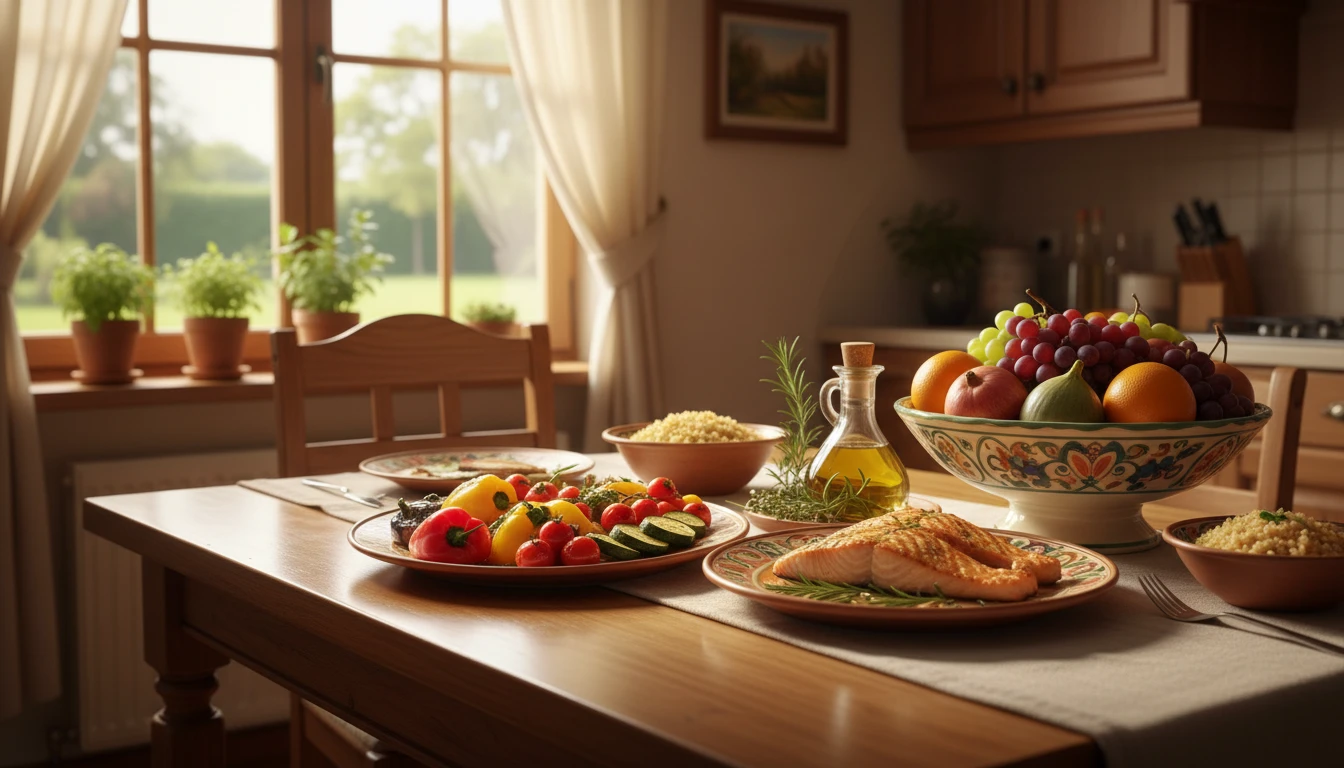
Food Lifestyles in Retirement: Your Friendly, No-Stress Guide to Eating Well After 60
Discover the best food lifestyles in retirement — practical, flexible, and built for real life after 60. Eat well, feel great, no guilt required.
Nobody warns you about the food part of retirement either.
They tell you about the freedom. The slow mornings. The trips you’ve been putting off for thirty years. What they don’t mention — what nobody puts in the retirement planning brochure, right next to the 401(k) charts and the Medicare explainer — is that somewhere around week three, you’re standing in your own kitchen at 10 a.m. with nowhere to be, a full refrigerator, and absolutely no idea what you’re supposed to be eating anymore.
Your doctor mentioned something about sodium at your last checkup. Your neighbor swears keto changed his life. Your daughter sent you three articles about plant-based eating with the energy of someone who has recently discovered a religion. Your feed looks like a culinary identity crisis — one person insisting lentils saved their life, another treating ribeye like a sacred text, a third posting smoothie bowls that look like they require a fine arts degree and forty-five minutes to assemble.
And you’re just standing there, holding a perfectly good egg, wondering if eggs are still okay.
Here’s what I wish someone had told me sooner: you don’t need the perfect food lifestyle. You need the one that fits your actual retirement life — Tuesday-morning-slow life, grandkids-visiting life, travel-when-we-can life, low-energy-Wednesday life. I’ve tried plenty of approaches over the years (some brilliant, some what I’d generously call “character-building”), and what finally worked wasn’t a diet. It was a rhythm. A sustainable, enjoyable, genuinely good-for-me rhythm that I could maintain on a tired day, a travel day, a holiday, and a perfectly ordinary Thursday.
That’s what a food lifestyle is — your rhythm with food. And in retirement, getting that rhythm right matters more than it ever has before. Not because you need to be perfect. Because you finally have the time, the freedom, and the very good reason to actually get it right.
Grab something to drink. Let’s talk about this like real people who are actually living it.
What Food Lifestyles Actually Are — And Why They Matter Even More After 60

I think of food lifestyles as the “how I usually eat” story. Not a two-week challenge or a Monday-only salad habit that evaporates by Wednesday. Your longer-term pattern: what you cook, what you snack on, what you reach for on autopilot when you’re tired or busy or just not in the mood to think about it.
It’s shaped by your culture, your values, your budget, your time, and — increasingly in retirement — how your body actually feels when you eat certain things. The plate is just the evidence. The reasons run deeper.
And here’s the retirement-specific truth that changes everything: your nutritional needs genuinely shift as you age. Not dramatically, not overnight, but meaningfully. After 60, your body needs:
- More protein to protect muscle mass, which naturally declines with age — a process called sarcopenia that nobody mentions until it’s already happening
- More calcium and vitamin D to support bone density and reduce fracture risk — because your bones are quietly making decisions about your future independence right now
- More fiber to support digestion, heart health, and blood sugar stability — three things that become increasingly non-negotiable as the years go on
- Fewer empty calories — because your caloric needs may decrease slightly, but your nutrient needs stay high or actually increase
In other words: the quality of what you eat matters more now, not less. Every meal is an opportunity to give your body what it needs to keep showing up for you — for the walks, the travel, the grandkids, the long game. The long, good, genuinely enjoyable game.
Common food lifestyles you’ll encounter:
- Omnivore: eats plants and animals. Most of us live here, and there’s nothing wrong with that.
- Vegetarian: skips meat but may include eggs and dairy.
- Vegan: no animal products, including dairy, eggs, and honey.
- Flexitarian: mostly plants, sometimes meat or fish — flexible by design and by name.
- Mediterranean: vegetables, legumes, whole grains, olive oil, fish, nuts, yogurt; minimal sweets and red meat.
- DASH: whole foods emphasizing fruits, veggies, low-fat dairy, and lower sodium — specifically designed to support blood pressure.
- Keto: high-fat, very low-carb to trigger ketosis.
- Carnivore: animal products only.
Why it matters: your consistent pattern — not one “perfect” day, not one heroic salad — controls how you feel. Energy, mood, sleep, joint comfort, digestion, brain clarity. I’ve been that person who hit a calorie target with gummy bears and cold brew. Technically impressive; emotionally a train wreck by 3 p.m.; completely useless by 4. The day I shifted to real, fiber-rich food — whole grains, vegetables, fruit, lean or plant proteins — everything smoothed out. Fewer cravings, steadier energy, and no 4 p.m. “why am I irritated at the mailbox?” moments.
That shift didn’t happen because I found the perfect diet. It happened because I found my rhythm. And that’s what we’re building here.
A Tour of Food Lifestyles: From Plant-Power to Protein-Heavy (No Judgment, Just Clarity)
Plant-Based and Vegetarian Food Lifestyles
I have genuine respect for plant-based eaters — not just for the ethics and sustainability, but for the culinary creativity it requires and the results it can produce. And for retirees specifically, the research is genuinely encouraging: plant-forward eating is consistently linked to lower rates of heart disease, type 2 diabetes, and certain cancers — all conditions that become more relevant as we age and all conditions we’d very much like to avoid.
You can build a satisfying, nutrient-rich retirement routine with beans, lentils, tofu, tempeh, nuts, seeds, whole grains, and all the vegetables your crisper can handle. It’s more abundant than it sounds. I promise.
- Vegetarians: no meat, often include eggs and dairy.
- Vegans: no animal products at all.
The protein question? Totally solvable — but worth paying real attention to in retirement, when protein needs actually increase. Legumes + grains + soy foods + nuts and seeds add up fast when you’re intentional about it. Two practical notes if you go this route:
- Mind the essentials: B12, iron, calcium, vitamin D, iodine, omega-3s. These are the nutrients most likely to need attention on a plant-based plan, and they matter even more after 60. Fortified foods and a simple B12 supplement help a lot. A conversation with your doctor about your specific levels is worth more than any article, including this one.
- “Vegan” doesn’t automatically mean “nutritious.” I tried “lazy vegan” for a month and accidentally majored in fries, crackers, and the kind of optimism that doesn’t survive contact with a nutrition label. Would not recommend — especially in retirement, when your body needs real, dense, actual fuel.
What I love about plant-based eating: it often feels genuinely abundant — big bowls, bright flavors, fiber that keeps you full for hours. When I nail a good chickpea curry with coconut milk and a pile of greens, I don’t miss meat at all. When I don’t plan? Hello, crackers-for-dinner chaos and a 9 p.m. hunger that has opinions.
Flexitarian: The Middle Lane Most Retirees Actually Stick With
Flexitarian is the food lifestyle I recommend most to friends who want better health without a total identity overhaul or a dramatic farewell to everything they’ve ever enjoyed eating. It’s plant-forward with room for meat or fish when you want it — at home, at a family dinner, at the “BBQ where the sides are potato salad and more potato salad and nobody is apologizing for it.”
Why it sticks, especially in retirement:
- No “never again” foods — less rebellion, more progress, fewer moments of standing in a parking lot eating a burger because you told yourself you couldn’t.
- Socially easy and genuinely budget-friendly.
- You still get most of the plant-based benefits without the full commitment.
- It works at restaurants, at grandkids’ birthday parties, on vacation, and at your sister-in-law’s house where the menu is not negotiable.
For me, flexitarian felt like flipping a switch from “dieting” to “living.” I eat plants most of the time, fish twice a week, and treat meat like a supporting character instead of the star of every meal. It’s flexible enough for real retirement life but structured enough to feel genuinely, consistently good. That combination — flexible and structured — is the sweet spot most of us are actually looking for.
Keto and Carnivore: Results-Forward, High-Commitment
Keto slashes carbs to push your body into ketosis, using fat for energy instead. Carnivore removes plants entirely and goes all-in on animal products.
Upsides people report:
- Fast early weight loss — often significant in the first few weeks.
- Fewer cravings for some people, particularly around sugar.
- Steady energy for certain individuals once the adaptation period passes.
Cautions worth knowing — especially for retirees, and I say this with genuine care:
- Keto’s saturated fat can creep up fast; you have to be intentional with olive oil, avocado, nuts, and fish rather than defaulting to heavy cream and bacon at every meal.
- It’s restrictive in ways that make social life, travel, and family meals genuinely complicated. Retirement is supposed to be the chapter where you enjoy things, not the chapter where you explain your macros at every dinner table.
- Carnivore skips fiber completely — and your gut, your heart, and your blood sugar all love fiber more than your coffee loves creamer. For older adults especially, fiber is not a nice-to-have. It’s doing real, important work.
- Both approaches can be hard to sustain long-term, and the research on their long-term safety specifically for older adults is still limited. That matters.
I tried keto. Day five, I almost wrote poetry about toast in a grocery aisle. I stood in front of the bread section for an embarrassingly long time. If carbs are a love language for you — and for many of us, they genuinely are — there are gentler food lifestyles that still move the needle, without the existential bread crisis or the social complications.
Mediterranean and DASH: The “Boring (But Brilliant)” Champions for Retirees

If food lifestyles were kitchen tools, these are the cast-iron pans: reliable, versatile, they age beautifully, and everyone who actually uses them wonders why they waited so long.
Mediterranean: vegetables, legumes, whole grains, olive oil, fish, nuts, yogurt, herbs; minimal sweets and red meat. Think color, flavor, and satisfying meals that don’t require a calculator, a food scale, or a degree in nutritional biochemistry.
DASH: fruits, vegetables, whole grains, low-fat dairy, lean proteins, nuts; lower sodium. Specifically designed to support blood pressure — which becomes increasingly important after 60 and which most of us are quietly managing whether we talk about it or not.
These two food lifestyles have more research behind them than almost anything else in nutrition — and the research specifically includes older adults, which matters enormously. The PREDIMED study, published in the New England Journal of Medicine, found that a Mediterranean diet supplemented with olive oil or nuts significantly reduced cardiovascular events in high-risk adults. The DASH diet was developed specifically to address hypertension — one of the most common health concerns in retirement, and one of the most manageable through food.
When I eat “Mediterranean-ish,” my life feels genuinely easier: sheet-pan salmon, lemony greens, whole grains, a handful of nuts, something good to drink. It’s healthy without turning dinner into a math equation or a source of stress. And for retirees managing blood pressure, cholesterol, or heart health — which is most of us, honestly, and there’s no shame in that — these two approaches are where I’d start every single time, without hesitation.
How to Choose a Food Lifestyle You’ll Actually Keep in Retirement
Most people fail not because they chose the “wrong” food lifestyle — but because they chose one that doesn’t fit their actual life. Their real schedule, their real budget, their real health needs, their real preferences, their real culture. Your food lifestyle should flex around you, not the other way around. You’ve spent enough of your life bending yourself around things that didn’t fit.
Ask yourself — honestly, not aspirationally:
- Which meals are easiest for me to improve first — breakfast, lunch, or dinner?
- What do I love eating that I can keep? (This is not a trick question. Keep the things you love.)
- Where do I need convenience most — mornings? travel? low-energy days when cooking feels like too much?
- Do I prefer clear rules or broad guidelines? (Both work. Know which one you are.)
- What’s my non-negotiable? Coffee, sourdough, Grandma’s Sunday pasta — these are valid. Build around them, not against them.
- Are there health conditions I’m managing that should shape my choices? Blood pressure, blood sugar, bone health, digestive issues — these deserve a seat at the table, literally.
Then use these simple frameworks to cut the decision fatigue and make good choices feel automatic.
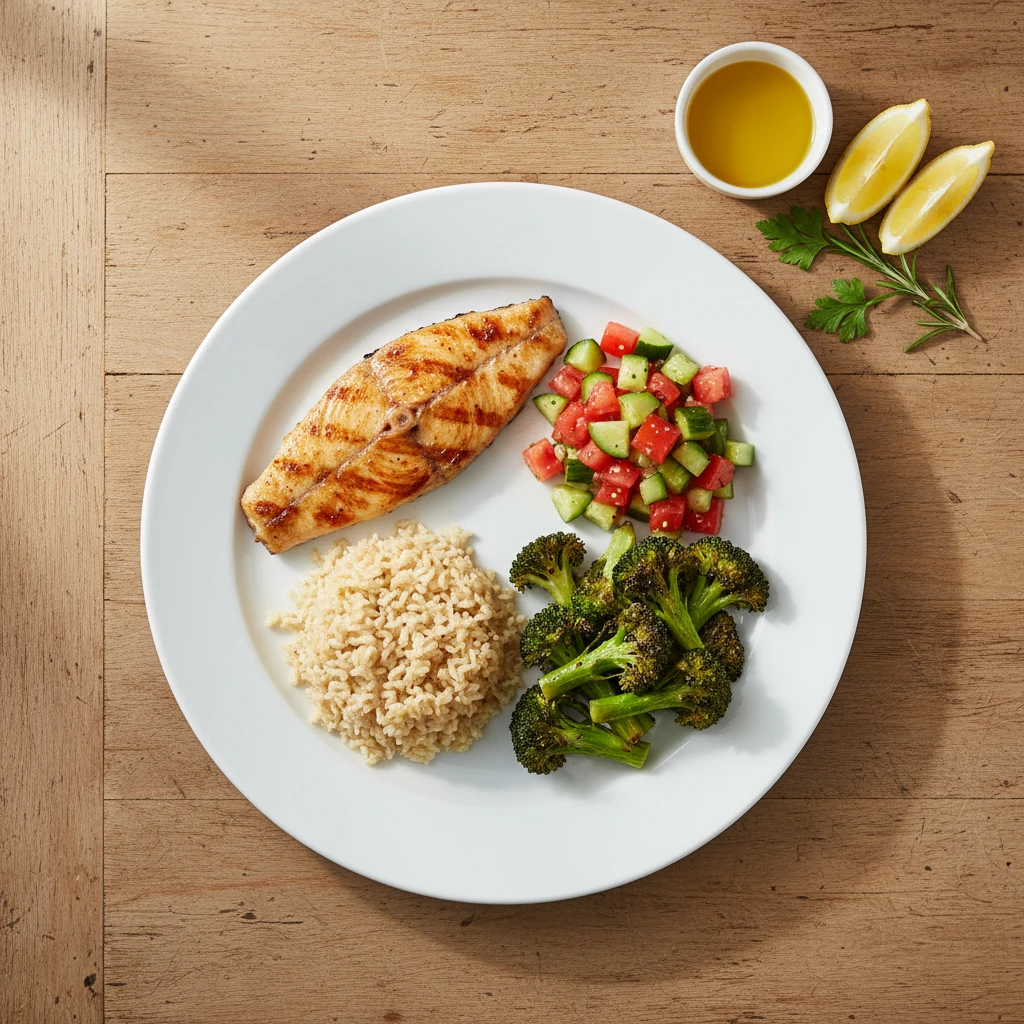
The 1–2–3 Plate Formula
- 1 protein (beans, tofu, fish, chicken, eggs, tempeh, Greek yogurt)
- 2 plants (vegetable + fruit, or two vegetables — whatever’s in the fridge)
- 3: one fist-sized whole grain or starchy vegetable (brown rice, quinoa, farro, sweet potato)
It works for any food lifestyle and eliminates the “what do I even make tonight?” spiral that ends in cereal or takeout. I default to this on low-energy days, and it saves me from the random snack avalanche every single time. It’s not glamorous. It works.
Meat-As-A-Side Rule
If you eat meat, make plants the star and keep meat to a palm-sized portion. You automatically eat more fiber and less saturated fat without tracking a single thing. No app required. No math. Just a smaller piece of chicken and a bigger pile of roasted vegetables.
The 5-Ingredient Label Rule
If a packaged food has more than five ingredients you don’t recognize — or multiple sugar names in the top five — skip it. Simpler foods are usually better foods. This one rule alone cleaned up my pantry more than any diet I ever tried, and it took about thirty seconds per item to apply.
Two Fish Meals Per Week
Aim for fatty fish twice weekly for omega-3s — which support heart health, brain health, and inflammation management, all of which matter more in retirement than they did at 35. Put it in your calendar like any other appointment. Otherwise it’s the thing you mean to do and somehow never quite get to.
The 80/20 Compass
Stay aligned with your food lifestyle 80% of the time; leave 20% for life — holidays, travel, birthday cake, the pasta at your favorite restaurant that you’ve been going to for fifteen years and are not giving up. This prevents the “I messed up, may as well quit” spiral that has derailed more good intentions than any bad food ever has.
One Upgrade Per Week
Tiny changes compound in ways that are genuinely surprising. Swap white rice for brown. Soda for sparkling water. Butter-heavy cooking for olive oil. A sugary breakfast for something with protein and fiber. It’s not flashy. It’s not Instagram-worthy. It works — and it keeps working long after the dramatic overhauls have faded.
Your Everyday Blueprint — Built for Real Retirement Life
Eat color on purpose. Different colors mean different phytonutrients and antioxidants doing different jobs in your body. A plate that looks like a paint swatch usually means you’re covered. A plate that’s entirely beige is a gentle, loving warning sign.
Prioritize protein at every meal. After 60, protein needs increase — most guidelines suggest 1.0–1.2 grams per kilogram of body weight daily for older adults, compared to 0.8g for younger adults. Spread it across meals rather than loading it all at dinner. Eggs at breakfast, legumes at lunch, fish or chicken at dinner. Your muscles are paying attention, and they appreciate the consistency.
Prioritize fiber. Whole grains, legumes, vegetables, fruit. On fiber-rich days, my snack monster is significantly quieter and my energy is noticeably steadier. Fiber also supports heart health, blood sugar stability, and digestion — three things that matter enormously in retirement and that fiber handles quietly and reliably, every single day.
Choose healthy fats. Olive oil, avocado, nuts, seeds, fatty fish. Move butter and ultra-processed snacks to “sometimes.” Your heart, brain, and joints all benefit from the right fats — and olive oil, specifically, has decades of research behind it that I find genuinely reassuring.
Watch the sodium. Most salt hides in bread, sauces, soups, and packaged foods — not the salt shaker you’re already being careful with. Labels help you steer. For retirees managing blood pressure, this one is worth taking seriously and consistently.
Keep sugar honest. Added sugar isn’t evil; it’s just sneaky and it’s everywhere. A little joy? Absolutely — life is short and dessert is real. A lot, all day, hidden in things you didn’t even know contained it? Your energy and blood sugar will file a formal complaint, and they won’t be wrong.
Hydrate like it’s part of the job. Thirst sensation decreases with age, which means older adults are more prone to dehydration — often without realizing it until they’re already tired, foggy, or headachy. I keep a water bottle on the counter; otherwise my “hydration plan” turns into coffee with a side of more coffee and a vague sense that something is off.
Cook simple, repeat often. Build 6–8 go-to meals you can make half-awake, on a tired day, without consulting a recipe. Less novelty, more consistency. The meals you make on autopilot are the ones that actually shape your health over time — not the elaborate ones you make once and photograph.
Pro tip I genuinely swear by: keep frozen vegetables on standby and canned tomatoes in the pantry at all times. They are the emergency brakes between you and takeout on the days when cooking feels like too much. They have saved me more times than I can count.
Food Lifestyles in Real Retirement Life: Eating Out, Travel, Family Dinners, Low-Energy Days
Eating out: Look for the 1–2–3 formula — protein, plants, whole grain. Ask for sauces and dressings on the side. You’re making it easier on future-you, not being difficult. Restaurants are generally very used to this request. You are not the first person to ask.
Family dinners and parties: Eat a small snack beforehand so you’re not arriving ravenous and making decisions with your hunger instead of your head. Fill half your plate with vegetables or salad, add protein, then enjoy the fun stuff you actually want. You can be healthy and human at the same time. These are not mutually exclusive, and nobody at the party is keeping score.
Travel: Pack a “snack kit” — nuts, a simple protein bar, fruit. Airport food becomes a supplement, not your lifeline. When I travel, I aim for “mostly aligned, somewhat flexible.” Some of my favorite memories involve foods that weren’t remotely “ideal” by any nutritional standard. Worth it, every single time. Then I come home and return to my rhythm, without guilt and without drama.
Low-energy days: This is where batch cooking quietly saves retirement. Cook a grain (quinoa, farro, brown rice), a protein (beans, chicken, tofu), and a sheet pan of vegetables on a good day. Add sauces — tahini, pesto, salsa — to keep things interesting all week. Future-you will send present-you a heartfelt, specific thank-you note. I speak from experience.
How to Read Food Labels Without Needing a Nap
Labels go from mystery to map once you know where to look — and once you stop reading the front of the package, which is essentially a marketing brochure.
- Start with the ingredient list. Fewer, familiar items usually win. If you can’t pronounce half of it, that’s information worth having.
- Sugar aliases to watch: syrup, maltodextrin, dextrose, evaporated cane juice, fruit juice concentrate. Sugar in a costume is still sugar, and it’s very good at wearing costumes.
- Sodium scan: if every item in your cart is “kind of salty,” the day’s total will creep up fast and quietly. Mix in low-sodium staples to balance it out.
- Fats: minimize saturated fat; skip trans fats entirely — full stop, no exceptions.
- Front-of-box buzzwords (“natural,” “light,” “multigrain,” “heart-healthy,” “made with real fruit”) are marketing confetti. Cheerful, colorful, and largely meaningless. The truth lives on the back, in the small print, in the ingredient list.
That one shift — ingredients first, always — helped me stop falling for health-washed snacks that were dressed up as something they weren’t. My cart got simpler, my meals got better, and somehow my kitchen got less chaotic. All from reading the back of the box instead of the front.
The Lifestyle in Food Lifestyle: Movement, Sleep, and Stress (The Trio That Changes Everything)
Your food lifestyle doesn’t exist in isolation. It works best — it only really works — when it’s paired with the other pillars that make it actually stick. And in retirement, you finally have the time, the freedom, and the very good reason to get all three right simultaneously.
Move most days. Walk, lift, dance, yoga — whatever gets you going and keeps you going. A 20-minute post-dinner walk is one of my favorite habits in retirement: it helps digestion, clears my head, and politely suggests I put my phone down and be present for a few minutes. For a deeper look at building movement into retirement life in a way that actually sticks, why exercise is an important component of good physical fitness in retirement covers everything from cardio to strength training to making it feel like a habit instead of a chore.
Sleep like it’s medicine. Because it is. On five hours, I crave sugar and salt like a raccoon at midnight — and I make food choices I wouldn’t make rested. On eight, I make better choices without trying, without willpower, without a pep talk. It’s not discipline. It’s biology doing its job when you give it the conditions it needs. Poor sleep raises hunger hormones (ghrelin) and lowers satiety hormones (leptin), which means you’re fighting your own body chemistry every time you try to eat well on a bad night’s sleep. If sleep is a struggle in retirement — and for many of us, it genuinely is — how to fall asleep with insomnia in retirement is worth reading right alongside this one.
Manage stress on purpose. Five minutes of breathwork, a walk, journaling, prayer, a phone call with someone who makes you laugh until something hurts — whatever lowers the dial for you. Stressed me wants chips and something crunchy and salty and immediate and a lot of it. Calmer me wants something green with olive oil and lemon and a moment to actually taste it. Same person, completely different food choices, based almost entirely on stress level. This is not a character flaw. It’s how humans work.
It’s not about doing everything perfectly. It’s about stacking a few good habits that quietly support each other — and in retirement, you have more capacity to do that than at any other point in your adult life. That’s not a small thing. That’s actually one of the great gifts of this chapter.
A 7-Day, Pick-Your-Path Menu for Retirees (Omni, Veg, or Flex)
Use this as a template, not a rulebook. Swap proteins and plants to match your food lifestyle. Keep it simple; repeat the winners; don’t apologize for eating the same good thing three times in a week.
Breakfasts (rotate):
- Oatmeal + berries + walnuts + cinnamon (vegan with plant milk; fiber-rich and genuinely filling)
- Greek yogurt + honey + pear + walnuts (vegetarian; excellent protein for retirees)
- Eggs + sautéed spinach + whole-grain toast (omni/vegetarian; my personal Tuesday default)
- Smoothie: spinach, frozen mango, chia seeds, protein powder (plant or whey), water or milk
Lunches (simple, satisfying, repeatable):
- Big salad: greens + chickpeas or grilled chicken + colorful vegetables + vinaigrette + seeds
- Lentil soup + side salad + whole-grain bread (make a big batch; eat it three days in a row without shame)
- Tuna (or white bean) salad with lemon, capers, herbs over quinoa
- Leftovers bowl: grain + vegetable + protein + sauce (tahini, pesto, or salsa — the sauce is doing a lot of work here)
Dinners (1–2–3 in action):
- Salmon + roasted broccoli + brown rice (Mediterranean/DASH-friendly; my most-repeated dinner)
- Tofu stir-fry + mixed vegetables + soba noodles (vegan; better than it sounds if you season it properly)
- Turkey meatballs + tomato sauce + whole-wheat pasta + arugula salad (omni; crowd-pleaser)
- Chickpea curry + spinach + basmati rice (vegan/vegetarian; the chickpea curry I mentioned earlier)
- Shrimp (or tempeh) sheet pan + peppers + onions + farro, lemon-herb drizzle
- Black bean tacos + slaw + avocado + salsa (vegan; add cheese if vegetarian; add fish if flexitarian)
- Baked chicken thighs + green beans + potatoes with olive oil and rosemary (omni; almost no effort, very good)
Snacks (pick 1–2 per day as needed, not as a hobby):
- Apple + peanut butter
- Carrots + hummus
- Cottage cheese + pineapple (vegetarian; great protein source that people underestimate)
- Edamame with sea salt (vegan; surprisingly satisfying)
- Handful of mixed nuts
- Dark chocolate square — because joy is a legitimate nutritional category and I will not be argued out of this
None of this requires perfection. Just rhythm. If you have pizza on Friday, enjoy it fully, hydrate, and move on without a single moment of guilt. Your food lifestyle is a pattern, not a grade. Patterns are forgiving. Grades are not. Choose the pattern.
Common Pitfalls — And Friendlier Replacements
- All-or-nothing thinking → 80/20 compass. Consistency beats intensity every single time, in every area of life, but especially here.
- Ignoring protein and fiber → build meals around both, deliberately. You’ll feel fuller, steadier, more energetic, and significantly less likely to raid the pantry at 10 p.m.
- Confusing plant-based with “ultra-processed but vegan” → read the ingredient list. Always. The label on the front is not your friend.
- No social strategy → decide your “flex plan” before the event, not during it when you’re hungry and the cheese board is right there. You’re in charge of your plate.
- Making 15 changes at once → one upgrade per week. Stack wins. Let momentum do the heavy lifting so you don’t have to.
- Skipping meals to “save calories” → this backfires in retirement, especially for muscle maintenance. Eat regularly, prioritize protein, and let your body work with you instead of against you. Your metabolism is not your enemy. Treat it accordingly.
When I stopped moralizing food — “good” versus “bad,” “clean” versus “cheat,” “earned” versus “guilty” — and started simply noticing how I actually felt after eating certain things, everything softened. Less guilt. Clearer choices. Way more peace around eating. That shift alone was worth more than any diet I ever tried, and it cost nothing.
Quick, Human FAQ on Food Lifestyles in Retirement
What’s a food lifestyle?
Your long-term pattern with food — the habits and choices that repeat most days, on autopilot, without a lot of deliberate effort. It’s the playlist you keep coming back to, not the song you play once and forget.
Are plant-based food lifestyles “best” for retirees?
They’re excellent when built on whole foods and planned carefully for nutrients like B12, calcium, and iron. But Mediterranean, DASH, and flexitarian can be equally great — and often easier to sustain socially and practically. The “best” one is genuinely the one you’ll actually live with and feel good on. That’s not a cop-out. That’s the truth.
Can I lose weight by changing my food lifestyle in retirement?
Yes — especially when you emphasize fiber-rich foods, adequate protein, fewer ultra-processed items, and reasonable portions. Think sustainable, not extreme. Crash diets in retirement can accelerate muscle loss, which is the opposite of what you want and the opposite of what your body needs.
How do I read labels fast?
Check ingredients first. Fewer, familiar items = better. Then scan sugar, sodium, and saturated fat. Ignore the front-of-box marketing poetry entirely. It is not written for your benefit.
Do movement and sleep really affect what I eat?
Hugely — more than most people realize until they experience the difference firsthand. They quietly decide a lot of your food choices before you even open the fridge. Well-rested, less-stressed you makes genuinely different decisions than exhausted, frazzled you. This is biology, not willpower, and understanding that distinction changes everything.
What about supplements in retirement?
Worth a real conversation with your doctor — especially for vitamin D, calcium, B12, and omega-3s, which are commonly under-consumed in older adults. Food first, always. But targeted supplements can fill real gaps that food alone sometimes can’t cover at this stage of life.
Your Friendly Next Step — Pick One, Just One
Food lifestyles aren’t auditions for moral superiority. They’re not a personality test or a political statement or a way to signal virtue at dinner parties. They’re tools — practical, personal, flexible tools — to help you feel better in your actual retirement life.
Whether you land on plant-powered, flexitarian, Mediterranean-ish, or a thoughtful omnivore pattern, the best food lifestyle is the one that gives you energy, fits your routine, and doesn’t make you resent dinner. That’s the whole bar. It’s not that high, and it’s not that complicated.
Personally, I lean flex-Mediterranean: lots of plants, olive oil like it’s a hobby I’ve committed to, fish twice a week, meat as a supporting character instead of the star, and an open-door policy for great bread and good company and the occasional dessert that’s genuinely worth it. I feel good. My energy is steady. I don’t dread meal planning. I don’t feel guilty after meals. That’s the whole point — and it took me longer than I’d like to admit to realize that “the whole point” was actually that simple.
Pick one small upgrade for this week. Just one:
- “Vegetables” — add one extra serving daily. One. That’s it.
- “Protein” — add a protein source to whichever meal currently lacks one.
- “Whole grains” — swap one refined grain for a whole version this week.
- “Movement” — walk 20 minutes after dinner three times. Put it in the calendar.
Stack those tiny wins. Let momentum do what motivation won’t — because motivation is unreliable and momentum is not.
And when someone insists their food lifestyle is the only right answer, the one true path, the thing that will fix everything if you’d just commit to it? Smile warmly. Enjoy your delicious, well-aligned, genuinely satisfying meal. And keep going — for your retirement, your health, your energy, and your life. Not their approval.
Key Takeaways:
- Food lifestyles are long-term eating patterns — not short-term diets or two-week challenges that evaporate by Thursday.
- After 60, protein, fiber, calcium, vitamin D, and healthy fats matter more than ever — and quality matters more than quantity.
- Mediterranean and DASH diets have the strongest research backing for older adults, specifically.
- Flexitarian is the most sustainable approach for most retirees — flexible enough for real life, structured enough to feel consistently good.
- The 1–2–3 plate formula works for any food lifestyle and eliminates decision fatigue on the days when you have none to spare.
- Sleep, movement, and stress management quietly shape your food choices more than willpower ever will — and in retirement, you finally have the time to get all three right.
- One small upgrade per week beats fifteen dramatic changes that last four days and leave you feeling like a failure.





2 Comments
Comments are closed.