
Fashion Insight for Retirees: What’s Really Changing in 2026 and How to Shop Smarter Without the Stress
Fashion insight for retirees in 2026 means smarter shopping, better value, and dressing with confidence — here’s what’s actually changing and how to use it to your advantage.
I’ve been paying attention to fashion long enough to know when the industry is just rearranging buzzwords. And I can tell you honestly — this isn’t that. The ground is actually moving. And for retirees, that’s genuinely good news.
Because here’s the thing nobody in the fashion industry says out loud: retirees are one of the most powerful, most underserved, and most misunderstood groups of shoppers on the planet. You have time to research. You have the budget to invest in quality. You know exactly what you want. And you have absolutely zero patience for clothes that pill after three washes, fit nobody over 40, or come with a return policy designed by someone who hates people.
The fashion industry is finally — slowly, imperfectly, but genuinely — starting to catch up with you.
In this guide, I’ll walk you through the most useful fashion insight for retirees right now: what’s changing in how clothes are made, sold, and priced; which technologies are actually worth your attention; and how to shop smarter in 2026 without turning every purchase into a research project. Think of it as a coffee chat with someone who’s been watching this space closely — not a 50-slide deck full of arrows pointing at nothing.
What “Fashion Insight” Actually Means for Retirees Right Now
Good fashion insight isn’t a trend list. It’s a map. It tells you what’s moving, where to place your bets, and which instincts to trust — because the rules that worked in 2015 won’t carry you through 2026.
Here are a few honest baselines worth knowing:
- Consumers across every age group are more value-conscious after years of inflation. You’re not alone in wanting more for your money — everyone does.
- The fashion industry is growing slowly but steadily, with non-luxury brands doing the heavy lifting right now.
- AI and data tools are shifting from “innovation lab curiosity” to everyday retail reality — and some of them are genuinely useful for shoppers, not just brands.
- Sustainability regulation is real, with actual deadlines and penalties — which means more transparency about what your clothes are made of and where they come from.
McKinsey’s State of Fashion 2025 report puts it clearly: expect low single-digit growth, rising price sensitivity, and sharper regional differences, alongside AI stepping into core operations and an industry-wide push to clarify what “value” actually means (McKinsey). For retirees who’ve always cared about value over hype, that’s a shift in your direction.
The Market Reset — And Why It’s Actually Good News for Retirees
If you’ve noticed that the fashion industry feels a little less frantic lately — fewer “must-have” moments, more focus on quality and longevity — you’re reading it correctly. The post-pandemic spending surge is over. What’s replaced it is something I’d call the steady stretch: slower growth, fewer easy wins for brands, and much more pressure to get the basics right.
For retirees, this is genuinely good news. Here’s why:
Brands are competing harder for your loyalty. When growth slows, smart brands stop chasing trends and start chasing trust. That means better quality, clearer sizing, more honest marketing, and customer service that actually picks up the phone.
Value is the new status. Even affluent shoppers are more value-aware now — discounting, quality basics, and off-price shopping are normal, not embarrassing. The $800 jacket that used to “float on vibe alone” (as one retail VP put it) now has to justify itself. That’s a win for anyone who’s ever paid good money for something that fell apart in a season.
Durability is having a moment. I spoke with a 62-year-old shopper recently who told a store associate, “I’ll pay more if it doesn’t pill in a month.” He wasn’t posturing. He was tired of replacing sweaters. That sentiment is now mainstream — and brands are responding with better materials, stronger construction, and longer warranties.
McKinsey and Fashion Dive both note that non-luxury is leading profit creation right now, with value-driven shoppers across all income levels driving the shift (Fashion Dive). Translation: the industry is moving toward what retirees have always wanted. You were ahead of the curve. As usual.
How Retirees Are Shopping Differently — And Smarter
The clearest fashion insight for retirees I’ve encountered this year came from two conversations that had nothing in common on paper.
First, a younger shopper at a trade event flipped through a line sheet and said, “If I can’t tell how you treat people, I’m out.” Then she bought from a brand with a one-page transparency brief that looked like it was made in Google Docs. I loved her immediately.
Later that week, a retired customer in a suburban store told an associate, “I’ll pay more if it doesn’t pill in a month.” Two shoppers, completely different ages, same energy: prove the value.
For retirees specifically, a few shopping behaviors are worth understanding:
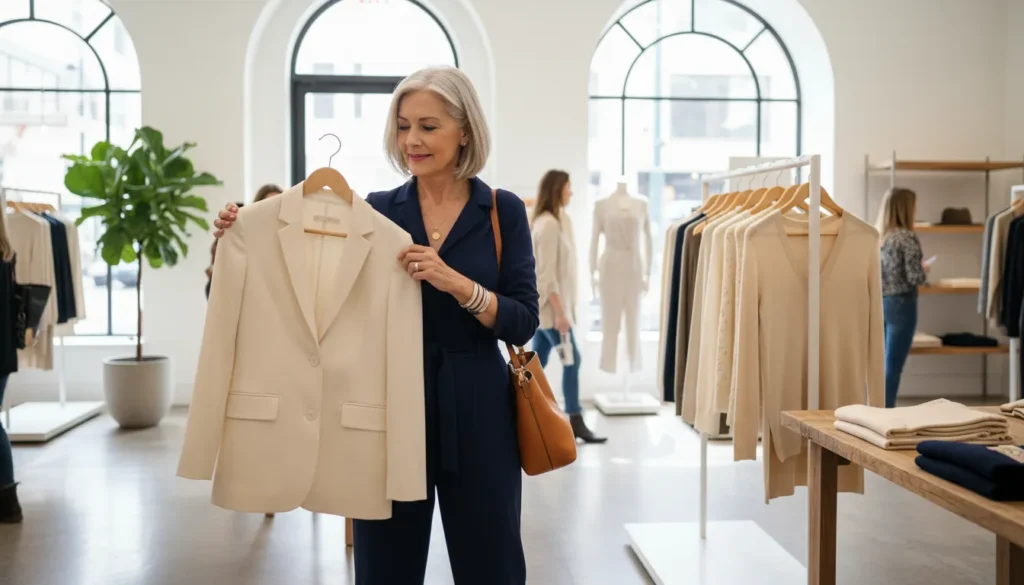
Smaller baskets, higher frequency. The big seasonal haul is fading. More retirees are shopping in smaller, more intentional bursts — two or three pieces at a time, chosen carefully, returned quickly if the fit is off. This actually works in your favor: you’re less likely to overbuy and more likely to end up with things you actually wear.
Research before purchase is the norm. Retirees tend to check reviews, compare materials, and read return policies before buying — habits that the industry is finally designing around. Better product descriptions, more detailed size guides, and honest customer photos are all responses to shoppers who actually do their homework.
Access over accumulation. Rental and resale aren’t fringe anymore. Many retirees are discovering that renting a special-occasion piece or buying quality secondhand is smarter than buying new and storing it forever. The industry has noticed — resale platforms and rental services are growing fast.
According to McKinsey, the “Silver Generation” controls a significant share of wealth in mature markets and is increasingly recognized as a key growth driver for 2026 planning (Fashion Dive). You’re not an afterthought. You’re the target.
Technology That’s Actually Useful for Retired Shoppers

Let’s talk about AI and retail technology without the spaceship soundtrack. In 2026, a few tools have moved from “interesting experiment” to genuinely useful — especially for retirees who’ve been burned by poor online sizing or frustrating return processes.
Virtual try-on is getting better. It’s not perfect, but when it’s calibrated correctly, it significantly reduces the “what I saw vs. what arrived” problem. Several major retailers now offer virtual try-on tools that let you see how a garment fits your body type before you buy. Worth using when available — it saves time, money, and the mild existential crisis of a bad mirror moment.
AI-powered size recommendations are increasingly accurate. Instead of guessing between a medium and a large, many sites now ask a few questions about your body, fit preferences, and how you like clothes to feel — and give you a specific recommendation. I’ve found these surprisingly reliable, especially for brands I haven’t tried before.
Smarter search and discovery means less scrolling. AI-driven product discovery tools are getting better at showing you things you’ll actually like, based on what you’ve bought and returned before. Less time wading through crop tops to find a proper blazer. That’s a genuine quality-of-life improvement.
Customer support is faster. Whether it’s a well-trained chatbot or a human-sounding AI assistant, response times have improved dramatically. One evening I DM’d a brand about a fit issue and got a helpful, specific reply within minutes. I kept the jacket. The brand kept a customer. Everyone won.
McKinsey’s latest research notes that 75% of fashion executives are prioritizing AI for inventory and cost control, with nearly half seeing AI-driven personalization as a major value driver (McKinsey). For shoppers, that translates to fewer stockouts, better recommendations, and less of the “sorry, that’s sold out in your size” disappointment.
One honest caveat: personalization can tip into creepy. Helpful is “You bought the black tee in May — here’s the same cut in merino.” Creepy is “We noticed you lingered for 19 seconds on a puffer.” If a brand’s recommendations feel invasive rather than useful, trust that instinct and shop elsewhere.
Sustainability With Teeth: What It Means for Your Wardrobe
If a brand’s sustainability story lives entirely in their marketing materials, 2026 will be educational for them. Regulation is the headline now, not the postscript.
The EU’s Digital Product Passport (DPP) requirements are rolling through product categories starting in 2025, pushing for traceability at the product level — materials, processes, care instructions, durability. The direction is clear: more disclosure, with real consequences for brands that can’t back up their claims (McKinsey).
For retirees, this is straightforwardly good news. It means:
More honest labeling. You’ll increasingly be able to scan a product and find out exactly what it’s made of, where it was made, and how long it’s designed to last. No more vague “sustainable materials” claims with nothing behind them.
Better durability information. Brands that can’t prove their quality claims will have fewer places to hide. Brands that genuinely make durable, well-constructed clothes will have a new way to prove it.
Easier care decisions. Clearer care instructions — not the cryptic symbol language that requires a decoder ring — are part of the transparency push. Your dry-cleaning bill may thank you.
Two practical moves I’ve seen work well for retirees navigating sustainability:
- Look for certifications, not vibes. GOTS (Global Organic Textile Standard), OEKO-TEX, and B Corp certification are verifiable. “Eco-conscious” with no supporting detail is not.
- Pick one circularity habit and do it consistently. Whether that’s buying secondhand for casual pieces, using a brand’s take-back program, or simply buying less and better — one consistent habit beats a complicated system you abandon in February.
Where to Shop: Physical Retail’s Comeback and What It Means for You
Stores are back — but they’re different. Not just racks, but reasons. The best retail experiences right now give you something to do, not just something to buy. I walked into a Nike flagship store recently and spent 20 minutes watching a real pickup game on their in-store court. People came for the moment; the shopping was a byproduct.
For retirees, the physical retail comeback is particularly relevant. Here’s what good stores are doing now that makes them worth visiting:
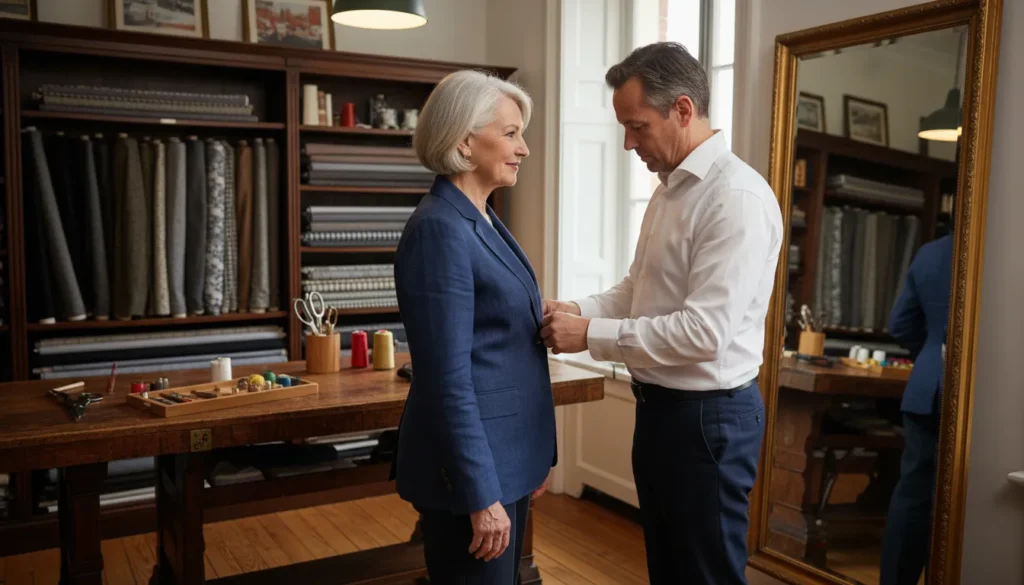
Competent human help at decision points. The best stores have staff who can actually help — with fit, styling, alterations, and returns — rather than just pointing you toward a rack. If you find a store with genuinely knowledgeable staff, become a regular. They’re worth their weight in cashmere.
Connected digital and physical experiences. Good stores now let you check online inventory, access your purchase history, and arrange easy exchanges without opening three apps or explaining your situation to four different people. The friction is coming down.
Destination experiences. Tailoring clinics, styling sessions, local collaborations, and in-store events are becoming more common as retailers try to give you a reason to visit that goes beyond what you can do online. These are often free or low-cost — and genuinely useful.
A store manager told me recently, “The fitting room is still our closer.” For retirees who’ve been burned by online sizing, that’s a good reminder: when fit matters, the fitting room is still your best tool. Use it without guilt.
Pricing, Value, and the Art of Paying the Right Amount
Retirees are not allergic to paying more. You’re allergic to paying more without a reason. That’s not frugality — that’s wisdom. And the fashion industry is slowly learning to speak your language.
Here’s how to spot genuine value versus clever marketing:
Materials you can feel. Hand-feel matters, even on a product page. Brands that show close-up fabric videos, list thread counts, or describe weight and drape are giving you real information. Brands that just say “premium quality” are not.
Fit clarity. One model shown in two sizes, with a quick comparison, tells you more than ten photos of the same size. Look for brands that show real fit variation — it’s a sign they’re designing for actual bodies, not just sample sizes.
Care instructions that don’t require a lab. If the care label reads like a chemistry exam, that’s a red flag. Good quality clothes are usually easier to care for, not harder.
Simple perks that respect your time. Fast pickup, smart exchanges, easy tailoring, and clear return windows are worth more than a loyalty points system that requires a spreadsheet to understand.
On pricing strategy: the “good, better, best” model is alive and well in retail. For retirees, I’d generally suggest investing in the “better” tier for pieces you wear constantly (trousers, blazers, everyday shoes) and being more flexible on the “good” tier for trend-adjacent pieces you’ll wear for a season or two. The math works out better than buying cheap repeatedly.
Regional Fashion Insight: Where to Find the Best Shopping Experiences
If you’re traveling in retirement — and I hope you are — understanding regional fashion differences can genuinely enhance your experience. The best shopping isn’t always where you expect it.
Europe rewards patience and local knowledge. A denim story that lands in Italy may need a comfort-fit variation in Germany. Local boutiques in smaller cities often carry better quality at lower prices than flagship stores in tourist areas. Ask your hotel concierge for neighborhood recommendations, not just the main shopping street.
Asia-Pacific offers extraordinary variety and value, particularly in Japan, Korea, and Thailand. Japanese craftsmanship in particular is worth seeking out — the attention to detail in construction and materials is exceptional, and the sizing has improved significantly for Western body types in recent years.
North America has strong regional variation. Coastal cities tend toward luxury and trend-forward pieces; suburban and smaller metro areas often have better value and more practical assortments. Don’t overlook outlet centers near major cities — the quality gap between outlet and full-price has narrowed considerably.
The Middle East has a growing modest fashion scene with genuinely beautiful design. If you’re visiting and appreciate elegant, well-constructed clothing that doesn’t require constant adjustment, it’s worth exploring.
Latin America has vibrant local craft and textile traditions that make for meaningful souvenirs and genuinely unique pieces. Look for local markets and artisan cooperatives rather than international chain stores.
Your Practical Shopping Guide for 2026: Simple Steps That Actually Work
You don’t need a revolution. You need a list.
This month:
- Audit your wardrobe honestly. What do you actually wear? What’s taking up space? Donate or consign what doesn’t serve you — and use that clarity to shop more intentionally going forward.
- Check the return policy before you buy online. A generous, easy return policy is a sign of a brand that’s confident in their product. A complicated one is a warning.
- Try one virtual try-on tool on a site you use regularly. It takes five minutes and can save you a frustrating return.
Next month:
- Visit one physical store you’ve been meaning to try. Ask for help. Use the fitting room. See if the staff actually know their product.
- Look up one brand you love and check their sustainability certifications. You might be pleasantly surprised — or usefully informed.
- Kill three items from your online wish list that you’ve been “thinking about” for more than six months. If you haven’t bought them yet, you probably don’t need them.
Over the next quarter:
- Build one consistent circularity habit — resale, take-back, or simply buying less and better.
- Find one local tailor or alterations service. A good tailor is worth more than a new wardrobe. Clothes that fit perfectly always look expensive, regardless of what you paid.
- Set a simple seasonal budget and stick to it. Not because you can’t afford more, but because constraints make you shop smarter and end up with things you actually love.
This plan is boring in the best way. Boring is repeatable. Repeatable is a wardrobe that actually works.
Frequently Asked Questions About Fashion Insight for Retirees
Is the fashion industry finally designing for older bodies?
Slowly, yes. More brands are expanding size ranges, offering longer inseams and sleeve lengths, and designing for comfort alongside style. It’s not universal yet, but the trend is clear — and retirees who vote with their wallets are accelerating it.
Are virtual try-on tools worth using?
Yes, especially for brands you haven’t tried before. They’re not perfect, but they’ve improved significantly and can save you the time and frustration of a return.
How do I know if a brand’s sustainability claims are real?
Look for third-party certifications (GOTS, OEKO-TEX, B Corp) rather than self-reported claims. The EU’s Digital Product Passport requirements are also pushing brands toward verifiable transparency.
Is resale shopping worth it for retirees?
Absolutely. Quality secondhand pieces — especially from brands known for durability — can be exceptional value. Platforms like ThredUp, The RealReal, and Poshmark have improved significantly in terms of quality control and return policies.
What’s the best way to build a retirement wardrobe on a budget?
Invest in a few high-quality basics (neutral trousers, a well-cut blazer, comfortable everyday shoes), be flexible on trend-adjacent pieces, and use resale for special occasions. A good tailor is worth more than most new purchases.
How has AI changed online shopping for retirees?
Better size recommendations, faster customer service, smarter search results, and virtual try-on tools are the most practical improvements. The technology is genuinely useful when it’s designed to help rather than just to sell.
Key Takeaways
- Fashion insight for retirees in 2026 means the industry is finally moving toward what you’ve always wanted: quality, value, transparency, and clothes that actually fit
- The market reset rewards brands that earn trust — which means better options for shoppers who do their homework
- Virtual try-on, AI size recommendations, and smarter search tools are genuinely useful for reducing returns and shopping frustration
- Sustainability regulation is creating more honest labeling and better durability information — a win for anyone who’s tired of replacing clothes every season
- Physical retail is worth revisiting — the best stores now offer real help, connected experiences, and reasons to visit beyond a discount
- A simple, consistent approach to shopping — fewer pieces, better quality, one circularity habit — beats a complicated system every time
Final Thoughts on Fashion Insight for Retirees
The best fashion insight for retirees in 2026 is surprisingly simple: clarity beats noise. Know what you want. Prove value before you pay for it. Remove the frictions that make good shopping frustrating. Use the new tools — virtual try-on, AI recommendations, resale platforms — like tools, not toys. And give yourself permission to shop on your own terms, at your own pace, for your own reasons.
When in doubt, ask the person closest to the product. A store associate once told me, “People come in for jeans; they leave feeling put together.” That’s the job — whatever the channel, whatever the trend cycle. Help yourself leave feeling put together. The confidence tends to follow.
You’ve spent decades dressing for other people’s expectations — the office, the occasion, the impression. Retirement is your chance to dress entirely for yourself. The industry is catching up. The tools are better. The options are wider.
Go find your wardrobe. It’s been waiting for you.
What’s your biggest fashion frustration in retirement? Drop it in the comments — I’d love to hear what you’re navigating.






4 Comments
Comments are closed.