Active Relaxation for Retirees: The Science-Backed Way to Stress Less and Feel More Like Yourself
Discover how active relaxation for retirees can lower cortisol, sharpen focus, and restore genuine calm — with practical techniques that fit real retirement life, no meditation mat required.
Nobody warns you that retirement comes with its own brand of stress.
Not the kind you left behind at the office — the back-to-back meetings, the inbox that refilled itself overnight like some kind of cruel magic trick, the performance reviews that made you feel like a contestant on a show you never auditioned for and weren’t entirely sure you wanted to win. That stress, you were ready to leave. You planned for it. You counted down to it. You may have even made a little paper chain and torn off a link every morning for the last six months. And when the day finally came, you walked out the door and exhaled for what felt like the first time in years.
And then.
A few weeks passed. And the quiet that was supposed to feel like freedom started to feel a little… hollow. Not bad, exactly. Just unfamiliar in a way you weren’t prepared for, like wearing someone else’s shoes — technically fine, but slightly off in a way you can’t stop noticing. The structure that used to drive you crazy turned out to be doing more work than you realized — giving your days shape, your brain a purpose, your nervous system a rhythm it knew how to follow. Without it, the stress didn’t disappear. It just changed shape. It became the low-grade hum of too much unscheduled time, the worry about whether you were doing retirement “right,” the restlessness that showed up at 2 p.m. on a Tuesday when you’d already read the news, finished your coffee, and weren’t quite sure what came next. Not crisis. Just… drift.
My neighbor Dave — retired engineer, genuinely lovely guy, the kind of person who alphabetizes his spice rack, has opinions about the correct way to load a dishwasher, and once spent forty-five minutes explaining to me why his particular brand of garden hose is objectively superior — described it perfectly about three months into his retirement. “I thought I’d feel like I was on vacation,” he said. “Instead I feel like I forgot to do something important and I can’t remember what it is.” He wasn’t wrong. That low-grade unease is real, it’s common, and it has a name: it’s your nervous system looking for a new rhythm. It spent decades knowing exactly what Monday morning meant. Now Monday morning looks suspiciously like Saturday, and your nervous system is standing there with a clipboard, waiting for instructions that aren’t coming, growing increasingly concerned.
This is more common than anyone admits. And it’s exactly why active relaxation for retirees matters — not as a wellness trend or a productivity hack or something you do because a magazine told you to, but as a genuine, science-backed way to help your nervous system find its footing in this new chapter.
I used to think relaxation meant doing as little as possible. One weekend I told myself I’d “rest,” then somehow watched an entire season of a baking show while eating takeout pizza and making zero decisions about anything. By Sunday night, I didn’t feel recharged. I felt like a human paperweight — vaguely guilty, oddly tired, slightly resentful of the contestants who kept crying about their soufflés, and no closer to the calm I’d been chasing. That’s the passive relaxation trap. It feels good in the moment, but your nervous system isn’t fooled. It knows the difference between numbing out and actually resting. It’s been around a lot longer than Netflix, and it is not impressed by your viewing history.
Active relaxation is different. It’s about giving your mind and body something purposeful and calming to do together — so you actually rest instead of just spacing out. Think of it like tuning a guitar instead of leaving it to buzz every time someone walks past. One creates harmony. The other just makes noise. And after decades of noise, you deserve harmony.
This guide is for the retiree who wants real rest — the kind that actually restores you, sharpens you, and makes the next day feel genuinely possible.
What Is Active Relaxation — and Why Does It Work So Well for Retirees?
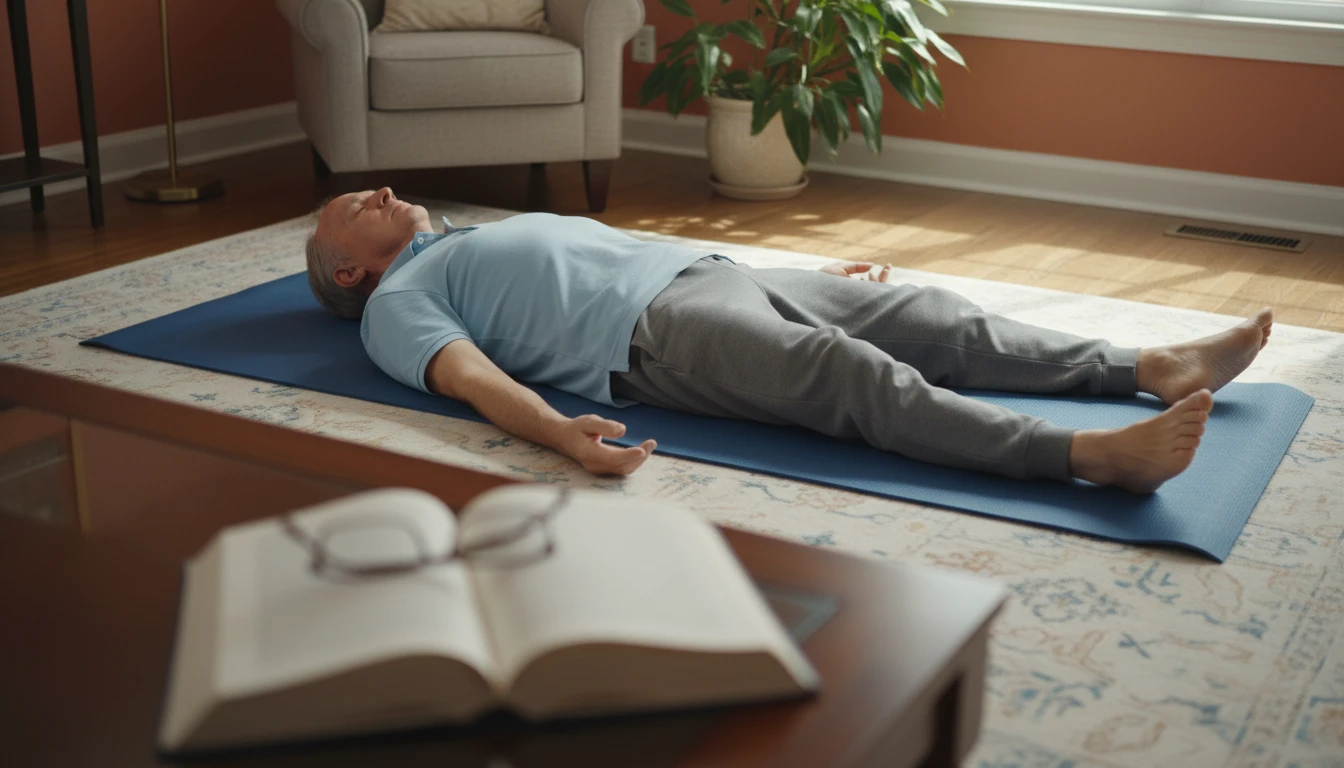
Active relaxation is the practice of engaging your mind and body in intentional, calming activities that activate your parasympathetic nervous system — your body’s built-in “rest and digest” mode — rather than simply disengaging from stimulation and hoping for the best.
The concept first emerged in sports psychology in the 1970s, when coaches noticed something counterintuitive: athletes who spent their rest days doing intentional, mindful activities — gentle stretching, visualization, light movement — recovered faster and performed better than those who simply lounged around. Decades later, neuroscience caught up and confirmed what those coaches already knew. Your brain doesn’t actually want “nothing.” It wants purposeful rest. It wants to be engaged without being overwhelmed. It wants the mental equivalent of a long walk through a neighborhood you’ve never explored, not a full stop in a parking lot.
For retirees, this insight is particularly relevant. The transition out of a structured work life removes a scaffolding that your nervous system had been leaning on for decades. Suddenly, the built-in rhythm is gone — and without something intentional to replace it, the brain can default to low-grade anxiety, restlessness, or the kind of foggy malaise that makes a perfectly good afternoon feel oddly unsatisfying. You’re not broken. You’re not failing at retirement. You’re just recalibrating. And recalibration takes something to calibrate toward.
I think of it like this: for thirty or forty years, your nervous system had a job. It knew what to do with Monday morning. It knew what to do with a deadline. It knew how to gear up and gear down, how to shift from high alert to low alert and back again. Retirement doesn’t automatically teach it a new rhythm — you have to give it one. Not by forcing calm, but by creating the conditions where calm can actually show up. Active relaxation is how you do that. It’s not a cure. It’s a practice. And the difference between those two things is everything — because a cure is something that happens to you, and a practice is something you build.
The research on this is consistent and compelling. A 2023 Stanford study found that people who practiced active relaxation — yoga, mindful movement, creative activities — saw a 23% drop in stress hormones compared to those who tried to relax passively. That’s not just “I feel calmer.” That’s measurable, chemistry-level change happening in your actual body. And for retirees navigating the emotional complexity of this life transition, that kind of change isn’t a luxury. It’s a foundation.
If you’ve been exploring the broader landscape of managing stress in retirement, active relaxation is one of the most practical and immediately accessible tools in that toolkit — and one of the few that gets more effective the more consistently you use it.
Your Brain on Active Relaxation: The Neuroscience Worth Knowing
Here’s where it gets genuinely interesting — because what’s happening in your brain during active relaxation is not just “you feel better.” It’s a measurable, structural shift in how your nervous system operates. Real change. Not placebo. Not wishful thinking. Actual neurological rewiring.
When you’re stressed, your sympathetic nervous system is running the show. It’s the one yelling “fight or flight!” — flooding your body with cortisol and adrenaline, tightening your muscles, narrowing your focus, and generally treating every minor inconvenience like a predator on the savanna. This system is extraordinarily useful when you actually need it. The problem is that for many people — especially those navigating a major life transition like retirement — it runs at a low simmer almost constantly, even when there’s no actual threat in sight. Your body is braced for a meeting that’s never going to happen. It’s waiting for an email that isn’t coming. It’s preparing for a performance review that ended the day you retired. It’s exhausting in a way that’s hard to explain to people who haven’t felt it. You’re not anxious about anything specific. You’re just… braced. All the time. For nothing in particular. And that low-grade bracing is quietly draining you.
Active relaxation flips the switch. Harvard’s Dr. Herbert Benson called this the relaxation response — a physiological state in which your heart rate slows, your blood pressure drops, your breathing deepens, and your muscles finally stop bracing for the next email notification that isn’t coming anymore. Activating this response intentionally, through practices like deep breathing, yoga, or progressive muscle relaxation, is the difference between waiting for calm to arrive and actually creating it. You’re not hoping to feel better. You’re doing something that makes better happen. That’s a meaningful distinction.
But here’s what makes active relaxation particularly powerful for retirees: it doesn’t just make you feel better in the moment. It makes your brain stronger over time.
Research consistently shows that people who practice active relaxation techniques have 25–35% lower cortisol levels than those who don’t — and unlike the temporary relief of passive downtime, these changes accumulate. You’re building a baseline of calm that carries over into your everyday life. Your prefrontal cortex — the part responsible for logic, decision-making, and emotional regulation — gets stronger. Your amygdala — the fear and panic center — becomes less reactive. It’s like upgrading your internal alarm system so it stops going off every time the cat knocks something over at 3 a.m. Or every time you check your retirement account balance. Or both simultaneously, which is its own special kind of morning that nobody prepares you for.
A retired nurse named Carol told me she started noticing the difference about six weeks into a regular breathing practice. “I used to wake up at 4 a.m. with my heart racing for no reason,” she said. “I’d lie there cataloguing everything I might have forgotten to do, even though I was retired and there was genuinely nothing to forget. I was stress-auditing a life that didn’t need auditing. Running through a checklist for a job I no longer had.” She started doing five minutes of deep breathing when she woke up — nothing elaborate, no app, no special cushion, just slow and intentional breath in the dark. “Now I wake up, do a few minutes of breathing, and actually go back to sleep. I didn’t think that was possible anymore.” It is possible. And it’s not magic — it’s just your nervous system finally getting the signal that it’s safe to stand down. That the audit is over. That the checklist is done. That you can rest now, for real, without guilt.
For retirees specifically, this neurological strengthening matters beyond stress relief. It supports the kind of cognitive activities for seniors that keep your mind sharp, your memory reliable, and your emotional resilience intact — which is exactly what you need to make the most of this chapter.
Active vs. Passive Relaxation: Why the Difference Matters More Than You Think
Let’s be honest about something most of us have done: the “just one episode” lie.
You sit down to relax. One episode becomes three. Suddenly it’s 11 p.m., your snacks are gone, your eyes feel like sandpaper, and you’re somehow more tired than when you started. You didn’t rest. You just postponed the restlessness until bedtime, where it waited for you patiently like a very persistent houseguest who brought their own pillow, rearranged your furniture, and has absolutely no intention of leaving. That’s the passive relaxation trap — and it’s not a character flaw. It’s not weakness. It’s just how passive downtime works. Mindless scrolling, streaming marathons, zoning out — they might help you escape for a bit, but they’re not the same as real rest. They’re emotional junk food: quick hit, zero nourishment, and a side of vague regret that you can’t quite name but definitely feel somewhere around your sternum.
Active relaxation works differently. Instead of zoning out, you’re zoning in — engaging both your body and mind in a way that creates genuine calm and focus rather than temporary distraction.
Here’s the practical difference:
| Passive Relaxation | Active Relaxation |
|---|---|
| Watching TV or streaming | Yoga or tai chi |
| Scrolling social media | Deep breathing or mindfulness |
| Lying on the couch | Progressive muscle relaxation |
| Mindless mobile games | Gardening, painting, or playing music |
| Result: Temporary distraction, lingering fatigue | Result: Lasting calm, sharper focus, better mood |
Psychologist Mihaly Csikszentmihalyi — the researcher who coined the term flow state — described this sweet spot as the place where you’re so immersed in what you’re doing that time disappears and your brain hums along at just the right frequency between challenge and ease. Not bored. Not overwhelmed. Just right. That’s exactly what active relaxation taps into. You’re not escaping your life. You’re fully inhabiting it, just at a gentler speed. And that distinction — escape versus inhabit — is the whole ballgame. One leaves you feeling like you were somewhere else. The other leaves you feeling like you were finally, fully here.
Passive relaxation delivers quick dopamine hits — a sugar rush for your brain that crashes just as fast. Active relaxation delivers the slow-burn version: steady, satisfying, and actually restorative. The difference in how you feel afterward is not subtle. One leaves you reaching for another episode, another scroll, another distraction. The other leaves you feeling like yourself again — like the version of you that existed before the stress became background noise you stopped noticing.
None of this means Netflix is evil. I’m not about to shame anyone for watching a show to unwind — I’ve finished more than one season in a single sitting, and I regret nothing, not even the baking show. But if your only stress strategy involves sitting still and consuming content, your nervous system might still be working overtime while you think you’re resting. The goal isn’t to never chill. It’s to balance your downtime so you’re actively recharging, not just numbing out until tomorrow. Because tomorrow, the restlessness will still be there. And it’s patient.
Science-Backed Active Relaxation Techniques That Actually Work
Here’s the part that matters most — the practical tools. Because “relax more” sounds great in theory, but how do you actually do that between the grandkids’ visits, the doctor’s appointments, the neighbor who keeps stopping by to talk about his garden hose, and your third cup of reheated coffee that you keep forgetting is in the microwave because you got distracted by something you can’t even remember now?
The key is starting small. Even 5–10 minutes of intentional practice can make a measurable difference. Think of these as tools you can reach for anytime stress starts to creep in — not a rigid program, not a commitment to a lifestyle overhaul, not something you have to earn or deserve or be ready for. Just a set of options that work. Options you can actually use on a Tuesday afternoon when the restlessness shows up uninvited and sits down in your favorite chair.
1. Progressive Muscle Relaxation: Your Body’s Reset Button
This one’s a classic for a reason. Developed by Dr. Edmund Jacobson in 1929, progressive muscle relaxation (PMR) trains you to notice and release tension throughout your body — something most of us desperately need, especially after decades of carrying stress in our shoulders, jaw, and lower back without fully realizing it. The tension becomes so familiar it stops feeling like tension. It just feels like you. It becomes your resting state. And you don’t even know it until someone asks you to let it go and you feel yourself drop two inches.
The technique is simple: tense a muscle group for five seconds, then release for about thirty. You’ll literally feel the stress melt away — and the contrast between tension and release is where the real benefit lives. It sounds almost too simple to work. It isn’t. Simple is not the same as ineffective. Sometimes the simplest things are the ones that actually change you.
Try this sequence: start with your toes, curl them tight, hold, release. Move up to your calves, then thighs, glutes, abdomen, hands, arms, shoulders, and finally your face — yes, your face, which is probably holding more tension than you realize right now. Focus on how the release feels. That’s not just comfort — that’s your parasympathetic nervous system taking over, doing exactly what it was designed to do when you finally give it permission.
A 2019 study published in Frontiers in Psychology found that PMR can lower systolic blood pressure by 7–10 mmHg and reduce perceived stress levels by nearly 40%. I tried it during a period when I realized I’d been unconsciously clenching my jaw for approximately three years straight — not during stressful moments, just… always. The first time I did a full body scan and got to my shoulders, I felt them drop about two inches. Two actual inches. I didn’t even know they’d been up there. I’d been walking around like I was bracing for impact and had completely stopped noticing — the way you stop noticing the hum of a refrigerator until it suddenly goes quiet and you realize how loud it was the whole time. Don’t rush it. The benefit comes from that deep sigh your muscles give when you finally, finally let go.
2. Mindful Deep Breathing: Your Built-In Reset Switch
If PMR is your body’s reset button, mindful breathing is your mental one. Simple, portable, free — and no special equipment required unless you count lungs, which you presumably have and have been underusing for stress relief purposes for most of your adult life.
Try the 4–7–8 technique developed by Dr. Andrew Weil: inhale for 4 counts, hold for 7, exhale for 8. This sequence lowers your heart rate and activates your parasympathetic nervous system — your body’s calm mode — in a matter of minutes. The first time I tried it, I felt slightly ridiculous counting my own breath in my kitchen, like I’d forgotten how to do something I’d been doing since birth. By the third round, I felt noticeably calmer. By the fifth, I understood why people keep talking about this. By the tenth day, I stopped questioning it and just did it, the way you stop questioning why coffee helps and just make the coffee.
Or, if you’re in a high-pressure moment, try box breathing: inhale 4, hold 4, exhale 4, hold 4. This is the technique used by Navy SEALs to stay calm in genuinely dangerous situations — not metaphorically dangerous, actually dangerous. If it works for someone jumping out of a plane in the dark, it can probably handle a difficult phone call, a stressful afternoon with the grandkids, or the moment you realize you’ve been on hold with your insurance company for forty-five minutes and the hold music has started to feel like a personal attack.
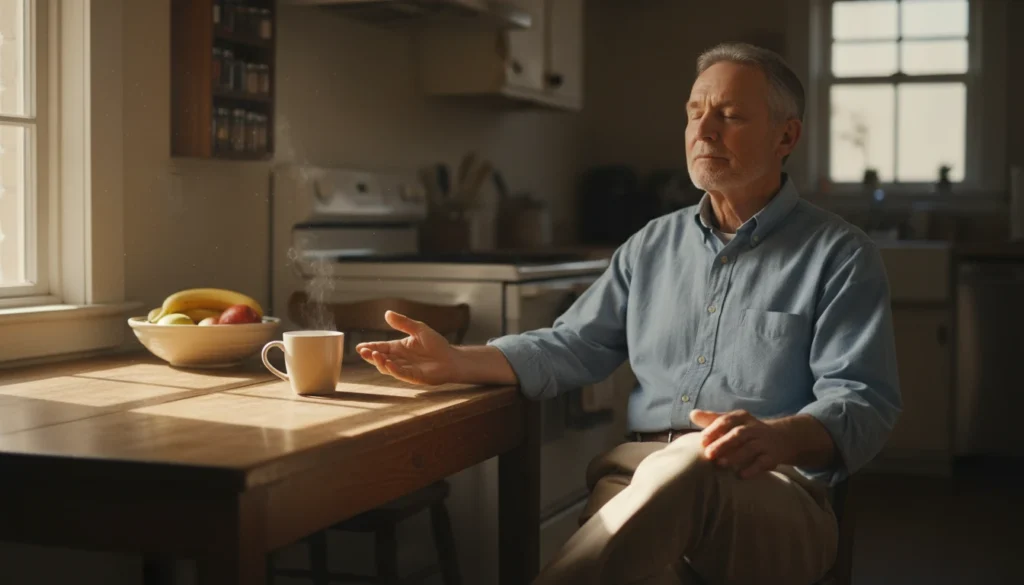
Here’s the detail that most people miss: the way you breathe matters as much as the fact that you’re breathing. Shallow chest breathing actually mimics the physiological signature of stress — short, tight, high in the chest — and it signals to your body that something is wrong. Deep belly breathing, where your diaphragm expands and your stomach rises, signals safety. It tells your nervous system: nothing is chasing us. We can stand down. We can stop bracing. Even three minutes of intentional deep breathing can measurably reduce cortisol and sharpen focus. And you can do it anywhere — at your kitchen table, in the car, in a waiting room, or in the world’s tiniest airplane bathroom, where no one can see you and everyone is pretending they’re not stressed either.
3. Movement-Based Relaxation: Calm in Motion
Sometimes the best way to relax isn’t by being still — it’s by moving mindfully. And for retirees, this is often the most accessible and enjoyable entry point into active relaxation, because it doesn’t require you to sit quietly with your thoughts, which, let’s be honest, can feel like a lot to ask on some days.
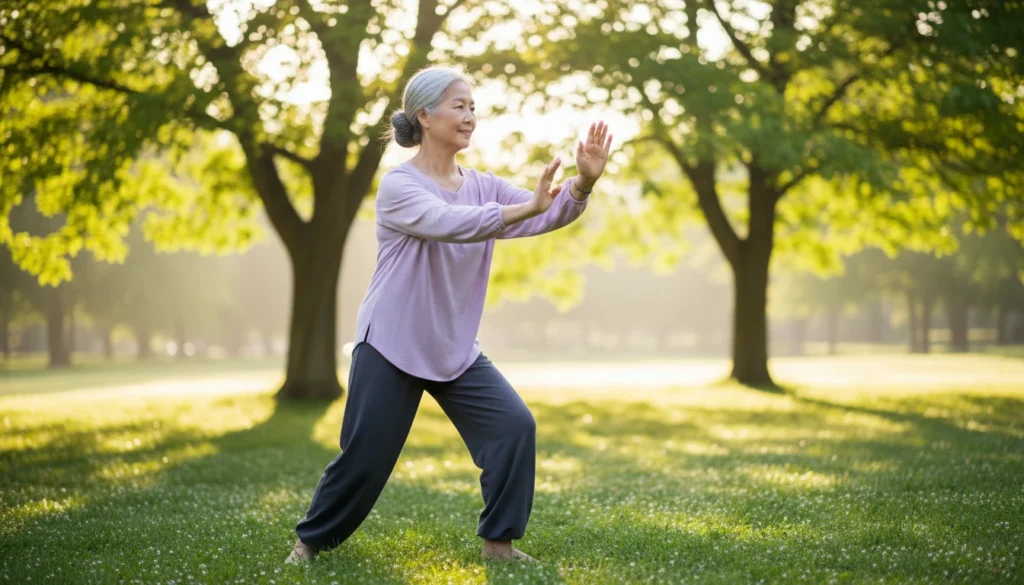
Yoga, tai chi, and qigong all combine gentle movement with focused attention in a way that keeps your mind present without demanding intensity. Research published in JAMA Internal Medicine found that tai chi can reduce anxiety by around 40% — with the added benefits of improved balance, flexibility, and mood that matter enormously for long-term health and independence. That’s not a small number. That’s nearly half your anxiety, gone, because you spent some time moving slowly in a park on Wednesday mornings.
A retired accountant named Frank started tai chi at 67 because his doctor suggested it and he had nothing better to do on Wednesday mornings. “I thought it was going to be embarrassing,” he told me. “Grown man waving his arms around in a park with a bunch of strangers who all seemed to know what they were doing and had clearly been doing it for years.” He went anyway, because what else was he going to do. Three years later, Frank is the one who shows up early to help set up the cones. He knows everyone’s name, their retirement stories, their grandchildren’s names. He’s brought four friends. He’s become, against all odds and his own expectations, a tai chi guy — and he says it with a kind of quiet pride that tells you he never expected to be this person and is genuinely, deeply delighted that he is. The tai chi is good. The Wednesday morning rhythm is better. The sense of belonging to something, of being expected somewhere, of mattering to a group of people who wave their arms around in a park together — he says that might be the best part of all.
And if studios and mats aren’t your thing? Walking meditation is a legitimate and underrated option. Slow down, put the phone away, and actually notice what’s around you — the feel of the ground under your feet, the way the air moves differently in the shade, the sound of your own footsteps on different surfaces. A study published in Frontiers in Psychology found that spending just 20 minutes in nature can reduce cortisol by up to 50%. That’s cheaper and faster than any spa treatment — and the commute is usually better, and nobody tries to sell you an upgrade.
Here’s the secret that makes this even more accessible: everyday activities count. Gardening, dancing in your kitchen, folding laundry — if you’re paying attention, it’s mindfulness in motion. I’ve found that washing dishes can feel oddly peaceful when I tune into the warm water and the rhythm instead of spiraling about whatever I was worried about ten minutes ago. Serenity was hiding in the sink the whole time. Nobody puts that on a wellness poster, but it’s true. And it’s free. And it gets the dishes done. That’s what I call a complete win on every level.
4. Creative Flow: The Art of Intentional Play
Active relaxation doesn’t have to mean exercise or formal meditation. It can be play — especially the creative kind. The kind you probably told yourself you’d get to “someday” for the last twenty years.
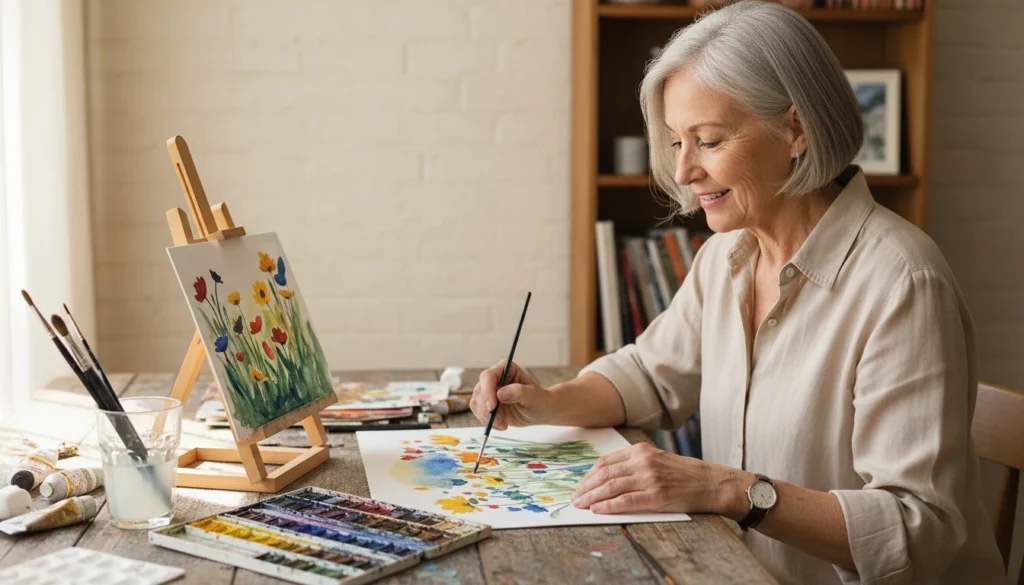
Drawing, painting, playing music, pottery, journaling, knitting — all of these tap into flow states, where your brain hits that sweet spot of full engagement and genuine calm. A 2022 study in Frontiers in Psychology found that just 45 minutes of creative activity reduced cortisol levels by 25% — regardless of the person’s skill level or prior experience. That last part matters more than people realize, and I want to say it again: regardless of skill level. You don’t have to be good at it. You just have to do it. The nervous system doesn’t grade on a curve.
A retired teacher named Gloria started watercolor painting at 71 because her granddaughter left a set of paints at her house and she didn’t want them to dry out. That was the whole reason. Not inspiration. Not a lifelong dream. Just: these paints are here and it would be a shame to waste them. “I’m terrible,” she told me cheerfully, with the energy of someone who has fully made peace with this fact and found it genuinely liberating. “My flowers look like blobs. My trees look like broccoli. My sunsets look like something went wrong at the paint factory and nobody caught it in time.” She laughed — the kind of laugh that comes from someone who genuinely doesn’t care, who has stopped performing competence and started just doing things for the joy of doing them. “I don’t care. I sit down at 10 a.m. and the next thing I know it’s noon and I feel like a completely different person.” That’s flow. That’s the point. The product is irrelevant. The process is everything. Gloria’s broccoli trees are doing more for her nervous system than a perfectly executed painting ever could — because she’s not performing. She’s not trying to impress anyone. She’s just present, in her kitchen, with her paints, making something that belongs entirely to her.
For retirees who’ve been meaning to pick up a creative hobby for years — and kept putting it off because work was always in the way, because there was always something more urgent, because you told yourself you’d do it “when things slow down” and things never slowed down — this is the moment. Not because you need to produce something impressive. Not because you owe the world your creativity. But because your nervous system genuinely benefits from the act of making something with your hands and your attention, and because you’ve earned the right to do something just because it feels good.
Even cooking and baking qualify. Kneading dough, stirring soup, chopping vegetables while fully present — these turn routine into ritual. And at the end, you get dinner. That’s what I call a complete win on every possible level.
If you’ve been thinking about journaling as a way to process the emotional texture of retirement, our guide to how to start journaling for mental health in retirement walks you through exactly how to begin — without pressure, without perfection, and without feeling like you need to write something profound every time you sit down.
Building Your Personal Active Relaxation Practice
Here’s the truth that no wellness article wants to admit: the best active relaxation technique is the one you’ll actually do.
Not the one that sounds most impressive at a dinner party. Not the one your neighbor swears by with the intensity of someone who has found religion. Not the one with the most scientific citations or the most aesthetically pleasing Instagram presence or the most elaborate setup. Not the one that requires a mat, a subscription, a special cushion, or a personality type you don’t have and have never had. The one that fits your life, your personality, and your current energy level — and that you can return to consistently without it feeling like another item on a to-do list you’re already behind on.
Start small. Pick one technique that sounds genuinely appealing — not impressive, not virtuous, just appealing — and practice it for 5–10 minutes, a few times a week. That’s it. No elaborate setup, no special equipment, no commitment to a lifestyle overhaul, no announcement to anyone. Just a small, consistent practice that your nervous system can start to recognize and respond to. Think of it like watering a plant — you don’t need to flood it. You just need to show up regularly. The plant doesn’t care if you’re doing it perfectly. It doesn’t care if you’re doing it gracefully. It just needs water, and it will grow.
If you like structure, schedule it. Put it in your calendar like an appointment you wouldn’t cancel. If you’re more spontaneous, weave it into existing moments: slow deep breaths while your coffee brews, a gentle stretch between activities, a mindful walk after lunch. I use habit stacking — pairing a new practice with something I already do — because it removes the friction of deciding when to start. It’s sneaky, but it works. My breathing practice lives right after my morning coffee. I don’t decide to do it. I just do it, because the coffee is already there and the habit is already formed and my brain has stopped arguing about it, which is the best possible outcome.
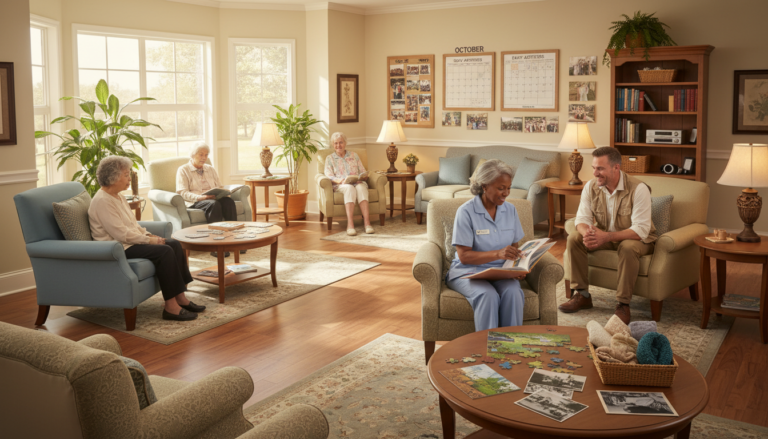
If you’re more social by nature, consider a group format. A yoga class, a tai chi meetup, a community art night — you get the relaxation benefits plus the social connection that research consistently identifies as one of the strongest predictors of wellbeing in retirement. That combination is hard to beat. You’re not just relaxing. You’re building a life. You’re becoming someone who shows up somewhere on purpose, which turns out to matter more than most people expect — especially in a chapter where showing up somewhere on purpose no longer happens automatically.
And please, let go of perfectionism. You don’t need to master anything. You don’t need to meditate for thirty minutes or hold a yoga pose for longer than is comfortable or produce a journal entry worth reading or do anything that would impress anyone. Even a few imperfect minutes of mindful breathing beats an hour of anxious multitasking — every single time, without exception, no matter how imperfect the breathing was. Imperfect and consistent will always beat perfect and occasional. Always. This is one of the few areas of life where showing up badly is still showing up, and showing up still counts.
A friend of mine — retired, sharp as a tack, deeply skeptical of anything that sounds like “wellness” or “self-care” or anything that might require him to use the word “intention” unironically in a sentence — started doing five minutes of deep breathing before bed because his wife asked him to try it for one week. Just one week. He called it “the dumbest thing I’ve ever done that actually worked.” He’s been doing it for two years. He still calls it dumb. He still does it every night, without fail, in the dark, before he goes to sleep. He sleeps better. He’s less irritable in the mornings. His wife has noticed. He has noticed. He just refuses to admit it’s working, which is its own kind of charming stubbornness that I find deeply relatable. Sometimes the bar for starting is just: try it for a week and see what happens. You can always quit. But you probably won’t. And that’s the whole point.
Active Relaxation and the Retirement Transition
There’s a reason active relaxation for retirees deserves its own conversation, separate from general wellness advice. The retirement transition is a specific kind of stress — one that doesn’t always look like stress from the outside, which makes it harder to name and harder to address and easier to dismiss as ingratitude when it’s actually just adjustment.
From the outside, retirement looks like freedom. And it is. But it’s also a profound identity shift — the loss of a role that structured your time, defined your social connections, gave your days a built-in sense of purpose, and told you, every single morning, exactly who you were and where you were supposed to be. That transition, even when it’s deeply wanted, even when you planned for it and looked forward to it and celebrated it with a cake that said “Finally Free” and meant every word, can leave your nervous system in a state of low-grade alert that passive relaxation doesn’t touch. You can watch all the TV you want. The unease will still be there when the credits roll, sitting quietly in the corner, waiting.
Active relaxation works for this specific kind of stress because it does two things simultaneously: it calms your nervous system in the moment, and it gives your days a new kind of intentional structure — one you build yourself, around what actually matters to you now, not what mattered to your employer or your schedule or your title. That’s not a small thing. That’s the whole thing. That’s the difference between retirement feeling like a long weekend that never ends and retirement feeling like a life you actually chose, on purpose, with intention.
A retired teacher named Margaret told me she started doing tai chi six months into retirement, mostly because a friend dragged her to a class and she didn’t have a good excuse not to go. She went in skeptical and slightly resentful of being dragged anywhere. “I thought it would be boring,” she said. “It wasn’t. It was the first time in months that I felt like I was doing something on purpose.” She paused for a moment, like she was still a little surprised by this, still processing what it meant. “Not productive. Not useful to anyone. Not something I could put on a list and cross off. Just… on purpose. Like I decided to be somewhere and I was there and that was enough.” She’s been going every Tuesday and Thursday for two years. The tai chi is good. The Tuesday and Thursday rhythm is better. The sense of doing something on purpose — of showing up somewhere because she chose to, because it matters to her, because it’s hers — might be the best part of all.
That’s the deeper gift of active relaxation for retirees: it’s not just stress relief. It’s a way of building a life that feels intentional — one practice, one morning, one purposeful hour at a time. And in a chapter where intentionality doesn’t come built-in anymore, where nobody is scheduling your days or defining your purpose or telling you where to be, that matters more than any technique. It’s not just about being calmer. It’s about being here, on purpose, in a life you actually chose.
For a broader look at the emotional landscape of this transition, our guide to mental health in retirement covers the full picture — from identity shifts and social changes to the research on what actually supports long-term wellbeing in this chapter.
Active Relaxation for Different Retirement Lifestyles
One of the most practical things about active relaxation is how adaptable it is. There’s no single right way to do it, and it fits almost every lifestyle, energy level, and physical capacity. It doesn’t require a particular body type, a particular income level, or a particular personality. It just requires showing up, in whatever form that takes for you.
If you’re highly active: Use movement-based practices — yoga, tai chi, walking meditation — as your primary tools. Add creative flow for the evenings when physical energy is lower but mental engagement is still available and the day isn’t quite done with you yet.
If you’re managing health issues or chronic pain: Gentle breathwork, progressive muscle relaxation, and visualization can all be adapted to work within your physical limits. The goal is never strain — it’s intentional engagement. Talk to your doctor about what’s appropriate, and know that even seated breathing exercises produce measurable physiological benefits. You don’t need a perfect body to have a calm nervous system. You just need to show up in the body you have, with the capacity you have, on the day you have.
If you’re highly social: Prioritize group formats. Community yoga, art classes, garden clubs, music groups — the social connection amplifies the relaxation benefits and adds the accountability that makes consistency easier. You’re more likely to show up when someone’s expecting you. And the conversation before and after the class — the catching up, the laughing, the knowing someone’s name and having them know yours — is often just as restorative as the class itself.
If you’re introverted or prefer solitude: Solo practices like journaling, creative work, or mindful walking are ideal. The quiet is a feature, not a bug — and you don’t need a class or a community to make active relaxation work. Some of the deepest calm I’ve ever felt has been completely alone, in a garden, with no agenda and nowhere to be and no one expecting anything from me and the particular pleasure of knowing that this hour belongs entirely to me.
If you’re caring for a spouse or family member: Micro-practices matter most here. Three minutes of deep breathing between caregiving tasks. A five-minute body scan before bed. A short walk around the block when someone else can sit with your loved one for twenty minutes. Small and consistent beats ambitious and occasional, every time, without exception. You cannot pour from an empty cup — and active relaxation is how you refill it, even when time is short and the days are long and you’re running on fumes and love in roughly equal measure and there doesn’t seem to be a moment that belongs to you. Find the moment anyway. It’s there. It’s small. It counts.
Tech-Assisted Calm: When Your Phone Actually Helps
Our phones cause plenty of stress — but they can also help manage it, if you use them intentionally rather than reflexively.
Apps like Calm, Insight Timer, and Headspace guide you through breathing exercises, body scans, and meditation sessions with enough structure to be genuinely useful, especially when you’re just starting out and not sure what you’re doing and would rather have a calm voice walk you through it than sit in silence wondering if you’re doing it right. They’re particularly helpful for retirees who want guidance without the commitment of a class — and who’d rather not explain to a room full of strangers that they’ve never done this before and aren’t entirely sure they believe in it yet but are willing to try.
If you love data, wearables like smartwatches can track heart rate variability (HRV) — one of the most reliable physiological indicators of relaxation and recovery. Some devices offer real-time biofeedback, letting you literally watch your stress response shift as you breathe. That kind of immediate feedback can be surprisingly motivating. There’s something deeply satisfying about watching your heart rate drop in real time because you remembered to breathe properly — like getting a gold star from your own body, which turns out to be the most satisfying kind.
But here’s the honest caveat: use tech as a tool, not a destination. True relaxation doesn’t come from staring at another screen — it comes from reconnecting with yourself, your body, and the present moment. Sometimes the most effective app is stepping outside, leaving your phone on the counter, and walking around the block without an agenda. No tracking. No notifications. No podcast. No destination. Just you and the air and whatever’s blooming in your neighbor’s garden and the particular quality of light at that exact time of day that you would have missed entirely if you’d been looking at a screen. That light is worth seeing. It’s been there every day. You just haven’t always been there to see it.
Frequently Asked Questions
How quickly will I notice results from active relaxation?
Most people feel measurably calmer after a single session — not dramatically, but noticeably. Lasting, structural benefits — lower baseline cortisol, better sleep, improved emotional resilience — build over 2–4 weeks of consistent practice. Think of it like fitness for your nervous system: the first workout matters, but consistency is what changes the baseline. You’re not trying to feel better once. You’re trying to feel better as your default.
Can active relaxation replace my regular exercise?
No — and it’s not trying to. Active relaxation complements cardiovascular and strength training but doesn’t replace them. Think of it as mental and nervous system conditioning that supports everything else you do, rather than a substitute for physical fitness. They work together. One makes the other more effective.
I tried meditation once and felt more anxious. Is that normal?
Completely normal, and more common than you’d think. When you first slow down, your brain sometimes rebels — surfacing thoughts and feelings that the busyness was keeping at bay, like opening a drawer you haven’t opened in years and finding everything you shoved in there. If sitting still makes you more anxious, start with movement-based practices like yoga or walking meditation instead. The stillness can come later, once your nervous system has had some practice with intentional calm and learned that slowing down is safe.
What if I have physical limitations?
Almost every active relaxation technique can be adapted. Seated yoga, gentle breathwork, visualization, and progressive muscle relaxation all work within significant physical constraints. The goal is never strain — it’s intentional engagement. Your doctor can help you identify what’s appropriate for your specific situation. The body you have right now is enough to start.
How do I know it’s actually working?
You’ll start noticing subtle shifts before you notice dramatic ones: slightly better sleep, a little more patience in frustrating situations, fewer stress spikes during the day, a general sense that you’re handling things with a bit more ease, a slightly longer fuse, a slightly quieter mind at 2 a.m. Over time, those subtle shifts compound into something that feels genuinely different — a baseline of calm that used to require effort and eventually just becomes how you feel. That’s the goal. Not a dramatic transformation. Not a new personality. Just a quieter baseline. Just a version of yourself that isn’t always bracing for something that isn’t coming.
Key Takeaways
- Active relaxation for retirees works by engaging your mind and body together in intentional, calming activities — producing genuine rest rather than temporary distraction
- Research shows it can lower cortisol by 25–35% and produce lasting neurological changes that make stress easier to handle over time
- The retirement transition creates a specific kind of stress that passive relaxation doesn’t address — active relaxation fills that gap by providing both calm and intentional structure
- Progressive muscle relaxation, mindful breathing, movement-based practices, and creative flow are all effective — the best one is the one you’ll actually do consistently
- Start with 5–10 minutes a few times a week; consistency matters far more than duration or perfection
- Group formats add social connection to the relaxation benefits — a combination that research consistently identifies as particularly powerful for retirees
- Tech tools like Calm and Insight Timer can help, but the goal is reconnecting with yourself — not adding another screen to your day