
Benefits of Home Workouts: Why Your Living Room Might Be the Best Gym You’ll Ever Need in Retirement
Discover the real benefits of home workouts for retirees — save time, protect your joints, and stay consistent without ever leaving home.
Retirement is supposed to be the chapter where you finally get to do things your way. Sleep in. Eat breakfast slowly. Wear slippers until noon if you feel like it. So why are so many of us still fighting traffic, circling parking lots, and waiting for some guy named Brad to finish his third set of bicep curls on the only squat rack?
I’ll never forget that one Tuesday — I drove twenty minutes to the gym, spent another ten circling the parking lot like a lost soul, and finally got inside… only to find Brad hogging the only equipment I actually needed. And there I was, sixty bucks a month poorer, watching him flex in the mirror while my workout window slowly closed.
That was the day I looked around my living room and thought: wait a minute.
That comfy space of yours — the one with the good afternoon light and the armchair you love — might actually be a better gym than that overpriced fitness center. And no, this isn’t just me justifying my deep and abiding hatred of traffic. The science actually backs this up, and I’ll show you exactly why.
Working out at home isn’t just about convenience (though, let’s be real, rolling out of bed and skipping the commute is glorious at any age). Studies show people who train at home tend to stick with it longer, see better results, and — believe it or not — actually enjoy the process more. For retirees especially, where consistency and joint-friendliness matter more than ever, the benefits of home workouts are almost unfairly good.
Let me walk you through why your own home might just be the ultimate gym you never realized you already owned.
Why Home Workouts Are Actually Genius (And Science Agrees)
The American Council on Exercise has made it pretty clear: home workouts deliver equivalent cardiovascular and strength benefits compared to traditional gym sessions. But here’s where it gets really interesting — for retirees, the benefits of home workouts often beat what you’d get at a commercial gym.
A study tracking workout adherence rates found something that stopped me in my tracks: people who committed to at-home workouts stuck with their exercise routine 23% more consistently than those with gym memberships. Twenty-three percent. The reason? They basically eliminated every excuse in the book. No commute. No waiting. No Brad.
I think about Margaret — a retired teacher from Ohio who decided to skip the gym hassle and start working out in her living room with nothing but a resistance band and a free YouTube channel. Six months later, she went from struggling through five modified push-ups to breezing through thirty full ones. Her secret wasn’t some fancy routine or expensive equipment. It was simply showing up every day.
That’s the thing about retirement that nobody tells you: you finally have the time to be consistent. And consistency, it turns out, is the whole game. If you’re still figuring out how to build that kind of daily rhythm, our guide on healthy retirement lifestyle habits is a great place to start.
The “home workouts aren’t real workouts” myth really needs to retire — pun absolutely intended. Meta-analyses show measurable improvements in muscle strength, power, and endurance from home-based exercise programs. These aren’t “good effort” results. They’re proof that real, meaningful progress happens in living rooms every single day.
The real magic of home workouts? They remove all the usual excuses — no gym anxiety, no waiting for machines, no commute. Just you, your space, and zero barriers between you and feeling better.
Key Takeaways:
- Home workouts deliver the same cardiovascular and strength benefits as gym sessions
- At-home exercisers are 23% more consistent than gym members
- Consistency — not intensity — is the real driver of results, especially in retirement
The Convenience Factor That Changes Everything (Especially After 60)
Let’s do some math that’ll make you seriously question every gym membership you’ve ever had.
The average gym visit takes about ninety minutes when you factor in travel time, changing clothes, waiting for equipment, and the actual workout. Compare that to a focused thirty to forty-five minute home workout session that starts the moment you decide to exercise. That’s forty-five minutes of your life back. Every. Single. Day.
If you work out three times per week, you’ve just reclaimed over two hours weekly. That’s 104 hours per year — more than two full workdays — that you can spend on grandkids, gardening, travel, or honestly, more home workouts. Because convenience breeds consistency like nothing else.
In retirement, your time is precious and your energy isn’t always predictable. Some mornings you wake up feeling like a million bucks. Others, your knees have opinions. Home workouts flex with you in a way that gym schedules simply can’t:
- Got a quiet morning before the grandkids arrive? Perfect time for a gentle strength circuit.
- Feeling energized after lunch? Quick low-impact cardio session in the living room.
- Watching your favorite show? That’s chair squat and calf raise time, my friend.
Weather becomes completely irrelevant when your gym is your own home. Blizzard outside? No problem. Heat advisory? Your air-conditioned living room has entered the chat. Bad hip day? You can modify every single exercise without anyone staring or offering unsolicited advice.
The mental freedom that comes with home workouts is enormous. When the toughest part of your workout is the five steps to your living room, you’re far more likely to actually do it. No traffic. No parking. No figuring out what to wear. Just you, your space, and the decision to show up — which, in retirement, is the most powerful decision you can make for your health.
Your Wallet Will Thank You (And So Will Your Retirement Account)
Let’s talk money — because the financial benefits of home workouts are almost ridiculous, and in retirement, every dollar you save is a dollar that stays in your pocket where it belongs.
The average gym membership costs fifty-eight bucks monthly, which adds up to $696 annually. Over five years of retirement? That’s $3,480. Over ten years? You’re looking at nearly seven grand. For what, exactly? The privilege of waiting for equipment and parking in the rain?
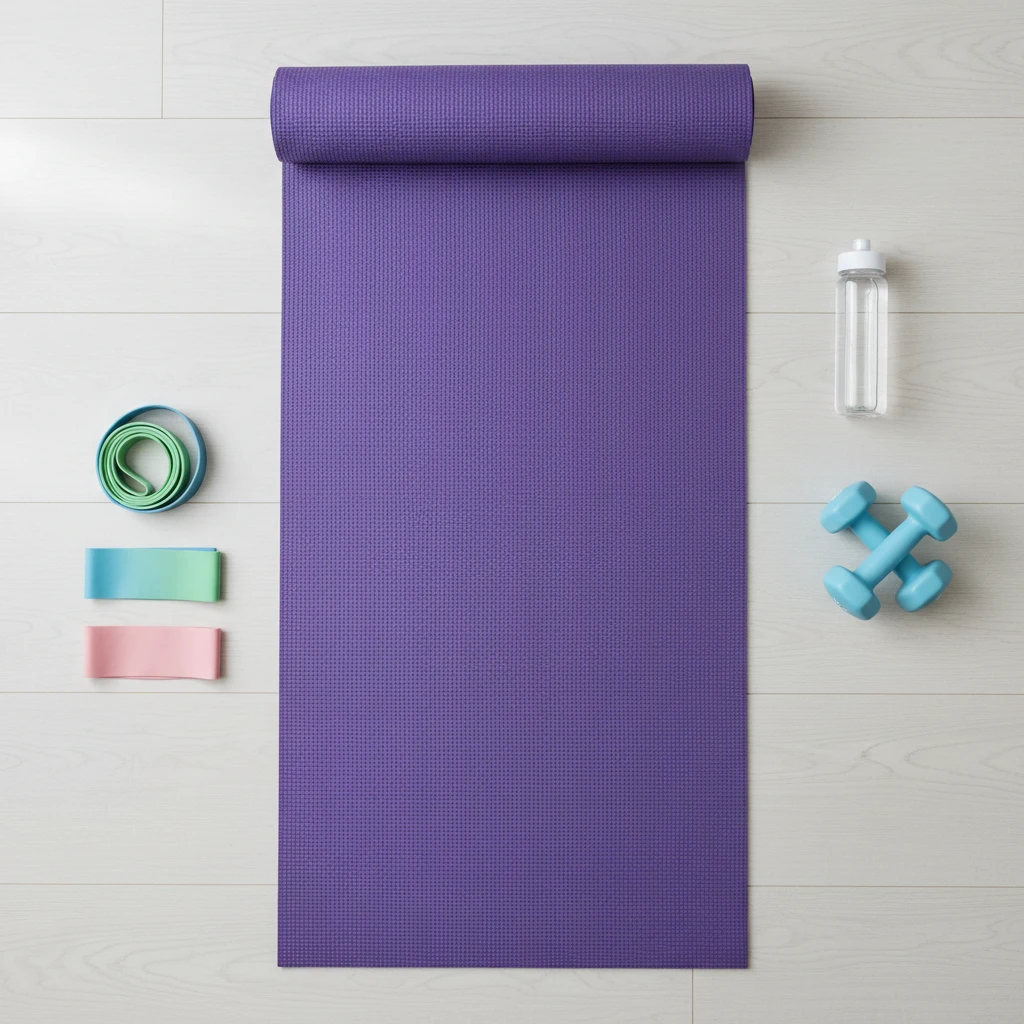
Now consider this: a complete home workout setup with resistance bands, adjustable dumbbells, and a yoga mat runs around $200–$400 one time. The math is so obvious it actually hurts a little.
But wait — there are hidden gym costs nobody ever talks about:
- Gas and parking: $15–$30 monthly
- Supplements sold at gym prices: $40–$60 monthly
- Specialized gym clothes you “need”: $20–$50 monthly
- Locker fees and extras: $10–$20 monthly
Suddenly, your “budget-friendly” gym membership is pushing $150+ monthly. Meanwhile, your home workout requires exactly zero ongoing costs. Zero. That’s money that could go toward a trip, a grandchild’s birthday, or simply staying comfortable in retirement.
Here’s the ROI breakdown on basic equipment that actually earns its keep:
- Resistance bands ($15–$25): Replace an entire cable machine system — and they’re wonderfully gentle on aging joints
- Adjustable dumbbells ($150–$300): Eliminate the need for multiple weight machines
- Yoga mat ($20–$40): Cushioning for floor exercises and stretching — your knees will genuinely thank you
- Kettlebell ($30–$60): Full-body functional movements in one simple, space-saving tool
That initial investment pays for itself within two to four months compared to gym costs. Everything after that? Pure savings — money that stays right where it belongs.
Equipment? What Equipment? (Your Body Weight Is Enough)
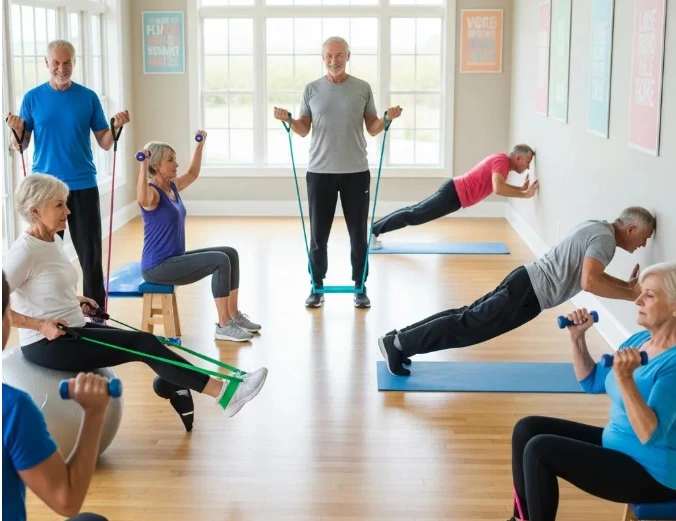
Here’s where home workouts really shine for retirees: your own body weight provides all the resistance you need for a genuinely effective full-body workout. No gym equipment required, no membership fees, no excuses.
And before you think “bodyweight exercises are for young people” — research published in the Journal of Aging and Physical Activity found that bodyweight resistance training significantly improves functional strength, balance, and mobility in adults over 60. That’s not a small thing. That’s the difference between carrying your own groceries and needing help with everyday tasks. That’s independence — and it’s worth fighting for.
Here’s how bodyweight exercises replace every major gym machine:
Push-up variations replace bench press and tricep machines:
- Wall push-ups — perfect starting point, easy on wrists and shoulders
- Counter push-ups — a natural step up from the wall
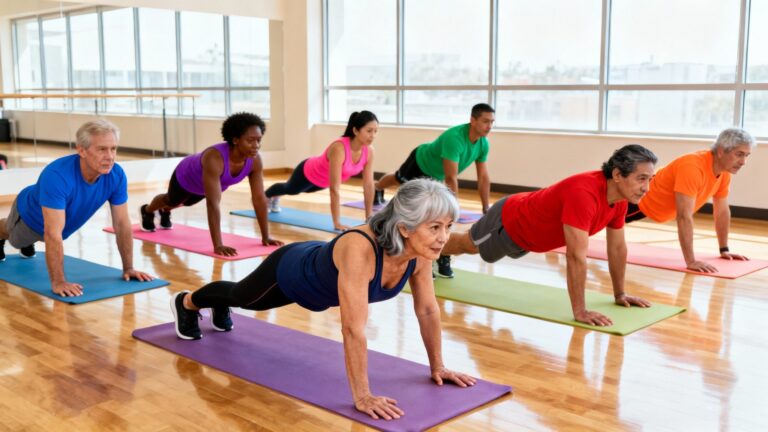
- Standard push-ups — chest and triceps
- Incline push-ups (hands on a chair) — upper chest, gentler on joints
Squat and lunge progressions replace leg machines:
- Sit-to-stand exercises — functional strength you use every single day
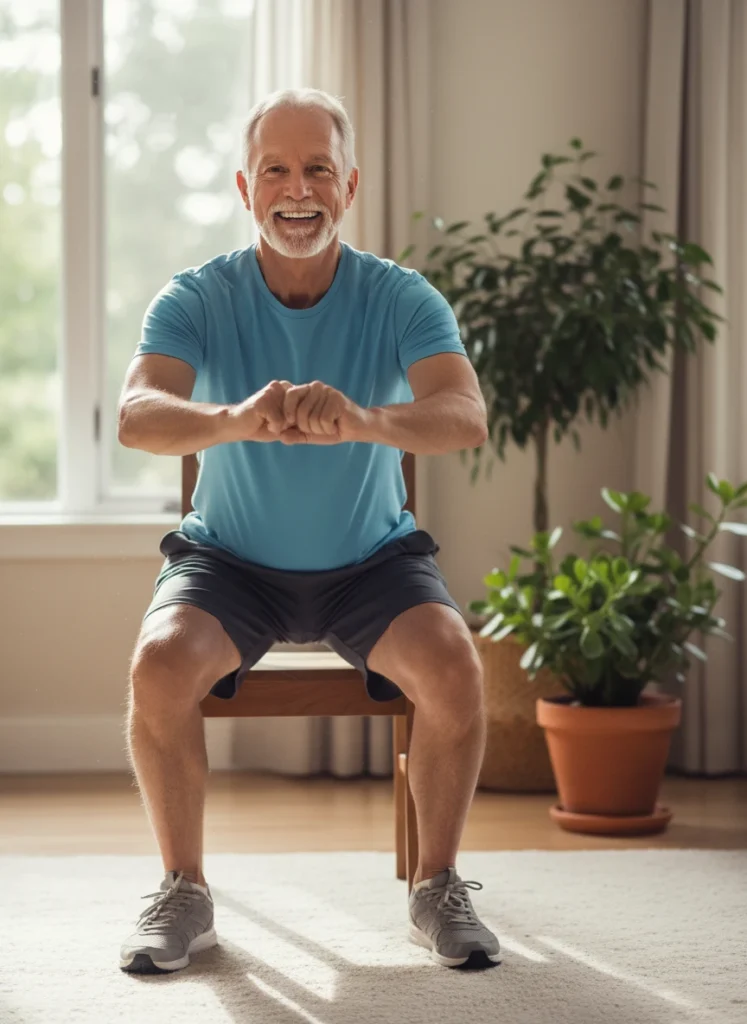
- Chair-assisted squats — foundational strength with a safety net
- Bodyweight squats — builds real lower body power
- Lunges — targets glutes and improves the balance that keeps you steady on your feet
Core exercises that beat any ab machine:
- Glute bridges — strengthens the posterior chain and supports lower back health
- Dead bugs — improves core stability and coordination
- Seated core twists — accessible for those with back sensitivities
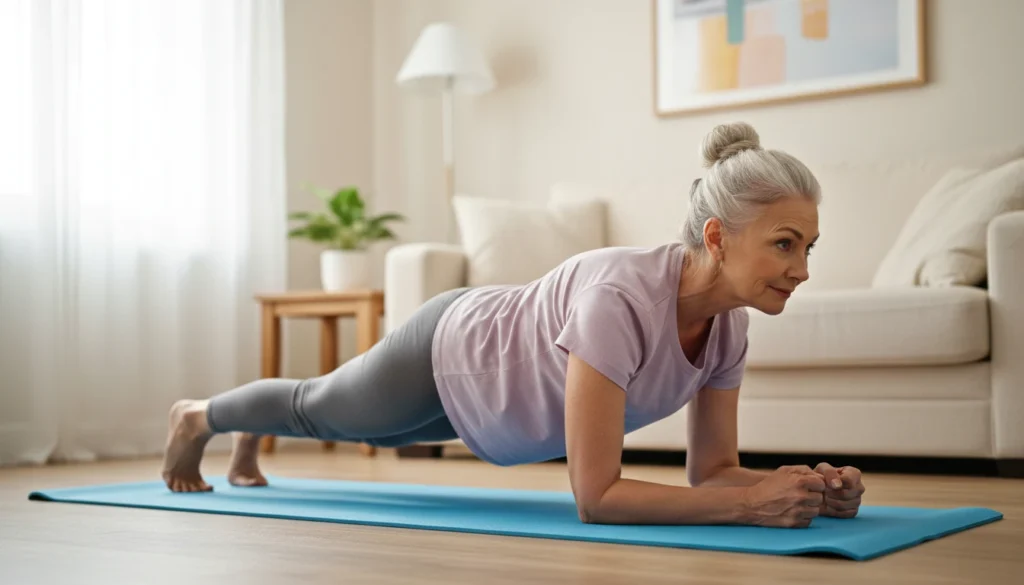
- Planks — engages the entire core, even in short holds
Progressive overload — the key to continuous improvement — happens through increased reps, longer hold times, more challenging variations, or adding resistance bands. No weights needed, no problem.
Key Takeaways:
- Bodyweight training improves functional strength, balance, and mobility in adults over 60
- Chair-assisted and wall variations make exercises accessible at any fitness level
- Progressive overload works perfectly without a single piece of gym equipment
When You’re Ready to Level Up: Smart Equipment Choices for Retirees
Once you’ve built a solid bodyweight foundation — and trust me, this takes longer than you think, and that’s perfectly fine — minimal equipment can unlock entirely new dimensions of your fitness routine.
Resistance bands are honestly the MVP of home gym equipment for retirees. For under twenty bucks, you get:
- Variable resistance that mimics weight machines
- The ability to target every muscle group
- Joint-friendly resistance curves that reduce injury risk
- Travel-friendly portability — perfect for snowbirds who split their time between homes
Adjustable dumbbells provide the strength training progression most people crave. Instead of buying fifteen different weights (who has space for that?), one adjustable set covers 5–50+ pounds per hand and grows with you as you get stronger.
Kettlebells offer the ultimate functional movement tool. A single kettlebell enables full-body strength training, cardiovascular conditioning, and improved coordination — all things that matter enormously for healthy, independent aging.
What NOT to buy: Those “As Seen on TV” contraptions promising magical results in ten minutes a day. Skip the ab rollers, thigh masters, and shake weights. I’ve learned this the hard way. Stick to time-tested equipment that serves multiple functions and won’t collect dust in the corner by February.
Privacy, Confidence, and the End of Gymtimidation
Gym anxiety is real — and it doesn’t get easier with age. Almost half of women report feeling intimidated at the gym, and around two-thirds of beginners skip exercises because they’re scared of being judged. Add in the self-consciousness that can come with an aging body — the slower movements, the modifications, the occasional grunt that escapes without permission — and the gym can feel downright unwelcoming.
Your own home eliminates this entirely. Like, completely.
In your living room, you’re free to:
- Learn proper form without feeling watched
- Grunt, sweat, and look ridiculous while exercising
- Try new movements without embarrassment
- Progress at your own pace — which in retirement, is exactly the right pace
- Wear whatever makes you comfortable (yes, even those ratty old shorts that your kids keep threatening to throw away)
This safe space becomes crucial for building confidence. When you nail your first real push-up or hold a plank for a full minute, there’s no audience — just your personal victory. These small wins compound into genuine confidence that spills over into other areas of life. You stand a little taller. You feel a little stronger. You stop letting Brad live rent-free in your head.
The privacy factor is particularly valuable for:
- Retirees returning to exercise after a long break
- Those recovering from injury or surgery
- Anyone working through balance or mobility challenges
- People dealing with body image concerns at any age
Building confidence at home often creates a natural stepping stone to other fitness spaces — group classes, walking clubs, community fitness programs. Many people start with home workouts, develop real skills and self-assurance, then venture out with their heads held high. And without Brad anywhere in sight.
Making Home Workouts Challenging and Effective (Yes, Even for Retirees)
The biggest myth about home workouts? That they can’t be challenging or effective. Tell that to anyone who’s attempted a proper circuit in their living room — they’ll laugh at you while catching their breath.
Progressive overload works perfectly with minimal equipment. Here’s how it looks in practice:
Time-based progressions:
- Week 1: 20-second planks
- Week 4: 45-second planks
- Week 8: 60-second planks
Rep-based progressions:
- Week 1: 5 wall push-ups
- Week 4: 10 counter push-ups
- Week 8: 15 full push-ups
A simple low-impact circuit for retirees:
- 45 seconds marching in place
- 15 seconds rest
- 45 seconds chair squats
- 15 seconds rest
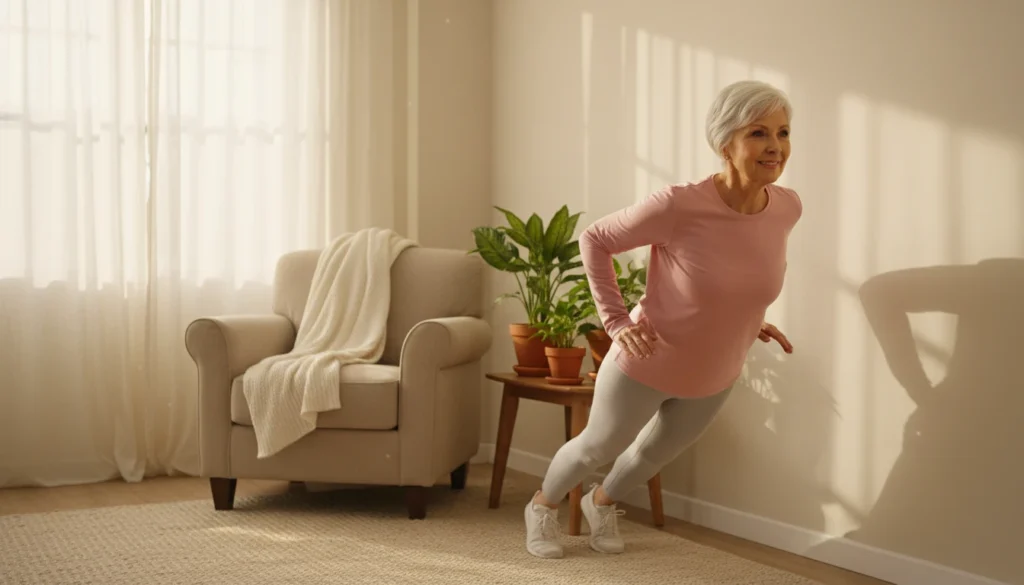
- 45 seconds standing core twists
- 15 seconds rest
- Repeat for 3–4 rounds
This type of circuit keeps your heart rate elevated, burns calories efficiently, and builds both cardiovascular endurance and muscular strength simultaneously. It’s gentle on joints and absolutely brutal on excuses.
Circuit training prevents boredom while maintaining intensity:
- Upper body circuit (wall push-ups, resistance band rows, overhead press)
- Lower body circuit (chair squats, glute bridges, calf raises)
- Full-body circuit (marching, sit-to-stands, standing twists)
- Flexibility and balance circuit (gentle yoga flows, single-leg stands, hip circles)
The key to avoiding plateaus without a gym full of equipment? Creativity and consistency. When chair squats become easy, try regular squats. When wall push-ups feel routine, move to the counter, then the floor. There’s always a way to make things harder — and always a way to make things safer. That balance is the sweet spot.
Structure and Accountability at Home
Working out at home doesn’t mean working out randomly — though I’ve definitely tried that approach and it doesn’t work. Structure matters just as much in your living room as it does in a commercial gym.
Creating a workout schedule starts with honest self-assessment. Three thirty-minute sessions weekly beats seven ambitious ninety-minute sessions that never happen. I’ve learned this lesson more times than I’d like to admit, and consistency trumps intensity every single time.
Sample weekly structure for retirees:
- Monday: Upper body strength (resistance bands + push-up variations)
- Wednesday: Low-impact cardio (walking, marching circuits, gentle movement)
- Friday: Lower body and core (squats, glute bridges, planks)
- Weekend: Active recovery (walking, stretching, yoga, gardening — yes, gardening counts)
You don’t need a gym buddy to stay accountable — virtual communities work just as well. Whether it’s a fitness app, a group chat with friends, or an online class, a little encouragement goes a long way. Retirement is a great time to find your people — even if they’re on the other side of a screen.
Tracking progress without gym equipment:
- Photo documentation of form improvements
- Timing how long you can hold challenging positions
- Counting reps and sets completed
- Measuring how you feel during and after workouts
- Tracking consistency streaks — even a simple calendar with X marks works beautifully
Setting up your space for success means designating a specific area for exercise, keeping any equipment visible, and removing barriers to starting. I keep my yoga mat rolled out in the corner of my living room as a constant reminder. It’s hard to ignore a yoga mat staring at you from across the room. Guilt, it turns out, is a surprisingly effective motivator.
Common Myths Busted (Let’s Get Real)
Myth: “You can’t build real muscle at home”
The evidence says otherwise. A ten-week study of older adults using only bodyweight exercises showed:
- 33% improvement in aerobic capacity
- 11% increase in core endurance
- 6% boost in lower-body power
Muscle growth depends on progressive overload and adequate protein — not location. Brad with his bicep curls can keep the squat rack.
Myth: “Home workouts aren’t intense enough”
Heart rate data from home circuit sessions often shows zones comparable to or exceeding traditional gym workouts. A simple round of chair squats, marching, and standing twists will have you questioning this myth pretty quickly — and reaching for a glass of water.
Myth: “You need a gym for cardio”
Marching in place, step touches, low-impact jumping jacks, and standing bicycle crunches provide excellent cardiovascular training. Many home cardio workouts burn more calories per minute than steady-state treadmill sessions — and you don’t have to wait for a machine or listen to someone else’s terrible music.
Myth: “Home workouts are boring”
This says more about creativity than home fitness. With thousands of free YouTube channels, app-based programs, and endless exercise variations, boredom comes from lack of exploration — not lack of options. Mix yoga, strength, dance, and balance work to keep things endlessly fresh. There’s a whole world of movement waiting in your living room.
Getting Started the Right Way
Setting up your home workout space doesn’t require a dedicated room or expensive renovation. I’ve worked out effectively in some pretty small spaces, and even a modest living room can accommodate a genuinely effective exercise routine.
Minimum space requirements:
- 6×6 feet for bodyweight exercises
- 8×8 feet for equipment-based workouts
- Clear ceiling height for any standing movements
Space optimization tips:
- Use foldable equipment that stores easily
- Choose multi-purpose items (resistance bands, adjustable weights)
- Clear the area before each workout session
- Utilize outdoor spaces — your backyard, porch, or driveway counts too
Beginner-friendly 2-week starter routine for retirees:
Week 1: Foundation Building
- Day 1: 10 chair squats, 5 wall push-ups, 20-second plank
- Day 3: 15 chair squats, 8 wall push-ups, 30-second plank
- Day 5: 20 chair squats, 10 wall push-ups, 40-second plank
Week 2: Building Momentum
- Day 1: 25 squats, 12 counter push-ups, 45-second plank
- Day 3: 30 squats, 15 counter push-ups, 60-second plank
- Day 5: 35 squats, 18 counter push-ups, 75-second plank
Motivation strategies that actually work:
- Schedule workouts like appointments — because they are
- Track progress visually (calendar, app, journal)
- Set small, achievable weekly goals
- Reward consistency milestones
- Connect with online fitness communities for retirees
Safety first — because nobody wants to explain a weird injury to their doctor:
- Always warm up before intense exercise
- Learn proper form through reputable sources
- Listen to your body and rest when needed
- Progress gradually — there’s no rush, and no one’s keeping score
- Stay hydrated throughout your workout
When to consider adding gym sessions:
- Desire for specialized equipment (heavier lifting)
- Need for group class energy and social connection
- Specific sport or activity training
- Advanced strength training progression
Remember, home workouts and gym sessions aren’t mutually exclusive. Many successful retirees combine both — using home workouts for daily consistency and gyms or community centers for variety and social connection. The goal isn’t to pick a side. The goal is to keep moving.
The beauty of starting at home? You develop discipline, proper form, and genuine fitness habits in a space that’s completely yours. When you do decide to explore other options, you’ll arrive as a confident, experienced exerciser — not an intimidated beginner who’s scared of Brad and his bicep curls.
Your living room is waiting. It’s got everything you need for an incredible workout. The only question left is: what are you going to do with it?
Frequently Asked Questions
Can I really build muscle effectively with just bodyweight exercises?
Absolutely — and the research backs it up. Studies show that bodyweight exercises can stimulate muscle growth through progressive overload, whether that’s increasing reps, adjusting exercise difficulty, or extending workout duration. Research demonstrates significant strength gains from bodyweight-only programs, even in older adults. The key is progression: advancing from wall push-ups to counter push-ups to full push-ups provides continuous muscle-building stimulus. Brad’s bicep curls have nothing on a proper progression plan.
How much space do I need for an effective home workout?
You can achieve excellent results in as little as 6×6 feet of clear floor space — I’ve done it in apartments that made closets look spacious. This allows for most bodyweight movements including squats, lunges, push-ups, and planks. For equipment-based workouts, 8×8 feet provides more comfort. Many effective exercises require even less — wall push-ups, calf raises, and standing movements need just 3×3 feet. Sometimes the best workouts happen in the smallest spaces.
What’s the minimum equipment I need to get started?
Technically, zero. Your body weight provides sufficient resistance for strength training, cardio, and flexibility work. However, a basic yoga mat ($20–$40) adds comfort and grip during floor exercises — and your knees will appreciate it. If you want to expand your options, resistance bands ($15–$25) offer the biggest bang for your buck, effectively replacing an entire gym’s worth of cable machines, and they’re wonderfully gentle on aging joints.
How do I stay motivated to work out at home without a trainer or gym environment?
Create structure through scheduled workout times, track your progress visually, and connect with virtual fitness communities for accountability. Set small, achievable weekly goals rather than overwhelming long-term targets. Many retirees find success with workout apps that provide guided sessions, or following along with live classes that simulate group fitness energy from home. Sometimes the best motivation is simply removing all the barriers to getting started — and in retirement, you finally have the time to do exactly that.
Are home workouts suitable for retirees with joint pain or mobility limitations?
Absolutely — and in many ways, home workouts are better for those with joint concerns. You can modify every single exercise to suit your body, progress at your own pace, and never feel pressured to keep up with anyone else. Chair-assisted squats, wall push-ups, and gentle resistance band work are all highly effective and joint-friendly. Always consult your doctor or physical therapist before starting a new exercise program, especially if you’re managing a specific condition. The National Institute on Aging has excellent resources on safe exercise for older adults — worth bookmarking. Your body has carried you this far — treat it with the respect it deserves.




4 Comments
Comments are closed.