
Sedentary Lifestyle Health Risks in Retirement: How Sitting Too Much Can Quietly Change Everything
Discover the real sedentary lifestyle health risks in retirement — from heart disease to mood changes — and get simple, practical strategies to move more and feel better starting today.
Key Takeaways
- A sedentary lifestyle in retirement is sneakier than it looks — without a workday forcing you to move, sitting hours pile up fast without you noticing
- The most serious sedentary lifestyle health risk in retirement is cardiovascular disease — and it builds quietly, without dramatic warning signs
- Prolonged sitting affects blood sugar, fat metabolism, circulation, mood, muscle strength, and joint health — often all at once
- You can exercise regularly and still sit too much — uninterrupted sitting is its own separate risk factor
- Breaking up sitting every 30–60 minutes with even 2-minute movement bursts makes a measurable difference
- 150 minutes of moderate activity per week is the baseline goal — and brisk walking counts completely
- Small, repeatable habits beat dramatic fitness overhauls every single time
I want to tell you something I wish someone had told me before I retired.
Your job — as exhausting, frustrating, and occasionally soul-crushing as it sometimes was — was secretly one of the best things keeping your body healthy.
Not because work is inherently good for you. But because it forced you to move. You walked to meetings you didn’t want to attend. You stood at the printer waiting for documents nobody really needed. You paced during phone calls. You rushed through parking lots in the rain, muttering things under your breath that we won’t repeat here. None of it felt like exercise. None of it was glamorous. But your body was moving — and it was quietly doing your heart, your metabolism, and your mood a lot of favors you didn’t even know you were receiving.
Then retirement happened. And all of that built-in, accidental movement just… evaporated.
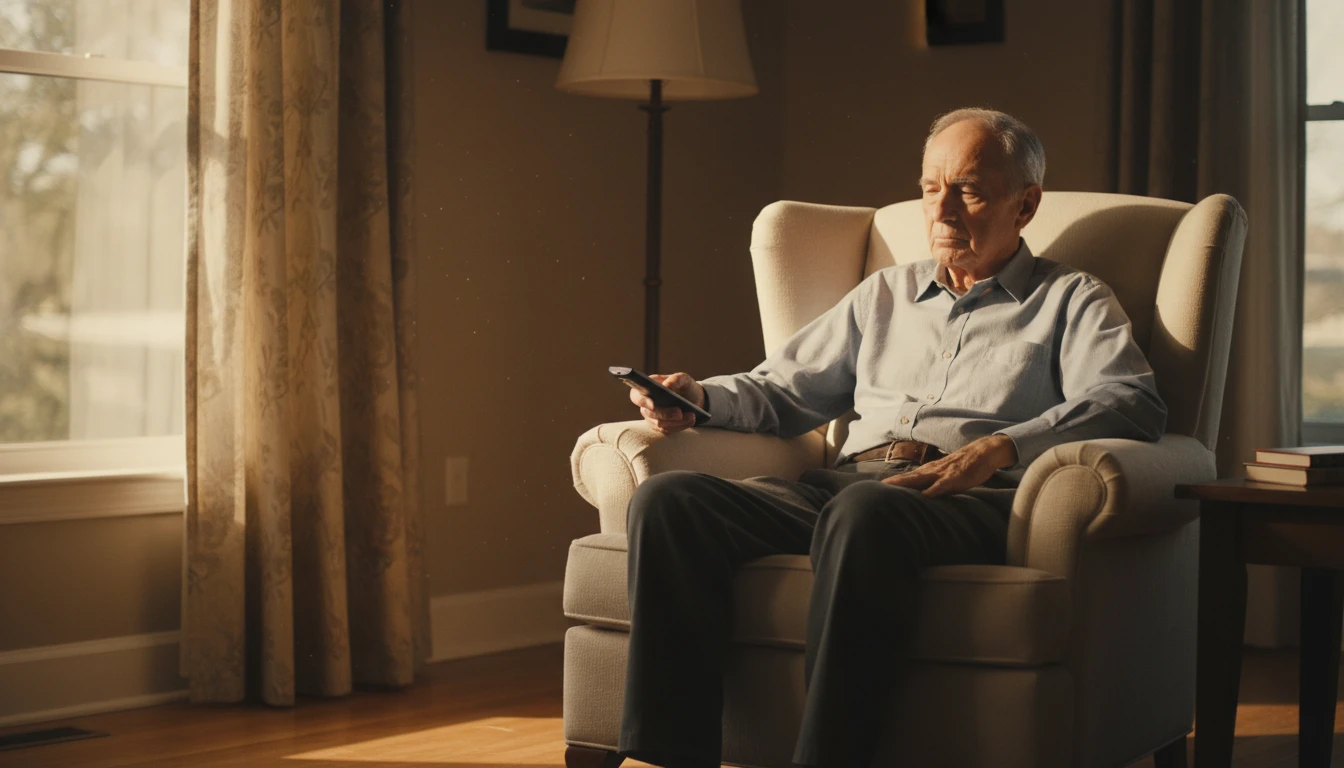
I noticed it in my own life about eight months in. I’d gone from a reasonably active workday to spending long, comfortable stretches in my favorite chair — reading, watching documentaries, falling down internet rabbit holes about things I’d never actually buy. It felt like freedom. And in many ways, it genuinely was. But my body was sending signals I wasn’t paying close enough attention to. More stiffness in the mornings. Less energy by afternoon. A general “blah” feeling I kept blaming on the weather, the season, the news — anything but the obvious.
It wasn’t the weather.
It was the chair.
So let’s talk about what’s actually happening when we sit too much in retirement — and what the research says about the most serious consequences. Because understanding the sedentary lifestyle health risks in retirement isn’t about scaring yourself into buying a treadmill you’ll use as a clothes rack. It’s about making smarter choices with the body you have, in the life you’re actually living right now. Not the life you had at 45. Not the life you’re planning to have “someday.” This one. Today.
What “Sedentary” Actually Means — And Why Retirement Is the Perfect Trap

Before we get into the health consequences, let’s clear up a misconception that trips up a lot of people — including people who genuinely consider themselves active.
Being sedentary doesn’t mean you never exercise. I know retirees who walk every single morning, swim three times a week, play golf on weekends — and still spend 9 to 11 hours a day sitting. And that combination is more problematic than most people realize, because we tend to think of exercise as the whole story. It’s not.
Here’s the distinction that actually matters:
- Sedentary behavior means any waking activity that uses very little energy — generally 1.5 METs or less. Sitting, reclining, watching TV, reading, driving. All of it counts, even the enjoyable stuff.
- Physical inactivity means not meeting exercise guidelines — typically at least 150 minutes of moderate-intensity aerobic activity per week.
You can check the “exercise” box and still rack up dangerous amounts of uninterrupted sitting time. Your body notices the difference, even when you don’t.
The simplest way I think about it: exercise is a deposit. Sitting is a withdrawal. One morning walk doesn’t erase eight hours in a chair, just like one salad doesn’t erase a weekend of “my emotional support nachos.” The math doesn’t work that way — and neither does your cardiovascular system.
A 2021 study published in Physical Therapy found that sedentary behavior actually increases during the transition from working life to retirement — which makes complete sense when you think about it. The built-in movement of a workday disappears overnight, and nothing automatically replaces it. Without a meeting to walk to, a colleague stopping by your desk, or a commute forcing you upright, it’s genuinely easy to sit for three, four, five hours without realizing it.
And the worst part? It doesn’t feel like anything. That’s the trap.
The Big One: Cardiovascular Disease
Let’s answer the most important question directly, because you deserve a real answer — not a list of vague warnings wrapped in medical jargon designed to make you feel bad and then sell you a supplement.
The most serious sedentary lifestyle health risk in retirement is cardiovascular disease.
That’s the broad category that includes heart disease, stroke, coronary artery disease, and related blood vessel problems. It’s the most consistently documented outcome in the research, it’s strongly tied to prolonged inactivity, and it’s the one that tends to do the most damage before you even know it’s happening.
A large meta-analysis published in The Lancet estimated that physical inactivity is a major contributor to global mortality and is linked to a meaningful portion of coronary heart disease and type 2 diabetes worldwide. And a 2024 study highlighted by UPMC HealthBeat found that people who sat at work faced a 34% higher risk of death from cardiovascular disease compared to those who didn’t. That’s not a “maybe.” That’s a “we can measure it and the number is alarming.”
When you’re inactive, these cardiovascular risk factors tend to climb — often simultaneously, often silently:
- Higher blood pressure — Movement helps maintain flexible blood vessels and healthy regulation. Without it, vessels stiffen and pressure rises. Gradually. Quietly.
- Worse cholesterol profile — Inactivity can lower HDL (“helpful” cholesterol) and raise triglycerides, a combination that accelerates plaque buildup in arteries.
- Weight gain and central obesity — Belly fat, in particular, is strongly linked to cardiovascular risk — more so than fat stored elsewhere in the body. And it tends to accumulate in retirement faster than most people expect.
- Higher blood sugar and insulin resistance — A direct pathway into vascular damage and, eventually, type 2 diabetes.
- Chronic low-grade inflammation — A 2025 study in Frontiers in Public Health found that elevated sedentary behavior was positively correlated with systemic inflammation markers — the kind that quietly feeds arterial plaque formation and cardiovascular events.
I think about a neighbor of mine — retired teacher, lovely guy, walked his dog every morning without fail. He thought he was doing everything right. And in many ways, he was. But he was also spending the rest of his day almost entirely seated. Reading, watching the news, working on his model trains. When his doctor flagged his blood pressure and cholesterol at a routine checkup, he was genuinely shocked. He wasn’t inactive, he said. He walked every day.
He was right. And he was also sitting too much. Both things were true at the same time.
The hopeful part — and I genuinely mean this — is that movement reverses many of these trends. Not perfectly, not instantly, but meaningfully. The research isn’t ambiguous on this. Movement helps. Sitting less helps. Both together help most.
What Prolonged Sitting Does Inside Your Body
Your body was built for movement. Walking, squatting, carrying, climbing, doing the occasional triumphant fist pump when you finally figure out the TV remote. When you stop moving for long stretches, several systems quietly downshift in ways that add up over time.
Your Metabolism Gets Sluggish
Research reviewed in Park et al. (2020) highlights how prolonged sitting affects enzymes and pathways involved in fat and sugar metabolism. Lipoprotein lipase — an enzyme important for breaking down fats — becomes less active. Muscle glucose uptake decreases. Translation: your muscles become less effective at managing blood sugar, and your body handles fat less efficiently.
For retirees, this matters even more because muscle mass naturally declines with age anyway. Less muscle means a lower metabolic rate to begin with — and sitting accelerates that decline. It’s a double hit that most people don’t see coming until they’re already dealing with the consequences.
Your Circulation Slows Down
When you move, your muscles help pump blood back toward the heart. When you sit for long periods, that pumping action stops, blood flow slows, and vascular function suffers. Over time, this contributes to higher cardiovascular strain and increases the risk of blood clots — particularly in the legs.
I think about it like a garden hose left sitting in the sun. Water flows fine when it’s moving. Let it sit still for hours, and things start to get stagnant. Your blood vessels aren’t that different. They need flow to stay healthy.
Your Nervous System Stays in Low-Grade Stress Mode
Long sedentary stretches can involve increased sympathetic nervous system activation — the “revved up” state that doesn’t help blood pressure or recovery. It’s subtle. It’s cumulative. And for retirees already managing blood pressure, it’s worth paying attention to — even if it doesn’t feel like anything in the moment.
It’s not that sitting is evil. It’s that hours of uninterrupted sitting — day after day, week after week — adds up like tiny interest charges on a credit card you forgot you had. By the time you notice the balance, it’s already significant.
Metabolic Syndrome and Type 2 Diabetes: The Quiet Companions
Cardiovascular disease may be the most serious sedentary lifestyle health risk in retirement, but type 2 diabetes is a close companion on this road trip nobody asked for — and the two are more connected than most people realize.
Your muscles are one of the biggest consumers of glucose in your body. When you move, muscles pull glucose from the bloodstream efficiently. When you don’t, the body has to produce more and more insulin to get the same job done. Over time, cells respond less well to insulin — this is insulin resistance, the gateway to type 2 diabetes and metabolic syndrome.
A classic review by Asker Jeukendrup (2009) summed up a hard truth: obesity and physical inactivity are established risk factors for type 2 diabetes, and a large share of people with type 2 diabetes also live sedentary lives. It’s not just one cause, but the pattern is consistent.
Metabolic syndrome — a cluster of risks including high blood pressure, elevated blood sugar, high triglycerides, low HDL cholesterol, and increased waist circumference — is particularly common among sedentary retirees. And notice how many of those also feed cardiovascular disease? That’s not a coincidence. Think of inactivity as the first domino: metabolic issues fall first, cardiovascular disease tends to be the big crash at the end.
For retirees, this matters even more because the metabolic changes of aging — reduced insulin sensitivity, changes in body composition, slower recovery — mean the threshold for harm is lower. The same amount of sitting that was manageable at 45 may be genuinely risky at 65 or 70. That’s not meant to be alarming. It’s meant to be honest. And honesty, in this case, is actually the most useful thing I can offer you.
Here’s something I’ve noticed in conversations with other retirees: a lot of us gained weight in the first year or two of retirement and couldn’t figure out why. We weren’t eating dramatically differently. We weren’t stressed. We were actually happier. But we were also moving significantly less than we realized — and our bodies were quietly keeping score.
Mental Health: Yes, Sitting Too Much Can Mess with Your Mood
If you’ve ever felt more anxious, flat, or vaguely irritable after a long day of sitting, you’re not imagining things — and you’re not just “getting older.” There’s real biology behind it, and it’s worth talking about openly.
Studies consistently find associations between higher sedentary time and worse mental health outcomes, including depression and anxiety. A 2023 review in BMC Public Health reported that sedentary behavior, physical inactivity, and poor diet may lead to an increased risk of anxiety, depression, and psychological distress. The relationship isn’t simply “sad people sit more” — there may be genuine causal pathways running in both directions.
In plain language: movement helps mood, and too much inactivity can make your brain feel like it’s buffering.
This is particularly relevant for retirees, because retirement itself can bring unexpected emotional challenges — loss of professional identity, changes in social connection, more unstructured time than expected. I’ve talked to retirees who described their first year as quietly disorienting in ways they hadn’t anticipated. Not unhappy, exactly. Just… untethered. And when you add prolonged sitting to that mix, you’re not doing your mental health any favors.
I’ve had days where I couldn’t figure out why I felt so flat — and then I realized I hadn’t left the house or moved meaningfully in two days. The connection is real. And the fix, annoyingly, is also real: get up and move. Even when you don’t feel like it. Especially when you don’t feel like it.
The World Health Organization notes that regular physical activity reduces the risk of depression and dementia by a meaningful margin — and improves overall quality of life. That’s not a small thing. That’s the whole ballgame.
A 10-minute walk doesn’t solve life. But it often makes life feel about 12% more solvable. I’ll take that deal every single time.
Muscles, Joints, and Bones: The Stuff You Feel Every Morning

Your muscles and joints love movement the way houseplants love sunlight. Starve them of it and… well, they don’t thrive.
Sedentary lifestyle health risks in retirement feel very immediate here: tight hips, achy lower back, stiff shoulders, weaker glutes, less balance. Over time, less strength and mobility makes daily life harder — carrying groceries, climbing stairs, keeping up with grandkids, getting up off the floor without making a sound effect.
And here’s the sneaky part: it’s not only “lack of exercise.” It’s “same position for hours.” Even a strong person can develop pain patterns if they’re stuck in one posture all day.
Muscles that aren’t used regularly lose size and strength. Joints that don’t move through their full range of motion get stiff. Connective tissue adapts to the positions you keep — so if you’re always in a sitting posture, your hip flexors shorten and your glutes basically go on an unpaid sabbatical.
A 2025 review in Nutrition, Metabolism and Cardiovascular Diseases found that sedentary behavior and physical inactivity are strictly linked to frailty and pre-frailty in older adults — and that sarcopenia (muscle loss) is a major component of that frailty. In plain English: sitting too much doesn’t just make you stiff. Over time, it can make you fragile.
This can contribute to:
- Increased strain on the lower back
- Reduced stability around hips and knees
- Higher risk of falls or injuries — one of the most serious and underappreciated health risks retirees face
- Lower bone density, increasing fracture risk
The fix isn’t a single magical stretch (I wish). It’s regular, varied movement — and we’ll get to exactly what that looks like in a moment.
Sedentary Behavior and Longevity: The Honest Conversation
Okay, deep breath — this is the heavy section. But it’s also the most important one.
Prolonged sedentary time is associated with higher risk of early death, even after accounting for bouts of exercise in some studies. A widely cited study by Koster and colleagues (2012) found that objectively measured sedentary time was linked to higher all-cause mortality, independent of moderate-to-vigorous physical activity.
In normal-human terms: a 30-minute workout is fantastic, but it doesn’t magically erase an entire day of being nearly motionless.
That’s why many researchers now talk about two separate goals:
- Get enough weekly exercise
- Reduce total sitting time — or at least break it up
Both matter. They’re not interchangeable.
The World Health Organization estimates that 4–5 million deaths per year could be averted if the global population were more active. And a 2020 analysis discussed in ScienceDaily estimated that existing levels of physical activity are already preventing about 3.9 million early deaths worldwide each year — a reminder that movement helps, even when it’s not perfect.
I also like a more optimistic framing: the BMC Public Health systematic review on sedentary behavior and health outcomes in older adults found consistent evidence that reducing sitting time improves outcomes. The research isn’t ambiguous. You have more control over this than you might think.
Practical Strategies That Actually Work for Retirees

If the phrase “lifestyle change” makes you picture throwing out all your furniture and joining a triathlon club, relax. We’re going for small, repeatable wins that fit the life you’re actually living — not the life of a 35-year-old training for a half marathon.
Hit the Baseline Exercise Goal
The target is:
- 150 minutes per week of moderate-intensity activity, or
- 75 minutes per week of vigorous activity
- Plus some strength training at least two days per week
That can be five 30-minute brisk walks. Three longer bike rides. Swimming twice a week. Dancing in your kitchen like you’re the main character in a movie nobody else is watching. Your heart does not care if it’s “cool.” It just cares that you’re moving.
And if 150 minutes sounds like a lot right now? Start with 10 minutes a day. Seriously. Ten minutes. Build from there. Progress beats perfection every single time.
The Hourly Interrupt Rule
Set a timer. Every hour, stand up and move for at least 2 minutes.
It can be:
- A short walk around the house or yard
- A few flights of stairs
- A quick stretch
- Refilling your water glass (hydration wins twice)
I started doing this with a phone timer and immediately learned two things: it works, and I do not enjoy being told what to do by my own phone. Still worth it. My phone is right. I hate that.
Movement Snacks
Movement snacks are short bursts of activity that don’t require a wardrobe change, a gym bag, or any kind of motivational speech to yourself in the mirror.
- 10 squats while the coffee brews
- A 7-minute walk after lunch
- Carry groceries in two trips (the least glamorous functional training in existence — and also the one I’m most likely to actually do)
- A quick bodyweight routine before your shower
These add up more than you’d think. And they’re often easier to maintain than one heroic workout you dread all morning and eventually talk yourself out of.
Make Sitting Slightly Less Convenient
- Put your phone charger across the room
- Take calls standing up or walking
- Use a standing desk occasionally
- Park a little farther away
- Walk to a neighbor instead of texting
The goal is to create tiny speed bumps in your sedentary routine — nothing dramatic, just enough friction to get your body moving more often throughout the day. Small inconveniences, genuinely big payoffs.
Find an Active Hobby You Actually Enjoy
This matters more than people admit. Consistency beats intensity every single time — and you will not be consistent at something you hate.
Good options for retirees:
- Walking with a podcast or audiobook you love (this one changed my life, genuinely)
- Swimming — low impact, high payoff, and the pool is usually full of people your age who are also just trying their best
- Cycling — outdoors or stationary
- Gardening — sneakier exercise than it looks, and deeply satisfying in a way that a treadmill will never be
- Pickleball — it’s basically cardio wearing a fun hat, and the social element is genuinely wonderful. I’ve never met an unhappy pickleball player.
- Dance classes, yoga, tai chi
If you enjoy it, you’ll do it. If you hate it, you’ll ghost it like a bad first date. Choose accordingly. Your future self will thank you.
Frequently Asked Questions
If I exercise regularly, does it cancel out sitting all day?
It helps significantly — but long uninterrupted sitting still carries its own risks, separate from exercise habits. The best combination is regular exercise plus breaking up sitting time throughout the day. Think of them as two different tools, not interchangeable ones. You need both.
What’s the easiest first step if I’m starting from zero?
Walking. Seriously. Start with 10 minutes a day. Build from there. Your body doesn’t need perfection — it needs a pattern. Ten minutes every day beats one heroic 90-minute session once a week, every time. Start embarrassingly small. It works.
Do I need a gym to reduce cardiovascular risk?
Absolutely not. Brisk walking, cycling, home workouts, stairs, dancing, gardening — these all count. Your heart responds to effort, not memberships. Save the money. Buy better walking shoes.
How quickly do benefits show up?
Some changes — like improved mood and energy — can appear within days. Cardiometabolic improvements typically begin within weeks of consistent activity. Give it a month before you judge it. The key is staying with it long enough for the changes to compound.
Is it too late to start if I’ve been sedentary for years?
No. Full stop. The research is clear that movement benefits older adults at any starting point. You won’t undo decades of inactivity overnight, but you can meaningfully reduce your risk and improve your quality of life starting today. The best time to start was years ago. The second-best time is right now — after you finish reading this.
What role does nutrition play?
Nutrition won’t replace movement, but it can make movement easier. A balanced diet supports weight management and steady energy. Prioritize fruits, vegetables, whole grains, lean proteins, and adequate hydration. Limiting ultra-processed foods and added sugars helps reduce metabolic strain — especially if you’re still building your activity routine.
The Bottom Line
The sedentary lifestyle health risks in retirement are real — and they’re sneakier than most people expect. Prolonged sitting raises blood pressure, worsens cholesterol and blood sugar control, contributes to weight gain, weakens muscles and joints, and nudges the body toward metabolic dysfunction — all of which increase heart and stroke risk over time.
But here’s the part I want you to carry with you long after you close this tab: this is also one of the most preventable situations in medicine. You don’t need to transform into a fitness influencer or start speaking exclusively in motivational quotes. You just need to move more often, sit a little less, and treat your body like it wasn’t designed to be a very comfortable piece of furniture.
Start small:
- Get your weekly movement in — even if it’s just walking
- Break up long sitting stretches with short movement breaks
- Find an activity you actually enjoy
- Stack tiny habits until they feel normal
Your chair will still be there when you get back. It’s not going anywhere. But you? You’ve got places to be. And a heart that’s counting on you to get there.




One Comment
Comments are closed.