

Go Greening in Retirement: Your Practical Guide to Sustainable Living That Saves Money and Feels Good
Go greening in retirement means lower bills, a healthier home, and a legacy worth leaving — here’s how to start without the overwhelm.
I didn’t become a sustainability person because I had a revelation. I became one because my power bill made me angry.
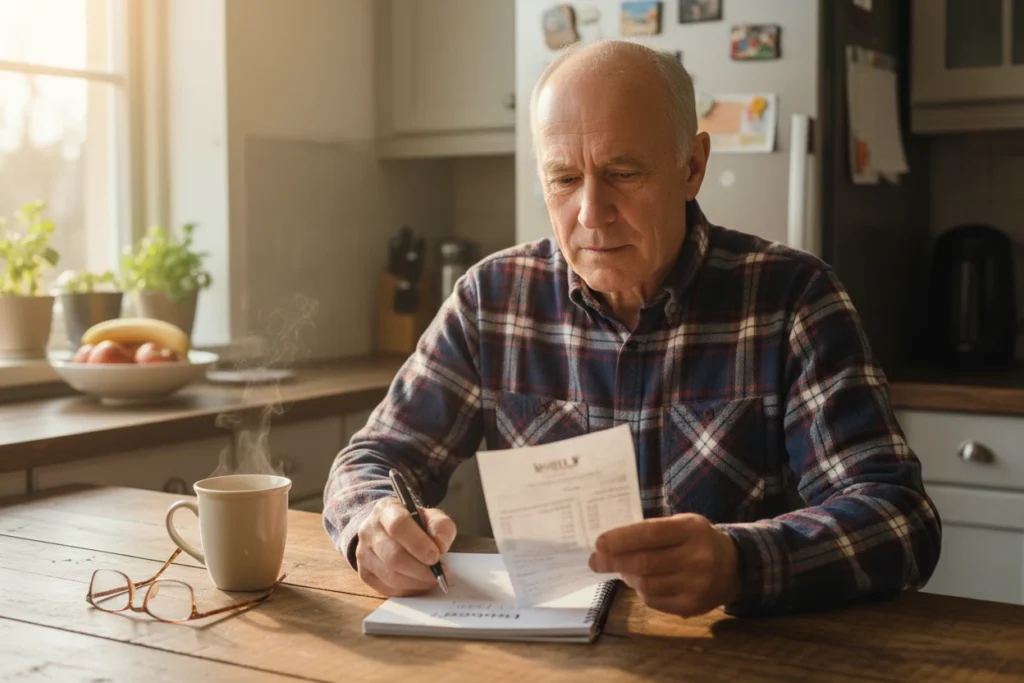
It was a Tuesday — the kind of unremarkable Tuesday that retirement is full of, which I mean as a compliment — and I was sitting at the kitchen table opening mail like a responsible adult. The utility bill landed in front of me. I stared at it. I stared at it some more. Then I said something I won’t repeat here, because this is a family-friendly website and also my grandchildren occasionally read over my shoulder.
That was the beginning. Not a documentary. Not a climate summit. A utility bill and a bad mood.
What followed was a genuinely surprising journey: a few small swaps, a lot of label-reading, one very satisfying DIY cleaning experiment, and a slow realization that going green in retirement isn’t about sacrifice at all. It’s about running your home — and your life — more intelligently. Lower bills. Cleaner air. Less stuff you don’t need. More mornings outside, which retirement hands you for free if you’re paying attention.
Households that make smart efficiency moves commonly trim utility costs by up to 30%. On a fixed income, that’s not a rounding error. That’s real money, back in your pocket, every single month, because you swapped some lightbulbs and stopped heating an empty house.
This guide is everything I wish someone had handed me at the start. What works, what’s overhyped, what the research actually says, and how to build habits that stick even on the weeks when motivation is nowhere to be found and you’re eating cereal for dinner. Because those weeks happen. And a good system survives them.
Key Takeaways:
- Smart efficiency moves can cut household utility bills by up to 30% — real savings on a fixed income
- Go greening is about practical, compounding choices — not perfection or dramatic lifestyle overhauls
- Retirement is the ideal time to start: you have the time, the motivation, and often the home equity to invest wisely
- Federal incentives (30% solar tax credit, up to $7,500 EV credits) make green upgrades more accessible than ever
- Indoor air is often 2–5x more polluted than outdoor air — simple swaps make a measurable difference
- Sustainable habits compound quietly: small changes in year one become significant savings by year five
- The goal isn’t sacrifice — it’s a smarter, healthier, more intentional way to run your home and your life
What “Go Greening” Actually Means — And What It Doesn’t
Let’s get this out of the way immediately, because the phrase carries a lot of baggage it doesn’t deserve.
Go greening is not cold showers, guilt trips, or a personality transplant. It’s not giving up your car, your air conditioning, or your occasional burger. It’s not a competition, and there’s no certificate at the end for whoever suffers the most. I want to be very clear about this, because I’ve watched smart, thoughtful people dismiss the whole idea because they assumed it required a level of sacrifice they weren’t willing to make — and they were completely wrong.
What it actually is: everyday decisions that help your budget and the planet at the same time. Smart consumption. Energy efficiency. Less waste. Choices that align with how you actually want to live in retirement — with intention, with less clutter, and with more of your money staying where it belongs.
Since the 2015 Paris Climate Agreement, sustainability shifted from “nice idea” to “smart strategy.” The UN Sustainable Development Goals gave it a practical framework. And for retirees specifically, the timing couldn’t be better: you’re at a life stage where you’re already reconsidering what you own, what you spend, and what kind of footprint you want to leave. Go greening fits that moment so naturally it almost feels like it was designed for it.
There’s also a distinction worth making between authentic sustainability and what the marketing world calls greenwashing — vague claims, leafy packaging, zero proof. The 2023 Edelman Trust Barometer found 86% of consumers expect real action on climate, not marketing vibes. My personal two-click test: look for third-party certifications and actual year-over-year data. If a brand won’t share numbers, assume it’s performance art. You’ve been around long enough to spot the difference between substance and spin.
The Four Pillars That Make It Sustainable (Not Just a Phase)
- Energy efficiency: using less to do the same — or more
- Circular thinking: choosing products designed to last, be repaired, or be returned to the earth
- Mindful consumption: buying less, choosing better, finishing what you have before buying more
- Community connection: sustainability is more fun — and more effective — when it’s social
Why Retirement Is the Perfect Time to Go Green

I’ve thought about this more than is probably normal, and I genuinely believe retirees are the most naturally positioned group to lead on this. Not because we’re more virtuous — we’re not — but because we have something working people almost never have: time, stability, and a reason to think long-term.
You have time. The number one barrier most working people cite for not making sustainable changes is time. You don’t have that problem anymore. You can research the solar installer, attend the farmers market on a Tuesday morning, and actually read the energy audit report instead of filing it in the “I’ll get to this someday” drawer where good intentions go to quietly expire. That drawer. We all have it. Retirement is when you finally open it.
You have stability. Many retirees own their homes outright or have significant equity — which means you can make investments that pay back over 5–20 years. You’re not moving every two years. The math works in your favor in a way it simply doesn’t for renters or people early in their careers. Solar panels, efficient appliances, better insulation — these are long-game moves, and retirement is the long game.
You have motivation. Grandchildren have a way of clarifying priorities. So does having more time to read, think, and reflect on what kind of world you’re leaving behind. I’m not trying to be heavy about it — but it’s real, and it matters, and it’s one of the most powerful motivators I’ve seen for retirees who go all-in on this. You stop thinking about next quarter and start thinking about next generation. That shift changes everything.
You have influence. Retirees are often the most respected voices in their families and communities. When you make a change, people notice. Stanford research suggests sustainable behavior adoption jumps roughly 60% with visible social proof. You’re not just changing your own footprint — you’re quietly modeling something for everyone watching. Your neighbor. Your adult kids. Your grandchildren who are paying more attention than you think.
The Real Benefits: Money, Health, and Something That Feels Like Purpose
The Financial Case (Let’s Start Here, Because It’s Compelling)
On a fixed income, every dollar of savings matters more than it did when a paycheck was arriving every two weeks. The financial case for go greening in retirement is genuinely strong — and it compounds over time in a way that makes the early effort very much worth it.
Lighting: LEDs use roughly 75% less energy than incandescents and last about 25 times longer. I swapped my most-used bulbs one Saturday afternoon. The next bill was about $40 lighter. That’s $480 a year for an afternoon of work and maybe $60 in bulbs. I’ve made far worse investments with far more effort, and I’m not going to pretend otherwise.
Heating and cooling: Smart or programmable thermostats typically save around $180 a year by not conditioning empty rooms. In retirement, your schedule is more flexible — which means you can actually program it to match how you live now, not how you used to live when you were out of the house for ten hours a day and the thermostat was running on a schedule designed for a life you no longer have.
Solar: The numbers have shifted dramatically in the past decade. Solar can deliver 200–300% ROI over 20 years, with payback often in 5–10 years depending on your location and utility rates. The 30% federal tax credit (available through 2032) makes the upfront cost significantly more manageable. Net metering means your panels can earn credits when you’re generating more than you use — which, if you’re home during peak sun hours, happens more than you’d think. And in retirement, you’re home during peak sun hours. A lot.
Incentives worth knowing:
- 30% federal tax credit on solar installation through 2032
- Up to $7,500 in EV tax credits for qualifying vehicles
- State rebates for efficient appliances, heat pumps, and weatherization
- Property Assessed Clean Energy (PACE) financing in 37 states — spreads costs over 10–20 years via your property tax bill, so there’s no large upfront payment required
The bottom line: a retiree who makes smart efficiency moves in year one and layers in solar over the next few years can realistically save $1,500–$3,000 annually by year three. Over a 20-year retirement, that’s a number worth sitting with for a moment.
The Health Benefits (This One Surprised Me Most)
I didn’t expect the health piece to land as hard as it did. But the research is clear, and the lived experience matches it in ways I didn’t anticipate.
The EPA estimates indoor air is often 2–5x more polluted than outdoor air — largely from off-gassing products, synthetic fragrances, and materials we use every day without a second thought. For retirees who spend more time at home, this matters more, not less. I used to think “indoor air quality” was something only people with allergies worried about. Then I swapped my cleaning products and my candles, opened the windows more, and noticed — genuinely noticed — that I was waking up with fewer headaches. I’m not saying it was magic. I’m saying the correlation was hard to ignore.
Harvard T.H. Chan School of Public Health research found that green building environments boosted cognitive function by 101% compared to conventional spaces. Clearer air, more natural light, less chemical load — it shows up in how you think and how you feel. For retirees who want to stay sharp and energetic well into their later years, that’s not a footnote. That’s a headline.
There’s also the outdoor piece. Spending time in nature — even just 20 minutes a day — is consistently linked to lower cortisol, better mood, and improved cardiovascular health, as documented in a 2019 study published in Scientific Reports. Go greening naturally pulls you outside more: the garden, the farmers market, the morning walk. It’s not incidental. It’s built into the lifestyle. And retirement, finally, gives you the time to actually do it without it feeling like one more thing squeezed into an already impossible day.
If you’re thinking about how all of this connects to staying healthy and energized in retirement, there’s a solid look at building healthy habits that actually stick on this site — practical strategies that pair well with everything in this section and don’t require you to become a different person to make them work.
The Purpose Factor (Don’t Skip This One)
I want to say something that doesn’t always make it into sustainability guides, because it’s usually considered too soft for a practical how-to article. I’m going to say it anyway.
Going green in retirement gives a lot of people a genuine sense of purpose. And purpose, it turns out, is one of the most important predictors of health and longevity in older adults — more than diet, more than exercise, more than almost anything else researchers have measured.
The transition out of work can leave a surprising vacuum — not just of structure, but of meaning. Having something you’re actively working toward, something that connects your daily choices to a larger story, something you can share with grandchildren and neighbors and friends — that matters in ways that are hard to quantify but very easy to feel. I’ve seen it transform how people experience retirement. Not dramatically. Quietly. The way the best things usually do.
Practical Go Greening Strategies for Your Retirement Home
Start With Energy — It’s the Highest-Impact Category
The smartest approach: shrink your energy appetite first, then consider feeding it with renewables. It’s cheaper and more effective in that order. Think of it like paying off debt before investing — the math just works better that way.
Your 60-minute starter list:
- Swap your 10 most-used bulbs to LEDs (start with the ones you use most — kitchen, living room, bathroom)
- Install a smart thermostat — it learns your routine within a week and adjusts automatically, which feels slightly uncanny and also very convenient
- Add two smart power strips (TV area and home office) to eliminate phantom loads from devices sitting on standby, quietly drawing power while doing absolutely nothing useful
Next step: book an energy audit. Think of it like a trainer for your home’s energy use — someone who looks at everything, tells you what’s actually costing you money, and gives you a prioritized list of improvements ranked by impact and payback time. Most utilities offer them at a discount or free. No guesswork. Just a clear roadmap, which is exactly what most of us want and almost nobody thinks to ask for.
Home solar — easier than it looks:
The process is: audit → design → permits → install → grid connection. Most reputable installers handle the permits and paperwork. Net metering earns you credits for extra power. Add a battery backup if you want resilience during outages — particularly worth considering if you live somewhere prone to weather disruptions or if the idea of a power outage at 2am genuinely concerns you, which is a reasonable thing to feel.
Transportation: The Retirement Advantage Nobody Talks About
Here’s something working people genuinely cannot do: completely redesign how they get around. You can, because you’re no longer tied to a commute. That’s a bigger deal than it sounds.
EVs make more financial sense now than they ever have. Lower fueling costs, significantly lower maintenance (no oil changes, fewer brake jobs thanks to regenerative braking), and federal incentives up to $7,500 make the math work for many retirees. The key is comparing real-world range to your actual driving patterns — not the once-a-year road trip, but the daily errands, the grandkids’ school, the farmers market. Most retirees drive far less than they think, which means range anxiety is usually a non-issue once you actually look at the numbers.
Not ready for an EV? Consider an e-bike for local errands. They’re genuinely fun — I cannot stress this enough — they keep you active, and they’re a fraction of the cost of a car. Many cities have expanded bike infrastructure significantly, and an e-bike makes hills and longer distances completely manageable regardless of fitness level. I’ve seen people in their seventies discover e-bikes and look like they’ve found a secret. They have.
The bonus nobody mentions: less driving means less stress. Fewer parking situations. Fewer traffic frustrations. More mornings where you walk to the coffee shop instead of driving, and arrive in a noticeably better mood. That’s not a small quality-of-life improvement. That’s a daily one.
Consumption and Waste: The Retirement Simplification
Retirement is often a natural time to simplify — to own less, use more intentionally, and stop accumulating things you don’t need and won’t use. Go greening fits that impulse so naturally it almost feels like they were designed for each other.
The hierarchy that actually works:
- Refuse what you don’t need (the hardest and most powerful step — and the one nobody talks about because it doesn’t involve buying anything)
- Reduce what you do use
- Reuse before replacing
- Recycle as a last resort, not a first response
Simple, lasting swaps:
- Glass jars, reusable bottles, cloth bags, and beeswax wraps instead of single-use plastics
- Cleaning concentrates and refill systems instead of buying new bottles every month
- Bamboo toothbrushes, durable razors, cloth towels — things that last and don’t create weekly waste
Composting in retirement: You finally have the time and, in many cases, the space to do this properly. Backyard bins and worm composting are low-maintenance once established — and there’s something quietly satisfying about turning your food scraps into something useful, like you’ve closed a loop that was always open and you just never noticed. If you’re in an apartment or condo, bokashi systems work indoors with minimal odor. The result: less trash, richer soil if you garden, and the kind of small daily satisfaction that retirement is actually made of.
Shopping local: Farmers markets, CSAs, and food co-ops aren’t just environmentally better — they’re genuinely more enjoyable. Tuesday morning at the farmers market, when the working crowd isn’t there, is one of retirement’s most underrated pleasures. Fresh produce, local vendors, someone selling honey, and usually a dog you’re allowed to pet. It’s a good morning. It’s a really good morning.
Making Your Home Greener: The Practical Details
Natural Cleaning That Actually Works
You can clean your entire home with three things: white vinegar, baking soda, and castile soap. I know that sounds like a Pinterest fantasy, but I’ve been doing it for years and my house is genuinely clean. My guests have not complained. My floors are fine. My counters are fine. Everything is fine, and I’m spending a fraction of what I used to spend on a cabinet full of single-purpose products that smelled like a chemical plant and probably weren’t doing my lungs any favors.
Here are the recipes I actually use:
- All-purpose (not for stone surfaces): 1 cup water + ½ cup white vinegar + 10–15 drops lemon essential oil
- Stone-safe cleaner: 2 cups warm water + 1 tsp castile soap
- Soft scrub: ½ cup baking soda + enough castile soap to form a paste
- Glass cleaner: 1 cup water + 1 cup vinegar + 1 tbsp isopropyl alcohol for streak-free results
Safety note: Vinegar etches natural stone. Label your DIY bottles clearly — “Not for stone” saves future-you from a marble countertop situation that is genuinely difficult to explain and impossible to un-etch.
Prefer store-bought? Branch Basics and Blueland both use concentrate systems with full ingredient transparency and refill models that cut plastic waste significantly. Either way, you’re breathing better air in your home — which, as we covered, matters more than most people realize and costs less to fix than most people expect.
Air Quality: Small Changes, Real Results
- Ventilate: crack windows 10 minutes a day when outdoor air quality is good — costs nothing, takes almost no effort, and makes a real difference in how a room feels and smells
- Skip synthetic fragrances: paraffin candles and aerosol sprays are among the worst indoor air offenders; switch to beeswax or coconut/soy candles with cotton or wood wicks; your nose adjusts within a week and eventually prefers it
- Add plants: snake plant, pothos, spider plant, peace lily — easy-care, lovely, and genuinely calming to have around. They won’t single-handedly purify your air, but they make the room feel more alive, which counts for something on a grey Tuesday when you need a small, quiet reason to feel good about your space
Textiles and Materials
Bedding, towels, and upholstery that sit against your skin for hours are worth upgrading to natural materials: organic cotton, linen, bamboo, hemp. They breathe better, last longer, and don’t off-gas like certain synthetics. For retirees who’ve already invested in a comfortable home, this is a natural next layer — and it connects directly to sleep quality, which is one of the most important health variables in retirement and one of the most overlooked.
If you’re still working on creating a bedroom that genuinely supports rest, there’s a practical guide on this site about designing a retirement bedroom for comfort and sleep — comfort and function, not just aesthetics, because a beautiful room that doesn’t help you sleep is just an expensive problem.
Greening Your Finances: The Investment Angle
Go greening in retirement isn’t just about what you spend — it’s also about where you put what you’ve saved. And this is a conversation that’s shifted considerably in the past decade.
ESG (Environmental, Social, and Governance) investing has moved from niche to mainstream. Morningstar data consistently shows that ESG funds have performed competitively with conventional funds over 5–10 year periods, with lower volatility in many categories. For retirees drawing down a portfolio, lower volatility isn’t a nice-to-have. It’s genuinely important.
Practical options:
- ESG-screened index funds (Vanguard, Fidelity, and iShares all offer them at low cost — you don’t need a specialty advisor to access them)
- Green bonds, which fund specific environmental projects and often carry government backing
- Community Development Financial Institutions (CDFIs) that invest in local sustainable projects and often serve communities that conventional finance overlooks
This isn’t about sacrificing returns for values. It’s about recognizing that companies with strong environmental practices tend to manage risk better, face fewer regulatory surprises, and attract better talent. The financial case has strengthened considerably. You don’t have to choose between doing well and doing good. Increasingly, they’re the same choice.
Building a Green Community in Retirement

Sustainable change is more fun — and more durable — when it’s social. And retirement gives you the time and the community connections to actually make this happen, which is something working people genuinely envy and rarely have.
Ideas that work:
- Host a “green swap” afternoon: neighbors bring items to trade, share DIY cleaner recipes, swap seeds or seedlings. Low stakes, high connection, and someone always brings something good to eat, which helps.
- Start or join a community garden: shared growing spaces reduce food miles, build community, and give you a reason to be outside regularly. Many retirement communities and HOAs are open to this if someone takes the lead. Be that person. It’s worth it.
- Organize a neighborhood energy audit day: utilities often offer group discounts, and doing it together creates accountability and momentum that doing it alone simply doesn’t.
- Share the wins publicly: a simple neighborhood board or group chat with monthly energy savings, green tips, and “what worked this week” posts. Stanford research shows visible social proof drives adoption — and it’s genuinely encouraging to see your neighbors making progress alongside you, even in small ways.
The social dimension of sustainability is one of its most underrated benefits. It gives you something to talk about, something to work on together, and a sense of shared purpose that retirement sometimes lacks — especially in the early months when the structure of work is gone and the new rhythm hasn’t fully formed yet. If you’re looking for ways to stay socially connected and active, there’s a good piece on this site about finding your community and staying engaged in retirement that pairs well with everything in this section.
Overcoming the Real Obstacles
Upfront costs: The sticker shock on solar, EVs, and high-efficiency appliances is real, and I’m not going to pretend otherwise. But the math over 5–20 years is usually compelling, and PACE financing (available in 37 states) spreads costs over 10–20 years via your property tax bill — no large upfront payment, no separate loan. Think payment plan, not panic. And remember: you’re not moving. The payback period works in your favor in a way it doesn’t for almost anyone else.
“I don’t know where to start”: Start with the 60-minute list. LEDs, smart thermostat, smart power strips. That’s it for week one. Then book an energy audit. Then pick one food swap. The goal is momentum, not perfection — and momentum comes from small wins, not grand plans that feel overwhelming before you’ve even begun.
Family skepticism: Lead with benefits people actually feel — lower bills, a better-smelling home, fewer headaches. Avoid purity tests or guilt language. Nobody changes because they felt bad about their laundry detergent. They change because something felt better, worked better, or saved them money. Show, don’t lecture. The results do the convincing.
Limited local options: If your area’s recycling is one mystery bin and the nearest farmers market is 45 minutes away, focus on reduction and energy efficiency first. Online vendors with refill systems ship nationwide. Community solar programs are available in many states even without rooftop access. You don’t need a specialty health food store or a progressive city council to do this well. You just need a browser and a willingness to try something new — which, if you’ve read this far, you clearly have.
Your 30-Day Go Greening Starter Plan for Retirees
Week 1: Audit and First Wins
- Swap your 10 most-used bulbs to LEDs
- Set your thermostat schedule (or install a smart thermostat)
- Add two smart power strips
- Scan 5 cleaning products with EWG’s database — prepare to be mildly scandalized
Week 2: Kitchen and Food
- Prioritize Dirty Dozen organic produce; use frozen for budget wins
- Try one farmers market or CSA sign-up
- Add 2–3 glass storage containers; start finishing what you have before buying more
Week 3: Home Environment
- Mix a batch of DIY all-purpose cleaner (label it “Not for stone” — future-you will be grateful)
- Add one easy plant — snake plant or pothos, both nearly impossible to kill, which I say from personal experience
- Ventilate 10 minutes a day; swap one synthetic candle for beeswax
Week 4: Community and Habits
- Share one green win with a neighbor, friend, or family member
- Book an energy audit (or complete one online)
- Set a monthly kWh or utility cost goal and track it
- Choose two upgrades for next month — then actually celebrate what you’ve accomplished. You did something. That counts.
FAQ
How much can I realistically save in year one?
Most homes see $500–$1,500 in year-one savings from LEDs, thermostat scheduling, and eliminating phantom loads. Layer in solar over the next few years and annual savings can reach $2,000–$3,000 or more depending on your location and usage. On a fixed income, that’s not a small number. That’s a vacation, or a year of groceries, or a very satisfying buffer in your emergency fund.
Is solar worth it if I’m in my 60s or 70s?
Often, yes — especially if you own your home and plan to stay. A 5–10 year payback period is well within a typical retirement horizon, and the 30% federal tax credit significantly reduces upfront cost. If you’re uncertain about staying long-term, community solar programs let you access solar benefits without rooftop installation. Worth a conversation with a local installer — most offer free assessments and won’t pressure you.
What’s the difference between carbon neutral and net zero?
Carbon neutral means you offset what you emit. Net zero means you cut emissions deeply first, then offset the small remainder. Net zero aligns better with climate science. The short version: reduce first, offset last. Offsets are a tool, not a strategy.
How do I spot greenwashing?
Look for third-party certifications (ENERGY STAR, B Corp, LEED), science-based targets, and audited reports with year-over-year data. If it’s all buzzwords and no numbers, be skeptical. You’ve been around long enough to know the difference between substance and marketing. Trust that instinct.
What are the five highest-impact moves for a retiree just starting out?
Switch to a renewable energy supplier (or explore community solar), replace incandescents with LEDs, optimize heating and cooling with a smart thermostat, reduce meat consumption 2–3 days a week, and add one form of active or shared transportation for local errands. These five moves can trim 30–40% of your household footprint — and usually save money in the process. Start there. Everything else builds on that foundation.
Conclusion: Go Greening Is the Smartest Operating System for Retirement
Go greening in retirement isn’t about sacrifice. It’s about better systems — ones that are often cheaper, healthier, and more aligned with the life you actually want to live in this chapter.
You’ve spent decades building something. Now you have the time, the stability, and the perspective to run it more intentionally. Lower bills. Cleaner air. A home that reflects your values. A legacy your grandchildren can see in the choices you made every single day — not just in what you left behind, but in how you lived while you were here.
Start with the 60-minute list. Book the energy audit. Take the morning walk. Swap one cleaner. Then do it again next week. And the week after that.
The compounding effect of small, consistent choices is quiet but real. It doesn’t make headlines. It doesn’t go viral. It just shows up, month after month, in a lower utility bill and a cleaner house and a body that feels better and a life that feels more like yours.
I’ll be on my porch with a cup of herbal tea, watching the solar panels do their thing, feeling unreasonably pleased about my LED bulbs and my DIY cleaner and the snake plant that is absolutely, definitely purifying my air. Come join me. The savings are good, and so is the company.






One Comment
Comments are closed.