

Natural Medicine: Your Friendly Guide to Herbal Remedies, Holistic Practices, and Sustainable Wellness for Retirees
Discover natural medicine for retirees — herbal remedies, holistic practices, and evidence-backed wellness habits that actually fit your life.
Key Takeaways:
- Natural medicine is not about abandoning your doctor — it is about having more tools in your wellness toolkit alongside conventional care
- Herbs like lavender and turmeric have genuine research behind them, but quality, dosing, and interactions with medications matter enormously
- Holistic practices like yoga, Tai Chi, and stress management are not optional extras — they are the foundation that makes everything else work
- Adaptogens support stress resilience over weeks of consistent use, not overnight
- Supplement quality varies wildly — look for third-party tested products with standardized extract amounts
- “Natural” does not automatically mean safe for everyone — always check with a qualified healthcare professional if you take prescription medications or manage a chronic condition
- The most effective natural medicine approach is the one you can actually sustain — start with one change and build from there
- Walking after dinner is one of the simplest, most consistently effective natural medicine habits you can build
Let me tell you about a Tuesday afternoon that changed how I think about my own health.
I was sitting in a doctor’s waiting room — the kind with chairs that are technically comfortable but somehow make your back hurt anyway — flipping through a magazine I was not really reading. I had been doing everything right. Taking what I was supposed to take. Showing up to every appointment. Eating reasonably well, or at least well enough that I did not feel guilty about it most of the time.
And I still did not feel good.
Not terrible. Not sick enough to complain about. Just not good. There is a particular kind of frustration that lives in that gap — between “nothing is technically wrong” and “I actually feel well” — and if you have spent any time there, you know exactly what I mean. It is the kind of frustration that is hard to explain to anyone who has not felt it, because from the outside everything looks fine. The numbers are okay. The appointments are covered. You are doing the things. And yet.
That afternoon, I started asking a different question. Not what is wrong with me. But what am I missing?
That question is where natural medicine begins for most people. Not with a dramatic health crisis or a wellness influencer or a documentary that makes you throw out everything in your pantry. Just a quiet, honest moment of wondering if there is a gentler way. A smarter way. A way that works with your body instead of just managing it from the outside.
Natural medicine did not fix everything overnight. Nothing does, and I am deeply suspicious of anything that claims otherwise. But it gave me a wider lens for looking at my own health — one that asked not just what hurts, but what is behind it. And that shift changed more than I expected.
This guide is for people who are curious but not naive. Who want real information, not hype. Who have enough going on without adding a wellness obsession to the list. Who just want to feel better, more often, in ways that actually last.
One important thing before we go any further: “natural” does not automatically mean safe for everyone. Herbs and supplements can interact with medications and may not be appropriate with certain health conditions. If you take prescription medication or manage a chronic condition — which describes most of us at some point in retirement — please talk with a qualified healthcare professional before starting new herbs or high-dose supplements. I am going to say this more than once because it genuinely matters, not because I am covering my bases.
What Is Natural Medicine and Why Does It Resonate So Deeply With Retirees?
Natural medicine is a broad umbrella term for health practices that use natural substances and whole-person strategies to support wellness. It includes herbal medicine, nutrition, lifestyle modifications, mind-body practices, and traditional systems like Ayurveda or Traditional Chinese Medicine.
The key difference is not that natural medicine ignores symptoms. It is that it treats symptoms as clues rather than the whole story.
If your sleep is terrible, natural medicine does not just hand you a sleep aid and send you home. It asks about your stress levels, your screen time habits, your caffeine timing, your blood sugar patterns, your bedroom’s light exposure, and whether you have a wind-down routine or just collapse into bed hoping for the best. If your digestion is off, it considers food triggers, fiber intake, stress response, and gut function instead of just reaching for the quickest fix.
I like to think of natural medicine as that friend who asks the second question. The first question is: what hurts? The second question is: what is behind it?
Most of us spent our working years only getting the first question. We were too busy for the second one. Retirement is a good time — maybe the best time — to finally slow down enough to ask it.
For retirees specifically, natural medicine resonates for a very practical reason: by the time most of us reach this season of life, we have accumulated a complicated relationship with conventional healthcare. Medications that interact with each other. Symptoms that get managed but never quite resolved. A body that responds differently than it did at 45 and nobody quite explains why. A growing sense that the system is very good at treating acute problems and less equipped for the slower, quieter work of actually feeling well.
I remember sitting with a friend over coffee — she is in her early seventies, sharp as a tack, and deeply skeptical of anything that sounds like it belongs in a health food store — and she said something that stuck with me. She said: “I do not want more medications. I want to understand what my body is actually trying to tell me.” That is it. That is the whole thing. That is why natural medicine resonates with so many people at this stage of life. Not because they have given up on conventional medicine. Because they want to be partners in their own health, not just passengers.
There is also growing scientific interest in how nutrition works alongside traditional natural medicine strategies. A 2024 review by M.R. Goyal explored the synergy between essential nutrients and traditional natural medicines in supporting well-being and disease prevention. In plain English: your grandmother was right — food matters. She just did not have the research citations to back her up, and honestly, she did not need them. She had decades of watching what actually worked, and that kind of knowledge has its own authority.
The Core Principles That Make Natural Medicine Feel Different
Once you understand the foundational principles of natural medicine, a lot of things start clicking into place — including why so many people find it more satisfying than conventional approaches alone.
It recognizes the body’s inherent healing capacity. This is not wishful thinking — it is basic biology. Your immune system, nervous system, and digestive system are designed to respond, adapt, and recover. Natural medicine aims to support these processes rather than override them. The body is not broken. It is often just under-supported, under-rested, and running on fumes.
It treats the whole person, not just isolated symptoms. Physical symptoms often connect to sleep quality, stress levels, emotional state, environment, and daily habits. Everything is linked, which is why fixing one thing sometimes mysteriously improves three other things. I started paying more attention to my sleep routine and noticed my digestion improved without changing anything else. Bodies are weird and wonderful like that.
It starts with the least invasive options first. Food, movement, sleep routines, and gentle botanical support typically come before stronger interventions. It is the “try turning it off and on again” of healthcare — and more often than you would expect, it actually works.
It focuses on root causes. Symptoms are signals, not the enemy. They are your body’s way of saying something is not quite right, and natural medicine takes that seriously instead of just quieting the alarm and moving on.
How Holistic Health Practices Fit Into Natural Medicine

Holistic health practices are the daily habits that make natural medicine actually work. Yoga, meditation, breathing exercises, mindfulness, stress management techniques. And I know — when you first hear “holistic health practices,” it can sound like something that requires incense, a very specific kind of tote bag, and strong opinions about crystals. It does not. It just requires showing up for yourself in small, consistent ways.
I used to massively underestimate stress. I treated it like background noise — annoying but ignorable, like a neighbor’s leaf blower that you eventually stop hearing. I thought I was handling it fine because I was still functioning. Still showing up. Still getting things done. I had confused “not falling apart” with “doing well,” which, it turns out, is a very common mistake that a lot of very capable people make.
Then I started noticing a pattern. When my stress was high, everything got worse. Sleep was lighter. My stomach was more sensitive. My patience disappeared faster than snacks at a grandkid’s birthday party. My body was keeping score even when I was not paying attention — and it had a lot of entries in that ledger.
When I finally built a few stress-management skills into my routine — nothing dramatic, just some intentional breathing and a consistent wind-down before bed — my health improved in ways I did not expect. Better sleep. Better mood. Less tension in my shoulders that I did not even realize I was carrying until it was gone. It felt less like a health intervention and more like finally exhaling after holding my breath for years without knowing it.
That is why holistic practices matter in natural medicine. Your body does its best repair and recovery work when it feels safe. Holistic routines help shift your nervous system out of constant alert mode and into rest-and-digest mode. And in retirement, when the pace of life finally slows down enough to actually notice how you feel, building these habits becomes both easier and more rewarding than it ever was during the working years.
Natural medicine is not just about what you take. It is equally about what you practice — and who you are becoming in the process of taking care of yourself.
Which Herbal Remedies Actually Have Science Behind Them?
Herbs are probably the most recognizable part of natural medicine, and also the part with the most noise around them. Some herbs are supported mainly by centuries of traditional use. Others have solid modern research backing them up. The most useful ones usually have both — and those are the ones worth paying attention to.
Realistic expectations matter here. Herbs are not usually instant fixes, and they are not meant to replace medical care for serious conditions. But for many everyday concerns — the kind that pile up quietly in retirement, the ones that are not dramatic enough to feel like emergencies but persistent enough to affect your quality of life — the herbal medicine benefits can be genuinely meaningful and well-documented.
A 2016 evidence review on complementary and integrative therapies reported meaningful support for certain herbal and nutritional interventions for common primary care problems, while emphasizing the importance of interactions and product quality. Translation: some of this works, but you cannot treat your supplement aisle like a candy store. I learned that the hard way after a phase where I was taking so many supplements I needed a spreadsheet to keep track and still could not tell you what any of them were actually doing. Simpler is usually smarter.
Lavender: Nature’s Calm-Down Button
Lavender is basically the herbal equivalent of that one friend who says “you are going to be fine” — and somehow, in the moment, you actually believe them. Not because they have solved anything. Just because something about the way they say it makes the panic step back a little.
In natural medicine, lavender is commonly used for mild anxiety, stress support, and relaxation. Research suggests certain lavender preparations can reduce anxiety symptoms and promote a calmer state, likely through effects on nervous system signaling. For retirees navigating the emotional adjustments that come with this season of life — new routines, health concerns, changes in identity, the particular kind of 3 a.m. worry that retirement sometimes brings — that kind of gentle support is worth knowing about.
Practical ways people use lavender:
- Aromatherapy through a diffuser or direct inhalation
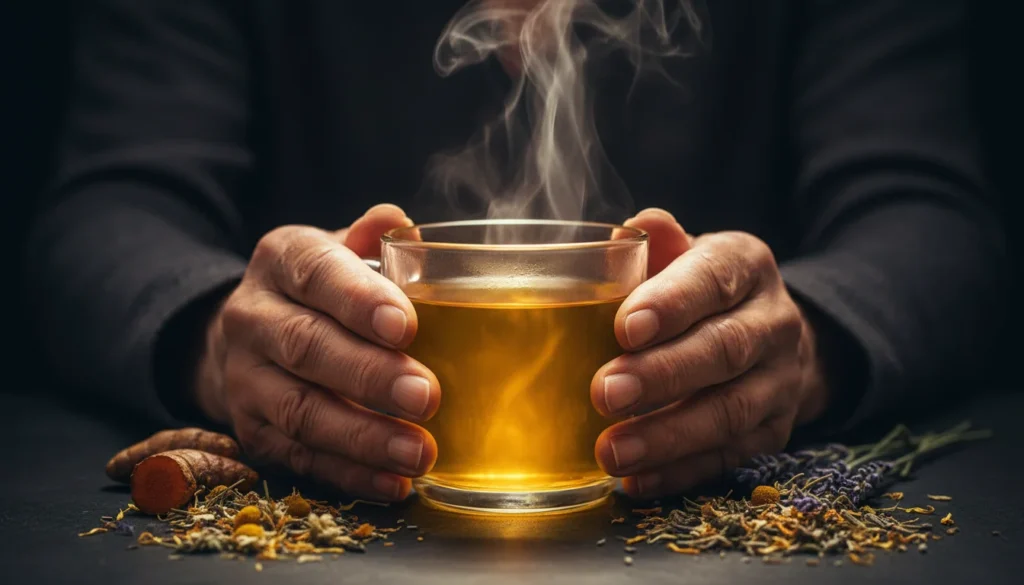
- Tea — gentle, affordable, easy to try, and honestly a lovely evening ritual that costs almost nothing and signals to your body that the day is winding down
- Standardized oral lavender preparations, often at doses around 80 to 160 mg per day depending on the product formulation
I keep lavender tea in my kitchen for nights when my brain decides to rehearse tomorrow’s conversations like it is preparing for a TED Talk. It does not erase stress. It does not solve anything. But it helps me step down from full panic mode to manageable concern — which, at the end of a long day, is exactly what I need to actually fall asleep instead of lying there cataloguing everything I forgot to do.
My neighbor — a retired teacher who spent thirty years managing classrooms full of eight-year-olds and has the patience of a saint and the stress response of someone who has seen everything — started lavender tea after I mentioned it. She called me two weeks later and said, “I do not know if it is the tea or just the ritual of making it, but I am sleeping better and I do not care which one it is.” Honestly? That is the right attitude. Sometimes the mechanism matters less than the result.
Safety note: essential oils are highly concentrated. Do not ingest essential oils unless a product is specifically formulated and labeled for oral use.
Turmeric: The Golden Child of Anti-Inflammatory Natural Medicine
Turmeric contains curcumin, a compound extensively studied for anti-inflammatory effects. Research suggests curcumin can influence inflammatory pathways involved in pain and stiffness — which is why it is popular for arthritis support, and why it shows up constantly in conversations about natural medicine for retirees.
A 2021 paper by I. Rinkunaite highlighted curcumin’s anti-inflammatory activity in arthritis models and pointed out a practical limitation: curcumin is not absorbed well without formulation support. That is why many quality supplements include absorption enhancers like black pepper extract. A 2011 study by Ramadan comparing turmeric and ginger in an arthritis model also found turmeric showed notable anti-inflammatory and antioxidant activity.
The first time I added turmeric to my cooking consistently, I learned two things. One: it tastes incredible in soups and curries, and it makes you feel like you are doing something genuinely good for yourself every time you use it — which is its own kind of medicine. Two: it stains everything. I once turned an entire batch of scrambled eggs a shade of yellow that made my family deeply suspicious of my intentions. I have permanently golden-tinted cutting boards. My favorite white dish towel is now a retirement casualty. Invest in an apron. Or just accept your new golden-era kitchen aesthetic and lean into it completely, because at some point it becomes a personality trait and you might as well own it.
Safety note: turmeric and curcumin may interact with blood thinners and may not be ideal for some gallbladder conditions.
What Are the Best Integrative Therapy Options in Natural Medicine?

Natural medicine tends to work best when you combine multiple tools rather than relying on one magic thing. Herbs can support your body’s processes, but integrative practices create the conditions where those processes can actually function well.
If your stress is through the roof and your sleep is terrible, it is harder for any supplement to feel like it is making a difference. Integrative therapies build the foundation so natural medicine can do its job. Think of it this way: supplements are the finishing touches, and integrative practices are the structure underneath. You would not skip the foundation and just paint the walls and wonder why the house feels unstable.
How Acupuncture and Massage Complement Natural Medicine
Acupuncture focuses on stimulating specific points on the body to support regulation and balance. Modern research suggests acupuncture may influence nervous system activity, inflammation, and pain signaling — all areas of particular interest for retirees managing chronic discomfort or recovering from injury.
Massage therapy supports circulation, reduces muscle tension, and helps activate the parasympathetic nervous system — your body’s rest-and-digest mode. It is also, frankly, one of the more enjoyable things you can do for your health, which matters more than people give it credit for. Sustainable wellness habits are ones you actually want to do.
The first time I got a professional massage during a stressful season, I realized my shoulders had been living somewhere up near my ears for months. I had gotten so used to the tension that I did not even notice it anymore — it had just become my normal. The therapist asked me to relax my shoulders and I thought I had. She gently pressed down on them and they dropped about two inches. Two inches. I had been walking around like that for months, bracing against something that was not even there anymore. Sometimes the most powerful thing natural medicine can do is simply help you remember what relaxed actually feels like.
The Role of Yoga and Tai Chi in Natural Wellness
Yoga and Tai Chi improve flexibility, strength, balance, and stress resilience — and for retirees, balance and fall prevention are genuinely important benefits that do not get talked about nearly enough. They also teach something most adults forget: how to breathe properly. Not the shallow, chest-only breathing most of us do all day, but the kind of deep, intentional breathing that actually signals safety to your nervous system.
I once walked into a 90-minute “all levels” yoga class thinking, how hard can stretching be? That was my first mistake. My second mistake was realizing “all levels” included people who fold like travel maps and make it look completely effortless while I was over in the corner wondering if my hamstrings had always been this short or if something had happened to them specifically. I spent the next two days walking like a cowboy who had just dismounted a horse after a very long ride. Start with beginner sessions. Your future self will send a thank-you card.
How Naturopathic Approaches Enhance Natural Medicine
Naturopathic medicine emphasizes nutrition, lifestyle modifications, and natural therapies that support the body’s inherent healing processes. It is particularly well-suited to the kinds of health goals retirees tend to have: more energy, better sleep, less pain, a stronger immune system, and a body that feels like an ally rather than a project you are perpetually behind on.
Good naturopathic thinking is practical detective work. Instead of treating every symptom as a separate problem, it looks for connections — because energy, digestion, sleep quality, mood, and inflammation are often linked in ways that are not immediately obvious.
Dietary and Lifestyle Changes That Support Natural Medicine
Diet and lifestyle are the foundation of effective natural medicine. I know that is not the exciting answer. Nobody clicks on an article hoping to be told to eat more vegetables and go to bed at a consistent time. But after years of watching people chase supplements while ignoring the basics, I have come to appreciate just how much the fundamentals matter.
Common naturopathic recommendations include:
- A whole-foods diet rich in vegetables, fruits, quality protein, fiber, and healthy fats
- Reducing ultra-processed foods and added sugars — notice I said reducing, not eliminating, because sustainable beats perfect every single time
- Regular movement, including simple walking
- Consistent sleep routines with good sleep hygiene
- Practical stress management techniques that you will actually use
Walking after dinner is one of the simplest interventions I have seen make a real difference for people. It is not glamorous. It will not get you Instagram followers. But it is consistently effective for digestion, blood sugar regulation, stress reduction, and sleep quality. No equipment, no gym membership, no special shoes required. Just you, the neighborhood, and maybe a podcast you have been meaning to start for six months.
My husband and I started walking after dinner about two years ago — not because we were being disciplined about it, but because we ran out of things to watch on television and needed something to do with ourselves. What started as mild desperation became one of the best habits we have ever built. We talk more on those walks than we did during entire weeks when we were both working. We notice things — the neighbor’s new garden, the way the light changes in autumn, the dog three streets over who has apparently decided we are his people now and waits by the fence every evening. It is twenty minutes. It costs nothing. And it has quietly become one of the best parts of our day.
How Adaptogens Work in Natural Medicine
Adaptogens are herbs used in natural medicine to support stress resilience and help the body maintain balance under pressure. Common adaptogens include ashwagandha, rhodiola, and holy basil — each with slightly different properties, but sharing a general theme: helping your body adapt to stressors more effectively.
A 2025 review by M.O. Sabry discussed rising scientific interest in adaptogens for stress-related issues such as fatigue, anxiety, and insomnia, noting potential anti-stress, antioxidant, and immune-supporting effects.
In real-world use, adaptogens are usually taken consistently for weeks, not just as needed. They are not fireworks — they are more like steady background support. The first time I tried an adaptogen, I was waiting for a dramatic shift. What I got was quieter: after a few weeks, I felt a little more steady under pressure. Like I had a better grip on the day instead of the day having a grip on me. It was subtle enough that I almost missed it — which is exactly how good adaptogens tend to work. The absence of overwhelm is easy to overlook until you remember what overwhelm used to feel like.
Safety note: adaptogens can interact with medications and may not be appropriate for everyone. Work with a knowledgeable practitioner if you are unsure.
Which Natural Medicine Supplements Support Immune Health?
Immune support is one of the most searched topics in natural medicine — and for good reason, especially for retirees whose immune function naturally shifts with age. Rather than trying to “boost” your immune system, which is not really how it works, focus on supporting the foundations immune function relies on: nutrition, sleep, stress regulation, and movement.
Vitamin C and Zinc: The Classic Immune Support Duo
Vitamin C supports immune cell activity and provides antioxidant protection. Zinc supports immune cell development and communication. Even mild zinc deficiency can impair immune function, which is why retirees should pay particular attention to getting enough through food and, when needed, supplementation.
I keep zinc lozenges around during the seasons when everyone seems to be sneezing. I do not treat them like a magic shield. I treat them like a helpful part of an overall immune-support plan — which also includes sleep, because your immune system loves sleep more than I love coffee, and that is genuinely saying something.
Safety note: higher doses of vitamin C can cause digestive upset — your body will send you a very clear memo on this. Long-term high-dose zinc can affect copper status, so do not overdo it.
Evidence-Based Herbal Medicine Benefits: What the Research Actually Shows
| Herbal Remedy | Common Use | Key Benefits | Evidence Level |
|---|---|---|---|
| Lavender | Anxiety and stress | Reduces anxiety symptoms, promotes relaxation | Moderate to High |
| Turmeric/Curcumin | Inflammation | Alleviates arthritis symptoms, reduces inflammatory markers | Moderate to High |
| Ashwagandha | Stress resilience | Enhances stress adaptation, may reduce cortisol | Moderate |
Individual responses vary, and research continues to evolve. Use this as a starting point, not a prescription.
Making Natural Medicine Work in Real Life
Natural medicine works best when it is consistent, realistic, and personalized. Not when it is perfect. Not when it is comprehensive. When it is yours — built around your schedule, your health history, your preferences, and the life you are actually living right now.
Start Simple — Seriously, Just Pick One Thing
Pick one change you can actually sustain. Maybe it is lavender tea at night. Maybe it is a better-formulated turmeric supplement. Maybe it is a ten-minute walk after dinner. Maybe it is finally trying that yoga class you have been thinking about for three years and keep putting off because the timing never feels quite right.
Do not try to overhaul your entire life in a weekend. That is how you end up burned out and back where you started — except now you also have a cabinet full of supplements you do not use and a yoga mat gathering dust like it is paying rent and contributing nothing to the household except guilt.
Natural medicine is not a sprint. It is more like learning to speak a new language: you start with a few useful phrases, practice consistently, and gradually build fluency. Nobody becomes conversational overnight. And nobody needs to — because the goal is not speed. The goal is staying power.
Quality Matters More Than You Think
Supplement quality varies wildly, and the industry is not regulated like prescription medications. When you can, look for products that have third-party testing — such as USP, NSF, or ConsumerLab verification — clearly list standardized extract amounts, and come from reputable companies with good manufacturing practices.
A cheap supplement that does not work is not saving you money. It is just wasting it differently.
Work With Qualified Practitioners
Natural medicine works best when you have guidance from qualified practitioners who understand both natural approaches and conventional medicine. Look for licensed naturopathic doctors, integrative medicine physicians, clinical herbalists, or registered dietitians with integrative experience.
They can help you navigate interactions, choose appropriate dosing, and integrate natural medicine safely with any conventional treatments you are already using. Think of them as partners in your wellness — not replacements for your existing care team, but thoughtful additions to it.
Your Natural Medicine Journey Starts Now
Here is what I want you to take away from all of this.
Natural medicine is not about rejecting modern healthcare or becoming someone who talks about their supplement stack at dinner parties. It is about having more options. Understanding your body better. Taking an active role in your wellness — which, in retirement, is one of the most valuable things you can do with your time and energy.
Some natural medicine approaches will work beautifully for you. Others will not do much. That is normal. Bodies are complicated, and what works for your friend might not work for you. And what works for you might look boring from the outside — a cup of tea, a walk around the block, a supplement nobody has heard of. That is fine. Your body is not trying to win a wellness contest, and neither are you.
The goal is not perfection. It is not even optimization. The goal is feeling better, more often, in ways that are sustainable for your actual life.
So start somewhere. Pick one evidence-based natural medicine approach from this guide. Try it consistently for a few weeks. Pay attention to how you feel. Adjust as needed. Be patient with yourself in the way you would be patient with someone you love.
That is natural medicine in action: practical, personalized, and focused on supporting your body’s own wisdom. And you do not need to have it all figured out right now. There is no finish line where you suddenly arrive at perfect health. There is just the ongoing practice of taking care of yourself as best you can, with the tools and knowledge you have, on the days you have them.
That is enough. You are enough. And natural medicine is here to support you along the way.






One Comment
Comments are closed.