
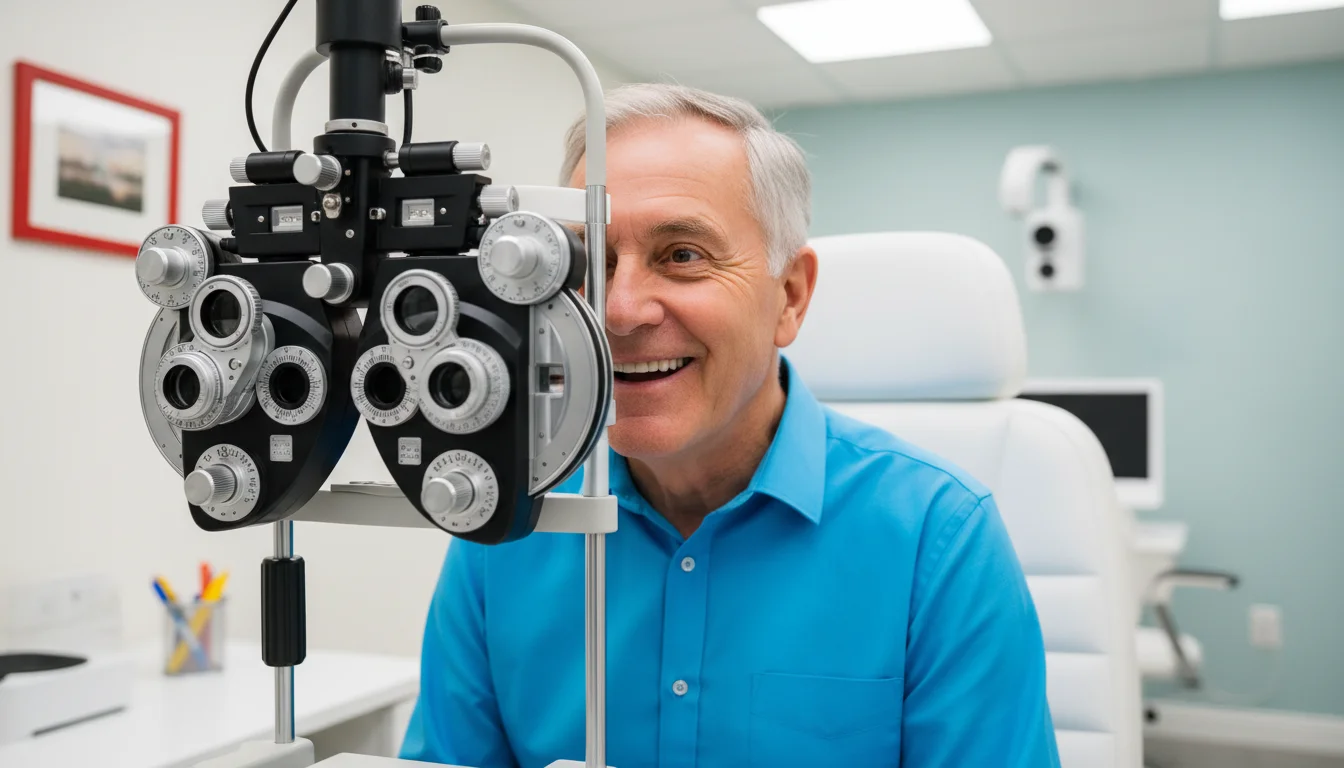
Retiree Vision Health: Your Complete 2026 Guide to Better Eyesight, Eye Nutrition, and Habits That Actually Work
Protect your retiree vision health in 2026 with smart habits, eye nutrition, supplements, and tips for common age-related eye conditions.
Key Takeaways:
- Retiree vision health is shaped by daily habits — nutrition, sleep, UV protection, and screen breaks — not just genetics and luck
- Common age-related eye conditions like cataracts, glaucoma, and AMD often develop silently, making regular comprehensive eye exams non-negotiable
- Lutein, zeaxanthin, omega-3s, vitamins A, C, and E, and zinc are the core nutrients that support long-term retiree vision health
- The AREDS2 supplement formula is science-backed for people with intermediate or advanced AMD — not a general daily vitamin for everyone
- The 20-20-20 rule, consistent sleep, hydration, and UV-blocking sunglasses are simple habits with real cumulative impact
- Smoking significantly increases risk for cataracts and AMD — and risk decreases after quitting
- Managing diabetes, high blood pressure, and high cholesterol is a direct retiree vision health strategy, not just a general health one
- If you do one thing from this guide: schedule the comprehensive eye exam
Let me tell you about the moment I finally took retiree vision health seriously.
I was sitting at the kitchen table trying to read a recipe — a real, printed recipe, not even a tiny font — and I had to get up twice to find better light. Then I held the paper closer. Then farther. Then I did that thing where you tilt your head slightly, as if a different angle is going to magically fix the problem. My spouse walked in, watched the whole performance, and said absolutely nothing. Just quietly set a pair of reading glasses on the table next to my coffee and walked away.
That was the moment.
It was not dramatic. Nobody handed me a diagnosis or a pamphlet. It was just a quiet Tuesday morning and a pair of drugstore readers that I absolutely did not need, thank you very much — except that I did, and they worked immediately, and I have not been the same since.
Here is what I have learned since that kitchen table moment: retiree vision health is not just about whether you can read the fine print. It is about staying in the driver’s seat — literally and figuratively. It is about driving at night without white-knuckling the steering wheel every time headlights come at you. It is about doing the crossword, finishing the woodworking project, seeing the expression on your grandchild’s face from across the room. It is about staying in your own life, fully, without vision quietly shrinking the edges of it.
And the thing nobody tells you clearly enough? You have more say in this than you think.
Whether you are dealing with dry eye that has basically moved into your guest room, navigating the early signs of something more serious, or just trying to stay ahead of the changes that tend to arrive quietly after sixty — this guide covers what actually matters. Common eye diseases, nutrition, supplements, and the daily habits that genuinely move the needle on long-term retiree vision health.
One important note before we go further: this guide is a starting point, not a substitute for personalized medical advice. If you are experiencing new or changing vision symptoms, please see a qualified eye care professional. Some of what we cover — especially supplements — should be discussed with your doctor before you start, particularly if you take medications or manage chronic conditions.
Understanding the Basics of Retiree Vision Health
For most of my adult life, I treated my eyes the way I treated the water heater — I assumed they would just keep working until they did not, and then I would deal with it. That is not a strategy. That is just optimism with no backup plan.
Retiree vision health is really three things working together: prevention, protection, and maintenance. Preventing avoidable problems. Protecting your eyes from the damage that accumulates quietly over decades — UV exposure, oxidative stress, chronic inflammation. And maintaining function through the habits and nutrition choices that support your eyes the way good maintenance supports anything worth keeping.
The genetics piece is real. If your parents had glaucoma or macular degeneration, that matters and your eye doctor needs to know. But genetics is not the whole story, and it is definitely not an excuse to do nothing. The CDC has reported that millions of adults in the U.S. live with vision impairment — and a meaningful portion of that vision loss is preventable or can be significantly delayed with early detection and consistent care.
That is not a scary statistic. That is an empowering one. It means the choices you make today — the food on your plate, the sunglasses you grab on the way out the door, the eye appointment you keep instead of rescheduling — actually matter. They add up. And in retirement, you finally have the time and the flexibility to build habits that stick in a way that was genuinely hard during the working years.
That is a real advantage. I think about that a lot.
The Most Common Eye Diseases Affecting Retiree Vision Health

I used to skip the “common conditions” sections of health articles because they felt like reading a list of things to worry about. But I have changed my mind on that. Knowing what to watch for is not the same as catastrophizing — it is just being informed enough to catch something early, when catching it actually makes a difference.
Cataracts: The Cloudy Culprit
The best description I ever heard for cataracts came from a friend who had surgery last year. She said it was like she had been looking at the world through a car windshield that had never been properly cleaned — and she had gotten so used to it that she forgot what clean looked like. After surgery, she cried. Not from pain. From seeing colors the way they actually are.
Cataracts happen when the lens of your eye becomes cloudy — usually with aging, sometimes from steroids, diabetes, or trauma. They sneak in so gradually that you adjust without realizing how much your vision has actually changed.
Watch for:
- Colors looking washed out or less vivid than they used to
- Night driving becoming genuinely stressful — headlights glaring and haloing in ways that make you quietly start avoiding it
- Needing more light to read, and finding yourself migrating toward windows like a houseplant chasing the sun
Cataract surgery is one of the most commonly performed and most successful surgeries in the world. Most people see dramatic improvement. My friend calls it the best thing she ever did for herself, and she says it with the kind of conviction that makes you want to go schedule your own appointment immediately.
Glaucoma: The Silent Vision Thief
Glaucoma has a reputation, and it has earned it. It is called the “silent thief of sight” because it damages the optic nerve — often associated with elevated eye pressure — without announcing itself. No pain. No obvious symptoms in the early stages. Just slow, quiet peripheral vision loss that you might not notice until it has already progressed significantly.
I find this one particularly sobering because it is so preventable with regular monitoring, and yet so easy to miss without it. Open-angle glaucoma, the most common type, develops slowly and painlessly. By the time people notice the tunnel-vision effect — the edges of the world gradually disappearing — meaningful damage has often already occurred.
Acute angle-closure glaucoma is a different story entirely: sudden severe eye pain, headache, nausea, halos around lights, blurred vision. That is a medical emergency. Not a “let me see how I feel in the morning” situation. An “I need to go to the emergency room right now” situation.
The lesson I keep coming back to with glaucoma: your eye doctor can see what you cannot feel. That is the whole argument for regular exams, right there.
Age-Related Macular Degeneration (AMD): The Central Vision Stealer
AMD affects the macula — the part of your retina responsible for the sharp central vision you use for reading, recognizing faces, and seeing detail. It is one of the leading causes of vision loss in older adults, and it is one of the conditions where retiree vision health habits — nutrition especially — can genuinely influence how things progress.
Early signs to know:
- Blurry or fuzzy spots in the center of your vision
- Straight lines looking wavy or distorted — like a funhouse mirror effect on your everyday world
- A dark, blurry, or empty area developing in the middle of your visual field
Research published in JAMA Ophthalmology has projected AMD prevalence rising significantly as the population ages. That is not a reason to panic. It is a reason to take retiree vision health seriously — especially if you have risk factors like family history, a long history of UV exposure, or smoking.
Refractive Errors: The Everyday Vision Problems
Myopia, hyperopia, astigmatism, presbyopia — these are the everyday vision changes that most of us navigate. Presbyopia in particular is the age-related loss of near-focus that tends to arrive right around the time you start holding menus at arm’s length and telling yourself the restaurant lighting is just bad.
(The restaurant lighting is not always bad. Sometimes it is just presbyopia. I say this with love and personal experience.)
Symptoms are familiar: blurry vision at certain distances, eye strain and headaches after reading or screen time, squinting that you do not even realize you are doing until someone points it out.
The fix is usually straightforward — updated glasses or contacts. The key is actually getting the prescription updated when it changes, rather than squinting through an old one for another year because the appointment feels like a hassle.
Dry Eye Syndrome: The Modern Epidemic
Dry eye might be the most underestimated retiree vision health complaint I hear about. People assume it is minor — just a little irritation — and then they spend months being quietly miserable with eyes that feel gritty, burning, or paradoxically watery. (Yes, watery. Your eyes can overproduce tears in response to irritation. The body trying to fix a problem by overcorrecting. Extremely relatable.)
Screen time, reduced blinking, air conditioning, certain medications, aging tear glands, autoimmune conditions — all of it contributes. For retirees who are spending more time on screens than ever — video calls with grandkids, streaming, news, email — dry eye is a genuinely common daily struggle.
The simplest habit that actually helps: blink deliberately. On purpose. Like it is a task. Set a reminder if you need to. It feels absurd. It works. And it costs exactly nothing.
Nutrition: Feeding Your Retiree Vision Health the Good Stuff

I want to be upfront about something: I did not used to think much about eating for my eyes specifically. I thought about eating for energy, for weight, for general health. Eyes felt like a separate category — something you dealt with at the optometrist, not at the grocery store.
I was wrong about that. And the research is pretty clear on why.
Your eyes are metabolically active tissue dealing with constant light exposure, oxidative stress, and inflammation. The nutrients that support antioxidant defenses, retinal function, and healthy blood vessels are not optional extras — they are the raw materials your eyes are working with every single day. What you eat genuinely matters here.
The Power Players: Lutein and Zeaxanthin
Lutein and zeaxanthin are carotenoids that concentrate specifically in the macula. Think of them as your eyes’ built-in tinted filters — they absorb blue light and fight oxidative stress, two things your eyes deal with constantly in the modern world.
The National Eye Institute’s AREDS2 trial found that lutein and zeaxanthin were beneficial in the supplement formula designed to reduce AMD progression risk in certain people. This is one of the most well-supported nutrition findings in retiree vision health — not wellness marketing, but a large-scale clinical trial with real results.
Best food sources:
- Kale, spinach, collard greens — the dark leafy green dream team
- Broccoli
- Egg yolks — genuinely underrated, highly effective, and significantly more enjoyable than kale at seven in the morning
Omega-3 Fatty Acids: The Inflammation Fighters
Omega-3s support retinal structure and may help with dry eye by supporting the tear film’s oil layer. The honest version: research is mixed on supplementation specifically, but fatty fish as a regular part of your diet is a strong retiree vision health win — and your heart will not complain either.
Best food sources:
- Salmon, sardines, mackerel — the fatty fish hall of fame
- Flaxseed, chia seeds, walnuts — plant-based options, though with some conversion limitations worth knowing about if fish is not part of your diet
Vitamins A, C, and E: The Antioxidant Trio
Vitamin A is essential for vision — especially low-light vision. Deficiency can cause night blindness and serious eye damage. Vitamin C supports blood vessels in the eye and antioxidant defenses. Vitamin E protects cell membranes from oxidative damage. Together, they form the antioxidant backbone of retiree vision health nutrition, and they show up in the AREDS2 formula for good reason.
My practical grocery list:
- Sweet potatoes, carrots, leafy greens — vitamin A via beta-carotene
- Citrus, strawberries, bell peppers, broccoli — vitamin C
- Nuts, seeds, vegetable oils — vitamin E
Zinc: The Unsung Hero
Zinc helps transport vitamin A and supports retinal function. It is part of the AREDS2 formulation shown to slow AMD progression in certain cases — making it one of the more evidence-backed nutrients in retiree vision health.
Food sources:
- Oysters, if you are adventurous
- Beef, pork, chicken
- Beans, nuts, whole grains
High-dose zinc supplements can cause stomach upset and affect copper levels — which is why copper is included in AREDS2 formulas. This is not a “more is better” situation.
Building the Eye-Friendly Plate
If I had to describe my ideal retiree vision health plate, it would look like this: dark leafy greens as the base, a fatty fish or lean protein, colorful vegetables in as many shades as possible — orange, red, yellow, green, basically eat like a kindergarten crayon box — nuts or seeds, and fruit. That is it. No exotic ingredients. No expensive superfoods. No meal plan that requires a spreadsheet and a personal chef.
Other regulars worth including:
- Eggs — lutein, zeaxanthin, and zinc in one convenient package
- Legumes — zinc and antioxidant support
- Citrus fruits — vitamin C
- Whole grains — vitamin E, zinc, niacin
- Lean meat and poultry — zinc
The best part: this way of eating supports retiree vision health and also — conveniently — most of the rest of your body. I genuinely love when that happens. It feels like a cheat code.
Lifestyle Habits That Protect Retiree Vision Health

Here is something I have come to appreciate about retirement that I did not fully anticipate: you get your time back. Not all of it, and not without its own complications — but the rigid structure of the working years loosens, and suddenly you have actual room to build habits that stick.
That is a bigger deal for retiree vision health than it might sound. Because most of what protects your eyes long-term is not dramatic. It is consistent. It is the boring daily stuff done reliably over months and years. And retirement is genuinely the best environment for building that kind of consistency.
The 20-20-20 Rule: Simple, Effective, Easy to Forget
Every 20 minutes of screen time, look at something 20 feet away for at least 20 seconds. That is it. That is the whole rule.
It gives your focusing muscles a real break and meaningfully reduces digital eye strain. I set a phone timer because “I’ll remember” is a lie I tell myself regularly and have stopped believing. When the timer goes off, I look out the window, take a breath, and feel like a person who has their life together. It takes twenty seconds. It helps more than you would expect.
Sleep: When Your Eyes Actually Recover
Sleep is when your eyes get lubricated, rested, and recovered from a full day of focusing, processing light, and doing the invisible work we never think about. Chronic poor sleep contributes to dryness, twitching, and a general eye discomfort that makes everything harder and more irritating.
Seven to nine hours is the general target. Consistency matters as much as quantity — going to bed and waking at similar times helps your body’s rhythms in ways that show up in your eyes, your mood, and your ability to be a pleasant person to be around. I speak from experience on all three counts.
Hydration: The Boring One That Actually Works
Steady hydration through the day supports tear production and eye comfort. Dehydration makes dryness noticeably worse, and it is one of the easiest retiree vision health factors to address. Not exciting. Not complicated. Just drink water consistently — not a heroic late-night catch-up session, just regular, boring hydration throughout the day.
Your eyes will notice. So will the rest of you.
Smoking: The One I Have to Say Plainly
Smoking significantly increases risk for cataracts and AMD. It damages blood vessels throughout the body, including the tiny ones that feed the retina. If you needed one more reason to quit — or to support someone you love in quitting — retiree vision health is a real and compelling one.
The encouraging truth: risk decreases after quitting. The timeline varies, but the trajectory improves. It is never too late, and your eyes are one of many parts of you that will benefit.
UV Protection: The Easiest Win on This List
Sunglasses are not a fashion accessory. They are protective equipment for your eyes, and UV exposure accumulates over a lifetime in ways that contribute meaningfully to cataract and AMD risk.
Look for lenses that block 99–100% of UVA and UVB. Wraparound styles offer better coverage because UV sneaks in from the sides. And yes — UV rays show up on cloudy days too. The sun does not take days off, and neither should your sunglasses habit.
This is also the one retiree vision health habit that makes you look good while doing it. I appreciate that kind of efficiency.
Exercise: Better Circulation, Better Eyes
Regular physical activity improves circulation and supports the blood vessels that feed the eye. It also helps manage diabetes and blood pressure — two conditions with direct implications for retiree vision health.
Research published in Ophthalmology found associations between regular physical activity and lower glaucoma risk. You do not need to run marathons. Brisk walking counts. Swimming counts. A bike ride counts. The goal is consistency, not intensity — and retirement is the perfect time to find movement you actually look forward to.
Vision Supplements: What the Research Actually Says
I want to be honest with you about supplements the way I wish someone had been honest with me earlier: the supplement aisle is full of products that sound compelling and are backed by varying degrees of actual evidence. Some are genuinely useful for specific people in specific situations. Others are expensive hope in a bottle.
Here is what the research actually supports for retiree vision health.
The AREDS2 Formula: The Gold Standard
AREDS and AREDS2 are landmark National Eye Institute studies — large, rigorous, long-term — examining whether specific nutrients could slow AMD progression. The AREDS2 formula that emerged includes:
- Vitamin C (500 mg)
- Vitamin E (400 IU)
- Lutein (10 mg)
- Zeaxanthin (2 mg)
- Zinc (80 mg standard; some versions use lower doses)
- Copper (2 mg)
Critical point: AREDS2 is recommended for people with intermediate AMD or advanced AMD in one eye — not as a general daily vitamin for everyone. If you smoke or have a smoking history, avoid formulas with beta-carotene — AREDS2 removed it partly for safety reasons in smokers. This is a conversation to have with your eye doctor before you start, not a supplement to grab off the shelf because the label sounds right.
Bilberry: Better Story Than Science
The World War II pilot bilberry story is genuinely great. The evidence, unfortunately, does not hold up. A Cochrane review found insufficient evidence to support bilberry for improving night vision. It is not harmful — it just is not the retiree vision health shortcut the legend suggests.
Others Worth Knowing
- Vitamin D: Some observational research links higher vitamin D levels with lower risk of certain eye conditions. Worth checking your levels with your doctor — many retirees are low without knowing it, and deficiency has implications well beyond vision
- Astaxanthin: Early research suggests possible benefit for eye fatigue, but the evidence base is not yet strong enough for a firm recommendation
- Ginkgo biloba: Limited evidence for circulation-related eye issues, and it interacts with blood thinners and other medications. A “talk to your doctor first” supplement, not a “grab it off the shelf” one
Quality matters with all supplements — look for USP or NSF third-party certification. And remember: supplements support a good foundation. They cannot replace one.
Essential Eye Care Practices for Long-Term Retiree Vision Health
Regular Eye Exams: The Non-Negotiable
I will say this as plainly as I can: many serious eye diseases develop without symptoms. Glaucoma. Early AMD. Diabetic retinopathy. You will not feel them coming. Your eye doctor can see them — with the right equipment, at the right intervals — long before you notice anything is wrong.
“Nothing seems wrong” is not a reason to skip the exam. It is actually the best possible time to go, because that is when early intervention is most effective.
General guidance:
- Comprehensive baseline exam around age 40
- Annual or near-annual exams through your sixties and beyond
- More frequent monitoring if you have diabetes, high blood pressure, family history of eye disease, or other risk factors
Schedule the exam. Not someday. This week.
Managing Digital Eye Strain
For retirees spending real time on screens — which is most of us, between family video calls, streaming, news, and email — digital eye strain is a daily reality worth managing actively.
Beyond the 20-20-20 rule:
- Screen at arm’s length, slightly below eye level
- Reduce glare with adjusted lighting or an anti-glare cover
- Increase text size — there is genuinely no prize for reading tiny fonts
- Preservative-free artificial tears for dryness
- Task-specific computer glasses if your eye doctor recommends them
Blue-light glasses: some people find them comfortable, especially at night. The evidence that they prevent eye disease is limited. If they help you feel better without breaking the budget, fine — just do not let them substitute for the basics.
Eye Hygiene: The Simple Stuff
- Wash hands before touching your eyes or lenses
- Remove eye makeup every night — every single night
- Replace eye makeup every three to six months
- Do not share makeup or applicators
- Follow contact lens instructions exactly — your eyes do not reward improvisation
Know Your Family History
Glaucoma, AMD, and other conditions run in families. Tell your eye doctor. If you are not sure what runs in yours, it is worth asking while you still can.
Manage Chronic Conditions
Diabetes, high blood pressure, and high cholesterol damage the blood vessels that feed the retina. Managing them is retiree vision health strategy, not just general health maintenance. Every improvement you make there is also an investment in your eyesight. It all connects — more than most people realize.
Your Retiree Vision Health Action Plan
Today:
- Schedule the comprehensive eye exam — right now, before you close this tab
- Start the 20-20-20 rule on screens
- Commit to UV-blocking sunglasses every time you go outside
This Week:
- Add leafy greens, colorful vegetables, eggs, and fatty fish to your meals
- Adjust your screen setup — reduce glare, check your viewing distance and angle
- Audit your eye makeup and contact lens supplies
This Month:
- Build sleep consistency — same bedtime, same wake time
- If you smoke, look into quitting support
- Learn your family eye history and bring it to your next appointment
Ongoing:
- Eat the kindergarten crayon box plate
- Hydrate steadily through the day
- Move your body in ways you enjoy
- Protect from UV every day, cloudy or not
- Manage chronic conditions with your healthcare team
- Keep eye exams on schedule — especially when nothing seems wrong
The Bottom Line on Retiree Vision Health
Your eyes are irreplaceable. Vision loss changes your quality of life in ways that are hard to fully appreciate until it starts happening — your independence, your confidence, your ability to stay fully present in the life you worked hard to build.
The grandkids’ faces. The sunsets. The books you finally have time to read. The road trips. The hobbies. All of it depends on eyes that are working as well as they possibly can for as long as possible.
And here is the part I want you to hold onto: most of retiree vision health comes down to small, consistent, unsexy habits. Food. Sleep. Screen breaks. Sunglasses. Checkups. None of it is glamorous. All of it adds up in ways that matter more than any single dramatic intervention ever could.
I am not perfect at this. Some weeks I am eating salmon and spinach and taking my screen breaks like a responsible adult. Other weeks I am running on coffee and willpower and wondering why my eyes feel like sandpaper. But I keep coming back to the basics, because progress beats perfection every single time — and because the alternative is letting something preventable quietly take more than it needs to.
Start with one thing. Stack another when it sticks. Keep the boring stuff consistent. And please — schedule the eye exam. Not because something seems wrong. Because that is exactly when it matters most.
Now if you will excuse me, my timer just went off and I owe my eyes twenty seconds of looking at something far away.
I am going to go look at the garden. It is a good garden. I am glad I can still see it clearly.






One Comment
Comments are closed.