How to Prevent Falls in the Elderly: What Actually Helps (From Someone Who’s Been There)
Learn how to prevent falls in the elderly with simple balance exercises, safer home setups, caregiver tips, and daily habits that protect independence.
My grandmother fell reaching for a coffee mug. Not on a ladder. Not on icy steps. Not doing anything remotely dangerous. Just standing in her own kitchen on a regular Tuesday morning, and that was it.
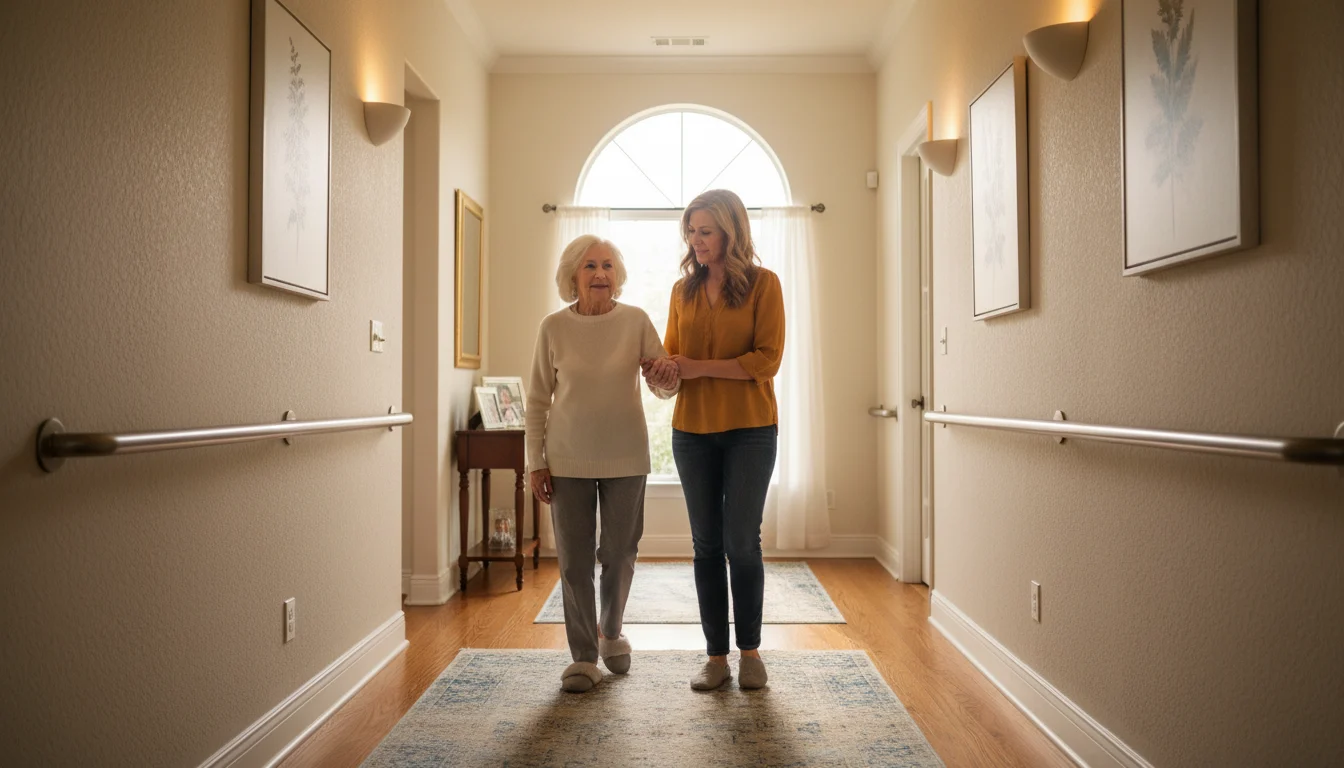
Six weeks of recovery. A walker she never fully made peace with. And this quiet, creeping fear that followed her around the house long after the bruise was gone. She stopped going to the back porch alone. She stopped walking to the mailbox. She’d reach for the wall when she walked down the hallway, even when she didn’t need to.
The fall healed. The confidence took a lot longer.
I think about her every time I write about this topic. Because figuring out how to prevent falls in the elderly sounds like something that belongs in a doctor’s waiting room pamphlet — dry, clinical, easy to ignore. But it’s not really about statistics or checklists. It’s about protecting the small, ordinary moments that make up a life. The morning coffee. The walk to the garden. Moving through your own home without bracing yourself.
Here’s what I’ve come to believe: most falls are preventable. Not every single one — life is still life. But so many of the risk factors are fixable. A better light bulb. A grab bar. Decent shoes. Five minutes of balance work at the kitchen counter. None of it is glamorous. All of it matters.
Key Takeaways
Before we get into the details, here’s the short version:
- Balance exercises like Tai Chi, single-leg stands, and heel-to-toe walking are among the most effective tools for reducing fall risk
- Home modifications — grab bars, better lighting, cleared walkways — can dramatically reduce hazards without a full renovation
- Mobility aids like canes and walkers support independence, not the opposite
- Caregivers play a huge role, especially when they notice small changes early and respond with partnership, not control
- Medications and vision are two of the most overlooked risk factors — regular reviews and eye exams matter more than people think
- Technology like fall-detection devices and wearables can add a helpful safety layer, especially for older adults who live alone
- Nutrition and hydration quietly affect strength, energy, and balance more than most people realize
- Small, consistent changes beat big dramatic plans every single time
Balance Exercises: The Boring Thing That Actually Works
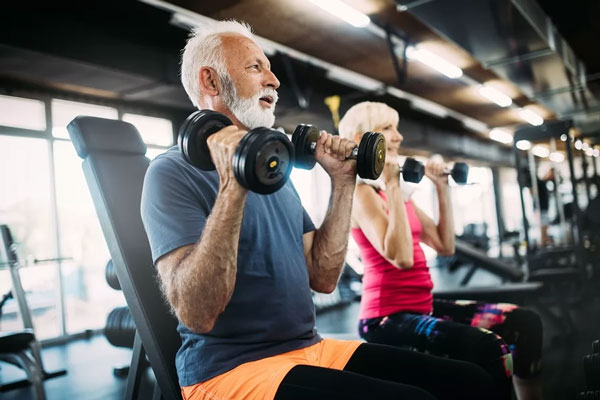
If I had to pick one place to start, it would be balance training.
Not because it’s exciting. It’s genuinely not. Nobody’s posting their single-leg stand progress on Instagram. But it quietly does something that matters a lot — it rebuilds the body’s ability to catch itself before a fall happens.
Think about the movements that happen dozens of times a day without a second thought:
- standing up from a chair
- stepping over a doorway strip
- turning around in the bathroom
- walking while carrying something
- getting dressed without wobbling
When those little movements start feeling shaky, daily life gets smaller fast. People start avoiding things. They sit more. They move less. Muscles get weaker. Balance gets worse. It’s a cycle that’s hard to break once it starts — and balance training is one of the best ways to interrupt it early.
Beyond the physical stuff, there’s something else balance work does that I think gets overlooked: it gives people back their confidence. And that matters enormously when you’re thinking about how to prevent falls in the elderly. Fear of falling can shrink a person’s world just as fast as an actual fall can.
Tai Chi
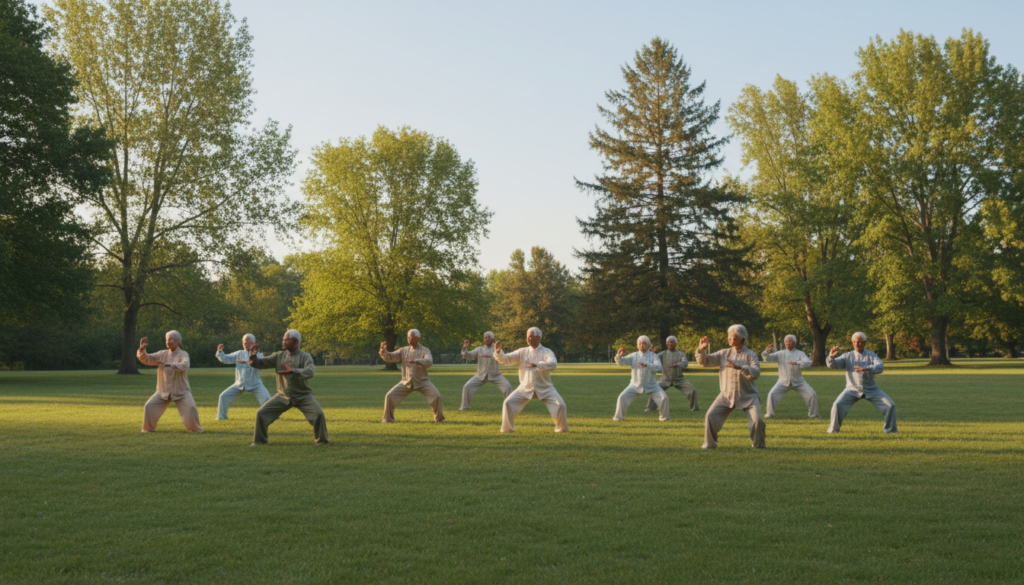
Tai Chi is slow, deliberate, and genuinely effective. The flowing movements build posture, coordination, and body awareness without stressing the joints. It also tends to feel approachable — and that matters, because the best exercise for preventing falls in older adults is the one someone will actually keep doing.
A 2010 review, The Effects of Tai Chi on Body Balance in Elderly People, confirmed that Tai Chi improves balance in older adults. Real research. Not just wellness vibes.
Single-leg stands
Stand on one foot for ten seconds. Sounds almost too simple, right?
But this trains the stabilizing muscles around the ankles, knees, and hips — the exact muscles that kick in when someone trips and needs to recover before hitting the floor. Try it near a counter the first time. Your body will let you know pretty quickly whether those muscles need work. Mine certainly did.
Heel-to-toe walking
Walk in a straight line with the heel of one foot touching the toe of the other. It improves gait control and coordination in a way that mirrors real-life movement. It also reveals balance gaps fast — which can feel humbling, but is genuinely useful information.
Safe setup for home balance exercises
Setup matters as much as the exercise itself. A few simple rules:
- keep a sturdy chair, counter, or wall within arm’s reach
- work on a flat, uncluttered surface with good lighting
- wear supportive shoes — not socks on smooth floors
- start with five minutes, not a full workout
- stop if anything feels dizzy, painful, or off
- if someone is nervous, have another person nearby — not hovering, just there
Home Safety: The House Might Be the Problem
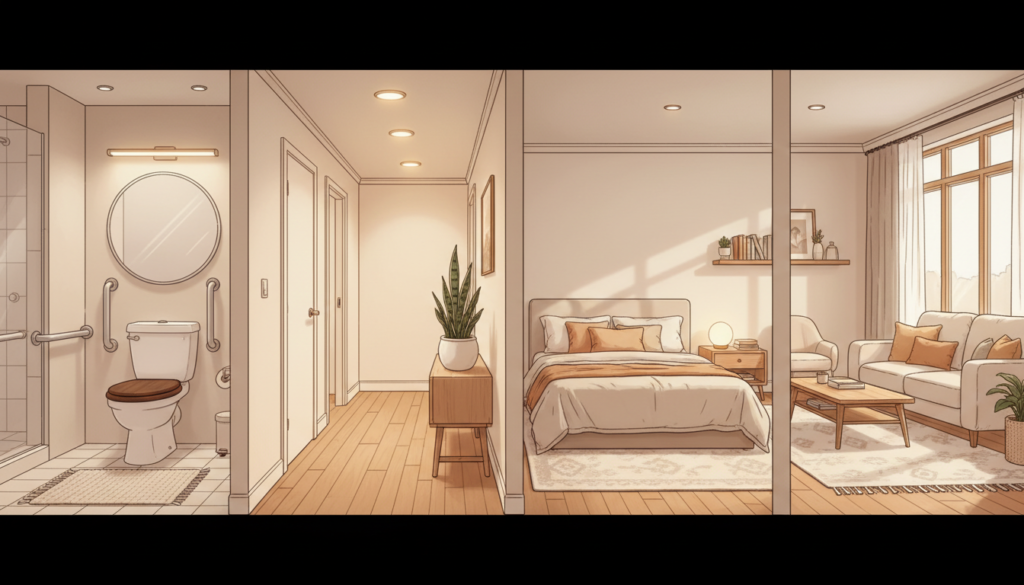
Sometimes it’s not the person. It’s the house.
A home can be full of tiny little traps nobody notices anymore because they’ve lived with them for years. The rug that curls up at the edge. The hallway that’s always a little too dim. The bathroom floor that turns into a skating rink after one shower.
This is a huge part of how to prevent falls in the elderly, and it’s often the fastest thing to fix.
Grab bars
Bathrooms are where a disproportionate number of falls happen. Wet floors, hard surfaces, awkward movements in a small space — it’s a lot happening at once.
Grab bars near the toilet and inside the shower give people something solid to hold onto. Some people resist them at first because they feel medical or institutional. I get it. But a grab bar is a lot less depressing than a broken hip.
Better lighting
Bad lighting causes more trouble than people expect.
If someone can’t clearly see the edge of a step, the corner of a rug, or the path to the bathroom at 2am, that raises fall risk immediately. Helpful upgrades:
- brighter bulbs in hallways and bedrooms
- motion-sensor night lights between the bed and bathroom
- easy-to-reach light switches
- better lighting around stairs and entryways
Remove tripping hazards
Not glamorous. Very important.
Things worth fixing or moving:
- loose rugs
- electrical cords across walkways
- clutter near furniture
- shoes left on the floor
- low tables in tight walking paths
A 2012 systematic review on home modification and fall prevention found that home evaluations paired with targeted changes were effective at reducing falls in community-dwelling older adults. Sometimes the smartest move in preventing falls in older adults is changing the space, not just coaching the person.
Home safety checklist
Do a slow walk-through every few months — especially after a health change, new medication, or recent fall. Familiar spaces hide obvious hazards because people stop seeing them.
- Lighting: Are the darkest areas actually bright enough?
- Walkways: Is there a clear, unobstructed path through main living areas?
- Bathroom: Grab bars, non-slip mat, shower chair if needed?
- Bedroom: Easy path from bed to bathroom at night?
- Stairs: Sturdy rails, easy-to-see steps?
- Flooring: Rugs secured? No lifted edges?
- Everyday clutter: Chargers, shoes, laundry piles, random boxes — where are they sitting?
That last one gets people every time. It’s usually not some dramatic hazard. It’s the completely ordinary thing that’s been sitting there forever.
Mobility Aids: Tools, Not Symbols
There’s a strange stigma around mobility aids — like using a cane means admitting defeat. I’d push back on that pretty hard.
A well-chosen, properly fitted aid is a tool for more independence, not less. It gives people the confidence to keep moving. And when people keep moving, they stay stronger. When they stop moving because they’re scared, everything gets harder.
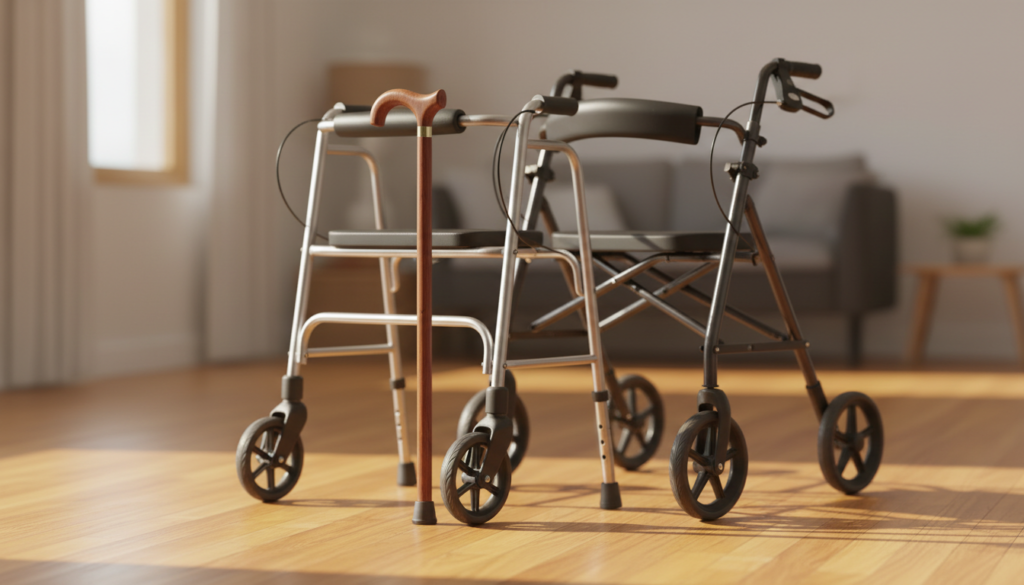
What to consider when choosing a mobility aid
- Canes help with lighter support needs
- Walkers help when someone needs more stability
- Rollators can work well for people who need breaks while walking
- Fit matters — a badly fitted cane or walker can make posture worse and actually increase fall risk
- Get professional help — a physical therapist can recommend the right option and make sure it fits properly
- Will they actually use it? The best mobility aid is the one someone uses every day, not the one leaning against the wall
Caregivers: The People Who Notice First
Caregivers are often the quiet backbone of preventing falls in older adults.
They notice the small changes that others miss — a slower walk, more hesitation on stairs, a hand reaching for the wall more often than before. Those details matter, and they’re easy to overlook if nobody’s paying close attention.
But this part can be tricky. Most older adults don’t want to feel watched or managed. They want to feel respected. They want to know they still have a say in how they live. The best caregiver support sounds less like orders and more like partnership.
Practical caregiver habits that help
- check in regularly about balance, fatigue, and dizziness
- notice new side effects after medication changes
- encourage simple exercise routines — and join in when possible
- help with home changes that keep getting put off
- go along to appointments when an extra set of ears would help
- watch for signs that daily tasks are getting harder
A 2019 study on caregiver knowledge and fall prevention found a clear positive correlation between what caregivers knew and how effectively they practiced fall-prevention strategies. People do better when they understand what they’re doing and why.
In daily life, caregiver support looks pretty unglamorous. It’s reminding someone to do the exercises. Moving a side table two feet to the left. Noticing that a medication seems to be making someone groggy. Standing nearby during balance practice.
And it’s knowing when to say “let’s do this together” instead of “you shouldn’t do that anymore.” That shift in tone changes everything.
Risk Factors Worth Knowing About
Fall risk is rarely just one thing. It’s usually a mix of little problems that stack up until one bad moment turns into an emergency.
Common fall risk factors
- weak muscles
- poor balance
- medication side effects — especially dizziness, drowsiness, or blood pressure drops
- vision problems and outdated prescriptions
- unsafe or unsupportive footwear
- dehydration
- poor nutrition
- cluttered or poorly lit living spaces
- long stretches of inactivity after illness or injury
This can sound like a lot. But the upside is that there are lots of places to step in and help.
Medications and vision
Some medications cause dizziness, drowsiness, or sudden drops in blood pressure. When that happens, even routine movement becomes less predictable. A regular medication review with a doctor or pharmacist can catch this early.
Vision problems add another layer. If someone can’t clearly judge a step, a rug edge, or a dimly lit hallway, their risk goes up fast. Routine eye exams are one of the simplest answers to how to prevent falls in the elderly — and yet they’re easy to put off. Life gets busy. Appointments pile up. A very fixable problem lingers longer than it should.
Nutrition and hydration
If someone isn’t eating enough protein, getting enough vitamin D or calcium, or drinking enough water, that can affect strength, energy, and balance in ways that are easy to miss. Dehydration alone can cause weakness, dizziness, and confusion.
Not the flashiest part of fall prevention. One of the most practical.
Technology: A Helpful Backup
Technology can’t replace human care. But it can add a meaningful layer of protection — especially for older adults who spend long stretches alone.
Types of fall-detection devices
- Smartwatches with fall alerts
- Pendants worn around the neck
- Clip-on devices that detect motion changes
- Home sensors that notice unusual movement patterns
- Apps that send reminders or alert family members quickly
The best device is the one the person will actually wear, charge, and understand. Fancy features don’t help much if it’s confusing, uncomfortable, or perpetually sitting uncharged on a nightstand.
Technology works best alongside caregiver involvement, not instead of it. An alert can tell a caregiver that someone fell. A sensor can show that a person is moving less than usual. But the human piece still matters most.
Frequently Asked Questions
What are the signs that a senior may be at risk of falling?
Watch for slower walking, poor balance, frequent tripping, dizziness, unusual tiredness, or a recent fall. New trouble with stairs, turning, or getting up from a chair can also be a sign. A healthcare provider can help assess these early.
What lifestyle changes can seniors make to reduce fall risks?
Daily movement, balance work, supportive shoes, better meals, enough water, regular eye exams, and a safer home setup all help. Staying physically and socially active matters too — movement builds the strength and confidence that keep people steady.
How can seniors adapt their daily routines to enhance safety?
Clear walkways, non-slip mats, night lights, supportive shoes, and short daily exercise sessions all make a difference. So does talking openly with family about what feels harder than it used to.
What community resources are available for fall prevention education?
Senior centers, hospitals, health departments, balance classes, physical therapy clinics, the CDC’s STEADI resources, and the National Council on Aging are all good places to start.
How can caregivers effectively communicate with seniors about fall risks?
Talk with them, not at them. Ask questions. Listen. Keep the tone respectful. Most people respond better when they feel included instead of corrected.
Conclusion
My grandmother got back to her porch eventually.
It took time. It took better lighting, steadier shoes, a grab bar she didn’t want at first, and a lot of small daily exercises she insisted weren’t helping right up until they clearly were.
That’s what preventing falls in older adults actually looks like in real life. Not one dramatic fix. A bunch of small, boring, helpful things that quietly add up to something bigger — confidence, steadiness, and the ability to keep living life on your own terms.
If you’re trying to help someone you love, start small:
- fix the lighting
- clear the walkway
- book the eye exam
- talk about dizziness
- get the grab bar installed
- try five minutes of balance work today, not next week
None of that is fancy. But it matters. And the people in your life are worth every bit of it.
Sources: CDC Fall Prevention Data; “The Effects of Tai Chi on Body Balance in Elderly People” (2010); “Systematic Review of the Effect of Home Modification and Fall Prevention Programs on Falls” (2012); “Effect of a Risk Reduction Intervention Strategy on Caregiver’s Knowledge, Attitude and Practice Related to Fall Prevention” (2019).