Colorado Outdoor Recreation in Retirement: Your Complete Guide to the Centennial State’s Greatest Trails, Peaks, and Paddles
Colorado outdoor recreation in retirement offers trails, ski runs, alpine lakes, and river floats that keep your body strong, your mind sharp, and your calendar full — here’s how to do it right.
I’ve always believed that the best thing retirement hands you isn’t a gold watch — it’s time. Time to finally answer the question you kept postponing during your working years: Where do I actually want to go? For a growing number of retirees, that answer has coordinates somewhere in Colorado.
Colorado outdoor recreation in retirement is more than a hobby. It’s a lifestyle framework — one backed by real science, designed by stunning geography, and surprisingly forgiving for anyone who wants to start (or restart) being active after 60. Whether you’ve been dreaming about a slow morning hike above treeline, a lazy float on a reservoir at dawn, or your first ski run in twenty years, the Centennial State has a version of that dream waiting for you.
This guide is written for retirees — whether you’re already in Colorado, planning a visit, or seriously wondering if this might be the place to put down roots after you hand in your badge for good.
Why Colorado Outdoor Recreation in Retirement Is Worth Thinking Seriously About
Let’s start with the part most articles skip.
The science on outdoor activity and aging is about as clear as that ridiculous blue water in an alpine lake. A study published in the International Journal of Environmental Research and Public Health found that spending more than 30 minutes outdoors was linked to significantly lower depressive symptoms, reduced fear of falling, and better self-reported physical functioning in older adults. Not occasionally. Consistently. Those weren’t just walkers doing laps at the mall — those were people spending real time outside in natural environments.
And if you thought nature exposure was just a mood softener, think again. A systematic review published in Landscape and Urban Planning analyzed 40 randomized controlled trials and found that natural environments improved cognitive functions including attention and working memory, reduced stress markers like salivary cortisol levels and blood pressure, and enhanced emotional wellbeing. For retirees who want to stay sharp — not just physically, but mentally — the argument for getting outside regularly is hard to argue against.
Then there’s the cardiovascular angle. A comprehensive review published in GeroScience found that brisk walking for 30 minutes a day, five days a week, was associated with a meaningfully reduced risk of cardiovascular disease, type 2 diabetes, cognitive impairment, and dementia, while also improving sleep and longevity. Trails, in other words, are doing real medical work.
Colorado gives you the ideal setting for all of it.
Key Takeaways
- Colorado outdoor recreation in retirement delivers proven physical, cognitive, and emotional health benefits backed by peer-reviewed research
- Hiking, snowshoeing, paddleboarding, fishing, and rafting all have retiree-friendly entry points that don’t require elite fitness or expensive gear
- Altitude requires a proper adjustment period — give yourself 24–48 hours and don’t skip the extra water
- Campsite and permit reservations fill up fast; booking early (sometimes six months out) is non-negotiable
- The best seasons for retirees are late spring through fall for hiking, and January through March for winter sports
- Having a flexible Plan B is part of the Colorado experience — and the alternatives are almost always great
- Leave No Trace principles aren’t a formality here; they’re what keeps the places you love open and intact
Who Colorado Outdoor Recreation in Retirement Is Really For
Here’s the honest version: this isn’t just for the retiree who ran marathons and summited peaks on annual vacations. Colorado outdoor recreation has a wide front door.
You can be someone who hasn’t done much hiking since your kids were in elementary school. You can have a bad knee, a sensitive lower back, or a general preference for not being miserable. You can arrive for a week and fall in love, or you can move here permanently and never run out of places to explore. The state is generous like that.
What Colorado does require is a little humility — about altitude, about weather, and about the gap between how fit you think you are and how the thin air makes you feel on day one. I’ll cover all of that. But first, let’s talk about what’s actually available.
Hiking: The Most Accessible Entry Point Into Colorado Outdoor Recreation in Retirement
Hiking is where most retirees start, and for good reason. It requires almost nothing — a decent pair of shoes, some water, a snack you’ll eat too early — and it delivers an outsized return on that investment.
Easy Wins That Don’t Feel Like a Consolation Prize
Emerald Lake in Rocky Mountain National Park is the kind of trail that makes you feel like you earned something without destroying your knees. It’s glacier-fed, the effort is manageable, and the views hit hard. Roxborough State Park near Littleton is another gentle entry point — red rock fins rise out of nowhere, loops are short and satisfying, and you can be done by lunch.
Both are genuinely beautiful. Neither requires a physical trainer to prepare for.
The Middle Ground (More Effort, More Reward)
Herman Gulch to Herman Lake is the trail I’d recommend to anyone who wants to step up their game without tipping into misery. Wildflowers in July are absurd in the best way. The Colorado Trail near Bailey and Breckenridge gives you thru-hike scenery on day-hike logistics — a smart combination.
Fourteeners: Yes, Even for Retirees
I won’t oversell this. Fourteeners — peaks above 14,000 feet — are serious undertakings. But a few are well within reach for fit, acclimatized retirees who plan carefully. Quandary Peak near Breckenridge is the most popular beginner fourteener for a reason: the route is straightforward, it’s heavily trafficked (which has pros and cons), and the summit view is legitimately worth every step. Mount Bierstadt near Georgetown is another solid option, with a boardwalk section across a marshy valley that feels almost cinematic.
One rule that applies to every hike above a certain elevation: be below treeline by noon in summer. Lightning doesn’t negotiate, and Colorado afternoon storms arrive fast and mean business.
Before heading out on any trail, especially if this is your first time hiking in the Rockies, I’d recommend reading through Safety Tips When Hiking for Retirees — it covers everything from what to pack to how to handle emergencies, and it’s written specifically with the retiree body and mindset in mind.
Winter Sports: Colorado Outdoor Recreation in Retirement Doesn’t Stop When It Snows
If you’ve written off winter sports as something for younger joints, Colorado might change your mind — particularly because there are excellent options that have nothing to do with carving down a double-black diamond at Vail.
Snowshoeing: The Most Underrated Winter Activity in the Rockies
Snowshoeing is having a well-deserved moment. The hush of a snow-covered forest, the soft crunch underfoot, the fact that you can turn back whenever you want without anyone judging you — it’s genuinely meditative. Brainard Lake Recreation Area west of Boulder is one of the best places in the state to try it. Frisco Nordic Center and Eldora Nordic offer groomed trails with easy parking and gear rentals nearby.
A research study published in the Journal of Aging and Physical Activity found that previously inactive older adults (ages 55–75) who enrolled in a biweekly 8-week hiking and nature program showed significant improvements in both cardiorespiratory fitness and physical quality of life. Snowshoeing offers the same kind of low-barrier, high-return outdoor engagement — and it’s forgiving enough that you can start from almost zero.
Skiing and Snowboarding for Retirees
If you want lifts and groomed runs, Colorado’s options range from the famous (Vail, Aspen, Steamboat Springs, Breckenridge) to the wonderfully low-key (Monarch, Wolf Creek, Eldora). The smaller mountains often offer better value, shorter lift lines, and a culture that’s more relaxed about the whole experience. March tends to be the sweet spot: deep snowpack from a full winter plus longer days and friendlier sun. It’s the month when Colorado skiing feels almost too good to be true.
Backcountry in Winter: A Note on Serious Planning
Backcountry skiing and snowshoeing off groomed trails require avalanche education, a dedicated partner, and the full safety kit: beacon, shovel, and probe. The Colorado Avalanche Information Center (CAIC) is your daily resource. This is not an area where you wing it and hope for the best.
Water Activities: Colorado Outdoor Recreation in Retirement Has a Splash Factor
No ocean? Doesn’t matter. Colorado has figured this out.
Rafting: Browns Canyon Is the Perfect Starting Point
If you’ve never been rafting — or if it’s been a long time — Browns Canyon on the Arkansas River is the entry-level experience that converts people. Friendly waves, big orange canyon walls, beautiful water. You’ll step off the raft grinning and immediately start asking about the next run. It’s located near Buena Vista, which is worth exploring on its own.
Paddleboarding at Dillon Reservoir
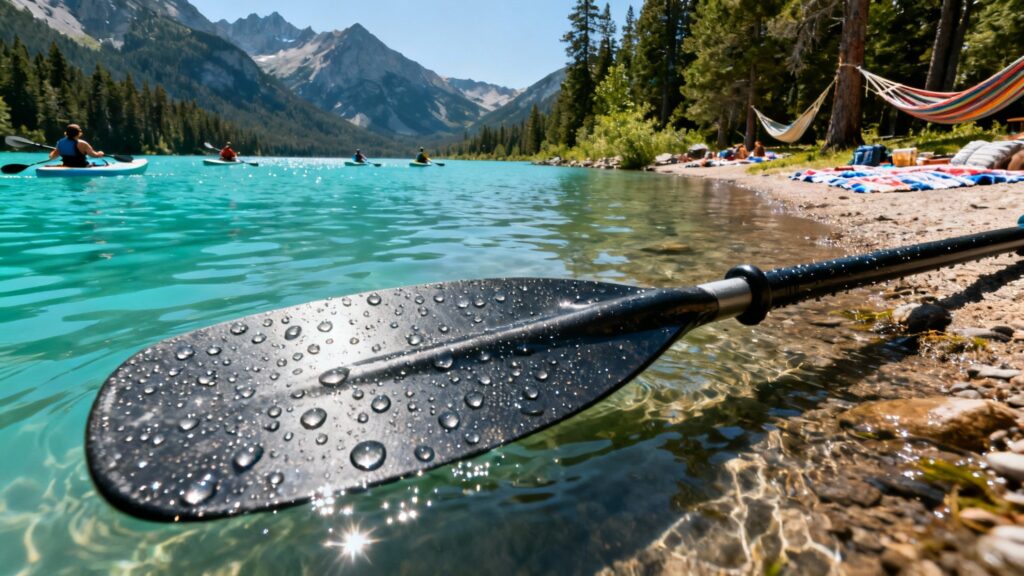
Dillon Reservoir near Silverthorne is one of those places that earns the word “serene” without any irony. Early morning on flat water, with the Ten Mile Range reflecting back at you, is about as peaceful as it gets in Colorado. Bring a warm layer — even on days that end up warm, mountain mornings at elevation bite a little.
Fishing: The Culture of Respect on Colorado’s Rivers
The Arkansas, Gunnison, and South Platte rivers are all renowned trout fisheries. Alpine lakes feel like hidden rooms. Fishing in Colorado carries a culture of genuine respect for the resource — it’s not just posted rules, it’s how the people who spend time on these rivers actually behave. CPW (Colorado Parks and Wildlife) handles licensing and offers education resources for anyone new to the sport.
Camping and Lodging: How to Actually Secure a Site
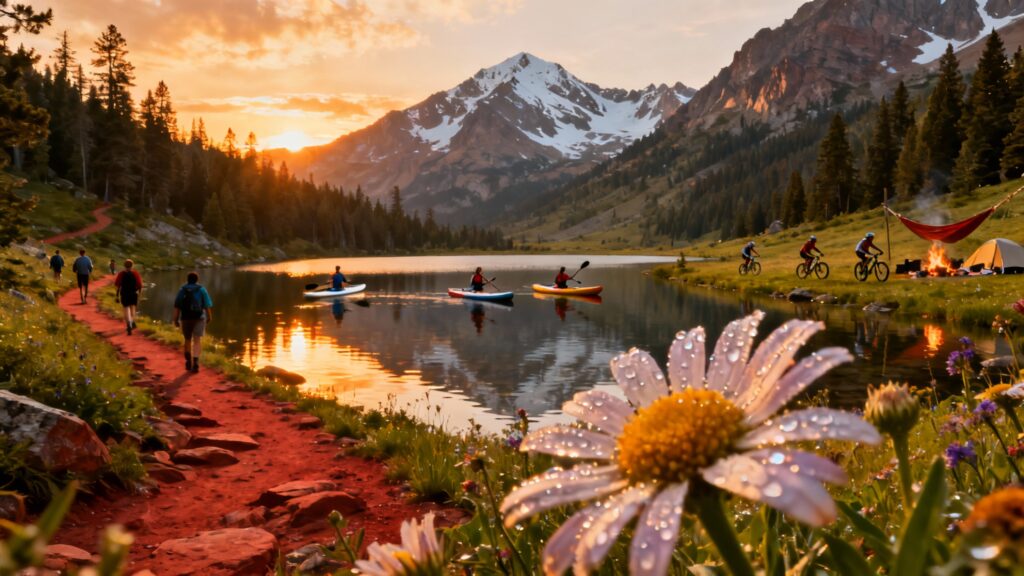
Colorado’s campgrounds are genuinely wonderful. They’re also genuinely competitive.
State parks offer more than 4,000 sites, plus cabins and yurts for those who want a door between themselves and the weather. The important detail: reservations open up to six months in advance, and popular summer dates evaporate fast. If you want a July weekend at a popular park, set a calendar reminder for the exact six-month mark and don’t be late.
Dispersed camping on national forest land is free, flexible, and deeply satisfying if you know what you’re doing. Keep fires within legal restrictions (fire bans change quickly in dry seasons — always check before building anything), use durable sites, and pack out everything.
Backcountry huts and private cabins are another excellent option, especially during shoulder season. Midweek stays are easier to book and often cheaper. A quiet Tuesday night in a mountain hut with a wood stove going is one of those experiences that makes retirement feel like exactly what it was supposed to be.
Understanding Altitude: The Colorado Variable Most Retirees Underestimate
Altitude deserves its own section, because it catches people off guard even when they think it won’t.
Most of Colorado’s popular outdoor destinations sit between 6,000 and 12,000 feet. Denver is already at 5,280 feet — a full mile up. The mountain towns where most outdoor recreation happens range from 8,000 to 10,000 feet at base level, with activities often going significantly higher.
At altitude, your body needs more time to move oxygen efficiently. The symptoms of altitude sickness — headache, fatigue, nausea, disrupted sleep — typically hit within the first 12 to 24 hours and can affect people regardless of age or fitness level. For retirees, who may be managing existing cardiovascular conditions, taking this seriously is not optional.
The protocol is simple: arrive a day early, hydrate aggressively, skip the strenuous activity on day one, and save the celebratory drink for night two. If symptoms are significant or worsening, descend to a lower elevation. There’s no shame in it — it’s just good judgment, and it protects the rest of your trip.
Permits, Reservations, and the Art of Having a Plan B
Colorado’s public lands run on different systems. Here’s the short version of what to know:
Rocky Mountain National Park requires timed entry reservations for its most popular areas (including the Bear Lake Corridor) during peak season. Check the NPS website well in advance — these fill up.
Popular trailheads sometimes require shuttle reservations or parking passes during summer months. Checking trail-specific requirements a week before your visit saves a lot of frustration.
Fire restrictions change with wind and weather. Check them before any campfire, not after.
And when the parking lot at your first-choice trailhead looks like a stadium event, have a Plan B ready. Colorado’s Plan Bs are almost always excellent — slightly less famous, slightly less crowded, and often just as beautiful.
Gear Basics for Colorado Outdoor Recreation in Retirement
You don’t need a full gear catalog. You need the right things.
Footwear is where I’d start. Trail runners work well for most maintained hiking trails. Light hikers with ankle support are better for rougher terrain. Break them in before your trip — blisters don’t discriminate by age.
Layering is non-negotiable. Even in July, mountain afternoons can drop fast. A base layer, a mid-layer (fleece or down), and a waterproof shell cover almost every Colorado scenario. Sun protection matters at elevation — UV exposure increases with altitude, so hat, sunglasses, SPF 30+, and lip balm aren’t optional.
Water: always more than you think. The combination of altitude and dry mountain air dehydrates you faster than coastal environments. Salty snacks help maintain electrolyte balance. The “emergency” chocolate you pack will be consumed before the first hour is over, and that’s fine.
Winter adds microspikes for icy trails, snowshoes for deep snow, and the full avalanche kit for any off-trail backcountry travel.
Rentals are readily available in mountain towns — Breckenridge, Steamboat, Durango, Glenwood Springs all have excellent outfitters. Renting before you invest in gear is genuinely smart for retirees trying new activities.
Season-by-Season Guide to Colorado Outdoor Recreation in Retirement
Spring wakes up at lower elevations while the high country is still buried. Desert trails near Moab (day’s drive from Denver), the lower foothills, and red rock parks are in prime condition. It’s the ideal time to ease back in after winter.
Summer is alpine season — wildflowers from late June into July, blue lakes, long daylight hours, and early-morning starts that put you on the trail before the crowds arrive. Plan for afternoon thunderstorms above treeline and build your schedule around them.
Fall is the show-off. Aspens turn gold from mid to late September, starting higher and working down. The air gets crisp, the crowds thin, and the colors are genuinely absurd. It’s many retirees’ favorite season in Colorado, and it earns that reputation.
Winter flips everything. Resort skiing, Nordic trails, snowshoe routes, and hot springs all become the main events. March is the sweet spot: deep snow and enough sun that you can actually feel it on your face.
How Colorado Outdoor Recreation Fits Into Retirement Lifestyle Planning
This isn’t just a travel note — it’s worth connecting to the bigger picture.
A study published in the Canadian Journal on Aging found that lifestyle planning — including physical activity, travel, and recreational goals — was a more significant predictor of retirement satisfaction than financial planning alone. Knowing your numbers matters. But knowing what you’re actually going to do with your days matters just as much — maybe more.
Colorado outdoor recreation gives retirees something concrete: a calendar worth filling. Early alarms for a sunrise hike, a winter weekend at a Nordic lodge, a fall camping trip timed for aspen color. These aren’t idle activities. Research consistently shows that purpose-driven outdoor engagement in later life is one of the most effective tools available for maintaining cognitive sharpness, cardiovascular health, and emotional resilience.
The mountains don’t care about your age. They care about your preparation, your respect for the environment, and whether you brought enough water.
Responsible Recreation: Leave It Better Than You Found It
More retirees are heading to Colorado’s outdoors every year — which is genuinely great news — but it does mean that responsible habits matter more than ever.
Stay on established trails, especially when conditions are muddy. Detours that seem harmless become permanent scars. Respect seasonal closures, particularly during spring when elk are calving and raptors are nesting. Pack everything out — including fruit peels, which don’t decompose as quickly as people assume, and don’t belong on a trail.
Fire restrictions change fast with dry conditions. If there’s any ambiguity about whether a fire is appropriate, the answer is no.
And learn a little about where you are. Knowing which watershed you’re hiking in, or what kind of ecosystem you’re walking through, changes how you move through a place. It turns a walk into something with a little more weight to it.
Conclusion: Colorado Outdoor Recreation in Retirement Is the Long Game
Here’s what I keep coming back to. Colorado outdoor recreation in retirement isn’t a bucket-list event. It’s a practice — something you build into how you live, not just something you visit once.
The evidence is clear: time outside, moving through natural environments, keeps retirees healthier, sharper, and happier than almost any other single lifestyle choice. The trails are there. The mountains are patient. The only thing required of you is to show up with good shoes, more water than seems necessary, and the willingness to let a blue-sky morning on a Colorado trail remind you why you worked so hard to get here.
Wear your layers. Book your campsite early. Start where the effort feels right and build from there. And leave the places you love a little better than you found them — so the retirees who come after you get the same ridiculous mountain morning you did.