
Safety Tips When Traveling Alone as a Retiree: Your No-Nonsense Guide to Smart Solo Adventures
Essential safety tips when traveling alone as a retiree — from staying aware and packing smart to avoiding scams and traveling with real confidence.
Let’s be real about solo travel in retirement for a second: it’s exciting, freeing, and occasionally just a tiny bit ridiculous.
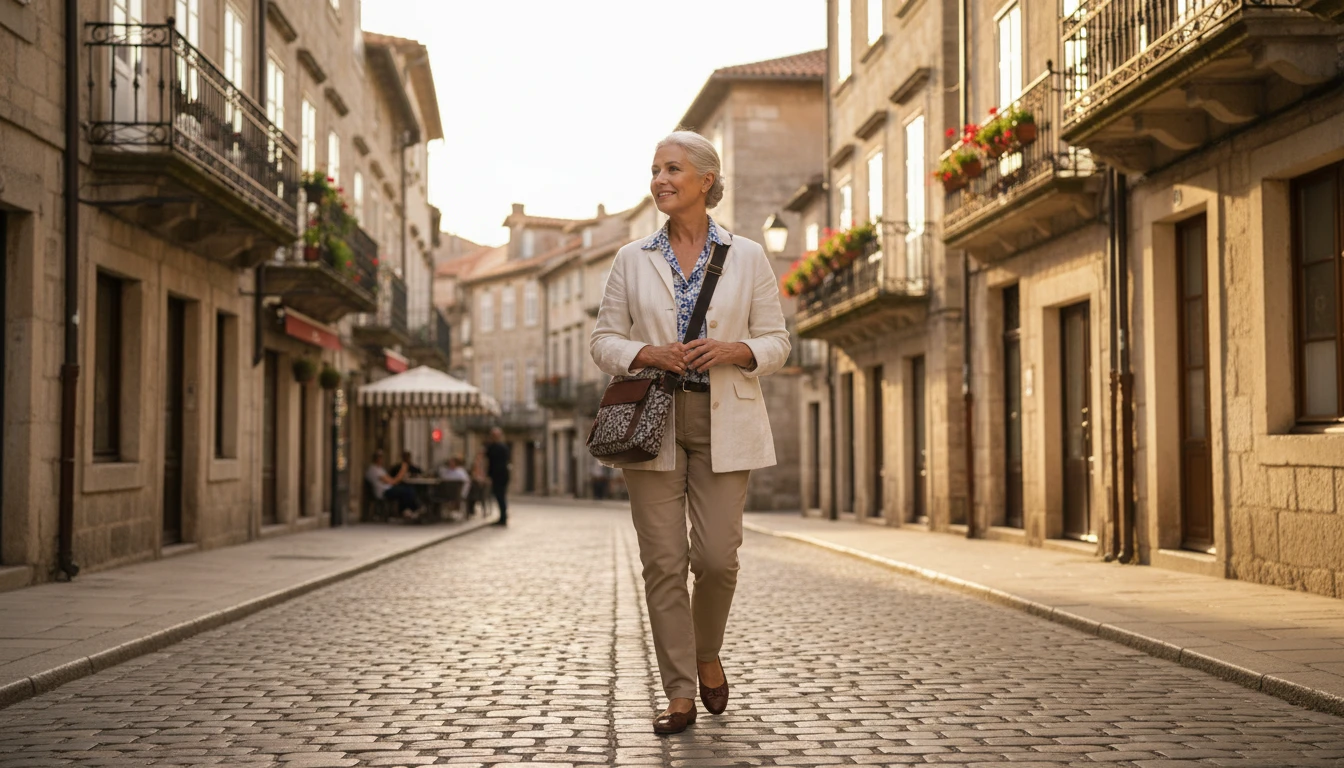
One minute you’re feeling like the main character, strolling through a cobblestone street with a coffee in hand and absolutely nowhere to be. The next, you’re standing outside a train station with 6% battery, a bag digging into one shoulder, and the vague sense that you may have taken a wrong turn about ten minutes ago. I’ve had both versions of that day. Sometimes on the same trip. Once, memorably, within the same hour.
That’s why good safety tips when traveling alone as a retiree matter so much. Not because the world is automatically dangerous, and not because solo travel has to feel scary. It’s because being prepared gives you room to actually enjoy it. You get more freedom, not less. More confidence. Fewer avoidable mistakes — which, let’s be honest, is the best any of us can realistically aim for.
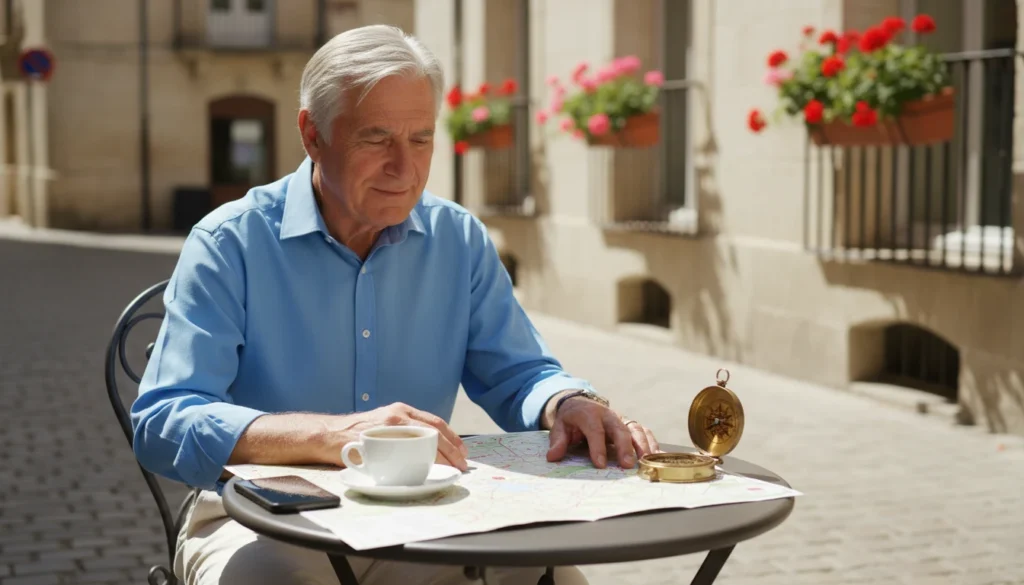
Solo travel in retirement is one of the most rewarding things I’ve ever done. It teaches you how capable you still are — which, after a few decades of being told to slow down, is a genuinely wonderful thing to discover. It sharpens your instincts. It also humbles you in very specific ways, usually involving public transportation, dead phone batteries, and the realization that yes, you absolutely should have downloaded the map before leaving the hotel.
So if you’re planning a trip on your own, this guide is here to help you travel smarter. Not paranoid. Not stiff. Just smart.
Key Takeaways
- Solo travel feels freer when you’ve handled the basics ahead of time
- The most useful safety tips when traveling alone as a retiree are usually the simplest ones
- Staying aware of your surroundings prevents most problems before they start
- Regular check-ins with someone you trust add a quiet, effective layer of safety
- Women traveling solo may need extra planning around local customs, transport, and boundaries
- Learning common scams before a trip saves money, stress, and embarrassment
- Practical clothing and smart packing make a genuine difference in comfort and confidence
- A first-aid kit, document copies, emergency contacts, and a power bank are non-negotiables
- Safety apps help most when you set them up before you need them
- Medication management and health planning are essential additions for retiree solo travelers
Safety Tips When Traveling Alone as a Retiree: Why It Deserves More Than a Five-Minute Skim
A lot of people skim safety advice the way they skim assembly instructions. They assume they’ve got the general idea, skip ahead, and hope nothing collapses. I understand the temptation. Travel safety content can get weirdly stiff — like it was written by someone who has never missed a bus or panic-bought bottled water in a language they do not speak.
But the reality is simple: when you’re on your own, the little practical things matter more.
There’s no built-in backup. No one is there to say, “Hey, maybe don’t walk down that dark side street,” or “That taxi feels off,” or “You left your passport in the hotel safe, right?” When you’re solo, you’re the planner, the navigator, the common-sense department, and the emergency contact brain all in one. It’s a lot of hats. Most of them are invisible. All of them matter.
For retirees, there’s an additional layer worth acknowledging honestly. You may be managing medications, navigating health considerations, or traveling without the physical stamina you had at thirty-five. None of that makes solo travel impossible — not even close. But it does make thoughtful preparation more valuable. The good news is that retirees tend to be excellent at exactly that kind of preparation. Decades of life experience count for a lot on the road. Probably more than a good pair of running shoes, though I’d recommend both.
The Foundation: Personal Safety Precautions Every Solo Retiree Traveler Needs
Situational Awareness — The Skill That Changes Everything
If I had to choose one habit that matters most for solo travel safety, it would be this one. Not martial arts. Not expensive gear. Not some ultra-dramatic travel hack from a YouTube thumbnail with a shocked face on it. Just plain old situational awareness.
Look up. Notice things. Pause before you move.
That’s really it.
When you’re in a new place, it helps to know what’s going on around you. Which streets are busy and well-lit? Where can you step inside if you suddenly feel uncomfortable? Who seems normal, who seems pushy, and who is paying a little too much attention to you specifically? These details matter, especially when no one else is there to clock them for you.
One of the most practical safety tips when traveling alone as a retiree is to stop using your phone while walking unless you absolutely have to. I say this as someone who loves maps, travel photos, restaurant reviews, and the false emotional security of holding a phone like it can solve everything. But distraction makes you easier to target. It also makes you look uncertain, which is its own kind of problem.
I’ve started checking directions while standing still — preferably near a shop or café — then putting my phone away before moving again. It’s such a small shift, but it changes how you carry yourself. You look more confident because you actually are more confident. And the instinct thing? Trust it. If a person, street, taxi, or situation feels wrong, you do not need to gather more evidence like you’re building a legal case. You can just leave. That’s allowed. That’s actually the whole point.
Regular Check-Ins: The Simplest Safety Net You’ll Ever Set Up
I don’t do dramatic check-ins. No one’s getting a detailed spreadsheet from me. But I do make sure somebody knows the basics.
Usually I text a family member or close friend when I land, when I arrive at my accommodation, and if I’m going somewhere more remote or getting in late. It takes almost no time, and it means someone has a rough idea of my movements if something goes sideways. My daughter calls it my “proof of life texts,” which I find both funny and slightly concerning about what she thinks I get up to.
This is one of those safety tips when traveling alone as a retiree that feels almost too obvious to mention, but it works because it’s easy. Easy systems are the ones people actually use. If you’re taking a long transfer, arriving after dark, or heading somewhere with patchy service, sharing your live location for a little while can be a good move too. Not forever. Just long enough to cover the vulnerable part. Simple, quiet, effective.
Emergency Preparedness: The Fifteen Minutes That Could Save Your Trip
This part is not glamorous. It will not make your Instagram story. Do it anyway.
Before a trip, save the local emergency numbers, your hotel address, and the location of the nearest hospital or clinic. If you’re traveling internationally, save your embassy or consulate details too. Government travel pages like the U.S. State Department travel site are useful for this because they pull together a lot of practical information in one place.
For retirees, add one more layer: make sure your travel insurance covers pre-existing conditions and medical evacuation. This is non-negotiable. Standard travel insurance often excludes pre-existing conditions unless you specifically opt in, and medical evacuation from a remote destination can cost tens of thousands of dollars without coverage. The U.S. Travel Insurance Association has solid guidance on what to look for.
I also keep digital copies of my passport, visa, insurance, and reservations — plus printed copies tucked separately in my bag. Printed copies feel a little old-school until your phone dies at the exact wrong moment, at which point paper starts looking incredibly sophisticated.
Health and Medication Management: The Retiree Solo Traveler’s Extra Layer
This section doesn’t appear in most generic travel safety guides, and that’s exactly why it’s here.
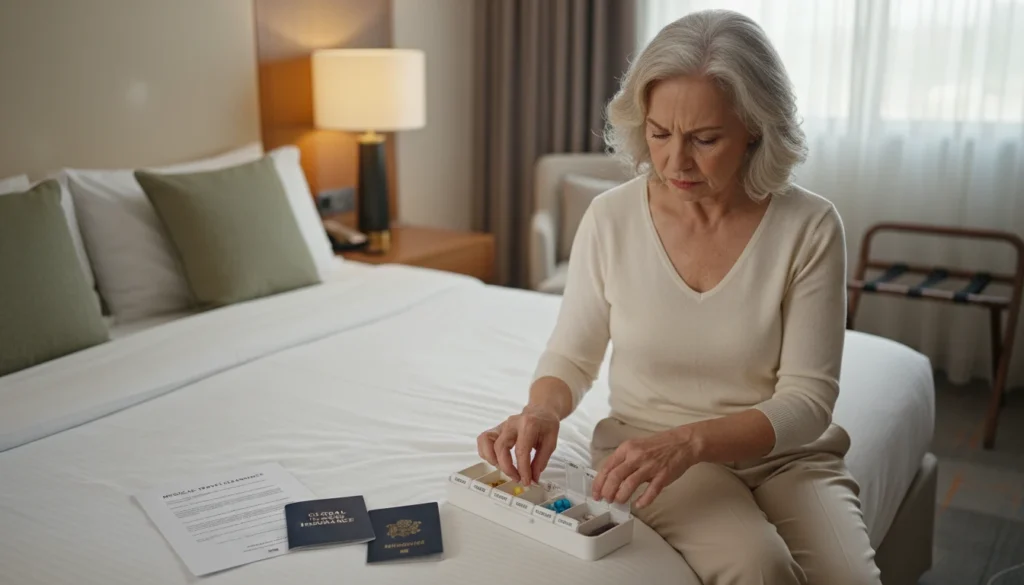
Managing medications while traveling solo requires a bit of planning, but it’s entirely manageable. Carry all medications in your carry-on — never in checked luggage. Keep them in original labeled containers. Bring more than you think you’ll need, ideally a week’s extra supply, because delays happen and pharmacies in foreign countries don’t always carry your specific formulation. I learned this the hard way in a small coastal town where the pharmacy had exactly two shelves and a very patient pharmacist who spoke no English. We figured it out eventually. I’d rather not repeat the experience.
Before you leave, ask your doctor for a letter summarizing your medical conditions, current medications, and dosages. This is invaluable if you need medical care abroad and can’t communicate clearly, or if customs questions your medications. Some countries have restrictions on certain drugs that are perfectly routine at home — worth checking in advance.
If you use medical devices like a CPAP machine, hearing aids, or mobility aids, research power compatibility and bring backup batteries or adapters. A dead hearing aid battery in a foreign train station is a solvable problem — but only if you brought the spare.
Safety Tips When Traveling Alone as a Retired Woman: Real Talk
The Unique Challenges Women Face — and How to Navigate Them
There’s no need to dramatize this, but there’s no point pretending it’s all the same either. Women traveling alone — at any age — often have to think about safety in a slightly more layered way.
You’re not just wondering where to go. You’re wondering how to get there, what time to return, whether this person is being friendly or intrusive, and whether saying “no thanks” will end the conversation or somehow invite five more questions. It’s not always heavy. But it is real.
A 2018 study in the Journal of Sustainable Tourism found that women often managed travel risk through practical strategies like planning ahead, reading situations carefully, and adjusting behavior to fit the local environment. That sounds about right to me. The most confident solo female travelers I know aren’t reckless. They’re observant. There’s a difference, and it matters.
For retired women, there’s an added dimension worth knowing: being older often works in your favor. In many destinations, older women are perceived as less threatening and more trustworthy, which can open doors and ease interactions in ways that genuinely surprise people. That’s a quiet advantage. Use it.
Research Local Customs Before You Arrive
I’ve learned this one the mildly awkward way — specifically, by showing up somewhere and immediately doing something that made three people stare at me simultaneously. Not my finest moment.
Understanding local customs before you arrive can make you feel at home faster. Sometimes it’s about dress. Sometimes it’s about how openly people chat with strangers, how public transport works, or what’s considered normal after dark. Even basic things like whether women usually dine alone in a certain area can be helpful to know ahead of time.
That doesn’t mean you need to overcorrect or dress like someone you’re not. It just means doing enough homework to move through the place without accidentally making yourself more noticeable than necessary. A little research goes a long way — and yes, it counts as one of the smartest safety tips when traveling alone as a retiree, even if it feels more like travel etiquette than safety advice.
Stay Vigilant in Crowds — Especially the Pretty Ones
Beautiful markets. Packed train stations. Festivals. Old city centers at golden hour. These places are wonderful, and they’re also where people get distracted.
That’s the trick of crowded places: they feel public, which makes them seem safe, but they’re also ideal for pickpockets, scammers, and people who count on confusion. When you’re taking in the atmosphere, you’re naturally less focused on your bag, your pockets, or the stranger hovering a bit too close.
Keep valuables zipped, crossbody bag in front, and phone put away unless you really need it. Boring? A little. Useful? Consistently.
Trust Your Instincts in Social Interactions
You do not owe strangers full access to your life.
That sounds obvious, but in the moment, social pressure can make people overshare — especially when traveling. You want to be kind. You want to be open. You don’t want to seem rude. Meanwhile, someone is asking where you’re staying, whether you’re alone, and what your plans are tomorrow. That’s a lot of information to hand over to someone you met four minutes ago.
You can be warm without being revealing. You can be polite without being available. If a conversation starts feeling off, leave it. End it. Redirect it. Pretend you’re late. Suddenly remember a prior commitment. Safety outranks social elegance every single time, and anyone worth talking to will understand that.
Common Risks to Avoid (And How to Spot Them Before They Spot You)
Risky Areas, Especially After Dark
Every city has zones that feel fine at noon and different at night. It’s worth knowing which ones those are before you arrive.
Check recent hotel reviews, travel forums, and local threads to get a sense of where to avoid walking alone after dark. One of the most practical safety tips when traveling alone as a retiree is to make nighttime transportation decisions before you’re tired, hungry, or overly optimistic. That’s when people start bargaining with themselves. “It’s only twenty minutes.” “This shortcut is probably fine.” “I’m sure I’ll figure it out.”
Maybe. Or maybe not. Book the taxi in advance. It’s worth every penny.
Tourist Scams: Know the Classics
Most scams run on the same fuel: distraction, urgency, and your desire not to seem difficult.
Fake taxis. Broken meters. Card skimmers. Overly helpful strangers. Someone “accidentally” spilling something on you while another person reaches for your bag. These things happen everywhere tourists go, especially where crowds and confusion are easy to manufacture.
Before any trip, search for common scams in that specific city. It’s one of the easiest safety tips when traveling alone as a retiree to follow, and it helps because familiarity kills surprise. Scams only work when you don’t see them coming. Once you know the script, the whole performance falls flat.
Keeping Valuables Secure
You don’t need to look paranoid. You just need to look like a hassle.
That’s really the goal. Keep valuables zipped up, close to your body, and out of sight when possible. Don’t flash cash. Don’t keep everything in one place. If you carry a passport, make sure it’s tucked away securely — or leave it safely locked at your hotel and carry a certified copy instead, depending on local requirements. Small habits matter here. They add up quietly and consistently.
How the Right Clothing Supports Your Safety When Traveling Alone
Why What You Wear Actually Matters More Than You Think
Clothing affects more than appearance. It affects comfort, mobility, attention, and confidence.
If your shoes are wrecking your feet, your bag keeps sliding off your shoulder, or your outfit makes you feel visibly out of place, that takes mental energy. And when you’re tired or uncomfortable, your decision-making gets worse. That’s just real life, and it doesn’t get less true as we get older.
For retirees, comfort is especially important. Footwear that supports your joints, layers that adapt to temperature changes, and bags that don’t strain your back or shoulders all contribute to a better, safer travel experience. Practical clothing isn’t boring. It’s useful. Sometimes those are exactly the same thing.
Comfort and Mobility as Safety Features
I’ve come to think of comfort as a form of preparedness.
If you can move easily, walk longer, adjust to temperature changes, and stop fussing with your outfit every five minutes, you’re in a much better position to stay aware of your surroundings. That makes a real difference — more than most people acknowledge.
Sometimes the best safety tips when traveling alone as a retiree are not dramatic at all. Sometimes they’re just: wear the comfortable shoes. Bring the extra layer. Don’t carry the giant tote with no zipper. Quiet wisdom. Loud results.
Smart Packing: What to Bring and Why It Matters
The Essentials You Shouldn’t Leave Home Without
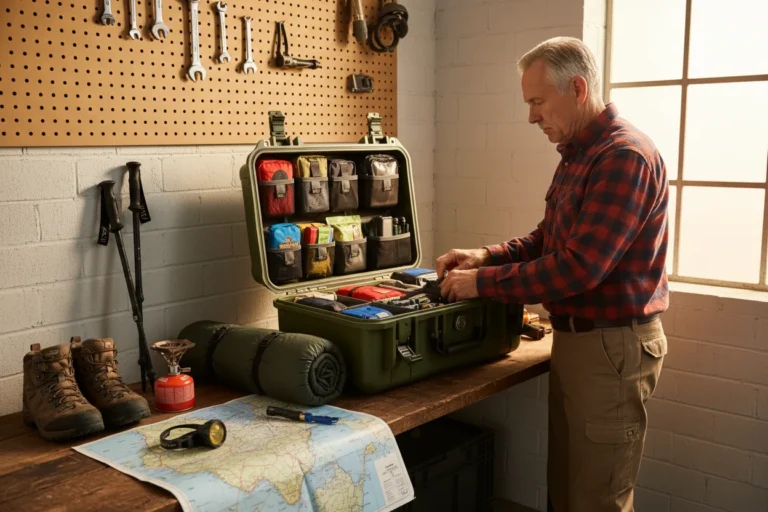
A small first-aid kit, copies of important documents, all medications, a power bank, and emergency contact details are the kind of items that don’t feel exciting until you need them. Then they feel like genius.
For retirees, add: a medical summary letter from your doctor, your insurance card and policy number, a list of all current medications and dosages, and any device-specific supplies you rely on. None of this is heavy. All of it earns its place in your bag.
Safety Accessories Worth Carrying
You don’t need to turn your luggage into a tactical gear display. A few helpful things are enough: a secure crossbody bag, a portable charger, a portable door alarm or lock depending on your accommodation, and a printed list of key contacts and addresses.
Quiet tools. Big help. Every time.
Emergency Contacts and Safety Apps: Set It Up Before You Go
Building Your Emergency Contact System
Save what matters before the trip starts. Accommodation details, emergency numbers, a couple of trusted contacts, and your transport info. Put it in your phone and write it down somewhere too.
It feels simple because it is. That’s why it works.
Safety Apps That Actually Work
Apps like Google Maps offline, bSafe, Noonlight, and TripWhistle can all be helpful depending on where you’re going. The trick is setting them up in advance — while you’re calm, charged, and connected to decent Wi-Fi. Not in the middle of a train station at 11pm with a dying battery. Ask me how I know.
Offline Access: The Tip Everyone Forgets Until They Need It
Download the map. Screenshot the booking. Save the address. Keep the basics available without signal.
It’s one of the least glamorous safety tips when traveling alone as a retiree, and consistently one of the most useful.
The Bottom Line on Safety Tips When Traveling Alone as a Retiree
Solo travel in retirement can stretch you in the best possible way. It makes you more resourceful, more observant, and more comfortable with your own company. It also reminds you — in the most satisfying way — that you are still entirely capable of navigating the world on your own terms. That’s not a small thing. That’s actually a pretty big thing.
That’s why solid safety tips when traveling alone as a retiree matter. They don’t take the fun out of the trip. They protect it. They help you stay flexible without being careless, open without being naive, and independent without being unsupported.
Do the prep. Trust your gut. Keep your phone charged. Wear the good shoes. Bring the extra medication. And give yourself credit for learning as you go.
That’s solo travel in retirement. Not perfection. Just getting a little better, a little wiser, and a lot more comfortable in your own skin every time you leave home.
Now go check your flashlight batteries. And your medication supply. I’m completely serious — when did you last do both of those things? I’ll wait.




3 Comments
Comments are closed.