
Soulful Luxury: The Best Luxury Travel Experiences for Retirees Who’ve Earned Every Bit of It
Discover the most unforgettable luxury travel experiences for retirees — from overwater villas to Zen ryokans — with real stories, smart tips, and destinations worth every penny.
Luxury Travel Experiences for Retirees: A Soulful Guide to the World’s Most Unforgettable Destinations
I want to tell you something I don’t say enough: I used to be a travel snob in reverse.
Not the kind who only flies business class and turns their nose up at anything under five stars. The opposite kind — the one who quietly judged people who spent serious money on travel, who thought “luxury” was just a word rich people used to justify being wasteful, who believed that the most meaningful trips were the ones where you roughed it a little, stayed in hostels, figured things out on the fly.
I was, in retrospect, exhausting.
Then retirement happened. And something shifted — not dramatically, not overnight, but gradually, the way light changes in a room when the season turns. I started thinking differently about time. About what I actually wanted from a trip. About the difference between an adventure that makes a good story and an experience that genuinely changes something in you.
And I started, slowly and a little reluctantly, exploring what luxury travel experiences actually felt like when you stopped approaching them with your arms crossed.
What I found surprised me. The best ones weren’t about being pampered into a stupor, though a good massage never hurt anyone. They were about space — physical, mental, emotional space — that most of us spend decades not having enough of. They were about waking up somewhere beautiful with nowhere to be. About eating slowly. About conversations that didn’t have an agenda. About looking at something — a lagoon, a mountain, a moss garden in the rain — long enough that it actually landed.
That’s what this guide is really about. Not a glossy brochure of places that cost a lot. A genuine, first-person look at the luxury travel experiences that are worth it — and how to figure out which one is worth it for you, specifically, right now, in this chapter of your life.
Because here’s what nobody tells you when you retire: you’ve spent decades earning the right to be intentional about this. Not reckless. Not guilty. Intentional. There’s a difference, and it matters.
Key Takeaways
- Luxury travel experiences for retirees are defined by meaning, not just marble — authentic connection, privacy, and genuine service matter more than star ratings
- The Maldives, French Polynesia, Kyoto, Santorini, Bali, and the Swiss Alps each offer a completely different flavor of luxury — knowing your travel personality helps you choose
- Shoulder seasons (spring and fall) offer better prices, fewer crowds, and more attentive service at most high-end destinations
- A 2023 Virtuoso survey found that 78% of affluent travelers now define luxury as authentic experiences over amenities — the industry is shifting to match
- Sustainability is no longer a bonus feature — 73% of luxury travelers factor it into their destination choices
- Wellness has moved from “spa on level two” to a full philosophy — sleep, food, movement, and quiet are now central to the best luxury travel experiences
- If planning feels overwhelming, a good travel advisor who specializes in senior or luxury travel can save you weeks of scrolling and hundreds of dollars
What Really Makes a Luxury Travel Experience Feel Luxurious?
Here’s a question I’ve been turning over for years: when we say luxury travel experiences, what are we actually talking about?
Because I’ve stayed in places that were objectively, undeniably, photographically fancy — lobbies that made you feel like you’d wandered into a very expensive museum, rooms where the bed had more pillows than I have opinions, everything scented like “forest that went to finishing school.” And I’ve left those places feeling vaguely empty. Like I’d been a guest at a very beautiful, very efficient production, and the curtain had just come down.
Then there were the other places.
A small lodge in the Scottish Highlands where the owner — a woman in her seventies with paint on her hands and strong opinions about whisky — greeted me at the door like I was someone she’d been expecting specifically. She showed me to my room, pointed out the window at a particular hill, and said, “That one’s worth climbing tomorrow. Go early. Take the left path.” She was right on all counts.
A ryokan in Kyoto where I woke up one morning and the room had been quietly, completely transformed while I slept. Futon gone. Low table set. Breakfast arranged in small lacquered bowls — miso, rice, a tiny piece of grilled fish, pickled plum, something green I couldn’t identify but ate anyway. I never heard a sound. Not a footstep, not a door. Just the evidence that someone had been there, cared, and left without needing credit for it.
A barefoot resort in the Maldives where the staff somehow knew, without being told, that I preferred my coffee strong and my mornings quiet. It appeared on my deck every day before I asked. That’s not a small thing. That’s someone paying attention.
Those are the trips I still return to in my mind when I need somewhere good to be. Not the lobbies. Not the thread counts. The moments of being genuinely seen and cared for.
Virtuoso, one of the world’s leading luxury travel networks, found in a 2023 survey that about 78% of affluent travelers now define luxury as authentic experiences — not star ratings, not amenities, not marble. People want meaning. They want to feel something. And increasingly, they know the difference between a place that’s expensive and a place that’s actually good.
The best luxury travel experiences share a few quiet traits:
- They’re beautiful in a way that feels earned, not manufactured
- The service is warm without being performative — present without hovering
- There’s enough privacy that you can be completely, gloriously off-duty
- And at least once, you catch yourself thinking: “I am going to remember this exact moment for the rest of my life”
That can happen on a yacht. It can also happen in a tiny restaurant with wobbly chairs, a handwritten menu, and the best thing you’ve ever put in your mouth.
The Maldives — Overwater Villas and Underwater Magic
If you search “luxury travel experiences,” the Maldives shows up like it owns the internet — and honestly, it has a case.
I’ll be straight with you: I was skeptical. The overwater bungalow thing felt like a marketing invention, a visual shorthand for “expensive vacation” that couldn’t possibly live up to the photos. I’d seen too many Instagram posts that looked like they’d been run through seventeen filters and a prayer.
Then I walked into one.
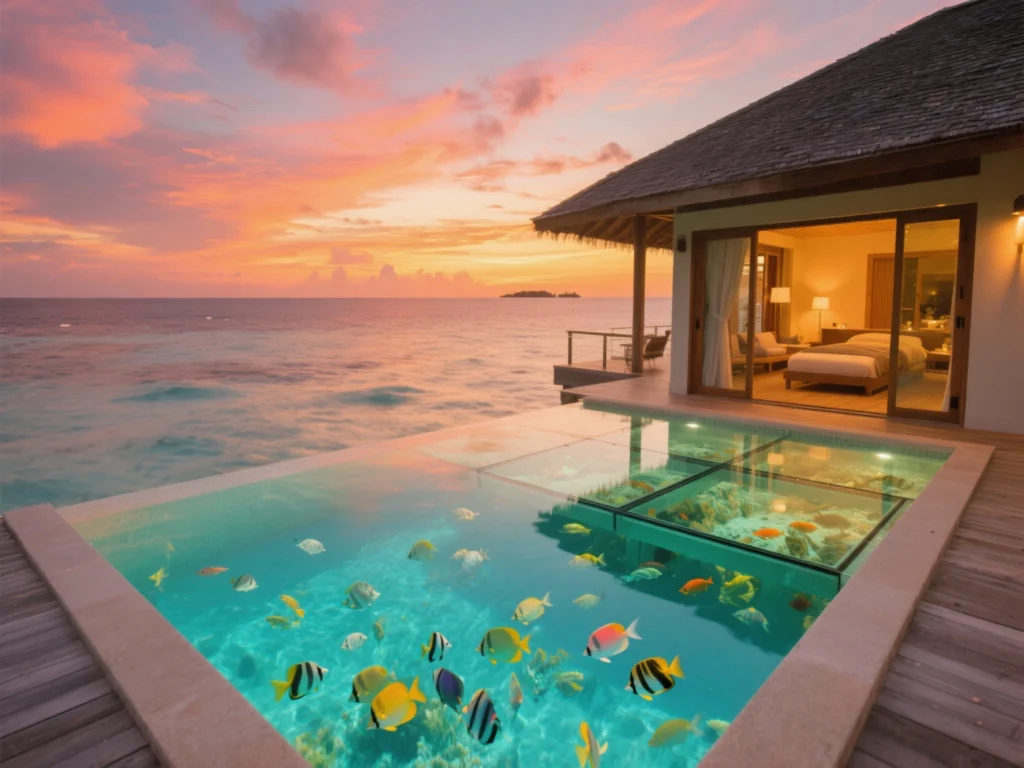
There was a glass panel in the floor, and beneath it, fish — actual fish, just going about their day, completely unbothered by the fact that I was standing above them in a bathrobe having a small existential moment. Outside, the deck had its own infinity pool that blurred into the lagoon, which blurred into the ocean, which blurred into the sky, and somewhere in that gradient of blue I lost track of where one thing ended and another began. A butler appeared — I still don’t know from where — with cold towels and fresh juice, and my inner cynic, the one I’d been carrying around for years, just quietly sat down and stopped talking.
I stayed on that deck for two hours. I didn’t read. I didn’t scroll. I just sat there and let the quiet be quiet.
Why the Maldives Earns Its Reputation
The “one island, one resort” model is the thing that makes the Maldives feel genuinely different from almost any other luxury travel experience. You’re not sharing the island with three competing properties, a cruise ship crowd, and a bachelor party that got on the wrong boat. It’s you, a small number of other guests, and an amount of ocean that feels almost personal.
At one resort, a marine biologist named Aisha took me on a private snorkeling trip to find manta rays. Just the two of us, fins on, floating in water so clear it felt like flying. And then they appeared — three of them, enormous and unhurried, moving through the water like they were thinking about something. I made a noise into my snorkel that I will not describe here. Aisha, to her credit, pretended not to notice.
The showstoppers at Maldivian resorts are genuinely show-stopping:
- Dinner in an underwater restaurant while reef sharks drift past the windows — you’ll spend more time watching the glass than your plate, and no one will blame you
- A massage in an overwater spa pavilion with fish visible through the floor beneath you, which is either deeply relaxing or deeply distracting depending on your relationship with fish
- A private picnic on a sandbank that only exists at low tide — a temporary island that belongs entirely to you for a few hours, and then disappears back into the sea like it was never there
What keeps the Maldives from feeling like a beautiful set is the ecosystem underneath it. The Maldives Marine Research Institute notes that these waters hold over 2,000 species of fish, 21 types of whales and dolphins, and five species of sea turtles. You’re not swimming in “nice water.” You’re a guest in one of the most biodiverse marine environments on the planet. That context — knowing what’s actually down there — changes how the whole place feels.
For retirees, the pace here is a genuine, almost medicinal gift. No itinerary. No checklist. No one expecting you to be anywhere. Just water, quiet, and the slow, slightly disorienting realization that you haven’t thought about your inbox in three days. And then the further realization that you don’t actually care.
French Polynesia — Romance, Culture, and Ridiculous Water
If the Maldives is the classic fantasy, French Polynesia is the one with more plot. Same visual drama — maybe more — but with a stronger sense of story, of people, of a culture that’s been here long before the resorts arrived and will be here long after.
Bora Bora gets the most attention, and when you see Mount Otemanu rising out of a turquoise lagoon at sunrise, you understand why. It’s almost aggressively beautiful. The kind of beautiful that makes you feel slightly inadequate as a photographer, no matter what camera you’re holding.
What Makes French Polynesia Feel So Alive
What sets French Polynesia apart from a lot of other luxury travel experiences is how present the Polynesian culture is — not as a backdrop, not as entertainment, but as the actual living heart of the place.
At night you hear drums that aren’t coming from a speaker. You see traditional dance performed by people who learned it from their parents, who learned it from theirs, and who are not doing it for your benefit so much as because it’s theirs and they’re proud of it. You eat poisson cru — raw fish with coconut milk and lime — and someone tells you exactly how their grandmother made it, with the specific pride of a person who knows the recipe is better than yours.
One of my favorite nights in French Polynesia was a tamaaraa — a traditional feast where food is cooked in an underground oven called an ahimaa. It wasn’t a tourist event. Local families came. Someone’s uncle was in the corner with a guitar, playing songs I didn’t know but somehow felt. Kids ran between the tables with the confidence of children who know they’re welcome everywhere. A woman next to me — I never got her name — kept putting things on my plate and watching my face when I ate them, with the focused satisfaction of someone who already knows the answer and just wants to see you figure it out.
I figured it out. Everything was extraordinary.
High-end resorts like the Four Seasons Bora Bora, St. Regis Bora Bora, and The Brando on Tetiaroa understand this balance. You get the overwater villa, the polished service, the sunsets that look like someone commissioned them. But you also get real access — to the water, to the culture, to the kind of evening that doesn’t feel like it was designed for you but that you somehow got to be part of anyway.
French Polynesia is where you go when you want a luxury travel experience that’s romantic and unreal in the best way — but still feels human. Still feels like somewhere people actually live and love and argue about recipes.
Dubai — High-Gloss, High-Drama Desert Luxury
Now for a complete gear shift. Buckle up.
Dubai is what happens when a city looks at the phrase “go big or go home” and decides home is no longer an option. It has committed, fully and without apology, to spectacle — and there’s something almost admirable about that level of commitment.
This is the place where you can look out from the 122nd floor of the world’s tallest building, go skiing inside a mall, and then have dinner at a restaurant where the bill arrives and you briefly forget how numbers work. All in the same afternoon. All without anyone acting like this is unusual.
The Burj Al Arab — the sail-shaped hotel that loves being called “seven-star,” even though that’s not technically a real rating — has gold-plated iPads, a fleet of Rolls-Royces, and a helipad that moonlights as an event venue. It’s a lot. It knows it’s a lot. It has fully made peace with being a lot.
Underneath the Glitter
I went to Dubai half-expecting to spend the whole trip mildly appalled. Instead, I found myself genuinely charmed — not by the spectacle, but by what was underneath it.
The food scene is serious. Not “nice hotel restaurant” serious — actually serious. Tiny shawarma spots where the line wraps around the block at midnight (always the right sign). Michelin-starred restaurants where the tasting menu is an event you’ll be talking about for months. A spice souk where the air is thick with cardamom and dried rose petals and you buy things you don’t need because they smell like somewhere you want to be.
And then there’s the old city. Al Fahidi, with its coral stone buildings and wind towers, its narrow lanes and small museums, feels like a completely different Dubai — quieter, older, more itself. I spent an afternoon there and came out feeling like I’d actually met the place, not just its skyline.
And then there’s the desert.
One night, I left the city behind for a luxury desert camp. We watched the dunes shift color as the sun went down — gold to amber to a deep, bruised purple that I’ve never seen anywhere else. We learned about falconry from a man who clearly loved his birds more than most people love anything. Then we lay on rugs under a sky full of actual stars — not the vague glow you get near cities, but real stars, the kind that make you feel small in the best possible way — and I thought: this is the part they don’t put in the brochure.
According to Dubai’s Department of Economy and Tourism, the city has welcomed over 14 million international overnight visitors in recent years, with luxury travel a significant driver. It’s clearly working hard to be one of the world’s defining luxury travel experiences. On the evidence, it’s not wrong.
Just visit between November and March. Unless you want to find out what it feels like to walk into a hair dryer set to “lava.” You don’t.
Santorini — White Walls, Blue Domes, and Applauded Sunsets
Time to soften the edges again.
Santorini is one of those places that lives in people’s imaginations long before they ever book a ticket. You’ve seen the photos. The white-washed houses. The blue domes. The caldera views. You’ve probably used one as a screensaver at some point and felt vaguely wistful about it.
Here’s the thing: you arrive, and it’s actually like that. The relief of that — of a place living up to its own mythology — is its own small pleasure.
I stood at the edge of the caldera on my first evening there, watching the light change on the water below, and a cat came and sat next to me. Just appeared, settled in, and stared at the view with the same focused attention I was giving it. We stayed there together for a while. I don’t know what the cat was thinking, but I was thinking: I’m glad I came.
Why Santorini Still Feels Magical
The sunset is the cliché, and yes, it’s worth it anyway.
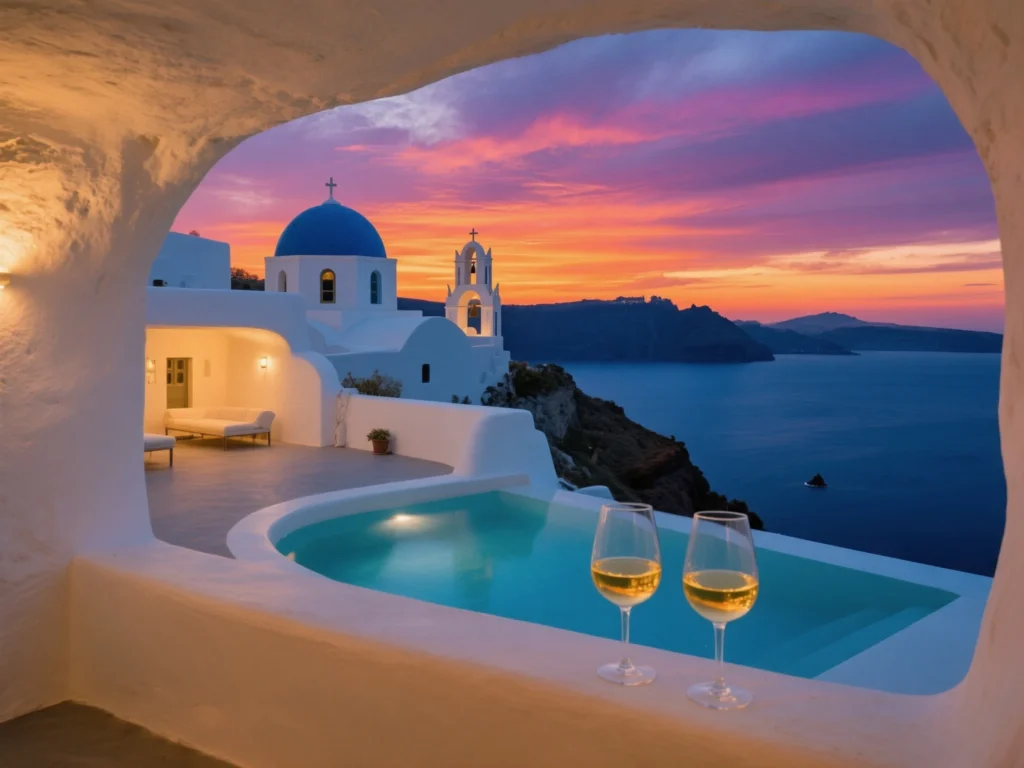
Around golden hour, people start finding their spots — balconies, staircases, low walls, the edges of terraces, anywhere with a clear line of sight to the west. The sky moves through orange and pink and purple while the white buildings catch the light and glow like they’re lit from inside. I’ve watched entire crowds go quiet, and then, when the sun finally drops below the horizon, break into spontaneous applause.
I rolled my eyes internally. Then I clapped. You will too. It’s involuntary.
Luxury in Santorini isn’t about grand resorts. It’s about cave hotels carved into the volcanic rock, with:
- Private plunge pools that seem to pour directly into the Aegean — you float there and feel suspended between the island and the sea, belonging to neither
- Terraces where breakfast appears without fanfare, along with coffee strong enough to wake up your ancestors
- Rooms that stay cool and quiet even when the island is buzzing — thick walls, deep silence, the particular peace of stone
The wine here is worth your full attention. Vines grown in volcanic soil, twisted into low baskets to protect them from the relentless Aegean wind, produce Assyrtiko — a white wine that’s bright and mineral and tastes, somehow, like the island itself. Sharp, clean, a little wild. I went to a tasting at Santo Wines expecting to be politely interested and came out genuinely converted.
A 2022 study in the Journal of Destination Marketing & Management described Santorini’s appeal as “authentic luxury” — upscale, but unmistakably, irreducibly Greek. You never forget where you are. The place won’t let you.
Go in spring or fall if you can. Summer is beautiful and also extremely crowded, and there are only so many people you can watch take the exact same photo from the exact same staircase before something in you starts to twitch.
Amalfi Coast — Italian Drama with a Side of Limoncello
Slide a little further along the Mediterranean and you hit the Amalfi Coast, where the cliffs, the lemon trees, and the architecture are all in a permanent, cheerful competition to see who can be the most dramatic.
The towns — Positano, Amalfi, Ravello, and a handful of smaller ones — cling to steep hillsides above the sea with the confidence of places that have been doing this for centuries and have no intention of stopping. The roads curve along the edge in a way that’s thrilling if you’re driving and mildly alarming if you’re a passenger on the side that faces the drop. I recommend the window seat anyway. The view is worth the occasional sharp intake of breath.
Where Every View Looks Edited
Positano is the show-off: pastel buildings tumbling toward the beach, boats in the bay, beach clubs with their neat rows of umbrellas, the general feeling that you’ve wandered into a film set that forgot to stop being real. It’s beautiful and it knows it and it doesn’t apologize.
Ravello sits higher and quieter, with terraced gardens and villas that explain, without words, why composers and writers have been coming here for centuries to stare at the horizon and call it work. Le Sirenuse in Positano was once a family’s summer home. Now it’s tiled floors and terraces and candlelit dinners that make you understand, viscerally, why people elope.
But the moment I think about most from the Amalfi Coast had nothing to do with any hotel.
I visited a tiny limoncello producer in Ravello — a family operation, not a tourist attraction, the kind of place you find because someone at your hotel mentions it quietly, like a secret. The lemons were enormous. Fragrant in a way that felt almost aggressive, like the trees were trying to tell you something. The owner — a man in his sixties with flour on his shirt from something unrelated — walked me through his process with the patience of someone who has explained this a thousand times and still means every word.
Then he poured me a glass of his “special” batch. The one not for sale. We drank it on a little terrace overlooking the sea while he told me about his grandparents, about how they made it differently, about why he changed the recipe, about why he thinks his version is better. He said this last part with a smile that suggested he knows it’s better and doesn’t need my agreement.
No setup. No soundtrack. Just a person, a recipe, a glass of something cold and lemony, and a view that made everything feel exactly right. That was the Amalfi Coast at its best — not the scenery, though the scenery is extraordinary. The people. The stories. The sense that you’ve been let into something real.
Kyoto — Quiet, Thoughtful, and Deeply Luxurious
Now we slow all the way down.
Kyoto is the destination I recommend most often to people who tell me they’re tired. Not physically tired — the deeper kind. The kind that comes from years of being needed, being on, being responsible for things. The kind that a week at a beach resort might not touch.
Kyoto touches it.
Ryokans and the Grace of Small Things
Stay in a ryokan if you possibly can. The high-end ones — Tawaraya, Hoshinoya Kyoto, Gion Hatanaka — don’t just give you a room. They offer you a different relationship with time.
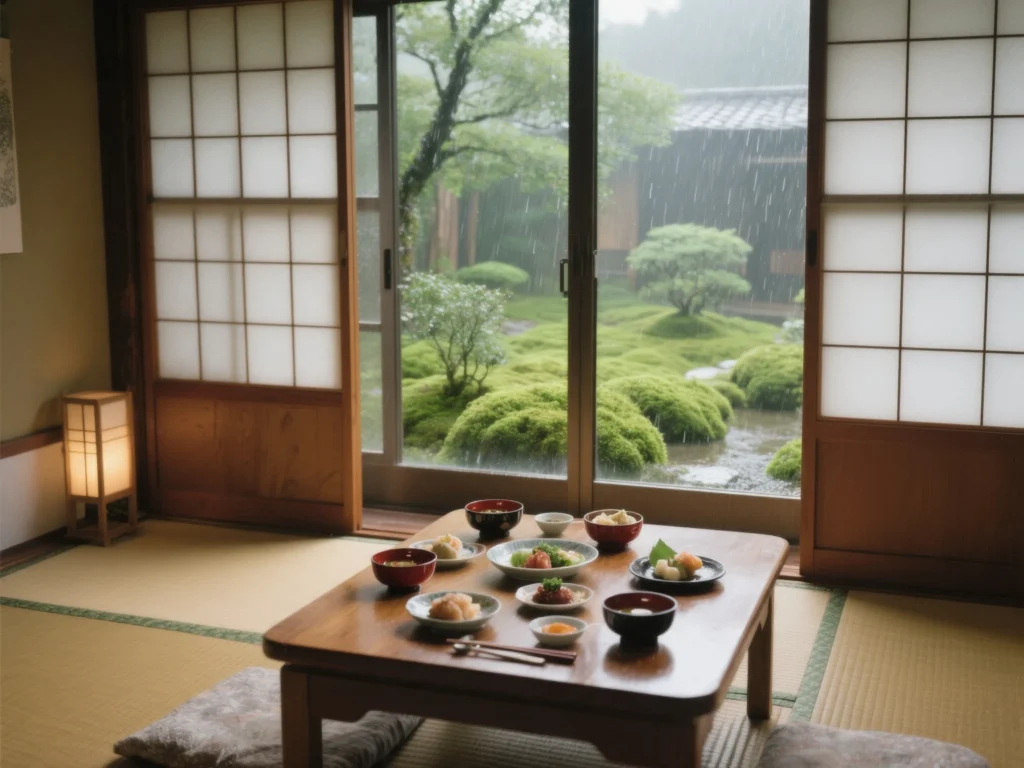
Shoes off at the entrance. Slippers on. Tatami mats underfoot, cool and slightly springy. A yukata robe that somehow makes you feel more composed than your actual clothes, like the garment itself is doing some of the work. Futons that appear when it’s time to sleep and vanish when it’s time for breakfast, as if the room itself is breathing around you.
Meals are kaiseki — a sequence of small, seasonal courses, each one a tiny edible argument for paying attention. I’ve spent a full minute looking at a single dish before picking up my chopsticks. Not because I was being precious. Because it was that beautiful, and I wasn’t ready to disturb it yet.
One morning, I woke up and the room had been transformed while I slept. Futon gone. Low table set. Breakfast arranged in small lacquered bowls — miso, rice, pickled vegetables, grilled fish, something I couldn’t identify but ate without hesitation. I never heard a sound. Not a footstep. Not a door sliding. Just the evidence that someone had been there, had cared, and had left without needing to be thanked for it.
I sat with that for a while. That kind of service — so present, so completely invisible — is its own form of luxury. Maybe the highest form. It requires not just skill but a particular kind of generosity, the kind that doesn’t need to be seen.
The Japan National Tourism Organization has noted a growing wave of travelers coming to Kyoto specifically for this — not to check off temples, but to slow down inside a place that has been doing “quietly refined” for centuries and has no interest in rushing.
For retirees especially, Kyoto offers something genuinely rare: a place that rewards you for going slowly. The temples, the gardens, the side streets that open unexpectedly onto something beautiful — they give you endless places to walk, sit, and simply exist without anyone needing anything from you. That’s not a small thing. After decades of being needed, that’s actually enormous.
Seychelles — Barefoot Luxury in a Wild Paradise
Back to the ocean, but wilder this time.
The Seychelles sit off the coast of East Africa like someone’s very specific, very detailed idea of paradise — the kind you’d sketch on a napkin if someone asked you to draw “perfect.” White sand so fine it squeaks underfoot. Water in shades of green and blue that don’t have proper names. Granite boulders the size of houses, smoothed by millennia of ocean, sitting on the beach like sculpture a giant left behind and forgot to collect.
Luxury That Doesn’t Ignore Nature
What makes the Seychelles different from most luxury travel experiences is the seriousness with which the best resorts treat the place itself. Not as a backdrop. As a responsibility.
Roughly half the country’s land area is under some form of protection. The most celebrated private-island resorts — North Island, Fregate Island Private — have genuine, ongoing conservation programs. Restoring native vegetation. Reintroducing endangered species. Monitoring sea turtle nesting sites year after year, season after season, with the patience of people who understand that some things take longer than a business quarter.
On North Island, you stay in villas with private pools and personal hosts and views that make your camera feel inadequate — and you also walk past giant tortoises on the path to dinner, because the tortoises were here first and have right of way. That shift in framing — we are guests in this ecosystem, even if the rooms are very, very nice — changes how the whole experience feels. It gives the luxury a kind of weight, a meaning, that marble and gold leaf can’t provide.
My favorite memory from the Seychelles is small and specific: floating above a sea turtle in about four feet of water, watching it graze on sea grass below me. It looked up once. Assessed me. Decided I was neither a threat nor a snack. And went back to its business with a composure I genuinely envied.
There was something grounding about that — being completely irrelevant to a creature that has been doing this for millions of years. It put things in perspective in a way that was oddly comforting.
Add in Seychellois Creole culture — the food, the music, the language that sounds like French decided to go on a long tropical holiday and never quite came back — and you get a place that feels rich in ways that have nothing to do with the minibar.
Swiss Alps — Snow, Meadows, and Old-World Comfort
Not every luxury travel experience involves saltwater and sunscreen.
If your shoulders drop two inches at the word “mountains” — if something in you goes quiet and happy at the thought of cold air and pine trees and a fireplace that actually works — the Swiss Alps might be your personal definition of luxury. And it’s a very good definition.
More Than Ski Trips and Postcards
St. Moritz, Zermatt, Gstaad — these towns have been associated with a particular kind of old-world glamour for over a century, and they wear it with the ease of places that have never needed to try too hard. Grand hotels that have been welcoming guests for generations. Chalets with fireplaces and views that make you want to write something, even if you’re not a writer. Trains that arrive exactly when they say they will, which is a luxury that anyone who has waited on a platform in the rain will deeply appreciate.
Hotels like Badrutt’s Palace in St. Moritz and The Chedi Andermatt have that quality I love in a great hotel: the sense that you could stay for a month and never run out of things to do, but also never feel pressured to do any of them. Spas with mountain views. Outdoor pools where you can swim in winter while snow falls around you, which sounds impractical and is actually one of the better experiences available to a human being. Beds that make oversleeping feel like a reasonable life choice.
The Glacier Express calls itself “the slowest express train in the world” and is genuinely proud of this. Eight hours from Zermatt to St. Moritz, winding through gorges and over viaducts and past villages so small and perfect they look like they were placed there by someone with very good taste. I spent most of that journey with my face close to the window, watching Switzerland go by, thinking about nothing in particular, which is its own form of luxury.
Switzerland Tourism has highlighted a growing interest in what they call “transformative experiences in nature” — not just a nice room, but something that actually changes how you feel when you leave. The Alps are built for that. You go outside, you move your body, you breathe air that tastes like cold water, you come back tired and hungry and happy. You eat something warm and comforting. You sleep deeply, the way you slept when you were young and didn’t know yet how rare that was.
If your ideal luxury travel experience involves hot soup, cold air, and the particular quiet that only exists when the nearest city is very far away — Switzerland is waiting. It has been waiting patiently, which is very on-brand.
Bali — Wellness, Culture, and Just-Right Chaos
Finally, Bali — a place that manages to be spiritual and chaotic, peaceful and busy, ancient and Instagram-famous, all at the same time, often within the same street.
Bali has become one of the most sought-after luxury travel experiences for retirees who want wellness woven into the trip — not tacked on as an afterthought, not a spa menu you glance at and never use, but genuinely built into the rhythm of the days.
Where Luxury Feels Like a Reset Button
Luxury in Bali often looks like a private villa tucked into rice terraces or jungle, where the main sound is water moving somewhere nearby and the main view is green in every direction. Pool, outdoor shower, bed facing the greenery. Roosters at dawn — which sounds annoying and is somehow not. Geckos on the walls at night, making their small clicking sounds, claiming their territory with complete confidence. The whole thing feels less like a hotel and more like someone handed you a temporary life and trusted you to live it well.
Places like Amandari, Four Seasons Sayan, and COMO Shambhala Estate know exactly who they’re for. Yoga at sunrise. Meditation. Long spa menus built around traditional Balinese healing practices that have been refined over centuries. Food that’s trying to nourish you, not just impress you.
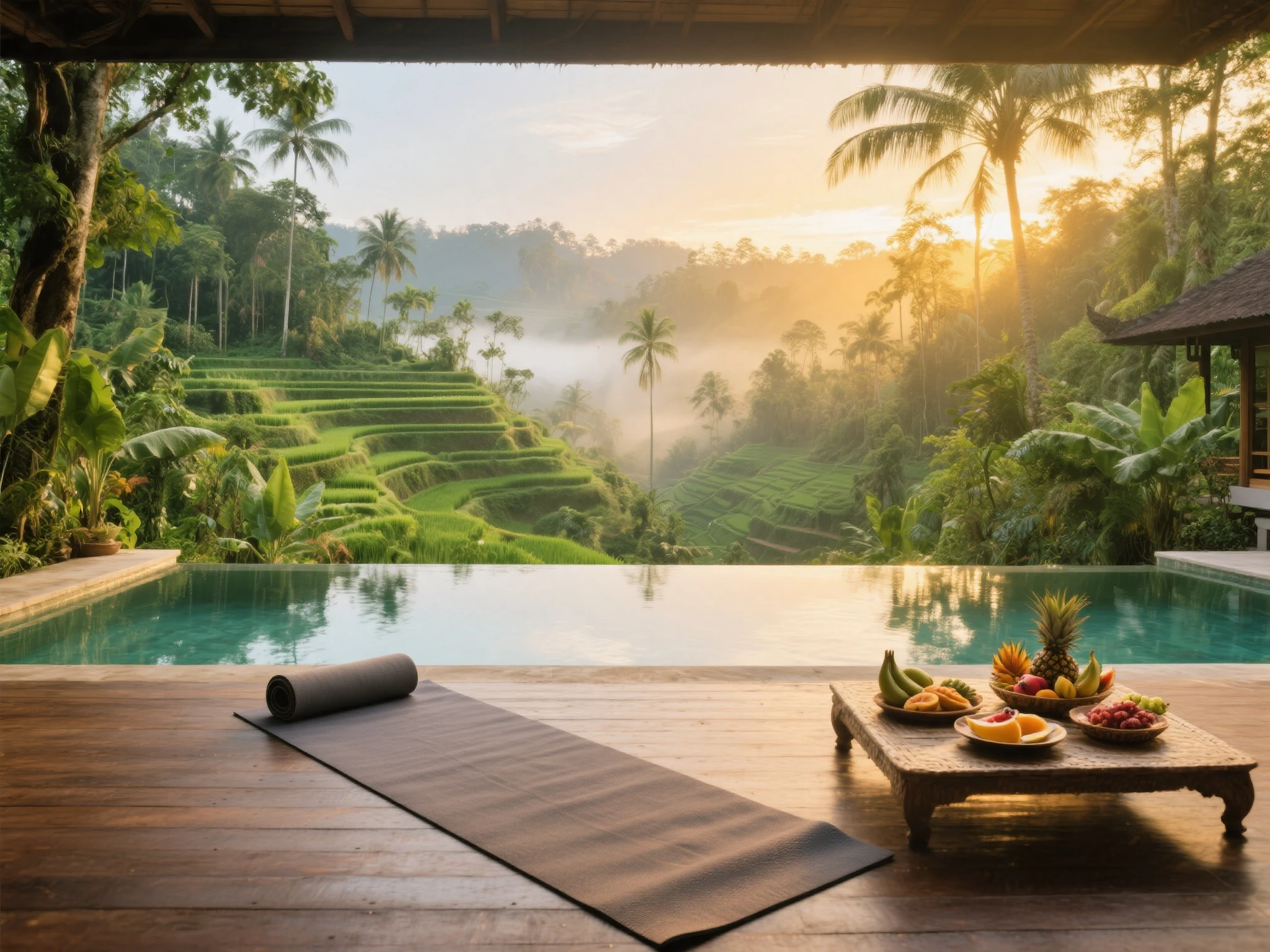
I spent a week near Ubud once that I still think about when I need to remember what it feels like to be well. Yoga at sunrise while mist sat in the valley below like it was resting. Breakfast with too much tropical fruit — there is no such thing as too much tropical fruit in Bali, I want to be clear about this. A massage where the therapist found knots I didn’t know I was carrying and quietly, methodically dismantled them. A slow walk through rice fields in the afternoon, the kind of walk where you stop a lot and don’t feel guilty about it. Early sleep under a mosquito net while frogs started their nightly performance outside.
I came home from that trip feeling like I’d been gently, carefully rebuilt. Not dramatically transformed — just quietly put back together in a way that lasted.
Culturally, Bali is wonderfully dense. Daily offerings placed at doorways and on the ground — small, intricate arrangements of flowers and rice and incense that appear every morning and are gone by evening. Temple ceremonies that happen in the middle of traffic and don’t apologize for it. Dance performances that are half art and half history and entirely worth staying up for. You’re not in a nice hotel that happens to be in Indonesia. You’re in Bali, full stop — and Bali has a very clear sense of itself that it will share with you whether you asked or not.
A 2023 report from Indonesia’s Ministry of Tourism showed sustained growth in wellness-focused luxury travel here, and it makes complete sense. If your idea of a luxury travel experience is one where you go home feeling like a slightly better, slightly quieter, slightly more like yourself version of you — Bali makes a very persuasive case.
If you’re still figuring out the logistics of traveling internationally in retirement — what to pack, what to plan, and what to leave behind — this practical guide to packing for travel abroad for retirees is worth reading before you book anything.
Choosing the Right Luxury Travel Experience for You
At this point, it’s completely reasonable to feel both inspired and slightly overwhelmed. All of these luxury travel experiences sound good. So how do you pick?
This is where you have to get genuinely, uncomfortably honest with yourself — not about budget, but about what you actually need right now. Not what sounds impressive. Not what your neighbor did. What you need.
Are you someone who recharges near water, or do mountains do something for you that the ocean can’t? Do you want to be surrounded by people and energy, or do you need to be somewhere quiet enough to hear yourself think? Are you celebrating something? Recovering from something? Running toward something, or just finally, finally giving yourself permission to stop running?
- The Maldives and Seychelles are for the version of you that needs water, silence, and not wearing real shoes for an entire week
- Kyoto and Bali are for the version of you that wants to come home different, not just rested — changed in some small, real way
- Dubai is for the version of you that wants to be genuinely, unapologetically dazzled
- Santorini and the Amalfi Coast are for the version of you that wants beauty, food, and just enough drama to feel alive
- The Swiss Alps are for the version of you that needs cold air, physical movement, and the deep quiet of being very far from a city
Shoulder seasons — spring and fall — are almost always the right call for most of these destinations. Better prices, better availability, and staff who aren’t operating at “we’re at full capacity and someone just dropped their room key in the pool” levels of stress. The whole experience is calmer. And calmer, at this point in life, is often better.
And if the planning feels too big to do alone — if the options are too many and the decisions too complicated — there is genuinely no shame in working with a good travel advisor who understands luxury. A few well-placed emails can save you weeks of scrolling and, often, real money. Let someone who does this every day do it for you.
Where Luxury Travel Is Heading Next
One of the more encouraging things about watching luxury travel experiences evolve is seeing what people actually care about now — and how much it’s shifted from what “luxury” used to mean.
A 2023 Virtuoso report found that around 73% of luxury travelers now factor sustainability into their destination choices. That’s why you’re seeing more private islands running genuine conservation programs, more hotels tracking their environmental impact with real transparency, and more partnerships with local communities that go deeper than “we hired a band for Friday nights.”
Personalization is getting smarter and quieter. The best properties don’t just remember your pillow preference — they shape the entire stay around who you are, what you came for, and what you need. That’s a different kind of luxury than a gold-plated anything.
And wellness has moved from a line item in the amenities list to a genuine philosophy. The best luxury travel experiences now ask: how do you actually feel when you go home? Are you sleeping better? Eating better? Do you feel more like yourself? Those are the questions that matter, and the best destinations are starting to build their entire offering around the answers.
The future of luxury travel looks less like “how much gold can we fit in the lobby?” and more like “how can we help you feel human again without trashing the planet in the process?” That’s a future I’m genuinely glad to be traveling toward.
Final Thoughts — Saying Yes to Your Version of Luxury
Here’s what I’ve come to believe, after all of it:
Luxury travel, at its best, isn’t about perfection. It’s about space.
Space to breathe without an agenda. Space to sleep without an alarm and wake up without dread. Space to eat slowly and actually taste what’s in front of you. Space to look at something beautiful — a lagoon, a mountain, a moss garden in the rain — long enough that it actually lands. Not just registers. Lands.
The Maldives, French Polynesia, Dubai, Santorini, the Amalfi Coast, Kyoto, the Seychelles, the Swiss Alps, Bali — they all offer their own version of that space. Some give it to you as an overwater bungalow. Some as a mountainside train ride. Some as a futon in a quiet room with a garden outside and breakfast you didn’t have to make, placed there by someone who cared enough to do it silently.
If one of these luxury travel experiences has been quietly calling to you while you’ve been reading — if one of them keeps surfacing in your mind, keeps making you think “what if” — pay attention to that. It doesn’t have to make sense on paper. You don’t need to justify it to anyone except maybe your bank account, and even then, you have a pretty solid argument.
Because if anyone questions why you’d spend serious money on a trip instead of something you can “keep,” you can gently point out that a 2014 study in the Journal of Consumer Psychology found that experiential purchases — like travel — make us happier in the long run than material ones. The joy of a thing fades. The memory of a place, a meal, a moment, a cat sitting next to you at the edge of a caldera — that tends to stick.
So technically, booking that trip is just evidence-based happiness management. You’re practically doing it for your health.
You don’t have to see every place on this list. Start with one. Start where you feel the smallest, quietest spark of “what if?” The world of luxury travel experiences isn’t going anywhere — but the chance to see one of them with the energy, curiosity, and health you have right now? That’s a little more limited.
If something in you is saying, “Maybe it’s time” — it probably is. And you’ve probably been saying it for longer than you realize.

2 Comments
Comments are closed.