
Natural Living for Retirees: A Practical, No-Drama Guide to Feeling Better in This Chapter
Natural living for retirees doesn’t mean going off-grid or giving up Netflix. Here’s a realistic, science-backed guide to cleaner food, simpler products, and more time outside — starting today.
Key Takeaways:
- Natural living for retirees isn’t about perfection — it’s about turning a dial gradually toward choices that feel better in your body and your home
- Food is the highest-impact starting point: eating more real, minimally processed foods reduces calorie overconsumption and improves energy, mood, and cravings
- Cleaning products and personal care items are the quiet plot twist — simpler swaps reduce daily chemical exposure without sacrificing effectiveness
- Indoor air quality matters more than most people realize — ventilation, fewer synthetic fragrances, and a couple of hardy houseplants make a real difference
- Spending at least 120 minutes per week in nature is linked to significantly better health and wellbeing — and it doesn’t require a forest or a fitness plan
- The mental side of natural living — slowing down, setting limits on screen time, practicing presence — is just as important as what you eat or clean with
- Start with one category, make it feel normal, then add another. Burnout isn’t natural, and neither is trying to change everything at once
When I first started looking into natural living for retirees, I had a very specific image in my head.
Me, in a sunlit farmhouse. Churning butter. Birds braiding my hair like a Disney princess. A pantry full of powders with names I couldn’t pronounce and a lifestyle that required a full personality transplant.
Then I remembered: I live in the real world. Where emails exist. Where laundry multiplies like it has a side hustle. Where dinner is sometimes “whatever is fastest that still technically counts as food.”
And that’s exactly why this matters — because natural living for retirees doesn’t have to look like that fantasy. It doesn’t require a new zip code, a homestead, or giving up your Netflix subscription. It’s about making a few smarter, calmer choices that reduce your exposure to the stuff your body doesn’t need — chemical, processed, mental — and increase your connection to the things it actually thrives on.
Also, if you’ve ever tried to “change everything” on a Monday and then rage-ordered takeout by Wednesday… hi. Welcome. You’re in very good company.
Here’s the thing about natural living that nobody puts in the headline: it often just gets you back to the basics your body already likes. Real food. Fresh air. Movement. Sleep. Sunlight. Less weird stuff. A 2019 randomized controlled trial published in Cell Metabolism found that people eating ultra-processed diets consumed about 500 more calories per day than those eating minimally processed foods — even when meals were matched for calories, sugar, fat, and fiber. Translation: food engineered to be irresistible tends to succeed at being irresistible. Your body isn’t broken. It’s just been working against a stacked deck.
So let’s unstick that deck. Here’s a friendly, doable guide to natural living for retirees — without turning your life into a nonstop DIY project.
What “Natural Living” Actually Means (The Sane Version)
Before we go any further, let’s define natural living for retirees in a way that doesn’t require buying a $48 jar of “ancestral dust” or explaining your lifestyle choices at every family dinner.
The sane version looks like this:
- You reduce exposure to overly processed foods and unnecessary chemicals — not eliminate, reduce
- You increase things that support health: whole foods, clean air, sunlight, movement, time outdoors
- You choose products and habits that are simpler, less toxic, and more sustainable — for your body and the planet
It’s not purity. It’s not perfection. It’s more like a dial you turn gradually — and retirement, with its new rhythms and more flexible schedule, is actually one of the best times in life to start turning it.
When I first started exploring natural living for retirees, I stopped asking “How do I do all of this?” and started asking “What’s the next small upgrade that won’t make me quit?” That mindset shift is the whole game.
Why Bother? The Real Case for Natural Living in Retirement
If you’re wondering whether natural living for retirees is actually worth your time and energy, here’s the honest answer: convenience has hidden fees.
That “fresh linen” air spray? Often a cloud of fragrance chemicals — including volatile organic compounds (VOCs) — that your lungs didn’t sign up for. The “quick” snack in the shiny wrapper? Usually engineered to keep you snacking well past the point of hunger. The cleaning products that smell like a lemon grove? Sometimes the headache you get afterward is the product, not the cleaning.
And it’s not just vibes. The U.S. Environmental Protection Agency has long noted that indoor air can be significantly more polluted than outdoor air — because of building materials, household products, and poor ventilation. That’s one reason natural living for retirees often starts right at home, in the rooms you spend the most time in.
Retirement also brings a unique opportunity here. You have more control over your environment, your schedule, and your daily choices than you did during your working years. That’s not a small thing. That’s actually a remarkable window to build a life that feels genuinely good — not just functional.
Starting With Food: The Gateway to Natural Living

If you want a high-impact starting point for natural living for retirees, food wins — because you do it every day, multiple times a day. Small shifts here show up in your energy, your mood, your cravings, and your sleep in ways that compound over time.
Ditch the “Food Product” Trap (Without Becoming the Fun Police)
A simple rule I keep coming back to: eat more foods that still look like what they were.
An apple? Great. Apple-“flavored” gummies shaped like tiny cartoon apples? That’s candy wearing a fruit costume. I’m not here to confiscate your snacks. I’m saying: when most of your meals come from real ingredients, the occasional treat doesn’t run the whole show. Your body gets what it needs, and the treat stays a treat instead of becoming the default.
Shop the Perimeter (Most of the Time)
You’ve probably heard the “shop the perimeter” tip. It’s popular because it works.
The perimeter of most grocery stores is where whole foods live: produce, eggs, dairy, meat, fish. The center aisles aren’t automatically evil — but that’s where foods often become shelf-stable by becoming something else entirely. When I’m trying to stay aligned with natural living for retirees, I do a quick mental check: “Is this feeding me, or is it just entertaining my mouth?” Sometimes the answer is “both,” and honestly? That’s fine.
Add One “Upgrade Meal” a Day
If changing your entire diet sounds exhausting — and it should, because it is — try this instead: one upgrade meal.
That could be:
- Breakfast: oats + fruit + nuts instead of sugary cereal
- Lunch: a simple salad + protein instead of fast food
- Dinner: a sheet-pan meal with vegetables and chicken instead of frozen pizza
One better meal a day is a quiet flex. It’s also a gentle, sustainable way to practice natural living for retirees without flipping your life upside down on a Tuesday.
Grow Something (Even If It’s One Herb That Refuses to Die)
I started with a basil plant on a windowsill. Not a homestead. Not a farm-to-table fantasy. One green plant trying its best.
And weirdly, it changed how I cooked. Fresh herbs make basic meals taste like you tried harder than you did. Plus, growing even a little food connects you to seasons and makes you appreciate what “fresh” actually means in a way that no grocery store label ever quite captures.
If you want to practice natural living for retirees in a way that feels satisfying fast, growing herbs is one of the easiest wins. Basil, mint, rosemary, chives — pick one. See what happens.
Cleaning Up Your Cleaning Products
If food is the gateway to natural living for retirees, cleaning products are the plot twist.
Because once you start paying attention, you open the cabinet under your sink and realize it’s basically a tiny chemical nightclub down there. Lots of activity. Questionable ingredients. Nobody checking IDs.
The “Smell Test” Is Not a Health Test
A lot of conventional cleaners smell “fresh” because of added fragrance — often made of many undisclosed ingredients, some of which are VOCs that off-gas into your indoor air.
I learned this the hard way. I used to deep-clean with strong sprays and end the day with a headache and a scratchy throat, like I’d been lightly punched by a lemon-scented ghost. When I switched to simpler options and improved ventilation, those symptoms eased up noticeably. The house was just as clean. My head felt better.
Simple Swaps That Actually Work
Here’s what I keep on hand — effective, not fussy:
- Vinegar + water for counters, glass, and basic surface cleaning
- Baking soda for scrubbing sinks and tubs
- Castile soap for general cleaning and floors
- Microfiber cloths — they pick up a shocking amount without extra product
Does this cover everything? Not always. If you have mold, serious grime, or a stomach bug running through the house like it pays rent, you may need stronger disinfectants. Natural living for retirees isn’t about refusing tools — it’s about using the least intense tool that gets the job done. Practical, not performative.
Rethinking Personal Care Products
This is where natural living for retirees gets personal — literally.
Your skin isn’t a brick wall. It’s more like a selective sponge, and what you put on it daily can matter more than most of us realize. Start with what touches your skin every day and stays on for hours: deodorant, lotion, moisturizer, sunscreen, and makeup if you wear it.
When I started, I didn’t throw everything away — that’s expensive and wasteful. I used what I had, then replaced items as they ran out with simpler alternatives. That’s a more sustainable way to approach natural living for retirees: gradual, intentional, not dramatic.
A quick word on natural deodorant: it can work really well — after an adjustment period. Your body may need a few weeks to stop relying on antiperspirant ingredients. You might have a couple of “huh, interesting” weeks. But then it often levels out. If you want help picking products, the Environmental Working Group’s Skin Deep database is a useful starting point for ingredient transparency.
Creating a Natural Home Environment
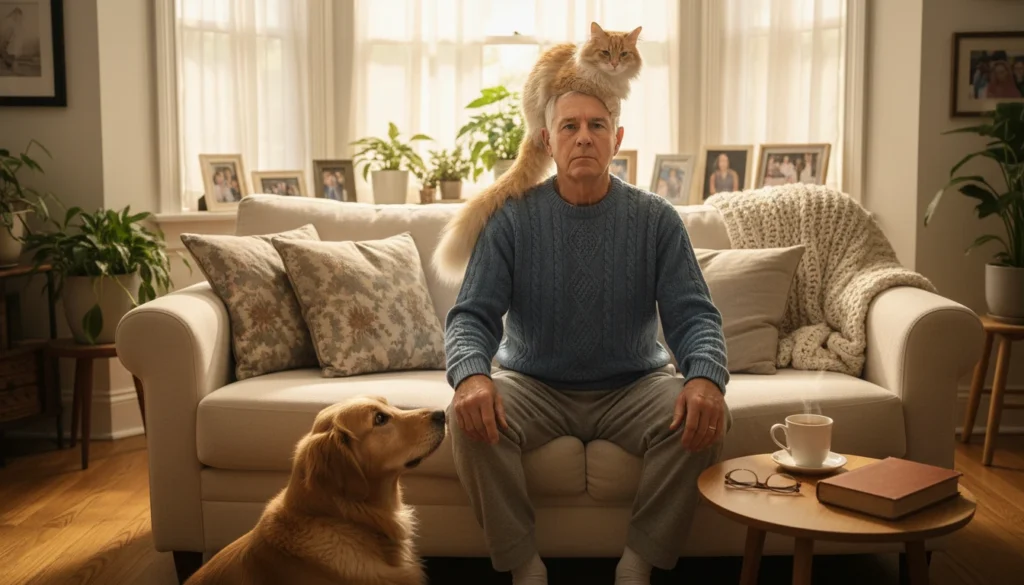
If you’re serious about natural living for retirees, your home environment is a big deal — because you spend a significant portion of your life in it, breathing it.
Indoor Air Quality: The Quiet Influencer
The EPA has noted that indoor air can be more polluted than outdoor air due to building materials, household products, and poor ventilation. That’s why natural living for retirees sometimes starts with the most revolutionary act of all: opening a window.
I know. Groundbreaking.
Easy fixes that feel good fast:
- Ventilate daily — even 10 minutes of cross-ventilation helps
- Skip artificial air fresheners — many release VOCs into the air you’re breathing
- Use exhaust fans — especially when cooking and showering
- Add a few hardy houseplants — snake plant, pothos, spider plant
Houseplants won’t solve everything, but they do something valuable: they make your home feel alive. And that emotional shift — feeling calmer, more grounded in your space — is part of natural living for retirees too. Not everything has to be measurable to matter.
Furniture, Paint, and “New Stuff Smell”
That “new” smell from furniture and paint? Often VOCs off-gassing into your living space.
You don’t need to panic-replace your couch. But when you buy new items:
- Look for low-VOC paints
- Choose solid wood and natural fibers when possible
- Let new furniture air out — open windows, use fans, give it a few days
It’s a long game. Natural living for retirees tends to be. And that’s actually one of its best features — it’s not a sprint. It’s a quiet, ongoing upgrade.
Connecting With Nature: The Part That Fixes More Than You’d Expect

If you ask me what the most underrated piece of natural living for retirees is, it’s this: go outside.
Not as a chore. Not as a fitness punishment. Not as something you schedule and then cancel when something “more important” comes up. Just… outside. Regularly. On purpose.
The 120-Minute Rule (Backed by Research)
A large study published in Scientific Reports (2019) found that people who spent at least 120 minutes per week in nature were significantly more likely to report good health and higher wellbeing — compared to those who spent no time in nature. That’s roughly 17 minutes a day, or a couple of longer walks per week, or a weekend park visit.
I love this finding because it’s specific and forgiving. You don’t need to move to the mountains. You don’t need a trail or a forest or a particularly scenic neighborhood. You just need a plan that fits your actual life — and the commitment to actually follow through on it.
Make Nature an Appointment You Don’t Cancel
I started scheduling outdoor time like it was a meeting with someone important — because honestly, it is. That someone is you.
When I’m consistent about getting outside, I’m more patient, I sleep better, and my brain doesn’t feel like 27 browser tabs are open at once. When I skip it for a week straight, I get what I can only describe as “crunchy in the personality department.” The connection is that direct.
This is the soft, sneaky magic of natural living for retirees: it improves your nervous system, not just your pantry.
Forest Bathing (Less Weird Than It Sounds)
Shinrin-yoku — forest bathing — is essentially “be in a forest and actually notice it.” Research out of Japan has linked it to reductions in stress markers like cortisol and improvements in mood and immune function. A review published in Environmental Health and Preventive Medicine found consistent evidence that time in forested environments reduces blood pressure, heart rate, and stress hormones.
You don’t need a forest, though. A park works. A trail works. Even a tree-lined neighborhood street works. The key is presence: no rushing, no multitasking, no doomscrolling. Just you and the outdoors being outdoors together.
Reducing Toxic Exposure in Everyday Life
At some point in the natural living for retirees journey, you start noticing how many modern conveniences come wrapped in plastic, fragrance, or mystery coatings. You can’t control everything — and trying to will make you miserable. But you can control a few high-impact things without losing your mind.
Plastic: Don’t Aim for Zero — Aim for Less
Plastic is useful. It’s also everywhere. Microplastics have been found in oceans, soil, and even the human body — and while research on long-term health impacts is still evolving, the direction of the evidence is worth paying attention to.
My approach is simple:
- Avoid heating food in plastic containers
- Use glass or stainless steel when it’s easy and convenient
- Don’t stress about the rest
That’s a sustainable way to practice natural living for retirees without becoming the person who brings their own mason jar to a wedding and makes it everyone’s problem.
Water Quality: A Boring Upgrade That Pays Off
If you want one “adult purchase” that quietly supports natural living for retirees, it’s a quality water filter. Not because tap water is always terrible — many places have decent municipal water — but because filtering can reduce contaminants and improve taste, which makes hydration easier. And hydration is one of those unsexy habits that quietly improves everything: energy, skin, digestion, mood, cognitive clarity.
The Environmental Working Group’s Tap Water Database lets you check what’s been detected in your local water supply. Worth a look.
EMFs and Screens: Focus on What’s Certain
EMFs are a heated topic, and the research isn’t simple or settled. What is clear — and well-documented — is that constant screen exposure disrupts sleep, focus, and stress levels in ways that compound over time.
So my natural-living compromise looks like:
- Don’t sleep with my phone by my head
- Take actual screen breaks during the day
- Get sunlight in the morning when possible — it anchors your circadian rhythm and makes sleep easier at night
Even if you never think about EMFs again, these habits still support natural living for retirees in ways that are measurable and real.
The Mental Side of Natural Living (Yes, It Counts)
If your idea of natural living for retirees is all food and products, you’re missing a big piece — arguably the most important one.
Natural living is also mental hygiene: reducing noise, making space, and letting your brain stop sprinting. Retirement gives you more opportunity for this than almost any other life stage. The question is whether you use it.
Slow Down in a World That Sells Speed
We’re trained to treat busyness like a personality. Constant stimulation, constant productivity, constant availability — it’s been normalized to the point where stillness feels suspicious. But constant stimulation isn’t natural for human beings. It’s exhausting. And it’s one of the things that makes stress worse, sleep harder, and joy harder to access.
I’ve started taking small pockets of quiet: a walk without headphones, a few minutes sitting outside with nothing to do, a “no phone in the bathroom” rule that is both healthier and less gross than it sounds. These aren’t dramatic changes. But they give my nervous system a break — and that break is a genuine, underrated part of natural living for retirees.
Mindfulness That Doesn’t Make You Roll Your Eyes
Mindfulness is just paying attention to the present moment without immediately judging it or trying to escape it. That’s it. No incense required. No special cushion. No app subscription, though those can help if you like them.
A review published in JAMA Internal Medicine (2014) found that mindfulness meditation programs showed moderate evidence for improving anxiety, depression, and pain. You can practice mindfulness while washing dishes, eating lunch, watering plants, or sitting on a park bench watching the world go by. The point isn’t to become a monk. The point is to stop living your whole life in “next.”
Making It Sustainable (Because Burnout Isn’t Natural)
If I could tattoo one thing on the internet’s forehead about natural living for retirees, it would be this: don’t do it like a sprint.
Start Small. Then Stack.
Pick one category:
- Food
- Cleaning products
- Personal care
- Home air quality
- Outdoor time
Work on that until it feels normal — not perfect, just normal — then add another. This is how habits actually stick. When I tried to change everything at once, I lasted about as long as a New Year’s resolution at a donut convention.
Don’t Let “Perfect” Bully “Better”
You’ll forget your reusable bag. You’ll eat fast food on a road trip. You’ll buy the non-organic strawberries because the organic ones cost the same as a small used car. You’ll have a week where the only nature you saw was through a window.
That doesn’t mean you failed. Natural living for retirees is about direction, not perfection. Every small choice in the right direction counts — even when it’s surrounded by imperfect ones.
Find Your People (Even If It’s Just One Friend Who Gets It)
Natural living is easier when you’re not doing it alone. Swap tips with friends. Join a community garden. Take a local cooking class or a foraging walk. Find a neighbor who’s also trying to eat better and swap recipes.
Community keeps the whole thing lighter and more fun — and fun is genuinely underrated in natural living for retirees. If it feels like a punishment, you won’t keep doing it. If it feels like a lifestyle you actually enjoy, you will.
The Bottom Line on Natural Living for Retirees
If you’ve read this far, you’re probably not looking for a gold star. You’re looking for a way to feel better in your body and your life — without turning every purchase into a moral philosophy exam or every meal into a research project.
That’s why natural living for retirees works best when it’s practical:
Eat more real food. Open windows. Use simpler cleaners. Read labels when you can. Spend time outside. Sleep like it matters. Forgive yourself quickly. Repeat.
You don’t have to do all of it. You don’t have to do it perfectly. You don’t have to do it all at once. Pick what fits your life right now. Start small. Let it grow.
And if your natural-living journey includes a store-bought deodorant, a freezer pizza on a tired Thursday, and a park walk that counts as “forest bathing” because there were definitely trees nearby — honestly? I think you’re doing great.
This chapter of life is yours. Natural living for retirees is just one way to make sure you’re actually in it — present, well, and feeling like yourself.