
Social Health for Retirees: Why Connection Is the Most Powerful Wellness Tool You’re Probably Ignoring
Discover why social health for retirees matters more than diet or exercise — and the small, science-backed steps that can change everything.
Let me start with a confession that I’m only slightly embarrassed to make.
For most of my adult life, I treated my social health the way most people treat the “check engine” light on their car. I’d notice it. I’d think, hm, that’s probably something I should look into at some point. And then I’d turn up the radio, merge onto the highway, and keep driving — because whatever was making that light come on was probably fine, and also I was busy, and also I’d deal with it next week.
Next week never came. You know how this goes.
I told myself I was just an introvert. That I was busy. That I’d “catch up with people soon.” That I didn’t need a lot of social interaction to feel okay — that I was, in fact, one of those rare, self-sufficient people who genuinely thrived in solitude. I had books. I had projects. I had a very comfortable couch and strong opinions about coffee. What else did a person need?
Spoiler: I was wrong. Profoundly, embarrassingly, expensively wrong. And “soon” never came.
There was one particular winter — deep in a project, barely leaving the house — where my most meaningful human interaction for about three weeks was with a barista who spelled my name wrong on a cup. (It’s not even a hard name. I’ve replayed this moment many times. I’ve considered that perhaps the universe was trying to tell me something. I’ve made peace with it. Mostly.) I wasn’t depressed, exactly. I wasn’t falling apart. I was just… flat. Like someone had turned the brightness down on everything and forgotten to mention it. My sleep was off. I was irritable over nothing — and I mean nothing, like the specific way a cabinet door didn’t close properly, which I thought about for an unreasonable amount of time. I kept thinking I needed a new supplement, a better morning routine, or maybe just more magnesium.
What I actually needed was a friend.
That realization sent me down a proper rabbit hole — research papers, books, interviews, the works. And what I found genuinely floored me. Social health for retirees isn’t just a soft, feel-good concept that belongs on a motivational poster next to a sunset. It’s one of the most powerful predictors of how long you live, how healthy you stay, and how much you actually enjoy the time you’ve got. Retirement removes the built-in social structure of a workplace overnight — and if you’re not intentional about replacing it, the gap quietly grows into something that affects everything else. Your sleep. Your heart. Your brain. Your ability to find Tuesday afternoon genuinely enjoyable rather than just something to get through.
Let me share what I learned — and what I actually did about it.
Key Takeaways
- Social health for retirees is one of the strongest predictors of longevity — strong social ties boost survival odds by 50%
- Loneliness triggers the same biological stress response as physical danger
- Quality relationships lower your risk of heart disease, stroke, and dementia
- Oxytocin — released during positive social interaction — actively counteracts cortisol
- Community belonging provides a sense of purpose that solo habits simply can’t replicate
- Social isolation is linked to chronic inflammation, poor sleep, and cognitive decline
- Small, consistent “micro-moves” beat grand social gestures every single time
- It’s never too late to rebuild — the brain stays adaptable well into old age
What “Social Health” Actually Means — And Why Most Retirees Misunderstand It
I want to clear something up before we go any further, because I spent years confusing “being social” with “being socially healthy.” They are not the same thing. Not even close. I know this because I’ve been both, at different points, and they feel completely different in your body.
I have a friend — let’s call her Maya — who is at every party, knows everyone in every room, and has a social calendar that makes me tired just looking at it. She’s the person who somehow knows the host, the caterer, and the person who designed the napkins. She also calls me sometimes at midnight feeling completely hollow. Like she’s been performing all day and has nothing left. Like she’s been surrounded by people for twelve hours and is somehow lonelier than when she woke up.
And then I have another friend who sees maybe four or five people a week, but every single one of those relationships is deep, honest, and genuinely nourishing. He always seems… settled. Like he knows where he stands in the world. Like he’s been let in on a secret that most people are still searching for.
Guess which one sleeps better. Guess which one gets sick less often. Guess which one I’d call in a crisis — and guess which one would actually pick up.
Social health isn’t about volume. It’s not about how many people you know or how full your weekends are or how impressive your social calendar looks from the outside. It’s about the quality of your connections — how seen you feel, how supported you are, and whether you have a sense of belonging somewhere that actually matters to you.
It breaks down into three core dimensions:
- Social Connectedness — the real structure of your network. Not your follower count. Not your Christmas card list. The actual question: who would show up if things got hard?
- Emotional Support — feeling genuinely heard and valued. Not just “liked” in the algorithmic sense, but actually known by someone who remembers what you told them last month and asks about it.
- Community Engagement — having a sense of belonging to something bigger than yourself. Feeling like a thread in a larger fabric, not just a loose end.
When all three are working, there’s this quiet, steady feeling of being anchored. You can weather things. When they’re not — even if everything else in your life looks perfectly fine on paper, even if your cholesterol is great and your step count is impressive — you feel adrift. And being adrift is exhausting in a way that no amount of sleep, supplements, or self-optimization can fix. Trust me. I tried all of them first.
This is especially true in retirement. When the workplace disappears, so does the daily social scaffolding most of us never realized we were leaning on — the morning check-ins, the lunch conversations, the casual hallway exchanges that quietly kept us tethered to other people. I didn’t fully appreciate how much of my social life had been outsourced to my job until it was gone. It’s a bit like discovering that the furniture you thought you owned was actually rented — and someone just came to collect it. Rebuilding that scaffolding intentionally is one of the most important things you can do in your retirement years. And most people don’t realize they need to until they’re already feeling the gap, sitting in a very quiet house wondering why Tuesday feels so long.
Why Social Health for Retirees Matters More Than You Think — Especially for Your Mind
Here’s where it gets personal for me again.
I used to think mental health was mostly an inside job. My thoughts, my habits, my mindset. Work on those, and everything else follows. I had a whole system. A journal. A meditation practice. A morning routine that would have impressed a productivity influencer. And those things have their place — I’m not throwing any of them out. But what I completely underestimated was how much my mental state was being shaped — constantly, invisibly, without my permission — by the people around me. Or in my case, the lack of them.
The most compelling evidence I came across was from Dr. Robert Waldinger, the director of the Harvard Study of Adult Development — the longest-running study on human happiness ever conducted. We’re talking 75+ years, multiple generations, thousands of participants, decades of data. And after all of that — after all the variables they tracked and all the theories they tested — here’s what Waldinger said was the clearest, most consistent finding:
“Good relationships keep us happier and healthier. Period.”
Not good genes. Not wealth. Not a killer morning routine or a perfectly optimized sleep schedule or the right supplements taken in the right order at the right time. Relationships. The actual, messy, sometimes inconvenient, occasionally awkward, deeply human business of being genuinely connected to other people.
I remember reading that and feeling two things simultaneously: deeply validated, and mildly annoyed that I’d spent so much money on supplements. So much money. We don’t need to get into specifics.
The Anxiety Loop Nobody Talks About in Retirement
When you have people genuinely in your corner, your brain perceives the world as less threatening. It’s not just emotional — it’s neurological, measurable, and real. Think about the last time you were facing something genuinely scary. A health scare. A financial worry. A relationship falling apart. And someone you trusted looked you in the eye — not at their phone, not at the middle distance, but actually at you — and said, “I’ve got you. We’ll figure this out.”
Remember how your shoulders dropped? How you could suddenly breathe again? How the problem didn’t change but somehow felt survivable in a way it hadn’t thirty seconds earlier? That wasn’t just comfort. That was your nervous system recalibrating in real time. That was biology doing exactly what it was designed to do.
Without that kind of support, your brain stays in a state of low-grade “high alert.” It’s scanning for threats constantly, even when there aren’t any. And when that state becomes chronic — when it’s just the background hum of your daily life, so familiar you’ve stopped noticing it — it becomes the perfect breeding ground for anxiety and depression. I’ve lived in that state. It doesn’t feel dramatic. It just feels grey. Like everything requires slightly more effort than it should. Like you’re wading through something invisible that nobody else seems to notice, and you’re not sure if you’re tired or just getting old or both.
The Weird, Wonderful Science of Mirror Neurons
Our brains have mirror neurons — cells that fire both when we perform an action and when we observe someone else doing it. This is why sitting next to a calm, grounded person can make you feel calmer without them saying a single word. Why laughter is contagious in a way that’s almost embarrassingly easy to trigger. Why being around someone who’s panicking makes your own heart rate spike even when nothing has actually happened to you personally.
We are literally wired to regulate each other’s emotional states. We are, at a neurological level, designed to be in each other’s business.
When your social health is poor, you lose access to this natural stabilizer. You’re trying to manage your entire emotional world from the inside, with no external input, no co-regulation, no one to help you reality-check the spiral at 2 AM when everything feels catastrophic and the cabinet door still won’t close properly. It’s like trying to fly a plane without a co-pilot, a control tower, or any of the instruments. Technically possible, I suppose. Deeply inadvisable. And exhausting in a way that makes you think something is fundamentally wrong with you, when really something is just missing — and it has a name, and it can be fixed.
The Biology of Belonging: What’s Actually Happening in Your Body
When you have a genuinely positive social interaction — a real laugh with a friend, a hug from someone you love, even a warm conversation with a stranger at the farmers market who turns out to have very strong opinions about heirloom tomatoes — your body releases oxytocin. You’ve probably heard it called the “cuddle hormone,” which is cute and also slightly undersells what it actually does. It’s not just about warm feelings. It’s about survival.
Oxytocin is the biological rival of cortisol, your primary stress hormone. While cortisol is busy raising your blood pressure, spiking your blood sugar, and inflaming your tissues — all very useful if you’re running from a predator, considerably less useful if you’re just stressed about your inbox or your retirement account — oxytocin sweeps in and essentially says: “Hey. We’re safe. Stand down. You can stop bracing now.”
It lowers blood pressure. It reduces inflammation. It tells your immune system it can stop being quite so paranoid and maybe take a breath.
I think of oxytocin as the clean-up crew for the mess cortisol leaves behind. And if you’re not getting enough genuine social connection, the mess just keeps accumulating. Quietly. Invisibly. Day after day, year after year, until it starts showing up as something your doctor has a name for — and a prescription pad ready, and a slightly concerned expression that they’re trying to keep neutral.
Your Vagus Nerve Has Opinions About Your Social Life
The Vagus Nerve — this long, wandering nerve that runs from your brainstem down through your heart, lungs, and gut — is deeply responsive to social cues. Eye contact. Tone of voice. Synchronized laughter. The physical warmth of being near someone you trust. All of these things stimulate the Vagus nerve and activate your parasympathetic nervous system — your “rest and digest” mode, as opposed to your “brace for impact” mode, which is where too many of us spend too much of our time.
In plain English: your body uses social connection as a biological signal that you are safe. And when it receives that signal, it stops burning energy on survival mode and starts investing in repair, recovery, and long-term health. It starts doing the maintenance work it’s been putting off because it thought there was an emergency.
So the next time someone implies that a long, slow, rambling dinner with people you love is “unproductive,” you can tell them — with complete scientific accuracy — that it’s literally medicine. You’re optimizing your Vagus nerve tone. You’re investing in your parasympathetic nervous system. You’re doing the work. Bill them accordingly, and order dessert.
Can Your Social Life Actually Help You Live Longer? (The Numbers Are Genuinely Shocking)
I want to share a statistic that stopped me cold when I first read it. I actually put down what I was reading, stared at the wall for a moment, and then read it again to make sure I hadn’t misunderstood.
Julianne Holt-Lunstad, a researcher at Brigham Young University, conducted a meta-analysis of data from over 308,000 participants across 148 studies. Her finding: people with strong social relationships had a 50% increased likelihood of survival compared to those with weak or absent social ties.
Fifty percent. That’s not a rounding error. That’s not a footnote buried in the methodology section. That is a massive, consistent, replicated effect across hundreds of thousands of people spanning multiple countries and multiple decades. That’s the kind of number that should be on billboards.
And here’s the part that really got me — the part I keep coming back to: the health risk of social isolation is comparable to smoking 15 cigarettes a day. It’s more dangerous than obesity. More dangerous than physical inactivity. We have entire public health campaigns, warning labels, school programs, and cultural infrastructure dedicated to smoking and sedentary lifestyles. We have almost nothing — culturally, medically, or politically — addressing loneliness with anything close to the same urgency. Even though it’s quietly affecting retirees at an alarming rate, in living rooms and retirement communities and perfectly nice houses where everything looks fine from the outside.
That feels like a gap worth talking about. Loudly. Repeatedly. At dinner, ideally, with people you love.
What Your Heart Actually Needs
A study published in the journal Heart found that social isolation and loneliness were associated with a 29% increased risk of heart disease and a 32% increased risk of stroke. When I read that, I had a genuinely uncomfortable moment of self-reflection that lasted longer than I’d like to admit. I had been obsessively tracking my resting heart rate with a fitness tracker, logging my workouts, optimizing my sleep, reading about zone 2 cardio — while completely neglecting the thing that was actually putting my cardiovascular system at risk.
Chronic loneliness keeps your blood pressure elevated. It keeps your inflammatory markers high. It keeps your body in a state of low-grade emergency, like a house alarm that’s been going off so long everyone has stopped noticing it. And your heart — which is exquisitely sensitive to stress, which has been faithfully doing its job every single second of your life without a day off — pays the price over time, slowly and silently, while you’re busy optimizing everything else.
Your Immune System Is Eavesdropping
Researchers at Carnegie Mellon University exposed volunteers to a cold virus and found that people with a wider range of social ties were significantly more resistant to getting sick than those with smaller social circles. Not just “felt better about being sick.” Actually, measurably, biologically more resistant. Their immune systems performed better. Full stop.
Your immune system is listening to your social life. It’s taking notes. It’s drawing conclusions. I find that equal parts fascinating and slightly invasive, honestly — like finding out your body has been reading your diary this whole time and has opinions about your choices.
The Loneliness Epidemic Hitting Retirees Hardest
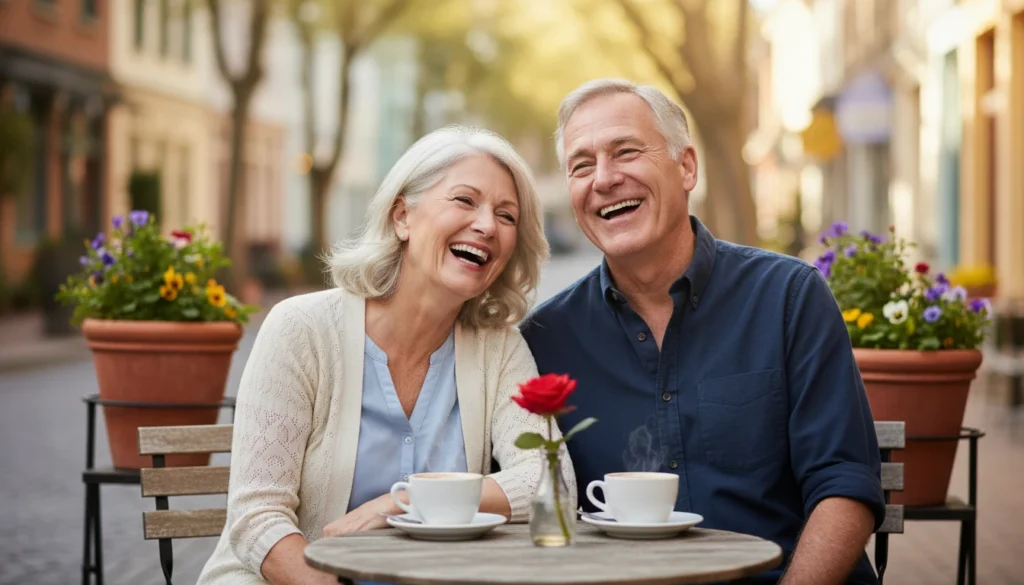
Here’s the uncomfortable truth that sits right at the center of social health for retirees: we are living through a loneliness crisis, and retirement is one of the highest-risk transitions for it. Not because retirees are doing anything wrong. But because the structure that quietly held everything together — the workplace, the daily rhythm, the built-in reason to see people — disappears almost overnight, and nobody really warns you that it’s going to take your social life with it.
In 2023, the U.S. Surgeon General declared loneliness a public health epidemic. Studies consistently show that around half of American adults report measurable levels of loneliness — and among retirees, the numbers are even more sobering. The workplace disappears. The daily rhythm disappears. The built-in reason to see people disappears. And if you haven’t been intentional about building connections outside of work, retirement can feel less like freedom and more like a very quiet room that you didn’t realize you’d been dreading — a room where the silence is fine at first, and then less fine, and then something you’re actively managing.
When you’re chronically isolated, your body enters what researchers call “hypervigilance” — a state of constant, low-level threat detection. Evolutionarily, this makes complete sense. A lone human was a vulnerable human. Being separated from the group was genuinely dangerous. Your brain hasn’t fully updated its threat assessment software since then, and it responds to social isolation accordingly:
- Sleep becomes fragmented — your brain stays “on guard” through the night, preventing the deep, restorative rest your body desperately needs, because some ancient part of it is convinced you need to stay alert
- Cognitive decline accelerates — the brain is fundamentally a social organ; without the complexity and stimulation of human interaction, it starts to lose its sharpness in ways that are subtle at first and considerably less subtle later
- Inflammation becomes your default state — without the calming effect of oxytocin, cortisol runs unchecked, and chronic inflammation quietly takes root in ways that show up years later as things you didn’t see coming
I’ve felt the edges of this myself. When I go too long without real, meaningful connection, I get what I can only describe as “socially rusty.” I become more cynical. My sense of humor — which I consider a core part of my personality, not a bonus feature, not something that can be removed without significant consequences — goes quiet. I start reading neutral emails as passive-aggressive. I start interpreting silence as rejection. I start having opinions about cabinet doors.
None of that is a character flaw. It’s a symptom. And recognizing it as a symptom — rather than just “who I am when I’m tired” or “just getting older” — was genuinely one of the more useful things I’ve ever figured out about myself. It changed how I respond to it. Instead of pushing through, I reach out. And it works, every single time, in a way that no supplement ever has.
What to Actually Do About It: Practical Steps for Retirees
Alright. We’ve established that social health matters enormously, that the science is overwhelming, and that retirement is one of the highest-risk periods for social isolation. Now let’s talk about what to actually do — because “just be more social” is about as helpful as “just stress less” or “just sleep better” or “just eat less and move more.” Technically true. Completely useless as actionable advice. The kind of thing that makes you want to close the tab.
Here’s what has actually worked for me, and what the research backs up.
The Two-Minute Text Rule
Most friendships don’t die dramatically. They don’t end in a fight or a falling out or a moment you can point to and say, “that’s where it went wrong.” They die quietly, slowly, in the “we should catch up soon” graveyard — which is a very crowded place, full of good intentions and people who genuinely meant it when they said it. We mean it when we say it. And then life happens, and “soon” becomes three months, then six, then a year, and then it feels weird to reach out because too much time has passed and now it would require an explanation and possibly a formal apology and maybe a small gift.
My rule — and I’m genuinely consistent about this now, which is not something I say lightly — is that if someone crosses my mind, I text them immediately. Not a long, elaborate message. Not a “hey, sorry it’s been so long, life has been crazy, I’ve been meaning to reach out, I feel terrible about it” essay that I’ll spend twenty minutes drafting, editing, second-guessing, and then abandon because it feels like too much. Just: “Hey, saw something that reminded me of you. Hope you’re doing well.” Twenty seconds. Send. Done. It keeps the ember glowing. You’d be amazed how much a tiny, consistent gesture does for a relationship over years — and how much people appreciate being thought of, even briefly, even imperfectly.
Find Your Third Place — And Actually Go There
Sociologists use the term “Third Place” to describe a space that isn’t home and isn’t work — somewhere you go regularly, where people recognize you, where you belong without having to earn it every time you walk through the door. A coffee shop where they know your order. A gym where people notice when you’re not there. A church. A walking club. A pottery class where everyone is equally bad at centering clay and equally delighted about it. A bookstore with a good events calendar and staff who have opinions.
In retirement, the Third Place becomes even more essential because the workplace — which used to serve that function, whether you realized it or not — is gone. I joined a local walking group about eight months ago. Do I love walking at 7 AM? I mean — I love having walked. The actual getting-up-while-it’s-still-dark part is still an ongoing negotiation between my ambition and my pillow, and my pillow is a formidable opponent. But I now have a group of people who expect to see me on Tuesday mornings. Who notice when I’m not there. Who I’ve had some genuinely great conversations with while pretending the hill we just climbed wasn’t as steep as it clearly, objectively was.
That feeling of being expected somewhere — of someone noticing your absence, of mattering to a group in a small but real way — is more powerful than I anticipated. It turns out that’s not a small thing. It might actually be one of the most fundamental human needs there is, right up there with food and sleep and a cabinet door that closes properly.
Volunteer — Seriously, It’s a Cheat Code
If you want to feel better quickly and build genuine connections without the awkwardness of forced small talk and the pressure of trying to be interesting to strangers, go volunteer somewhere. The shared mission removes the social pressure entirely. You’re not standing around trying to be funny or impressive or the kind of person who has interesting things to say at parties. You’re both doing something that matters, side by side, and the conversation happens naturally because you have something real to talk about.
Friendships built around shared purpose tend to be stickier and more meaningful than ones built around proximity alone — and they form faster, too, in a way that feels almost unfair compared to the usual slow crawl of adult friendship-building. I’ve made some of my most genuine retirement friendships through volunteering. There’s something about working toward something together that skips about six months of the usual “getting to know you” small talk and goes straight to the good stuff — the real conversations, the actual laughs, the kind of connection that makes you drive home thinking, I really like that person.
Actually Listen — Like, Really Listen
Here’s a small shift that has quietly transformed some of my most important relationships, and it cost me nothing except a little ego: I stopped listening to respond and started listening to understand. When a friend says, “I’ve been feeling a bit lost since I retired,” instead of immediately launching into my own experience (relatable, but not actually helpful in that moment, and also not what they asked for), I ask: “What’s been the hardest part?” And then I actually wait for the answer. And then I ask a follow-up. And then another.
People are genuinely starving to be heard. Not advised. Not fixed. Not one-upped with a story about how your situation was actually harder. Just heard — fully, without the other person mentally composing their response while you’re still talking. If you become the person who actually listens — who asks the second and third question, who remembers what someone told you last month and follows up on it unprompted — you will become someone people want in their corner. You will become, without trying very hard, one of the most valuable people in someone’s life. And that is the foundation of real, lasting social health.
Community Involvement: Why Belonging to Something Bigger Changes Everything in Retirement
I’ll be honest — I used to roll my eyes a little at “community involvement.” It sounded like something you put on a college application or said at a networking event to seem well-rounded and civic-minded. I was wrong about that, and I’ve had to sit with some genuinely uncomfortable self-reflection about it, which I’m sharing with you now so you can skip that part.
When you’re genuinely part of a community — a neighborhood group, a faith community, a sports league, a volunteer organization, a book club that actually reads the books and doesn’t just use it as an excuse to drink wine (though honestly, both are valid) — you gain access to something that’s very hard to manufacture on your own: the feeling that you matter to a group of people. That they’d notice your absence. That you’re a thread in something larger than yourself, and the fabric would be slightly different without you in it.
That feeling is one of the most powerful antidepressants available. And it’s completely free. No prescription required. No co-pay. No waiting room with magazines from 2019 and a television playing the news at a volume that makes it impossible to think.
Community also provides what I think of as “social infrastructure” — a network of people you can call on for practical help, emotional support, and shared resources. Not just borrowing a lawnmower (though honestly, that’s great too, and underrated as a bonding experience). But having people who show up when things get hard. Who bring food when you’re sick. Who check in when they haven’t heard from you. Who create a genuine safety net around you that you didn’t have to build entirely by yourself, from scratch, in your 60s, while also trying to figure out what to do with all this free time.
A Necessary Word About Social Media
We have to talk about it, because it’s the elephant in every room — and for retirees especially, it can feel like a lifeline that is actually, upon closer inspection, a very comfortable, very well-designed trap.
Social media is not inherently bad for social health. I want to be fair about this. If you’re using it to coordinate real-world plans, stay connected with family across distances, find local community groups, or follow accounts that genuinely make your life better — it can be a net positive. It has its uses. I’m not here to tell you to delete everything and go live in the woods.
But if you’re using it to passively scroll through the highlight reels of people you haven’t spoken to in years while sitting alone at 11 PM, comparing your ordinary Tuesday to someone else’s carefully curated vacation — that’s not connection. That’s comparison. And comparison, as someone much wiser than me once said, is the thief of joy. It’s also, I would add, a very efficient way to feel simultaneously overstimulated and deeply lonely, which is a remarkable achievement when you think about it.
A ten-minute phone call with a friend I actually care about does more for my social health than two hours of scrolling. Every single time, without exception, in a way that is not even close. I know this. I still have to remind myself of it regularly, because the scroll is easy and the phone call requires me to be present and occasionally say something coherent. If you’re in the same boat, you’re not alone — and the reminder is worth repeating as many times as it takes, including right now, including to yourself.
Recognizing When Your Social Health Is Struggling
Just like you’d pay attention to a persistent cough or unusual fatigue or the check engine light on your car (we’ve come full circle), it’s worth checking in on your social health from time to time. Not in a clinical, clipboard-and-questionnaire way. Just honestly. Some signs that things might need attention:
- A persistent sense of loneliness even when you’re technically around people — the particular loneliness of being in a room full of people and feeling invisible
- Withdrawing from activities or hobbies you used to genuinely enjoy, not because you’re busy but because you just… can’t quite get there
- Feeling like a burden, or like no one would really notice if you quietly disappeared from their lives — which is almost never true, but feels very true when you’re in it
- Going weeks without a conversation that felt real or meaningful, where you actually said something true and someone actually heard it
- A creeping cynicism or irritability that doesn’t have an obvious cause, and that you recognize as not quite being yourself
None of these are character flaws. None of them mean something is fundamentally wrong with you. They’re signals — your body and mind’s way of saying, “Hey, we’re running low on something important, and we’d really appreciate it if you’d do something about it.” And the response isn’t to force yourself to go to a party you don’t want to attend and perform wellness for two hours. It’s to reach out to one person you trust and be honest about where you’re at. That single act of vulnerability — just saying “I’ve been a bit isolated lately” to someone who cares — is often the thing that starts to turn it around. Every single time.
Social Health for Retirees as You Age: Why It Gets More Important, Not Less
Our social circles naturally shrink with age. Kids grow up and move away. We retire from workplaces that provided built-in daily social structure. Friends relocate. People we love get sick, or die. And if we haven’t been intentional about building and maintaining connections along the way — if we’ve been coasting on the social infrastructure of work and assuming it would always be there — we can find ourselves in our 60s and 70s with a social life that’s a fraction of what it once was, and no obvious roadmap for rebuilding it, and a quiet, uncomfortable feeling that we should have been paying more attention.
The research on this is sobering. Socially isolated seniors have significantly higher rates of dementia, physical decline, and early mortality. But the flip side — and this is the part I want you to hold onto — is equally compelling: the Blue Zones, the regions of the world where people routinely live past 100 in genuinely good health, all share a common thread of tight-knit community life. People in Sardinia, Okinawa, and Loma Linda aren’t just eating well and moving their bodies. They’re embedded in communities where they are needed, valued, and genuinely engaged until the very end. Where people notice when they’re not there. Where they matter.
They don’t just have good diets. They have people. And it turns out, after all the research and all the data and all the decades of studying what makes a long life a good one, that might be the most important ingredient of all. The one that no supplement can replicate and no morning routine can replace and no fitness tracker can measure — but that you can feel, immediately and unmistakably, the moment you have it.
Conclusion: Social Health for Retirees Is Not Optional — It’s the Foundation
Here’s what I keep coming back to, after everything I’ve read and researched and personally stumbled through and occasionally learned the hard way while being slightly too stubborn to learn it the easy way: social health for retirees isn’t a nice-to-have. It’s not a bonus feature. It’s not the cherry on top of an otherwise well-optimized life. It’s the foundation everything else is built on — and without it, the rest of the structure is a lot less stable than it looks.
Your heart needs your relationships. Your brain needs them. Your immune system is literally counting on them. And honestly? So is your sense of humor, your resilience, your ability to find meaning in the everyday, your capacity to get back up when life knocks you flat, and your ability to genuinely enjoy the retirement you worked so hard to get to.
So here’s my challenge to you — and to myself, because I need the reminder just as much as anyone, probably more than I’d like to admit:
Don’t wait for the perfect moment to invest in your social health. Send the text today — the one you’ve been meaning to send for three months. Say yes to the thing you’d normally skip. Show up for someone who needs it, even when it’s inconvenient, especially when it’s inconvenient. Find your Third Place and actually go there, more than once, until it starts to feel like yours — until they know your name and your order and notice when you’re not there.
The research is clear. The biology is clear. And if you’ve ever felt the difference between a season of genuine connection and a season of isolation — really felt it, in your body, in your mood, in the quality of your days, in whether Tuesday feels like something to get through or something to actually live — then your gut already knows it too. It’s always known it.
Your health is a team sport. Go find your team. They’re out there, and they’re probably waiting for someone exactly like you to show up.
Frequently Asked Questions
How many close friends do retirees actually need for good social health? There’s no magic number, but research around “Dunbar’s Number” suggests we generally need 1–2 true confidants, about 5 close friends, and around 15 active social ties to feel genuinely supported. That said, one deeply reciprocal, honest friendship — the kind where you can say the true thing and be heard — is worth more than twenty surface-level ones. Quality is the whole game. It always has been.
Can introverted retirees have strong social health? Absolutely — and honestly, many introverts have exceptional social health precisely because they invest deeply in a small number of relationships rather than spreading themselves thin across dozens of shallow ones. Introversion is about how you recharge, not your capacity for depth or connection. Some of the most socially healthy people I know are introverts who see four people a week and genuinely know all four of them.
What if I’ve been isolated since retiring and genuinely don’t know where to start? Start smaller than you think you need to. A brief, warm exchange with a neighbor. A text to someone you’ve been meaning to reach out to for months — just send it, don’t overthink it. One community event, even if you only stay for twenty minutes and spend most of it near the snacks. The brain is adaptable, and social skills — like any skill — come back with practice. You don’t have to go from zero to thriving overnight. You just have to go from zero to one.
Is online community “real” community for retirees? It can be a meaningful supplement, especially for those with mobility limitations or geographic isolation. But it rarely replaces the full biological benefit of in-person connection — the eye contact, the tone of voice, the synchronized laughter, the physical presence that tells your nervous system, on a deep and ancient level, that you are genuinely safe with another human being. Use it as a bridge, not a destination.
How do retirees rebuild a social life after losing a spouse or close friend? Grief naturally contracts our world, and that’s okay for a season — it’s supposed to. But intentional, gentle re-engagement matters enormously, and it doesn’t have to be dramatic. Grief support groups, volunteer work, faith communities, and interest-based clubs all provide low-pressure entry points back into connection — with people who often understand loss firsthand, who aren’t going to rush you or minimize what you’ve been through. You don’t have to be okay to show up. You just have to show up.


4 Comments
Comments are closed.