
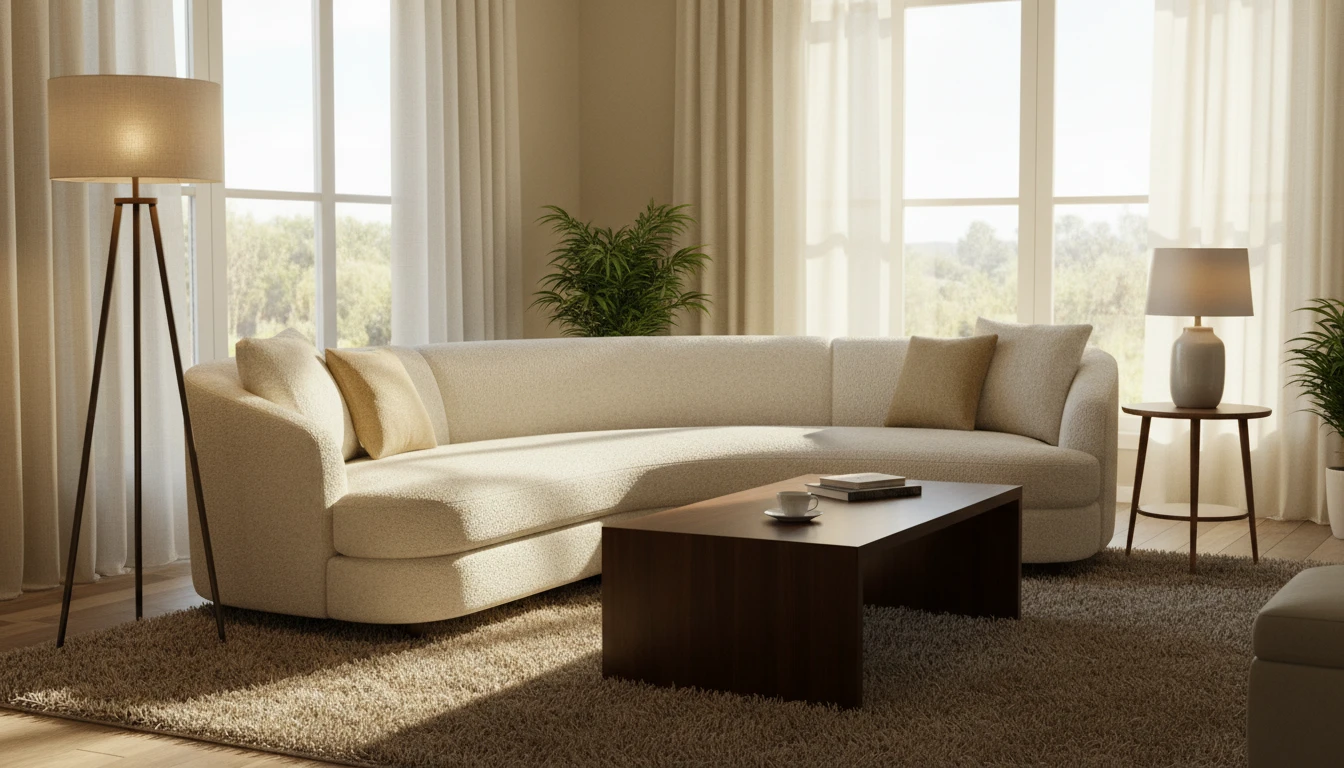
Furniture Aesthetics: A Complete Guide to Beautiful and Functional Design for Your Retirement Home
Furniture aesthetics in retirement means spaces that look great, feel right, and actually work for how you live now — here’s how to get there.
If you’ve ever stood in a furniture store squinting at a sofa like it’s an SAT question, hi — I’ve been there. I once spent three hours wandering a showroom, falling in love with pieces that would have bullied my living room into submission. Gorgeous? Absolutely. Practical for my space — and my life at this stage? Not even close.
That’s the quiet truth about furniture aesthetics: the best rooms aren’t just pretty. They’re livable. They’re where form meets function, style meets reality, and your shoulders drop the second you walk in. And in retirement, that matters more than it ever has. You’re home more. You’re using these spaces more. The sofa that looked stunning in the showroom but wrecks your back after twenty minutes is no longer a minor inconvenience — it’s a daily problem.
Think less “Pinterest museum,” more “I can actually put my feet up here and stay a while.”
Quick tip before we dive in: take photos of your room in morning and evening light. Keep them handy when you shop. Showrooms are charming liars. Your camera tells the truth.
In this guide, we’ll unpack the core elements — color, texture, proportion, and materials — explore popular styles, and talk about how to blend aesthetics with real-life functionality. Along the way, I’ll share what’s worked for me, what I’d never do again, and a few small tweaks that make a surprisingly big difference. Ready?
Key Takeaways:
- Furniture aesthetics in retirement is about spaces that look good and actually support how you live now
- Color, texture, proportion, and material quality are the four pillars — get these right and everything else follows
- Scale and proportion matter more than style — a beautiful piece in the wrong size ruins a room
- Comfort and ergonomics are non-negotiable at this stage; if you can’t relax in it, you won’t use it
- Mixing styles works beautifully with one consistent thread — wood tone, metal finish, or color family
- Budget-friendly upgrades (hardware swaps, reupholstering, secondhand finds) can transform a space without replacing everything
- Sustainable, low-VOC materials aren’t just good for the planet — they’re better for your indoor air quality and your health
What Are Furniture Aesthetics, Really?
Furniture aesthetics are the look, feel, and flow of your space — how pieces play together and how they make you feel. Calm? Energized? Cozy? Irritated because the coffee table is gorgeous but too far for your actual coffee? That’s aesthetics doing push-ups in the background.
It’s all a conversation: your sofa vs. your walls, your floors vs. your lighting, that arched doorway vs. your modern lamp. Nothing lives alone. Historically, we’ve swung from ornate to streamlined — think gilded carvings to Bauhaus logic — and today’s best interiors borrow from both: a little warmth, a lot of function, and just enough personality to make it yours.
In retirement, this conversation gets more personal. You’re not decorating for a life you’re rushing through anymore. You’re designing for a life you’re actually living — slower mornings, longer afternoons, more time in every room. That changes what “beautiful” means. It means a chair you can get in and out of comfortably. A dining table that fits the people you actually host. A bedroom that genuinely helps you rest.
Do this: pick three words you want your space to feel like. Mine are calm, warm, uncluttered. I use them like a pocket compass. If a piece doesn’t move me toward those words, I walk away — politely and with financial restraint.
The Four Pillars of Furniture Aesthetics
Color and Finish: Your Mood Director
Color isn’t background — it’s the mood. And in retirement, when you’re spending more time at home than ever before, the colors around you matter in ways they simply didn’t when you were out of the house for ten hours a day.
Warm tones — terracotta, tobacco, deep greens — feel cozy and grounding. Cool tones — soft gray, misty blue — focus the mind and create calm. Bold hues shine as accents, unless you’re going maximalist, in which case, toss confetti with confidence.
I once painted my office a bright orange for “motivation.” Great decision for about two weeks. Then my brain started sprinting at 10 p.m. Color psychology is real — but always context-dependent. For retirement spaces, I lean toward tones that feel restful without being sterile.
Current lean-ins:
- Neutrals that play nice (ivory, greige, pebble gray)
- Earth tones (ochre, olive, cedar brown)
- One bold statement (a cobalt lounge chair, a terracotta accent wall)
- Monochrome layers — same color family, varied depth
Finish matters too:
- Matte = understated, modern
- Satin = soft sheen, versatile
- High-gloss = luxe but unforgiving (shows every fingerprint and every scratch)
- Natural/distressed wood = effortless character that only gets better with age
Pro move: test peel-and-stick paint samples and fabric swatches on the actual wall behind where furniture will live. Check them morning, afternoon, and evening. The “perfect beige” at noon might moonlight as pale green at dusk.
Texture and Materials: Depth You Can Feel
Texture makes a room feel alive. Real wood has warmth you can feel. Leather develops character. Woven fabrics soften the edges. Engineered materials aren’t the enemy — plywood allows graceful curves, MDF delivers a glassy paint finish, and performance fabrics save your sofa from grandchildren, pets, and the occasional red wine situation.
Aim for at least three textures per room. Easy combos:
- Wood + metal + boucle
- Glass + linen + matte ceramic
- Leather + wool + brushed brass
Small contrast, big payoff: sleek glass coffee table + chunky knit throw; velvet pillow + raw steel lamp; smooth marble + rough jute rug.
Shape and Proportion: The Silent Deal-Maker
Shapes speak. Curves feel friendly and approachable — which is why they’re having such a moment right now, and why they work so well in retirement spaces where comfort is the priority. Sharp angles feel modern and precise. But proportion is where rooms win or lose.
I once bought a sectional that was perfect — if my living room were a gymnasium. Visual weight matters as much as physical size: a dark walnut credenza “reads” heavier than a pale ash one of the same dimensions.
Before buying anything significant, tape the footprint with painter’s tape. Walk around it. Sit in the space. If it feels tight now, the real piece will feel tighter.
Guidelines worth memorizing:
- Coffee table height ≈ sofa seat height (give or take 2 inches)
- Coffee table length ≈ 2/3 sofa length
- Dining seat height: 17–19 inches; table height: ~29–30 inches
- At least 30 inches of walkway clearance; 36 inches for main paths — and in retirement, wider is always better for comfort and ease of movement
Material Quality: What Lasts vs. What Lies
Materials are more than looks — they’re lifespan. Solid wood can be refinished. Veneer is great if it’s high-quality and well-applied. Cheap hardware will betray you in year two. If you’re investing, prioritize frames first (sofa, dining table), then fabrics, then accents.
And here’s something I’ve come to believe deeply: the best furniture investment you can make is often a well-preserved vintage or antique piece. Yes, it’s old. But if it’s still intact after fifty years, that’s not a liability — that’s a track record. Quality that has already proven itself is quality you can trust.
Watch for:
- Tight, even stitching on upholstery
- Dovetail joints on drawers (a very good sign)
- Kiln-dried hardwood frames
- Fabrics with a Martindale rating of 30,000+ for daily household use
Popular Furniture Aesthetic Styles — And How to Make Them Work in Retirement
Minimalist Aesthetics: Intentional and Calm
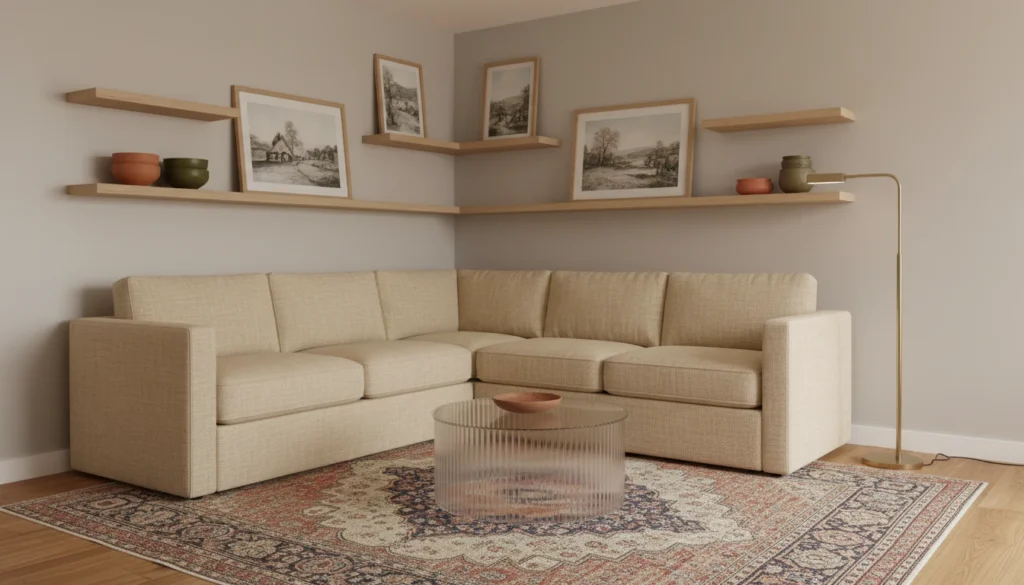
More and more people are moving toward minimalism as they enter retirement — and it makes complete sense. You’ve spent decades accumulating. Now you get to curate. Minimalism isn’t about owning nothing; it’s about owning the right things. Without warmth, though, minimalist rooms can feel like a dental waiting room — crisp but emotionally chilly. Add soul with natural materials and soft textures.
Try:
- Platform bed in oak, linen headboard, wool rug
- Floating shelves with curated (not crammed) items
- One sculptural lamp that feels like art
If it feels sterile, add one warm element per zone: a jute rug, linen drapes, a walnut side table. That’s usually all it takes.
Maximalist Aesthetics: Charm with a System
Maximalism is layers — patterns, books, textures, color — with a plan. The best maximalist rooms don’t shout; they hum. Tie it together with a unifying thread: a color family, consistent metal finishes, or repeating shapes (arches, circles, fluting).
Use the 60/30/10 color rule:
- 60% base (walls, big furniture)
- 30% secondary (rugs, curtains)
- 10% accent (art, pillows, ceramics)
Think jewel-toned velvet sofa, vintage rug, gallery wall — grounded by a consistent palette. In retirement, maximalism can be a beautiful way to display a life well-lived: the travel art, the inherited pieces, the ceramics from that pottery class you finally had time to take.
Mid-Century Modern Aesthetics: Optimism, Streamlined
Tapered legs, warm woods (walnut, teak), honest materials. Classic pieces like the Eames Lounge Chair, Noguchi table, and credenzas with clean fronts. Keep it from feeling “themed” by mixing in contemporary art and updated lighting.
Winning pairing: walnut credenza + abstract oversized art + linen drum shade floor lamp
Mid-century modern also ages beautifully — which is part of why it’s never really gone out of style. The proportions are human-scaled, the materials are warm, and the pieces tend to be genuinely comfortable. For retirement spaces, it’s a natural fit.
Industrial Aesthetics: Raw and Refined
Exposed steel, reclaimed wood, concrete — balanced with warmth. The trick is contrast: hard + soft, cool + warm. Without that balance, industrial spaces can feel cold and unwelcoming, which is the last thing you want in a home you’re spending more time in.
Use:
- Warm bulbs (2700–3000K) and dimmers
- Leather cushions on metal chairs
- Woven throws, textured rugs, and layered lighting
How to Balance Aesthetics with Functionality
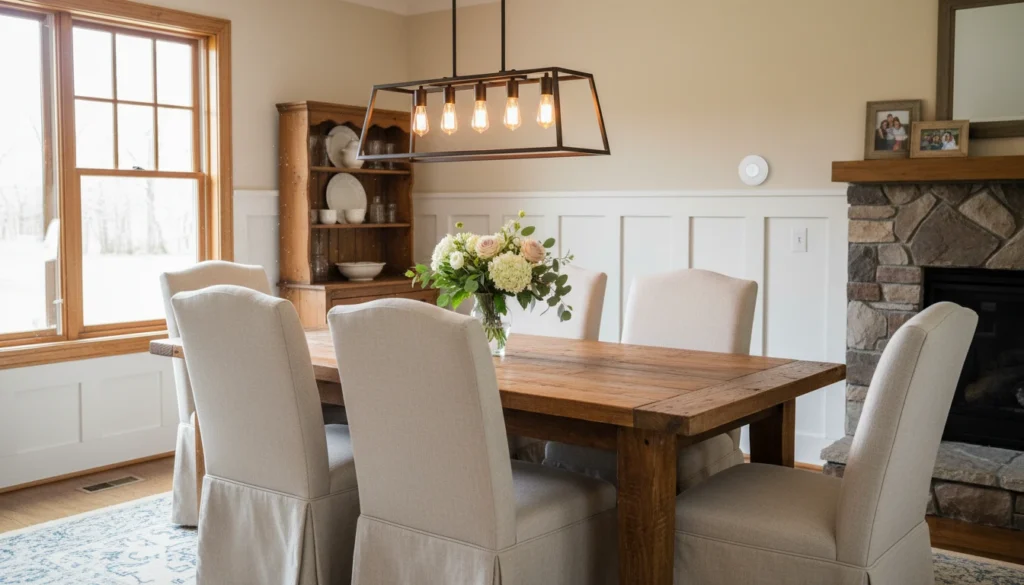
Let’s ban the beautiful chair no one sits in. Function first doesn’t mean “boring” — it means “you’ll use it daily without regret.”
In retirement, ergonomics aren’t optional. Dining chairs where your feet actually touch the ground. Sofas with real back support that you can get in and out of without a production. Task lighting that doesn’t cast a shadow on your book or your crossword. These aren’t luxury considerations — they’re the difference between a room you love and a room you avoid.
Storage with stealth: ottomans with compartments, coffee tables with drawers, sideboards that hide charging stations and the general chaos of modern life.
Multi-functional heroes: extendable dining tables for when the family visits, sleeper sofas for guests, nesting tables that disappear when you don’t need them.
Do this for one week: jot down how you actually use each room. Eat in the living room? Work at the dining table? Host grandchildren more than dinner parties? Let the truth steer your choices — not the room you think you should have, but the room you actually live in.
Room-by-Room Aesthetic Playbooks
Living Room Aesthetics
Anchor with a sofa that fits the room and your lifestyle. If you’re watching movies with grandchildren, deep seats. If you’re hosting book club, structured seating that’s easy to get in and out of.
Float the sofa when possible — pulling it off the wall improves flow and makes the room feel larger. A narrow console behind it adds lighting and a landing spot for things that would otherwise end up on the floor.
Choose one statement piece (bold coffee table, sculptural chair) and let everything else support it. Resist the urge to make every piece a statement. Rooms need a lead and a supporting cast.
Layer lighting: overhead + floor + table + accent. Natural light still does the heavy lifting, so avoid blocking windows — especially important as eyes age and natural light becomes even more valuable.
Layout cheat codes:
- Conversation zones: seats roughly 8–10 feet apart maximum
- Rug sizing: front legs of major pieces on the rug; err larger, not smaller
Bedroom Aesthetics
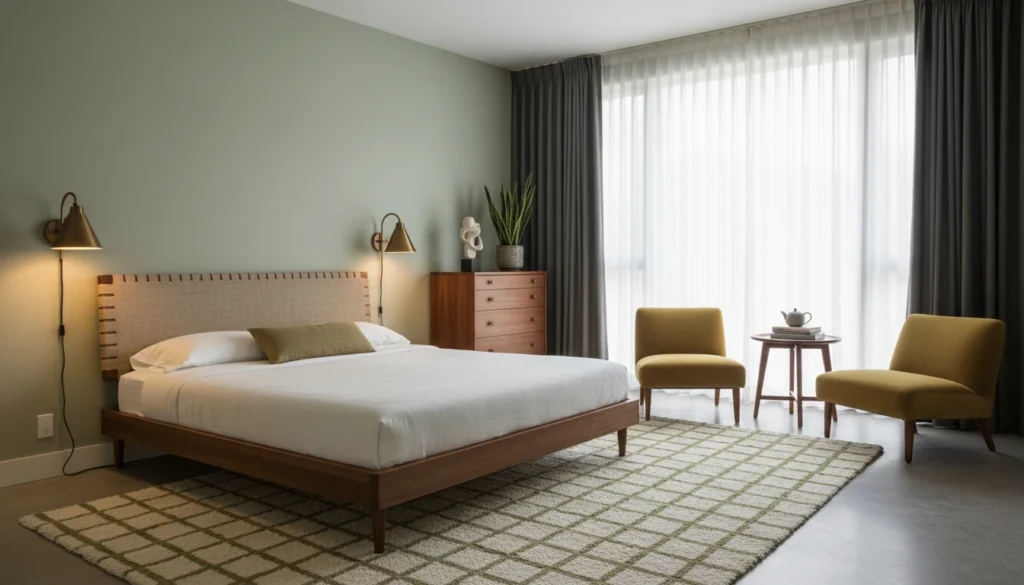
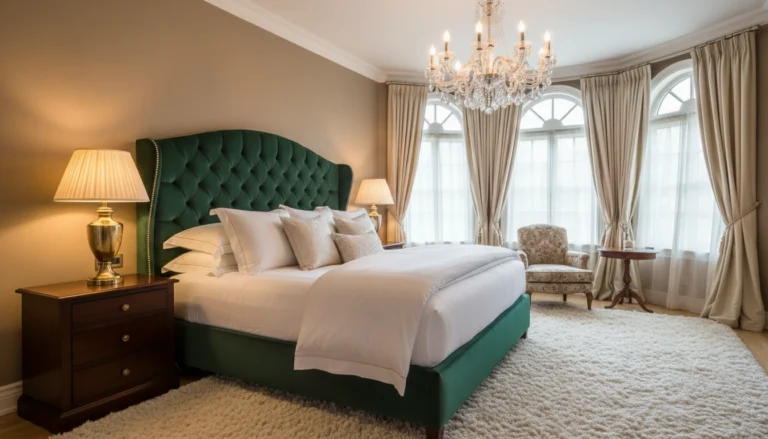
Pick a bed that sets the tone: upholstered (soft and warm), wood (natural and grounding), metal (clean and edgy). Quality slats or a solid platform means better sleep and less squeak — and in retirement, sleep quality is one of the most important health variables you can invest in. There’s a full guide on this site about designing a bedroom that genuinely supports rest — worth reading alongside this one, because a beautiful bedroom that doesn’t help you sleep is just an expensive problem.
Nightstands don’t have to match. Tie them together with shared material or hardware color.
Keep colors calm: muted blues, earthy neutrals, soft greens. These aren’t just aesthetically pleasing — research consistently links cooler, softer tones to better sleep onset and lower cortisol levels.
Sconces or plug-in pendants free up nightstand space and look tailored without hiring an electrician.
Little luxuries:
- Soft-closing drawers
- Blackout curtains layered over sheers
- One tactile throw at the foot of the bed
Dining Room Aesthetics
Table personality drives the room: farmhouse wood (casual warmth), glass (modern and airy), stone (elevated and durable). In retirement, when the dining table becomes the gathering place for family visits and long Sunday lunches, choose a surface that can handle real life.
Chairs = comfort first. Upholstered for long dinners, wood or metal for easy cleaning. If mixing, unify with color or material. And please — sit in the chair before you buy it. A beautiful chair that’s uncomfortable after twenty minutes will quietly ruin every meal.
Lighting: pendant centered 30–34 inches above the table, always on a dimmer. Dining rooms live or die by mood, and a dimmer costs almost nothing compared to the difference it makes.
Tips for a Cohesive Home
Build a house palette: 4–6 colors (two neutrals + three accents). Use in varying ratios from room to room. Instant flow, even in a home with very different spaces.
Invest in anchors (sofa, dining table, bed). Layer in budget-friendly accents (side tables, pillows, art). This is where the high-low strategy pays off most clearly.
Repeat on purpose: a brass finish that shows up in three rooms, a consistent wood tone from floor to furniture, a recurring curve in mirrors and lamps. Repetition reads as intention, not accident.
Mood board everything. Seeing items together prevents “great alone, chaotic together” purchases — a mistake I’ve made more than once and would like to save you from.
Add personal story: heirlooms, travel art, handmade ceramic bowls. This turns “nice” into “yours.” And in retirement, your home should feel unmistakably like yours — a reflection of a life actually lived, not a showroom approximation of one.
Budget-Friendly Upgrades That Don’t Look Budget
Reupholster quality frames — switch to performance fabric if life is messy (and life, especially with grandchildren around, is often messy).
Refinish wood: sand, stain, oil, or paint. It’s a weekend project with decade-long benefits and one of the most satisfying things you can do on a slow Saturday afternoon.
Hardware swap: new pulls and knobs = instant glow-up for dressers and cabinets. Genuinely one of the cheapest transformations available.
Style with intention: pillows, rugs, lamps, and art can refresh a room seasonally without replacing big pieces.
Shop secondhand: estate sales, consignment, Facebook Marketplace. Set saved searches (“walnut dresser,” “tapered leg chair,” “marble coffee table”) and turn on alerts. The good stuff disappears fast — but it’s out there, and it’s often significantly better quality than what you’d find new at the same price point.
Pro hack: if you find a great used piece with mediocre hardware, factor in a $40 hardware swap. It’s the cheapest transformation in furniture, and it works every single time.
Common Furniture Aesthetic Mistakes — And How to Fix Them
Ignoring scale: measure, tape it out, double-check doorways. Measure ceiling height too — tall cabinets need breathing room, and a piece that fits the room but not the doorway is a very expensive lesson.
Choosing looks over comfort: if you can’t relax in it, you won’t use it. In retirement, this is non-negotiable.
Style soup: stick to the 80/20 rule — one dominant style, one supporting accent style. Connect them with color, material, or shape.
Neglecting lighting: rooms need layers and warm color temperature, not just a single overhead light that makes everything look like a waiting room.
Buying full matching sets: coordinated, yes. Identical, no. You want a conversation, not a choir in unison.
Blocking flow: leave at least 30 inches for pathways; 36 inches for busy pass-throughs. In retirement, generous clearance isn’t just aesthetic — it’s practical.
Future Trends Worth Your Attention
Sustainability as standard: FSC-certified wood, low-VOC finishes, recycled materials, and modular designs that evolve with you. The 2023 Sustainable Furnishings Council survey found over 70% of consumers prefer sustainably made furniture when cost and style are comparable — a trend that’s only accelerating.
Softer silhouettes: curves, scallops, rounded edges — more human, less harsh. These aren’t just aesthetically warmer; they’re physically friendlier, which matters more as we age.
Bold color with restraint: rich jewel tones and saturated accents in rooms that still breathe.
Tech that blends: hidden charging, adjustable-height tables, cord management that doesn’t ruin the vibe.
Craft and character: artisan-made pieces, visible joinery, and patina-friendly materials that age with grace. In retirement, you have the time to seek these out — and the eye to appreciate them.
Harvard T.H. Chan School of Public Health research highlights the benefits of low-VOC materials for indoor air quality and cognitive function — choices that look good and literally help you think better. For retirees spending more time at home, this isn’t a footnote. It’s a headline.
Mixing Aesthetic Elements Without the Chaos
Want to blend mid-century with industrial? Minimalist bones with maximalist art? You can — and it’s often where the magic lives.
Keep one constant: wood tone, metal finish, or color family. Vary shape vocabulary with intention: curvy sofa + angular coffee table + round mirror to bridge the two. Anchor with neutrals, then let accents roam. Your big pieces are the steady friends; the accessories are the fun ones who tell great stories at dinner.
Personal note: I once paired a lean linen sofa (minimalist) with a vintage Persian rug (maximalist) and a ribbed glass coffee table (modern). The throughline? Warm neutrals and a hit of brass. It shouldn’t have worked. It did. And I smile every time I walk past it.
Frequently Asked Questions
How do I know if my furniture aesthetics match my style?
Make a mood board with only pieces you’d actually buy. Compare to your current space. If walking in the door feels like a little exhale, you’re aligned.
Can I mix different styles in one room?
Absolutely. Use the 80/20 rule. Pick one primary style and layer in a secondary one. Connect them with color, materials, or shapes.
What’s the difference between trendy and timeless?
Timeless uses classic proportions, quality materials, and simple shapes that age well. Trendy plays with bold colors or quirky silhouettes that might date quickly. Invest in timeless anchors; rotate trends through pillows, throws, and art.
How much should I spend on furniture?
Spend more where you sit, sleep, and gather — sofa, mattress, dining table. Think cost-per-use over years, not sticker price today. Mix high and low everywhere else.
How do I maintain finishes and fabrics?
Follow care guides, use coasters (future you says thanks), rotate rugs and cushions to even wear, condition leather quarterly, oil wood once or twice a year, and keep direct sun off delicate fabrics.
Quick care calendar:
- Quarterly: leather conditioning, cushion rotation
- Biannual: wood oiling, rug flip and rotate
- Annual: professional clean for high-traffic upholstery
Final Thoughts
Furniture aesthetics in retirement aren’t about copying a showroom. They’re about creating a place you actually love to live in — where the sofa supports your movie nights, the dining table fits your people, and your style comes through without shouting.
This is the chapter where you finally get to design for yourself. Not for the life you were rushing through, but for the one you’re actually living. Take your time. Measure twice. Trust your three-word compass. The right pieces don’t just look good — they make your days easier and your nights calmer.
When I finally stopped chasing “perfect” and started chasing “this feels right for how I live now,” everything clicked. That’s the sweet spot — beautiful and functional, with a little personality seasoning on top. And if you’re thinking about how all of this connects to the broader project of making your home work better for retirement life, there’s a solid piece on this site about creating a retirement-friendly home environment that pairs well with everything here.
Now go make something lovely. And yes — take the tape measure. It’s the unsung hero of great design.




2 Comments
Comments are closed.