Quality Clothes for Retirees: A Budget-Friendly Guide to Looking and Feeling Your Best
Choosing quality clothes for retirees doesn’t have to be complicated or expensive — this guide covers fabric, fit, construction, plus-size options, and smart shopping strategies for your golden years.
I used to think good clothes were the ones with the fanciest logo and the most dramatic price tag. You know the vibe: you hand over your card, you get a glossy bag, and you tell yourself you’ve “invested.” Then the seam pops on day three and you realize you didn’t invest — you donated to the universe.
It took me an embarrassingly long time to learn the real truth: good clothes aren’t a vibe. They’re a set of decisions. Fabric. Construction. Fit. Care. (Also: not panic-buying something just because it’s “on sale” and you’re hungry. That last one is very specific and very personal.)
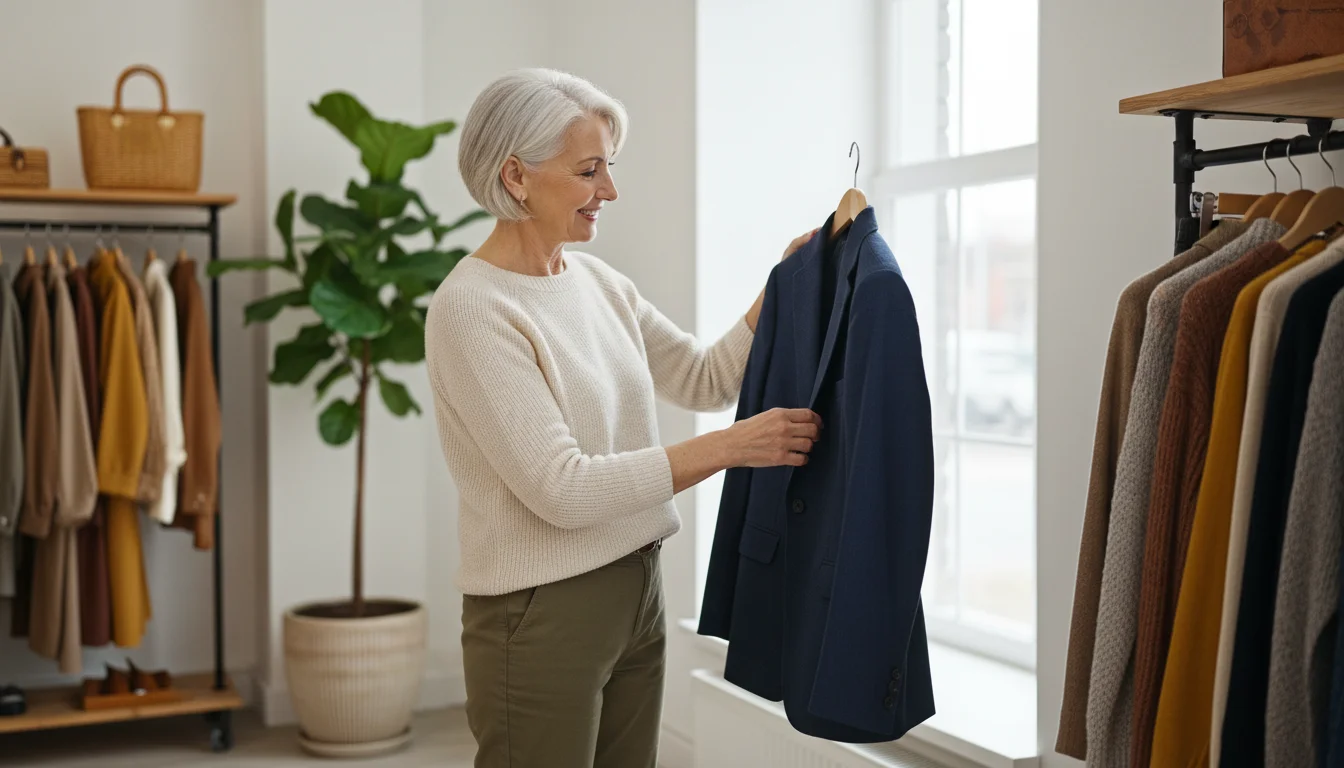
And here’s the thing nobody really talks about — retirement changes what “good clothes” even means. You’re no longer dressing for a commute, a boardroom, or a boss who notices when you wear the same blazer twice. You’re dressing for your life now. Morning walks, lunch with friends, travel, grandkids, and the occasional Tuesday where you just want to feel put-together without trying too hard.
I remember the first time I got dressed after retiring and realized — with genuine surprise — that I had absolutely no idea what I actually liked to wear. Thirty-something years of dressing for other people’s expectations, and I’d never really stopped to ask myself the question. I stood in front of my closet for a solid five minutes, staring at a row of blazers I’d never choose again, and thought: who even bought all of this?
It was equal parts liberating and mildly terrifying. Mostly liberating.
This guide is for anyone who’s ever stood in a fitting room wondering how to tell if clothes are good quality — especially when fast-fashion lookalikes are basically everywhere. It’s also for anyone trying to find quality plus-size clothing that’s actually designed for a real body (not a mannequin’s imaginary cousin), and for anyone who loves the thrill of scoring affordable, well-made clothes without ending up with a shirt that pills before you even remove the tag.
Key Takeaways
- Quality clothes for retirees prioritize comfort, durability, and ease of care over trend-chasing.
- Natural fibers like cotton, linen, and wool offer the best breathability and longevity for everyday wear.
- Strong construction — tight stitching, reinforced seams, quality hardware — is what separates a garment that lasts from one that doesn’t.
- Plus-size shoppers deserve the same construction standards as any other size — don’t settle for less.
- Smart shopping strategies (secondhand, off-season sales, ethical budget brands) make quality accessible on a fixed income.
- Proper care extends the life of your wardrobe significantly — and saves money in the long run.
What Defines Quality Clothes for Retirees?
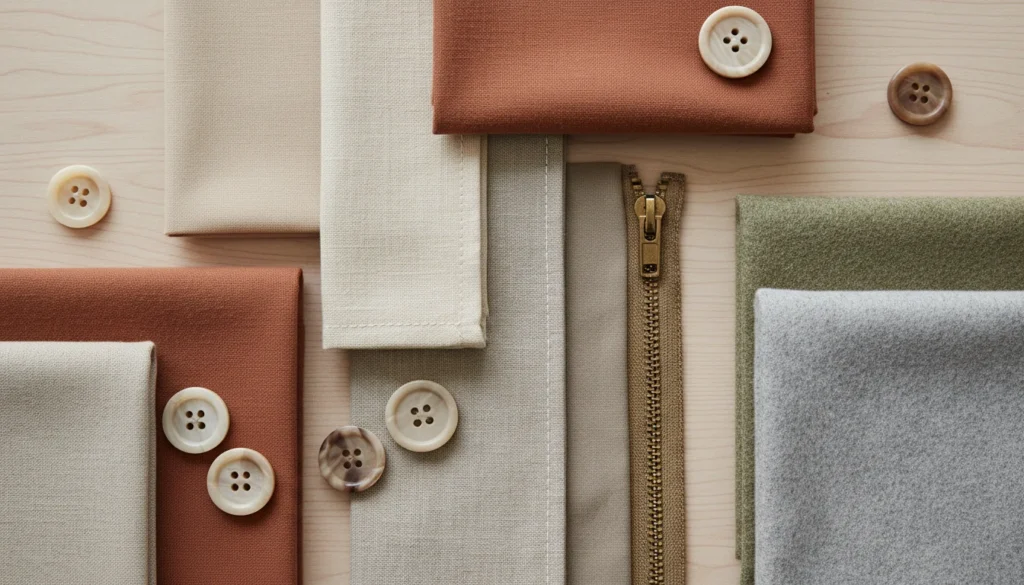
Good quality clothing is defined by the combination of appropriate fabric, precise construction, and proven durability — together delivering comfort, performance, and longevity. But for retirees specifically, there’s a fourth element that often gets overlooked: wearability. Not just “does it hold up?” but “does it feel good to wear all day?”
Fabric provides the fundamental properties — breathability, weight, and stretch — that determine how a garment behaves. Construction techniques like stitch density and seam type determine how well it holds shape and resists wear. And durability shows up in reinforcement at stress points, hardware quality, and resistance to pilling and distortion.
If you want the simplest mental model: quality clothes keep their promises. They don’t twist after one wash, sag in weird places, or make you feel like you’re wearing a compromise. They just work — and somehow that makes you feel like you’ve got your life together even when your calendar is chaos.
I think about it like a good pair of shoes. You know the ones — the pair you reach for automatically because they never let you down. No blisters. No second-guessing. Just comfortable, reliable, done. That’s what your whole wardrobe should feel like. Not exciting, necessarily. Just deeply, quietly reliable. The kind of reliable that lets you focus on your actual day instead of adjusting your waistband every twenty minutes.
Here’s a quick checklist of the most reliable indicators of garment quality:
- Fabric integrity: the material has substantial weight, consistent weave or knit, and appropriate drape.
- Stitching and stitch density: even stitches and backstitching at stress points prevent unraveling.
- Seam types and finishes: reinforced seams and proper seam types (flat-felled or French seams) reduce stress and friction.
- Hardware and trims: durable zippers, buttons with secure stitching, and quality lining prolong function.
- Professional finishes: neat hems, matched patterns, and secure linings signal attention to detail.
These indicators form a quick in-store or online snapshot you can use to compare items and prioritize longevity — which is exactly how you build a closet that’s more “ready to wear” and less “what even is this and why do I own it?”
How to Identify the Best Quality Fabrics
High-quality fabrics combine fiber content, construction (weave or knit), and finish in ways that deliver intended performance — breathability, insulation, or drape. For retirees, breathability and ease of care tend to matter most. You want clothes that feel comfortable through a full day of activity, wash easily, and don’t require a PhD in laundry to maintain.
Look for natural fibers like cotton, linen, and wool when breathability and comfort matter. Consider engineered fibers or blends when strength, quick-dry properties, or stretch recovery are priorities.
Here’s a quick comparison of common fabric families:
| Fabric | Breathability | Durability | Care | Cost |
|---|---|---|---|---|
| Cotton | High | Moderate | Machine wash, medium care | Low–Medium |
| Linen | Very high | Moderate–High | Hand or gentle wash, wrinkles easily | Medium |
| Wool (blends) | High (insulating) | High | Hand wash or dry clean | Medium–High |
| Polyester (synthetic) | Low–Moderate | High (abrasion-resistant) | Machine wash, quick-dry | Low |
In person, test fabric by observing drape over your hand, checking opacity against light, and feeling the hand weight. Tighter weaves with a substantial hand typically last longer than thin, flimsy alternatives.
Here’s where I admit I’ve become “that person” in stores: I hold fabric up to the light like I’m checking a $20 bill for authenticity. If it goes see-through under normal lighting and it’s not meant to be sheer, that’s a warning sign — especially for pants. Nobody needs surprise transparency on a Tuesday. Nobody.
My mother used to do this too, actually. She’d walk into any store, pick up a blouse, hold it to the window, and either nod approvingly or put it back with the quiet dignity of someone who had seen too much. I thought it was embarrassing when I was twelve. I rolled my eyes. I walked three steps ahead so people wouldn’t know we were together. Now I do it every single time, and I think about her every time I do it, and honestly — she was right about most things.
Also, don’t underestimate construction. Fiber matters, but fabric construction matters too. A well-made cotton poplin can outlast a sloppy “premium blend” that pills on day one. The label says “premium.” The pilling says otherwise.
The Ellen MacArthur Foundation has strong reporting on clothing lifecycles and why durability is a key sustainability lever — wearing garments longer is one of the most meaningful ways to reduce fashion’s footprint. The takeaway is simple: buying quality clothes and wearing them longer is not just good for your closet — it’s good for everything else too.
Key Construction Features That Signal Durability
Durable construction centers on stitch type, stitch density, seam choice, and reinforcement at high-stress points like pockets and underarms. Count or estimate stitch density — more stitches per inch typically mean stronger seams — and look for flat-felled or bound seams in areas subject to tension.
Reinforced stitching like bartacks at pocket corners and belt loops indicate attention to longevity, while neat topstitching and secure hems point to professional finishing. Hardware quality — metal zippers, corozo or well-sewn buttons — matters because cheap hardware often fails before the fabric does. I’ve had zippers give up on me in situations I’d rather not revisit. Invest in the zipper.
One of my favorite “in the wild” checks: flip the garment inside out and look at the seams. If the inside looks like it was assembled during a power outage — loose threads, weird puckering, raw edges trying to escape — that’s useful information. If the finishing is neat, even where nobody’s supposed to look, that’s usually a sign you’re holding something worth buying.
There’s something almost philosophical about that, isn’t there? The quality of a thing is often most visible in the parts nobody sees. The inside of a seam. The underside of a collar. The back of a button. The places where a manufacturer could have cut corners and nobody would have noticed — except you, eventually, when it falls apart in the middle of a family dinner and you have to spend the rest of the evening holding your sleeve together with quiet dignity.
For retirees especially, pay attention to waistbands, cuffs, and collar construction. These are the areas that take the most daily stress and tend to show wear first. A well-constructed waistband that lies flat and doesn’t roll is worth its weight in gold — and your lower back will quietly thank you every single day.
Finding Quality Plus-Size Clothing That Actually Fits
Choosing quality plus-size clothing requires brands that prioritize inclusive grading, proportion-aware design, and consistent construction across sizes. High-quality plus-size lines apply size-inclusive pattern grading and often test fit on diverse bodies — avoiding the common issues of tightness in busts or excess fabric at shoulders.
And yes, I’m going to say the quiet part out loud: quality plus-size clothing isn’t a bonus feature. It’s the baseline. A garment shouldn’t get flimsier as sizes go up. If anything, plus sizes deserve more thoughtful engineering — because bodies move, sit, reach, bend, and live full lives. (Also: pockets. Real pockets. Functional pockets that can hold an actual phone and not just the idea of a phone. I will die on this hill and I will die with my hands in my pockets.)
Quality signals for plus-size clothing are the same as any other garment — good fabric, strong construction, reinforcement — but plus-size pieces also benefit from design details like strategically placed darts, supportive waistbands, and longer seams where needed.
When evaluating brands, look for:
- Clear size ranges with consistent fit notes for each style
- Adjustable elements — waist tabs, shirring, or stretch panels — that improve customization
- Stable knits or mid-weight woven fabrics that reduce cling and preserve shape
- Reinforced hems and quality zippers that support durability across the full size range
If you’re shopping online, look for fit notes that mention where a garment is designed to sit (true waist vs. mid-rise), how much stretch it has (and if it recovers), and what body shape it was fit on. Brands that write those details tend to be brands that actually measured something besides vibes. And brands that don’t? Well. You’ve probably already met them in a fitting room and it didn’t go well.
How to Find the Perfect Fit and Build a Versatile Retirement Wardrobe

Finding the perfect fit starts with accurate measurement, honest fit testing, and learning how proportion and layering change perceived fit. Measure bust, waist, hips, and shoulder width, and compare those numbers to a brand’s sizing chart rather than relying on standard size labels.
When trying clothes, focus on how garments sit at key points — the shoulder seam, bust darts, and waistline — and test movement to ensure comfortable range and no pulling. For retirees, I’d add one more test: sit down in it. Seriously. Find a chair in the fitting room or just sit on the little bench and see what happens. If you’re spending more time sitting than you used to — at restaurants, on planes, at grandkids’ events — a garment that’s comfortable standing but miserable sitting isn’t actually comfortable. It’s just a standing outfit pretending to be a real one.
Build a versatile retirement capsule wardrobe around stable basics:
- A well-fitted blazer or cardigan that works for casual and slightly dressier occasions
- A structured dress or two that can go from a lunch out to a family gathering
- Comfortable tops with varied necklines in neutral and one or two accent colors
- A pair of trousers with a stable, comfortable waistband
- Layering pieces — a lightweight jacket, a soft wrap — for temperature flexibility
If tailoring sounds intimidating, I get it. I used to think tailoring was reserved for movie stars and people who own actual ironing boards. But even small tweaks — hemming, taking in a waist, adjusting sleeve length — can make “fine” clothes feel like quality clothes. And for retirees on a fixed income, tailoring one good piece is often smarter than buying three mediocre ones. A $15 hem can save a $60 pair of trousers. That math works every single time, and your tailor will be genuinely delighted to see you.
How to Buy Affordable Quality Clothes on a Retirement Budget
You can absolutely find quality clothes for retirees without spending a fortune. The trick isn’t finding the absolute lowest price — it’s finding the best value. Sometimes that’s a $20 tee that wears like a champ. Sometimes it’s a $90 coat you buy off-season for $45 and wear for five winters. Cost-per-wear math is surprisingly comforting when you’re trying to make adult decisions about adult money.
Smart shopping strategies for retirees on a fixed income:
- Prioritize quality for the pieces you wear most — outerwear, trousers, everyday tops
- Buy trend pieces secondhand or at lower price points, since you’ll wear them less
- Shop off-season for the best prices on durable core pieces
- Use secondhand marketplaces to access high-quality garments at a fraction of new prices
- Set alerts for sales on targeted items rather than browsing aimlessly
Here’s a comparison of shopping channels to help you decide where to spend:
| Option | Cost Level | Quality Trade-offs | Best Use Case |
|---|---|---|---|
| Outlet/Factory Stores | Low–Medium | May include end-of-line styles; check construction | Basics, seasonal layers |
| Secondhand / Resale | Low | Variable condition; potential high-quality finds | Investment pieces, outerwear |
| Ethical budget brands | Medium | Prioritize core pieces; limited assortment | Everyday staples |
| Sales & Off-season Buys | Low | Timing required; sizes limited | Build wardrobe gradually |
My personal rule (which I break only when I’m feeling chaotic or the sale sign is particularly persuasive): I don’t buy a piece unless I can name at least three outfits I’ll wear it with. That one tiny habit is how I stopped collecting “closet decor” and started buying quality clothes that actually earn their hanger.
I also started keeping a running list on my phone of things I actually need — not things I want in the abstract, but specific gaps in my wardrobe. A navy cardigan. A pair of dark trousers that aren’t quietly disintegrating. One good white shirt that doesn’t go transparent in sunlight. Shopping with a list is boring. It’s also how you stop spending money on things you’ll never wear and start spending it on things that make you feel like yourself.
Why Sustainable and Ethical Clothing Matters for Retirees
Sustainable and ethical clothing matters because sourcing, manufacturing practices, and lifecycle thinking directly influence a garment’s material quality, construction attention, and ultimate longevity. And for retirees, longevity is the whole point.
Materials sourced through regenerative or organic practices frequently yield fibers with fewer chemical residues and better intrinsic performance. Manufacturers that prioritize skilled labor invest more time in seam finishing and quality-control steps. According to research published by the Textile Exchange, organic fiber processing preserves fiber tensile strength and colorfastness — which improves wash resistance and reduces pilling over time.
Fair trade manufacturing often correlates with better-trained workers who perform more consistent seam finishing and quality checks, resulting in fewer defects and longer-lasting garments. The trade-off is typically a higher upfront cost — but the result is a piece that maintains function and appearance longer, which often delivers lower lifetime cost compared to lower-quality alternatives.
And honestly, there’s something quietly satisfying about knowing that the cardigan you’ve worn for four years was made by someone who was paid fairly to make it well. That’s not a small thing. That’s the kind of detail that makes getting dressed feel like a values statement instead of just a morning chore.
How to Check Clothing Quality Before You Buy
Checking clothing quality before purchase means applying a concise, repeatable inspection routine — fabric checks, seam and stitch inspection, hardware testing, and fit evaluation — to avoid costly mistakes. These steps work both in-store and for online purchases when combined with careful reading of materials and construction notes.
Use this step-by-step checklist when evaluating garments:
- Inspect the fabric: feel the hand weight, check weave tightness, and test opacity against light.
- Examine stitches per inch and evenness: look for consistent stitches and backstitching at stress points.
- Check seams and finishes: identify seam types (flat-felled, French) and look for bound or serged raw edges.
- Test hardware and trims: zip and unzip zippers, check button attachment, and assess lining quality.
- Assess fit and movement: raise arms, sit, and walk to ensure no pulling, gaping, or uncomfortable restriction.
If you’re shopping with friends, this is the moment you become “the quality person.” You know the one. The friend who disappears into the fitting room with a blouse and comes out saying, “I’m sorry, but the seam finish is emotionally unstable.” That is a real thing I have said out loud in a real store. I regret nothing. My friends now ask me to come shopping with them specifically for this reason, which I choose to interpret as a compliment.
For fabric specifically, test pilling tendency by rubbing a discreet area — early pilling suggests lower-quality fibers or poor finishing. Check stretch recovery on knits by stretching a small area and watching for rebound; good recovery predicts lasting shape retention.
For construction, look for reinforcement at stress points — bartacks at pocket corners and belt loops — to prevent early failure. Check for loose threads, puckering, or misaligned pattern matches; these signs often indicate poor quality control and a garment that will look tired long before its time.
How to Care for Quality Clothes So They Last

Proper care extends the lifespan of quality clothes for retirees by preserving fiber integrity, maintaining shape, and preventing avoidable damage like shrinkage, abrasion, or sun-fading. And honestly, good care habits are one of the most underrated ways to stretch a retirement clothing budget — because the best quality garment in the world won’t survive being treated like a dish towel.
Following care labels is a baseline, but understanding the reasoning — temperature affects fiber strength; mechanical agitation causes pilling — lets you make smarter choices. Air-drying delicate knits, using low-heat tumble for sturdy pieces, and turning garments inside out to protect surface fibers all add up to significantly longer garment life.
Best-practice care rules for common fabrics:
- Cotton and cotton blends: Machine wash cool, reshape while damp, tumble low or air-dry to reduce shrinkage.
- Linen: Gentle cycle or hand wash, air-dry, iron while slightly damp to restore smoothness.
- Wool and wool blends: Hand wash or use wool cycle with a mild detergent, dry flat to avoid stretching.
- Synthetic blends: Machine wash cold, avoid high heat in drying to prevent melting or loss of shape.
I know air-drying can feel like a lifestyle choice. “Who am I, a person with a sunlit balcony and unlimited patience and a decorative drying rack?” But even drying your most-loved pieces flat or on a hanger — instead of blasting them in high heat — can add years to your quality clothes. I started doing this with my better sweaters a few years ago and the difference is genuinely remarkable. They still look new. Meanwhile, the ones I forgot about and threw in the dryer look like they’ve had a difficult decade and several personal crises.
The American Cleaning Institute offers a helpful guide to laundry care symbols that’s worth bookmarking, especially if you’re dealing with unfamiliar fabrics or that one mysterious symbol that looks like a tiny bathtub having an existential moment.
Repair and Upcycling: Making Good Clothes Last Even Longer
Repair and upcycling restore function and style, turning near-worn items into long-term wardrobe assets. For retirees, this is both a practical money-saver and — if you enjoy it — a genuinely satisfying way to spend an afternoon.
Common repairs include re-stitching hems, replacing buttons and zippers, and reinforcing seams — all of which can be done at home for small costs or by a tailor for complex fixes. Upcycling ideas like patching with visible mending, shortening outdated hems into new styles, or converting shirts into layered pieces extend use and refresh looks without spending a cent on something new.
Regular small repairs prevent larger failures and maintain garment integrity. And knowing when to consult a professional tailor preserves valuable pieces that DIY attempts might damage. (I say this as someone who once tried to fix a hem with iron-on tape and ended up with a trouser leg that was technically shorter on one side. The tailor fixed it. She was very kind about it.)
Prioritizing repair over replacement maximizes cost-per-wear and aligns with the broader goal of choosing and maintaining quality clothes for retirees. The repair economy is growing — more tailors, cobblers, and clothing repair services are available now than at any point in recent memory, making it easier than ever to extend the life of pieces you genuinely love.
And if you’re looking for more ways to make your retirement lifestyle feel intentional and well-designed — not just your wardrobe, but the whole picture — check out Retirement Lifestyle Planning: The Real, Honest Guide to Finances, Health, and Living Well. It covers how the small daily choices, including what you wear and how you present yourself, connect to a bigger sense of purpose and identity in retirement. Worth a read with a good cup of coffee.
Conclusion: Buy Less, Wear More, Stress Less
If there’s one thing I wish someone had told me earlier, it’s this: quality clothes for retirees are easier than they look. You don’t need a fashion degree. You don’t need a “capsule wardrobe spreadsheet” (unless that brings you joy — genuinely, no judgment, I see you). You just need a simple system and the willingness to slow down long enough to actually look at what you’re buying.
Start with fabric you can live with, check construction where it matters, and make sure the fit supports your actual life — not the life you had ten years ago, not the life you think you should have, but the one you’re actually living right now. If you’re shopping plus-size, hold brands to the same standards you’d expect anywhere else — because quality plus-size clothing should be the norm, full stop. If you’re shopping on a budget, remember you can absolutely find affordable, well-made clothes by shopping strategically, checking details, and timing purchases like the savvy person you are.
Then care for what you buy. Wash gently, dry smart, fix the little stuff before it becomes dramatic, and let your wardrobe do what it’s supposed to do: make getting dressed feel a little easier, a little more like yourself, and a little less like a daily negotiation with your closet.
That’s the quiet power of quality clothes for retirees — they’re not just “nice things.” They’re reliable things. And honestly? After everything you’ve built and everything you’ve earned, reliability is the most stylish thing in the room.