
Mental Health in Retirement: How Society Shapes the Way We Age
Let’s walk through how society affects mental health in retirement — what pushes older adults toward burnout, anxiety, depression, and distress, and what actually helps.
Key Takeaways
- Mental health in retirement is shaped by social forces — not just personal choices or mindset.
- Financial insecurity, social isolation, cultural stigma, and limited access to care are among the biggest drivers of poor mental health in older adults.
- Ageism and systemic inequity add additional layers of stress that compound over time.
- Prevention, access to care, and community connection are all part of the solution.
- Struggling in retirement is not a personal failure — it is often a predictable response to real, external pressures.
- Small actions — honest conversations, community involvement, policy support — all contribute to meaningful change.
When people talk about mental health in retirement, the conversation almost always starts — and ends — with the individual.
Fix your mindset. Sleep more. Take up pickleball. Be grateful you’re not still commuting.
And look, I get it. Those things aren’t wrong. A good night’s sleep genuinely helps. Gratitude practices have real research behind them. But here’s what nobody tells you when you’re white-knuckling your way through a rough patch in retirement: if you’ve tried all the “right” things and still feel overwhelmed, anxious, numb, or just completely done — that’s not a personal failure. That’s a sign you’ve bumped into something bigger.
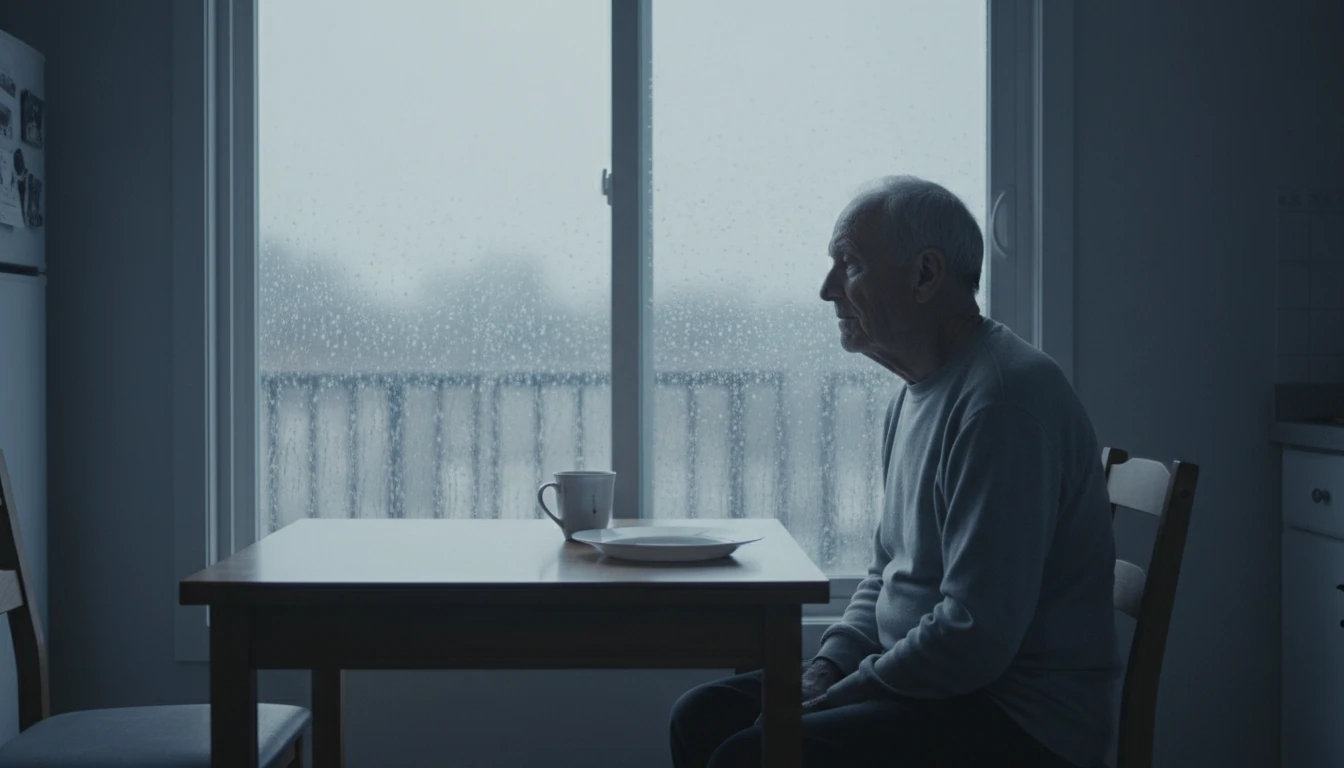
Mental health doesn’t exist in a vacuum. It lives inside real lives, real neighborhoods, real systems. And retirement? Retirement drops you into a whole new set of those systems — often without the structure, identity, or social scaffolding that work quietly provided for decades. The calendar clears. The inbox goes quiet. And suddenly, the things that used to hold your days together are just… gone.
Society affects mental health in retirement in ways that are easy to overlook precisely because they feel so normal. So ordinary. So much like “just life.” Things like:
- Trying to stay calm when your fixed income isn’t keeping up with rising costs.
- Feeling invisible in a culture that worships youth and productivity.
- Growing up in a generation where “be strong” was the only acceptable response to pain.
- Sitting on a therapist’s waitlist for months while you’re barely holding it together.
I’ve heard so many versions of the same sentence from retirees: “I feel like I should be enjoying this more.” And every time, I want to say the same thing back: you’re not broken. You’re navigating a world that didn’t do a great job preparing you for this chapter — and gives very uneven support once you’re in it.
Mental health challenges in retirement are real, they’re common, and they are not a sign that you failed at aging. The world around you matters — and the society you’re in influences mental health in retirement far more than most people are willing to admit.
Society and Mental Health Problems in Retirement
When we ask how society affects mental health in retirement, we’re really asking something more personal:
How much of what I’m feeling is “just me” — and how much is a completely normal reaction to a genuinely hard situation?
Most of us were trained to believe it’s mostly “just you.” If you’re struggling after retirement, the usual script kicks in fast:
- You should be relieved. You worked hard for this.
- You have all this time now — why aren’t you happy?
- You need better habits. Get a routine going.
- Focus on the positive.
There’s a place for personal responsibility in all of this. I’m not dismissing that. But it’s not the whole story — and honestly, for a lot of retirees, it’s not even the first chapter.
Think of it like a garden. Your genetics, your history, your personality — those are the seeds. Some seeds are more sensitive. Some are remarkably sturdy. But the soil, the weather, the water, the pollution, the person tending the garden — that’s society. That’s the environment you’re growing in.
You can do everything “right” as a seed. But if the soil is dry and depleted, the weather keeps swinging to extremes, and people keep stomping through the garden on their way somewhere more important — you’re going to struggle. That’s not weakness. That’s just what happens when the conditions are harsh.
When we look at how society affects mental health in retirement, we’re paying attention to questions like:
- Can you realistically cover housing, healthcare, and daily expenses on a fixed income — or is every month a quiet, low-grade emergency?
- Do you feel safe and genuinely connected in your community, or are you increasingly isolated without quite knowing how it happened?
- Does your culture make it okay to say “I’m not okay” — or does it quietly punish that kind of honesty?
- Do you feel like you still belong somewhere, or did your sense of purpose retire right along with your job title?
Once you start seeing these patterns, something shifts. The internal monologue changes. Instead of “What is wrong with me?” it becomes “Look at what I’ve been trying to carry — with very little support.”
That shift matters more than it might seem. It doesn’t erase the pain. But it trades shame for context — and context is a much healthier place to start healing from.
The Social Drivers That Shape Mental Health in Retirement
There are many ways society affects mental health in retirement, but a handful of forces show up again and again — like the background settings of everyday life that nobody thinks to question. Money. Housing. Community. Culture. Access to care. Systemic inequality.
These don’t announce themselves as policy issues. They show up as:
- The late-night money panic when a medical bill arrives that you weren’t expecting.
- The quiet ache of realizing you haven’t had a real, meaningful conversation in days.
- The awkward silence when you mention feeling lost after retirement and everyone suddenly finds something else to look at.
- The tenth unanswered voicemail to a therapist’s office.
Let’s get into each one.
1. Economic Factors: Fixed Income and Financial Insecurity
It’s almost funny — in a not-funny-at-all way — how often we try to have serious conversations about mental health in retirement without ever mentioning money.
Money doesn’t buy happiness. We all know that line. But it absolutely buys options: nutritious food, stable housing, healthcare, transportation, medication, therapy. It buys breathing room. And breathing room — the feeling that you can handle an unexpected expense without your whole life unraveling — is incredibly soothing to a nervous system that’s been running on adrenaline for forty years.
Living on a fixed income in retirement isn’t just “having less.” It’s living inside a constant, low-hum mental arithmetic:
- “If I pay this medical bill, I can’t cover that prescription.”
- “If the car breaks down, I’m in real trouble.”
- “If I live longer than my savings, what happens then?”
I heard a retiree joke once: “My doctor told me to reduce my stress and I said, ‘Great — can you have a word with my Medicare plan?'” The room laughed. But it landed the way it did because it was so painfully close to the truth.
Research published in the American Journal of Psychiatry has consistently found that financial insecurity is strongly associated with higher rates of depression and anxiety in older adults — not because they’re ungrateful or not trying hard enough, but because the stakes of every single financial decision feel enormous when there’s no paycheck coming in next Friday.
Housing insecurity makes it worse. Rising rents, climbing property taxes, the pressure to downsize from a home full of memories — these aren’t just logistical headaches. They strip away the one place that felt stable and familiar. And when home feels uncertain, everything else does too.
This is one of the most direct ways to see how society affects mental health in retirement: when people are constantly managing survival-level financial stress, emotional wellbeing doesn’t just take a back seat — it gets left at the curb.
2. Social Isolation and the Loss of Community
Even if you’re someone who genuinely loves your alone time — and I count myself in that group — there’s a world of difference between choosing solitude and feeling alone in the world.
Work, for all its frustrations, quietly provided something most of us didn’t fully appreciate until it was gone: daily human contact. Coworkers. Routines. The casual small talk by the coffee machine that felt meaningless but actually wasn’t. Retirement removes all of that, often overnight, and leaves a silence that can feel surprisingly loud.
When you have people you can call — someone who notices when you’ve gone quiet, someone who’d show up if things got bad — it acts like a cushion for your mental health. The hard stuff still hurts. But it doesn’t feel quite as bottomless.
Now imagine the opposite. Maybe you:
- Moved to a retirement community where you don’t know a single soul yet.
- Outlived close friends or a spouse who was your primary companion.
- Have family nearby but rarely actually see them.
- Have a full social media presence but very few real, nearby people in your life.
From the outside, your life might look completely fine. You run errands. You nod at neighbors. You make small talk. But sometime on a random Tuesday afternoon, it hits you: if something truly went wrong right now, you’re genuinely not sure who you’d call.
That realization alone — that quiet, creeping awareness — can drop your mood in ways that are hard to explain to someone who hasn’t felt it.
Loneliness isn’t just sadness with extra steps. A landmark analysis from Brigham Young University found that social isolation carries health risks comparable to smoking about 15 cigarettes a day. Fifteen. That’s how deeply, fundamentally wired we are for connection — at every age, but especially as we get older and the natural social structures of life start to thin out.
On the flip side, I’ve seen what happens when community actually shows up for retirees. Neighbors who check in without being asked. Shared meals that turn into real friendships. Groups built around something genuine — a garden, a book, a cause worth caring about. That kind of connection doesn’t just feel good. It’s biologically, measurably protective.
When we ask how society affects mental health in retirement, this is one of the biggest pieces of the answer: are we building communities where older adults feel genuinely seen and supported — or are we quietly letting them disappear into separate corners while we congratulate ourselves on how well they seem to be doing?
3. Cultural Norms, Stigma, and the “Strong Generation” Problem
Culture is the invisible script we absorb without realizing it — and most of us don’t notice it until we try to say something it doesn’t have room for.
For many of today’s retirees, that script was written in an era that valued stoicism, self-reliance, and keeping your problems firmly inside the house. Therapy was for people who were “really” struggling — as in, visibly falling apart. Emotions were managed privately. You showed up, you worked hard, you didn’t complain, and you certainly didn’t burden other people with your inner life.
That script served a purpose. It got a lot of people through genuinely hard times. But it also quietly taught generations of people to swallow their pain, edit their emotions, and perform “fine” long after fine had left the building.
You might have grown up hearing things like:
- “We don’t talk about that outside this house.”
- “You’re fine. Other people have it worse.”
- “Be strong. Don’t make a scene.”
From the outside, that looks like discipline. Like resilience. Inside, it often means you’ve spent decades becoming very, very good at hiding — and retirement, with all its quiet and unstructured space, makes that performance harder to maintain.
I grew up with some version of that messaging too. You keep it together. You don’t burden people. You show up, no matter what. From the outside, you look functional — maybe even impressive. Inside, you might feel like you’re slowly, quietly disappearing.
Stigma around mental health in retirement isn’t always someone loudly declaring that therapy is weakness. It’s usually far more subtle than that:
- The silence that falls after you open up about feeling lost.
- The quick subject change when you mention depression.
- The well-meaning “You’ve earned this rest — enjoy it!” that shuts the whole conversation down before it even starts.
Over time, those moments teach you that honesty about your mental health is risky. So you learn to keep it to yourself. You get very good at the performance. And the gap between how you look and how you actually feel keeps quietly widening.
Understanding how society affects mental health in retirement means recognizing that cultural scripts aren’t neutral. They can make healing easier — or they can block it at every single turn.
4. Access to Mental Health Services
Let’s say you’ve done the genuinely hard part: you’ve admitted to yourself that you’re struggling, and you’ve decided you want help. That step alone can take months. Sometimes years.
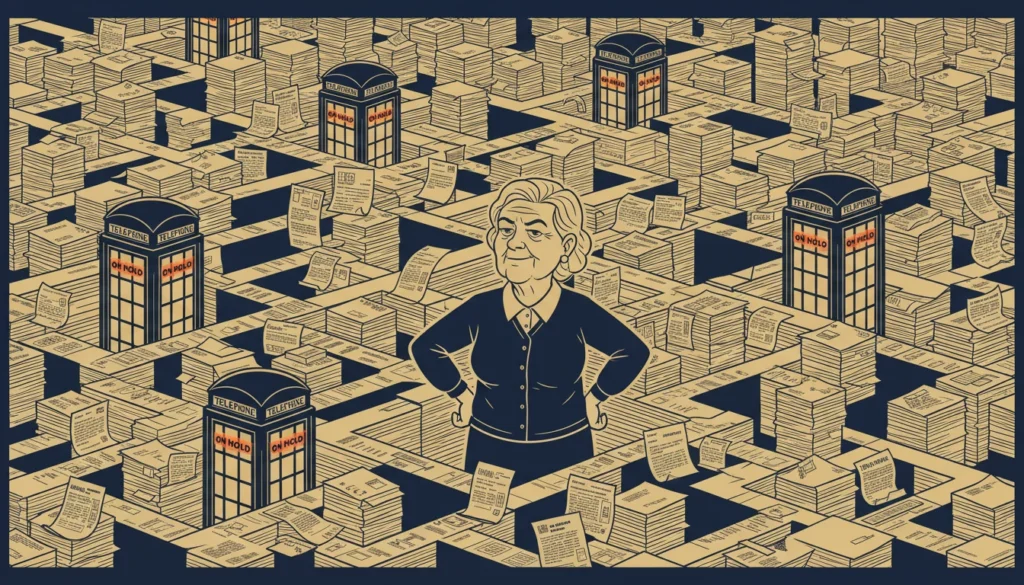
Now you get to enter a whole new maze: actually getting care.
Very quickly, how society affects mental health in retirement stops being abstract and becomes a very concrete logistics problem:
- Does Medicare cover mental health services in any meaningful way — or mostly in theory?
- Can you find a provider who takes your insurance and is actually accepting new patients?
- Can you get to appointments without a long drive or depending on someone else for a ride?
- Does the provider understand the specific, real challenges of retirement — or will you spend half the session explaining why “just go back to work” isn’t the answer you were looking for?
I’ve personally been through the “call, voicemail, email, wait, repeat” loop while trying to find a therapist. At one point I had a small spreadsheet going — tracking who I’d contacted, who was full, who didn’t take my insurance, who never replied at all. By the time I finally got an actual appointment, I was already emotionally exhausted from the process of trying to get help.
A lot of retirees never make it that far. They hit the first wall and quietly give up.
The Substance Abuse and Mental Health Services Administration (SAMHSA) has been documenting this for years: without affordable, accessible, and culturally competent mental health care, the gaps in who gets help and who doesn’t will keep widening — and older adults are consistently, disproportionately on the wrong side of that gap.
Access isn’t a bonus feature. It’s the bridge between “I’m struggling” and “I’m actually getting support.” Without it, everything else is just good intentions.
5. Ageism, Discrimination, and Social Inequity
There’s no honest way to talk about how society affects mental health in retirement without talking about ageism — and the way it compounds every other challenge on this list.
Experiencing discrimination because of your age — being dismissed, talked over, treated as irrelevant, or quietly made to feel like a burden — isn’t just offensive. It’s exhausting in a deep, ongoing, cumulative way that most people outside of it don’t fully appreciate.
It can look like:
- A doctor who assumes your concerns are “just aging” without really listening.
- Feeling invisible in spaces, conversations, and systems designed for younger people.
- Watching your opinions carry less weight in family decisions than they used to.
- Navigating healthcare, technology, and financial systems that weren’t built with you in mind — and don’t particularly care that they weren’t.
A review published in JAMA Psychiatry found that perceived discrimination is consistently associated with higher levels of depression, anxiety, and psychological distress. And for retirees who are also navigating racial, gender, or economic inequities on top of ageism, those layers don’t just add — they multiply.
Friends and colleagues have described what it feels like to be the “only one” in a room — the only person of color, the only one without financial security, the only one who doesn’t quite fit the picture of what retirement is “supposed” to look like. On the outside, they seem composed. Inside, they’re tracking every comment, every look, every shift in tone. That constant self-monitoring takes a real, measurable toll.
So when we say society affects mental health in retirement, this is a significant part of what we mean: life is simply heavier for some people — because of systems they didn’t create but still have to survive every single day.
How Mental Health Challenges Show Up in Retirement
Once you start noticing how society affects mental health in the background, you start seeing how it shows up in the foreground too — in doctor’s offices, in families, in the quiet of a Tuesday afternoon when you can’t quite name what’s wrong.
Mental Health Conditions in Older Adults
Some struggles fit neatly into diagnostic categories: major depression, anxiety disorders, PTSD, cognitive decline. Mental health professionals use tools like the Diagnostic and Statistical Manual (DSM) to identify and treat these conditions — and that structure genuinely helps a lot of people.
But society doesn’t single-handedly create every disorder. What it does affect is who is more likely to develop certain conditions, when symptoms surface, how severe they become, and — critically — who actually gets treatment.
If you spent decades managing chronic stress — financial pressure, unsafe environments, discrimination, family conflict — you’re entering retirement carrying a heavier emotional load than someone who didn’t. That load interacts with biology, loss, and the disorientation of major life transition in ways that can be genuinely destabilizing, even for people who seemed to handle everything just fine for years.
Substance Use in Retirement
Substance use and mental health are often tangled together — and retirement is no exception to that pattern.
For some retirees, substances start as a coping tool: a drink to ease the anxiety of an unstructured day, something to help the brain quiet down at night, something stronger to numb grief or loneliness that doesn’t seem to have anywhere else to go.
At first, it might feel like it works. A few hours of relief. A break from the noise inside your own head. But over time, substance use can become its own serious problem — layered directly on top of the pain that was already there, making both harder to treat.
Zoom out further and you can see whole communities of older adults quietly struggling with this — often in places with poor access to healthcare, limited social support, and very few safe, affordable ways to cope with the weight of everything they’re carrying.
Everyday Distress That Doesn’t Have a Label
Not everyone has — or wants — a formal diagnosis. But that doesn’t mean they’re okay.
There’s a large, largely invisible group of retirees walking around with what you might call everyday distress:
- Burnout that no vacation can touch.
- A low-level sadness that never fully lifts, but never quite gets bad enough to feel like a “real” problem.
- Anxiety about health, money, or purpose that keeps them in a constant, low-grade state of “What if?”
From the outside, these people look completely functional. They show up to family dinners. They smile in photos. They answer texts promptly. But inside, they feel worn down, disconnected from themselves, and quietly unsure of who they are now that the role they played for decades is gone.
A lot of this distress is tied directly to how retirement — and aging — is structured in our society: the abrupt loss of identity tied to work, the cultural pressure to appear content and grateful, the absence of meaningful daily structure, and the slow erosion of community support that most people don’t notice until it’s already gone.
It’s not that retirement is just hard. It’s that we’ve organized it in ways that are genuinely hard on human nervous systems — and then act surprised when people struggle.
The Role of Public Health in Supporting Mental Health in Retirement

For a long time, mental health was treated as a strictly individual problem with strictly individual solutions: you, your therapist (if you could find one), your medication (if you could afford it), your coping strategies (if anyone had ever taught you any).
Public health offers a different lens — and honestly, a more honest one. It asks:
- What patterns do we see across whole communities of older adults?
- Who is struggling the most, and what do their circumstances have in common?
- What can we change about the environment so fewer people end up in crisis in the first place?
Prevention Strategies
Most mental health systems are built to react. Someone hits a breaking point, and then the system scrambles to catch them. Prevention asks a different question: what if we made it less likely for people to reach that breaking point at all?
For retirees, that can look like:
- Policies that protect retirement income and reduce the financial insecurity that quietly drives so much anxiety.
- Workplaces that offer phased retirement options, so the transition isn’t a cliff edge.
- Communities intentionally designed for connection — not just housing.
- Trauma-informed care in the healthcare settings that serve older adults every day.
Going back to the garden metaphor: prevention is about improving the soil and the weather, instead of waiting until every plant is already sick.
Improving Access
Public health also focuses on making support genuinely easier to reach — especially for retirees who face transportation barriers, technology gaps, insurance limitations, or simply the exhaustion of navigating a system that wasn’t designed with them in mind.
That might include:
- Mental health screenings built into routine medical appointments, so people don’t have to seek them out separately.
- Telehealth options that actually work for people with limited mobility or unreliable internet.
- Peer support programs that connect retirees with others who’ve navigated similar challenges.
- Community health workers trained to provide basic mental health support in the places where older adults already are.
The goal isn’t to turn every person into a therapist. It’s to make sure help isn’t hidden behind a hundred barriers that most people quietly give up on.
Education and Awareness
When respected people — athletes, community leaders, or just someone in your own circle — say “I deal with anxiety” or “therapy genuinely helped me,” it quietly rewrites the cultural script that so many retirees grew up with.
I’ve watched rooms visibly soften when someone says, “Yeah, I’ve been there too.” It doesn’t fix everything. But it takes away some of the loneliness — and sometimes that’s exactly what someone needed to hear before they’d consider asking for help.
Good education doesn’t just list symptoms. It shows people what support can actually look like, and reminds them that struggling doesn’t make them weak or broken — especially in a life chapter that comes with real, legitimate, underappreciated challenges.
What Can We Do to Improve Mental Health in Retirement at a Societal Level?
Reading all of this can feel heavy. You might be sitting there thinking: “Okay, this all makes sense — but I’m one person. I don’t control housing policy or the healthcare system.”
That’s true. None of us can fix everything alone. But change happens at different levels — personal, relational, community, and policy. You don’t have to do everything. You just have to do something real in your corner of the world.
Promote Equitable Access to Mental Health Care
We can start by stopping the quiet pretense that mental health care is a luxury for people with extra time and money — especially for retirees living on fixed incomes.
On a larger scale, that might look like supporting:
- Policies that meaningfully expand Medicare coverage for therapy and mental health services.
- Funding for community clinics and senior-focused crisis centers.
- Programs that bring mental health support directly into senior centers, faith communities, and the places older adults already gather.
On a personal level, it might mean learning what resources actually exist in your area — and sharing them when someone opens up to you, instead of changing the subject.
Reduce Stigma and Normalize Mental Health Conversations
A lot of stigma quietly dissolves when regular people start talking honestly. You don’t have to share everything with everyone. But when it feels safe, you might:
- Mention therapy the same casual way you’d mention a dentist appointment.
- Take someone seriously — really seriously — when they say they’re struggling.
- Stop using words like “crazy” as a throwaway joke.
- Ask “How’s your mental health lately?” and then actually stay for the answer.
Sometimes one honest conversation with someone you trust does more than a whole public awareness campaign. When someone you respect says, “Yeah, I’ve had panic attacks too” or “I went through a really dark stretch after I retired” — suddenly you’re not a strange exception. You’re just human.
Address the Social Determinants of Health
If mental health in retirement is genuinely tied to housing, income, safety, and access to care — and it is — then working on those things is mental health work. Full stop.
That includes:
- Supporting policies that protect Social Security and retirement benefits.
- Backing efforts to create and preserve affordable senior housing.
- Pushing for fair, dignified treatment of older adults in healthcare, financial, and legal systems.
- Supporting food banks, mutual aid networks, and community programs that meet basic needs without making people feel like a burden for having them.
Foster Strong Social Connections
And then there’s the quiet, unglamorous, genuinely powerful work of simply showing up for each other.
That might look like:
- Actually knowing your neighbors’ names — and checking in when you haven’t seen them in a while.
- Reaching out to friends who go quiet when they’re overwhelmed, instead of assuming they’re fine.
- Joining groups or communities where people actually care about each other, not just share a zip code.
- Starting small, consistent traditions — regular dinners, weekly walks, monthly game nights — that give people something to count on.
Community doesn’t erase mental health challenges. But it fundamentally changes the experience — from “I’m fighting this completely alone” to “We’re figuring this out together.” And that difference is not small.
Wrapping It Up: Why Mental Health in Retirement Is a Social Issue, Not Just a Personal One
Mental health in retirement isn’t just about mindset, motivation, or willpower. It’s about the conditions we’re actually living in: the cost of living, the safety of our communities, the stories we were told about asking for help, the way systems treat us, and whether we have real people genuinely in our corner.
When we ignore the social side of mental health in retirement, we end up quietly blaming individuals for responding like human beings to genuinely hard situations. We tell people to “self-care” their way out of problems that actually require community care and systemic change. And then we wonder why they’re still struggling.
That doesn’t mean personal choices don’t matter. Therapy can help. Medication can help. Healthy habits and coping skills can help. But they work best in a world that isn’t constantly working against the people trying to use them.
Understanding how society shapes mental health in retirement gives us a bigger, more honest map. It helps us see that:
- Some struggles are not personal failures — they’re predictable responses to real pressure and real inequality.
- Genuine solutions have to include both individual support and meaningful social change.
- Every one of us has some role — small or large — in making things better for the people around us.
If you’ve been hard on yourself for not “handling retirement better,” I hope this softens that a little. Maybe it’s not that you’re weak. Maybe you’ve been carrying far more than anyone should have to carry alone — and doing it quietly, because that’s what you were taught to do.
And if you’re in a position to help — whether that’s listening to a friend, supporting a local organization, or simply pushing for fairer policies — know that your effort counts. You’re part of the answer to how society affects mental health in retirement.
No single article changes the world. But seeing the bigger picture is always a start. Once you can name what’s happening, you’re not just stuck inside it anymore — you’re able to move, choose, connect, and slowly, together with others, begin to change it.




4 Comments
Comments are closed.