
What to Write in a Retirement Card: Practical Messages, Examples, and Wishes
Stuck on what to write in a retirement card? Discover heartfelt, funny, and formal message ideas, plus expert tips to make your farewell note truly memorable.
There is a specific kind of panic that sets in when a retirement card lands on your desk. You know the one. It’s usually tucked inside a bright manila envelope, traveling from cubicle to cubicle like a high-stakes game of hot potato. You open it, see a sea of “Best of luck!” and “We’ll miss you!” and suddenly, your brain decides to forget every meaningful interaction you’ve ever had with that person.
I’ve been there more times than I care to admit. You want to say something profound, but you also don’t want to sound like a Hallmark AI gone rogue. A retirement card is a small, meaningful way to say thanks and wish someone well as they move into a new chapter. Whether you’re writing to a coworker who survived a thousand “reply-all” threads with you, a close friend, or a family member, the right words make the moment feel personal.
This guide walks you through choices for tone, examples for different relationships, and ideas—formal, funny, and heartfelt—so you can figure out exactly what to write in a retirement card that actually fits the retiree. We’ll show how to craft thoughtful retirement notes, share polished examples for formal cards, offer lighthearted lines for those who like a laugh, and highlight quotes and tips for personalizing your message. By the end, you’ll have clear, ready-to-use lines and approaches to make any retirement card feel genuine.
How do you write meaningful retirement card messages?
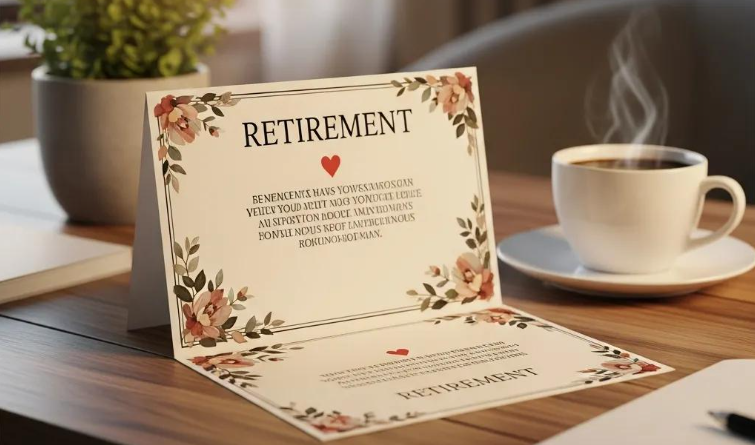
A meaningful retirement message starts with knowing who you’re writing to. It sounds simple, but we often overcomplicate it by trying to sound “professional” instead of just sounding like ourselves. Speak from the heart, acknowledge the retiree’s contributions, and end with sincere wishes for what’s next. Personal details—names, shared memories, or a small inside joke—turn a generic line into something they’ll actually want to keep in a shoebox for twenty years.
I remember when my first mentor retired. I spent forty minutes trying to write something that sounded “executive.” Eventually, I gave up and just wrote about the time he helped me fix a massive spreadsheet error at 6:00 PM on a Friday. He told me later that was the only note that made him laugh.
Research also highlights how carefully worded farewell notes matter, especially in professional settings like retirement. A 2023 study by KF Yusob, titled A linguistic analysis of farewell emails by Malaysian workers, examined how these messages function as a “genre” of workplace communication. The study found that while relocation emails are often functional, retirement messages are deeply rooted in identity and legacy. They help bridge the gap between a professional past and a personal future, which is why getting the wording right leaves such a lasting impression.
What are the key elements of a heartfelt retirement message?
Most memorable retirement notes include a few consistent elements that move them beyond the “Happy Trails” cliché.
Emotional resonance is the big one. You don’t have to be a poet, but you should say why the person mattered. Describe their impact or what you’ll miss about them. Maybe it was their ability to stay calm during a merger, or maybe it was just the fact that they always knew where the good snacks were hidden.
Personal anecdotes are the secret sauce. A brief, specific memory makes your message feel grounded and honest. If you can reference a specific win or a shared struggle, do it. It proves you weren’t just occupying the same office space; you were actually paying attention.
Well wishes are your closing act. Close with optimistic hopes for their retirement—rest, adventure, or time with loved ones. Whether they’re planning to sail the Mediterranean or just finally finish that 5,000-piece puzzle of a haystack, acknowledge their specific version of “the good life.”
How to personalize your retirement wishes effectively?
Small details go a long way when personalizing a card. If you’re wondering what to write in a retirement card to make it stand out, try these simple techniques.
First, use the recipient’s name. It sounds basic, but opening with a name immediately makes the note feel directed and warm. It’s the difference between a mass-produced flyer and a personal letter.
Next, reference shared experiences. Mention a project, meeting, or moment you both remember to spark connection. “I’ll never forget that presentation in Chicago” carries a lot more weight than “Thanks for the hard work.”
Finally, match the retiree’s personality. If they love jokes, add a light quip. If they’re reserved, keep the tone respectful and sincere. I once saw someone write a three-paragraph comedy routine in a card for a very serious Chief Financial Officer. It was… uncomfortable. Don’t be that person. Match the vibe.
What are examples of formal retirement wishes for cards?
Formal messages work well for bosses, senior colleagues, or acquaintances. They show respect and gratitude while staying polished and professional. You want to sound appreciative without sounding like you’re sucking up—it’s a delicate balance, but it’s doable.
How to write respectful messages for a boss or senior colleague?
When writing to someone higher up the food chain, keep it courteous and specific. You want to acknowledge their legacy without making it sound like a eulogy. Try one of these:
“Congratulations on your retirement. Your leadership and steady guidance made a real difference to this department—thank you for everything.”
“Wishing you a restful and rewarding retirement. Your dedication to this company has inspired all of us to work a little harder.”
“Thank you for your mentorship over the years. I’ve learned so much from your example. Enjoy this well-earned new chapter.”
These lines express appreciation while maintaining a professional tone. They acknowledge the hierarchy while still feeling human.
What formal phrases convey appreciation and best wishes?
If you’re short on space or just want to keep it brief and classy, a few polished closers can be reused:
“Best wishes for a fulfilling retirement.”
“May your retirement be peaceful and joyful.”
“Congratulations on reaching this important milestone.”
Short, gracious phrases like these work well in cards where space is limited, like those tiny cards that come with a bouquet of flowers.
How can you use humor in retirement card sayings?
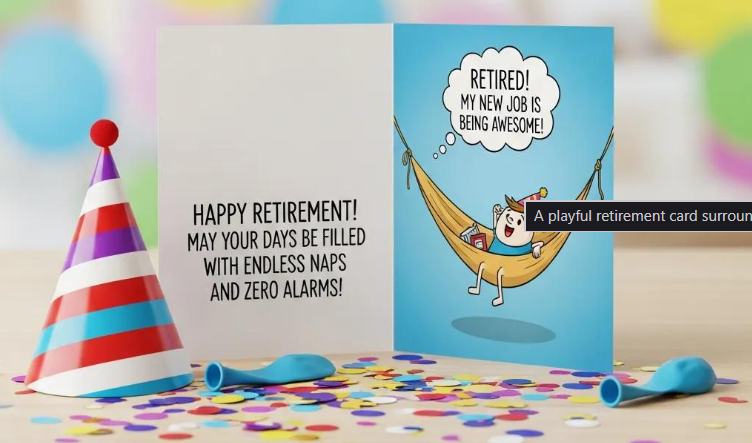
Humor can make a retirement card memorable—when it suits the person. A gentle joke or witty line adds warmth, but avoid anything that could embarrass or offend. Retirement is a celebration of freedom, so lean into the “no more alarms” and “no more meetings” angle. It’s a universal joy.
What are popular funny retirement messages and sayings?
If you know they have a good sense of humor, here are a few playful options to try:
“Retirement: When you stop lying about your age and start lying about your income!”
“Congratulations on your retirement! From now on, every day can feel like Saturday—except you don’t have to do yard work on Sundays.”
“You’re off to great places—just don’t forget to set your alarm for the early-bird specials!”
“I’m not saying I’m jealous, but I’ve already started practicing my ‘retired’ face in the mirror. Enjoy the freedom!”
These lines add levity and are great for people who enjoy a laugh. They acknowledge the absurdity of suddenly having 40+ extra hours a week to fill.
How to balance humor with respect in retirement cards?
Use humor carefully. I’ve always believed that a good joke should be a bridge, not a barrier. Keep these rules in mind:
Understand the retiree. Make sure the joke fits their specific sense of humor. If they’re a serious golfer, a golf joke is gold. If they hate sports, it’s a swing and a miss.
Avoid offensive humor. Skip anything that could be misread or hurtful. Age jokes can be tricky—keep them light and focused on the “perks” of being older, not the “pains.”
Stay respectful. Even a funny card should end on a warm, sincere note. A joke followed by “Seriously, we’re going to miss you” is a winning combination.
What are thoughtful retirement messages for different recipients?
Your relationship with the retiree should guide the tone. Tailored messages feel more meaningful than one-size-fits-all lines. When you’re deciding what to write in a retirement card, think about the “proximity” of your relationship.
What to write for coworkers and team members?
For colleagues, acknowledge teamwork and shared moments. These are the people you’ve spent more time with than your own family some weeks.
“It’s been a pleasure working with you. Your contributions shaped our team and made the office a better place to be—enjoy every minute of retirement!”
“Congratulations on your retirement. Your friendship and support meant a lot to all of us, especially during the busy seasons. We’re going to miss your perspective.”
These lines celebrate the professional bond while keeping the message personal. It’s about acknowledging that they weren’t just a “resource”—they were a person.
How to craft messages for friends and family members?
For loved ones, lean into warmth and excitement. This is personal. You’re not just celebrating the end of a job; you’re celebrating the start of a new era of your relationship with them.
“I’m so happy for you as you start this new adventure—may it be full of the joy and relaxation you’ve been talking about for years.”
“Congratulations on your retirement! I can’t wait to see all the wonderful things you do with your extra time. Does this mean we finally get to take that road trip?”
Personal references and affectionate closings make these notes feel intimate and sincere. This is the place for the “I’m so proud of you” lines.
Where can you find inspiring retirement quotes for cards?
A well-chosen quote can add heart or perspective to your message. It’s like bringing in a professional backup singer to help you hit the high notes. Pick one that connects to the retiree’s outlook and goals.
Which quotes best capture retirement sentiments?
A few widely loved lines that never go out of style:
“Retirement is not the end of the road. It is the beginning of the open highway.” – Unknown
“The best is yet to come.” – Frank Sinatra
“Retirement: A time to enjoy all the things you never had time to do when you worked.” – Catherine Pulsifer
“Don’t simply retire from something; have something to retire to.” – Harry Emerson Fosdick
Use quotes sparingly and pair them with a short, personal note. A quote on its own can feel a bit like a lazy Sunday afternoon—nice, but lacking direction.
How to incorporate quotes seamlessly into your message?
Make a quote feel natural with these tips:
Integrate quotes naturally. Lead into the quote with a sentence that connects it to your message—e.g., “As you begin this next chapter, I kept thinking of this line: ‘the best is yet to come.'”
Attribute properly. Give credit to the author when known. It adds a touch of class and prevents people from thinking you’re trying to pass off Sinatra’s lyrics as your own.
Choose quotes that matter. Pick lines that reflect the retiree’s actual hopes or personality. If they’re a cynic, don’t give them a “rainbows and butterflies” quote.
What are tips for writing the perfect retirement card message?
The perfect card balances tone, brevity, and sincerity. If you’re still stuck on what to write in a retirement card, remember that you don’t need to write a novel. You just need to be present.
How to match message tone to recipient and occasion?
Match tone to the person and context. I once received a card that was so formal I thought I was being summoned for jury duty. It didn’t fit the relationship at all.
Know the retiree. Choose formal or casual language based on your actual relationship, not the one you think you should have.
Consider the setting. A workplace card often calls for polished wording; a family card can be more relaxed. If the card is being read aloud at a party, keep it punchy.
Examples of tone variations: Friendly and warm for close friends; respectful and concise for colleagues.
What common mistakes should you avoid when writing retirement cards?
Watch for these pitfalls that can turn a nice gesture into a “meh” moment:
Clichés. Overused phrases like “Happy Trails” can come off as lazy. Try to add a personal touch instead. Even adding “Happy Trails on your new boat!” makes it 10x better.
Wrong tone. Too casual or too stiff language can feel off. If you’ve never joked with your boss, don’t start in their retirement card.
Lack of personalization. Generic notes are forgettable. Include a detail or memory whenever possible. If you can’t think of one, mention a quality you admire about them.
Frequently Asked Questions
What should I avoid when writing a retirement card?
Avoid clichés and generic phrases that sound like you’re just checking a box. Don’t use a tone that clashes with your relationship—too casual for a boss or too formal for a close friend. Be careful with jokes: make sure they match the retiree’s sense of humor and won’t offend. Whenever possible, add a personal detail to make the message feel genuine.
How can I make my retirement card message more memorable?
Focus on personalization and emotion. Share a brief story or a specific memory that highlights your connection. Use the retiree’s name and reference a shared moment or accomplishment. Pair a short personal note with a thoughtful quote if you like—those touches make a card stick in someone’s memory.
Are there specific themes I should consider for retirement messages?
Yes—popular themes include new beginnings, adventure, relaxation, and gratitude. You can emphasize upcoming freedom to travel or hobbies, celebrate the retiree’s career achievements, or simply express thanks for their support and friendship. Choose a theme that reflects the person and what they value.
What is the best way to sign off a retirement card?
Match your sign-off to the overall tone. For formal messages, use “Best wishes,” “Sincerely,” or “Warm regards.” For personal notes, try “With love,” “Cheers,” or “Take care.” A short, heartfelt closing sentence before your sign-off—like “You’ll be missed” or “Enjoy every moment”—adds warmth.
How can I incorporate quotes into my retirement card?
Introduce a quote so it connects to your message—for example, “As you begin this new chapter, remember: ‘the best is yet to come.'” Attribute the quote when possible and pick a line that reflects the retiree’s outlook or plans. Keep it brief and follow it with a personal sentence.
What are some creative ways to present a retirement card?
Little details make the presentation special: a handwritten note, a small printed photo of a shared memory, or a tiny keepsake tucked inside (a bookmark, a favorite recipe, or a framed quote). A decorative envelope, a sprig of dried flowers, or presenting the card with a bouquet can make the moment feel ceremonial and memorable.
Conclusion
Writing a retirement card is an opportunity to recognize a person’s work and wish them well in whatever comes next. It’s the final “well done” of a long career. When you’re deciding what to write in a retirement card, keep your message honest, include a personal detail, and choose a tone that fits your relationship.
Use the examples and tips here as a starting point, then add your own voice—those small personal touches are what the retiree will remember long after the cake is gone. Start writing, and make their send-off feel truly special. You’ve got this!




One Comment
Comments are closed.