
Stress Relief for Retirees: Your Practical Guide to Actually Feeling Better
Real, practical stress relief for retirees — from movement and breathing to sleep, boundaries, and knowing when to ask for help. Because retirement deserves to feel better than this.
I used to think stress relief meant lighting a lavender candle and waiting for my problems to gently dissolve into thin air. Spoiler: they absolutely did not. They just sat there, smelling faintly of lavender, completely unbothered.
And honestly, I think a lot of retirees feel the same way — except the stress looks a little different now. It’s not the 6 AM alarm or the impossible deadline anymore. It’s the quiet weight of a changing identity. It’s watching a fixed income stretch across a month that keeps getting more expensive. It’s a body that has strong opinions about stairs. It’s a brain that still hasn’t gotten the memo that you’re supposed to be relaxing now.
Retirement is supposed to be the reward. The finish line you’ve been sprinting toward for decades. And for many people, it genuinely is wonderful — but it also comes with its own brand of stress that nobody really warns you about. Financial uncertainty. Health concerns. The strange grief of losing a daily routine that told you who you were. The social isolation that creeps in when you’re no longer surrounded by coworkers every day, whether you liked those coworkers or not.
If you’ve been Googling stress relief for retirees at 2 AM while your brain replays every financial decision you’ve ever made, I see you. I’ve been you. Honestly, on some nights, I am you — sitting there in the dark, wondering why retirement feels harder than the job did.
The good news? You don’t need a two-week retreat in Bali or a winning lottery ticket to deal with it. You just need a handful of strategies that actually work in normal, messy retirement life — and maybe a little willingness to experiment, look slightly ridiculous in your living room, and admit that what you’ve been doing so far might not be cutting it.
Key Takeaways:
- Chronic stress in retirement is real, common, and manageable with the right tools
- Movement, breathing, sleep, and nutrition form the physical foundation of stress relief
- Social connection and creative outlets are underrated but genuinely powerful
- Saying no is a skill — and one of the most practical stress management tools available
- Professional help is not a last resort; it’s a smart, grown-up option
- Small, consistent changes beat dramatic overhauls every single time
What Built-Up Stress Actually Does to Your Body — Especially After 60
Before we get into stress relief for retirees in a real, practical way, it helps to understand what’s actually going on under the hood. Because when you understand what your body is trying (badly) to do, all the tools you’ve heard about suddenly make a lot more sense.
When you’re stressed, your body floods your system with cortisol — the “fight or flight” hormone designed to help you outrun actual danger. A little cortisol? Totally fine. It helps you focus and react quickly. Cortisol camping out in your system like it signed a year-long lease and also refuses to do dishes? That’s when things get messy.
Here’s the part nobody tells you: as we age, our bodies become less efficient at clearing cortisol after a stressful event. The recovery takes longer. The residue lingers. So what might have bounced off you at 40 can genuinely flatten you at 65 — not because you’ve gotten weaker, but because your system is working with different chemistry now. That’s not a character flaw. That’s biology.
Research published in Psychoneuroendocrinology shows that chronic high cortisol levels can disrupt everything — weight, memory, blood pressure, immune function. Your body starts treating your average Tuesday like a full-scale emergency. That’s why you feel exhausted even when, technically, you “haven’t done that much.” You have. Your nervous system has been running a marathon in the background all day.
What cracks me up — and not in a fun way — is that our bodies still haven’t figured out we’re not running from lions anymore. Most of our stress now comes from insurance paperwork, family group chats, and that one neighbor who has opinions about your lawn. But our nervous system responds as if all of that is life-or-death. Thanks, evolution. Truly helpful.
The symptoms are probably familiar: headaches that won’t quit, shoulders so tight they’re practically earrings, stomach issues for no obvious reason, exhaustion that sleep doesn’t fix, and that charming habit of clenching your jaw so hard at night you wake up with a sore face. Mentally, it shows up as irritability, brain fog, and a vague sense that you’re dropping balls somewhere but you’re too tired to figure out where.
None of that makes you weak. It just means your stress response has been stuck in the “on” position for too long. The rest of this guide is about nudging that switch back toward “off” — or at least “not constantly blaring.”
The Movement Solution: Getting Your Body to Help Your Brain
Here’s something I wish someone had told me earlier: you cannot outthink stress. I tried. I went full spreadsheet mode on my retirement budget, convinced that if I just organized hard enough, I’d relax. I color-coded things. I made sub-tabs. I did not relax. Trying to “logic” your way into calm is like trying to negotiate with a smoke alarm. Sometimes you just have to open a window and move.
Exercise is probably the most well-researched tool we have for stress relief. A study in the Journal of Clinical Psychiatry found that regular physical activity can be as effective as medication for reducing anxiety in some people. That doesn’t mean you need to suddenly love burpees or sign up for CrossFit at 6 AM. This is not that kind of pep talk. I promise.
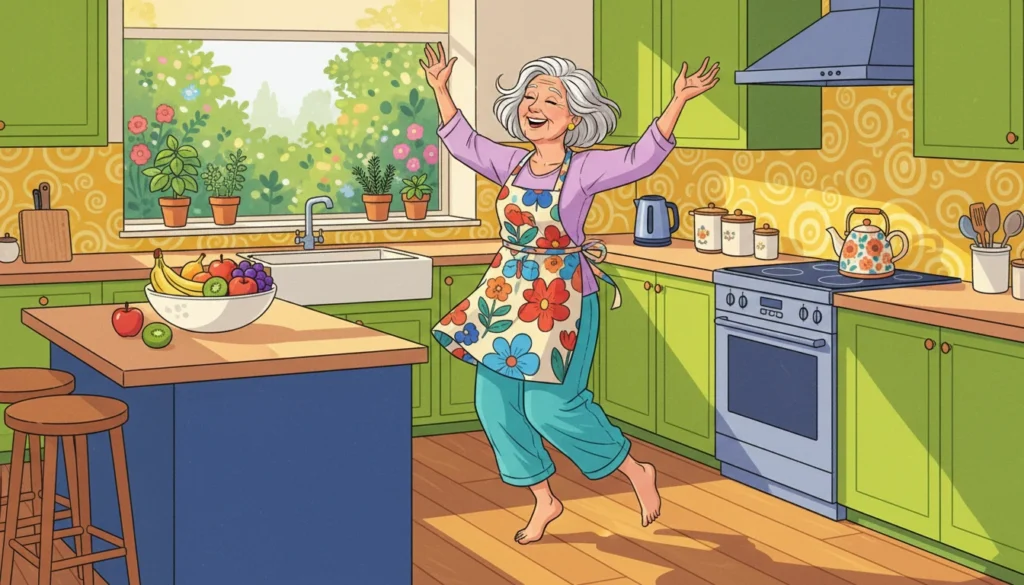
When I’m trying to figure out stress relief for retirees through movement, I start with one question: what do I actually not hate today? Some days that’s blasting embarrassing early-2000s pop and dancing around the kitchen like I’m in a low-budget music video that nobody asked for. Other days, it’s just walking around the neighborhood and silently reviewing everyone’s landscaping choices. (The people with the plastic flamingos? Brave. Respect.) The point isn’t performance — it’s giving your body a way to burn off some of that cortisol your brain’s been hoarding.
Yoga deserves a special shout-out because it’s like a two-for-one deal: movement plus intentional breathing. I used to think it was just stretching for people who own too many crystals. Then I tried it during a particularly stressful week of retirement paperwork, when my neck felt like it had fused into one concrete block. Holding a warrior pose and actually focusing on my breath did something to my nervous system I wasn’t expecting. It felt like someone turned the volume down inside my own head. I didn’t become a yoga person overnight, but I did become a “okay fine, I see why people do this” person, which is progress.
And if you’re looking for something that builds strength while also managing stress — because why not make your movement do double duty — the team over at Vanika has a genuinely excellent breakdown of how to build muscle after 60 in a way that’s sustainable, joint-friendly, and actually enjoyable. Worth a read before you commit to anything that involves jumping.
One important thing: this only really works if you do it somewhat regularly. Working out once and expecting all your built-up stress to vanish is like watering a plant a single time and being shocked it died. Aim for small, consistent movement — most days of the week if you can — so your body actually learns, “Oh, we’re not always in danger. Good to know.”
The Breathing Techniques That Actually Work (And Don’t Feel Totally Ridiculous)
Being told to “just breathe” when you’re stressed is infuriating. If it were that simple, we wouldn’t be here. But the right kind of breathing? That can be surprisingly powerful, and yes, there’s real science behind it — not just someone on a wellness podcast telling you to “find your center.”
You’ve got this major nerve highway in your body called the vagus nerve. Think of it as a direct line between your brain and your organs. When it’s activated through slow, deep breathing, it basically tells your brain, “We’re safe. Stand down. You can stop acting like we’re being chased now.” Research in Frontiers in Psychology shows that slow breathing exercises can lower cortisol and improve how your body responds to stress overall.
My go-to for stress relief for retirees in the moment is the 4-7-8 breath. Inhale through your nose for four counts, hold for seven, exhale through your mouth for eight. The first few rounds feel a little awkward — like you’re learning to manually operate your lungs for the first time — but then your shoulders drop a bit and your brain feels a tiny bit less loud. It doesn’t fix your life, but it can get you through the next 10 minutes. And sometimes 10 minutes is all you need.
Box breathing is another favorite, especially if you like structure: in for four, hold for four, out for four, hold for four. Repeat that “box” a few times. Fun fact: Navy SEALs use versions of this technique before high-stress missions. I use it before difficult conversations with my financial advisor and crowded grocery stores on a Saturday morning. Same emotional energy, honestly.
The best thing about breathing techniques is that you can do them anywhere and nobody has to know. In the car. In the bathroom. In bed when your brain decides 3 AM is the perfect time to remind you of something embarrassing you did in 1987. No equipment, no apps, no mat required. Just lungs and a tiny sliver of willingness.
Sleep: The Non-Negotiable Foundation of Stress Relief in Retirement
We need to talk about sleep. I know — you’ve heard “get more sleep” so many times your eyes probably roll automatically now. Mine did. I went through a phase where I actually said, “I’ll sleep when I’m dead.” Then my body replied, “Cool, let’s move that deadline up a little.”
When you’re trying to figure out stress relief for retirees, sleep isn’t extra credit. It’s the foundation everything else rests on. During deep sleep, your brain literally clears out waste products, resets chemical levels, and organizes memories. Without that cleanup, you wake up already behind — already running a deficit before the day has even started.
The American Psychological Association has data showing that people who sleep fewer than eight hours a night report significantly higher stress levels than those who get enough rest. Meanwhile, high stress makes it harder to fall asleep and stay asleep. It’s the most annoying loop in existence: too stressed to sleep, too tired to handle stress. Rinse, repeat, feel terrible.
What helped me was treating sleep like an actual non-negotiable appointment — not a “if there’s time” activity. I set a bedtime alarm, not just a wake-up alarm. That little buzz at night is my body’s version of a manager saying, “Wrap it up.” My wind-down routine is simple and shockingly low-glamour: no screens for at least an hour before bed (I fail at this sometimes, but I aim for it), a book that isn’t about finances or productivity, and a bedroom that’s colder than feels reasonable at first. The National Sleep Foundation recommends 60–67°F for optimal sleep, which sounded absurd until I tried it and started sleeping better than I had in years.
We’ve turned exhaustion into a weird badge of honor, like the most tired person wins some invisible prize. But that’s not strength — that’s slow, quiet burnout wearing a productivity costume. Getting enough sleep isn’t lazy. It’s the most practical, unsexy way to relieve built-up stress and handle everything else retirement throws at you without coming apart at the seams.
The Social Connection You’re Probably Neglecting
Here’s a slightly uncomfortable truth: one of the most powerful forms of stress relief for retirees is also one of the easiest to avoid when you’re overwhelmed — talking to other humans. Real ones. Not just the TV.
There’s a landmark study from Brigham Young University that compared social isolation to smoking in terms of health impact. They found that chronic loneliness is about as bad for you as smoking 15 cigarettes a day. Fifteen. A day. Meanwhile, a lot of retirees respond to stress by quietly canceling plans, ghosting group chats, and retreating into their own heads — which is understandable, but not helpful.
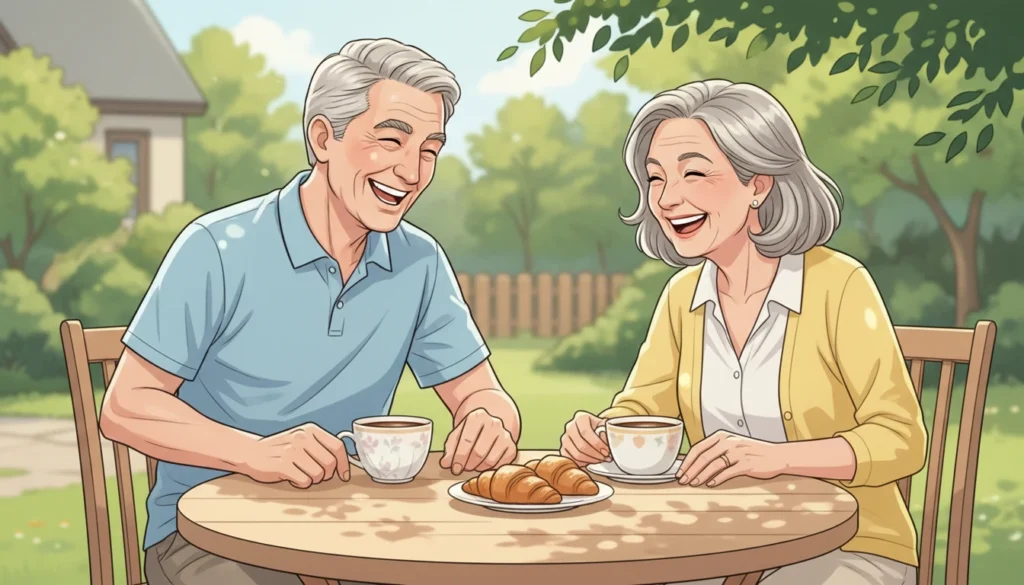
When stress piles up, my default move is to hide. Cancel the lunch. Mute the notifications. Convince myself I’m “too tired” to be good company. But every time I actually push myself to text a friend, hop on a call, or meet someone for coffee, I walk away feeling lighter. Not fixed, not magically calm, but less alone in it. Which counts for a lot more than we give it credit for.
Something strange happens when you say your stress out loud. The thing that felt huge and terrifying in your head becomes more manageable once it’s shaped into actual sentences. Other people can also point out where you’re being too hard on yourself — which, if you’re anything like me, is fairly often and with impressive creativity.
On the flip side, being there for someone else can quietly lower your own stress too. Volunteering, checking in on a friend, or even just listening for once instead of talking about your stuff — it pulls your brain out of self-focused worry and reminds you that you’re part of something bigger. And that your worth isn’t based solely on how productive you were before you retired, or how much you’re “doing” now.
The Power of Saying No (And Actually Meaning It)
If your calendar looks like a game of Tetris played by someone with a personal grudge, this section is for you.
A lot of retirement stress isn’t about “big traumatic stuff.” It’s death by a thousand yeses. Yes to every family request. Yes to every committee. Yes to babysitting every weekend even when your knees are staging a protest. Yes to every social plan even when you know you’re at your limit. Learning stress relief for retirees often means learning one small, terrifying word: no.
For a long time, I thought saying no made me difficult or selfish. If someone asked for help and I said no, it felt like failing some invisible test I hadn’t agreed to take. Then I came across a study in the Journal of Consumer Research that looked at the language people use when sticking to boundaries. People who said “I don’t” instead of “I can’t” were much more consistent. “I can’t make it” sounds like you might be persuaded with the right argument. “I don’t do weeknight events” sounds like a policy. A policy you made. For yourself. Like an adult.
Start tiny. Say no to one thing this week that you would normally say yes to just because you feel guilty. See what happens. Spoiler: the world will not collapse. You might even feel a weird rush of relief, followed immediately by guilt, followed eventually by peace. That’s the process. It’s not pretty, but it works.
And please, for the love of your nervous system, stop apologizing for having limits. “I’m at capacity” is a complete sentence. You don’t need a three-paragraph explanation or a doctor’s note. Every time you say no to something that drains you, you’re saying yes to having a little more space to breathe, sleep, move, and do the actual things that help relieve built-up stress instead of just piling on more.
Creative Outlets: The Underrated Stress Reliever

There’s something weirdly magical about making something — anything — with your hands or your mind. Even if it’s objectively terrible. Sometimes especially if it’s terrible. My first attempt at watercolor looked like a crime scene, and I felt genuinely better afterward.
Researchers at Drexel University found that just 45 minutes of creative activity significantly lowered cortisol, and it didn’t matter whether people were “good” at art or not. That part made me irrationally happy. You don’t need to be the next Picasso. You just need to show up with some markers, paint, dough, an instrument, your voice — whatever — and mess around without an agenda.
When I’m trying to figure out stress relief for retirees through creativity, I pick things where the stakes are low. Adult coloring books (yes, the cheesy ones — they work, and I will not apologize for this). Doodling during a long phone call. Baking something lopsided that still tastes good. Rearranging a bookshelf so it looks vaguely pleasing to my very tired eyes. Retirement, it turns out, is a genuinely great time to pick up the hobby you always said you’d get to “someday.” Someday is now. Might as well make it weird and fun.
Writing can be huge here too. Not picture-perfect journaling with headings and inspirational quotes. I mean “brain dump” journaling where you spill all the half-formed worries, frustrations, and what-ifs onto a page and don’t judge any of it. I have a notebook that no one will ever read where I just unload. Half of it is barely legible. All of it helps.
Music is another direct line to your nervous system. Research published in Trends in Cognitive Sciences shows that music interacts with the same brain systems involved in stress and emotion. So yes, that playlist you made during a low moment is more than just vibes. It’s medicine, in a very human way. Sing in the car. Play something badly. Put on the album that takes you back to a time when things felt simpler. Your brain will thank you.
Nutrition and Stress: What You Eat Actually Matters
I wish I could tell you that stress relief for retirees involves unlimited fries and energy drinks. Tragically, my body has repeatedly and firmly informed me this is not the case. It has opinions now. Strong ones.
Food won’t magically delete your problems, but it absolutely affects how capable you feel of handling them. When I’m stressed and living on coffee, sugar, and vibes, everything feels ten times harder. When I eat semi-decently, I’m not suddenly enlightened — I’m just less on the edge. Less likely to have a disproportionate reaction to the printer not working.
Let’s start with the obvious villains: too much caffeine (I know, I know), constant sugar spikes and crashes, and going so long without eating that you turn into the low-blood-sugar version of yourself that even you don’t like. On the supportive side, omega-3 fatty acids — think salmon, sardines, walnuts, flaxseeds — have been shown to help with anxiety. A study in Psychosomatic Medicine found that omega-3 supplementation reduced anxiety symptoms by about 20%. That’s not nothing. That’s actually quite something.
Complex carbs like oats, quinoa, brown rice, and sweet potatoes support more stable energy and help your brain get a steady supply of fuel. Vitamin C–rich foods and magnesium powerhouses — dark chocolate, avocado, leafy greens — also play nice with your stress response. I personally lean on the “magnesium-rich dark chocolate” part pretty hard. It’s basically medicine. I’ve decided.
Then there’s your gut. Around 95% of your body’s serotonin is produced in the gut, which means your digestive system has a shocking amount of influence over your mood. Probiotic foods like yogurt, kefir, kimchi, and sauerkraut can support a healthier gut environment, which in turn supports a more balanced brain. Your body is one big interconnected drama, basically, and your gut is the lead character nobody gave enough credit to.
Hydration sounds boring until you remember that even mild dehydration can increase cortisol levels. If you’re always wired and tired, and also always forgetting to drink water until 4 PM, that combo is not helping. I’ve had to trick myself with a big water bottle on my desk that physically stares at me all day. It works. Embarrassingly well.
Nature and Outdoor Time: The Free Therapy Session
If someone could bottle what 20 minutes outside does for built-up stress and sell it, they’d be a billionaire. Thankfully, nature is still free — and one of the genuinely great perks of retirement is that you finally have the time to actually use it without guilt.
A study from the University of Michigan found that just 20 minutes in nature significantly reduced cortisol levels. They called it a “nature pill,” which sounds cute until you actually try it and realize it’s weirdly accurate. Japanese researchers have studied “forest bathing” (shinrin-yoku) — basically slow, intentional time in nature — and found lower stress hormones, better mood, and even healthier heart markers. The trees are doing something. We don’t fully understand it. We should probably just go outside more.
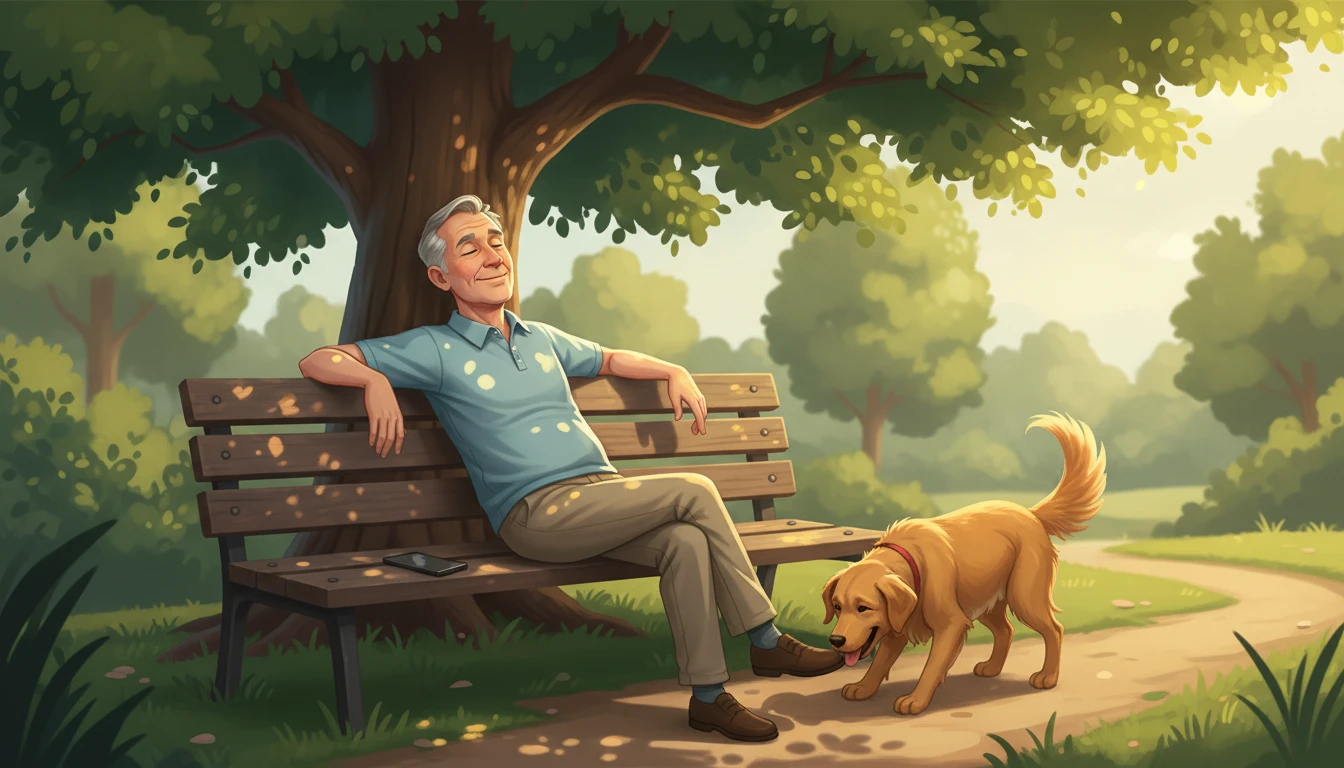
For a long time, I brushed this off. “Go outside” sounded too simple to matter. Then I let myself sit on a park bench for 15 minutes one insanely stressful afternoon, phone on airplane mode, just watching trees and people and a dog that was way too excited about a stick. And something in my body softened that hadn’t relaxed in days. I didn’t solve anything. I just sat there. And it helped.
You don’t need a cabin in the woods or an ocean view for this to work. A quiet corner of a park. Your back porch. Even a small patch of grass in the middle of a city. Research in Environment and Behavior shows that simply looking at greenery through a window can reduce stress. Your nervous system is surprisingly easy to impress sometimes. Give it a tree. It’ll be grateful.
These days, I sneak in little “nature doses” whenever I can: taking a walking meeting instead of sitting at my desk, drinking my coffee outside, or just opening a window and actually noticing what’s out there for once. Add some sunlight to the mix, and you’re also helping reset your circadian rhythm, which feeds back into better sleep, which feeds back into — yep — less built-up stress. It’s a whole beautiful loop, and it starts with just going outside.
Mindfulness and Meditation: Beyond the Hype
For years, I was firmly in the “meditation is not for me” camp. I pictured super calm people with perfect posture and zero intrusive thoughts, sitting in serene silence. Meanwhile, my brain is more like 37 tabs open, music playing from somewhere, and a notification I can’t find. Meditating sounded like asking chaos to sit quietly and behave. Nice idea. Not realistic.
Then I learned that meditation isn’t about having no thoughts. It’s about noticing the thoughts without letting them drag you around by the collar. And practicing that skill over and over until your brain slowly learns a new trick: “Oh, I don’t have to believe every single anxious story I tell myself.” That realization alone was worth the awkward first few sessions.
A meta-analysis in JAMA Internal Medicine reviewed 47 studies and found that mindfulness meditation programs provided meaningful improvements in anxiety and depression. That’s research-speak for “this isn’t just a woo-woo trend; it does something real.” Something measurable. Something worth trying.
When I’m using mindfulness for stress relief for retirees, I lean on apps because I need someone with a calm voice telling me what to do. I’ve used Headspace, Calm, Insight Timer — they all have decent simple sessions. I started with 3–5 minutes because anything longer felt like a negotiation with my own brain. Some days I still tap out early. That’s okay. Showing up imperfectly still counts.
Body scan meditations are especially helpful if your stress lives in your muscles — which, after 60, it often does. I didn’t realize how much I was clenching my jaw and shoulders until someone said, “Now relax your jaw,” and I thought, “Oh. That was an option this entire time?” It was. It is. Your body has been waiting for you to notice.
If you want a deeper dive into how mental wellness practices specifically support retirees through life transitions, the team at Vanika has a thoughtful, honest guide on mental wellness counseling for retirees that covers therapy, coaching, and holistic support without the woo-woo overload — it’s worth bookmarking for when you’re ready to go further.
Professional Help: When DIY Isn’t Enough
Here’s the part a lot of people quietly skip: sometimes “breathe more, walk more, sleep more” isn’t enough. If you’ve tried multiple ways to relieve built-up stress and you’re still constantly on edge, drained, or spiraling, it might be time to get backup. And that’s not failure. That’s wisdom.
Therapy isn’t just for people in full-blown crisis. Cognitive Behavioral Therapy (CBT), for example, has a solid pile of evidence behind it for stress and anxiety. It helps you spot the thought patterns that pour gasoline on your stress and replace them with something more accurate and less brutal. Think of it as hiring someone to help you debug the software running in your head. Except the software is 65 years old and has some legacy code that really needs updating.
I waited way too long to try therapy because I thought, “Other people have it worse. I should be able to handle this myself.” That’s like saying you shouldn’t go to a mechanic because someone else’s car is more broken. It makes zero sense, but we do it all the time with mental health — especially in a generation that was taught to just push through.
If in-person therapy feels out of reach, there are online options like BetterHelp and Talkspace, and some Medicare plans now cover mental health services more broadly than they used to. Community mental health centers often have sliding-scale fees. You don’t have to announce it to the world. You just have to start somewhere.
Medication is another tool that deserves way less stigma. If your brain chemistry has basically been marinating in stress for years, sometimes it needs more than lifestyle changes. Under the guidance of a doctor or psychiatrist, medication can give you enough breathing room to even use the other tools you know about. It’s not cheating. It’s treatment. And there’s a difference.
The main thing I want to say here is: if you’re drowning, you don’t have to keep trying to “self-care” your way out alone. Asking for help is not an admission that you’re weak. It’s actually one of the most practical, grown-up forms of stress relief for retirees that’s become unmanageable. The bravest thing you can do is say, “I need a little help with this.”
Building a Sustainable Stress Management Practice in Retirement
Okay, so now you’ve got about fourteen different ideas bouncing around your brain. Breathing! Walking! Boundaries! Veggies! Therapy! Great. But how do you turn all this into something you’ll actually stick with when life gets chaotic again — because it will?
First: start seriously small. Like, “laughably small, is this even doing anything?” small. Maybe it’s one five-minute walk after lunch. One 4-7-8 breathing session before you open your email. Going to bed 15 minutes earlier. If you try to rewrite your whole life in a week, you’re just sneaking stress in through the back door and calling it a wellness plan.
Second: attach new habits to things you already do. Breathe deeply while your coffee brews. Do a 60-second stretch every time you close your laptop for the day. Step outside for three minutes when you finish a tough call. Little, consistent actions add up in a way that “I’m going to change everything starting Monday” never does. Monday has heard that promise before. It’s not impressed.
I also like keeping a super low-effort log on my phone — just a note where I jot down what I did and how I felt. Nothing fancy. “Walked 10 minutes, felt slightly less murderous.” “Stayed up too late scrolling, felt wrecked.” Over time, you start to see your own patterns. That makes it easier to know which things actually relieve built-up stress for you specifically, instead of guessing.
And please remember: there will be bad days. You will have weeks where you don’t move much, sleep badly, eat whatever’s closest, and forget every breathing technique you’ve ever learned. That doesn’t reset everything back to zero. It just means you’re a person. A real, tired, doing-your-best person. When you notice it, you can gently steer yourself back — no dramatic self-lecture required.
The Bottom Line on Stress Relief for Retirees
If you’ve made it all the way here, first of all, I’m genuinely impressed. Second, it probably means you’re really ready to figure out how to relieve built-up stress in a way that works for your actual retirement life — not the fantasy version where every day is a perfectly paced walk on the beach with a good book and zero financial anxiety.
There’s no single magic solution, but there is a combination that will work for you. The physical tools — movement, breathing, sleep, food, nature — help your body step out of constant alarm mode. The mental and emotional tools — boundaries, mindfulness, therapy, connection, creativity — help your brain stop turning every inconvenience into a five-alarm fire.
What works for me won’t map perfectly onto you, and that’s okay. Your job is to experiment like a scientist who also occasionally cries in the shower. Try things. Notice what genuinely makes you feel a little bit better — lighter, calmer, more like yourself. Do more of that. Let go of the stuff that just makes you feel guilty or “behind.”
Built-up stress doesn’t evaporate overnight, especially if it’s been stacking up for months or years. But it does respond to small, consistent changes. You can absolutely get to a place where stress is something you manage instead of something that manages you — where it’s an occasional, annoying houseguest instead of a permanent roommate who never pays rent and always has opinions.
You deserve to feel better. Not someday “when things calm down” — they won’t, not magically, not on their own. But now, in the middle of the mess. Start somewhere. Start small. Pick one thing from this list today and try it. Your future, less-frazzled self is already rooting for you. Loudly. With snacks.





2 Comments
Comments are closed.