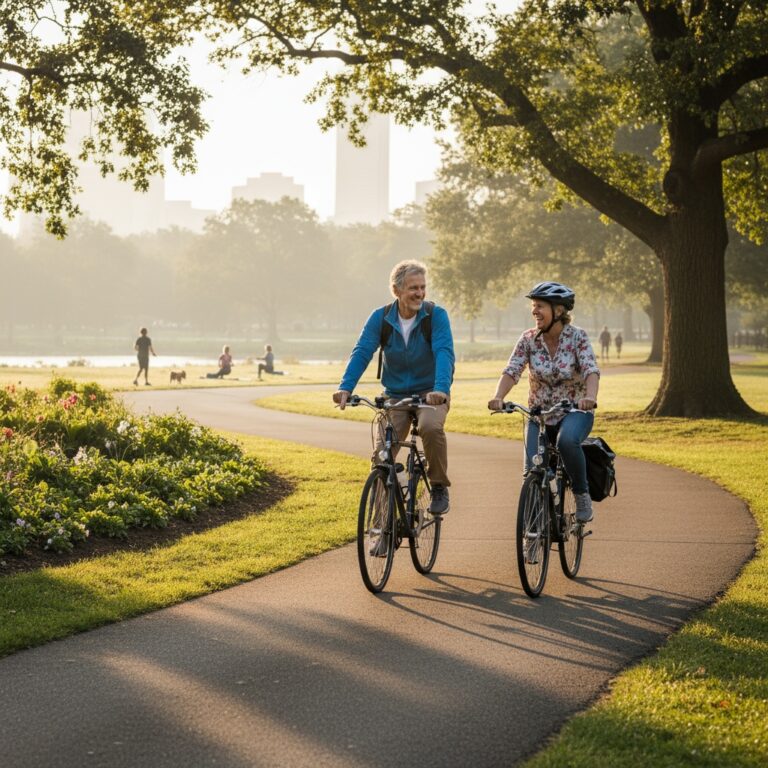

Stress-Free Retirement Routine: Your Complete Guide to Calm, Healthy, and Enjoyable Days After Work
A stress-free retirement routine helps retirees reduce daily stress, improve health, and enjoy more meaningful days through simple habits that actually stick.
Retirement is supposed to feel like exhaling after holding your breath for decades. But here’s the twist nobody warns you about: once the structure of work disappears, stress doesn’t always leave with it. It just changes shape. Instead of deadlines and meetings, it becomes “What am I doing today?”, “Why am I more tired than I used to be?”, or “How did I get so busy doing nothing?”
That’s where a stress-free retirement routine becomes surprisingly powerful. Not rigid schedules. Not military precision. Just a flexible rhythm that helps you feel steady, grounded, and actually in control of your days.
I’ve seen it happen often: people retire thinking stress will automatically disappear, only to realize they need new tools to manage it. The good news? You don’t need complicated systems or personality overhauls. You need small, repeatable habits that quietly do their job in the background while you enjoy your life.
And yes—this includes mornings that don’t start with anxiety and evenings that don’t end with “why did I feel scattered all day?”
Let’s build that version of retirement.
Key Takeaways
- A stress-free retirement routine reduces anxiety by replacing structure lost after work
- Small daily habits matter more than rigid schedules
- Physical movement, sleep, and social connection are the foundation of calm aging
- Stress management improves heart health, mood, and cognitive resilience
- Retirees benefit most from flexible routines, not strict discipline
- Research shows mindfulness and lifestyle changes reduce stress hormones and anxiety levels
- Consistency—not perfection—is what creates long-term calm
Why a Stress-Free Retirement Routine Matters More Than You Think
Retirement removes one kind of stress—but can quietly introduce another.
Without work structure, days can blur. Some retirees feel free at first… then unsettled. Time expands, but so does decision fatigue. Even simple questions like “What should I do today?” can create low-grade stress.
A stress-free retirement routine solves this by giving your day just enough shape to feel grounded, without taking away freedom.
Research from the American Psychological Association shows that chronic stress in older adults is linked to higher risks of cardiovascular issues, sleep disruption, and cognitive decline. In other words, unmanaged stress doesn’t just feel bad—it compounds over time.
But here’s the hopeful part: small lifestyle routines can meaningfully reduce stress markers.
A study published in PubMed (National Library of Medicine) found that consistent daily habits—especially related to sleep, movement, and mindfulness—help regulate cortisol levels in older adults.
So no, this isn’t about “staying busy.”
It’s about staying balanced.
And there’s a big difference.
What a Stress-Free Retirement Routine Actually Looks Like
Let’s clear something up: a stress-free retirement routine is not a strict schedule with alarms every hour.
If that sounds exhausting, good instinct—you’re not wrong.
Instead, think of it as a gentle framework:
- A steady morning rhythm
- A purposeful midday structure
- A calming evening wind-down
- Flexible space in between
That’s it. Nothing fancy. Nothing overwhelming.
I like to think of it like a riverbank rather than a cage. It guides the flow without stopping it.
The Morning Anchor: Start Your Stress-Free Retirement Routine Right
Mornings set the emotional tone for the day. In retirement, they can either feel peaceful… or strangely chaotic (“Why is it already 11:30?”).
A strong stress-free retirement routine starts with what I call an “anchor morning.”
1. Wake Without Rush
No immediate phone scrolling. No news overload. Just a slow entry into the day.
Even 10 quiet minutes helps regulate stress response systems.
2. Light Movement
Gentle stretching, walking, or yoga helps reduce cortisol levels and improve circulation.
According to research in Harvard Health Publishing, regular low-intensity movement improves mood regulation and reduces perceived stress in older adults.
Nothing intense. Just consistent.
3. A Simple Plan for the Day
Not a rigid schedule—just clarity:
- One thing you want to do
- One thing you need to do
- One thing you’d enjoy doing
That’s your structure.
And surprisingly, that alone reduces anxiety more than most people expect.
Midday Reset: Preventing Stress From Building Up
This is where many retirees accidentally lose their calm.
Midday often becomes a drift zone—too many small tasks, errands, or passive screen time.
A stress-free retirement routine needs a reset point.
1. Step Away From Screens
Even a 15-minute break reduces mental fatigue.
2. Eat Without Distraction
Yes, it sounds simple. No, most people don’t do it.
Mindful eating helps regulate digestion and prevents stress-related overeating patterns.
3. Go Outside (Even Briefly)
Exposure to natural light improves mood and circadian rhythm regulation.
A study shows that time outdoors is strongly associated with lower stress and improved emotional wellbeing in older adults.
You don’t need a forest hike.
A sidewalk walk works.
The Role of Movement in a Stress-Free Retirement Routine
Movement is one of the most underrated stress tools available.
Not exercise as punishment. Movement as regulation.
Walking, swimming, gardening, light strength training—all of it counts.
Why It Works
Physical activity helps:
- Reduce cortisol levels
- Improve sleep quality
- Increase endorphins
- Stabilize mood
Even 20–30 minutes a day makes a measurable difference.
And no, it doesn’t need to feel like “workout time.”
If it feels like punishment, it won’t last.
Stress-Free Retirement Routine and Sleep: The Hidden Foundation
If there is one area that quietly controls everything else, it’s sleep.
Poor sleep turns small stress into big stress.
Good sleep turns big stress into manageable stress.
A stress-free retirement routine must include sleep protection habits:
Evening Wind-Down Ritual
- Dim lights
- Reduce screen exposure
- Light reading or music
- Consistent bedtime
Research from the National Institute on Aging highlights that sleep consistency is strongly linked to improved cognitive and emotional health in older adults.
Think of sleep like a retirement investment account: consistency compounds.
Social Connection: The Emotional Core of a Stress-Free Retirement Routine
Here’s something nobody warns you about: stress increases when connection decreases.
Retirement can unintentionally shrink social circles.
That’s why a stress-free retirement routine must include people, not just habits.
Simple Ways to Stay Connected
- Weekly coffee with a friend
- Walking groups
- Volunteering
- Short daily check-in texts
According to research in JAMA Internal Medicine, strong social connections significantly reduce stress-related health risks in older adults.
Not optional. Essential.
Even brief interactions matter more than most people think.
Mindfulness: The Quiet Reset Button in Your Stress-Free Retirement Routine
Mindfulness doesn’t mean sitting cross-legged for hours trying to “empty your mind.”
It means noticing what’s happening without getting pulled into it.
Simple Practice
- Focus on breathing for 2–5 minutes
- Notice when thoughts drift
- Gently return attention
That’s it.
A review in JAMA Internal Medicine (Mindfulness studies) found mindfulness-based practices reduce anxiety and improve emotional regulation.
Not instantly.
But steadily.
Like strength training for your nervous system.
What to Avoid in a Stress-Free Retirement Routine
Sometimes reducing stress is about removing friction points.
1. Over-Scheduling
Retirement doesn’t need to be optimized.
Over-structured days can feel strangely stressful.
2. Too Much Passive Screen Time
A little is fine. Hours of scrolling often increases mental fatigue.
3. Ignoring Energy Patterns
Some people are morning thinkers. Others are afternoon movers.
Work with your rhythm, not against it.
Building Your Personal Stress-Free Retirement Routine
Here’s where it gets practical.
A stress-free retirement routine doesn’t need complexity. It needs consistency.
Morning
- Wake slowly
- Move gently
- Set simple intentions
Midday
- Take a reset break
- Go outside
- Eat mindfully
Evening
- Reduce stimulation
- Connect with someone
- Prepare for sleep
That’s your foundation.
Everything else is optional.
Troubleshooting: When Your Routine Stops Working
It will happen. That’s normal.
Life doesn’t follow routines perfectly.
Instead of restarting everything, adjust gently:
- Feeling restless? Add more movement
- Feeling scattered? Reduce inputs (screens, noise)
- Feeling low energy? Improve sleep first
- Feeling isolated? Increase social contact
A stress-free retirement routine is meant to bend, not break.
The Psychology Behind a Stress-Free Retirement Routine
There’s a reason routines feel calming.
They reduce decision fatigue.
Every decision—what to do, when to do it, how to do it—uses mental energy. Without structure, those decisions stack up quickly.
A steady routine removes low-level stress before it starts.
It’s not about control.
It’s about conserving energy for things that actually matter.
How This Changes Over Time
Here’s the interesting part: a stress-free retirement routine evolves.
What works at the beginning of retirement might shift a year later.
That’s not failure—it’s adaptation.
Some people become more active.
Some slow down.
Some rediscover hobbies they forgot they loved.
Your routine should move with you.
Final Thoughts: Your Stress-Free Retirement Routine Is Already Within Reach
A stress-free retirement routine isn’t built through discipline alone. It’s built through kindness toward your future self.
Small habits:
- A slower morning
- A walk outside
- A real conversation
- A better night of sleep
These don’t feel dramatic. But they change everything.
Research consistently shows that stress reduction in older adults improves not just emotional wellbeing but long-term physical health outcomes. And the encouraging part? You don’t need perfection to see results.
You just need repetition.
So start small. One anchor habit. One moment of calm. One decision that makes tomorrow easier.
And let it grow from there.
If you’re building a fuller retirement lifestyle beyond stress management, you may also find ideas in Vanika retirement wellness insights to help support healthier, more intentional living.
Because retirement isn’t about doing less.
It’s about living better.
And a stress-free retirement routine is one of the simplest ways to get there.