
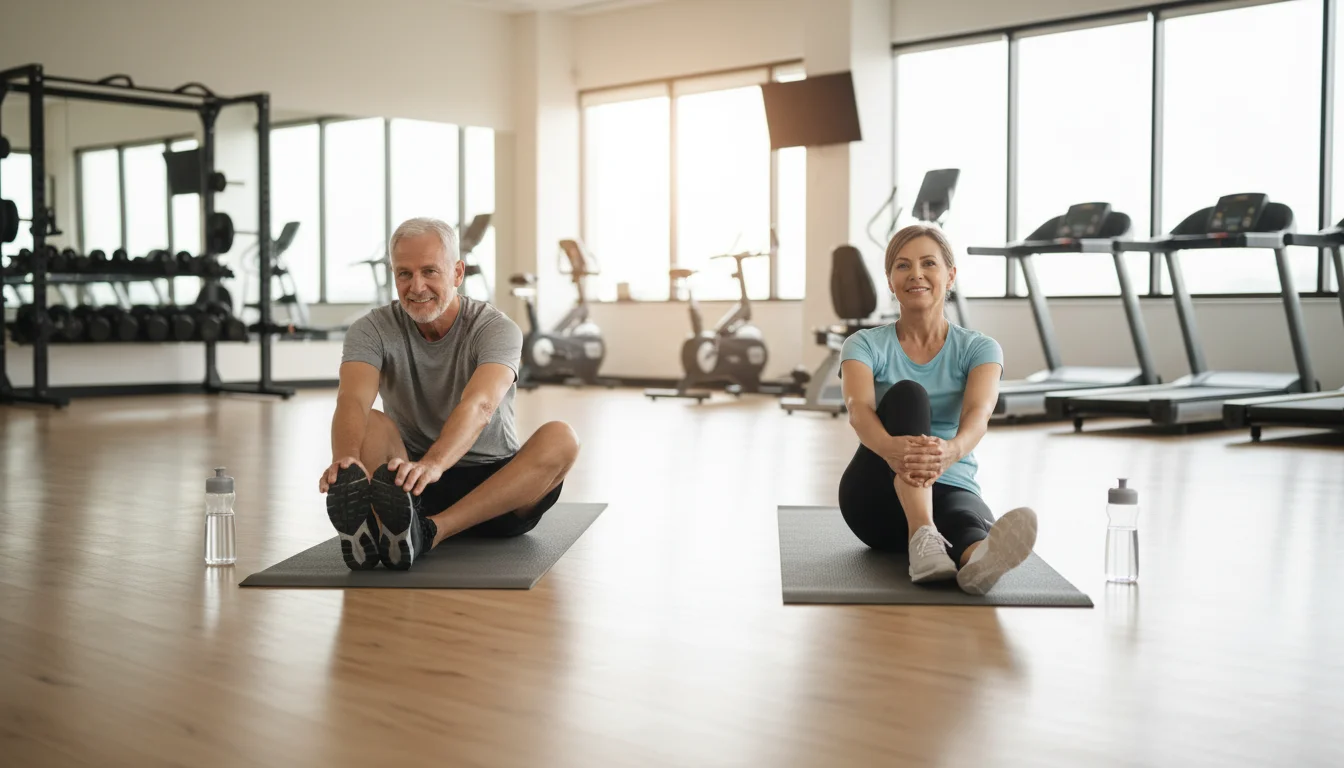
Gym Workout for Beginner Seniors: Your Complete Guide to Starting Strong (and Actually Enjoying It)
Start a safe, effective gym workout for beginner seniors with simple routines, clear progress tips, and confidence-building guidance for lasting results.
I want to tell you about the afternoon I stood in the middle of a gym and had absolutely no idea what I was doing.
It was a few months into retirement. My doctor had been gently encouraging me to start strength training, and then, in the way good doctors do, she stopped being quite so gentle. “Muscle mass matters more as we age,” she said, in that calm, practiced tone that suggested she’d delivered this message many times and watched many people nod thoughtfully before doing absolutely nothing.
I was one of those people.
Eventually, though, I joined a gym. I bought new sneakers. I bought workout clothes specifically for this new chapter, which felt very responsible and hopeful of me. Then I walked in, looked around, and immediately forgot every brave thought I’d had in the parking lot.
The machines looked complicated. Everyone else seemed to know exactly where they were going. I hovered near the entrance pretending to study the posted rules, when really I was just trying to avoid making eye contact with anything that had cables attached to it. I was certain I was the only person in the building who didn’t belong there.
So I left.
I went home, made tea, and reorganized a drawer that did not need reorganizing. Apparently that’s one of my preferred avoidance techniques: if I can’t control my fitness, perhaps I can alphabetize batteries.
I’m telling you this because if you’re thinking about starting a gym workout for beginner seniors, there’s a good chance you’re carrying some version of that same feeling. The not-sure-where-to-begin feeling. The everyone-else-knows-what-they’re-doing feeling. The maybe-I’m-too-late feeling.
You’re not too late.
You’re just at the beginning.
And beginnings are awkward for almost everyone, even the people who now stride confidently toward the cable machine like they own stock in the place.
This guide is here to make that beginning easier. It’s a practical, realistic, honest plan for starting a gym workout for beginner seniors in a way that helps you feel safer, stronger, and surprisingly proud of yourself.
Why a Gym Workout for Beginner Seniors Is One of the Best Decisions You Can Make
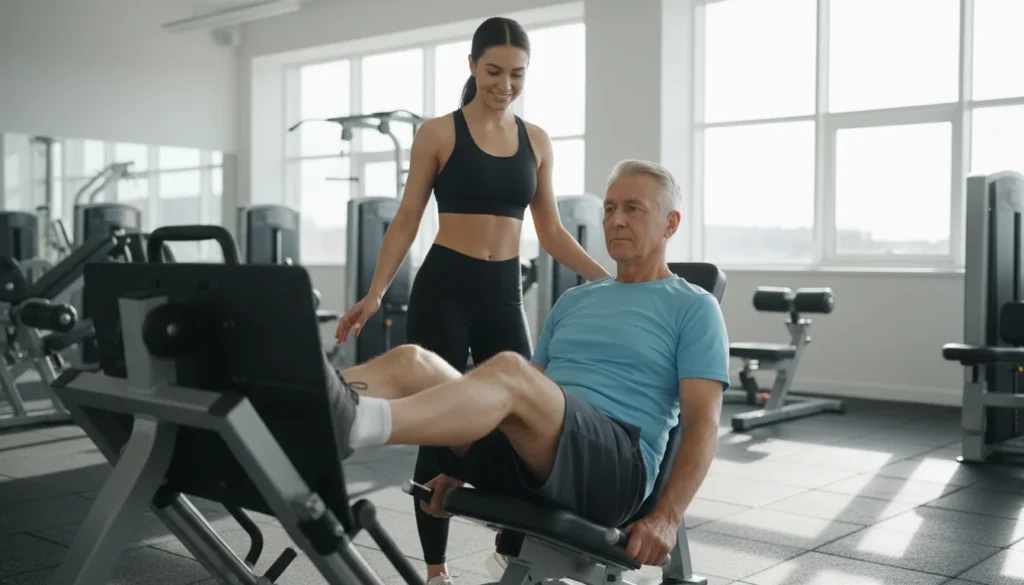
The research on strength training for older adults is so solid at this point that it almost feels rude to ignore it.
A landmark study published in JAMA found that progressive resistance training helped older adults improve muscle strength, physical function, and overall quality of life, including people in their 70s and 80s. That matters because strength is not just about appearance. It’s about how you live. It’s about getting out of a chair without pushing off your knees. It’s about carrying groceries, climbing stairs, catching yourself if you trip, and feeling less cautious in your own body.
The American College of Sports Medicine recommends that adults over 65 do muscle-strengthening activities at least two days a week. There’s a reason for that. Strength training helps maintain muscle mass, preserve bone density, improve balance, and reduce fall risk. And falls, unfortunately, are one of the biggest health threats older adults face.
A good gym workout for beginner seniors is not vanity. It’s preventive medicine with better lighting.
There’s also the part that doesn’t always make it into the medical summaries: the confidence. The deep, satisfying realization that your body can still adapt. That you are not done getting stronger. That capability is still available to you.
When I started strength training, I noticed small changes first. Getting out of chairs felt easier. Carrying shopping bags didn’t feel like such an event. I moved differently before I ever looked different. And honestly, that mattered more.
That’s the promise of a consistent gym workout for beginner seniors. It’s not about becoming someone else. It’s about becoming more physically able to live the life you want.
What a Gym Workout for Beginner Seniors Can Help Improve
A well-designed gym workout for beginner seniors can support nearly every part of daily life.
It can help preserve and build muscle, which we naturally lose with age if we don’t actively work to keep it. It can strengthen bones, which becomes especially important later in life, particularly after menopause. It can improve coordination, posture, and balance. It can boost mood and support cognitive health. It can increase stamina and energy in that slightly annoying but very real way exercise tends to do.
And perhaps most importantly, it supports independence.
That word matters.
Being able to carry your own bags, stand up from the floor, reach into cabinets, open a stubborn jar, and move through your day without constantly negotiating with your joints—that is not a small thing. That is quality of life.
A gym workout for beginner seniors helps protect that.
Your First Day at the Gym: What to Expect and How to Handle the Nerves
Let’s start with the part people rarely say out loud: gym anxiety is real.
And for older adults, it can come with extra layers. You may worry you’re too old, too deconditioned, too inexperienced, too slow, too noticeable. You may assume everyone will be watching.
They won’t.
Most people at the gym are deeply committed to thinking about themselves. This is one of the few truly reassuring things about human nature.
Still, knowing that doesn’t always calm your nerves, so it helps to have a very simple first-day plan.
Before You Go
If possible, call ahead and ask whether the gym offers a new-member orientation. Many do, and it’s worth taking. Go during off-peak hours if you can—late morning or early afternoon on weekdays tends to be quieter. Wear supportive shoes. Bring water, a towel, and a written plan so you’re not wandering around trying to invent confidence in real time.
That written plan matters. A gym workout for beginner seniors gets much easier when you already know what you’re there to do.
Your First 15 Minutes
On your very first visit, keep expectations low and simple.
Put your things in a locker. Walk on a treadmill for five minutes at an easy pace. Identify two or three machines you’ll use that day. Ask a staff member for help setting one up. Do one set if that’s all you can manage. Then leave.
That counts.
The first visit is about familiarity, not performance. It’s about teaching your nervous system that this place is not hostile territory. It’s just a room full of equipment and people making improvements in public.
That helped me tremendously. Once I stopped thinking of the gym as a place where fit people go to be fit, and started thinking of it as a place where people go to become more capable, everything softened.
A gym workout for beginner seniors starts there: not with perfection, but with entry.
The Best Equipment for a Gym Workout for Beginner Seniors
For the first several weeks, machines are your friend.
I know free weights look more impressive, and there’s always someone over in the corner lifting something that seems to weigh as much as a dining table. Good for them. That is not your assignment right now.
Machines are ideal for a gym workout for beginner seniors because they guide your movement, support stability, and reduce the coordination demands that can make beginners feel overwhelmed. They also help you learn what certain exercises are supposed to feel like.
Here are the most beginner-friendly machines to start with:
| Machine | Main Muscles Worked | Why It Helps Seniors |
|---|---|---|
| Leg Press | Quads, glutes, hamstrings | Builds lower-body strength without balance demands |
| Chest Press | Chest, shoulders, triceps | Develops pushing strength safely |
| Lat Pulldown | Back, biceps | Supports posture and pulling strength |
| Cable Row | Mid-back, biceps | Helps counter rounded shoulders and sitting posture |
| Shoulder Press | Shoulders, triceps | Builds overhead strength with stability |
After four to six consistent weeks, many people doing a gym workout for beginner seniors can begin adding light dumbbells. But there is no rush. Machines are not a lesser choice. They are often the smartest one.
Basic Gym Etiquette That’s Good to Know
This part feels oddly intimidating until someone tells you, so let me just save you the stress.
Wipe down equipment after you use it. Return weights where they belong. Don’t camp on a machine during long rest periods if others are waiting. And if you need help, ask.
Truly, ask.
A lot of gym staff are nicer than the setting makes them seem, and most regulars are not nearly as territorial as beginners fear. One of the quiet secrets of a successful gym workout for beginner seniors is realizing you do not need to know everything on day one.
You just need to be willing to learn.
The Ideal Weekly Structure for a Gym Workout for Beginner Seniors
For the first four to six weeks, the best plan is usually three full-body workouts per week.
That structure works beautifully for a gym workout for beginner seniors because it trains all major muscle groups often enough to build strength while still allowing plenty of recovery time. Recovery matters more than many people realize, especially as we get older. Your body gets stronger between workouts, not just during them.
A simple schedule might look like this:
- Monday, Wednesday, Friday
- Tuesday, Thursday, Saturday
- Sunday, Wednesday, Friday
Thirty to forty-five minutes per session is enough. You do not need marathon gym visits. In fact, shorter, manageable workouts are one reason a gym workout for beginner seniors tends to be more sustainable than people expect.
If you miss a day, don’t panic. Just slide the plan forward. Do not try to make up for it by doing too much at once. That is how people end up sore, discouraged, and bargaining with themselves in the parking lot.
Warm-Up: The Part You’ll Be Tempted to Skip
Please don’t skip it.
A proper warm-up is one of the most important parts of a gym workout for beginner seniors because it gets your muscles warm, your joints moving, and your nervous system ready to work. It also lowers the risk of injury, which is a very compelling reason all by itself.
Start with five minutes of light cardio:
- treadmill walking
- easy cycling
- gentle elliptical
Then add a few dynamic movements:
- arm circles
- torso twists
- leg swings
- hip circles
- ankle rolls
Ankle rolls deserve more respect than they usually get, especially for older adults. Balance and lower-leg mobility matter. Tiny unglamorous things often do.
A warm-up is not just something to get through. In a good gym workout for beginner seniors, it’s the bridge between ordinary daily life and purposeful movement.
Workout A: Machine-Based Full-Body Routine
This is a great starting workout for the first two to four weeks of your gym workout for beginner seniors plan.
Aim for 2 to 3 sets of 8 to 12 reps for each exercise, resting about 60 to 90 seconds between sets. Start lighter than you think you need. That is not weakness. That is intelligence.
Leg Press
The leg press is one of the most useful exercises in a gym workout for beginner seniors because lower-body strength affects nearly everything. Chairs, stairs, walking, getting up from the floor—it all comes back to strong legs and hips.
Sit with your back flat, feet shoulder-width apart on the platform, and lower slowly until your knees are around a right angle. Then press through your heels to return to the start.
Chest Press
This machine builds pushing strength for daily life. Doors, arm support, lifting, carrying—more of life is “push” than we tend to think.
Adjust the seat so the handles line up with your mid-chest. Press forward smoothly, then return with control. Don’t let the weights slam. The machine is not to blame for your enthusiasm.
Lat Pulldown
This strengthens your upper back and helps improve posture, which is one of the hidden gifts of a good gym workout for beginner seniors.
Grip the bar a bit wider than shoulder-width, pull it down toward your upper chest, and squeeze your shoulder blades together. Then let it rise back up slowly.
Cable Row
Rows are wonderful for countering years of slouching over desks, steering wheels, crossword puzzles, and phones.
Sit tall, pull the handle toward your lower ribs, and focus on moving with control instead of momentum. Slow, steady movement almost always wins.
Shoulder Press Machine
This supports overhead strength, which helps with everything from luggage to kitchen cabinets.
Start with the handles near shoulder level, press upward without arching your back, and lower carefully. Keep it light at first. There is no need to prove anything to the shoulder press machine.
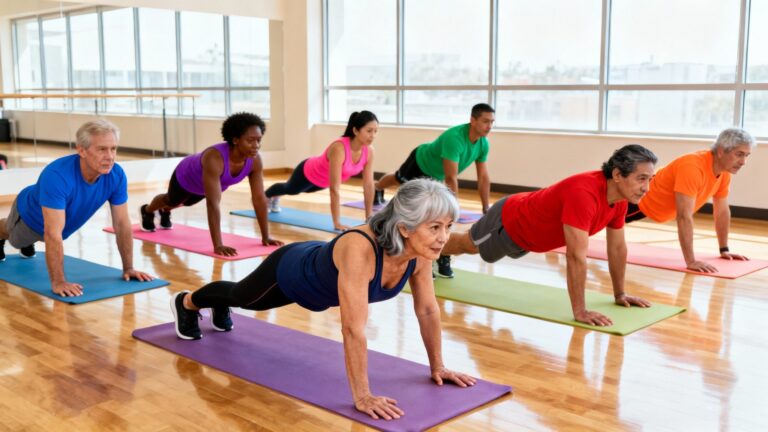
Plank
Core strength supports posture, balance, and spinal stability. In other words, it matters a lot.
Hold a plank on your forearms and toes, or drop to your knees if needed. A modified plank is still a plank. Hold for 15 to 45 seconds depending on ability.
A gym workout for beginner seniors should challenge you, not humiliate you. Modifications are part of training, not evidence against it.
Workout B: Dumbbell-Based Full-Body Routine
Once you’ve done Workout A for a couple of weeks and feel more comfortable, you can start rotating in some dumbbell movements. This adds coordination and functional strength, which are both valuable in a gym workout for beginner seniors.
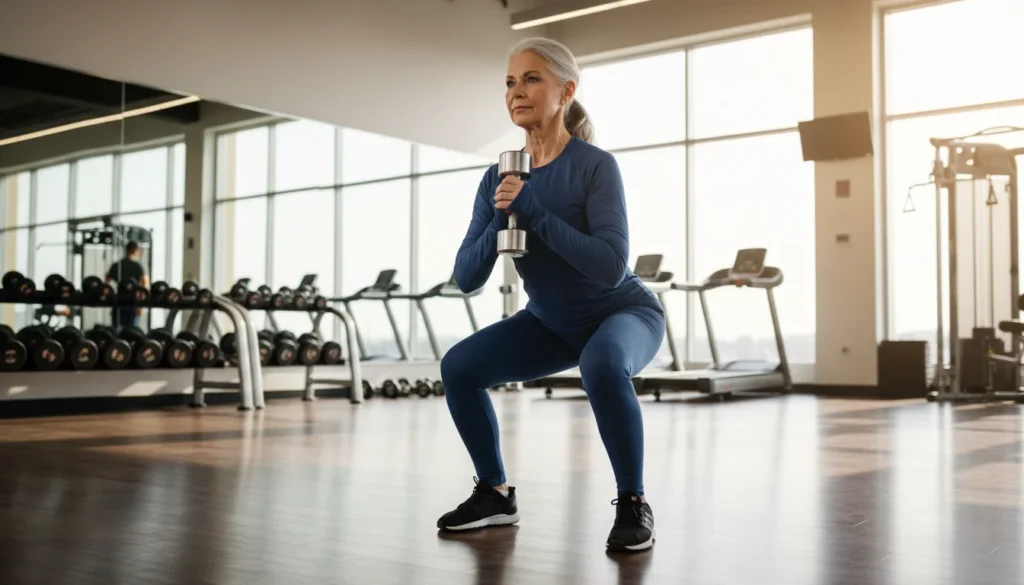
Goblet Squat
Hold one dumbbell close to your chest, stand with feet about hip-width apart, and sit back as if lowering into a chair. Keep your chest up and your weight in your heels.
If bodyweight-only is where you need to start, start there.
Dumbbell Bench Press
Lie on a bench with dumbbells near chest level, press upward, then lower with control. If this feels too advanced at first, incline push-ups against a bench are an excellent substitute.
One-Arm Dumbbell Row
Support yourself with one hand and knee on a bench, and row the dumbbell toward your hip. Keep the movement smooth and focused. You’re not yanking a lawn mower.
Dumbbell Romanian Deadlift
This teaches the hip hinge, which is one of the most important movement patterns in daily life. It’s how you bend and lift safely.
Hold dumbbells in front of your thighs, soften your knees slightly, hinge at your hips, and lower the weights along your legs while keeping your back flat. Then return to standing by driving your hips forward.
This is a key movement in a gym workout for beginner seniors because it trains the muscles you need to protect your back while picking things up.
Dumbbell Shoulder Press
Start with dumbbells at shoulder height and press overhead with control. Lower them carefully. If the range feels uncomfortable, keep the weight light and work within a pain-free motion.
Dead Bug
Lie on your back with arms reaching up and knees bent at 90 degrees. Slowly extend the opposite arm and leg while keeping your lower back gently pressed into the floor. Return and switch sides.
The name is unfortunate. The exercise is excellent.
A 12-Week Roadmap for a Gym Workout for Beginner Seniors
One of the best things you can do is stop expecting instant transformation and start thinking in phases. A gym workout for beginner seniors works much better when you give it time to build.
Weeks 1–2: Foundation
Focus on learning movements, understanding equipment, and establishing consistency. Keep weights light. This is where confidence begins.
Weeks 3–4: Early Progression
If you can do 12 clean reps with good form, increase the weight slightly—usually by 5 to 10 percent. You can also add a set to a few key exercises if recovery feels good.
Weeks 5–6: Development
Alternate your machine and dumbbell workouts. Start noticing what feels easier. This is where your body begins giving you little signs that things are changing.
Weeks 7–8: Optional Expansion
If you’re recovering well and enjoying the routine, you can add a fourth day or keep the three-day full-body plan. Either choice is fine. More is not automatically better.
Weeks 9–12: Consistency and Review
Stay with the plan. Take a lighter week around week 12 if needed. Then pause and assess what’s improved—strength, stamina, confidence, balance, or simply your comfort in the gym itself.
Every successful gym workout for beginner seniors depends less on doing something dramatic and more on doing something repeatable.
Cool-Down and Stretching
A cool-down helps your body shift out of workout mode and into recovery mode. That matters more than people think, especially after a gym workout for beginner seniors where blood pressure, joint comfort, and next-day soreness all deserve some respect.
Walk for five minutes at an easy pace after training, then stretch the muscles you used most:
- hamstrings
- quads
- chest
- shoulders
- back
Hold each stretch gently for 20 to 30 seconds. Breathe slowly. This is not the moment to become overly ambitious and try to fold yourself like a travel umbrella.
Common Mistakes in a Gym Workout for Beginner Seniors
Most beginner mistakes are not dramatic. They’re small, ordinary, very fixable things.
Skipping the warm-up is a big one. So is using too much weight too soon. Another common issue is inconsistency—working out intensely one week, then disappearing for ten days because you got sore or busy or slightly annoyed by the whole concept.
A successful gym workout for beginner seniors depends on steady repetition, not heroic bursts of motivation.
Another mistake is comparing yourself to other people. Don’t. The person next to you is on a different timeline, with different history, different joints, and possibly a deeply unreasonable amount of confidence. It has nothing to do with you.
Track your own progress. That’s the comparison that matters.
How to Track Progress
You do not need a fancy fitness app unless you enjoy that sort of thing. A notebook works beautifully.
After each gym workout for beginner seniors session, write down:
- the exercises you did
- the weights you used
- how many sets and reps you completed
- a quick note about how it felt
That note can be simple: “felt strong,” “hips tight,” “go heavier next time,” “surprisingly okay,” or even “did not enjoy leg press but survived.”
Progress tracking matters because it gives you proof. And proof is motivating.
Signs that your gym workout for beginner seniors plan is working include better control, stronger lifts, less fatigue during workouts, and daily life feeling easier. Sometimes the biggest progress shows up outside the gym first.
Recovery, Nutrition, and the Other 23 Hours
A gym workout for beginner seniors is not just about what happens in the gym. Results depend heavily on what happens outside it.
Sleep
Sleep is where recovery happens. Muscles repair, the nervous system resets, and movement patterns sink in. If your sleep is poor, your progress will feel slower.
Try to keep a regular bedtime, reduce screen time before bed, and give yourself enough hours to recover properly.
Protein
Older adults often need more protein than they realize, especially when strength training. Research published in the American Journal of Clinical Nutrition has shown that older adults generally require more dietary protein to support muscle maintenance and growth.
That means each meal should ideally include a real protein source—eggs, fish, chicken, yogurt, beans, tofu, or something similar. A gym workout for beginner seniors works much better when your muscles have actual building material.
Hydration
Seniors are more prone to dehydration, and thirst signals can become less reliable with age. Drink water steadily throughout the day, not just when you feel thirsty.
Active Recovery
On non-gym days, gentle movement helps. Walks, easy stretching, swimming, and light mobility work all support recovery without adding stress.
Sometimes the most productive thing you can do for your gym workout for beginner seniors plan is take a calm walk and let your body recover.
Adding Cardio to a Gym Workout for Beginner Seniors
Cardio supports heart health, stamina, and overall well-being, but when you’re starting strength training, it should complement the program rather than interfere with it.
Good cardio options include walking, cycling, swimming, the elliptical, and even the rowing machine if it feels comfortable. Start with 20 to 30 minutes, two or three times a week, at a moderate pace.
A gym workout for beginner seniors does not need to become a six-day-a-week fitness overhaul. Keep it manageable. Keep it realistic. Keep it sustainable.
How to Make a Gym Workout for Beginner Seniors Stick Long Term
This part matters more than the perfect exercise selection.
Long-term success comes from identity, routine, and a little self-respect.
Instead of thinking, “I’m trying to work out,” try thinking, “I’m someone who trains.” It sounds small, but it changes the emotional tone of the whole thing. The gym stops being a temporary project and becomes part of how you take care of yourself.
That shift made a huge difference for me.
A gym workout for beginner seniors also becomes easier to maintain when it feels personal. If you hate one machine, use another. If you love morning workouts, keep them in the morning. If you prefer shorter sessions, do shorter sessions consistently.
This is your program. Not a punishment. Not a test. Not a performance for anyone else.
Frequently Asked Questions About Gym Workout for Beginner Seniors
How often should beginner seniors go to the gym?
For most people, three full-body workouts per week is the ideal starting point. That gives you enough practice and enough recovery.
Is soreness normal?
Yes, especially in the beginning. Mild to moderate muscle soreness is normal. Sharp pain, swelling, numbness, or joint pain is not. A good gym workout for beginner seniors should challenge muscles, not create injuries.
Should I hire a personal trainer?
Not necessarily, but two or three sessions with a trainer who has experience with older adults can be incredibly helpful. It can speed up your learning and build confidence fast.
How long before I see results?
Many people feel stronger within two to three weeks. Visible changes often take longer. Daily-life improvements, though, can show up surprisingly early. That’s one reason a gym workout for beginner seniors can feel rewarding before the mirror tells the full story.
Are there exercises seniors should avoid?
Not automatically, but some movements are better approached carefully. Heavy barbell back squats, behind-the-neck presses, and high-impact jumping are usually not where beginners should start. Stick with machines and controlled dumbbell work first.
Key Takeaways
- Gym workout for beginner seniors plans work best when they start with three full-body sessions per week.
- Machines are an excellent starting point because they offer support, control, and safety.
- Strength training helps with balance, independence, bone health, posture, and daily function.
- Warm-ups, recovery, sleep, and nutrition are essential parts of progress.
- Tracking workouts makes improvement easier to see and easier to sustain.
- Consistency beats intensity every single time.
Final Thoughts: The Gym Belongs to You Too
I think back often to that version of me who walked into the gym, panicked quietly, and left.
I’m glad she went back.
Not because she transformed into some impossibly disciplined fitness person who now enjoys protein shakes and says things like “let’s crush it.” That did not happen. But she did become stronger. More capable. More comfortable in her body. More confident in places that once made her feel out of place.
That is what a gym workout for beginner seniors can offer.
Not a new identity, exactly. A fuller one.
It can help you move through the world with more ease. Travel better. Carry more. Fall less. Recover faster. Trust your body a little more. It can remind you that strength is still available to you, even now, maybe especially now.
The gym is not reserved for people who already know what they’re doing.
It’s for people who are learning.
It’s for people who are beginning.
It’s for you.
So yes, start small. Ask questions. Use light weights. Write things down. Warm up properly. Rest when you need to. Keep showing up.
And when the time comes, go pick up something heavy.



2 Comments
Comments are closed.