
Safety Bed Rails for Seniors: A Practical Guide to Preventing Falls and Installing Them Safely
Everything you need to know about safety bed rails for seniors — types, installation, risks, and smarter alternatives to keep your loved one safe at night.
Nobody warns you about the moment you realize your parent needs a bed rail.
One day you’re just living your life, and then suddenly you’re standing in a medical supply aisle at 9 p.m., squinting at product labels, trying to figure out the difference between “adjustable” and “semi-fixed” while a fluorescent light flickers overhead. It’s a lot. And honestly, it sneaks up on you faster than you’d expect.
I’ve been there. When my grandmother started having trouble getting out of bed on her own, our family went through exactly this process — the research rabbit holes, the conflicting product reviews, the well-meaning but vague advice from her doctor. What I wish we’d had was a straightforward, honest guide that didn’t read like a legal disclaimer or a Wikipedia stub.
So that’s what this is.
Safety bed rails for seniors are one of the most practical, low-cost tools in the fall-prevention toolkit — but only when you choose the right type, install them correctly, and actually maintain them. This guide walks through all of it: the different rail types, step-by-step installation, what safety certifications actually mean, the real risks nobody likes to talk about, and how to build a smarter overall safety setup around them.
According to the CDC, falls are the leading cause of fatal and non-fatal injuries among adults 65 and older, with over 36 million falls reported each year in the U.S. alone. That number stopped me cold the first time I read it. Thirty-six million. That’s not a rare edge case — that’s an epidemic hiding in plain sight, one bedroom at a time.
Let’s make sure your loved one isn’t part of that statistic.
Why Safety Bed Rails for Seniors Actually Matter More Than You Think

Here’s something I didn’t fully appreciate until I watched my grandmother navigate her bedroom at night: the bed itself is one of the most dangerous places in a senior’s home. Not because it’s inherently dangerous, but because of everything that happens around it — the getting in, the getting out, the 3 a.m. bathroom trips taken half-asleep with no lights on.
Falls rarely announce themselves. There’s no dramatic buildup. One moment everything’s fine; the next, someone’s on the floor. And for older adults, the consequences can spiral fast — hip fractures, head injuries, a sudden loss of confidence that makes them afraid to move independently at all. That last one is underrated. I watched my grandmother become more hesitant, more cautious, more dependent after a minor fall that didn’t even result in injury. The psychological impact was real and lasting.
Safety bed rails for seniors address this on two levels. Physically, they act as a barrier and a grip point — something solid to hold during transfers, something that stops an accidental roll before it becomes a fall. Psychologically, they provide reassurance. Knowing the support is there changes how confidently someone moves, even at 2 a.m. when they’re groggy and the room is dark.
A 2025 scoping review by A. Hall explored bedrail use in hospitals and community settings and found that while rails are widely used, the evidence base around best practices — especially in home environments — still has meaningful gaps. That’s not a reason to avoid them. It’s a reason to use them thoughtfully, which is exactly what this guide is designed to help you do.
The Different Types of Safety Bed Rails for Seniors (And How to Choose)
I’ll be honest — the first time I tried to shop for bed rails, I was overwhelmed. There are more options than you’d expect, and the product descriptions all start to blur together after a while. Here’s how to actually make sense of the landscape.
Adjustable Bed Rails: The Flexible All-Rounder
Adjustable rails are the most popular choice for home use, and after going through this process myself, I completely understand why. They’re built to adapt — you can change the height, extend the length, and in many models fold them flat when they’re not needed. That last feature matters more than it sounds. There’s a real dignity component here. Nobody wants to feel like they’re sleeping in a hospital bed every single night.
What to look for in adjustable safety bed rails for seniors:
- Height adjustability to match different mattress depths and the user’s natural reach
- Locking mechanisms that keep the rail firmly in place during use — not just sort of in place
- Padded sections that reduce bruising during an accidental bump or roll
- Tool-free installation for easy setup, removal, and cleaning
The versatility is genuinely useful. Whether you’re working with a thick memory foam mattress or a standard spring setup, a good adjustable rail can be configured to fit. They’re also a smart choice if the person’s needs are likely to change over time — which, let’s be real, they usually are.
Fixed Bed Rails: Maximum Stability, Minimum Fuss
If adjustability isn’t a priority and you want something that simply will not move, fixed rails are worth a serious look. These are bolted or permanently attached to the bed frame, which means they’re not going anywhere — and neither is the person using them.
Fixed safety bed rails for seniors work especially well for people who need consistent nighttime support and aren’t going to be moving the bed around frequently. The trade-off is obvious: once they’re in, they’re in. But for a lot of families, that’s actually a feature, not a bug. There’s something genuinely reassuring about a rail that doesn’t wobble, shift, or need to be re-tightened every few weeks. My grandmother’s caregiver called it “set it and forget it” — except you don’t actually forget it, because you still need to inspect it. More on that shortly.
Portable Bed Rails: The Travel-Friendly Option
Portable rails are lightweight, easy to install, and designed to go wherever the person goes — a hotel room, a family member’s guest bedroom, a short-term rehab facility. They’re not the most robust option for long-term daily use, but for travel or temporary recovery situations, they fill a real gap.
One honest caveat I’d offer here: portable rails tend to offer less stability than fixed or adjustable models. If the person using them has significant mobility challenges or tends to put real weight on the rail during transfers, a more permanent solution is probably the smarter call. Portable is convenient; it’s not always sufficient.
How to Install Safety Bed Rails for Seniors the Right Way
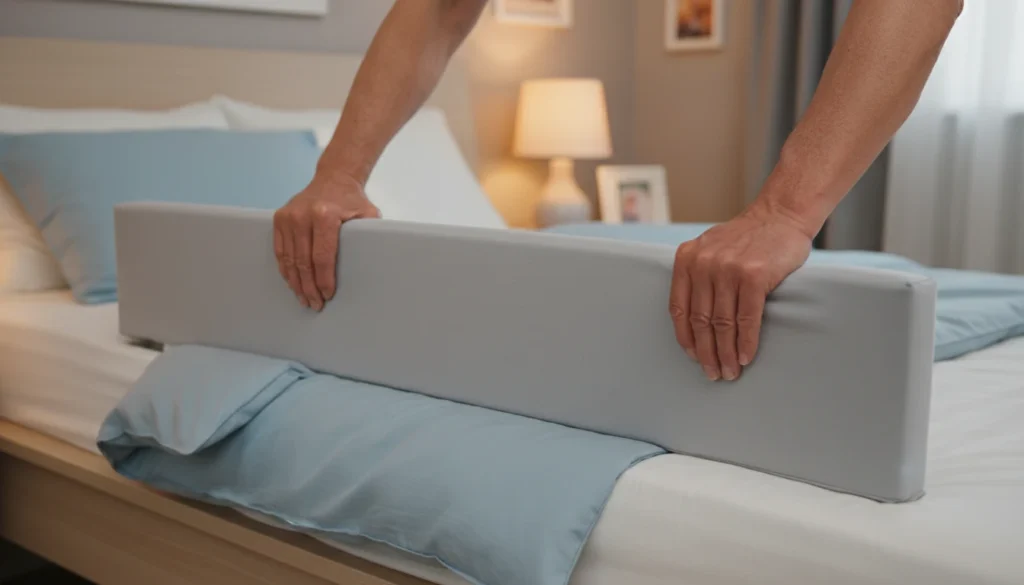
I cannot stress this enough — and I say it from experience, having watched a well-meaning family member rush through an installation and end up with a rail that wobbled like a loose tooth: a poorly installed bed rail is worse than no bed rail. It creates a false sense of security while introducing new hazards. Installation isn’t complicated, but it absolutely requires attention to detail.
Step-by-Step Installation Guide
1. Gather everything before you start. Most rails come with the hardware you need, but have a screwdriver and wrench nearby just in case. Nothing derails a project faster — pun fully intended — than realizing mid-installation that you’re missing a bolt.
2. Actually read the manual. I know. Nobody reads manuals. But bed rail installation is one of those situations where skipping the instructions can genuinely cause harm. Each model has specific requirements, and assuming they’re all the same is how mistakes happen.
3. Position the rail where it’ll actually be used. Place it where the person naturally reaches for support — typically along the side they use to get in and out of bed. This sounds obvious, but it’s worth confirming with the person who’ll be using it. They know their own habits better than you do.
4. Secure every fastener completely. Attach the rail to the bed frame or mattress support using the supplied brackets. Tighten everything until there’s zero play in the connection. If it wiggles even slightly, it’s not done.
5. Test it like you mean it. Push, pull, and shift the rail in every direction. Apply real pressure — not a polite tap. If it moves, find out why and fix it before the rail goes into regular use. This step takes two minutes and could prevent a serious injury.
Maintenance: The Part Everyone Skips (Please Don’t Skip It)
Here’s a truth that most product guides gloss over: installation is a one-time event, but maintenance is ongoing. I learned this the hard way when I noticed a loose bolt on my grandmother’s rail during a routine visit — it had been fine for months and then suddenly wasn’t. Regular checks matter.
- Inspect every few weeks for loose bolts, bent components, frayed straps, or worn padding
- Clean regularly with a damp cloth and mild cleaner — sweat and dust degrade materials faster than you’d think
- Replace parts immediately if anything cracks, corrodes, or stops locking properly — no temporary fixes
A five-minute check every couple of weeks is genuinely all it takes. Think of it like checking the smoke detector batteries — small effort, significant payoff. And if there’s ever a fall or a significant change in the person’s mobility, do a full inspection right away, not eventually.
Safety Standards and Certifications: What to Actually Look For
This is the part where most people’s eyes glaze over, and I get it — regulatory language is not exactly riveting. But stay with me, because this stuff matters more than it seems.
What the Requirements Actually Cover
When evaluating safety bed rails for seniors, look for products that clearly document:
- Stability testing — proof that the rail resists tipping, collapsing, or shifting under realistic loads, not just gentle lab conditions
- Material safety — confirmation that components are non-toxic and free of hazardous chemicals
- Weight capacity — a clearly stated maximum load so you can match the product to the actual person using it
These aren’t bureaucratic checkboxes. They’re the difference between a rail that holds when someone grabs it in a panic and one that doesn’t.
What’s Changed Recently — and Why It Matters
Safety standards for bed rails have evolved meaningfully in recent years. Newer testing protocols simulate more realistic forces — the kind of pressure that happens when someone grabs the rail urgently at 2 a.m., not just a controlled push in a testing facility. There’s also been a stronger emphasis on user-centered design, with more attention paid to reducing entrapment risks and making rails easier to operate for people with limited hand strength or dexterity.
In the UK, concerns about bedrail safety in nursing homes and private residences prompted a National Patient Safety Alert in August 2023. That kind of regulatory attention is a signal worth paying attention to — it means this isn’t a niche issue. It’s something clinicians, regulators, and families are all actively working through.
The Real Benefits — and the Honest Risks Nobody Talks About Enough
Let’s be straight with each other here, because safety bed rails for seniors are genuinely helpful and genuinely capable of causing harm if used incorrectly. That’s not a contradiction — it’s just the reality of any tool that involves physical support and an older adult’s body.
What Bed Rails Do Really Well
They support independence. This is the one I care about most, honestly. Having a stable rail to grip during transfers means many seniors can get in and out of bed without assistance — which matters enormously for dignity, confidence, and quality of life. My grandmother told me once that the rail made her feel “less like a patient.” That stuck with me.
They reduce fall risk. A rail acts as both a physical barrier against rolling out of bed and a support structure for controlled movement. That combination addresses two of the most common nighttime fall scenarios simultaneously.
They reduce anxiety. This one doesn’t get talked about enough. Knowing the support is there — even when it’s rarely needed — changes how confidently someone moves at night. That confidence has real downstream effects on overall mobility and independence.
Where Things Can Go Wrong
Entrapment is a real and serious risk. Gaps between the mattress and the rail can trap limbs, and in serious cases, this has led to significant injury. The fix is straightforward: use correctly sized rails, ensure the mattress fits snugly, and follow the spacing guidelines in the product documentation. But it requires deliberate attention — it’s not something you can just assume is fine.
Over-reliance is a subtler problem. Some people start using the rail as a substitute for other mobility aids or physical therapy, which can actually accelerate decline. Rails work best as part of a broader approach, not as a replacement for it.
The bottom line: safety bed rails for seniors are a tool, not a complete solution. Used correctly, they’re excellent. Used carelessly, they introduce new problems. The difference is almost entirely in how they’re selected, installed, and monitored over time.
Comparing the Best Safety Bed Rails for Seniors
When you’re ready to shop, here’s a quick reference to help you compare the main options side by side:
| Rail Type | Key Features | Best For | Price Range |
|---|---|---|---|
| Adjustable Bed Rail | Height adjustable, safety padding, foldable | Most home users | $100–$200 |
| Fixed Bed Rail | Permanent installation, maximum stability | Long-term daily use | $80–$150 |
| Portable Bed Rail | Lightweight, easy setup, travel-friendly | Travel or short-term recovery | $50–$100 |
Beyond price, the features that matter most are adjustability (to minimize gaps between the rail and mattress), padding (to reduce impact injuries), and ease of installation (because a complicated setup is more likely to be done wrong). Look for products with clear safety documentation and, ideally, third-party certification. If a product can’t tell you how it was tested, that’s a red flag worth taking seriously.
Beyond the Rail: Building a Smarter Safety Setup
Here’s something I’ve come to believe pretty firmly after going through this with my own family: safety bed rails for seniors are most effective when they’re one layer in a broader system. The rail handles the bed. But what about the path to the bathroom? The hallway at midnight? The bathroom floor?
Other Devices That Pair Well With Bed Rails
Grab bars in the bathroom and hallway provide reliable handholds in the spots where slips are most common. If you’re only going to add one thing to the bathroom, a grab bar near the toilet and one in the shower are the highest-impact choices — full stop.
Non-slip mats are unglamorous but genuinely effective. Placing them at the bedside, in the bathroom, and at the top of stairs addresses some of the most common fall locations without requiring any installation at all.
Mobility aids — canes, walkers, rollators — should be used alongside rails, not instead of them. Each tool addresses a different part of the movement challenge, and they work better together than any one of them does alone.
Smart Home Integration: The Future Is Already Here
This is where things get genuinely interesting, and I’ll admit I was a little skeptical at first. Motion sensors that detect when someone leaves the bed can trigger alerts or turn on low-level lighting automatically. Smart lighting that activates during nighttime movement reduces the chance of tripping in the dark without requiring anyone to fumble for a switch. Emergency alert systems — whether wearable or room-based — can notify caregivers quickly after an incident.
None of these replace human oversight. But they extend it in ways that matter, especially for families who can’t be physically present overnight. When I set up a simple motion-activated night light in my grandmother’s hallway, she told me it was “the best thing anyone had done for her in years.” It cost about $15. Sometimes the small things land the hardest.
Frequently Asked Questions About Safety Bed Rails for Seniors
What should I consider when choosing safety bed rails for seniors? Start with the person’s mobility level, bed type, and whether the rail needs to be permanent or portable. Prioritize adjustability, padding, certified safety testing, and clear installation instructions. And ask the person who’ll be using it — their input matters more than any product review.
How often should I inspect a bed rail? A quick visual check every two to three weeks is a good baseline. Do a more thorough inspection — testing all fasteners and locking mechanisms — after any fall or significant change in the user’s mobility. Don’t wait for something to go wrong before you check.
Are there safety certifications I should look for? Yes. Look for documented stability testing, material safety confirmation, and clearly stated weight capacity. Products certified by recognized testing bodies offer an additional layer of confidence that’s worth seeking out.
When should a bed rail be replaced? Replace it if you see cracks, bent metal, rust, missing or broken locking mechanisms, or persistent wobble that can’t be corrected. Worn or missing padding is also a clear signal to repair or replace — don’t try to patch it with tape and hope for the best.
Can bed rails be used with other safety devices? Absolutely — and they should be. Rails work best as part of a broader safety plan that includes grab bars, non-slip surfaces, mobility aids, and where appropriate, smart sensors and emergency alert systems.
What’s the biggest misconception about bed rails? That they eliminate fall risk entirely. They reduce it significantly when used correctly, but they’re not a guarantee. Careful selection, proper fit, and ongoing monitoring are all required. Anyone who tells you otherwise is overselling it.
Conclusion: The Right Rail, Used the Right Way, Changes Everything
Here’s what I keep coming back to after all the research, all the product comparisons, and honestly, all the personal experience: safety bed rails for seniors aren’t a magic fix. But they’re one of the most practical, accessible tools available for reducing nighttime falls and supporting the kind of independence that makes life feel worth living.
When they’re chosen thoughtfully, installed correctly, and maintained consistently, they genuinely work. I’ve seen it firsthand. My grandmother went from hesitant and anxious about nighttime movement to confident and self-sufficient — and a big part of that was simply having something solid to hold onto.
The key is treating safety bed rails for seniors as part of a system, not a standalone solution. Pair them with grab bars, non-slip surfaces, appropriate mobility aids, and regular reassessments as needs change. Stay current on safety standards. Don’t skip the maintenance checks, even when everything seems fine — especially when everything seems fine.
If you’re in the process of evaluating options right now, focus on products with clear safety documentation, adjustable features that minimize gaps, and user-friendly designs that the person will actually want to use. The best rail isn’t the one with the most five-star reviews. It’s the one that fits the person, the bed, and the life they’re living.
Falls don’t have to be inevitable. With the right setup, a little ongoing attention, and maybe a $15 motion-activated night light in the hallway, you can make the bedroom a genuinely safer place — and that peace of mind is worth every bit of effort it takes.