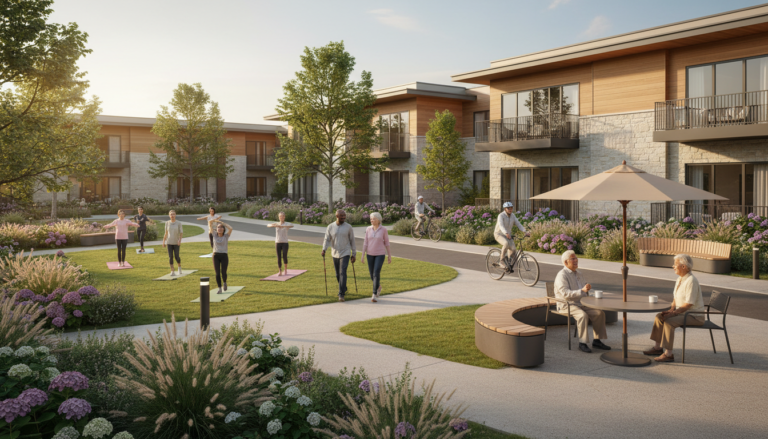

Living Apartments: A Retiree’s Complete Guide to Finding, Enjoying, and Managing Your Perfect Rental Home
A retiree’s friendly guide to living apartments — how to find the right rental, pick amenities, understand leases, and truly enjoy apartment life in retirement.
Key Takeaways:
- Living apartments in retirement is a deliberate, smart choice — not a consolation prize. Flexibility, convenience, and freedom from maintenance are real, meaningful benefits
- Start your search with three locked-in basics: your real budget (not your “maybe” budget), your ideal location, and your timing
- The right neighborhood shapes your daily routine — and your daily routine shapes your happiness. Don’t underestimate this
- Amenities that genuinely improve retirement life include in-unit laundry, reliable climate control, elevator access, and soundproofing
- Always tour in person, document everything on move-in day, and read the lease before you sign — even the parts that feel like fine print written by a committee of robots
- Renter’s insurance is affordable, often required, and absolutely worth it
- Making an apartment feel like home doesn’t require a renovation budget — lighting, textiles, and removable décor do more than you’d think
- The best living apartment isn’t the fanciest one. It’s the one that fits your life right now — and makes your mornings a little easier
Nobody tells you this when you retire, but one of the quieter surprises of this season is how much your relationship with “home” changes.
For most of my working life, home was the place I collapsed into at the end of the day. It was the house with the yard that needed mowing every single weekend without fail, the gutters that needed cleaning twice a year whether I remembered or not, the furnace that — I promise you this is true — chose the coldest possible weekend of the year to stop working. Home was also a project. Always something to fix, upgrade, patch, or quietly worry about while pretending to watch television.
And I loved it. Until I didn’t.
When retirement arrived, I started asking a different question. Not “what does this house need?” but “what do I actually need?” And the answer surprised me a little. I needed less space and more freedom. Less maintenance and more mornings that started with coffee instead of a to-do list. I needed a home that worked for my life now — not the life I had at 42, when I had the energy of someone who genuinely believed they could refinish the deck and still make it to a dinner party.
That’s when living apartments started making a lot of sense.
And I know what some of you are thinking, because I thought it too: apartments are for young people, for people just starting out, for people who haven’t “made it” yet. That story is outdated, and honestly, it was never quite right. Living apartments in retirement can be one of the smartest, most freeing decisions you make in this chapter. No yard. No roof repairs. No “honey, I think the water heater is making a noise again” at 10 p.m. on a Sunday. Just your space, your routines, and your life — without the maintenance tax that homeownership quietly charges you every single month.
But finding the right apartment? That’s still a process. Listings disappear fast. Prices shift like a mood ring. “Cozy” is sometimes code for “your bed will also be your dining room table, and your dining room table will also be your home office.” And if you haven’t rented in a while — or ever — the modern rental market can feel like a foreign country with its own language, customs, and inexplicable fees.
This guide is here to help. I’ll walk you through how to search efficiently, how to evaluate neighborhoods for retirement living, which amenities actually matter at this stage of life, what to watch for in a lease, how to make your apartment genuinely feel like home, and what’s happening in the rental market right now. Think of it as the conversation I wish someone had with me before I started touring units — practical, honest, and human. Like we’re talking over coffee, not reading a contract written by a committee of robots who’ve never actually lived anywhere.
Research backs up what many retirees are already feeling intuitively. A 2023 study published in Housing Policy Debate found that older adults increasingly prefer rental housing for its flexibility and reduced maintenance burden, particularly after major life transitions like retirement or the loss of a spouse. In other words: you’re not alone in this, and you’re not settling. You’re adapting — and that’s a sign of wisdom, not defeat. I’d even argue it’s one of the better decisions available to you right now.
Why Living Apartments Make Sense in Retirement

Let’s set the tone clearly: living apartments in retirement are not a consolation prize while you “wait” for something better. For a growing number of retirees, apartment living is a deliberate, well-reasoned choice — and the reasons are genuinely good ones that hold up under scrutiny.
Freedom from maintenance is the big one. No more weekends lost to yard work, roof repairs, or appliance emergencies that always seem to happen at the worst possible time. When something breaks in an apartment, you call management. That’s it. That’s the whole process. I cannot overstate how much mental energy this frees up — energy you can redirect toward literally anything else you’d rather be doing. Travel. Grandkids. A hobby you’ve been putting off since 2009. All of it becomes more available when you’re not mentally managing a property.
Financial flexibility matters too, and it matters more than most people admit out loud. The U.S. Bureau of Labor Statistics consistently shows housing as the largest slice of most household budgets. Downsizing into a well-chosen apartment can free up significant cash flow — money that can go toward travel, grandkids, hobbies, or simply a more comfortable retirement cushion. Renting also keeps your capital liquid in ways that homeownership doesn’t, which matters more than most people acknowledge when you’re living on a fixed income and the market does something unexpected.
Location and convenience become more important in retirement, not less. Living apartments in walkable neighborhoods — close to medical offices, grocery stores, restaurants, parks, and community centers — can genuinely support your health and social life in ways a suburban house with a long driveway never could. I’ve talked to retirees who moved from a house they loved into an apartment they weren’t sure about — and within six months, they couldn’t imagine going back. The proximity to everything changed their daily life in ways they hadn’t fully anticipated.
And community — real, built-in community — is something apartment living can offer that a standalone house often can’t. Neighbors you actually see. Common spaces where connections happen naturally. Building events that don’t require you to organize anything or bring a dish. For retirees navigating the social shift that comes with leaving the workforce, that matters more than most people expect — and more than most people admit until they’ve experienced it.
The goal isn’t to find a perfect apartment. The goal is to find the right apartment for your life right now. Those are very different searches — and knowing the difference makes everything easier and considerably less stressful.
How to Find Living Apartments Without Losing Your Mind
Apartment hunting can be oddly emotional. You’ll fall in love with a place that’s over budget. You’ll tour a unit that smells like “mystery” and you won’t be able to identify the mystery. You’ll see a listing with twelve perfect photos that somehow don’t include the bathroom — and now you know exactly why they didn’t include the bathroom.
Here’s how to make the search feel less chaotic and more strategic, especially if you haven’t rented in a while.
Start With the Big Three: Budget, Location, Timing
Before you get lost in listings, lock in these basics. Seriously — do this first. It will save you from falling in love with apartments that were never going to work.
1. Budget — your real budget, not your “maybe” budget
A common guideline is spending no more than 30% of gross income on housing, but in retirement, your income picture looks different than it did during your working years. Social Security, pension payments, investment withdrawals, and part-time income all factor in differently than a salary did. Work with your actual monthly take-home number — not what you used to earn, and not what you’re hoping things will look like once you “figure out the finances.”
A practical approach I use:
- Decide your maximum rent — the number where you’d still sleep fine at night
- Add estimated utilities
- Add parking, pet fees, and internet
- Make sure you can still afford groceries, healthcare costs, and the occasional treat that makes retirement feel like retirement
Because living in an apartment shouldn’t require an exclusive relationship with instant noodles. Especially not in retirement, when you’ve genuinely earned better.
2. Location — where your life actually happens now
When comparing living apartments, location isn’t just a pin on a map. For retirees specifically, the location question has layers that it didn’t have at 35.
Ask yourself:
- How close is the nearest medical office, specialist, or hospital?
- Is there a grocery store within a reasonable distance — or will you be doing “grocery field trips” that eat up half your afternoon?
- Are parks, pharmacies, cafes, or transit genuinely walkable — or just technically nearby?
- Does the neighborhood feel safe and comfortable at different times of day?
- Is there a sense of community — people out walking, local businesses active, neighbors who make eye contact and say hello?
If you can, visit the area at different times: weekday morning, evening, and weekend. Neighborhoods have personalities. Some are “quiet and charming.” Some are “quiet until Friday night, and then it’s a different story entirely.” You want to know which one you’re choosing before you sign anything.
3. Timing — because the rental market has seasons
Rental markets tend to be more competitive in spring and summer, when demand peaks and everyone seems to be moving at once. Winter can be quieter, which sometimes means better options, more negotiating room, and landlords who are genuinely motivated to fill vacancies before the holidays. That varies by city, but it’s a pattern worth knowing — especially if your move timeline is flexible, which retirement often makes possible in ways that working life never did.
Use Online Listings — But Don’t Stop There
Yes, you’ll use major platforms to search for living apartments. Filter by your must-haves, save searches, and set alerts so you’re not refreshing manually at midnight. But also:
- Ask friends and neighbors: Some of the best apartments get rented by word-of-mouth before they’re ever widely advertised. I’ve heard this story more times than I can count — someone found their perfect place because a friend mentioned it at lunch
- Join local community groups: Neighborhood Facebook groups, NextDoor, and community boards can be surprisingly effective, especially for smaller buildings and quieter neighborhoods
- Walk the area: In some neighborhoods, smaller landlords still rely on “For Rent” signs — especially in the quieter, more residential areas that retirees often prefer
Build a “Must-Have vs. Nice-to-Have” List — and Actually Stick to It
This sounds basic, but it’s the difference between a smart choice and an emotional one. And emotional choices in apartment hunting are expensive.
Must-haves for retirees might include:
- Ground floor or elevator access — especially important if mobility is a consideration now or might become one later
- Single-floor layout with no interior stairs
- Pet-friendly policy (if you have a companion animal — and many retirees do, for very good reason)
- Proximity to medical care
- In-unit laundry or accessible laundry on the same floor
- Air conditioning in warm climates
Nice-to-haves might include:
- Rooftop deck or community garden
- Fitness center or pool
- Smart home features
- A view that makes you feel like a main character in your own quiet, well-earned story
Don’t let a “nice-to-have” trick you into ignoring a “must-have.” It happens more than you’d think — especially when the rooftop deck is really, genuinely, unreasonably nice.
Neighborhoods and Lifestyle: Choosing Where You’ll Actually Be Happy

A lot of apartment advice treats neighborhoods like simple categories: “safe,” “hip,” “family-friendly.” But your best neighborhood depends on what you value — and in retirement, those values often shift in meaningful ways that catch people off guard.
Safety and a Comfortable Vibe
Look beyond statistics if you can:
- Are streets well-lit at night?
- Do people walk dogs or sit on porches in the evening?
- Are local businesses active and maintained — or are there a lot of empty storefronts?
- Does it feel like a place you’d come home to without a stress spike?
I’ve toured apartments in neighborhoods that looked fine on paper but felt off the moment I stepped outside. That feeling is data. It’s not irrational — it’s your brain processing a hundred small signals at once. Trust it.
Everyday Convenience — More Important Than You Think
In retirement, convenience isn’t a luxury — it’s a quality-of-life factor that compounds daily. Think about:
- Grocery stores and pharmacies
- Coffee shops or diners (your morning ritual matters more than you might admit)
- Public transit or ride-share availability
- Medical offices and specialists
- Parks, walking paths, or green space where you can actually decompress
I once lived in a place where the nearest grocery store was a 20-minute drive. It didn’t sound like a big deal when I signed the lease — until I realized I was scheduling my entire week around “grocery day” and feeling vaguely resentful about it. That is not the low-maintenance, freedom-forward retirement lifestyle I had envisioned. Learn from my mistake. Check the grocery store distance before you fall in love with the apartment.
Transportation and Accessibility
If you drive, check parking availability, street cleaning rules, and traffic patterns at the times you’d actually be coming and going. If you’re considering reducing or eventually eliminating driving — which many retirees do, and it’s a reasonable thing to plan for — check bus and train frequency, walkability scores, and whether the neighborhood is genuinely navigable on foot for someone who isn’t in a hurry.
The AARP Livability Index lets you score any address across multiple factors including walkability, transit access, and proximity to services. It’s a genuinely useful tool when comparing living apartments in different areas: AARP Livability Index.
Location shapes your routine. Routine shapes your happiness. It’s not dramatic — it’s just quietly, consistently true.
Essential Amenities in Living Apartments: What Actually Matters in Retirement
Amenities are where listings get creative. You’ll see phrases like “luxury finishes” and “resort-style living,” which could mean anything from genuine marble countertops to “we painted the hallway a nice shade of gray and added a succulent near the mailboxes.”
Let’s talk about the features that genuinely improve daily life in retirement — not just the ones that photograph well for the listing.
The “Daily Life” Amenities That Make a Real Difference
In-unit laundry
If you can get it, it’s a major quality-of-life upgrade at any age — but especially in retirement. Not having to haul laundry down stairs, across a parking lot, or wait for a shared machine to free up? That’s not a small thing. That’s Tuesday morning being easier than it used to be. That’s one fewer errand on your mental list. I’ve lived both ways, and I will never voluntarily go back to shared laundry. Never.
Reliable climate control
Air conditioning in warm climates isn’t a luxury for retirees — it’s a health consideration that deserves to be taken seriously. Heat-related illness is a real risk for older adults, and the CDC recommends that seniors have access to cool environments during heat events. Make sure the system works well — actually test it during the tour — before you sign anything.
Elevator access and single-floor layout
Even if stairs aren’t a problem today, they may become one. Choosing a ground-floor unit or a building with a reliable elevator is a form of planning ahead — and it’s the kind of planning that future-you will quietly, deeply appreciate. It’s also the kind of planning that present-you will appreciate on the day you come home with six bags of groceries and don’t have to negotiate a staircase.
Parking
If you have a car, understand exactly what you’re getting: assigned vs. unassigned spots, guest parking availability, monthly fees, and how far the walk is from your car to your door. Parking can be the difference between “I love coming home” and “I dread coming home every single day.” That gap is larger than it sounds, and it compounds over a 12-month lease.
Soundproofing and noise levels
Noise is one of the most common complaints in apartment living — and for retirees who value peace and quiet (which, after decades of open-plan offices and busy households, is most of us), it matters even more. When touring, listen carefully: hallway noise, street noise, footsteps from the unit above, sounds through shared walls. Tour at a realistic time if possible — after work hours, not 11 a.m. on a Tuesday when the building is essentially empty and everything sounds peaceful by default.
Accessibility Features Worth Asking About Specifically
For retirees, it’s worth asking directly about:
- Grab bars in bathrooms — or the ability to install them without penalty
- Walk-in showers vs. tub-only bathrooms
- Wider doorways for mobility aids
- Step-free entry to both the building and the unit
- Well-lit common areas and parking
These aren’t just “nice-to-haves” — they’re features that can determine how long a particular apartment actually works for your life. The National Aging in Place Council offers resources on what to look for in age-friendly housing: NAIPC Resources.
Smart Home Features: Helpful, Not Just Hype
Smart features can make living apartments safer and easier in ways that are genuinely practical:
- Smart thermostats can reduce energy costs and maintain comfortable temperatures automatically — which matters when you’re home more often than you used to be
- Smart locks reduce key drama (and losing keys is a lifestyle for some of us — I’m not naming names, but I know who I am)
- Video doorbells and secure building access add peace of mind that’s hard to put a price on
Just don’t let “smart” distract you from basics like plumbing quality, pest control history, and how quickly management actually responds to maintenance requests. A smart thermostat in a building with a slow, unresponsive maintenance team is still a frustrating place to live. The technology doesn’t fix the people.
Touring Living Apartments: What to Check Beyond “Is It Nice?”

A tour is not a vibe check. It’s a fact-finding mission — and the facts you gather in 20 minutes can save you 12 months of quiet regret.
Inside the Unit
- Water pressure: Turn on faucets, run the shower, flush the toilet. Do this. Every time.
- Windows: Do they open? Are they drafty? Is there enough natural light to make the space feel livable, not just technically habitable?
- Cell signal: Dead zones are real, annoying, and not something you want to discover after move-in
- Outlets: Enough of them? Placed where you’d actually use them, or in the one corner of the room where nothing goes?
- Storage: Closets that are genuinely functional — not just technically present and emotionally supportive
- Signs of pests: Tiny droppings, traps, unexplained smells — ask directly about pest history and don’t feel awkward about it
- Bathroom accessibility: Is the shower step-free? Is there room for grab bars if you ever need them?
The Building and Common Areas
- Mail and package system — important if you shop online, and at this point, who doesn’t
- Elevator condition and reliability — ask how often it’s serviced
- Trash and recycling area — clean and organized, or a situation?
- Parking safety and lighting at night
- Hallway noise levels — stand still and just listen for a minute
- Common areas — are they maintained, welcoming, and actually used by residents?
The Lease and Costs — Ask Before You Fall in Love
Ask for a complete fee breakdown before you get emotionally attached to the place:
- Application fee
- Administrative fee
- Security deposit
- Pet deposit and/or monthly pet rent
- Parking fee
- Amenity fee
- Move-in and move-out fees
- Which utilities are included vs. billed separately
That “great price” can quietly become not-so-great once fees stack up. I’ve seen apartments where the listed rent was genuinely reasonable — and the total monthly cost, once everything was added, was a completely different number that required a moment of quiet recalibration.
Understanding Leases: What Retirees Should Know Before Signing
If you haven’t signed a lease in a while — or ever — welcome. Leases don’t care about your feelings, but they do respond very well to preparation and attention.
Questions to Ask Before You Sign
- What’s the lease term, and what’s the renewal process?
- What happens if I need to break the lease early — and what does it actually cost?
- How are maintenance requests submitted, and how quickly are they typically resolved?
- What’s the guest policy?
- Is renter’s insurance required?
- What are the rules around decorating — nails, paint, mounting a television?
- Are there any planned rent increases at renewal, and how much notice is given?
Security Deposits and Move-In Documentation
Security deposits are typically one to two months’ rent. You want that money back — so treat move-in day like you’re documenting everything for a very calm, very organized, very thorough insurance claim.
Do this on day one, without skipping any of it:
- Take photos and video of every room, every wall, every appliance, every corner
- Note any existing damage on the move-in checklist — in writing, specifically
- Email a copy to management so it’s time-stamped and officially on record
Security deposit rules vary by state, but many require landlords to return deposits within a set timeframe and provide an itemized list of any deductions. Nolo has long-standing, practical guides on landlord-tenant topics that are actually readable by humans.
Utilities: Know What You’re Actually Paying
Clarify before you sign — not after:
- Which utilities are included in rent?
- Who bills for water and trash?
- Is electricity individually metered or shared across units?
- Is there flexibility in internet providers, or is there one option and that’s the whole story?
This is where budgeting for living apartments often gets messy — because the rent looks fine until the first month’s bills arrive and the math quietly changes on you.
Renter’s Insurance: Don’t Skip It
Renter’s insurance is usually affordable — often $15–$30 per month — and it protects your belongings in the event of theft, fire, or water damage. Many landlords now require it. Even when they don’t, it’s worth having. You’ve spent a lifetime accumulating things that matter to you. Protect them. It costs less than one dinner out per month.
How to Make Living Apartments Feel Like Home
Here’s the part I genuinely enjoy talking about: making your apartment feel like yours — not like a place you’re temporarily occupying while waiting for your real life to resume.
Comfort and Organization Without a Renovation Budget
Use space-saving furniture that doesn’t look like camping gear:
- Storage ottomans that double as seating and hide things you don’t want to look at
- Beds with built-in drawers — genuinely life-changing if you’re downsizing
- Foldable or wall-mounted desks for a home office that disappears when you’re done
- Nesting tables that tuck away when not needed and appear when guests arrive
Go vertical:
Shelves, hooks, tall bookcases — vertical storage gives you more usable space without making a room feel cluttered or small. It’s one of the most underused strategies in apartment living, and it works in every room.
Lighting is everything — and I mean everything:
Most apartments come with overhead lighting that makes you look tired and your plants look vaguely alarmed. Add warm floor lamps, table lamps, and soft bulbs. The difference is immediate and dramatic — and it costs considerably less than you’d think. I’ve transformed rooms with two lamps and a dimmer switch. It sounds small. It isn’t.
Making a Rental Feel Personal Without Losing Your Deposit
- Removable wallpaper — the good kind has come a long way and actually looks intentional
- Peel-and-stick backsplash tiles for a kitchen that feels updated without a renovation
- Command hooks and strips for artwork, organization, and the things you want on walls
- Area rugs to define spaces, add warmth, and make hard floors feel like a choice rather than a compromise
- Curtains — check whether you can replace hardware, but even adding panels to existing rods changes a room completely and immediately
Small changes make a big difference in living apartments. You don’t need to own the walls to make the space feel genuinely, unmistakably yours.
Building Community With Neighbors
Apartment communities can be surprisingly social — if you lean in just a little. Say hello in the hallway. Attend building events. Join community boards or neighborhood groups. Be the person who starts a friendly conversation near the mailboxes, because someone has to be that person and it might as well be you.
You don’t need to become best friends with everyone. But knowing a neighbor or two can turn a building into a community — and for retirees navigating the social shift that comes with leaving the workforce, that’s not a small thing. Research published in The Gerontologist found that social connectedness is one of the strongest predictors of wellbeing in older adults. Your neighbors are not just people who share your hallway. They’re part of your support network — whether you’ve thought of them that way or not. And sometimes they become the people you actually look forward to seeing.
Living Apartments in 2026: What Retirees Should Know About the Market
Markets vary significantly by city and region, but a few broader patterns are shaping the rental landscape right now — and they’re worth understanding before you start your search.
Supply, Demand, and What It Means for You
In many areas, rental demand remains strong due to ongoing urbanization, job concentration in metro areas, and higher mortgage rates that have pushed some would-be buyers back into renting. At the same time, new multifamily construction has added supply in some regions, which can stabilize rent growth — but it’s uneven, and it varies enormously by location. What’s true in one city may be completely different two hours away.
For broader U.S. market context, the Joint Center for Housing Studies of Harvard University publishes an annual report that’s widely cited and genuinely useful for understanding the big picture.
How to Negotiate Rent Without Making It Awkward
You can negotiate in many cases — and retirees, who often have flexible move-in dates and stable, predictable income, are actually in a decent negotiating position. Landlords value stability. You represent stability. Use that.
Try:
- Bringing comparable listings from the same area — specific addresses, specific prices
- Asking for a modest discount or waived fees rather than a dramatic reduction that puts everyone in an uncomfortable position
- Offering a longer lease if you’re planning to stay — this is genuinely valuable to landlords and often worth something in return
- Negotiating upgrades: parking included, a storage unit, or a free month spread across the lease term
Even when rent is firm, fees often aren’t. That’s where the real negotiating room tends to live — and where a polite, prepared conversation can actually move things.
Common Pitfalls in Living Apartments — and How to Avoid Them
Falling for the photos: Listings can hide road noise, odd layouts, small rooms, and smells that no filter can fix. Always tour in person or request a live video walkthrough. Always.
Not reading the lease: I know it’s long. I know it’s not fun. Read it anyway. Every page. Future-you will be grateful — and possibly relieved that you caught something before it became a problem.
Skipping renter’s insurance: It’s affordable, it’s often required, and it protects everything you’ve accumulated over a lifetime. Don’t skip it. It’s not worth the risk.
Ignoring long-term livability: Ask yourself honestly — will I still want this commute, this neighborhood, this layout in 12 months? Can I see myself here through a full lease term and possibly beyond? Apartments that work beautifully for your life right now are worth more than apartments that look impressive on paper but quietly wear on you over time.
FAQ: Quick Answers About Living Apartments in Retirement
What should I consider when moving into a new apartment as a retiree?
Focus on accessibility features, proximity to medical care and daily conveniences, total monthly costs (rent plus utilities plus fees), and lease flexibility. Document everything on move-in day — photos, video, written notes. All of it.
How can I negotiate rent with a landlord?
Bring comparable listings, ask politely and specifically, and negotiate fees or lease incentives if the rent itself is firm. Off-peak seasons and flexible move-in dates give you more leverage than you might expect — especially when you can offer a longer lease term.
What are the most common pitfalls to avoid?
Not reading the lease, skipping the in-person tour, ignoring renter’s insurance, and underestimating total monthly costs beyond the listed rent. These four things account for most of the “I wish I’d known” conversations I’ve had with fellow retirees.
How can I make my apartment feel like home without renovating?
Lighting, textiles, removable décor, and smart organization systems do more than most people expect. A few intentional changes make a rental feel genuinely personal — and none of them require losing your security deposit or calling a contractor.
What are the real benefits of apartment community living for retirees?
Shared amenities, built-in maintenance support, social connection, and often better security features than standalone rentals. The community aspect, in particular, is something retirees consistently underestimate until they experience it firsthand.
How do I handle conflicts with neighbors?
Start with calm, direct communication — most issues resolve faster than you’d expect when approached that way. If the issue continues, document it and involve building management. Calm and specific beats emotional and vague almost every time.
Finding the Right Living Apartment: It’s About Fit, Not Perfection
If you take one thing from this guide, let it be this: the best living apartments aren’t always the fanciest or the most feature-packed. They’re the ones that fit your life — the ones that make your mornings smoother, your evenings calmer, and your budget a little less dramatic.
Use a smart search strategy. Pick a neighborhood that matches how you actually live now — not how you lived at 45, when you had different energy, different priorities, and a different relationship with your weekends. Prioritize amenities that improve daily life in real, practical ways. Read the lease. Document everything. And once you move in, give yourself permission to make the space yours — even if you’re doing it with peel-and-stick wallpaper and a lamp you found on sale that turned out to be exactly right.
Apartment living in retirement can be flexible, freeing, and surprisingly fulfilling. And when you find the right place? It stops being “a rental.” It becomes home — the kind where your routines settle in, your life expands a little, and you stop refreshing listing sites at midnight wondering if you made the right call.
You did. Now go enjoy your mornings. You’ve earned them.