
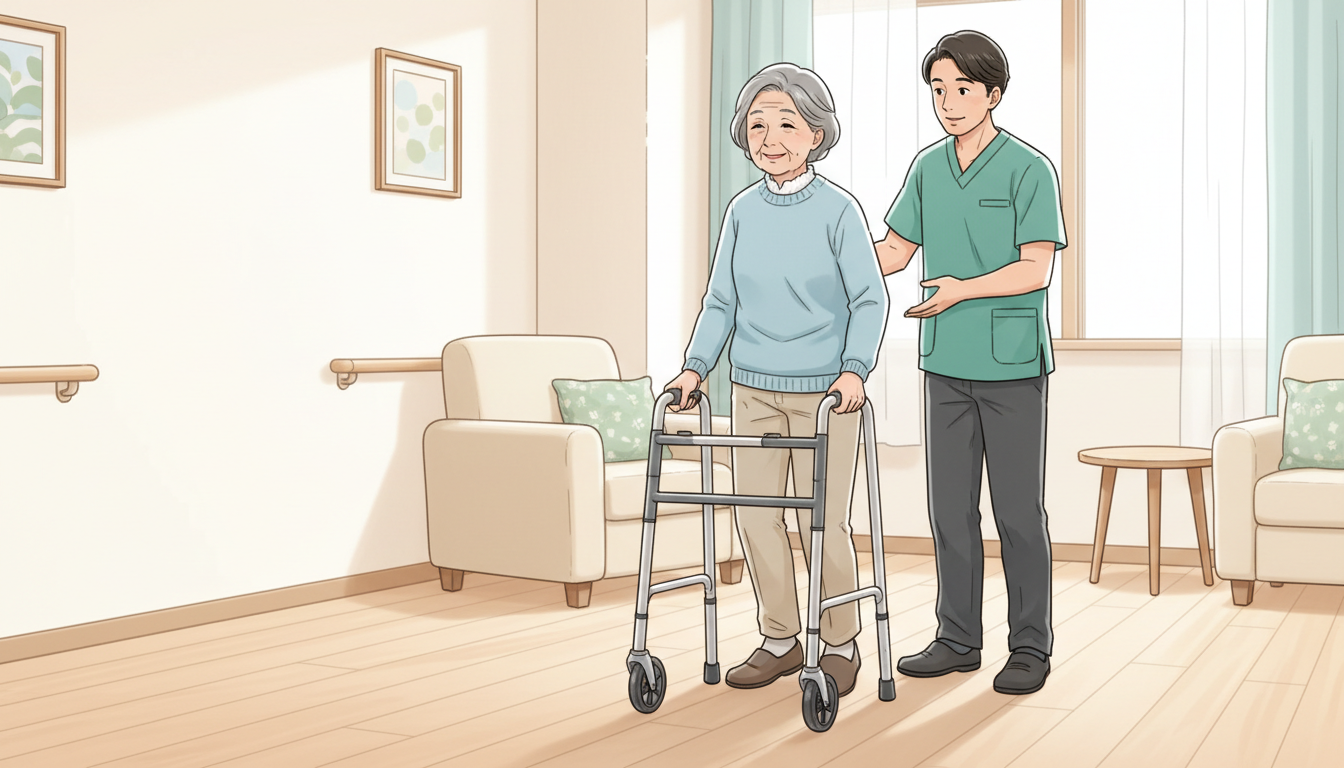
The Complete Guide to Safety When Using Walkers for Seniors: What You Really Need to Know
Practical, proven tips for safety when using walkers for seniors—from choosing the right walker to safer daily use at home and outdoors.
If you’ve ever watched a parent, grandparent, or neighbor pause before taking a step, you know this isn’t just about getting from Point A to Point B. Mobility is independence. It’s dignity. It’s the difference between “I can do this myself” and “I guess I’ll just stay seated.” That’s why safety when using walkers for seniors matters so much—it protects confidence as much as it protects bones.
I’ve always believed a walker can be life-changing… but only if it’s used well. I’ve also seen how quickly a “helpful tool” can turn into a hazard when the height is off, the brakes don’t bite, or someone gets a little too brave on a throw rug that’s basically a banana peel wearing a cute pattern.
So let’s talk about safety when using walkers for seniors the way it happens in real life: real houses, real curbs, real weather, real people—and yes, real moments when someone tries to carry coffee while steering a walker like they’re auditioning for a balancing act.
Why Safety When Using Walkers for Seniors Matters More Than People Realize
Walkers are designed to reduce falls, but they can also contribute to falls when the device isn’t right for the person or it’s used in ways it wasn’t designed for. That’s not a knock on walkers—it’s a reminder that the “tool” is only as safe as the way it’s matched, fitted, and maintained.
A study published in the Journal of the American Geriatrics Society reported that roughly 47,000 older adults are treated in emergency departments each year for injuries involving walkers and canes. That number doesn’t mean walkers are bad. It means we should take safety when using walkers for seniors seriously—because a small misstep can become a big problem fast.
I learned that lesson with my grandmother. She was thrilled when she got her walker—like it came with a free membership to Independence Club. But the handles weren’t adjusted correctly, and nobody checked the rubber tips. Within a week, she caught the walker on the edge of a rug and almost went down. It wasn’t dramatic… until you remember that one fall can lead to fear, less movement, less strength, and then even more fall risk. It’s a domino effect nobody wants.
Choosing the Right Walker: The First Big Win for Safety
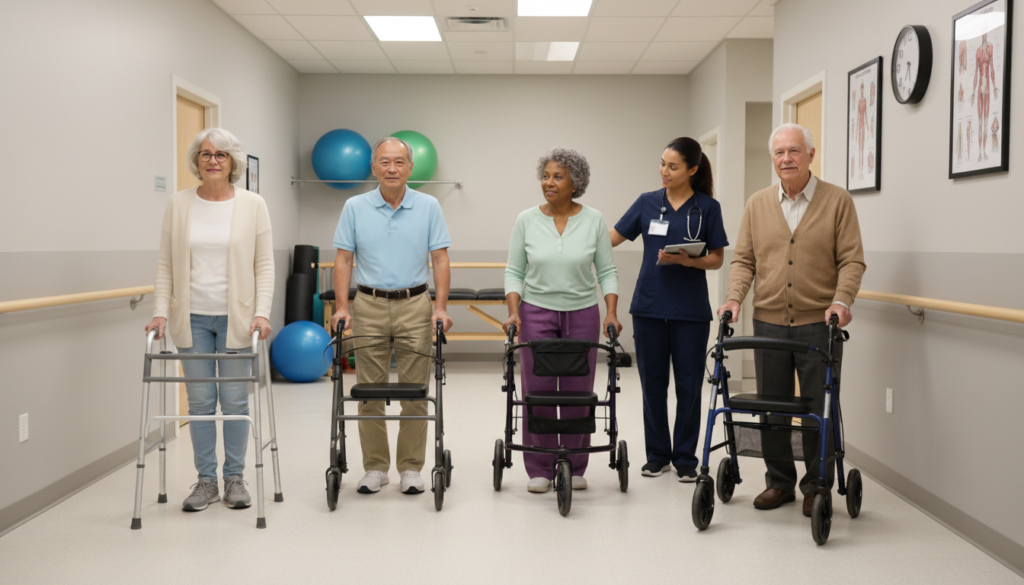
When people think about safety when using walkers for seniors, they often jump straight to technique. But walker safety starts earlier than that—with the choice of walker itself. “Most popular” isn’t the same as “best for this body.”
Standard Walkers: Maximum Stability, More Effort
Standard walkers (no wheels) tend to be the most stable because they don’t roll forward. For seniors who need strong support and have the arm strength to lift and place the walker each step, they can be a great option. The trade-off is energy: lifting a walker repeatedly can tire someone out, and fatigue has a way of turning good form into risky form.
Two-Wheeled Walkers: A Good Middle Ground
Two-wheeled walkers have wheels in front and rubber tips at the back, which makes them easier to move without fully lifting. They’re often a solid match for seniors who need support but don’t have the strength—or patience—to pick up a standard frame every step. The main caution is control: if someone leans too far forward or moves too quickly, the walker can slide ahead, which isn’t great for balance or confidence.
Four-Wheeled Walkers (Rollators): Freedom With a Learning Curve
Rollators are popular for a reason. They roll smoothly, they often include a seat for breaks, and they make longer walks feel more doable. But rollators raise the stakes on one specific skill: brake control. If hand strength or coordination is limited, the brakes might not engage firmly enough, and the rollator can roll away at exactly the wrong moment. I’ve seen rollators treated like shopping carts—helpful until they suddenly aren’t.
Knee Walkers: Useful, But Not a General Solution
Knee walkers can be helpful for certain lower-leg injuries, but they require balance and coordination that many older adults don’t comfortably have—especially if general mobility issues are already present. They’re more of a specialty tool than a standard recommendation for long-term safety when using walkers for seniors.
Getting the Fit Right (Because Inches Matter More Than You’d Think)
If there’s one part of safety when using walkers for seniors I wish every family took seriously, it’s fitting. A walker that’s too low encourages hunching, reduces control, and strains the back. A walker that’s too high makes shoulders tense and weakens grip leverage. Either way, the body ends up compensating—and compensating is where falls sneak in.
A simple fitting check goes like this: when the senior stands upright with hands on the grips, elbows should bend slightly—around 15 degrees—and the handles should generally align with the wrist crease when arms hang naturally at the sides. It should feel neutral, not like a shrug or a slump.
Also, those push-button height adjustments deserve real attention. After you set the height, make sure each button clicks fully into place on every leg, and confirm the legs are even. I’m not saying you need to inspect it like an aircraft mechanic, but you do want to know it won’t shift mid-step.
Daily Safety When Using Walkers for Seniors : Technique That Actually Works
Walking with a walker looks intuitive, but safe use has a rhythm. When people skip the rhythm—usually because they’re tired, distracted, or rushing—that’s when stability disappears.
A good basic pattern is to place the walker about one step ahead, then step forward with the weaker leg (if one side is weaker), then bring the stronger leg through. The key detail is to stay slightly behind the front bar rather than drifting forward into the walker frame. I like to describe the walker as a “safety bubble.” You walk behind it, not through it.
Turning is another underestimated moment. Pivoting quickly can be risky, especially on smooth floors. Slower, smaller steps with the walker kept close tends to be safer and steadier. It isn’t flashy, but “not falling” rarely is.
Navigating Curbs, Thresholds, and Rug Traps Without Panic
Real life isn’t a flat, obstacle-free hallway. Safety in the real world—where there are curbs, door thresholds, uneven sidewalks, and carpets that grab rubber tips—takes practice.
Curbs are all about order. Going up, you typically get close, place or lift the walker onto the curb, step up with the stronger leg, then bring the weaker leg up. Going down, you set the walker down first, step down with the weaker leg, then bring the stronger leg down. With rollators, brakes can help stabilize while positioning, but the senior still needs to move slowly and deliberately because wheels add momentum.
Door thresholds are sneaky because they look harmless. Approaching straight-on is usually safest. With a standard walker, fully lifting over the threshold avoids catching. With wheeled walkers, going slowly—sometimes one wheel at a time—prevents that “stuck and lurch forward” moment.
And rugs… rugs deserve their own warning label. The CDC has long identified home hazards like loose rugs and clutter as common contributors to falls among older adults. If you want a simple, high-impact upgrade to safety when using walkers for seniors, securing or removing loose rugs is one of the best places to start. I know, some rugs are sentimental. But so are ankles.
Sitting Down and Standing Up Safely (Where a Lot of Falls Begin)
One of the most common mistakes I see is using the walker to pull up to standing or to brace while sitting down. Walkers aren’t meant to take full body weight in that way, and rollators can roll even when someone thinks the brakes are “probably on.”
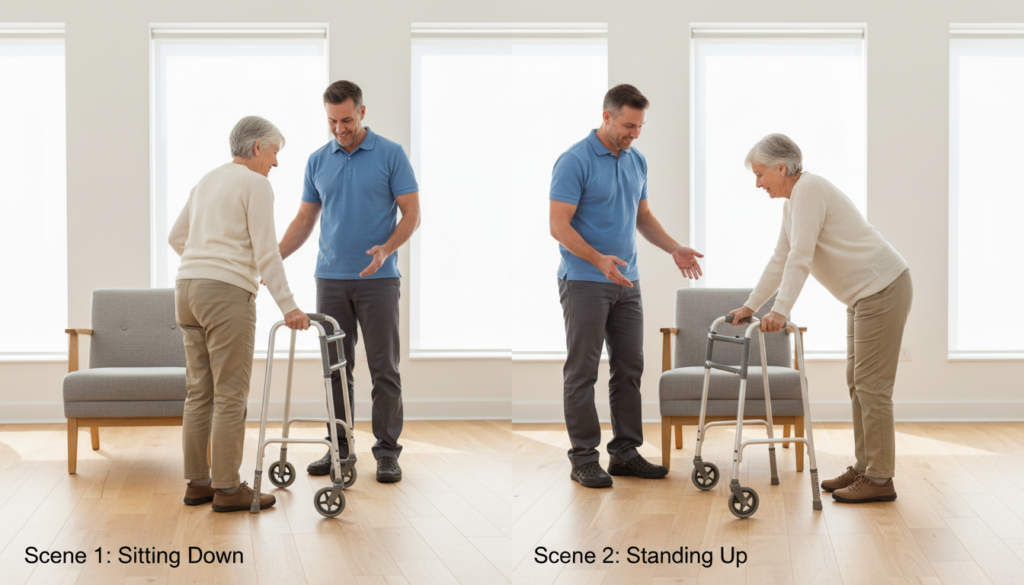
A safer approach is to back up until the chair touches the back of the legs, reach back for the chair’s armrests or the seat, and lower down with control. Standing up is the reverse: scoot to the edge, push up from the chair, find balance first, then reach for the walker. It’s not complicated, but it does require patience—and patience is a key ingredient in safety when using walkers for seniors.
If the senior uses a rollator seat, brakes must be fully locked before sitting. This is one of those rules that sounds strict until you’ve seen a rollator slide backward like it’s trying to escape responsibility.
Home Setup That Supports Safety When Using Walkers for Seniors (Without Making It Feel Clinical)
You don’t need to turn the house into a hospital wing to make it safer. Usually, the biggest improvements come from small changes that make movement predictable.
Start by creating clear paths. Walkers are commonly around 23–28 inches wide, and narrow spaces force awkward turns, bumps, and scraping along furniture. Coffee tables, ottomans, plant stands, and stray cords are frequent “gotcha” items. I’ve helped families make one small furniture change and watched the senior immediately look more confident—because suddenly the house felt navigable again.
Lighting is another underrated upgrade. Dim hallways and nighttime bathroom trips are a perfect storm: sleepy brain, low visibility, and a mobility device. Bright bulbs and motion-sensor night lights can reduce those risky “where’s the switch?” moments.
Bathrooms, of course, are their own category. Water plus slick surfaces plus tight spaces is a fall-risk cocktail. Grab bars, non-slip mats, shower chairs, and raised toilet seats can make bathroom movement safer and less stressful. If the space is tight, it can also make sense to keep the walker just outside the bathroom door and rely on grab bars inside.
Maintenance: The Overlooked Side of Safety When Using Walkers for Seniors
Walkers don’t last forever without care. Rubber tips wear down. Screws loosen. Brakes weaken. Wheels collect debris. And because wear happens gradually, people often don’t notice until something fails.
Research published in the Archives of Physical Medicine and Rehabilitation has highlighted that many mobility devices used by older adults are in poor condition—worn tips, loose parts, faulty brakes. The takeaway isn’t “panic.” It’s “check it like you’d check a smoke alarm.” Quick, regular inspections keep small problems from becoming scary ones.
Rubber tips should have tread and grip, not a smooth, shiny surface. Wheels should roll evenly, without wobble. Brakes should engage firmly and hold position. Grips should feel secure, not loose or slippery. Replacement parts are usually affordable, and replacing them early is far better than waiting for a failure.
Seasonal conditions matter too. Ice and snow dramatically increase risk, so limiting outdoor use during slick conditions—or using appropriate attachments—can help. Summer heat can create fatigue, and fatigue affects coordination. For safety when using walkers for seniors, energy management is part of the plan.
Common Mistakes That Undercut Walker Safety (Even for “Veterans”)
Even seniors who’ve used walkers for years can pick up habits that quietly increase risk.
Carrying items in the hands is a big one. Most walkers require both hands for steady control, and juggling coffee or a phone reduces stability. If carrying is necessary, a basket, tray, or bag attachment is safer—just don’t overload it and shift the walker’s balance.
Rushing is another classic. I get it—nobody wants to feel slow. But rushing often means skipping the proper step sequence, turning too sharply, or missing obstacles. I usually tell people: it’s better to arrive a little late than to arrive in an ambulance. Not poetic, but effective.
Stairs are a hard boundary. Unless a walker is specifically designed for stairs (rare), it shouldn’t be used on staircases. Handrails and assistance are safer. If stairs are unavoidable and the senior can’t safely manage them, it’s worth considering changes like moving the bedroom to the main floor or installing mobility supports.
And finally: ignoring pain. Pain in the hands, wrists, shoulders, or back is a signal—often that the walker height is off, the device is wrong, or technique needs improvement. “Powering through” isn’t a safety plan.
When It’s Time to Upgrade or Reassess the Walker
Mobility needs change. Strength changes. Balance changes. Health conditions change. That means safety when using walkers for seniors includes reassessment—not once, but periodically.
If the senior is having trouble controlling the walker, experiencing more near-falls, or dealing with a new medical issue that affects mobility, it’s worth having a professional evaluate whether a different walker type—or additional supports—would be safer. Also, if a walker is damaged and repairs don’t hold, replacing it is usually the safer call.
The Role of Physical Therapy in Safety When Using Walkers for Seniors
Here’s my honest take: if a senior is getting a walker for the first time, a few sessions with a physical therapist can be one of the best investments you make. PT isn’t just about exercises. It’s about learning safer movement patterns, practicing real-world situations, and correcting small issues before they become dangerous habits.
Physical therapists can help with fitting, gait technique, turns, curbs, transfers (like sitting and standing), and home safety recommendations. And this training matters. Research in Physical Therapy has shown that structured mobility device training can improve confidence and reduce risk in older adults. It’s the difference between “I own a walker” and “I know how to use this thing safely.”
Confidence Without Carelessness: The Goal
Confidence is important, because seniors who don’t trust their walker often avoid moving—which can lead to weakness, stiffness, and even higher fall risk. But we also don’t want “overconfidence,” where someone treats the walker like an invincible safety shield.
Start with short, familiar routes. Practice the tricky spots (door thresholds, tight turns) while someone is nearby. Increase distance and complexity gradually. Celebrate progress. Getting to the mailbox independently can be a huge win. And encourage honest feedback—if something feels unsafe, it probably is.
Final Thoughts: Safety When Using Walkers for Seniors Is Ongoing, Not One-and-Done
Safety when using walkers for seniors isn’t a single purchase or a one-time lesson. It’s a combination of the right walker, a proper fit, consistent technique, a safer environment, and regular maintenance—plus the humility to reassess when needs change.
I’ve seen walkers restore freedom: more movement, more social life, more willingness to do everyday tasks without fear. I’ve also seen preventable accidents caused by small things—a worn rubber tip, a loose rug, a rushed turn, brakes that weren’t fully locked.
The good news is that most walker-related injuries are preventable. Take the time to set things up correctly. Make a few changes at home. Keep the walker in good condition. Practice the basics until they feel automatic. That’s how safety when using walkers for seniors becomes real—not just something we talk about, but something that protects independence day after day.