

Low Cost Medical Healthcare in 2026: Plans & Care | Vanika
A practical, friendly guide to low cost medical care—insurance, clinics, prescriptions, bills, and telehealth to save money without skimping.
Accessing low cost medical care (without sacrificing quality) is one of those modern life skills nobody teaches in school—right up there with filing taxes and figuring out why your phone battery dies faster when you really need it. With rising medical costs, understanding affordable health insurance plans and low-cost care options matters for real people with real budgets.
I’ve had seasons where I looked at a medical bill and thought, “Did they charge me extra for the emotional damage?” And I’ve also had seasons where a little planning—plus knowing where to look—made healthcare feel manageable again. That’s what this guide is for: a clear, comprehensive way to access low cost medical care, from choosing insurance to finding a clinic, saving on prescriptions, and handling bills without spiraling.
We’ll cover the best affordable health insurance plans, how to find low-cost urgent care, ways to save on prescription drugs, financial assistance options, telemedicine, and direct primary care. By the end, you’ll have a practical menu of choices for getting quality healthcare on a budget.
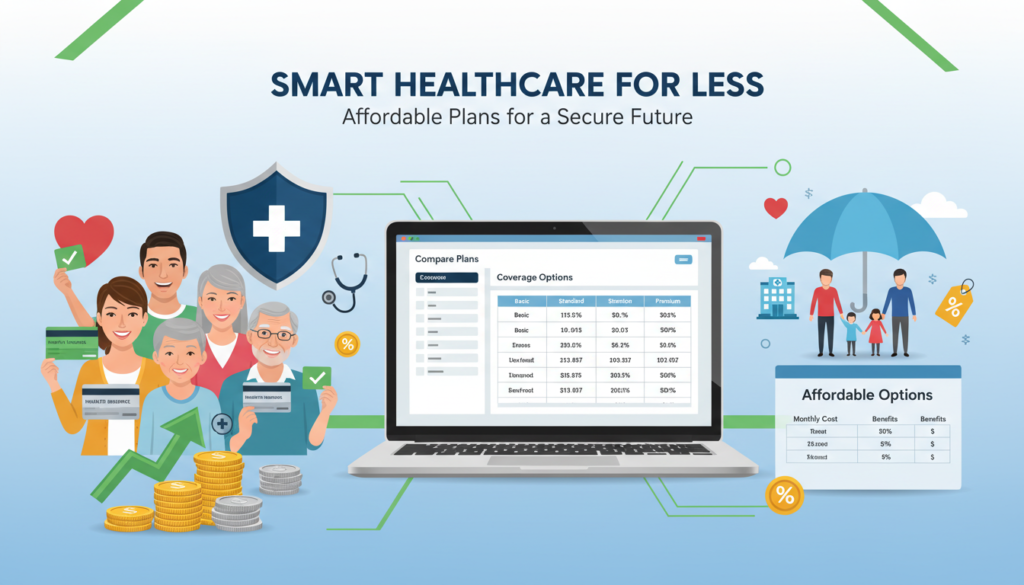
What Are the Best Affordable Health Insurance Plans for Low Cost Medical Care?
Affordable health insurance plans are built to provide essential coverage at a lower cost, which makes low cost medical care more accessible to more people. These plans often include key benefits such as preventive services, emergency care, and prescription drug coverage. The best plan for you depends on how you use healthcare: Are you mostly healthy and just want coverage “just in case”? Do you take ongoing prescriptions? Do you have kids who treat urgent care like it’s a hobby?
A quick, real-world way to compare plans is to look beyond the monthly premium. You’ll also want to check your deductible, copays, and out-of-pocket maximum. The cheapest premium can sometimes come with a deductible so high it’s basically a “good luck out there” plan. The sweet spot is the plan that matches your actual needs—so you pay less overall, not just less per month.
How Does the Affordable Care Act Help Lower Medical Costs?
The Affordable Care Act (ACA) plays a major role in lowering medical costs by helping eligible individuals and families pay for coverage. In plain language: if you qualify, the ACA can make monthly premiums and out-of-pocket spending more affordable, which supports low cost medical care long-term.
Key ACA features include:
- Premium tax credits (subsidies) that can lower what you pay each month for Marketplace insurance.
- Cost-sharing reductions (CSRs) for eligible people who choose certain Silver plans, reducing deductibles and copays.
- Protections for pre-existing conditions, meaning insurers can’t deny you coverage because you’re human and have a medical history.
- Preventive services covered at no extra cost in most plans—think vaccines, screenings, and wellness visits.
The research on Medicaid expansion under the ACA is especially compelling. In a study led by Benjamin D. Sommers (published in The New England Journal of Medicine in 2017), expansion was associated with improved access to care—like being more likely to have a personal doctor—and reduced cost-related delays in both getting care and filling prescriptions. It also linked to less difficulty paying medical bills, which is the kind of “small detail” that can change a household’s entire financial stability.
ACA’s Impact: Lowering Medical Bills for Low-Income Adults
including having a personal doctor and reductions in cost-related delays in both care and medication use. Expansion was associated with a decline in difficulty paying medical bills
Three-year impacts of the Affordable Care Act: improved medical care and health among low-income adults, BD Sommers, 2017
Who Qualifies for Medicaid and CHIP Benefits?
Medicaid and the Children’s Health Insurance Program (CHIP) provide essential health coverage for low-income individuals and families. They’re big players in low cost medical care because they often offer low premiums and low out-of-pocket costs.
Eligibility is based on income, household size, and state rules. In states that expanded Medicaid, adults with income up to 138% of the federal poverty level may qualify. CHIP typically covers children in families who earn too much for Medicaid but not enough to comfortably afford private insurance.
If you’re wondering whether applying will be a headache, here’s the honest answer: it can be a bit paperwork-y, but the payoff is huge if you qualify. Many states have online applications, and you can usually apply year-round (not only during open enrollment). If you get stuck, local enrollment counselors and community clinics often help people through the process.
Where Can You Find Low Cost Urgent Care Near Me?
Healthcare professional assisting a patient in a modern urgent care clinic
If you want low cost medical care for a non-emergency issue, urgent care is often the MVP. It’s designed for problems that need attention soon—just not “call an ambulance” soon.
A practical rule I use: if it’s serious but you’re stable, urgent care is usually the place to start. If it’s life-threatening or could become life-threatening quickly (chest pain, severe bleeding, trouble breathing), skip the debate and go straight to the ER.
How Do Urgent Care Clinics Compare to Emergency Rooms in Cost and Services?
Urgent care clinics typically cost less and move faster than emergency rooms. A visit to urgent care might run $100–$200 (often less with insurance), while an emergency room visit can cost $500–$3,000 or more depending on tests, imaging, and how complex the situation is.
Urgent care clinics also tend to have:
- Shorter wait times
- Extended hours, including evenings and weekends
- Common services like strep tests, flu tests, treatment for minor fractures/sprains, infections, and simple wound care
For the right conditions, urgent care can be the smarter low cost medical option. A study by T. Yee (2013) discussed how urgent care centers can shift non-emergency cases away from higher-cost emergency departments. In other words, urgent care can save money when it’s used appropriately—kind of like using a screwdriver instead of a chainsaw. Both are tools, but only one makes sense for most household jobs.
Urgent Care Centers: A Lower-Cost Alternative to EDs
care from emergency departments to lower-cost UCCs. Urgent care center visits generally cost less than emergency department visits, though they tend to be on par with primary care
The surge in urgent care centers: emergency department alternative or costly convenience, T Yee, 2013
What Services Do Community Health Clinics Offer for Affordable Care?
Community health clinics are one of the best-kept secrets in low cost medical care. These clinics often offer primary care, dental services, mental health support, and preventive care at reduced costs.
Many operate on a sliding fee scale based on income. Translation: if you’re working but money’s tight, you might still qualify for discounted care. That sliding scale can be the difference between “I guess I’ll just ignore this cough until it becomes a personality trait” and “I can actually see a clinician this week.”
Community clinics may also help you with:
- Insurance enrollment support (Medicaid/CHIP/Marketplace)
- Referrals to low-cost labs and imaging
- Medication assistance programs
How Can You Save on Cheap Prescription Drugs?
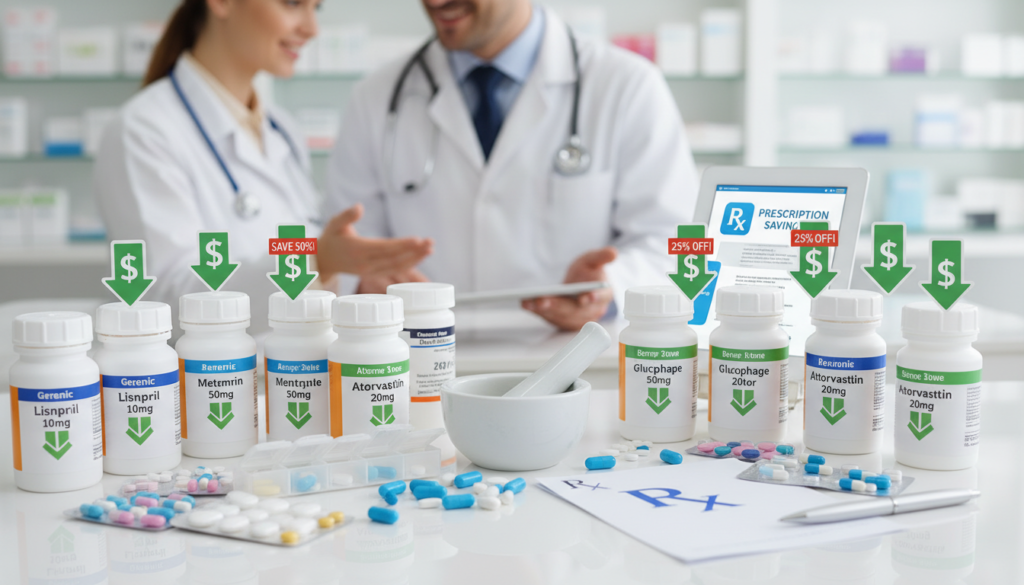
Prescription medications are a major expense for many families. And the frustrating part is that you can do everything “right”—get insurance, see the doctor, follow the plan—and still get smacked with pharmacy prices that feel…creative.
The good news: there are several reliable ways to keep prescription costs in check while staying consistent with treatment. That consistency is part of low cost medical care too, because skipping meds often leads to bigger problems later (and bigger bills).
What Are the Benefits of Using Generic Drugs for Cost Savings?
Generic drugs provide the same therapeutic benefit as brand-name drugs but usually cost much less. Patients can sometimes save up to 80% by using generics.
If you’ve ever wondered whether generics are “the bargain version,” here’s the reassuring truth: generics must meet FDA standards for safety, strength, and effectiveness. In everyday terms, they work the same for most people.
A smart habit: when you get a new prescription, ask one simple question: “Is there a generic version?” It’s a small line that can lead to big low cost medical wins over the year.
How Do Prescription Discount Cards and Manufacturer Copay Programs Work?
Prescription discount cards can lower the cash price of medications at many pharmacies. They’re often free to use and can sometimes beat insurance copays for certain drugs.
Manufacturer copay programs are offered by some pharmaceutical companies to reduce costs for brand-name drugs. They typically have eligibility rules and may not apply if you’re on certain public insurance programs, but when they do apply, they can significantly reduce out-of-pocket costs.
If you’re juggling a pricey prescription, it’s worth comparing:
- Your insurance price
- The discount card price
- A different pharmacy’s price
Yes, it’s annoying that you have to comparison shop like you’re buying a flight. But it’s also one of the more effective low cost medical strategies available today.
What Medical Bill Assistance Programs Help Manage Healthcare Costs?
Medical bills can pile up fast. Even a “simple” outpatient procedure can come with multiple bills—facility fees, physician charges, lab charges, imaging charges. It’s like a band that refuses to stop doing encore performances.
This is where low cost medical care becomes less about the appointment itself and more about how you handle the paperwork afterward.
How Can You Negotiate Medical Bills and Access Financial Assistance?
Negotiating medical bills is a practical (and more common than people realize) way to reduce healthcare costs. Here are steps that often work:
First, ask for an itemized bill. You’re not being difficult—you’re being responsible. Itemized bills can reveal duplicate charges or services you didn’t receive.
Next, call the billing office and ask:
- Whether there’s a self-pay discount
- Whether you qualify for a financial assistance program
- Whether you can set up a payment plan
Many hospitals and clinics have financial assistance policies, and nonprofit organizations can also guide people through the process of handling medical debt.
What Hospital Charity Care Options Are Available for Low Income Patients?
Many hospitals offer charity care programs for low-income patients. Eligibility is usually based on income and household size. Some programs cover part of the bill; others cover the whole thing.
To apply, you typically contact the hospital’s financial assistance office and provide documentation like proof of income and household expenses. It can feel like a lot, but if it reduces a bill from “devastating” to “manageable,” it’s worth the effort.
How Does Telemedicine Provide Affordable Medical Care Alternatives?
Patient engaging in a telemedicine consultation from home
Telemedicine has quietly become one of the most practical options for low cost medical care—especially for common, straightforward issues. It’s not perfect (a video call can’t do a throat swab), but for many problems, it’s fast, convenient, and less expensive.
What Are the Cost Benefits of Virtual Doctor Visits?
Virtual doctor visits can cost less than in-person visits, depending on your insurance and provider. Some telemedicine services offer flat-rate pricing, which makes budgeting easier.
You also save on the hidden costs:
- Travel time
- Gas or transit
- Time off work
- Childcare (sometimes)
A 2020 systematic review by J.T. Atmojo and colleagues found telemedicine can create cost savings for patients and the healthcare system, supporting the idea that remote care can reduce unnecessary in-person visits and related expenses.
Telemedicine: A Cost-Saving Strategy for Healthcare
Nowadays, with healthcare costs on the rise, telemedicine is increasingly being seen as a strategy for healthcare organizations to make cost-saving. This study aimed to explore the opportunity of telemedicine utilization in cost savings to patients and the health care system.
Telemedicine, cost effectiveness, and patients satisfaction: a systematic review., JT Atmojo, 2020
Which Telehealth Services Are Best for Low Cost Medical Needs?
The best telehealth service depends on what you need. Some platforms focus on urgent issues like infections and minor illnesses, while others specialize in therapy, psychiatry, or chronic disease management.
For low cost medical needs, telehealth can work especially well for:
- Minor skin issues
- Allergy symptoms
- Medication refills (when appropriate)
- Follow-up visits
- Mental health counseling
If you like convenience (and who doesn’t), telehealth can be a smart part of your healthcare routine—especially when it helps you avoid a higher-cost setting.
What Is Direct Primary Care and How Does It Lower Medical Expenses?
Direct primary care (DPC) is an alternative model where you pay a monthly membership fee for primary care services, often without using insurance for those visits.
It can support low cost medical care by making routine access predictable: you know what you’ll pay each month, and you often get more time with your clinician.
How Do Membership Models Work in Direct Primary Care?
In DPC, the monthly fee usually covers:
- Office visits
- Preventive care
- Basic chronic disease management
Because DPC practices often skip insurance billing for day-to-day services, administrative overhead can be lower. Patients also often get easier scheduling and direct communication with their provider.
What Are the Advantages Compared to Traditional Primary Care?
DPC can offer:
- Shorter wait times
- More personalized care
- Transparent pricing
- Easier access to the clinician
This doesn’t replace insurance for emergencies or major procedures, but for many people it makes primary care more accessible and predictable—two big ingredients in low cost medical planning.
| Strategy | Description | Cost Impact |
|---|---|---|
| Affordable Care Act | Provides subsidies and expands Medicaid in participating states | Lowers premiums and out-of-pocket costs |
| Urgent Care Clinics | Offers lower-cost services than ERs | Reduces emergency care expenses |
| Generic Drugs | Same efficacy as brand-name drugs at lower prices | Saves up to 80% on prescriptions |
| Telemedicine | Remote consultations at lower fees | Cuts travel and time costs |
This table illustrates various strategies that can help individuals access affordable healthcare services while managing costs effectively. By understanding these options, patients can make informed decisions about their healthcare needs.
Conclusion: Building a Low Cost Medical Care Plan You Can Actually Stick With
Navigating affordable health insurance and low cost medical care can feel like a part-time job—except it doesn’t come with snacks or a 401(k). But the tools are out there.
Start by exploring coverage options through the ACA, Medicaid, or CHIP if you qualify. Use urgent care wisely to avoid expensive ER bills when the situation isn’t life-threatening. Lean into generics, discount cards, and assistance programs to keep prescriptions affordable. And if you’re managing ongoing care, telemedicine and direct primary care can add convenience and predictability.
The biggest shift I’ve seen (in myself and in friends) is this: once you treat healthcare like something you can plan for—rather than something that only happens to you—low cost medical care becomes much more realistic.
You don’t have to do every strategy at once. Pick the two that fit your life right now. That’s usually enough to start feeling like you’re back in control—and that’s the real win.






One Comment
Comments are closed.