

Adventure Travel Agents for Seniors: Your Secret Weapon for Epic Retirement Trips (And How to Find the Right One)
Discover how adventure travel agents for seniors help retirees save time, money, and stress—plus how to find the perfect one for your next epic trip.
Let me tell you something nobody puts on a retirement card.
They’ll write “Congratulations!” and “You’ve earned it!” and maybe something about golf. What they won’t write is: “Good luck figuring out how to actually plan the big trips you’ve been putting off for thirty years.”
Because here’s the thing nobody warns you about retirement—the time finally shows up, the passport is ready, the bucket list is very much still there, and then you sit down to plan your dream trip and realize that planning a real adventure is basically a part-time job. A stressful, tab-heavy, blog-contradicting, permit-confusing part-time job that you did not sign up for.
I know because I’ve been there. Sitting at my kitchen table at 11pm, surrounded by cold coffee and seventeen open browser tabs, trying to figure out whether the bus from Puerto Natales to Torres del Paine actually runs on Tuesdays or if that blog post was just confidently wrong. Spoiler: it was confidently wrong.
For years, I thought adventure travel agents were basically travel’s version of the fax machine—technically still around, but why? You’ve got flight apps, booking sites, Google Maps, and that one friend who “totally knows a guy” for everything. What else could you possibly need?
Then I tried planning a multi-country trekking trip through Patagonia completely on my own.
Forty-seven browser tabs later, I was neck-deep in bus schedules, permit rules, weather windows, and wildly conflicting advice from people who all seemed very sure they were right. I almost booked a “luxury eco-lodge” that, based on later reviews, appeared to be half lodge, half disappointed barn. That was the moment I finally admitted it: maybe, just maybe, adventure travel agents aren’t obsolete after all—especially for those of us in our retirement years who’ve earned the right to do this right.
Here’s what I’ve come to believe after years of adventure travel, some of it brilliantly planned and some of it gloriously chaotic: the trips that stay with you forever aren’t the ones where everything went perfectly. They’re the ones where you were fully present—not buried in logistics, not stressed about permits, not frantically Googling “is this bus actually going to show up” in a language you don’t speak. And that kind of presence? It’s a lot easier when someone else is handling the complicated stuff.
That’s exactly what adventure travel agents for seniors do. And if you’ve been on the fence about using one, I’d like to make the case that it might be the best travel decision you make this decade.
What Exactly Do Adventure Travel Agents Do? (Besides Make You Look Like a Planning Genius)

Here’s the thing about adventure travel: it’s not like booking a beach resort where your toughest choice is ocean view versus garden view. Real adventure involves moving parts. Lots of them.
You’re juggling permits, trail quotas, seasonal closures, gear requirements, local guides, insurance, safety protocols, and logistics that sometimes feel like a puzzle designed by someone who genuinely hates free time. And when you’re a retiree, there’s an added layer—you want to make sure the trip is physically appropriate, medically sensible, and genuinely enjoyable. Not just technically doable. Actually enjoyable.
Adventure travel agents exist specifically for this world. They focus on active, experiential trips—think mountain trekking, safaris, multi-day hikes, kayaking expeditions, cycling tours, and wilderness adventures where “room service” is you boiling water for instant coffee at sunrise while the mountains turn pink around you. Unlike generic travel agents who might spend most of their time booking cruises or city breaks (no shade, those have their place), adventure travel agents live and breathe this niche. Many of them aren’t just booking expeditions—they’re out there doing them on their days off, coming back sunburned and grinning and full of opinions about which mountain huts have the best soup.
According to the Adventure Travel Trade Association’s 2022 industry report, the global adventure travel market was valued at roughly $586 billion, with projected annual growth of around 17.4% through 2030. And a growing, increasingly significant slice of that market? Retirees and active seniors who are finally, finally cashing in on decades of deferred adventure. The industry has noticed. The good agents have adapted. And honestly, it’s about time.
How Adventure Travel Agents Differ from Regular Travel Agents
I’ve worked with both types over the years, and the contrast is pretty stark once you’ve experienced it.
A regular travel agent might book you a hotel in Nepal.
An adventure travel agent will:
- Connect you with a Sherpa guide who’s summited Everest multiple times and knows exactly when to push and when to say “let’s rest here and eat something”
- Arrange the correct trekking permits and TIMS cards before you even think to ask
- Build in acclimatization days so you don’t destroy yourself on day two and spend the rest of the trip recovering in a teahouse
- Confirm that your travel insurance actually covers high-altitude trekking (spoiler: a lot of standard plans don’t—and this matters even more after 60)
- Factor in your pace preferences, any mobility considerations, and medical needs without making you feel like you’re being handled with kid gloves or quietly judged
My cousin learned this the hard way when she booked what she thought was a “light hiking trip” in Peru through a regular agent. She ended up on the Inca Trail in running shoes, no trekking poles, and an insurance policy that specifically excluded anything over 2,500 meters. She survived—but I’m not sure her knees ever forgave her. Or the agent, for that matter.
Adventure travel agents tend to know these trips inside out because they’ve done them. Many have hiked the same routes, stayed in the same mountain huts, and eaten the same questionable freeze-dried meals they’re recommending to you. They’re not just repeating marketing copy—they’re translating real, boots-on-the-ground experience into solid, personalized advice. That difference is everything when you’re planning something that actually matters to you.
Why Retirees Especially Need an Adventure Travel Agent

I’m one of those people who genuinely loves planning. I color-code itineraries. I make packing spreadsheets. I once spent an entire Sunday afternoon building a weather comparison chart for three different months in the same destination. My family finds this both impressive and deeply concerning.
But even as an enthusiastic planner, I’ve learned there’s a big difference between booking a weekend city break and organizing a 10-day trek in a remote region where the phrase “backup option” doesn’t really apply. And in retirement, the stakes feel a little higher—this isn’t just a vacation. It’s the trip you’ve been dreaming about for twenty years. You want it to be good. You want to come home and tell the story for the next decade.
1. They Unlock Experiences You Simply Can’t Click-and-Book
Here’s a fun plot twist: some of the best experiences in adventure travel are not bookable on big travel sites. At all.
A lot of small, local operators don’t list their trips on the usual platforms. Some protected areas require permits that are only released through approved agencies. Certain private reserves, remote lodges, or conservation-focused tours only work with vetted adventure travel agents—and if you don’t know the right people, you simply don’t get in. No amount of determined Googling will change that.
When I decided I wanted to track mountain gorillas in Rwanda, I naively assumed it was just a matter of paying online and showing up with a camera and a lot of excitement. Turns out, permits are tightly limited, dates book out months in advance, and the process is… let’s say “not designed for the casual planner who discovered this was possible last Tuesday.”
My adventure travel agent already had relationships with local partners. She secured the permit, confirmed the trek date, and arranged transfers so smoothly I almost didn’t notice how complicated it actually was. Standing in the misty forest, watching a silverback casually demolish a stalk of bamboo about ten feet away while his family went about their morning like I wasn’t even there—I had one very clear thought: there is absolutely no way I would’ve pulled this off on my own. Not without a lot of stress, several wrong turns, and probably a missed permit window that would’ve haunted me for years.
2. They Save You a Genuinely Absurd Amount of Time
The American Society of Travel Advisors found that travelers who use agents save an average of four hours per trip on planning. That sounds modest until you realize that’s probably a conservative estimate for complex adventure trips—and that those four hours are usually the most frustrating, decision-fatiguing, “why are there seventeen different opinions about this” hours of the whole process.
When I tried to DIY Patagonia, I spent entire evenings comparing bus routes, park entry rules, “best” months (which five different blogs violently disagreed on), and gear lists that ranged from “bring a light jacket” to “prepare for mild polar conditions.” I wasn’t planning a trip. I was doing unpaid research for a trip I hadn’t even booked yet. My husband started calling it my “second job” and he wasn’t entirely wrong.
An experienced adventure travel agent has already done that homework—and then some. They know which trails match your fitness level and pace, which operators are reputable versus “my cousin bought a van and now we run tours,” how to avoid wasting days on bad connections, and when to build in rest days so you don’t crash halfway through.
For retirees especially, that last point is gold. You’re not trying to prove anything to anyone. You want to enjoy this. A good agent builds in breathing room so the trip feels like an adventure, not a forced march through your own bucket list.
3. They’re Your Safety Net When Things Go Sideways
Adventure travel comes with risk. That’s part of the appeal—but it also means things can change quickly. And for senior travelers, having a solid safety net isn’t paranoia. It’s just smart, experienced planning.
Weather shuts down mountain passes. Political situations shift. Airlines cancel flights. Your ankle decides to try a new, exciting angle halfway through day three.
During a kayaking trip in Belize, I discovered I’m intensely allergic to something in the jungle. Within an hour, my face was puffy, my breathing was weird, and my brain was composing dramatic goodbye messages to people who absolutely did not deserve them. Because I’d booked through a specialized adventure travel agent, I had a clear emergency contact protocol. One call later, the local partner had a doctor headed to the lodge, my itinerary was rearranged to give me recovery time, and the activities I’d miss were partially refunded.
If I’d booked that trip piecemeal on random websites? Best-case scenario, I’d be on hold with customer service while my face slowly expanded. Worst case, I’d be Googling “nearest hospital” in a language I don’t speak, in a place I’d never been, alone.
That’s not a story I want to tell. And thanks to my agent, I don’t have to.
4. They Can Actually Save You Money—Yes, Really
It sounds backwards, I know. Pay someone so you can spend less?
But here’s the thing: adventure travel agents have access to contracted rates, local relationships, and real insight into what’s worth paying for—and what’s absolutely not. They’ve seen enough trips to know where the money goes to waste and where it genuinely makes a difference to your experience.
The U.S. Travel Association has reported that people who use travel agents often save 10–15% on complex itineraries compared with booking every element solo. When you’re talking about a $4,000–$6,000 adventure, that’s not pocket change. That’s your next trip’s flight budget, or a really excellent celebratory dinner when you get home.
My friend Dave is the king of budget travel. This is a man who pre-calculates the value of a hotel breakfast buffet down to the price-per-egg. He has a spreadsheet for this. I’ve seen it. Even he now uses an adventure travel agent for bigger trips. On a two-week cycling tour in Vietnam, his agent saved him roughly $800 by avoiding a wildly overpriced domestic flight, steering him away from a needlessly fancy bike rental, and bundling his accommodations with a local operator at a lower contracted rate.
He still tells people he “found a great deal,” of course. But between you and me? The deal had a name and an email signature.
The Different Types of Adventure Travel Agents for Seniors
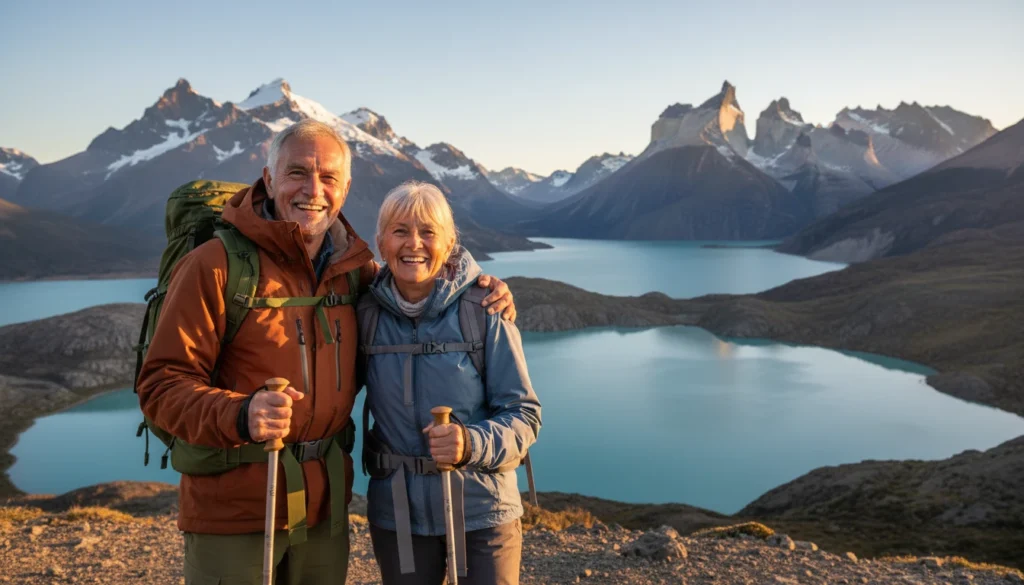
Once you start looking into adventure travel agents, you realize they’re not all doing the same thing. That’s actually a good thing—it means you can find someone who fits the exact kind of trip you’re dreaming about, not just a generic version of it.
Generalist Adventure Travel Agencies
These are the big, broad adventure brands that run trips on multiple continents with itineraries spanning everything from soft adventure to full-on expeditions. They’re a great fit if you’re fairly new to adventure travel, want a mix of activities, or like the idea of group trips with built-in logistics and a ready-made social circle.
My first real adventure trip was through a generalist agency in Costa Rica—two weeks of hiking, zip-lining, river rafting, and spotting more sloths than I knew the world possessed. I had absolutely no idea what I was doing, and I didn’t have to. They walked me through every detail from packing lists to tipping norms, and I came home feeling like a seasoned adventurer. I was not. But I felt like one, and honestly, that’s half the point.
Specialist Adventure Travel Agents
These are the deep nerds of the adventure world—and I say that with genuine, heartfelt admiration.
Specialist adventure travel agents focus on a narrow slice of the market: one activity (mountaineering, diving, long-distance cycling), one region (the Alps, Patagonia, East Africa), or one style of trip (polar expeditions, technical climbs, long thru-hikes). Their knowledge isn’t broad—it’s deep. And deep knowledge is exactly what you want when you’re planning something serious and meaningful.
When I planned a climbing trip in the Dolomites, I worked with an agent who lives and breathes European alpine routes. She knew which via ferrata felt more exposed than the photos suggested, which mountain huts had legendary apple strudel worth planning your whole day around, and which “quiet” routes were quietly lying about being quiet. That kind of nuanced intel doesn’t come from five minutes of Googling. It comes from years of experience—and it makes a huge difference when you’re pushing your comfort zone somewhere beautiful and remote.
Luxury Adventure Travel Agents
Yes, you can absolutely combine “luxury” and “adventure” without the universe imploding—and for many retirees, this is genuinely the sweet spot. You’ve worked hard. You’ve earned comfortable beds and good wine. You don’t have to choose between adventure and comfort anymore.
Luxury-focused adventure travel agents design trips where you spend the day doing properly wild things—tracking wildlife, hiking remote trails, flying in tiny planes over glaciers—and then return to hot showers, excellent bedding, and meals that don’t come in dehydrated pouches. You get the full experience of being out there in the world without sacrificing the creature comforts you’ve spent a lifetime earning.
I once joined a friend on a last-minute spot she had for a luxury safari in Botswana. We spent the days tracking elephants and lions on foot with expert guides who knew things about animal behavior that made every sighting feel like a private lesson. The evenings? Watching the sunset with chilled champagne and three-course dinners while the sky turned every shade of orange imaginable. Same level of adventure, significantly more thread count. I have absolutely zero regrets.
Senior-Specific Adventure Travel Agents
This is a growing niche worth knowing about—and honestly, one of the most exciting developments in the adventure travel world right now.
Some agencies now specialize specifically in adventure travel for older adults, designing trips that are physically appropriate, medically thoughtful, and paced for genuine enjoyment rather than endurance. They understand that “active senior” doesn’t mean “slow”—it just means the trip should be designed with wisdom, not just adrenaline. There’s a difference, and the best agents in this space understand it deeply.
These agents often partner with guides experienced in working with older travelers, build in more rest days and flexible pacing, prioritize accommodations with accessibility features where needed, and have strong relationships with travel medical insurance providers who actually understand senior travel needs. If you’re 60-plus and want adventure without the “prove yourself” energy, these specialists are absolutely worth seeking out.
How to Find the Right Adventure Travel Agent for Your Retirement Trip

Once you’re sold on the idea, the next question is obvious: how do you actually pick one? It’s a bit like dating. You’re looking for compatibility, shared values, and someone who won’t leave you stranded when things get weird. And just like dating, first impressions matter—but so does what happens after the honeymoon phase.
Look for Real Credentials, Not Just Pretty Branding
Professional adventure travel agents often hold certifications or belong to organizations like the Adventure Travel Trade Association (ATTA), the American Society of Travel Advisors (ASTA), or specialized bodies for diving, mountaineering, or guiding.
Those acronyms might not mean much at first glance, but they signal a baseline of professionalism and accountability. ATTA, for example, emphasizes safety and sustainability—two things you really want baked into any serious trip. After seeing the impact of over-tourism on some trekking routes in Nepal—eroded paths, overflowing trash, villages struggling with uneven tourist income—I’ve become much more intentional about working with people who prioritize responsible travel. Credentials aren’t everything, but they’re a decent, meaningful starting filter.
Ask About Their Personal Adventure Experience
One of my absolute non-negotiables when evaluating adventure travel agents is simple: have you actually done this sort of thing yourself?
That doesn’t mean they’ve climbed every peak on earth or kayaked every coastline. But if someone is selling technical mountaineering trips and has never worn crampons, I’ve got questions. Pointed ones.
When I was considering an African safari, I asked one agent to tell me about her own experience in the region. She launched into a story about a mock elephant charge in Zambia, complete with hand gestures, sound effects, and a very candid confession about how terrified she’d been—and how she’d laughed about it for the rest of the trip. She talked about the difference between dry season and green season, what it feels like to wake up and hear lions calling nearby, and why leopard sightings are somehow even more impressive in person than in every documentary you’ve ever watched.
That conversation did more to earn my trust than any glossy brochure could have. I booked the trip. It was extraordinary.
Ask How They Handle Senior-Specific Needs
This is the question most people forget to ask—and it’s arguably the most important one for retirees. A great adventure travel agent for seniors will ask about your fitness level without making you feel judged, proactively discuss travel medical insurance options, know which trips are genuinely appropriate for your age and physical condition, and have real experience handling medical situations or emergencies on the road.
If an agent brushes past these questions or gives you vague, breezy reassurances, keep looking. You deserve someone who takes this seriously—because it is serious, and the right agent will treat it that way without making you feel like a liability.
Read Independent Reviews and Ask for References
Testimonial pages are nice, but they’re curated by the people who want your business. I always look for Google reviews, Trustpilot feedback, mentions in adventure travel forums, or trip reports where travelers name the agent or company they used. Real people, real experiences, unfiltered.
And if I’m planning something expensive or logistically intense—think Antarctica, multi-week treks, remote regions—I’ll ask the agent directly: “Could you connect me with one or two past clients who did a similar trip?” A good adventure travel agent won’t flinch at that question. They’ll have people who are genuinely, enthusiastically happy to talk.
Pay Attention to How They Actually Communicate
You’re trusting this person with a lot: your money, your time, your safety, your bucket list dreams. How they communicate with you from the very first interaction tells you a lot about how they’ll handle everything that comes after.
Early on, watch for things like: Do they respond within a reasonable timeframe? Do they answer the actual question you asked—or do you get vague, copy-paste vibes that feel like they went to twelve other people? Do they listen when you say “I have X budget” or “I’m nervous about Y,” or do they bulldoze past it with cheerful confidence?
My current agent asks really sharp follow-up questions: “When you say you’re active, what does that look like in a typical week?” and “How do you usually handle altitude, early mornings, or long travel days?” and “On past trips, what felt like too much—or not enough?”
Those questions sound small. But they’re how you end up on the right trail instead of the wrong mountain, having the time of your life instead of quietly wondering why you thought this was a good idea.
What It’s Actually Like to Work with an Adventure Travel Agent
If you’ve never worked with an adventure-focused agent before, the whole process can feel a bit mysterious. In practice, it usually follows a pretty logical—and honestly, pretty enjoyable—flow. Here’s what to expect.
The Initial Deep-Dive Chat is where it all starts. Most adventure travel agents begin with a longer call or detailed questionnaire covering where you want to go, how much time you have, your realistic budget, your fitness level, and any non-negotiables. This is the time to be completely, unapologetically honest. If your current fitness routine is “occasionally remembering to take the stairs,” say that. It doesn’t disqualify you from adventure—it just shapes the kind of trip they’ll suggest.
On my first call with my now go-to agent, I admitted that I’m weirdly scared of cable cars but completely fine with steep hiking. I also told her I refuse to share a bathroom with strangers and that I need at least one good coffee every morning or I become a different, less pleasant person. Instead of trying to talk me out of any of it, she just said, “Got it. We’ll lean into solid ground adventures with private bathrooms and good coffee.” Bless her. Truly.
The Custom Proposal comes next. Your agent will come back with one or more proposed itineraries—a day-by-day breakdown, difficulty level, accommodation details, what’s included, what’s not, and pricing. This is your chance to push back, tweak things, and make it genuinely yours. Want an extra rest day? Prefer guesthouses over tents? Want to add a side trip to a nearby city? Adventure travel agents expect you to have opinions. That’s the whole point of working with a human instead of just clicking “book now” and hoping for the best.
The Booking and Prep Phase is where your agent turns into a logistics ninja. Behind the scenes, they’re reserving spots with local operators, securing permits, coordinating transfers, and double-checking seasonal factors. On your end, you should receive a clear payment schedule, a packing list tailored to that exact trip, training or preparation tips if the route is demanding, and insurance recommendations. Before my Kilimanjaro climb, my agent sent me a 20-page prep guide covering everything from blister prevention to mental pacing on summit night. It felt slightly overkill at the time. Then I hit 5,000 meters and thought, right, this is exactly why we over-prepared. Every single page of it.
Support While You’re Out There means you won’t be messaging your agent every day from the backcountry—but knowing they’re in your corner makes a real, tangible difference. Good adventure travel agents have local partners on the ground, give you clear emergency contacts, and sometimes check in between stages of your trip. When volcanic ash shut down flights across part of Europe, my agent rerouted me home via a creative combination of buses, ferries, and one very early-morning flight that I’m still not entirely sure was real. While other travelers were sleeping in airport chairs, I had a plan. A slightly chaotic plan, but a plan.
The Post-Trip Debrief is the part most people don’t expect to love—but do. After you get home, most pros will reach out to ask how it went. They’re not just fishing for compliments. Good feedback helps them fine-tune future recommendations, adjust which local partners they trust, and improve their trip materials. I’ve had post-trip calls where we dug into tiny details: which lodge had the best food, whether “moderate” felt accurately described, what surprised me most, and what I’d skip next time. Those conversations are why my later trips have felt spookily tailored—like my agent can read my mind, or at least my packing list.
Common Mistakes Retirees Make with Adventure Travel Agents
Nobody likes learning the hard way. Here are a few pitfalls worth knowing about before you start—some of which I discovered personally, and some of which I watched other people discover while I quietly took notes.
Treating price as the only deciding factor. With adventure travel, “cheapest” can quickly turn into “most regrettable.” If one quote is dramatically lower than all the others, something is usually missing—less experienced guides, weaker safety protocols, crowded routes, or hidden costs that show up later when you’re already committed. You don’t need the most expensive option, but you also don’t want a bargain-basement expedition when your safety and once-in-a-decade experience are on the line.
Not being honest about fitness or comfort level. Adventure travel agents aren’t there to judge your cardio routine. They’re there to match you with something you’ll actually enjoy and remember fondly. If you oversell your abilities to sound more adventurous, you can end up on a trip that’s more survival challenge than vacation. I watched a guy get helicoptered out of a high-altitude trek because he’d told his agent he was “pretty fit” when his actual training routine was “carrying groceries once a week.” You don’t get extra points for suffering. Nobody gives you a medal.
Skimming the fine print. Adventure trips often have stricter cancellation terms than regular vacations. Pay attention to deposit terms, minimum group sizes, and what happens if weather forces a route change. I once lost a hefty deposit because I assumed I could shift dates easily. That was an expensive way to remember that assumptions are not, in fact, policies. Read everything. Ask about anything unclear. It’s worth five minutes of your time.
Ignoring your gut. Even if someone looks perfect on paper—great reviews, impressive certifications, beautiful website—if their communication feels off or you feel pressured or dismissed, listen to that instinct. You want an adventure travel agent who respects your boundaries, welcomes questions, and never makes you feel dumb for asking. There are plenty of excellent agents out there. You don’t need to settle for someone who gives you a weird vibe just because their Instagram is pretty.
Key Takeaways
- Adventure travel agents for seniors handle the complex logistics that DIY planning can’t easily manage—permits, local operators, safety protocols, pacing, and more
- They unlock exclusive experiences that simply aren’t bookable on standard travel sites, no matter how determined you are
- Travelers who use agents save an average of 4+ hours of planning time and often 10–15% on trip costs
- Senior-specific adventure agents factor in pacing, medical considerations, and appropriate difficulty levels without making you feel like a liability
- Look for agents with ATTA or ASTA credentials, real personal experience, and genuinely attentive communication from day one
- Always be completely honest about your fitness level, budget, and comfort zone—it leads to a dramatically better trip
- The relationship compounds over time: each trip gets more tailored, more personal, more you
Final Thoughts: Are Adventure Travel Agents Worth It for Retirees?
If you’re booking a simple city break or a long weekend at the beach, you probably don’t need help. A couple of tabs, a credit card, done.
But if you’re dreaming about the kind of trip that requires permits or quotas, takes you well off the usual tourist grid, involves real physical effort and some risk, and doubles as a “this might be one of the biggest things I ever do” experience—then adventure travel agents are very often worth every single penny. And then some.
Retirement is the season when the big trips stop being “someday” and start being “next spring.” You’ve earned this. You’ve got the time, the wisdom, the patience, and—let’s be honest—the hard-won perspective to know that life is genuinely too short for bad trips, missed opportunities, and forty-seven browser tabs that lead nowhere useful.
I think about that silverback in Rwanda sometimes. The way he just sat there in the mist, completely unbothered, eating his bamboo like he had all the time in the world. There was something almost instructive about it. Like the universe was saying: you planned well, you showed up, and now you get to just be here.
That’s what a great adventure travel agent gives you, ultimately. Not just a well-organized itinerary. Not just saved time and money. But the chance to actually be there—fully, completely, without the mental noise of logistics and what-ifs and did-I-book-the-right-thing.
So if there’s a big trip sitting in the back of your mind—Kilimanjaro, Antarctica, a long trek in the Alps, gorillas in Rwanda, cycling through Tuscany, watching the Northern Lights from somewhere impossibly remote—it might be time to talk to one or two adventure travel agents, ask all the questions, and see what they sketch out for you.
Worst case, you get a clearer sense of what’s involved. Best case? You end up standing somewhere you’ve only ever seen in photos, realizing that letting an expert help was the smartest part of the whole plan.
And honestly? That’s a pretty wonderful way to spend your retirement.






One Comment
Comments are closed.