New Ways of Travel for Seniors: How Today’s Retirees Are Rewriting the Rules of Adventure
New ways of travel for seniors are slower, smarter, and more meaningful—from slow travel and wellness trips to solo escapes and micro-adventures.
Discover new ways of travel for seniors that are slower, more intentional, and a lot more enjoyable than the old “see everything in 48 hours” approach.
I have a confession to make: for a long time, I was terrible at travel.
Not bad at packing. Not bad at booking. Bad at the actual experience of it.
I treated travel like a competitive sport for overachievers with carry-ons. The goal was to squeeze in as much as possible, come home exhausted, and then casually say things like, “Oh yes, I’ve done Paris.” Which usually meant I’d seen one landmark, eaten one pastry under pressure, and spent the rest of the time hustling toward a gate number blinking on a departure board.
My personal masterpiece of bad planning was a five-day trip through Paris, Amsterdam, and Brussels. Five days. Three cities. One deeply delusional version of me. I saw the Eiffel Tower from a bus window, ate a Belgian waffle while half-jogging, and took hundreds of photos that now feel like evidence from someone else’s life.
A few months later, standing in airport security with cold coffee in one hand and my dignity in a plastic bin, I had a thought I didn’t love: if this is travel, maybe I don’t actually enjoy it.
That realization was annoying. Travel was supposed to be one of my things. But once I admitted it, I started changing how I moved through the world. And retirement helped, not because it magically fixed everything, but because it gave me time to travel differently.
That’s what makes these new ways of travel for seniors so appealing. They aren’t about cramming more in. They’re about getting more out of where you already are.
The Slow Travel Movement: Why Less Is Actually More
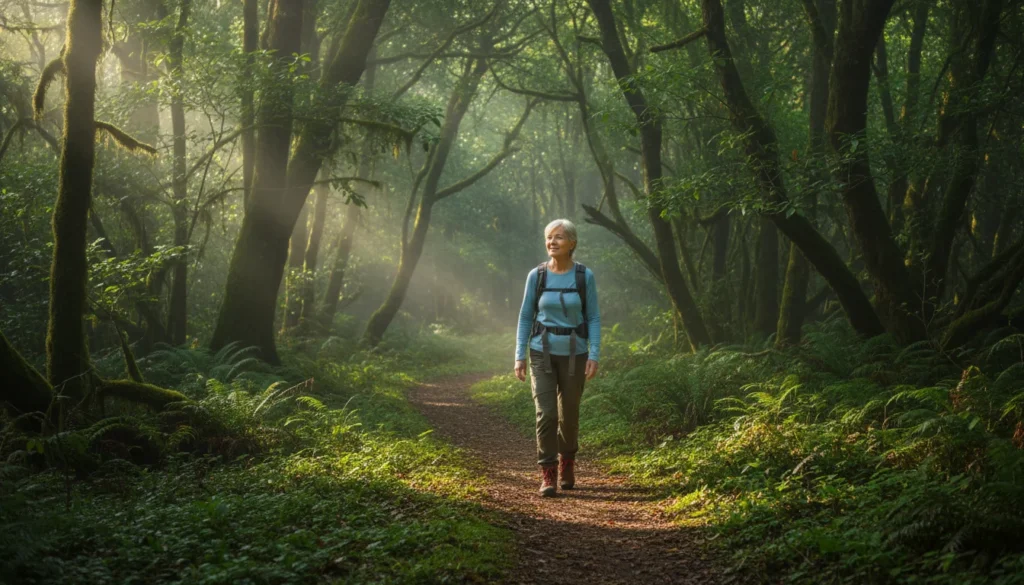
One of the most refreshing new ways of travel for seniors is also the least flashy: slow down.
Slow travel sounds almost too obvious to be useful. Stay longer. Do less. Go deeper. That’s the whole idea. And yet it completely changed the way I travel.
I stumbled into it by accident in Portugal. I arrived with a very serious itinerary—Lisbon, Porto, Algarve, one week, color-coded spreadsheet, the whole production. My Airbnb host in Lisbon looked at it the way a doctor might look at a patient who says they’ve been eating thumbtacks.
Then she asked, gently, “Why don’t you just stay here?”
It was such a simple question that it felt mildly offensive. Stay? In one place? Was that allowed?
So I did it. I canceled my train bookings, tried not to think about the fees, and stayed in Lisbon for three weeks.
That’s when the trip actually began.
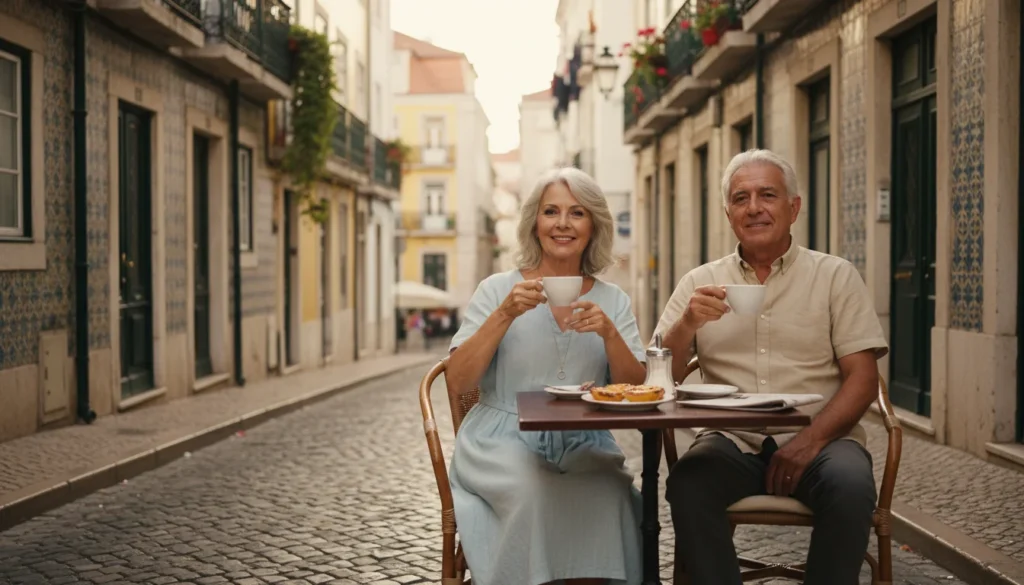
By week two, I had a regular café. The barista started making my coffee when I walked in. I learned just enough Portuguese to embarrass myself with confidence. I wandered the same streets at different times of day and realized places aren’t static; they change with the light, the people, the mood. Kids filled the squares in the afternoon. Laundry moved in the breeze overhead. Old men argued over cards with the seriousness of diplomats.
At some point, I gave directions to another visitor. Badly, but still. That’s when I realized I no longer felt like I was “doing” Lisbon. I was simply living there for a little while.
And that feeling isn’t just sentimental travel nonsense. A 2023 study in the Journal of Travel Research found that travelers who spent longer in fewer destinations reported significantly higher satisfaction and lower stress than people following multi-stop itineraries.
For retirees, slow travel makes particular sense. You’re not trying to cram joy into a long weekend before Monday morning. You can rent an apartment, buy groceries from the same market, and notice which bakery always has a line for reasons no one fully explains.
Oddly enough, it can also be more affordable. Fewer transit costs. Fewer rushed decisions. Fewer expensive tourist traps you only entered because your spreadsheet said “1:45–2:30 museum.”
Turns out, less really can be more. Which is irritating, because it means the calm people were right.
Regenerative Travel: Leaving Places Better Than You Found Them
Some of the most meaningful new ways of travel for seniors ask a different question altogether: not just what will I get from this trip? but what will this trip give back?
That’s the heart of regenerative travel.
For years, I thought “responsible travel” meant basic decency. Don’t litter. Learn how to say thank you. Don’t act like the entire town exists to provide your vacation backdrop. All good things, obviously. But regenerative travel goes a step further. It asks whether your visit can positively contribute to the place you’re visiting.
That shift matters, especially in destinations strained by overtourism. Venice, Barcelona, and Thailand’s Maya Bay have all become examples of what happens when too many people arrive with cameras and too little connection to the place itself.
The Center for Responsible Travel reported in 2023 that 76% of travelers say they now consider the environmental and social impact of a destination when planning a trip, up from 43% in 2019. That doesn’t mean everyone is getting it right, but at least more people are asking better questions.
Sometimes regenerative travel looks simple:
- staying in locally owned accommodations
- booking with community-based guides
- eating at neighborhood spots instead of the places with laminated photo menus
- spending more time in one destination so your money actually lands somewhere meaningful
Other times, it’s more hands-on.
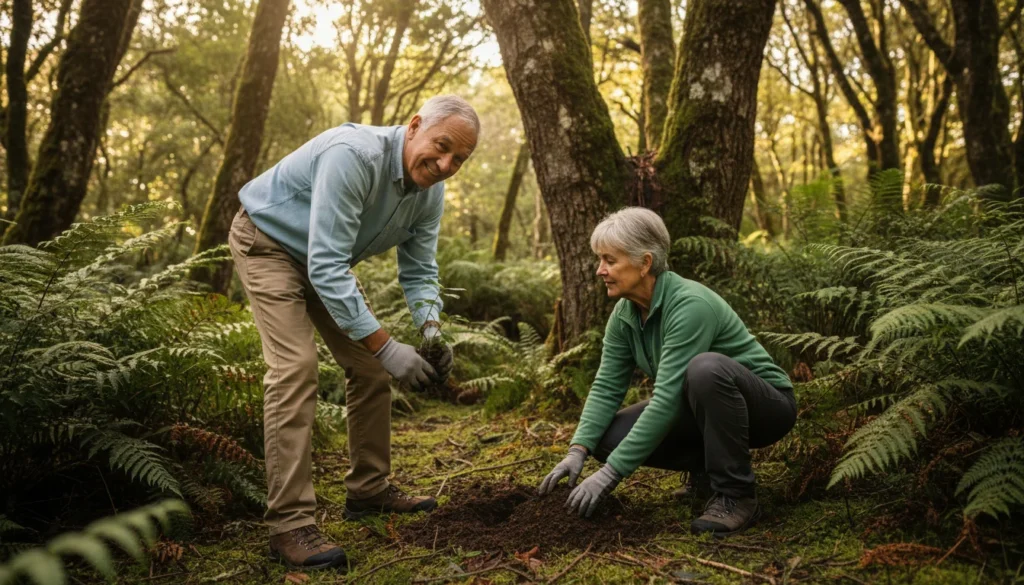
On a trip to New Zealand, I joined a native forest restoration project outside Wellington. No one handed me a branded water bottle or called me a hero, which was honestly a relief. I got gloves, a quick lesson on how not to destroy a sapling, and a patch of muddy ground.
It was deeply satisfying. Not glamorous. Just real. By the end of the week, I understood more about the local ecosystem than I ever would have from a scenic drive and a souvenir shop.
That’s what makes this one of the most compelling new ways of travel for seniors. You’re not just consuming a place. You’re participating in it. For many retirees, that feels better than checking off landmarks ever did.
Organizations such as Pack for a Purpose and platforms like Worldpackers can help travelers find opportunities that are structured, local, and actually useful.
Micro-Adventures: Epic Experiences in Your Own Backyard
Not all new ways of travel for seniors require a long-haul flight, a passport, or a suitcase full of compression cubes.
Sometimes the best trip is the one that starts an hour from home.
The term “micro-adventure,” popularized by British adventurer Alastair Humphreys, basically means this: do something small, local, and slightly out of the ordinary. Which, yes, sounds suspiciously like “go outside,” but stay with me.
I tried it during a stretch when life felt stale and my own house had started giving me that familiar, slightly judgy energy. I made a loose rule: once a month, I’d do something that was outside my routine, lasted longer than an errand, and cost less than a nice dinner.
One month I camped on a small hill less than an hour away. Nothing dramatic. No cinematic mountain range. Just a quiet place, a cheap tent, and extremely mediocre instant coffee at sunrise.
Another time I rented a kayak early in the morning and paddled through mist with birds I normally only notice in parking lots. I took a short train ride to a town nearby, wandered into a little museum with squeaky floors, and ended up talking to a diner owner who had thirty years’ worth of opinions and absolutely no intention of keeping them to himself.
None of those outings looked impressive on paper. That’s part of their charm.
A study published in the International Journal of Environmental Research and Public Health found that regular exposure to nature can improve mood and reduce stress, even when the breaks are short and local. Frequency matters. Little adventures count.
That’s why micro-adventures are among the most accessible new ways of travel for seniors. They don’t require a huge budget or perfect knees or a heroic amount of planning. They just require curiosity.
And honestly, curiosity ages well.
Solo Travel: The Ultimate Journey of Self-Discovery
Solo travel used to make people look at me like I’d announced plans to wrestle a bear recreationally.
“You’re going alone?”
Yes.
“On purpose?”
Also yes.
Now, solo travel is one of the fastest-growing new ways of travel for seniors, especially for retirees who are tired of negotiating every meal, museum stop, and bathroom break with someone else.
Booking.com’s 2024 travel research found that solo travel remained a strong global trend, and older adults are a growing part of that story. It makes sense. Retirement often opens up a new kind of independence, and many people are realizing they don’t need to wait for a perfect travel companion to finally go somewhere they care about.
My first solo trip was to Japan, which was either brave or deeply unnecessary. Possibly both. I picked a country with a language barrier, a famously complex transit system, and enough cultural nuance to humble me before lunch.
I worried about everything. Getting lonely. Looking awkward at dinner. Getting lost and quietly becoming part of the subway furniture.
And yes, some of that happened. I absolutely got lost. More than once. There were meals ordered by pointing at photos and hoping for the best. There were evenings that felt a little lonely.
But there was also something unexpectedly freeing about having every day belong entirely to me.
I spent hours in a Kyoto temple garden doing almost nothing. I ate when I felt hungry. I left when I felt done. I changed plans without committee approval. I noticed that strangers were more likely to talk to me because I was alone, not less. An older woman explained shrine etiquette on a train. A bar owner scribbled food recommendations on a napkin I still have somewhere.
Solo travel teaches you what you actually enjoy when nobody else is steering the day. That’s useful at any age, but especially in retirement, when you have more freedom than ever to shape your life around what genuinely fits.
It turns out eating alone in a ramen shop is not tragic. It’s just dinner.
Wellness Travel: Prioritizing Health and Rejuvenation
Some new ways of travel for seniors aren’t about seeing more. They’re about recovering better.
Wellness travel has grown well beyond luxury spas and green juice with trust issues. The Global Wellness Institute valued wellness tourism at $814 billion in 2023 and projects continued growth through 2027. That says something important: people are increasingly using travel to feel better, not just get away.
My own interest in wellness travel arrived the unglamorous way. I was burned out. Not the dramatic kind where you collapse onto a chaise lounge in linen. The ordinary kind. Tired all the time. Restless at night. Irritated by small things, including printers and probably weather.
A therapist suggested a retreat in Colorado. I resisted because “retreat” sounded like something people say right before handing you herbal tea and asking about your inner child. But I went.
It wasn’t fancy. Shared rooms. Silent breakfasts. Group meditation. No phones. That last rule alone nearly sent me back to the parking lot.
The first couple of days were rough. My brain got louder before it got quieter. Then slowly, things shifted. I noticed my food. My breathing. My thoughts. I slept better. I walked without listening to three things at once. I came home not transformed, exactly, but steadier.
That’s the real appeal of wellness travel. It doesn’t have to be indulgent. It can be practical.
For retirees, it might look like:
- a gentle walking trip in nature
- a yoga or meditation retreat
- a few days in a thermal spa town
- a quiet cabin stay with books, naps, and no notifications
- a simple self-designed reset focused on rest, movement, and good meals
A 2023 study in the Journal of Travel Medicine found that wellness-focused trips were linked to improvements in stress, sleep, and overall well-being that lasted after the trip ended.
That part matters. A good trip shouldn’t leave you needing another one to recover from it.
Voluntourism Done Right: Making a Real Difference
Of all the new ways of travel for seniors, voluntourism may be the one that most needs careful handling.
At its best, it creates meaningful connection and practical support. At its worst, it becomes feel-good tourism with a side of disruption.
That distinction matters.
I almost skipped a sea turtle conservation program in Costa Rica because I was wary of anything that looked too tidy in the brochure. But the organization was locally run, required a minimum stay, and was very clear about the purpose of the work and the limits of volunteer involvement. Good signs all around.
The work itself was gloriously unglamorous. Long beach walks at night. Quiet instructions from local biologists. Data collection. Careful handling of nesting sites. Mosquitoes that seemed personally invested in my downfall.
And yet, it felt deeply worthwhile.
A 2022 study in the Journal of Sustainable Tourism noted that the most effective voluntourism programs tend to share a few traits: local leadership, long-term goals, transparent impact, and roles that genuinely match volunteer ability.
That makes voluntourism one of the most rewarding new ways of travel for seniors when it’s done thoughtfully. Retirees often bring patience, professional skill, and life experience that can actually help. The key is to ask a few plain questions before booking:
- Who leads this project?
- Does the community want this support?
- Would locals be better paid to do this work instead?
- Can the organization explain its outcomes clearly?
When the answers are solid, voluntourism can shift travel from passive observation to meaningful participation. Not savior stuff. Just useful, respectful involvement. Which, frankly, is better.
Bleisure and Van Life: Flexible Travel for the Modern Retiree
Two more new ways of travel for seniors are growing for the same reason: flexibility.
The first is bleisure travel, a word I still don’t love, though I’ve accepted that it exists and can’t be put back in the drawer. It simply means extending an already-planned trip for personal enjoyment.
Visiting family? Stay two extra days. Going to a wedding in a city you’ve never explored? Add a little breathing room on either side. Expedia Group reported in 2023 that 89% of travelers had extended a trip for leisure at least once, and many said it reduced stress and improved the overall experience.
This approach works especially well in retirement. You’re already there. The flight is already paid for. Why rush home before the trip has had a chance to become memorable?
Then there’s van life, which is a bigger swing but an increasingly popular one. According to the RV Industry Association, more than 11 million U.S. households own an RV, and van conversions are among the fastest-growing categories.
The appeal is easy to understand: freedom, mobility, lower lodging costs, and the odd thrill of waking up with a different view out the window. Of course, it’s not all charming camp mugs and sunset photos. There’s water to refill, laundry to figure out, and the occasional night spent in a parking lot that has all the romance of a dentist’s waiting room.
Still, for the right retiree, it can be a wonderful fit.
And if you’re curious but not sell-your-house curious, renting a camper van for a week is plenty. That’s enough time to figure out whether life on wheels feels liberating or just weirdly cramped.
Both reactions are perfectly respectable.
Key Takeaways
- New ways of travel for seniors focus more on meaning than mileage.
- Slow travel often creates deeper memories and less stress than packed itineraries.
- Regenerative travel helps your visit support local communities and environments.
- Micro-adventures prove you don’t need a passport to feel refreshed or inspired.
- Solo travel can be liberating, confidence-building, and far less lonely than people assume.
- Wellness travel gives rest and recovery a real place in the itinerary.
- Voluntourism works best when it’s locally led, transparent, and genuinely useful.
- Bleisure and van life offer flexible ways to travel that fit retirement well.
Final Thoughts: The Best Travel of Your Life Might Still Be Ahead of You
Here’s what I know now that I didn’t know back when I was speed-running European capitals with a pastry in one hand and bad judgment in the other:
The best trips aren’t always the biggest ones.
They’re the ones where you stay long enough to recognize a street. Where someone remembers your coffee order. Where you help plant something, or sit quietly somewhere beautiful, or take a short train ride just because the day is open and you can.
That’s why these new ways of travel for seniors matter. They make room for depth, recovery, curiosity, and contribution. They trade frantic movement for actual experience.
Retirement gives you something extraordinary: time that isn’t already spoken for. And travel, when it’s done well, becomes one of the most rewarding ways to spend it.
Maybe that means a month in one city. Maybe it means a solo trip you’ve postponed for years. Maybe it means a local micro-adventure on a random Tuesday because no one is taking attendance.
There isn’t one right way to travel now. Thank goodness. There’s just the way that feels true to this season of life.
And if you ask me, that’s a much better place to begin. 🌍