
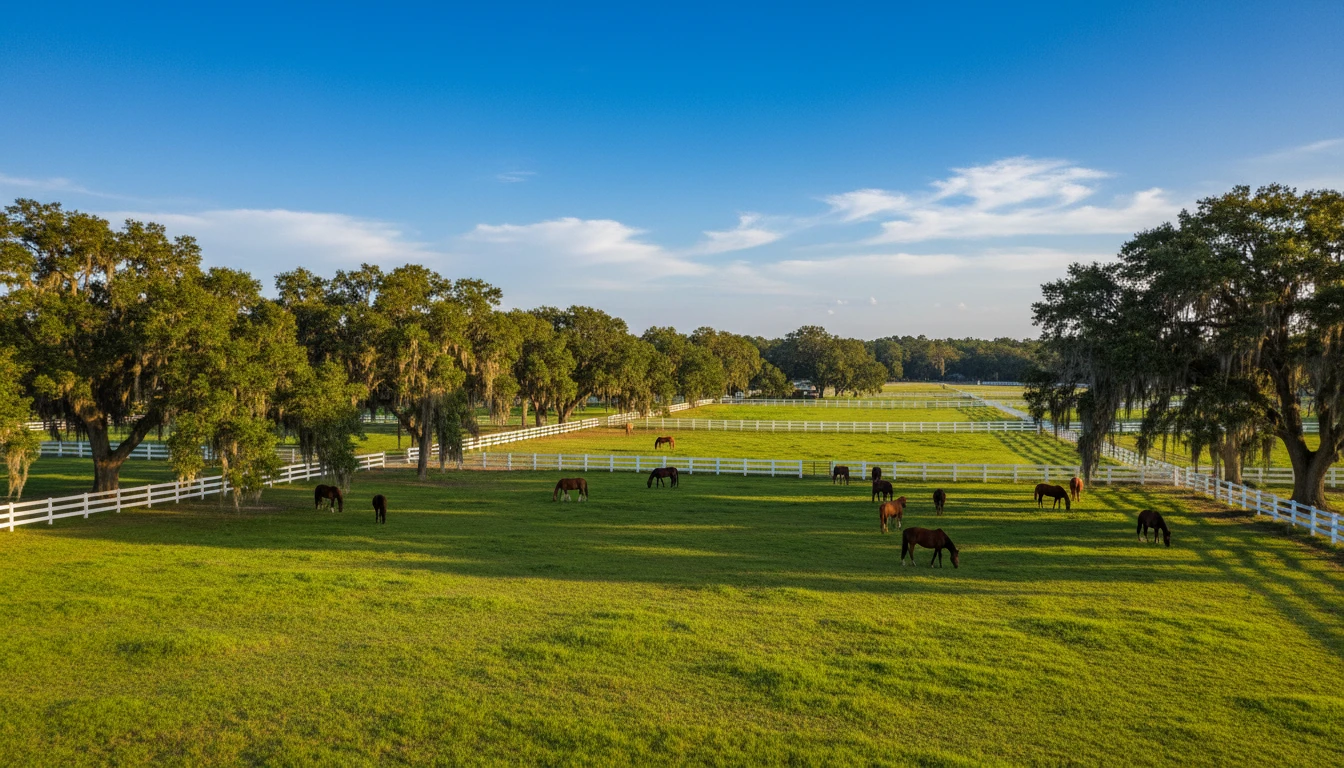
Best Places to Retire in Florida Without Hurricanes: Safer Inland Cities for a Peaceful Retirement
Discover the best places to retire in Florida without hurricanes. Explore safe inland cities with low costs, great healthcare, and active communities.
My aunt moved to a beachside condo in Fort Lauderdale and spent her first three hurricane seasons doing something I’d describe as “competitive anxiety.” She had a go-bag by the door from June through November. She tracked every tropical depression that formed in the Atlantic. She knew the difference between a watch and a warning better than most meteorologists.
She eventually moved to Ocala. She still has a go-bag — because she’s sensible — but she only checks it once a year now.
That shift in daily stress is the real argument for finding the best places to retire in Florida without hurricanes. It’s not that inland cities are invincible. It’s that lower storm exposure changes how you actually live from day to day — and that matters in retirement more than most people anticipate.
Why the Best Places to Retire in Florida Without Hurricanes Are Worth Considering
Florida gets unfairly painted as a monolith when it comes to hurricane risk. The reality is more nuanced. Coastal areas — particularly barrier islands and low-elevation shorelines — face the full force of storm surge, direct wind exposure, and flooding. Inland cities, sitting 60–100+ miles from the coast, see storms that have already weakened over land, face no storm surge risk, and typically sustain significantly less structural damage.
Research on hurricane vulnerability in Florida consistently finds that location meaningfully reduces the most dangerous hurricane hazards — particularly storm surge — even if it doesn’t eliminate storm risk entirely. Inland placement offers real, measurable risk reduction, and may be among the better options when looking for the best places to retire.
Florida’s other advantages — no state income tax, warm winters, outdoor lifestyle, and a massive senior services infrastructure — remain fully intact 60 miles from the coast.
Key Takeaways:
- Ocala and Gainesville are the most consistently recommended best places to retire in Florida without hurricanes
- Inland living typically reduces housing costs significantly compared to coastal Florida equivalents
- Florida’s no-state-income-tax advantage applies regardless of where you live in the state
- Inland retirement communities increasingly build emergency preparedness infrastructure into their standard amenities
- No Florida location is completely hurricane-proof — preparedness remains essential even in lower-risk areas
Best Places to Retire in Florida Without Hurricanes: Top Inland Cities
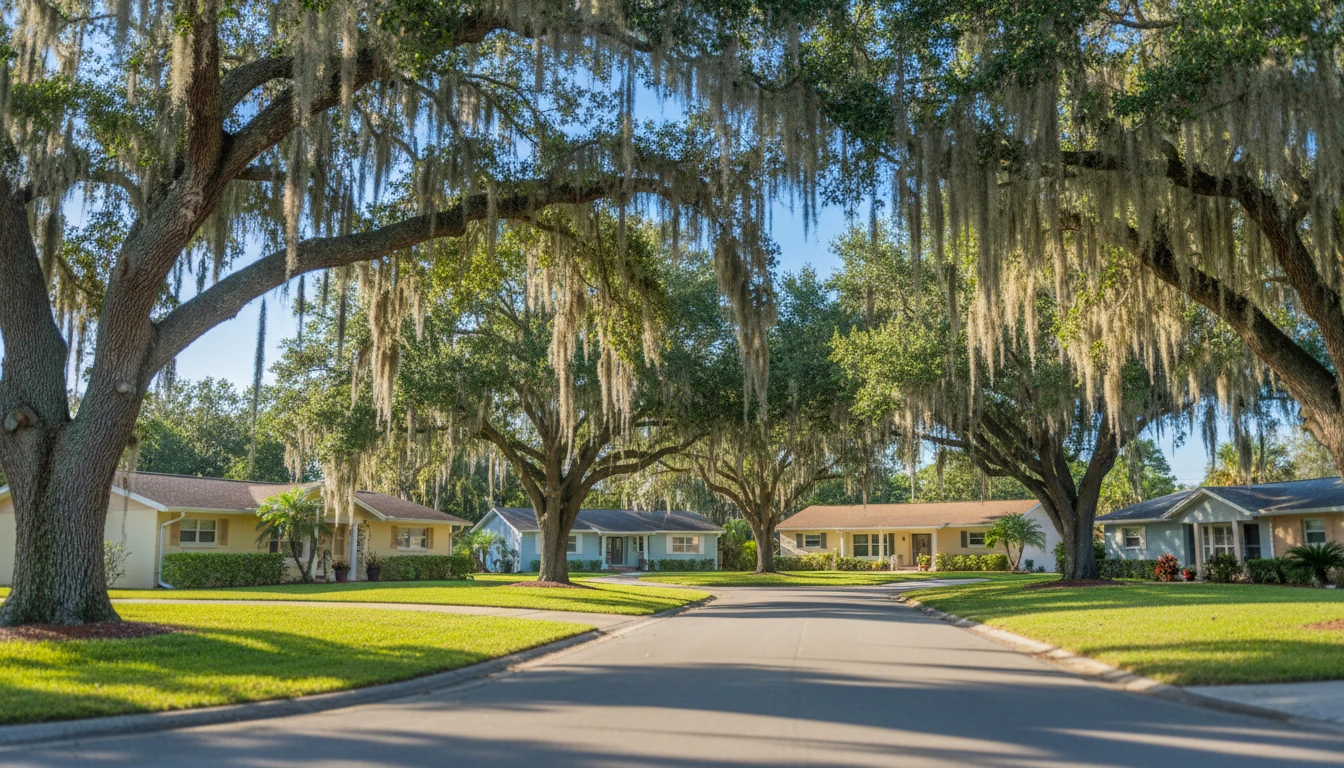
Ocala — Florida’s Horse Country Sweet Spot
Ocala is the city that comes up most consistently when retirees research the best places to retire in Florida without hurricanes. Situated in Marion County in North Central Florida, it sits well inland with significantly reduced storm exposure compared to any coastal market.
The lifestyle draws are real. Ocala’s horse country setting gives it a green, rolling landscape that’s distinctly un-Florida in the best possible way. Neighborhoods are quiet and spacious. Housing costs run meaningfully below the state’s coastal markets — and the gap widens considerably compared to Miami, Naples, or Sarasota.
Healthcare access is solid: Ocala Regional Medical Center and AdventHealth Ocala serve the area, with specialist access enhanced by proximity to Gainesville’s larger medical complex when needed. The outdoor infrastructure — state parks, equestrian trails, Silver Springs — keeps active retirees genuinely occupied year-round.
The Villages, Florida’s largest active adult community, is also within reasonable distance, giving Ocala-based retirees access to one of the country’s most comprehensive senior social ecosystems without paying its premium housing prices.
Gainesville — College Town Energy With Serious Healthcare
Gainesville is the other anchor of the best places to retire in Florida without hurricanes conversation, and it brings something Ocala doesn’t: world-class medical infrastructure. The University of Florida Health system — anchored by UF Health Shands Hospital — consistently ranks among Florida’s top medical facilities, with specialty programs in cardiology, oncology, geriatrics, and neurology that match what you’d find in major coastal metros.
The University of Florida’s presence also shapes the city’s cultural calendar. Arts events, lecture series, athletic programs, and a diverse restaurant scene give Gainesville an intellectual energy that more purely residential retirement markets often lack. For retirees who want mental stimulation alongside physical comfort, that matters.
Housing costs sit below the statewide average. The trade-off versus Ocala is slightly more urban traffic and a college-town character that not every retiree finds appealing — but for those who do, it’s a genuine asset.
Other Low-Risk Inland Florida Retirement Areas Worth Considering
Beyond Ocala and Gainesville, several other inland Florida communities reduce hurricane exposure while maintaining strong livability:
- Lake City — Northern Florida, low cost of living, relaxed pace, improving healthcare infrastructure
- Brooksville / Spring Hill — Hernando County, inland enough to reduce surge risk significantly, with growing retirement community development
- Leesburg / The Villages corridor — Lake County offers lower costs than The Villages proper with full proximity to its amenities
Cost of Living in the Best Places to Retire in Florida Without Hurricanes
How Inland Costs Compare to Coastal Florida
The financial case for inland retirement in Florida is straightforward. Coastal premium pricing — driven by waterfront desirability and tourism demand — simply doesn’t exist inland. In Ocala, median home prices run well below Sarasota, Naples, or Miami Beach. In Gainesville, the housing market is more influenced by the university rental market than resort demand, which keeps prices rational.
| City | Median Home Price | State Income Tax | Key Tax Benefit |
|---|---|---|---|
| Ocala | ~$275,000 | None | Homestead + senior exemption |
| Gainesville | ~$310,000 | None | Alachua County senior programs |
| Sarasota (coastal) | ~$520,000 | None | Higher baseline cost |
| Naples (coastal) | ~$700,000+ | None | Premium coastal pricing |
Florida’s statewide no-income-tax advantage applies equally inland. Property tax homestead exemptions and senior discount programs available through Marion and Alachua counties add further relief. A financial advisor familiar with Florida’s county-level exemption structures can map your specific situation against expected long-term costs before you commit.
Healthcare at the Best Places to Retire in Florida Without Hurricanes
Strong healthcare access is the factor that most often makes retirees hesitate about inland Florida — the assumption being that coastal metros have better medical options. In Gainesville’s case, that assumption is simply wrong. UF Health Shands consistently outranks many coastal Florida hospitals on quality metrics.
In Ocala, the dual hospital network provides solid primary and specialty care. For complex procedures requiring highest-level facilities, proximity to Gainesville — about 40 miles — provides a meaningful backstop.
Inland retirement communities increasingly partner directly with regional health systems, offering on-site clinics, wellness programming, and telehealth infrastructure that reduce the need to travel for routine care. For retirees managing chronic conditions, that integrated model is often more practical than the fragmented private clinic landscape common in coastal resort markets.
Hurricane Preparedness in the Best Places to Retire in Florida Without Hurricanes
Lower risk is not zero risk, and the best inland Florida retirees treat preparedness as a habit rather than a crisis response.
What Preparedness Looks Like Inland
Ocala and Gainesville both publish seasonal evacuation routes and emergency resource guides before each hurricane season. Inland routes — heading north into Georgia or west away from the peninsula — are typically less congested than coastal evacuation corridors, which is a meaningful practical advantage during an actual storm event.
The best inland Florida retirement communities have built emergency preparedness into their standard infrastructure:
- Clear hurricane protocols — communication plans, designated shelter spaces, and resident guidance documents updated annually
- Backup power systems — generators and protected common areas for extended outages
- Health facility contingencies — partnerships with nearby hospitals and on-site medical staff protocols for storm events
Even in the lowest-risk inland zones, a basic emergency kit — three days of water and food, medications, important documents, flashlights, and a battery radio — is the minimum standard recommended by Florida emergency management officials.
Frequently Asked Questions
What should retirees specifically look for in a hurricane-safe Florida community?
Documented emergency plans, backup power capability, healthcare partnerships, and clear communication systems during storm events. Ask communities directly about their protocols before moving — the quality of answers tells you a great deal about how seriously they take resident safety.
Are there active adult communities inland in Florida?
Yes. The Villages is the most famous, and its surrounding Lake and Marion County corridors have developed substantial active adult and age-restricted community options at various price points. Ocala in particular has seen significant retirement community development over the past decade.
How does Florida’s tax structure benefit inland retirees specifically?
The no-state-income-tax advantage is statewide. Inland counties often add property tax homestead exemptions and senior discount programs on top of that baseline. Marion County (Ocala) and Alachua County (Gainesville) both offer senior exemption programs — verify current eligibility thresholds with a local tax advisor.
What is the climate like in inland Florida compared to coastal areas?
Slightly lower humidity than Gulf Coast markets, no storm surge risk, and somewhat cooler winter temperatures than South Florida. Summer heat is comparable to coastal areas, and afternoon thunderstorms are a year-round feature of Florida’s inland climate. The absence of salt-air corrosion is also a practical benefit for housing maintenance.
Conclusion
The best places to retire in Florida without hurricanes deliver exactly what the name suggests: full access to Florida’s retirement advantages — warm winters, no state income tax, active senior communities, strong outdoor lifestyle — with meaningfully reduced exposure to the state’s most serious weather risk.
Ocala and Gainesville lead the list for good reasons: lower housing costs, solid-to-excellent healthcare access, active retirement communities, and inland positioning that takes storm surge entirely off the table. With sound financial planning, practical hurricane preparedness habits, and a clear-eyed assessment of your healthcare needs, the best places to retire in Florida without hurricanes offer a retirement that’s genuinely comfortable — and considerably less stressful than spending six months a year watching weather radar.
About the Author
Josh Gibson is the founder of Vanika.com, a retirement-focused resource dedicated to helping individuals better understand retirement income, Social Security, pensions, taxation, and financial planning for retirement.
With over a decade of experience in digital publishing, SEO, and content strategy, Josh currently serves as the Search Engine Optimization Manager at IC-Agency, where he leads content and search optimization initiatives for various online brands.
Through Vanika, Josh combines his expertise in research-driven content creation with a strong interest in retirement education, helping readers access clear, trustworthy, and easy-to-understand information sourced from reputable organizations, government agencies, and financial resources.
Vanika’s editorial approach focuses on accuracy, transparency, practical guidance, and regularly updated content designed to support retirees and pre-retirees in making informed decisions.
For inquiries or collaborations:
Email: josh[at]vanika.com