
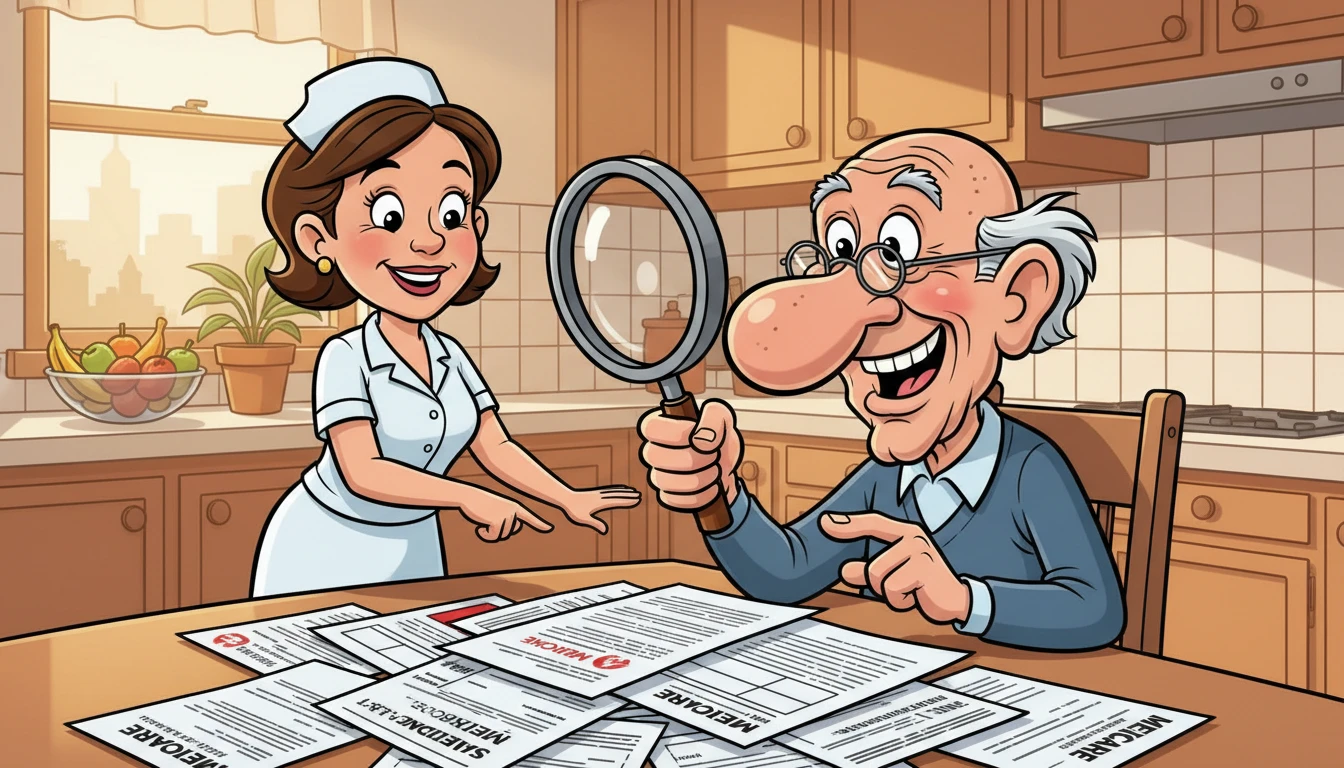
Medicare In Home Help for Seniors: Understanding Its Coverage Options
Medicare in home help for seniors explained — who qualifies, what’s covered, what it costs, and how to fill the gaps with Medigap, Medicaid, and community programs.
There is a moment — and if you are reading this, you may have already had it — where someone you love can no longer manage everything on their own at home. Maybe it is getting in and out of the shower. Maybe it is managing a wound after surgery. Maybe it is just the quiet realization that they need someone there.
And then the next question hits you: Does Medicare cover any of this?
The honest answer is: sometimes yes, sometimes no, and the line between the two is more specific than most people expect. Medicare in home help for seniors is one of the most misunderstood parts of the entire program — because the coverage is real and meaningful, but it comes with conditions that catch families off guard when they need it most.
So let’s clear this up properly. What Medicare actually covers at home, what it does not, what it costs, and what else is available when Medicare falls short. If you are unfamiliar with Medicare and Senior Insurance, this guide breaks it all down.
What Home Health Services Does Medicare Cover for Seniors?
The first thing to understand about medicare in home help for seniors is that Medicare was not designed to cover long-term, nonmedical personal care. It was designed to cover medically necessary care — the clinical stuff that would otherwise require a hospital or facility visit.
That distinction sounds small. It is actually everything.
Which Medicare Parts Cover In-Home Nursing and Aide Services?
Both Part A and Part B can cover home health services, but they apply under different conditions:
- Part A typically covers home health care following a qualifying inpatient hospital stay. If you were admitted to a hospital for at least three days and then need skilled care at home during recovery, Part A is usually what kicks in.
- Part B covers home health for ongoing medically necessary skilled care — even without a prior hospital stay. If your doctor certifies that you need skilled nursing or therapy services at home on an outpatient basis, Part B can cover that.
Knowing which part applies matters because the cost-sharing rules are different between the two — a key Medicare and Senior Insurance detail that affects your out-of-pocket costs.
What Types of In-Home Help Does Medicare Actually Provide?
Here is what falls under medicare in home help for seniors coverage when medically necessary:
- Skilled Nursing Care — licensed nursing for wound care, injections, IV medications, catheter care, and monitoring complex medical conditions
- Physical Therapy — rehabilitation to restore mobility, strength, and function after illness, surgery, or injury
- Occupational Therapy — helping seniors relearn daily tasks and adapt their environment for safety and independence
- Speech-Language Pathology — services for swallowing disorders, speech difficulties, or cognitive communication issues
- Home Health Aide Services — personal care assistance like bathing, grooming, and dressing when it is part of a medically necessary care plan
- Medical Social Services — counseling and care coordination for complex medical situations
That last bullet on home health aide services is where most confusion lives. Medicare can cover aide visits — but only when they are tied to a clinical care plan supervised by a skilled nurse or therapist. Aide services alone, for someone who just needs help around the house, are generally not covered. Medicare is covering the medical context, not the personal convenience.
Who Qualifies for Medicare In-Home Help for Seniors?
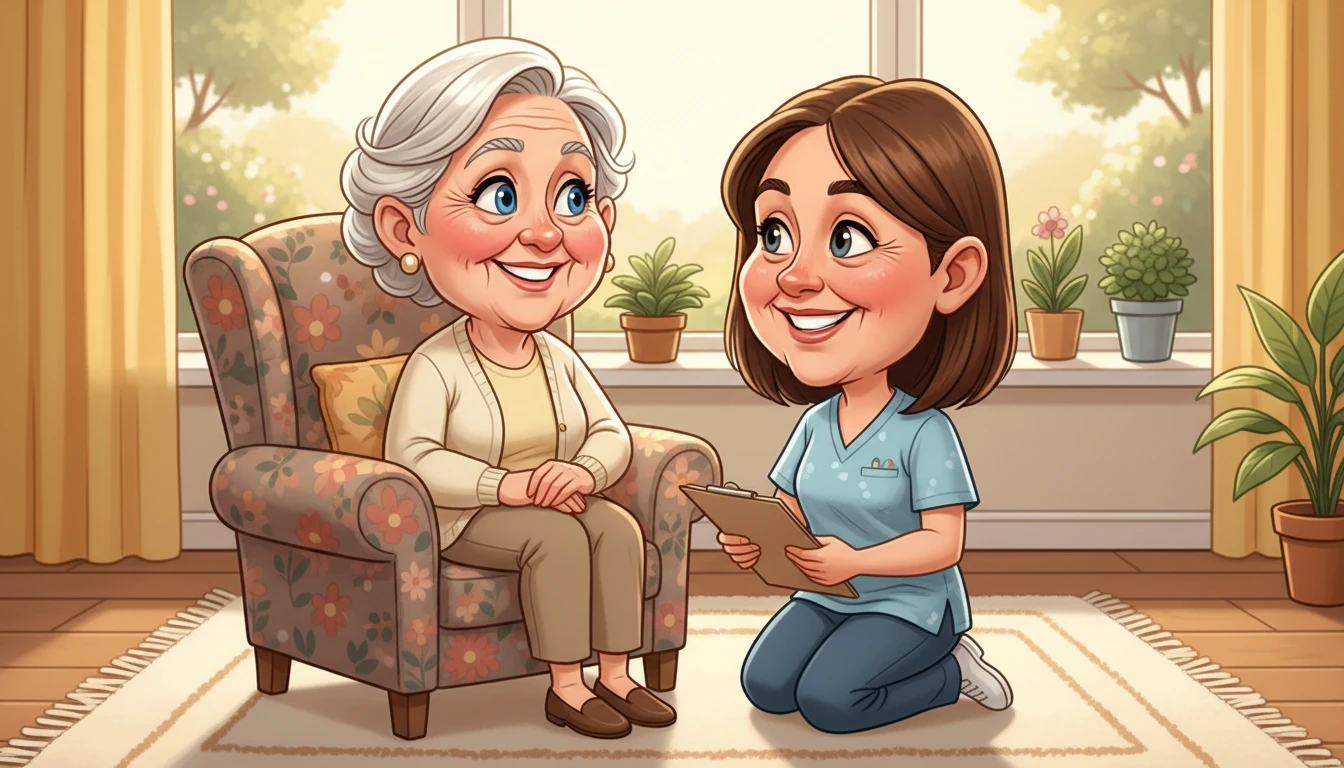
Eligibility for medicare in home help for seniors has four main requirements, and all four need to be met simultaneously. Miss one and the claim is likely to be denied.
The Four Eligibility Requirements
- You must be enrolled in Medicare — Part A, Part B, or both, depending on the situation
- A physician must certify the need — a doctor or qualifying practitioner must examine you, document that skilled care is medically necessary, and establish a written care plan
- You must be homebound — Medicare’s definition of homebound means leaving home requires considerable effort, involves a health risk, or requires assistance. You can still leave occasionally for medical appointments or religious services; you just cannot be freely mobile without it being a significant undertaking
- Services must be provided by a Medicare-certified agency — not just any home care company; it must specifically be Medicare-approved
What Counts as Medically Necessary?
Medicare pays when a beneficiary’s condition genuinely requires skilled clinical services that cannot safely be self-administered or delegated to an untrained caregiver. The clinician must document the need clearly, and the services must be reasonable and appropriate for the diagnosis and recovery goals.
This is why the physician relationship is so important in medicare in home help for seniors planning. It is also a reminder that Medicare and Senior Insurance coverage always begins with proper documentation.
How Do Seniors Actually Start the Process?
The process is simpler than most people expect:
- Talk to the treating physician — explain the situation and ask about home health eligibility
- The doctor documents the need and writes a home health order with a care plan
- Select a Medicare-certified home health agency — your doctor may recommend one, or you can search at medicare.gov
- The agency handles intake — they confirm Medicare eligibility, review the care plan, and begin services
- Care is reviewed periodically — Medicare requires ongoing documentation that skilled care remains necessary
How Much Does Medicare In-Home Help for Seniors Actually Cost?
Here is the part most guides gloss over — the actual out-of-pocket picture.
Part A vs. Part B Cost-Sharing for Home Health
| Coverage Scenario | What Medicare Covers | What You May Owe |
|---|---|---|
| Home health via Part A (post-hospital) | 100% of approved home health services | $0 for home health itself; durable medical equipment at 20% |
| Home health via Part B (ongoing skilled care) | 100% of approved home health services | $0 for home health itself; durable medical equipment at 20% |
| Durable medical equipment (either part) | 80% after deductible | 20% coinsurance |
Here is a detail worth knowing: for home health services themselves — the nursing visits, therapy, aide visits — Medicare covers 100% of approved costs when all eligibility conditions are met. There is no coinsurance on the home health visits. The 20% coinsurance applies to durable medical equipment provided during home health care, not the visits themselves.
What this means practically: if you qualify, medicare in home help for seniors coverage is actually quite good. The challenge is qualifying — not the cost once you do.
How Supplemental Insurance Fills the Remaining Gaps
Even with strong Medicare coverage, gaps remain — the Part A deductible, the Part B deductible, and equipment coinsurance can add up. Understanding your Medicare and Senior Insurance options is essential here. Medigap (Medicare Supplemental Insurance) is designed exactly for this:
- Covers Part A and Part B deductibles depending on the plan
- Covers the 20% coinsurance on durable medical equipment
- Makes ongoing home health costs predictable and manageable
If your loved one is on a Medicare Advantage plan (Part C), check the plan’s home health benefits directly — Advantage plans must cover all Medicare-covered services, but cost-sharing structures vary by plan. This is a critical Medicare and Senior Insurance comparison to make before enrolling.
What Options Exist Beyond Medicare for In-Home Senior Help?
This is the part of medicare in home help for seniors planning that often gets skipped — and it is where a lot of real-world solutions live.
How Medicaid Differs From Medicare for Home Care
Medicaid is means-tested — eligibility is based on income and assets — but it often covers a significantly broader range of home and community-based services than Medicare does, including:
- Long-term personal care (bathing, dressing, grooming) without a medical necessity requirement
- Home-delivered meals
- Adult day services
- Caregiver support programs
Benefits and eligibility rules vary by state, so what is available in one state may not exist in another. If income and assets qualify, Medicaid can fill the biggest gap Medicare leaves open — ongoing nonmedical personal care.
Seniors who qualify for both Medicare and Medicaid are called dual eligible, and coordination between the two programs can significantly reduce out-of-pocket costs while expanding the services available. A Medicare and Senior Insurance counselor can help you maximize both.
Community and Private Resources for In-Home Senior Care
Beyond Medicare and Medicaid, a real ecosystem of support exists that most families never fully explore:
- Area Agencies on Aging (AAA) — federally funded local agencies that connect seniors with home-delivered meals, transportation, companionship programs, and caregiver respite. Find your local AAA at eldercare.acl.gov
- PACE (Program of All-Inclusive Care for the Elderly) — a comprehensive program for seniors who qualify for nursing home-level care but prefer to live at home; covers medical and nonmedical services
- Nonprofit and faith-based organizations — many communities have volunteer programs providing rides, errands, and friendly visits at no cost
- Private home care agencies — fully customizable, from a few hours of companionship per week to round-the-clock care, but paid out of pocket or through long-term care insurance
The most effective medicare in home help for seniors plans are almost always layered — Medicare handling the clinical piece, Medicaid or private pay covering the personal care piece, and community resources filling in the social and logistical gaps. Reviewing your Medicare and Senior Insurance coverage annually ensures care needs are fully met.
Key Takeaways at a Glance
| What Medicare Covers | What Medicare Does NOT Cover |
|---|---|
| Skilled nursing (wound care, injections, complex medications) | Custodial care without skilled need |
| Physical, occupational, speech therapy | Long-term nonmedical personal care |
| Home health aide visits tied to a care plan | Housekeeping, meal prep, companionship alone |
| 100% of approved home health visits | 24/7 home care or live-in assistance |
Frequently Asked Questions
What should seniors consider when choosing an in-home help agency for Medicare services?
Confirm the agency is Medicare-certified first — this is non-negotiable for coverage. Beyond that, check licensing, staff training credentials, how they handle care plan updates, whether they carry liability insurance, and their reputation for reliability. Ask specifically about staff turnover, since consistency matters a great deal in home care.
Are there limits on how long Medicare covers in-home help for seniors?
Yes — but it is not a time limit in the traditional sense. Medicare covers medicare in home help for seniors services as long as skilled care remains medically necessary and all eligibility conditions continue to be met. Coverage is reviewed periodically, and it ends when the skilled care need resolves, not on a fixed schedule.
Can family members be paid for providing in-home care under Medicare?
Medicare does not pay family caregivers directly. However, some state Medicaid programs — particularly through Home and Community-Based Services (HCBS) waivers — do offer compensation to family caregivers in certain situations. Eligibility and availability vary by state.
How do seniors qualify for Medicaid home care services?
Medicaid eligibility is based on income, assets, and in many cases a documented level of medical or functional need. The process typically involves submitting financial documentation and undergoing a medical or functional assessment. Contact your state Medicaid office or local Area Agency on Aging to start the process.
What should a senior do if a Medicare claim for in-home help is denied?
Do not accept the denial without reviewing it carefully. Read the denial notice to understand the specific reason, work with your home health agency and physician to correct or supplement documentation if needed, and file a formal appeal if you disagree with the decision. Each level of appeal has defined timeframes — act promptly.
Can seniors receive both Medicare and Medicaid benefits for in-home help?
Yes. Dual-eligible seniors can receive benefits from both programs simultaneously. Medicare typically handles medically necessary skilled services, while Medicaid can cover personal care, custodial services, and additional supports that Medicare does not. Coordination between the two can meaningfully expand total coverage and reduce costs.
What community resources are most useful for filling gaps in medicare in home help for seniors?
Start with your local Area Agency on Aging — they are the single best access point for community-based services, including meals, transportation, caregiver support, and benefits counseling. The SHIP (State Health Insurance Assistance Program) can also help you navigate Medicare and Senior Insurance coverage questions at no cost.
About the Author
Josh Gibson is the founder of Vanika.com, a retirement-focused resource dedicated to helping individuals better understand retirement income, Social Security, pensions, taxation, and financial planning for retirement.
With over a decade of experience in digital publishing, SEO, and content strategy, Josh currently serves as the Search Engine Optimization Manager at IC-Agency, where he leads content and search optimization initiatives for various online brands.
Through Vanika, Josh combines his expertise in research-driven content creation with a strong interest in retirement education, helping readers access clear, trustworthy, and easy-to-understand information sourced from reputable organizations, government agencies, and financial resources.
Vanika’s editorial approach focuses on accuracy, transparency, practical guidance, and regularly updated content designed to support retirees and pre-retirees in making informed decisions.
For inquiries or collaborations: Email: josh[at]vanika.com