
Which of the Following Is Not Required to Be Inspected but Should Be Checked Weekly to Help Ensure Safe Travel?
Learn which of the following is not required to be inspected but should be checked weekly to help ensure safe travel and vehicle safety. Spoiler: it’s more than you think — and skipping these checks is how a $30 fix quietly becomes a $600 nightmare.
My dad had this old saying: “A car will tell you when something’s wrong — you just have to be willing to listen.” He’d say it every Sunday morning while walking around his truck with a cup of coffee, pressing on tires, peeking under the hood, doing his little ritual. I thought it was overkill. I was wrong.
I learned that the hard way on a road trip a few years back — somewhere between nowhere and the middle of nowhere — when my car started overheating because I’d been ignoring a slow coolant leak for weeks. The kind of thing a ten-minute weekly check would’ve caught. Instead, I got a two-hour wait for a tow truck, a very expensive repair bill, and a lot of time to think about my life choices.
So here’s the thing: most drivers assume their annual inspection covers everything that matters. It doesn’t. There’s a whole category of components — the ones that answer the question which of the following is not required to be inspected but should be checked weekly to help ensure safe travel — that fall right through the cracks of formal inspection programs. And those are often the exact parts that cause breakdowns, accidents, and the kind of stress that ruins a perfectly good road trip.
This guide is my attempt to fix that. No jargon, no scare tactics — just the stuff you actually need to know, explained like a friend who happens to know a lot about cars.
The Inspection Gap Nobody Talks About
Here’s something that surprised me when I first looked into it: formal vehicle inspections vary wildly by region, and they’re designed around minimum legal thresholds — not optimal safety. They’re a floor, not a ceiling.
A 2021 systematic review published in Accident Analysis & Prevention by L.M. Martín-delosReyes found that vehicle defect rates ranged from 3% to 19% in developed countries — and hit as high as 27% in developing ones. That’s potentially one in four cars on the road carrying an undetected problem. And many of those defects? They’re in components that formal inspections don’t even cover.
The gap between “passed inspection” and “actually road-ready” is real. Weekly checks are how you close it. And honestly, once you build the habit, it takes about ten minutes. Less time than scrolling through your phone while your coffee brews.
Which of the Following Is Not Required to Be Inspected but Should Be Checked Weekly?
Let’s get into the specifics — the parts that deserve your attention every single week, even when no one’s requiring you to look at them.
Brakes: The One You Absolutely Cannot Ignore
I’ll be direct here: your brakes are the most important safety system on your vehicle. Full stop. And yet brake wear is one of those things that sneaks up on you gradually — a little less responsive here, a faint squeal there — until one day you’re pressing the pedal harder than you should and wondering when that started.
Brake issues don’t always show up between annual inspections, especially if you drive a lot, live somewhere hilly, or tow anything heavy. That’s why a quick weekly check matters so much.
What to look for:
- Pedal feel — Press it firmly. It should feel solid and stop well before the floor. A soft, spongy, or sinking pedal is your car waving a red flag.
- Response time — Are you stopping where you expect to? If the car feels like it needs more distance than usual, that’s worth paying attention to.
- Sounds — Squealing means your brake pads are thinning out and asking nicely to be replaced. Grinding means they’ve already given up and now metal is meeting metal. Neither sound is one you want to ignore.
- Dashboard lights — Modern cars are pretty good at telling you when something’s off. Don’t dismiss that little orange brake warning light as a glitch.
Catching a brake issue early is the difference between a $150 pad replacement and a $600 rotor job. I know which one I’d rather pay for.
Tires: Four Patches of Rubber Between You and the Road
Think about that for a second. Everything your car does — accelerating, braking, turning — depends on four contact patches roughly the size of your hand. That’s it. And those four patches are constantly changing: losing pressure, wearing down, picking up damage from potholes and curbs and the general chaos of road life.
Tire pressure alone changes with temperature. A tire that was perfectly inflated last Monday might be 4–5 PSI low by Friday after a cold snap. That’s not a dramatic failure — it’s just physics. But under-inflated tires reduce fuel efficiency, affect handling, and significantly increase blowout risk. Over-inflated tires aren’t much better — they reduce traction and wear unevenly.
Weekly tire checks should cover:
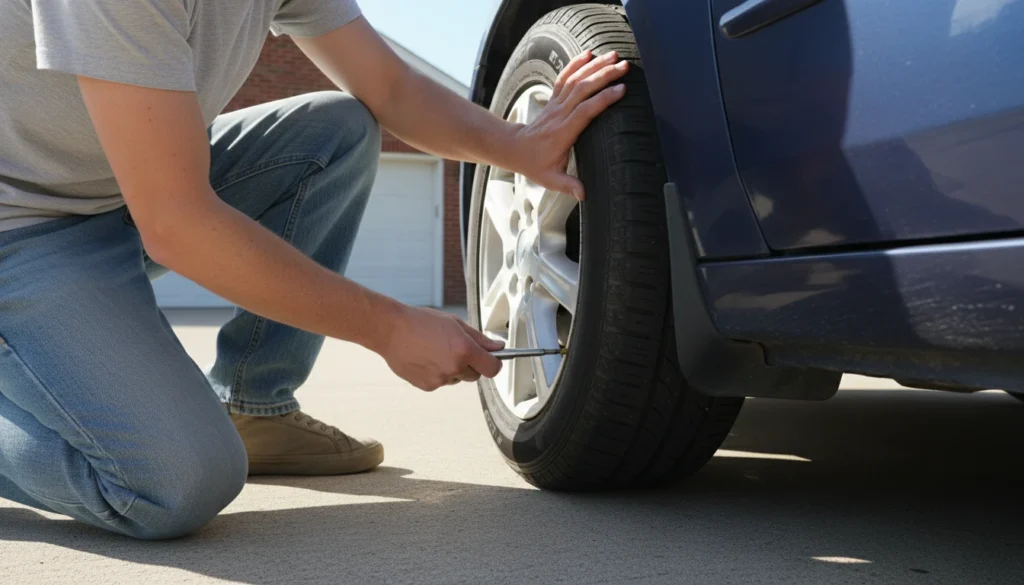
- Pressure — Use an actual gauge, not just a visual check. Tires can look fine and still be dangerously low. Match the PSI to the sticker inside your driver’s door, not the number printed on the tire sidewall.
- Tread depth — The classic penny test: insert a penny into the tread groove with Lincoln’s head pointing down. If you can see the top of his head, your tires are past their safe limit.
- Sidewalls — Run your eyes along the sides of each tire. Cracks, cuts, or bulges are serious. A bulge especially is a blowout waiting to pick its moment — usually the worst possible one.
- Wear patterns — Uneven wear (heavier on one edge, or worn in the center) signals alignment or inflation issues that need addressing before they get worse.
I started doing tire checks every Sunday after a friend of mine had a blowout on the freeway from a sidewall bulge she’d noticed but kept meaning to “deal with later.” She was fine, thankfully. Her tire was not.
Loose Bolts and Fasteners: The Quiet Troublemakers
This one catches people off guard. Bolts loosen. It’s just what happens — vibration, heat cycles, road stress, and time all conspire to gradually work fasteners loose. And a loose bolt in the wrong place (wheel lugs, suspension components, engine mounts) can cause a failure that goes from “annoying” to “terrifying” very quickly.
You don’t need to crawl under the car with a torque wrench every week. A quick visual scan of accessible fasteners — especially around the wheels and any areas that were recently serviced — takes two minutes. If something looks loose or feels like it’s vibrating when it shouldn’t, that’s worth investigating before it becomes a roadside emergency.
Fluid Levels: The Lifeblood Your Car Doesn’t Talk About (Until It’s Too Late)
Fluids are easy to forget because they’re hidden. Out of sight, out of mind — until your engine overheats or your brakes feel suddenly, terrifyingly soft.
Here’s what to check weekly:
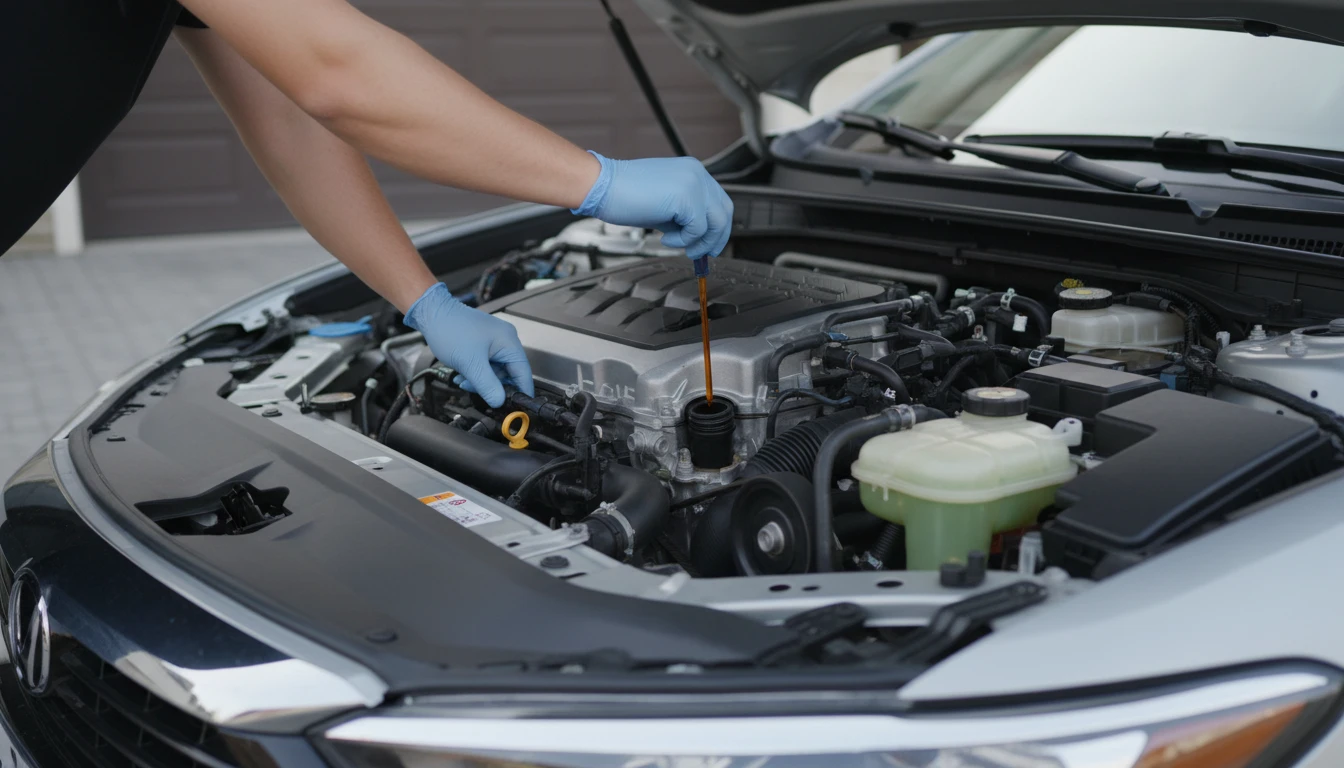
- Engine oil — Pull the dipstick, wipe it clean, reinsert it, and check the level. Low oil means increased engine wear. Dark, gritty oil means it’s overdue for a change. Both matter.
- Coolant — Check the reservoir (not the radiator cap when the engine is hot — please don’t do that). Low coolant can lead to overheating, which can destroy an engine faster than you’d expect.
- Brake fluid — If this level is consistently dropping, you may have a leak somewhere in the brake system. That’s not a “check again next week” situation. That’s a “call a mechanic today” situation.
- Windshield washer fluid — Okay, this one won’t strand you. But driving with a dirty windshield in bright afternoon sun or after a truck splashes you with road grime is genuinely dangerous. It’s also the easiest fix on this entire list.
That coolant leak I mentioned at the start of this article? I’d noticed the reservoir was a little low a few weeks before the breakdown. I topped it off and figured it was fine. It wasn’t. A weekly check with a maintenance log would’ve shown me the level was dropping consistently — which is the actual warning sign. Lesson learned, expensively.
Why These Parts Aren’t on the Official Inspection List

It’s a fair question. If brakes, tires, and fluids are so critical, why aren’t they always covered by formal inspections?
The short answer: inspection programs are standardized across millions of vehicles and designed around minimum legal thresholds. They can’t account for every driving pattern, climate, vehicle age, or the fact that your tire pressure was fine in October and is now low in January because it got cold.
A 1986 study titled “Does Periodic Vehicle Inspection Prevent Accidents?” found something telling: failure rates for certain components rose with vehicle age, and the timing of inspections had a measurable relationship with accident rates. In other words, the frequency of checks matters — not just whether they happen at all. An annual inspection is a snapshot. Weekly checks are a running story.
Think of your annual inspection as a baseline. It’s useful. It’s just not enough on its own.
How to Build a Weekly Check Routine That Actually Sticks
Here’s where most vehicle maintenance advice falls apart: it tells you what to do but skips the part about how to make it a habit. And habits are everything.
Attach It to Something You Already Do
Don’t just say “I’ll check my car every Sunday.” That’s too vague. Attach the check to an existing trigger. Fill up the tank? Do a quick walkaround while the pump runs. Sunday morning coffee? Pop the hood while it brews. The check takes ten minutes — it just needs a consistent anchor to become automatic.
I do mine every Saturday morning before I run errands. It took about three weeks to feel natural. Now it feels weird not to do it.
Use a Written Checklist — Every Time
Your brain is not a reliable checklist. Write it down, keep it in your glove box, and follow it every single time. Here’s a simple one to start with:
Weekly Vehicle Safety Checklist:
- [ ] Tire pressure — all four tires plus the spare
- [ ] Tire tread depth and sidewall condition
- [ ] Engine oil level and color
- [ ] Coolant level
- [ ] Brake fluid level
- [ ] Windshield washer fluid
- [ ] Brake pedal feel and response
- [ ] Listen for unusual sounds during a short test drive
- [ ] Check for fluid spots under the car after it’s been parked
- [ ] Visual scan of accessible bolts and fasteners
- [ ] Confirm spare tire, jack, and emergency kit are present and accessible
Keep a Simple Maintenance Log
A small notebook in the glove box works perfectly. Note the date, what you checked, and anything that seemed off. Over time, patterns emerge — and patterns are what tell you when something needs professional attention. A one-time low coolant reading is probably nothing. A consistently dropping coolant level over four weeks is a leak. The log is what shows you the difference.
Have the Right Tools Within Reach
You don’t need a full garage setup. The essentials are:
- A digital tire pressure gauge — more accurate and easier to read than the old stick-style ones
- Dipsticks for oil and transmission fluid (already in your car)
- A flashlight for checking under the hood and around tires in low light
- A basic tool kit for tightening anything that’s come loose
The Real Payoff: What Weekly Checks Actually Give You
You Save Real Money
Small problems are cheap. Big problems are expensive. That’s not a metaphor — it’s just how car repair works. A worn brake pad caught early costs a fraction of what a damaged rotor costs. A slow tire leak caught weekly is free to fix at a gas station. A coolant leak caught early is a hose replacement; caught late, it’s an engine rebuild. The math is not subtle, and it always favors the person who checks regularly.
You Drive Differently — In a Good Way
There’s a psychological benefit here that doesn’t get talked about enough. When you know your car is in good shape, you drive more relaxed. Less distracted by that background hum of “is that noise normal?” anxiety. I’ve noticed this in myself — the drives after I’ve done my checks feel genuinely different from the ones where I haven’t. Calmer. More present. Less white-knuckled at highway speeds.
You Extend Your Car’s Life Significantly
Vehicles that are consistently maintained routinely hit 200,000+ miles. Neglected ones often don’t make it to 100,000 without major repairs. Weekly checks are a big part of that equation — not because any single check is dramatic, but because the cumulative effect of catching small issues early adds up to years of additional reliable life.
You’re Also Looking Out for Everyone Else
A car with worn brakes, low tires, or loose components isn’t just a risk to the driver. It’s a risk to every other person on the road. Weekly checks are, in a small but real way, an act of consideration for the people sharing the road with you. I think that’s worth saying out loud.
Frequently Asked Questions
How long do weekly vehicle checks actually take?
Once you know the routine, about 10–15 minutes. The first few times might take a little longer as you get familiar with where everything is, but it becomes quick and intuitive fast.
What if I find something wrong?
Minor issues — slightly low tire pressure, a loose non-critical bolt — handle them yourself. Anything involving brakes, steering, or fluids that are dropping faster than expected? Get a professional opinion before your next drive. Don’t wait.
Can I do checks in bad weather?
Most checks can be done in light rain or cold. In cold climates especially, tire pressure drops about 1 PSI for every 10°F drop in temperature — so winter checks are actually more important, not less.
Do electric vehicles need the same weekly checks?
EVs skip the oil check and some fluid checks, but tires, brakes (which wear slower thanks to regenerative braking, but still wear), and fasteners all still need regular attention. Battery coolant systems also benefit from periodic monitoring.
Conclusion: Ten Minutes a Week, Fewer Surprises on the Road
So — which of the following is not required to be inspected but should be checked weekly to help ensure safe travel? Brakes, tires, fluid levels, and fasteners. The components that formal inspections often miss but that have the most direct impact on whether you get where you’re going safely, and whether your car is still running well five years from now.
None of this is complicated. It doesn’t require mechanical expertise or a garage full of tools. It just requires showing up once a week, spending ten minutes with your car, and paying attention. That’s genuinely it.
My dad was right. Your car will tell you when something’s wrong — but only if you’re actually listening. Build the habit. Use the checklist. Keep the log. And drive with the quiet confidence that comes from knowing your vehicle is actually ready for the road.
Because the alternative — finding out something was wrong at 70 mph on a Tuesday night — is a story nobody wants to tell.
Sources: Martín-delosReyes, L.M. et al. (2021). “Effect of periodic vehicle inspection on road crashes and injuries: a systematic review.” Accident Analysis & Prevention. | “Does periodic vehicle inspection prevent accidents?” (1986). Transportation Research Record.