
Social Health and Wellness in Retirement: Why Strong Connections Matter More Than Ever
Social health and wellness matter more in retirement because strong relationships can support your body, protect your mood, and make daily life feel less lonely and more meaningful.
Nobody really warns you about the quiet.
You spend decades hearing about the good parts of retirement. The freedom. The flexibility. No more alarm clocks, no more rushed breakfasts, no more back-to-back meetings, and no more pretending that a “quick question” is ever quick.
And honestly, retirement can be wonderful.
There’s something almost magical about going to the grocery store on a Tuesday morning when everyone else is at work. The aisles are calm. The parking lot is civilized. Nobody is panic-buying bananas on their lunch break. You start to feel like you’ve discovered a secret society.
But then, somewhere in those first few weeks or months, another feeling can show up.
The phone doesn’t ring the way it used to. The calendar has more white space than expected. The people you talked to every day — coworkers, clients, teammates, neighbors in the office hallway, the person who always had strong opinions about the breakroom coffee — are suddenly not part of your daily life.
Not dramatically.
Just quietly.
That quiet can be peaceful at first. Then it can begin to feel a little too wide.
I once heard a retired school principal describe it in a way that stayed with me. She had spent more than 30 years walking hallways, solving problems, greeting students, talking with teachers, and being needed by everyone before 8:15 in the morning. She retired on a Friday with flowers, applause, cake, and speeches that made everyone cry. By Wednesday, she was sitting at her kitchen table at 10 a.m., staring at her coffee and wondering what she was supposed to do with herself.
“I didn’t just lose my job,” she said. “I lost my whole social world in one day.”
That sentence is the heart of this topic.
Retirement doesn’t only change your schedule. It changes your social world, your roles, your routines, and sometimes even your sense of who you are.
That is why social health and wellness deserve a real place in retirement planning. Not as a nice little bonus. Not as something to think about after the finances, the Medicare decisions, the downsizing conversations, and the “should we move closer to the grandkids?” debate.
Social health and wellness belong right in the middle of retirement planning because connection is health.
Social health is about the quality of your relationships, the roles you play in your community, and your sense that you belong somewhere. It is the feeling that people know you, expect you, care about you, and would notice if you stopped showing up.
And the research is clear: strong social connections are linked with lower stress, better mental health, healthier habits, and even longer life.
This article looks at what social health and wellness mean in retirement, why loneliness can affect the body and mind, what the research says, and how retirees can rebuild meaningful connection one small step at a time.
Not by becoming the mayor of the neighborhood by Friday.
Just by showing up, reaching out, and building a life where connection has room to grow.
Key Takeaways
- Social health and wellness are essential parts of retirement health, not optional extras.
- Retirement can weaken social health because work friendships, daily structure, identity, and purpose often change all at once.
- Strong relationships are linked with lower stress, better sleep, healthier habits, and improved mental well-being.
- Loneliness and social isolation can increase the risk of depression, heart disease, cognitive decline, and early death.
- Some research suggests certain people may be more biologically sensitive to loneliness, making intentional connection even more important.
- Community engagement, volunteering, classes, faith groups, clubs, and regular check-ins can help retirees rebuild a strong social network.
- Digital tools can support social health and wellness, but active conversation is usually more helpful than passive scrolling.
- Small, consistent actions usually build better connection than big, dramatic gestures.
What Is Social Health and Why Does It Matter in Retirement?
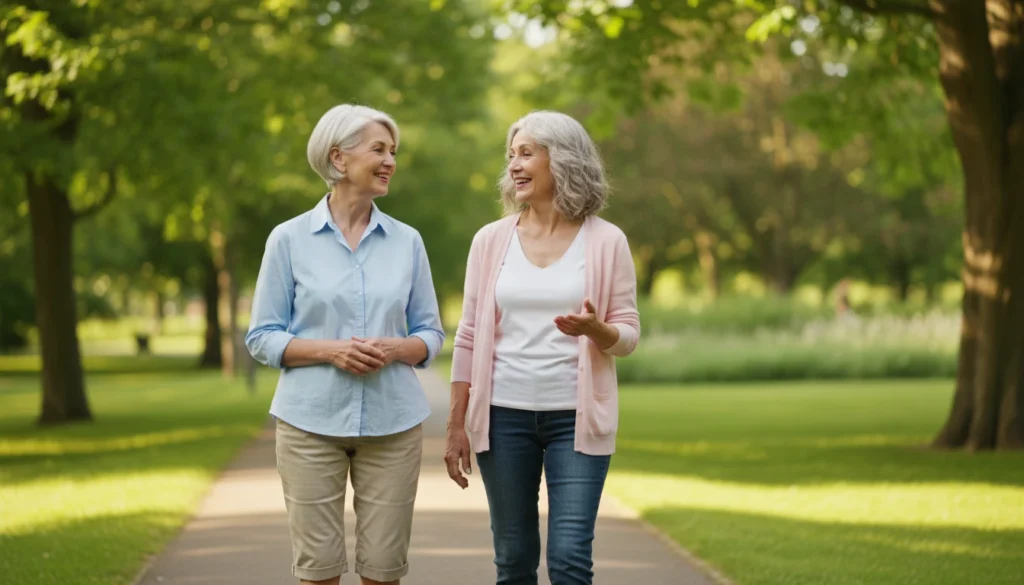
Social health is your ability to build and maintain meaningful relationships, communicate honestly, play valuable roles in your community, and feel like you genuinely belong somewhere.
I like to think of it as relationship fitness.
Not because friendship should feel like going to the gym, though some family group texts do require endurance. But because social health needs regular attention. If you ignore it long enough, it weakens. If you practice it, it gets stronger.
Social health is not about having the biggest social calendar. It is not about knowing everyone in town or being the person who gets invited to every event. Some people are naturally quieter. Some people love solitude. Some people need a lot of social time, while others are perfectly happy with a smaller circle.
Good social health is more personal than that.
It means you can answer yes to questions like:
- Do I have someone I can call when life gets hard?
- Do I feel accepted somewhere as I actually am?
- Do I have people I enjoy spending time with?
- Do I have roles that matter to me and to others?
- Do I feel like someone would notice if I disappeared from my usual routines?
Those questions become more important after retirement because the workplace used to answer some of them automatically.
Even if you did not love your job, work probably gave you daily contact. It gave you a reason to leave the house. It gave you familiar faces, shared jokes, casual updates, and a role that other people recognized.
Then retirement arrives, and that structure can vanish almost overnight.
That does not mean retirement is bad. It means retirement requires rebuilding.
A lot of people prepare financially for retirement, which is wise. They think about income, insurance, housing, taxes, and healthcare. But far fewer people prepare socially. They don’t ask, “Who will I talk to on a normal Tuesday?” or “Where will I feel needed?” or “What community will replace the one work gave me?”
Those questions are not fluffy. They are deeply practical.
The Centers for Disease Control and Prevention describes social connectedness as an important part of health and well-being. The World Health Organization has also identified social connection as a global health priority because loneliness and social isolation affect health across age groups and countries.
That means social health and wellness are not just about feeling happier, though that matters. They are also tied to the way the body handles stress, illness, sleep, inflammation, and daily habits.
In retirement, that connection becomes especially important.
Why Retirement Can Put Social Health at Risk
Retirement is often described as freedom, and it is. But freedom can feel strange when it arrives without structure.
For decades, your week may have had a built-in rhythm. Monday meant one thing. Friday meant another. You knew when you had to be somewhere. You knew who you would see. You knew what role you played.
Retirement can remove that rhythm quickly.
Suddenly, the whole day belongs to you.
That sounds wonderful until you realize you are now responsible for designing every part of it. The schedule. The purpose. The relationships. The reasons to leave the house. The reasons to put on real pants.
And yes, real pants still matter occasionally, even in retirement.
Work Friendships Often Fade
Work friendships can be real friendships. The laughter was real. The trust was real. The “Can you believe that meeting?” conversations were definitely real.
But many work friendships are held together by proximity. You see each other every day, so connection happens naturally. Once you no longer share the same workplace, the friendship needs a new structure.
That can feel awkward.
Sending a text like, “Want to get lunch sometime?” can feel oddly vulnerable. Almost like dating, but with more sensible shoes and fewer expectations.
Still, someone has to make the first move. If you miss a work friend, reach out. The relationship may change, but it doesn’t have to disappear.
Daily Structure Disappears
A regular schedule protects social health more than people realize.
When there is no structure, it becomes easy to drift. You mean to call your friend. You mean to join the walking group. You mean to try the library class. You mean to volunteer.
Then it rains. Or you sleep late. Or you think, “I’ll start next week.”
Next week is where many good intentions go to nap indefinitely.
Social health and wellness improve when connection becomes part of the routine, not something you do only when motivation happens to stop by.
Identity Can Feel Unsteady
Many people are used to being known by their work role.
Teacher. Nurse. Business owner. Engineer. Manager. Accountant. Pastor. Mechanic. Salesperson. Caregiver. Attorney. Office problem-solver. Person everyone called when the printer started making that terrible noise again.
Then retirement changes how the world sees you.
You are still the same capable person, but fewer people may ask for your opinion, your help, or your leadership. That can feel disorienting.
Social connection helps rebuild identity around who you are now, not only what you used to do.
Retirement is not the end of usefulness. It is the end of one job description.
You still have wisdom, skills, humor, experience, opinions, patience, stories, and probably a very specific belief about the correct way to load a dishwasher.
Those things belong somewhere.
Family Dynamics Can Shift
Retirement also changes family relationships.
Adult children may be busy with their own careers and families. Grandchildren may live far away. A spouse or partner may have a completely different vision of retirement.
One person wants travel. The other wants routine. One person wants constant togetherness. The other wants the level of alone time usually associated with remote cabins and suspiciously long walks.
None of this means something is wrong.
It simply means retirement changes the social pattern at home, too. Social health and wellness include family communication, boundaries, expectations, and the ability to talk honestly about what everyone needs.
The Science Behind Social Health and Wellness
Strong relationships feel good, but the benefits go far beyond mood.
Social connection affects the body’s stress response. When you feel supported, your brain receives a powerful message: I am not alone. That message can calm the body’s stress systems.
One important system is the hypothalamic-pituitary-adrenal axis, often called the HPA axis. This system helps regulate cortisol, the body’s main stress hormone.
Cortisol is not bad. You need it. It helps you respond to emergencies, stay alert, and handle short-term pressure.
The problem happens when stress stays high for too long.
When cortisol remains elevated, it can contribute to sleep problems, higher blood pressure, weight changes, inflammation, and mood issues. Chronic stress is like leaving the engine running all night. Eventually, something wears down.
Supportive relationships help buffer that stress.
A friend cannot magically lower your property taxes or make a confusing medical bill explain itself, though I would personally support that kind of friendship feature. But a good friend can make hard things feel less overwhelming. A trusted person gives your mind somewhere to put the worry besides spinning it alone at 2 a.m.
A widely cited meta-analysis by Julianne Holt-Lunstad and colleagues, published in PLOS Medicine, found that stronger social relationships were associated with a significantly lower risk of death. The researchers concluded that social relationships influence mortality risk in ways comparable with well-known health factors.
That is a big deal.
It means social health and wellness belong in the same conversation as exercise, nutrition, sleep, preventive care, and stress management.
Not instead of those things.
Alongside them.
We spend a lot of time talking about retirement income, healthcare costs, housing, and whether downsizing is worth the trouble. Those things matter. But we should also be asking: Who will sit with me on an ordinary Tuesday? Who will laugh with me? Who will notice when I sound tired? Who will tell me, kindly, that maybe I do not need another gadget from a late-night commercial?
That is health, too.
How Social Health Supports Mental Well-Being
Retirement can bring relief, joy, and freedom. It can also bring uncertainty, grief, boredom, anxiety, and a strange feeling of being untethered.
Strong social connections help protect mental health during that transition.
Connection Reduces Emotional Load
When you talk to someone you trust, the problem may not disappear, but it often becomes more manageable.
A health scare feels different when someone sits beside you in the waiting room. A family conflict feels less consuming when a friend lets you talk it through. A lonely day feels less permanent when someone calls just to check in.
That is emotional buffering.
The stress still exists, but it lands differently because you are not carrying it by yourself.
Sometimes the most helpful thing another person can say is not brilliant. It is not a quote suitable for a mug or a decorative pillow. It is simply, “That sounds hard. I’m here.”
Simple. Human. Enough.
Being Known Protects Self-Worth
One of the hardest parts of retirement can be feeling less visible.
At work, people may have needed your decisions, skills, leadership, humor, labor, or steady presence. After retirement, that daily feedback can disappear.
Social connection reminds you that your value did not retire.
You are still funny, wise, useful, curious, generous, stubborn in charming ways, and probably right about more things than your family is willing to admit.
Good relationships reflect that back to you.
The best relationships do not only ask, “What did you do today?” They ask, “How are you doing with all of this?”
That is the difference between contact and connection.
Conversation Keeps the Brain Engaged
Meaningful conversation is mentally active.
You listen. You respond. You remember. You interpret tone. You ask questions. You tell stories. You solve problems. You occasionally pretend you understand someone’s new hobby until you can Google it later.
That kind of engagement matters.
The National Institute on Aging notes that social isolation and loneliness in older adults are linked with higher risks for health problems, including cognitive decline and depression.
Social health and wellness are not only about having fun, although fun is underrated and should probably be prescribed more often. They also help keep the mind active and emotionally supported.
A good conversation may be one of the simplest brain exercises available. No equipment. No membership fee. Just two people, a little honesty, and possibly coffee strong enough to qualify as a personality trait.
How Social Health Affects Physical Health

Relationships do not stay in the emotional category. They show up in the body.
People with strong social ties often have healthier habits, lower stress levels, and better support during illness. They may be more likely to get medical care, take medication correctly, stay active, eat regularly, and recover after setbacks.
Sometimes the reason is wonderfully simple.
Someone notices.
A friend says, “You’ve seemed tired lately. Did you call the doctor?”
A walking group gets you out the door.
A spouse reminds you about medication.
A neighbor checks in after surgery.
A church friend brings soup, which is both practical and emotionally powerful because soup is basically care in liquid form.
Social Connection Supports Heart Health
Chronic loneliness and social isolation can affect blood pressure, inflammation, and cardiovascular health. The American Heart Association has noted that social isolation and loneliness may be associated with increased risk of heart attack and stroke.
This does not mean loneliness causes every health problem. Human health is complicated, and anyone who says otherwise is probably trying to sell you something in powder form.
But the link is strong enough to take seriously.
In retirement, when work routines no longer shape your day, social connection can provide gentle accountability. Not the annoying kind with a clipboard and whistle. The helpful kind.
“Want to walk tomorrow?”
“Did you ever schedule that appointment?”
“Come with me to the class. If it’s terrible, we’ll leave and get lunch.”
That kind counts.
Social Support Helps Recovery
Social support can also help during illness, surgery, or periods of lower energy.
Having people nearby can mean help with rides, meals, medication reminders, errands, and emotional encouragement. It can mean someone notices when symptoms worsen or when you seem discouraged.
If you have ever been sick and had someone drop off groceries or send a simple “checking on you” message, you know it is not just about the groceries.
It is the proof that you are on someone’s mind.
Habits Are Social
We like to think our habits are purely personal, but they are often shaped by the people around us.
If your friends walk regularly, you may walk more. If your social plans revolve around sitting for hours and eating heavy meals, that shapes your routine too. If people around you talk openly about checkups, hearing aids, balance exercises, blood pressure, and sleep, those things start to feel normal instead of embarrassing.
Social health and wellness can quietly support healthier choices without turning your life into a wellness boot camp run by someone named Brad.
This is why your social environment matters.
You do not need perfect friends. Nobody has perfect friends. If someone claims they do, ask gentle follow-up questions. But it helps to spend time with people whose habits and attitudes make your life a little healthier.
Loneliness and Social Isolation in Retirement
Loneliness and social isolation are related, but they are not exactly the same.
Loneliness is the feeling of being disconnected.
Social isolation is the actual lack of regular social contact.
You can be isolated without feeling lonely. Some people enjoy a lot of solitude. You can also feel lonely in a crowded room, which is one of life’s more frustrating design flaws.
In retirement, both can happen.
The U.S. Surgeon General’s advisory on loneliness and isolation describes social disconnection as a serious public health concern. The advisory notes that lacking social connection can increase the risk of premature death and is associated with higher risk of heart disease, stroke, anxiety, depression, and dementia.
That is sobering.
But it is also helpful because it tells us loneliness should not be dismissed as weakness, moodiness, or “just a phase.”
Loneliness is a health signal.
Why Loneliness Sneaks Up After Retirement
Loneliness does not always arrive loudly.
You may not wake up one morning and say, “I am socially isolated.” More often, you notice small changes.
There are fewer reasons to leave the house. Fewer casual conversations. Fewer people asking your opinion. Fewer shared jokes. Fewer invitations. Fewer moments when someone says, “We missed you.”
At first, it may feel like rest.
Then it may start to feel like absence.
One retiree described it this way: “I had all the time I ever wanted, but no place I had to be.”
That sentence captures something many people feel but do not say out loud.
Retirement freedom is wonderful. But most people still need rhythm, purpose, and connection.
Rest is healing when it follows effort. But endless rest without connection can begin to feel less like peace and more like drifting.
Signs Your Social Health May Need Attention
You may want to focus more intentionally on social health and wellness if you notice:
- You go several days without meaningful conversation.
- You avoid social plans even though you feel lonely.
- You feel like people would not notice if you stopped showing up.
- You miss being needed.
- You feel more irritable, flat, anxious, or sad.
- You spend more time scrolling than actually talking with people.
- You have stopped doing activities you used to enjoy.
- You feel nervous about reaching out because it has been too long.
That last one is common.
But here is the good news: most people are not keeping a spreadsheet of how long it took you to call. And if they are, perhaps they need a hobby.
Reach out anyway.
A simple “I was thinking about you” can reopen a door that felt more locked than it really was.
What Research Says About Loneliness, Genetics, and Health
Here is something that surprised me the first time I read about it: loneliness does not only show up in emotions and behavior. It may also show up in genetics.
A 2021 study by Bahrami and colleagues, published in Nature Communications, examined genetic data and found shared genetic factors between loneliness, severe mental disorders, and cardiovascular disease risk factors.
This does not mean loneliness is “all genetic.” It does not mean anyone is doomed to be lonely. It also does not mean your genes are sitting around making social plans without you.
But it does suggest that some people may be more biologically sensitive to loneliness than others.
I find that strangely comforting.
If loneliness has always hit you harder than it seems to hit other people, if it affects your sleep, appetite, mood, or energy more deeply than you think it “should,” you may not be dramatic. You may simply be wired to need connection more urgently.
That is not a flaw.
It is information.
And in retirement, that information matters.
Some people need more solitude. Some people need more conversation. Some people need a small circle. Some need a wider community. The goal is not to copy someone else’s retirement social life. The goal is to understand what keeps you well and build around that.
The Key Components of Social Health
Social health is not one single thing. It is made of several pieces that work together.
When one piece is missing, you feel it, even if you cannot immediately name what is wrong.
Your Support Network
Your support network includes the people you can call on: family, friends, neighbors, former colleagues, faith community members, hobby friends, volunteer teammates, and trusted professionals.
These are the people you text with good news. The people you call when something goes wrong. The people who know enough about your life to ask real questions.
In retirement, this network needs active tending.
It does not maintain itself the way it may have when work kept you in contact with dozens of people every week.
Your Communication Skills
Social health also includes how you communicate.
Can you say what you need? Can you listen well? Can you handle conflict without disappearing or exploding? Can you set boundaries without guilt taking over the steering wheel?
Retirement can strain long-standing relationships, especially marriages and family relationships, because people are suddenly sharing more time and space.
Two people can love each other deeply and still have very different opinions about how much togetherness is healthy before noon.
Communication matters.
Your Social Roles
Social roles give structure and meaning to your days.
You might be a volunteer, mentor, grandparent, neighbor, club member, board member, faith group participant, caregiver, tutor, walking partner, or friend who always remembers birthdays.
Roles answer important questions:
- Who counts on me?
- Where do I show up?
- What do I contribute?
- Where am I wanted?
Belonging is not just being present in a room. It is feeling accepted, valued, and expected.
That kind of belonging helps protect social health and wellness in retirement.
The Real Benefits of Strong Social Connections
If social connection came in pill form, it would probably be prescribed everywhere.
Possible side effects may include increased laughter, occasional feelings of being genuinely known, and rare but wonderful moments when someone remembers your birthday without a social media reminder.
Strong relationships deliver real benefits across mental, physical, and emotional health.
Mental Benefits
Close relationships provide emotional support, validation, and help with problem-solving. People with strong social ties often report fewer symptoms of depression and anxiety and may recover more easily from stressful events.
Not because their lives are perfect.
Because they are not navigating everything alone.
Physical Benefits
Socially connected people often have lower long-term stress and healthier habits. Strong social ties are associated with lower mortality risk and better health outcomes.
Supportive relationships may also help people recover after illness or surgery because practical help and emotional encouragement are both easier to access.
Emotional Benefits
Strong social connections increase life satisfaction and meaning.
In retirement, when work no longer provides a built-in sense of purpose, relationships often become one of the main sources of identity and joy.
Knowing someone is genuinely glad you exist changes the way you move through the world.
That may sound simple, but it is powerful.
What the Research Says About Social Networks and Health
Researchers have studied social support and health for decades, and the findings keep pointing in the same direction: people with stronger social connections tend to have better health outcomes.
One well-known example is the Alameda County Study, which followed residents in California beginning in the 1960s. Researchers found that people with stronger social ties had lower rates of death than people who were more socially disconnected, even after accounting for factors such as health behaviors and socioeconomic status.
Later research has continued to support the idea that social relationships matter for health. The term “social capital” is sometimes used to describe the value of trust, connection, and cooperation within relationships and communities.
That phrase may sound formal, but the idea is simple.
Relationships are a resource.
Who knows you, who trusts you, who helps you, who expects you, and who you can help all shape your well-being.
For retirees, social capital can shrink quickly after leaving work. Rebuilding it takes intention, just like rebuilding muscle after a long break.
It does not happen by accident.
It happens through repeated choices: call, show up, join, volunteer, invite, listen, return.
How Retirees Can Improve Social Health and Wellness
Here is the genuinely hopeful part: social health can improve at any age.
You can rebuild connection after retirement. You can deepen old friendships. You can make new ones. You can find meaningful roles even if your work identity has changed. You can start again, even if the first step feels awkward.
And yes, it may feel awkward.
Awkward is not failure. Awkward is just the toll booth on the road to connection.
Start With One Person
Pick one person you would like to reconnect with and send a simple message.
Try:
“I was thinking about you today. How have you been?”
Or:
“Would you want to grab coffee next week?”
Or:
“I’m adjusting to retirement and realizing I’d like to be more intentional about staying connected. Want to catch up sometime?”
Do not write the message, rewrite it seven times, question your entire personality, and then delete it.
Send it.
If the person responds warmly, wonderful. If not, try someone else. One quiet response does not define your social future.
Create a Weekly Social Rhythm
Do not leave connection entirely to chance. Put it on the calendar.
For example:
- Monday morning walking group
- Tuesday call with a sibling
- Wednesday volunteer shift
- Thursday class or hobby group
- Sunday dinner with friends or family
You do not need plans every day. But predictable touchpoints help prevent isolation from creeping in.
A weekly rhythm removes decision fatigue. You are not asking every morning, “Should I be social today?” The plan already exists.
Future-you will appreciate present-you for handling the logistics.
Join Something With Repeat Contact
One-time events are fine, but relationships usually grow through repetition.
That is why clubs, classes, volunteer teams, faith communities, and regular groups work well. You see the same people again and again.
At first, you are the new person. Then you are the person who comes on Tuesdays. Eventually, you are simply part of the group.
That is how belonging forms.
The first visit may feel uncomfortable. You may spend half the time figuring out where to park, where to sit, whether everyone already knows each other, and whether you accidentally joined the advanced watercolor class when your current skill level is “confused cloud.”
Go anyway.
Then go again.
Use Your Skills
Retirement does not erase your experience.
You may have decades of knowledge, patience, leadership, craft, professional skill, caregiving wisdom, or practical know-how that could help someone else.
Consider:
- Mentoring younger professionals
- Tutoring students
- Volunteering with nonprofits
- Helping at a library, food pantry, school, hospital, or community center
- Serving on a local board
- Teaching a class
- Supporting a faith community
- Joining a civic group
Purpose and connection often grow together. When people count on you, you feel more anchored.
Sometimes the best way to stop feeling invisible is to become useful in a place that genuinely needs what you know.
Practical Steps for Building Genuine Connection
Genuine connection is usually built through small, ordinary actions.
Consistency. Honesty. Remembering. Following up. Showing up when it would be easier to stay home with tea, slippers, and a documentary you only half intend to finish.
Be a Little More Honest
You do not need to overshare. But small honesty helps relationships deepen.
Instead of always saying, “I’m fine,” try:
- “I’m doing okay, but retirement has been more of an adjustment than I expected.”
- “I’ve been a little lonely lately, so I’m trying to get out more.”
- “I miss having regular people to talk to during the week.”
Those sentences may feel vulnerable, but they also give others permission to be real.
You might be surprised how many people say, “Me too.”
Offer Small Invitations
Connection often starts with small invitations:
- “Want to walk tomorrow morning?”
- “I’m going to that library talk. Want to come?”
- “I made too much soup. Can I bring you some?”
- “Want to try that class with me?”
- “Want to sit together at the meeting?”
Small invitations are easier to accept and easier to repeat.
You are not saying, “Would you like to become central to my emotional support system?”
You are saying, “Want coffee?”
Much better. Much less likely to make everyone stare at their shoes.
Follow Up
Following up is underrated.
If someone mentions a doctor’s appointment, ask how it went. If they talk about a grandchild’s recital, ask about it later. If they say they have been tired, check in.
People feel cared for when you remember.
That is not complicated, but it is rare enough to be powerful.
Remembering the little things is one of the clearest ways to say, “You matter to me,” without making a speech.
Most of us do not need grand gestures. We need someone who remembers we were nervous about Tuesday.
Handle Conflict Without Disappearing
Retirement relationships can get strained.
Spouses may need new boundaries. Adult children may need space. Friends may disappoint you. Groups may include people who talk too much about parking, which is somehow both boring and impossible to escape.
Conflict does not always mean a relationship is bad. Sometimes it means the relationship needs clearer communication.
Try saying:
- “I value our relationship, and I don’t want this to become a bigger issue.”
- “Can we talk about what happened?”
- “I need a little more space during the week, but I still want us to spend time together.”
- “That hurt my feelings, and I wanted to be honest instead of pulling away.”
Social health and wellness are not about perfect harmony.
They are about relationships that can survive real life.
Social Health Strategies Specifically for Retirees
Retirees face social challenges that deserve specific strategies, not generic advice that sounds like it was written for a 35-year-old with a standing brunch reservation.
If You Miss Work Friends
Reach out directly.
You might say:
“I miss our regular conversations. Want to have lunch once a month?”
Or:
“I’m trying to stay better connected after retirement. Would you be up for coffee every few weeks?”
The goal is not to preserve every work friendship exactly as it was. That may not be possible. The goal is to notice which relationships still have life in them and give those a new place to grow.
If You Moved After Retirement
A retirement move can reset your social world to zero.
That can be exciting, but it can also feel lonely.
Start building connection early:
- Visit local community centers.
- Join neighborhood groups.
- Attend library events.
- Volunteer locally.
- Take a class.
- Walk at the same time each day and greet people.
- Say yes to low-pressure invitations.
Do not underestimate tiny rituals.
Same coffee shop. Same walking route. Same farmers market booth where the tomato person eventually learns your name.
These things help a new place begin to feel like yours.
If You Are Widowed or Grieving
Grief can make connection feel exhausting. It can also make connection essential.
Start gently.
A grief support group may help because you do not have to explain everything. People in the room already understand parts of the pain.
You might also ask one trusted person for a simple standing plan, such as coffee every Saturday or a weekly phone call.
Grief can make decision-making hard, so predictable routines help.
And if you can only manage short interactions at first, that is okay.
Connection does not have to be big to matter.
If You Are Married and Suddenly Together All the Time
Retirement can change a marriage quickly.
More time together sounds lovely until one person reorganizes the kitchen and the other person has opinions about “the correct drawer.”
Couples need both togetherness and independence.
Talk about:
- Personal space
- Shared activities
- Separate hobbies
- Household routines
- Time with friends
- Expectations around family
- Money stress
- Health concerns
A healthy retirement marriage usually includes both “we” time and “me” time.
It is not unloving to need separate interests. In many cases, it is what keeps togetherness enjoyable.
Nobody needs to be silently observed while choosing cereal every morning like it is a performance review.
If You Feel Shy or Out of Practice
Start with structured settings.
Classes, volunteer roles, faith groups, and clubs are easier because there is something to do.
You do not have to walk into a room and become fascinating on command. You can simply help arrange books, attend a lecture, plant flowers, sort donations, or join a walking group.
Activity lowers the pressure.
Conversation follows more naturally.
And remember, many people feel out of practice. You may look around and assume everyone else is confident, but half the room is probably hoping they do not say something weird.
Humans are united by more awkwardness than we admit.
How Community Engagement Supports Social Health and Wellness
Community engagement may be one of the most reliable ways to rebuild social health and wellness in retirement.
Why?
Because it gives you structure.
A community group gives you a place to go, people to see, and a reason to show up. That is exactly what retirement often removes.
Good Places to Start
Consider:
- Local libraries
- Senior centers
- Community colleges
- Walking groups
- Faith communities
- Volunteer organizations
- Gardening clubs
- Book clubs
- Fitness classes
- Art or music groups
- Civic associations
- Historical societies
- Animal shelters
- Food banks
- Pickleball groups, because apparently pickleball has become the unofficial social network of retirement
You do not have to pick the perfect thing.
Just pick one thing.
Then go more than once.
The first visit may feel awkward. The second feels less strange. By the fourth or fifth time, you may recognize faces. That is how community forms.
Redefine Success
Do not make the goal “find my new best friend immediately.”
That is too much pressure.
Better goals include:
- Stay for the whole event.
- Introduce yourself to one person.
- Ask one question.
- Come back next week.
- Learn two names.
- Volunteer for one small task.
Those goals sound small because they are.
Small is good. Small is sustainable.
And when you keep showing up, those small moments start stacking. A nod becomes a hello. A hello becomes a conversation. A conversation becomes, “Are you coming next week?”
That is the sentence you are waiting for.
It means you have started to belong.
Choose Contribution Over Entertainment
Entertainment is nice, but contribution builds belonging faster.
If you volunteer, help organize, bring snacks, set up chairs, greet newcomers, or share a skill, you become part of the structure.
People start expecting you.
That is powerful.
Being needed is one of the most reliable antidotes to feeling invisible.
It also gives you a reason to go even when you do not feel like it. Some days, that makes all the difference.
Motivation is flaky. Responsibility, used wisely, can be a friend.
Social Health and Wellness in the Digital Age
Technology can be a gift for retirees, especially when family and friends live far away.
Video calls, group texts, online classes, hobby forums, and social media groups can all support social health and wellness. For retirees with mobility limitations, caregiving responsibilities, health challenges, or long-distance family, digital connection can be a lifeline.
But there is a difference between connection and scrolling.
Active digital connection helps.
Passive scrolling often does not.
Better Ways to Use Technology
Try:
- Video calling family once a week
- Starting a small group text with friends
- Joining an online class with live discussion
- Participating in a hobby group
- Sending voice messages instead of only texts
- Commenting meaningfully instead of only liking posts
- Scheduling phone calls instead of saying “we should talk sometime”
“We should talk sometime” is where conversations go to nap indefinitely.
Put it on the calendar.
And if video calls feel awkward at first, that is normal. Everyone spends the first minute saying, “Can you hear me?” and looking at their own face with mild concern.
That is just part of the ritual now.
Set Boundaries Around Passive Scrolling
If you close an app feeling worse than when you opened it, pay attention.
Social media can create comparison, frustration, and the illusion of connection without the nourishment of actual relationship.
A few simple boundaries can help:
- Avoid screens right before bed.
- Limit scrolling sessions.
- Mute accounts that make you feel anxious or irritated.
- Use social media to start conversations, not replace them.
- Move meaningful conversations to phone, video, or in-person time when possible.
Technology should help you feel more connected, not just more aware of everyone else’s vacation photos.
Used well, it can keep relationships alive across distance. Used poorly, it can turn into a glowing little loneliness machine.
The difference is intention.
A Simple 30-Day Plan to Improve Social Health and Wellness
If you want a practical starting point, try this.
Week 1: Notice and Reach Out
- Write down the people you miss or want to know better.
- Send one message to reconnect.
- Schedule one phone call, coffee, or walk.
- Notice when you feel most lonely during the week.
Do not overthink the message. Short is fine. Warm is enough.
Week 2: Add One Regular Touchpoint
- Choose one recurring social activity.
- Look at library, senior center, volunteer, or community calendars.
- Attend one event.
- Introduce yourself to one person.
The goal is not instant belonging.
The goal is showing up.
Week 3: Deepen One Connection
- Follow up with someone you spoke to.
- Ask a more meaningful question.
- Share a little more honestly than usual.
- Offer one small invitation.
This is where acquaintances can start becoming real connections.
Week 4: Build a Repeatable Routine
- Put two social touchpoints on your calendar.
- Decide what you will keep doing weekly or monthly.
- Remove one habit that makes you feel more isolated.
- Celebrate progress, even if it feels small.
By the end of 30 days, your entire social life may not be transformed.
That is fine.
This is not a movie montage.
But you will have created movement. And movement matters.
Social health and wellness are built through repetition, not dramatic reinvention.
Conclusion: A Connected Retirement Is a Healthier Retirement
Social health and wellness are not a side quest in retirement.
They are not a bonus round you get to after everything else is handled.
They are a core part of how your body, mind, and daily life function.
Strong connections can support your mood, lower stress, improve habits, protect your sense of purpose, and help you feel more rooted in the world. Loneliness and isolation, on the other hand, can increase the risk of depression, anxiety, heart disease, cognitive decline, and early death.
That is not meant to scare anyone.
It is meant to clarify something important: connection deserves planning.
The hopeful part is that social health can change at any age.
You do not need to become a social butterfly. You do not need a giant friend group. You do not need to fill every square on your calendar until retirement starts feeling like a second job with better snacks.
You just need small, consistent steps.
Reach out.
Show up.
Join something.
Listen well.
Invite someone.
Set a boundary.
Send one honest message.
Come back next week.
Over time, those tiny moves can build a sturdier network and a stronger sense of “I am not doing this alone.”
Because after everything you have built and everything you have earned, you deserve a retirement that is not just long.
You deserve one that is genuinely, deeply, well-connected.


One Comment
Comments are closed.