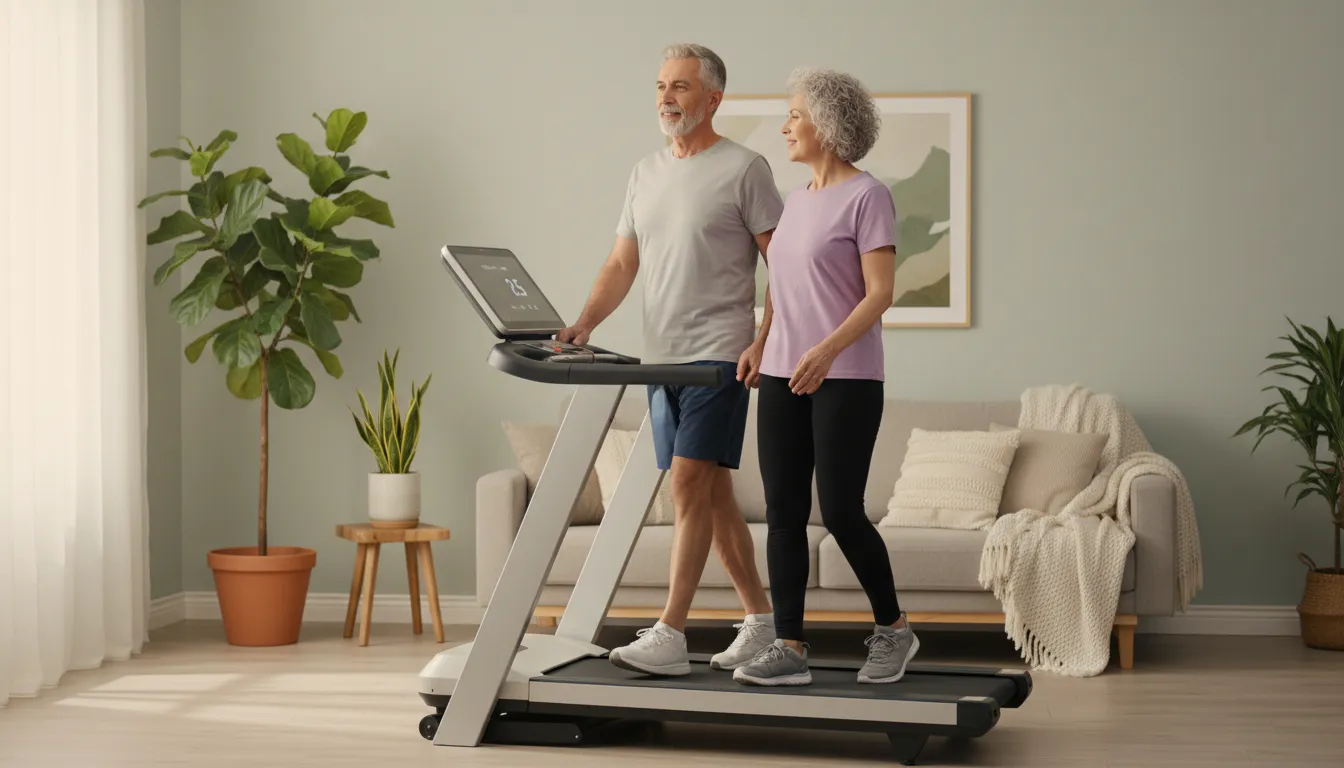
Safety Treadmill for Seniors: Essential Features, Best Picks, and Safe Walking Tips
Find the best safety treadmill for seniors with must-have features, trusted brands, and practical tips for safer low-impact exercise at home.
Buying a treadmill for an older adult can feel weirdly high-stakes. It’s not like choosing a toaster. If you pick the wrong toaster, breakfast is annoying. If you pick the wrong treadmill, someone could get hurt. That’s why finding the right safety treadmill for seniors matters so much.
I’ve seen this play out with older relatives who genuinely wanted to walk more but didn’t love the reality of walking outside. One hated slick sidewalks after rain. Another didn’t trust uneven pavement. And one just didn’t want to deal with neighbors who somehow turn a five-minute stroll into a full committee meeting. Fair enough. A treadmill can be a great answer, but only if it feels safe enough to use consistently. That last part is huge. The fanciest machine in the world is basically an expensive coat rack if it feels intimidating.
That’s why a good safety treadmill for seniors matters so much. It makes movement feel doable again. It lowers fall risk, supports confidence, and turns exercise from something stressful into something that can quietly become part of the week. In this guide, I’ll walk through the features that actually matter, the brands worth comparing, how seniors can use a treadmill safely, and the simple habits that make the whole experience feel a lot more comfortable and sustainable.
Why Choosing the Right Safety Treadmill for Seniors Matters
Staying active gets framed as a fitness goal, but for many older adults, it’s really about maintaining independence. Walking helps with balance, mobility, circulation, endurance, and even mood. It can make everyday life easier — getting up from a chair, carrying groceries, climbing stairs, or just feeling steady enough to move through the day without second-guessing every step.
I think that’s the part younger shoppers sometimes miss. For a lot of seniors, this isn’t about chasing personal records. It’s about staying confident enough to do normal life without feeling fragile. That’s a very different goal, and it deserves equipment that respects it.
The challenge is that aging changes the equation. Balance may not be as sharp as it once was. Joint pain may show up uninvited. Reaction time can slow down. And suddenly a standard treadmill designed for younger runners feels like it was built by someone who thinks everyone wants to train for a mountain marathon before lunch.
That’s where a safety treadmill for seniors earns its keep. The right machine creates a more controlled environment than outdoor walking, with predictable terrain, adjustable speed, and built-in support. For seniors who worry about tripping on cracked sidewalks, slick pavement, or poor lighting, that consistency can be a huge relief.
And the concern is justified. The CDC has repeatedly reported that falls are a leading cause of injury among older adults in the United States. So when families prioritize safety features on exercise equipment, they’re not being overprotective. They’re being sensible.
The Safety Features That Matter Most
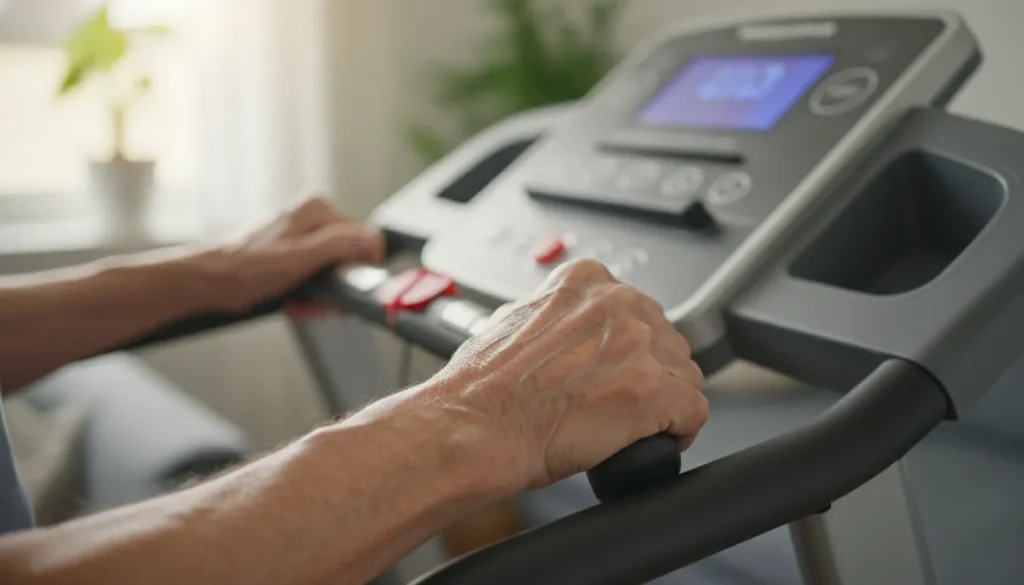
A lot of treadmill marketing sounds impressive until you realize it’s mostly shiny language wrapped around mediocre design. For seniors, the most important features are usually the least flashy. They’re the features that make a treadmill feel stable, predictable, and easy to control.
In other words, this is not the time to be dazzled by a giant touchscreen and seventeen virtual trails through Iceland. Lovely, sure. But if the stop button is tiny and the rails feel flimsy, none of that helps.
Handrails That Feel Solid, Not Symbolic
Handrails are one of the first things I look at on a safety treadmill for seniors, because they tell you a lot about the machine’s priorities. Some treadmills technically have handrails, but they feel like decorative suggestions. That’s not what you want.
Good handrails should feel sturdy in the hand and well positioned along the deck. They should offer support when getting on and off the machine, and they should be close enough to use lightly during walking without forcing an awkward posture. If the rails wobble in the store, that’s your answer. Keep moving.
For many older adults, handrails provide more than physical support. They create peace of mind. That may sound small, but it isn’t. Confidence changes how someone approaches exercise. A person who feels steady is much more likely to use the treadmill regularly.
Emergency Stop Systems That Are Easy to Reach
If a treadmill doesn’t have a reliable, obvious emergency stop, it doesn’t belong in the conversation. A proper safety treadmill for seniors should make it easy to stop the belt immediately.
Most models include a safety key that clips to clothing and shuts the machine off if the user slips or moves too far back. That feature matters. So does a clearly visible stop button on the console. In a moment of dizziness or panic, nobody wants to decode a control panel like they’re launching a space shuttle.
Simple wins here. Big button. Quick response. No drama.
Safety Harness Options for Extra Stability
Not every senior needs a harness system, but for some people, it can make a huge difference. Seniors recovering from surgery, rebuilding confidence after a fall, or dealing with significant balance issues may benefit from a treadmill setup that includes overhead harness support.
This is one reason treadmills are so common in rehabilitation settings. A harness gives users a safety net while still allowing natural walking movement. It doesn’t replace strength or balance work, of course, but it can make practice feel less scary. And when someone is nervous, reducing fear is half the battle.
Cushioning That Makes Walking Feel Kinder on the Joints
One of the best things about a well-designed safety treadmill for seniors is that it can make walking easier on the knees, hips, and lower back. Deck cushioning helps absorb impact so each step feels a little less harsh.
That matters more than people realize. Seniors with arthritis, old injuries, or post-surgical stiffness often tolerate walking better on a cushioned treadmill than on pavement. It’s still exercise, but it doesn’t feel like the ground is trying to pick a fight.
Controls That Don’t Require a Tutorial
I have a personal theory that some fitness brands assume everyone loves buttons, screens, menus, and more buttons. But seniors don’t need a treadmill that can simulate Everest while tracking twelve performance metrics and possibly judging their playlist.
They need controls that are easy to read and easy to use.
A senior-friendly treadmill should have a clear display, straightforward speed adjustments, and buttons that are large enough to press without hesitation. Gradual speed control is especially important. On a safety treadmill for seniors, tiny increases matter. Jumping too quickly from one pace to another can feel unsettling, even dangerous.
Which Brands Offer a Good Safety Treadmill for Seniors?
Several established brands make treadmills with safety and comfort features that work well for older adults. No single brand is perfect for everyone, but a few names come up again and again for good reason.
NordicTrack, LifeSpan, and ProForm Compared
NordicTrack often appeals to users who want solid cushioning and smooth incline adjustments. Many models have supportive handrails and reliable emergency stop systems, which makes them worth a look for households focused on comfort and stability.
LifeSpan is often praised for practical features that make daily use easier, including low step-up height and wide walking surfaces. That lower deck height might sound like a minor detail, but it can make getting on and off the treadmill feel much safer.
ProForm has options that stand out for user-friendly displays and, on some models, compatibility with added support features. For seniors who want simple guided programs without feeling overwhelmed, ProForm can be a comfortable middle ground.
| Brand | Key safety features | Comfort features |
|---|---|---|
| NordicTrack | Adjustable handrails, emergency stop button | Cushioned deck, adjustable incline |
| LifeSpan | Safety key, heart-rate monitor | Wide running surface, low step-up height |
| ProForm | Safety harness option, easy-to-read display | Built-in workout programs, soft-grip handles |
The best safety treadmill for seniors depends less on the logo and more on the person using it. A fit, active 68-year-old may want different features than an 82-year-old recovering from a fall. That sounds obvious, I know, but it’s amazing how often shopping advice skips that part.
If you’re shopping for a parent, I’d strongly recommend thinking about their real habits instead of their ideal ones. Do they like simple controls? Are they cautious getting on and off things? Do they get overwhelmed by too many settings? Those answers usually tell you more than any product badge ever will.
What Seniors Should Prioritize Before Buying
If you’re comparing models, it helps to ignore the bells and whistles at first and focus on the essentials.
Precise Speed Control
A treadmill that jumps speed too quickly can feel unsettling. Seniors usually do best with gradual, predictable speed changes that allow them to settle into a pace comfortably. Starting slow should feel normal, not like a failure. In fact, it’s smart.
Low Step-Up Height
This feature doesn’t get enough love. A lower step-up height makes mounting and dismounting safer, especially for seniors with reduced mobility or stiff joints.
Wide, Stable Walking Surface
A little extra room can go a long way. A wider deck gives older users more space to walk comfortably without feeling like one distracted step could send them off the edge.
Clear Visibility and Easy Navigation
Displays should be bright and easy to read. Buttons should be obvious. Settings should be simple. If someone has to ask for help every time they want to change the speed, the treadmill is working against them.
Quiet, Smooth Operation
This may sound like a luxury, but it’s not. A treadmill that jerks, clunks, or growls can make seniors feel uneasy. Smooth operation builds trust in the machine, and trust matters.
Safe, Low-Impact Exercise: Where to Start
Once the treadmill is in place, the next question is obvious: what’s a safe starting point?
For many older adults, a beginning speed of around 1 to 2 mph makes sense. That pace allows the body to get used to the belt while keeping the workout manageable. There’s no gold medal for starting too fast. If anything, starting too fast is a great way to decide you hate treadmills forever.
I actually think one of the most helpful mindset shifts is this: slow is not embarrassing. Slow is smart. Slow gives the body time to settle in, and it gives the brain time to trust the machine.
A slight incline of around 1 to 2 percent can also be helpful. It mimics natural walking conditions a bit more closely and gently engages additional muscles without putting too much strain on the joints. But this should always depend on comfort, balance, and any guidance from a healthcare provider.
A useful piece of research here comes from a 2014 study by R.K. Begg on walking-induced fatigue in older adults. The study found that fatigue from fast walking increased tripping risk and affected gait control. In plain English: when older adults get tired, walking mechanics can become less stable, and that increases the chance of a misstep. That’s one more reason a safety treadmill for seniors should support conservative pacing and gradual progress instead of forcing intensity.
Fall-Prevention Habits That Matter During Treadmill Use
Even the best treadmill can’t do all the work. Safe use comes down to habits too.
Wearing supportive, non-slip shoes is one of the simplest ways to improve stability. It’s not glamorous advice, but neither is slipping in socks on a moving belt. Some lessons don’t need to be learned firsthand.
Supervision can also help, especially during the first few sessions. I’ve noticed that seniors often relax once someone is nearby, even if that person isn’t doing much beyond folding laundry or pretending not to watch. Presence builds confidence. Sometimes just hearing, “You’re doing great, keep it easy,” is enough to settle nerves.
Warm-ups and cool-downs matter too. A few minutes of slow movement before and after a treadmill walk can reduce stiffness and lower the risk of dizziness. Sudden starts and sudden stops are great for action movies, not so much for low-impact exercise.
Heart rate monitoring is another useful tool, especially for seniors managing cardiovascular concerns. Many treadmill models include built-in monitors, though external devices may be more accurate. Either way, the goal is simple: make sure the workout stays in a safe, sustainable range, not somewhere between “productive” and “why did I do that?”
Why Safety Treadmills Matter in Rehabilitation Settings
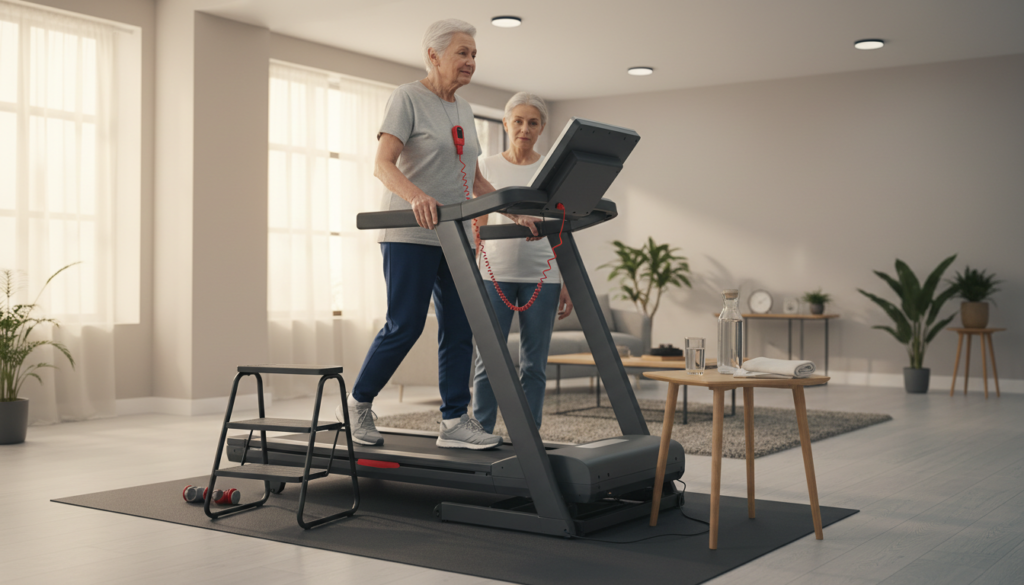
There’s a reason physical therapists use treadmills so often in senior rehab. A safety treadmill for seniors creates a controlled environment where walking can be rebuilt step by step.
After surgery, injury, or illness, therapists often begin with short walking sessions at slow speeds. They watch posture, stride length, balance, and endurance. Adjustments are made in real time. That kind of control is hard to replicate outdoors.
Harness systems are especially valuable in rehabilitation. They allow patients to practice walking with reduced fear, which can speed up progress emotionally as well as physically. Sometimes the biggest hurdle isn’t strength. It’s the memory of the last fall.
For seniors transitioning from rehab to home exercise, choosing a treadmill with similar safety features can make that shift much smoother. Familiarity helps. So does consistency.
Maintenance Tips to Keep a Safety Treadmill for Seniors Reliable
A treadmill isn’t the kind of equipment you set up once and then ignore forever. Regular maintenance is part of safe ownership. Not the thrilling part, obviously, but still part of the deal.
Emergency stop systems should be tested regularly. Handrails should be checked for looseness. The walking belt should be inspected for wear, slipping, or drifting out of alignment. If something feels off, it probably is.
Lubrication is another big one. Most manufacturers recommend lubricating the deck on a set schedule, and skipping that step can affect performance and safety over time. It’s one of those boring little tasks that quietly prevents bigger, more expensive problems later.
A few warning signs should never be brushed off:
- unusual noises during operation
- inconsistent speed
- belt hesitation or slipping
- a faulty safety key or stop button
- flickering or inaccurate console readings
None of these are “maybe it’ll fix itself” situations. This is not a haunted lamp. It’s exercise equipment. If the machine acts strange, stop using it and get it serviced.
Frequently Asked Questions
What are the benefits of using a treadmill for seniors instead of walking outside?
A safety treadmill for seniors offers a predictable walking surface, adjustable speed, and built-in support features that outdoor environments simply can’t guarantee. For older adults who worry about uneven sidewalks, weather, or poor lighting, that controlled setup can make regular walking much more realistic.
How can seniors tell if they’re using the treadmill correctly?
Good posture, a steady pace, and light use of the handrails are all good signs. Seniors should feel stable, able to breathe comfortably, and in control of the machine. If they seem tense, rushed, or off balance, the speed may be too high.
Are there treadmill exercises beyond regular walking that seniors can try?
Yes, but they should be introduced carefully and ideally with professional guidance. Some seniors benefit from short walking intervals, gentle incline changes, or balance-focused variations used in rehab. Still, the safest starting point is usually straightforward walking.
What should seniors do if they feel dizzy or unwell while using the treadmill?
They should stop the treadmill immediately, hold the rails, and step off carefully once the belt stops. Sitting down, resting, and hydrating is the next step. If dizziness happens more than once, it’s worth checking in with a doctor.
How can family members help seniors use a treadmill safely?
Family members can help choose the right treadmill, make sure it’s set up in a clear and well-lit area, and stay nearby during early sessions. Sometimes encouragement matters just as much as equipment.
What signs show a treadmill needs repair?
Strange noises, inconsistent speed, loose handrails, a slipping belt, or a malfunctioning stop system are all signs the treadmill needs attention. A safety treadmill for seniors is only safe if those features actually work.
Conclusion
Choosing the right safety treadmill for seniors isn’t about finding the most advanced machine or the flashiest screen. It’s about finding a treadmill that feels steady, simple, and supportive enough to use with confidence.
That usually means prioritizing strong handrails, reliable emergency stop features, gentle cushioning, easy controls, and a walking surface that feels secure. It also means starting at a realistic pace, building gradually, and treating maintenance like part of the safety plan, not an afterthought.
If I were helping a parent or grandparent shop for a treadmill, that’s exactly where I’d start. Not with the hype. Not with the fancy extras. Just with the question that matters most: will this machine help them move more safely and more often?
Because that’s really the goal. A good safety treadmill for seniors doesn’t just support exercise. It supports confidence, routine, and the kind of independence that makes everyday life feel a little easier. And honestly, that’s a pretty great return on investment.
The best version of this purchase isn’t a dramatic before-and-after story. It’s quieter than that. It’s someone feeling steady enough to walk for fifteen minutes after breakfast, then doing it again a few days later, then hardly thinking twice about it. That kind of progress may not look flashy, but it matters. A lot.