

Comprehensive Guide to New Senior Living Communities: Assisted Living Reviews, Amenities, and Affordable Options
A warm, practical guide to new senior living communities, including assisted living, memory care, amenities, reviews, and affordable options.
If you’re trying to make sense of new senior living communities, you’re not alone — and you’re definitely not the only person who has stared at three nearly identical brochures and thought, Okay, but what’s this place actually like on a Tuesday afternoon?
That’s the real question, isn’t it? Not just what’s listed on the website, or how pretty the lobby looks, or whether the dining room has chandeliers. It’s whether a place feels safe, kind, comfortable, and human. Whether your mom will make a friend. Whether your dad will eat the food without launching a full editorial about it. Whether the staff notices the little things that matter.
I’ve always thought senior living decisions sit in that awkward space between practical and deeply emotional. You’re comparing care plans and pricing, sure. But you’re also thinking about dignity, comfort, routine, loneliness, and the quiet hope that the next chapter can still be a good one. The good news is that today’s new senior living communities offer more choices than ever before, and many of them are designed with real quality of life in mind — not just basic care.
In this guide, I’ll walk through the main types of communities, the amenities that actually matter, how memory care differs from standard senior housing, what affordable options exist, and how to use reviews without getting lost in internet chaos. Because yes, reviews are helpful. But also, the internet has never met a one-star experience it didn’t want to turn into a novel.
What Are the Different Types of New Senior Living Communities?
When people first start researching new senior living communities, one of the biggest surprises is how many categories there are. “Senior living” sounds simple until you realize it includes several very different housing and care models. That matters, because choosing the right fit starts with knowing what kind of support a person actually needs today — and what they may need a year or two from now.
In general, most new senior living communities fall into three main groups: assisted living, independent living, and memory care. Some communities focus on just one of these, while others offer multiple levels of support on the same campus. That second option can be especially appealing for families who want more flexibility over time.
The best way to think about it is this: independent living is built for convenience and community, assisted living adds help with daily needs, and memory care provides more specialized support for cognitive decline. Same general world, very different levels of care.
How Do Assisted Living Facilities Support Senior Care Needs?
Assisted living is often the middle ground families are looking for. It’s for older adults who don’t need the medical intensity of a nursing home but do need help with everyday routines — things like dressing, bathing, medication management, mobility, and meals.
At their best, assisted living communities don’t feel clinical. They feel supportive. There’s a difference. A good assisted living setting gives residents help without making them feel like they’ve handed over their independence at the front desk.
That balance matters. In a 2019 study published in The Gerontologist, researchers examining healthcare in assisted living found that many residents had multiple chronic conditions and fairly complex care needs, even though the setting is often described as “non-medical.” What stood out in that research wasn’t just the level of need, but how much quality depended on the way care was coordinated and individualized. In plain English: the details matter more than the brochure.
That’s why the strongest assisted living communities build personalized care plans instead of applying the same template to everyone. One resident may need reminders and meal support. Another may need hands-on help getting ready in the morning but little else. Good staff know the difference, and they know the resident behind the checklist.
When I look at assisted living options, I always come back to simple observations. Does the staff seem rushed, or calm? Are residents sitting alone all day, or actually interacting? Does help arrive when someone needs it? Fancy wallpaper is nice, I guess, but it won’t help much if no one answers a call button promptly.
What Independent Living Options Are Available for Seniors?
Independent living is designed for seniors who can largely manage daily life on their own but want less responsibility and more connection. It’s often a great fit for people who are tired of maintaining a house, driving everywhere, or spending too much time alone — even if they’re still quite active.
Housing options vary, but most new senior living communities offer some mix of apartments, cottages, villas, or condo-style residences. Some are compact and practical. Others look suspiciously nicer than the first apartment I rented in my twenties, which feels rude, honestly.
The appeal of independent living usually comes down to three things: convenience, social life, and predictability. Meals may be available. Housekeeping is often included. Transportation helps with errands and appointments. There are activities, outings, clubs, classes, and enough group events that even introverts can selectively participate without feeling like they’ve been drafted into summer camp.
That social part isn’t just a bonus. The CDC has repeatedly pointed to the health risks associated with loneliness and social isolation in older adults, including increased risk for depression, heart disease, and cognitive decline. In that context, independent living isn’t just about downsizing. It can be a smart move for emotional and physical well-being too.
Of course, price matters. Independent living costs vary widely by location, apartment size, and amenity level. Urban communities and newly built campuses tend to cost more, while smaller cities may offer better value. That range is one reason families often start with independent living and then compare it carefully against assisted living to see where the better long-term fit really is.
Which Amenities Define Quality Retirement Communities?

Amenities can be a little tricky. On one hand, they genuinely matter. On the other hand, senior living marketing departments have never met a cappuccino machine they didn’t want to photograph like it changed civilization.
So yes, amenities matter — but only the right ones.
The best new senior living communities use amenities to make daily life easier, healthier, and more enjoyable. That means focusing less on flashy extras and more on the features residents will actually use every week. Comfort is part of quality. So is access. So is the feeling that life hasn’t suddenly become smaller.
A strong retirement community usually offers a mix of wellness services, social spaces, reliable dining, transportation, and practical safety features. Residents don’t need to live at a resort. They do need an environment that supports real life with a little grace.
What Social and Wellness Services Enhance Senior Living Experiences?
This is where a community often starts to feel either vibrant or forgettable.
The better new senior living communities know that wellness is broader than blood pressure checks and a chair yoga class on Wednesdays. Physical health matters, obviously, but so do routine, friendship, movement, purpose, and having something to look forward to besides lunch. Though to be fair, a good lunch can carry a lot of emotional weight.
Social and wellness services might include exercise classes, walking clubs, book groups, gardening, art workshops, spiritual gatherings, movie nights, lectures, and local outings. The exact list matters less than whether residents actually participate and seem to enjoy it. A packed activity calendar means nothing if nobody shows up.
I’ve always thought one of the best signs of a healthy community is hearing ordinary, slightly funny conversation in the common areas. Not staged friendliness. Real-life chatter. Someone complaining about the bridge game. Someone else reminding a neighbor about trivia night. That kind of thing tells you the place has a pulse.
Many communities now also offer wellness screenings, nutrition support, therapy partnerships, and programs focused on balance, mobility, and cognitive engagement. Those services can make a real difference over time, especially for residents trying to stay active and independent longer.
How Do Safety Features and Healthcare Services Vary Across Communities?
Safety is one of those topics families care deeply about but sometimes ask about too vaguely. “Is it safe here?” is a fair question, but it’s too broad to get a useful answer. Every place will say yes.
What matters is how.
Some new senior living communities offer emergency call systems in every unit, secure building access, grab bars, fall-reduction design, nighttime staffing, medication support, and on-site wellness checks. Others may offer only a few of those features and rely more heavily on outside medical providers.
Healthcare services vary just as much. One community may have a nurse on-site, regular assessments, and coordination with physicians or home health providers. Another may only provide general oversight and expect families to arrange most outside care themselves. Neither is automatically wrong, but the difference is important.
When families compare communities, it helps to ask practical questions. Who handles medications? What happens after a fall? How are emergencies managed overnight? Is there someone on-site 24/7? These aren’t dramatic questions. They’re normal. And honestly, any good community should answer them clearly without getting weirdly defensive.
How to Find and Evaluate the Best Memory Care Facilities?
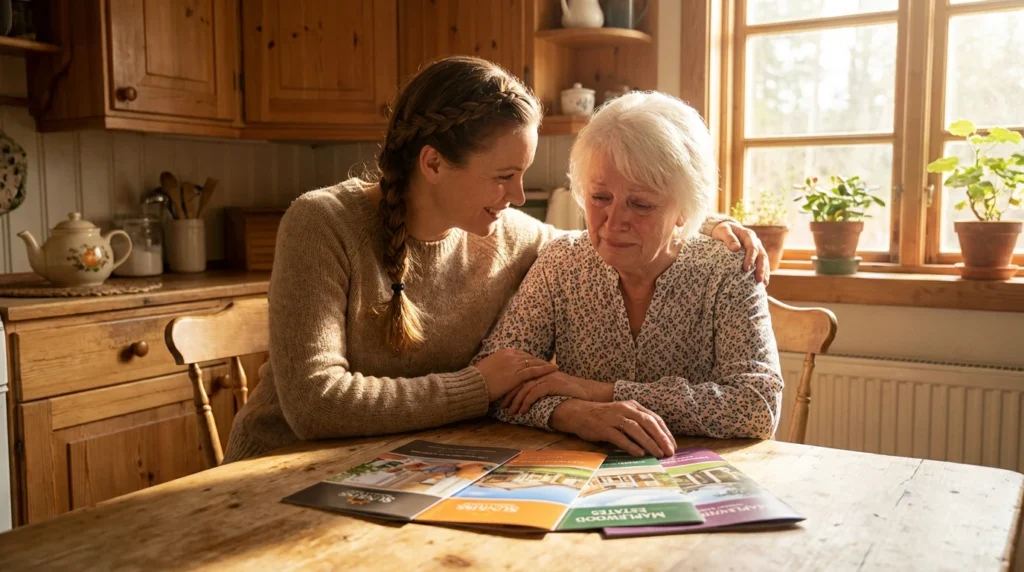
Memory care deserves its own careful evaluation because it serves a different kind of need. Families looking for memory care usually aren’t just searching for housing. They’re trying to find stability, safety, and a setting where their loved one won’t be overwhelmed or misunderstood.
That’s a heavy thing to carry.
The best memory care communities are built around routine, trained staffing, and environments designed to reduce confusion. And because dementia affects every person differently, choosing among new senior living communities with memory care means paying attention to far more than appearances.
What Specialized Care Does Memory Care Provide for Seniors?
Memory care supports seniors living with Alzheimer’s disease or other forms of dementia through a more structured and secure environment. Staff are typically trained in dementia-specific communication, behavior support, redirection techniques, and daily care routines that reduce stress rather than increase it.
That last part matters. A lot.
The Alzheimer’s Association has long emphasized the importance of routine, familiar cues, and calm environments for people living with dementia. Good memory care communities take that seriously. They create settings where the day feels predictable, spaces are easier to navigate, and activities are designed to match cognitive ability instead of accidentally exposing limitations.
Specialized care often includes help with all daily living tasks, medication oversight, structured meals, memory-supportive programming, sensory activities, and secure layouts to prevent wandering. You’ll also often see smaller activity groups, simplified schedules, and more staff guidance throughout the day.
When memory care is done well, it feels patient. Not rushed. Not loud. Not chaotic. That’s usually the feeling I’d trust most on a visit.
Which Reviews and Ratings Help Choose Top Memory Care Communities?
Reviews can be especially helpful when evaluating memory care, but they need to be read with some common sense. One angry review doesn’t tell the whole story, and neither do thirty glowing comments that all sound like they were written by the same cousin.
Look for patterns. If multiple families mention compassionate staff, strong communication, and clean, calm spaces, that means something. If several reviews mention unanswered concerns, high staff turnover, or frequent confusion, that means something too.
Ratings from senior care directories can help narrow the list, but they shouldn’t replace a visit. In-person observation matters more in memory care than almost anywhere else. Watch how staff speak to residents. Watch whether residents seem soothed or agitated. Watch the pace of the place. If it feels frantic to you, imagine how it feels to someone already struggling to process their surroundings.
That’s not a small detail. That’s the whole ballgame.
What Are Affordable Senior Housing Options in New Communities?
Cost is usually the part of this process that makes people exhale slowly and rub their temples. Understandably.
The reality is that new senior living communities can be expensive, especially in high-demand areas. But “expensive” and “impossible” are not the same thing. There are affordable options, and there are financing strategies many families don’t hear about until they’re already overwhelmed.
How Does Affordable Senior Housing Compare to Other Senior Living Types?
Affordable senior housing generally focuses more on basic housing support and less on bundled lifestyle services or hands-on care. That means lower costs, but also fewer extras. In many cases, residents may have access to age-friendly housing, community programming, and some supportive services, but not the same level of daily care found in assisted living or memory care.
That doesn’t make affordable housing a lesser option. It just means it serves a different purpose.
For seniors who are still fairly independent, affordable housing within or near new senior living communities can provide stability, social connection, and a manageable monthly cost. It may not include chef-prepared meals and a salon downstairs, but not everyone needs that. Sometimes the right answer is simply a safe, accessible home with a little community built in.
The key is matching care level to actual need. Overpaying for services someone doesn’t use can strain finances fast. Underestimating care needs can create bigger problems later.
What Financing and Cost Options Are Available for Seniors?
This is where families often need a clearer map. A 2024 review by researcher W. He on American senior housing and financing decisions pointed out something a lot of people already feel firsthand: housing choices in later life are deeply important, but the financial side is still underexplored and often poorly understood.
In practical terms, seniors may be able to use a mix of resources. These can include retirement income, proceeds from selling a home, long-term care insurance, veterans benefits, Medicaid waiver programs in certain states, and subsidized housing programs such as HUD-supported options for low-income older adults.
Families should also ask whether the pricing model is all-inclusive or tiered. One community may quote a lower starting rate, then add charges for medication management, bathing assistance, transportation, and other services. Another may look pricier upfront but include more in the base cost. This is where spreadsheets become unexpectedly emotional.
I’d also say this: don’t assume the first price you hear tells the whole story. Ask for a full cost breakdown. Ask what tends to increase over time. Ask what happens if care needs change. Those questions can save families from some unpleasant surprises later.
How Can Families Use Reviews and Localized Information to Choose Senior Living?

At some point, every family reaches the stage where all the options start to blur together. That’s when local insight becomes gold.
Reviews, community referrals, local agencies, and in-person visits help turn a long list of new senior living communities into a short list that actually makes sense. This is where research gets practical.
What Role Do Assisted Living Reviews Play in Decision Making?
Assisted living reviews are useful because they often reveal the stuff brochures won’t. Families talk about communication, staffing, food quality, cleanliness, responsiveness, and whether management follows through when something goes wrong.
That’s the real value. Not perfection. Pattern recognition.
A few mixed reviews are normal. Honestly, I’d trust that more than a suspiciously flawless page of praise. What matters is whether the same concerns show up repeatedly, and whether positive reviews mention specific strengths rather than generic compliments.
If several people mention kind staff, respectful care, good communication, and smooth transitions, that’s meaningful. If reviews keep circling back to understaffing, billing confusion, or unanswered concerns, take that seriously.
How to Search for Senior Living Communities Near Me Effectively?
The most effective search usually combines online tools with local knowledge. Search engines and senior housing directories can help identify new senior living communities nearby, but local aging agencies, hospital discharge planners, social workers, and even community groups often provide more grounded recommendations.
It also helps to search with intent. Instead of only typing “senior living near me,” try narrowing by care type, budget, or location priorities. Think in terms of lifestyle too. Close to family? Walkable area? Quiet suburb? Access to medical centers? Those details shape daily life more than people expect.
And then, once you have a shortlist, visit. Visit again. Show up at a different hour. Notice the smell. Notice the noise level. Notice whether residents look engaged or parked. That may sound blunt, but it’s often the difference between a nice website and a genuinely good fit.
The Thing Families Usually Learn in the End
Choosing among new senior living communities is never just about housing. It’s about figuring out what kind of daily life is possible now, and what kind of support will make that life feel stable, comfortable, and dignified.
The right community isn’t always the newest building or the fanciest one. Sometimes it’s the place where the staff remembers your mom likes tea before dinner, where your dad finds a table of guys arguing about baseball, where the nurse calls because something seems slightly off — not dramatically wrong, just off. Those small things add up fast.
That’s why this search matters so much. And it’s why new senior living communities deserve a thoughtful look beyond the marketing language. When families understand the differences between assisted living, independent living, memory care, amenities, affordability, and reviews, they’re much better equipped to choose with confidence instead of panic.
And that’s really the goal. Not perfection. Just a decision grounded in good information, clear priorities, and a little peace of mind.
If you’re in the middle of this process now, take your time. Ask the awkward questions. Trust what you see. And if a place looks great online but feels off in person, believe the in-person version. Your gut usually knows before your spreadsheet does.
If you want, I can also turn this into:
- a clean final blog draft
- a more premium editorial version
- or a lighter, even more human-sounding rewrite with a stronger personal voice and fewer formal phrases.