How to Improve Balance in Seniors: Practical Exercises, Fall-Prevention Tips, and Stability Strategies
Discover how to improve balance in seniors with proven exercises, home safety tips, and expert strategies that reduce fall risk and boost independence.
I’ll be upfront with you — balance wasn’t something I thought much about until I watched my grandmother grip the kitchen counter like it was a life raft every time she walked past it. She was sharp as a tack, funny, fiercely independent, and quietly terrified of falling. She never said it out loud, but you could see it in the way she moved — cautious, hesitant, like she was always bracing for something.
That experience stuck with me. And the more I’ve learned about how to improve balance in seniors, the more I’ve come to believe that most of what we accept as “just getting older” is actually changeable. Not all of it. But a lot more than people realize.
So if you’re here because you’re worried about a parent, a grandparent, or honestly yourself — welcome. You’re in the right place. This isn’t a clinical handout. It’s a real conversation about what actually works, why it works, and how to make it fit into a real life.
Key Takeaways
- Tai Chi is one of the single best things an older adult can do for balance — it improves proprioception, postural control, and mental calm all at once, and research shows benefits lasting up to six months after practice ends
- Strength training and yoga aren’t optional extras — they build the muscle support and flexibility that make every other balance strategy more effective
- Most falls happen at home, and a significant portion are caused by environmental factors that are completely fixable with simple modifications
- Grab bars, better lighting, and cleared walkways aren’t just for people who’ve already fallen — they’re smart prevention for anyone who wants to stay independent
- The right assistive device, properly fitted, extends capability rather than limiting it — a cane isn’t a white flag; it’s a tool
- Physical therapy — especially vestibular rehab — targets the root causes of dizziness and instability in ways that generic exercise programs simply can’t
- Calcium, vitamin D, and adequate protein form the nutritional backbone of bone strength and muscle function — both essential for staying steady
- Wearables and AI-driven rehab tools are genuinely useful now, not just futuristic — they track patterns, flag risk, and personalize training in ways that make a real difference
- Consistency beats intensity — two to three sessions of balance-focused movement per week, done regularly, produces results that sporadic intense effort never will
- Fear of falling is itself a risk factor — building confidence through movement is just as important as building physical strength
Why Balance Gets Harder With Age (And Why That’s Not the Whole Story)
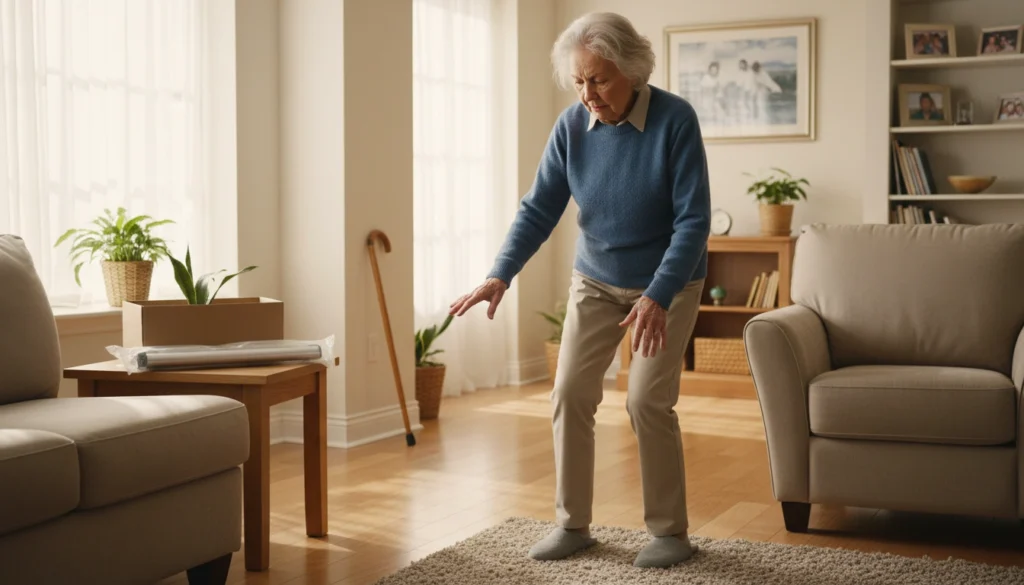
Before we talk solutions, it helps to understand what’s actually going on. Balance isn’t one single thing — it’s a constant, mostly unconscious conversation between your muscles, your inner ear, your vision, and your nervous system. When you’re young, that conversation happens fast and automatically. As we age, every part of that system slows down a little. Muscles lose mass. Vision softens. The vestibular system — basically your body’s built-in gyroscope — becomes less responsive. And the speed at which your brain processes all that incoming information? It drops too.
The result is a narrower margin for error. A younger person stumbles on a crack in the pavement and recovers without thinking. An older adult with reduced proprioception — the body’s sense of where it is in space — might not catch themselves in time. And that gap, small as it sounds, is where falls happen.
Here’s what I want you to hold onto though: none of this is a one-way street. The body responds to training at any age. The nervous system adapts. Muscles rebuild. And with the right approach, how to improve balance in seniors stops being a vague worry and becomes a concrete, manageable plan.
The Best Balance Exercises for Seniors — And Why They Actually Work
Tai Chi: The Slow-Motion Superpower Nobody Talks About Enough
If I had to pick one exercise to recommend to every older adult I know, it would be Tai Chi. I realize that might sound like the most predictable answer imaginable — but hear me out, because the research behind it is genuinely impressive.
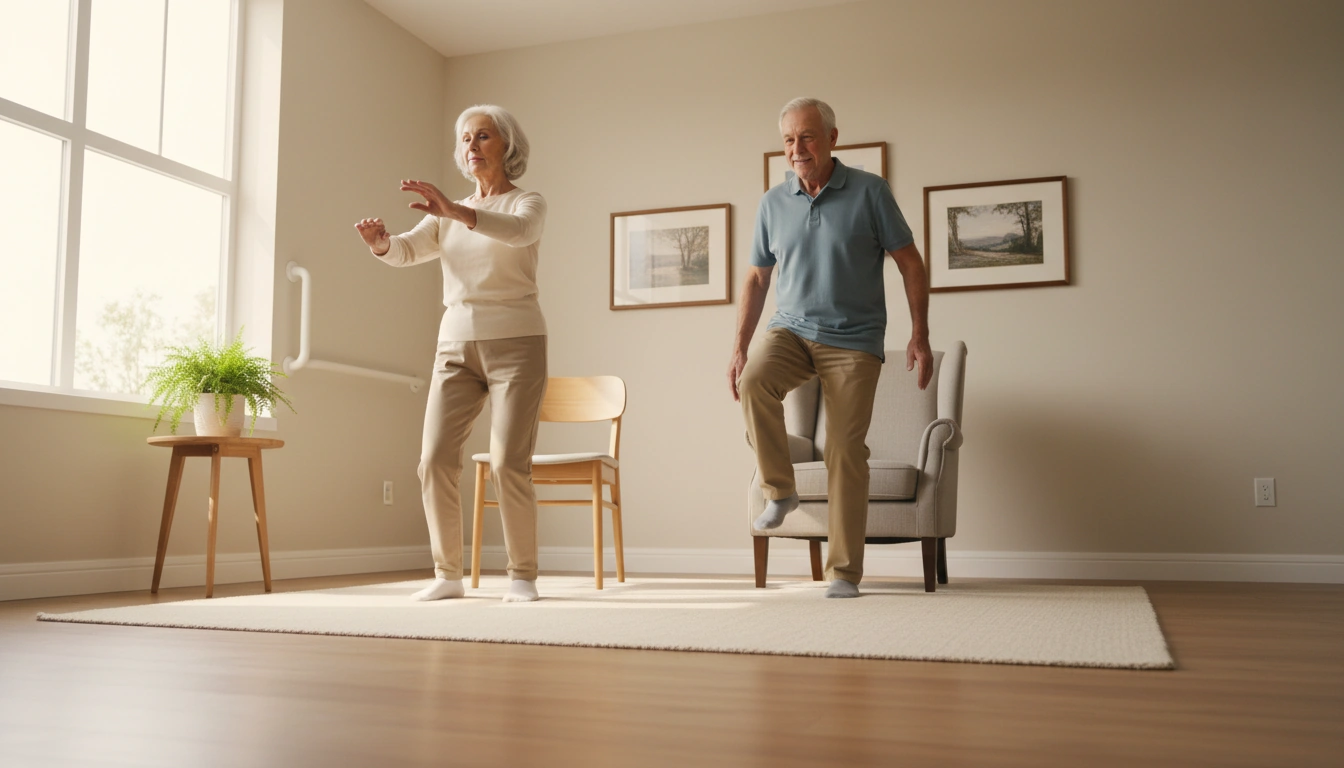
Tai Chi combines deliberate, flowing movements with controlled breathing and focused attention. That combination trains proprioception, sharpens postural control, and builds the kind of body awareness that catches a stumble before it becomes a fall. A 2024 study by L. Li found that Tai Chi practice improved both tactile and kinesthetic sensation in adults over 80 — and those benefits held up for six months after the study ended. For a population where sticking with an exercise program can be genuinely difficult, that kind of lasting effect is remarkable.
There’s also something that doesn’t show up in the data but that I think matters enormously: Tai Chi reduces the anxiety around movement. Fear of falling is its own risk factor — when you’re tense and hesitant, you move differently, and not in a good way. Tai Chi builds confidence alongside coordination. That combination is hard to replicate.
Strength Training: The Unsexy Essential That Changes Everything
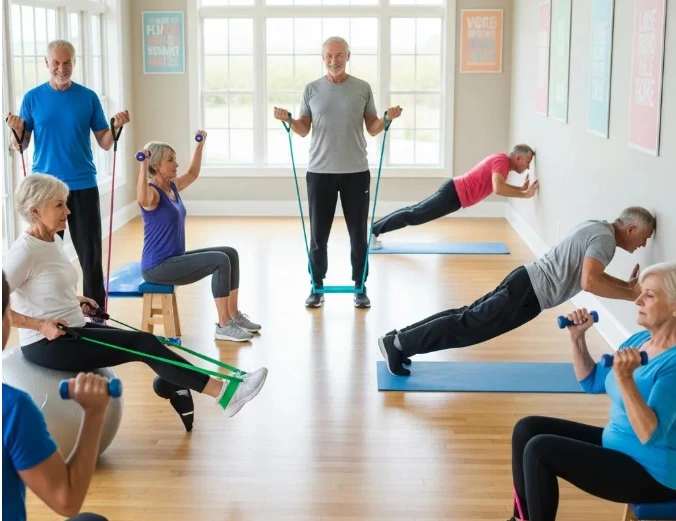
Nobody’s making a motivational poster about chair squats. But if you’re serious about how to improve balance in seniors, strength training is non-negotiable. The muscles around your hips, thighs, and core are doing the heavy lifting — literally — when it comes to keeping you upright. And they need regular work to stay strong.
The good news is that you don’t need a gym or a complicated program. Some of the most effective moves are also the simplest:
- Chair-assisted squats — stand up slowly, sit back down with control. That’s the whole exercise. It works.
- Side leg raises — standing behind a chair, lift one leg out to the side and lower it slowly. Your hip abductors will feel it.
- Resistance band exercises — light bands add just enough challenge to build strength without stressing joints.
The principle is gradual progression — making things a little harder over time as your body adapts. Start easy, build slowly, and always use support if you need it. There’s genuinely no prize for skipping the chair.
Yoga: Where Flexibility Meets Focus
Yoga rounds out the trio in a way that nothing else quite does. Where Tai Chi emphasizes flow and strength training builds power, yoga adds flexibility and body awareness that directly translates to better balance. Poses like Tree Pose, Warrior III, and single-leg variations challenge your stability in a controlled environment — which is exactly the kind of practice your nervous system needs to get better at the real thing.
And before anyone says “I can’t do yoga” — chair yoga is a thing, it works, and it’s a genuinely effective entry point for anyone who’s been sedentary or has limited mobility. The seated versions of balance-focused poses are not a consolation prize. They’re a legitimate starting point.

Senior Fall Prevention: Making Your Home Work For You, Not Against You
Here’s a number that stopped me cold when I first read it: according to a study by B.A. Steinman (2010) on environmental assessment and fall prevention strategies, roughly 55% of fall-related injuries happen inside the home — and about 35–40% of falls are linked to environmental factors that are entirely fixable. That means more than a third of falls aren’t really about the person at all. They’re about the space.
I find that oddly hopeful. Because while you can’t always control how your inner ear behaves on a given morning, you absolutely can control whether there’s a loose rug in the hallway.
The Home Safety Walk-Through That Could Prevent a Fall
You don’t need to renovate anything. You need to walk through your home slowly — or a loved one’s home — and look at it with fresh eyes. Ask yourself: where are the traps?
Start with tripping hazards. Loose rugs are the classic culprit, but don’t overlook extension cords crossing the floor, furniture placed in unexpected spots, or slightly raised thresholds between rooms. These are the things we step over a thousand times without thinking — until one day we don’t.
Install grab bars where it counts. The bathroom is ground zero for falls. Wet floors, awkward positions, the need to shift weight quickly — it’s a genuinely risky environment. Grab bars near the toilet and in the shower aren’t just for people who’ve already had a scare. They’re smart prevention for anyone. Stair landings are another high-priority spot that often gets overlooked.
Fix the lighting. This one gets skipped constantly, and I don’t understand why. Poor lighting doesn’t just make it hard to see — it disrupts depth perception, which is already compromised in many older adults. Bright, even lighting on stairs, in hallways, and especially in the bathroom at night makes a real difference. Motion-activated night lights are a low-effort, high-impact upgrade that costs almost nothing.
Assistive Devices: Tools, Not Admissions of Defeat
There’s sometimes a real reluctance to use a cane or walker — as if accepting one means something has been permanently lost. I’d push back on that framing pretty firmly. A well-fitted walking aid is a tool, the same way glasses are a tool. It extends your capability; it doesn’t define your limits.
Canes and walkers provide a wider base of support, which is exactly what the body needs when balance is uncertain. Non-slip footwear — shoes with good tread, a secure fit, and a low heel — reduces slip risk on smooth floors more than most people expect. Shower chairs and stairlifts make daily tasks safer without requiring anyone to white-knuckle their way through a routine that should feel ordinary.
The key word is well-fitted. A cane that’s the wrong height or a walker that’s not properly adjusted can actually make things worse. A physical therapist or occupational therapist can get the fit right — and that appointment is worth making.
How Physical Therapy Targets Balance at the Source
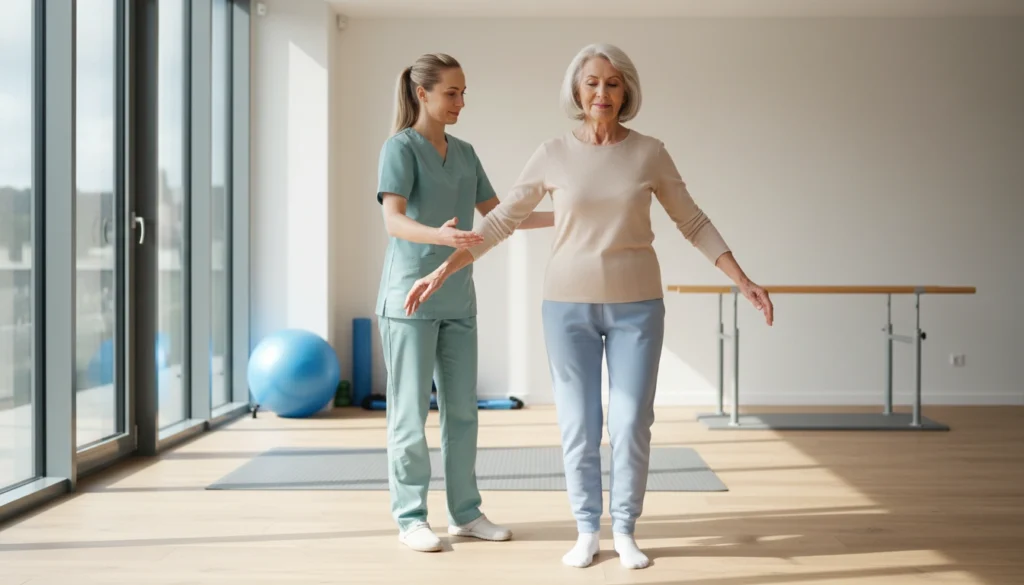
Physical therapy is where how to improve balance in seniors gets genuinely personal. A good PT doesn’t hand you a generic exercise sheet and send you home. They assess your specific strengths, weaknesses, gait patterns, and history — then build a program around what you actually need. It’s the difference between a tailored suit and something off the rack.
Vestibular Rehabilitation: When the Problem Is in Your Ears
If dizziness or vertigo is part of the picture, vestibular rehabilitation therapy (VRT) is worth knowing about. It’s an exercise-based program specifically designed to help the nervous system compensate for inner-ear dysfunction — and it works through a combination of adaptation, substitution, and habituation.
A 2021 review on vestibular rehabilitation therapy outlined its core goals: improve gaze stability, enhance postural control, reduce vertigo, and restore daily function. The exercises involve head-eye coordination drills, balance tasks with a reduced base of support, and gradual exposure to the kinds of movements that trigger symptoms. It sounds counterintuitive — deliberately doing the thing that makes you dizzy — but that’s exactly how the nervous system learns to compensate. Controlled, progressive exposure is the mechanism.
VRT is appropriate for a wide range of vestibular conditions, regardless of age or how long symptoms have been present. If dizziness is contributing to balance problems, this is a targeted, evidence-backed path forward that’s worth asking a doctor about specifically.
Core PT Techniques That Build Real-World Stability
Beyond vestibular work, physical therapists use a toolkit of techniques that directly address fall risk in practical, everyday terms:
- Strengthening exercises focused on the core and lower body — the literal foundation of stable movement
- Progressive balance training — from two-legged stands to single-leg work to unstable surfaces, each step building on the last
- Functional mobility training — practicing the actual movements of daily life: getting up from a chair, stepping over obstacles, turning around quickly without losing your footing
That last category matters more than it might seem. It’s not enough to balance on one leg in a clinic. You need to catch yourself when you trip on the way to the mailbox. Functional training is what bridges that gap between the exercise and the real world.
Nutrition and Bone Health: The Foundation Beneath the Foundation
You can do all the right exercises and still be at elevated risk if your bones are brittle and your muscles are underfueled. Nutrition is the quiet backbone of any serious balance improvement plan — and it’s one of the most underappreciated pieces of the puzzle.
The Nutrients That Keep Bones Strong
Calcium and vitamin D are the headline act, and for good reason. Calcium maintains bone density — found in dairy, leafy greens like kale and bok choy, and fortified foods. Vitamin D is what allows your body to actually absorb and use that calcium. Without enough of it, you can eat all the dairy you want and still come up short. Sunlight is the most natural source, but fatty fish, egg yolks, and fortified foods fill the gap, especially through winter months when sun exposure drops.
Magnesium and phosphorus play supporting roles in bone structure and are easy to get through nuts, seeds, and whole grains. The goal isn’t to obsess over every micronutrient — it’s to eat a varied, whole-food diet that covers the bases consistently, day after day.
Protein, Hydration, and Why Both Matter More Than You Think
Here’s something that genuinely surprises people: older adults actually need more protein per pound of body weight than younger adults, not less. Muscles need protein to repair and grow, and the efficiency of that process declines with age — which means the intake needs to go up to compensate. Lean meats, fish, eggs, legumes, and dairy all contribute. Spreading protein across meals rather than loading it all at dinner improves how well the body actually uses it.
And then there’s hydration — the most unglamorous advice in this entire article, and also one of the most impactful. Dehydration causes dizziness, reduces concentration, and weakens muscle function. All three of those things directly increase fall risk. Drinking enough water throughout the day, and extra during activity or hot weather, is one of the simplest things you can do to support balance. It’s not exciting. It works anyway.
Technology That’s Actually Changing the Game for Senior Balance
This is the part of the conversation I find genuinely exciting — because the technology available for monitoring and improving balance in older adults has advanced dramatically, and it’s becoming more accessible every year.
Wearables That Watch Your Back (Literally)
Modern smartwatches and activity trackers have moved well beyond step counting. They can monitor gait patterns, detect subtle changes in movement quality, and identify fall-risk patterns before a fall actually happens. Many include automatic fall detection that alerts caregivers or emergency contacts if a sudden impact is registered.
What I find most valuable about these devices isn’t just the emergency response feature — it’s the ongoing data. Seeing trends in activity levels, gait variability, or balance metrics over time gives both individuals and clinicians something concrete to work with. It turns “I’ve been feeling a bit unsteady lately” into actual information that can drive a targeted response.
AI and Virtual Reality: Smarter, More Engaging Rehab
AI-driven rehabilitation platforms and virtual reality environments are making balance training more personalized and, honestly, more interesting than it’s ever been. VR lets users practice navigating real-world scenarios — uneven terrain, crowded spaces, unexpected obstacles — in a completely controlled setting where a stumble has zero consequences. The system adjusts difficulty based on performance, keeping the challenge in the productive zone without ever becoming dangerous.
AI tools analyze movement data and adapt programs in real time, helping clinicians fine-tune interventions and helping individuals stay engaged with their training over the long haul. It’s not replacing the human element of physical therapy — but it’s a genuinely powerful complement to it, and it’s only getting better.
A Realistic Plan for Better Balance — Starting This Week
So what does a practical, sustainable approach to how to improve balance in seniors actually look like in real life? Here’s the honest version — no fluff, no overwhelming to-do list:
Week one: pick one exercise. A Tai Chi class, a yoga video, or a simple home routine of chair squats and leg raises. Twenty minutes, two or three times this week. That’s it.
This weekend: do the home walk-through. Spend an afternoon identifying the obvious hazards — rugs, lighting, bathroom safety. Fix what you can fix immediately. Note what needs a grab bar or a brighter bulb.
This month: talk to a doctor or PT. Especially if there’s dizziness, a history of falls, or significant mobility limitations. A professional assessment catches specific issues that general advice won’t.
Ongoing: eat well, drink water, stay consistent. Not revolutionary. Genuinely impactful.
None of this requires a dramatic lifestyle overhaul. It requires showing up for small habits that compound over time — which, when you think about it, is how most good things in life actually work.
Frequently Asked Questions
What are the early signs that balance is declining? Frequent stumbling, grabbing furniture for support, difficulty on uneven ground, dizziness, or quietly avoiding activities that used to feel easy. Fear of falling is itself a warning sign worth taking seriously.
Can balance really improve at any age? Yes — and the research on Tai Chi in adults over 80 is a good example of just how much. The nervous system retains plasticity well into old age, and muscles respond to training regardless of when you start.
How long before balance exercises show results? Most people notice real improvements within four to eight weeks of consistent practice. The operative word is consistent — two to three sessions per week, every week, beats occasional intense effort every time.
Are balance exercises safe for seniors with arthritis or joint pain? Many are, especially chair-assisted and seated options. Always check with a healthcare provider first, and work with a physical therapist if there are significant joint issues. There are almost always modifications that work.
The Bottom Line
Figuring out how to improve balance in seniors isn’t about finding one magic exercise or one perfect solution. It’s about layering smart habits — movement, environment, nutrition, professional support, and the right tools — into a life that keeps older adults steady, confident, and genuinely independent.
I believe most falls are preventable. Not all of them — but most. And the gap between “at risk” and “moving with confidence” is often smaller than people think. It just takes knowing where to start, and then actually starting.
Pick one thing from this guide. Do it this week. Then add another. That’s how balance improves — one small, consistent step at a time. And honestly? That’s how most worthwhile things get built.