
How Do I Become a Prepper as a Retiree: Your Real-World Guide to Emergency Preparedness That Actually Works
How do I become a prepper as a retiree? This guide walks you through gear, food storage, checklists, and mindset — practically, confidently, and without the drama.
The night that changed everything for me wasn’t dramatic. No tornado sirens, no earthquake, no cinematic disaster unfolding outside my window. It was just a storm that knocked out power for four days and exposed, in the most embarrassing way possible, how completely unprepared I was.
By night three I was eating cold soup in the dark, phone at 4%, wearing a headlamp I’d found in a junk drawer. My neighbor knocked to check on me. She had a generator, organized shelves of food, a hand-crank radio, and the energy of someone who had thought all of this through long before the clouds rolled in. I had lukewarm soup and regret.
That was the moment I stopped thinking of prepping as something other people did and started genuinely asking: how do I become a prepper as a retiree? Not a bunker-building, camo-wearing, end-times prepper. Just someone who isn’t completely helpless when ordinary life gets disrupted — and who has the peace of mind that comes from actually being ready.
If you’re here asking the same question, good. You’re already doing better than I was — because I didn’t think to ask until I was already sitting in the dark.
Key Takeaways
- Emergency preparedness is simply thinking ahead — it’s the spare tire logic applied to your home and your retirement
- Retirees on fixed incomes benefit enormously from a well-stocked pantry that absorbs price spikes and supply disruptions
- Start with your most realistic local risks — not the most dramatic hypotheticals
- A household plan takes about 45 minutes to create and is the single most important thing you can do before buying any gear
- Water is the most critical supply — one gallon per person per day, minimum three-day supply at home
- Skills matter as much as gear — first aid, navigation, and water purification are worth learning at any age
- Build gradually, rotate regularly, and let the system run itself — this doesn’t have to be a weekend overhaul
How Do I Become a Prepper as a Retiree: What Emergency Preparedness Actually Means
Let’s get one thing out of the way first. Prepping has a branding problem. Say the word and most people picture someone with a decade’s worth of freeze-dried food and a suspicious number of generators. That version exists, sure. But it’s not the whole picture, and it’s definitely not where you have to start — especially in retirement.
At its core, emergency preparedness is just thinking ahead. It’s identifying the risks that are realistic for where you live, making a plan for how you’d respond, and putting together the resources to actually carry that plan out. That’s it. It’s the same logic as keeping a spare tire in your car — not because you expect a blowout, but because you’d rather not be stranded on the side of the road at midnight hoping someone stops.
For retirees specifically, this logic carries extra weight. Fixed incomes leave less room to absorb sudden grocery runs or price spikes during a crisis. Mobility considerations can make last-minute store trips harder. And many retirees live alone or with a partner, without the built-in backup network that larger households sometimes provide. A well-organized preparedness system quietly addresses all of that — without requiring a bunker, a survival course, or a dramatic lifestyle overhaul.
Once I reframed it that way, the whole thing felt a lot less extreme and a lot more like something I should’ve been doing all along.
Why Being Prepared Matters More Than You’d Think
Here’s something I didn’t expect to find when I started digging into this: preparedness isn’t primarily about having the right stuff. It’s about feeling capable enough to use it.
A literature review published in the journal Disasters found that people who feel confident and supported are significantly more likely to prepare effectively. The researchers looked at a whole mix of factors: health status, self-efficacy, community support, the nature of the emergency. What stood out was that knowledge and confidence drive action just as much as resources do. Which means starting with solid information — like you’re doing right now — isn’t just a nice first step. It’s actually the right one.
For retirees, this matters even more. The mental shift that comes with being prepared — that quiet exhale of knowing you’re actually ready — is genuinely valuable at a stage of life when uncertainty can feel heavier. You stop feeling anxious about what might happen and start feeling steady about what you’ve already done. That’s not a small thing. That’s the whole point.
Understanding the Core Benefits of Becoming a Prepper in Retirement
People come to prepping from all kinds of directions. Some had a close call. Some watched a natural disaster unfold on the news and thought, that could be us. Others quietly hit a point where depending entirely on emergency services — which are often stretched thin when large-scale disasters hit — started feeling like a gamble they weren’t willing to keep taking.
Whatever brought you here, the benefits go well beyond having supplies on a shelf. You make better decisions under pressure when you’ve already thought through the scenarios. You feel less rattled by uncertainty. And there’s a quiet kind of confidence that comes from knowing that if the power goes out tonight, you’re not scrambling — you’re fine.
For retirees, there’s an additional layer: financial resilience. A well-stocked pantry absorbs price spikes, supply chain disruptions, and the kind of unexpected expenses that can strain a fixed income. It’s not just emergency preparedness — it’s smart household economics. That shift in mindset, honestly, was the biggest thing prepping gave me. The gear is useful. The confidence is something else entirely.
Identifying Your Risks: The Step Most People Skip
This is where a lot of new preppers go sideways — and I’m including my past self here. The excitement of buying gear kicks in before the thinking does. I almost bought a flood kit once. I live nowhere near a flood zone. Truly a great use of forty-five minutes and some money I didn’t need to spend.
Before you buy anything, sit down and honestly think through what you’re actually preparing for. What are the most realistic emergencies where you live? If you’re in the Southeast, hurricanes and flooding are your primary concerns. The Pacific Northwest brings earthquake risk and wildfire season. The Midwest has tornadoes and ice storms that can shut everything down for days. And everywhere has the unglamorous stuff — extended power outages, water main breaks, a bad winter, supply chain hiccups that empty grocery shelves faster than you’d believe.
For retirees, there’s an additional layer of risk assessment worth doing: health and mobility. Do you rely on medications that need refrigeration? Do you have mobility limitations that would affect evacuation? Are there medical devices in your home that require power? These aren’t uncomfortable questions — they’re practical ones, and answering them honestly makes your preparedness plan dramatically more effective.
Nail down your top two or three risks and let those drive your decisions. Your money goes a lot further when it’s solving real problems instead of hypothetical ones.
Building Your Household Plan
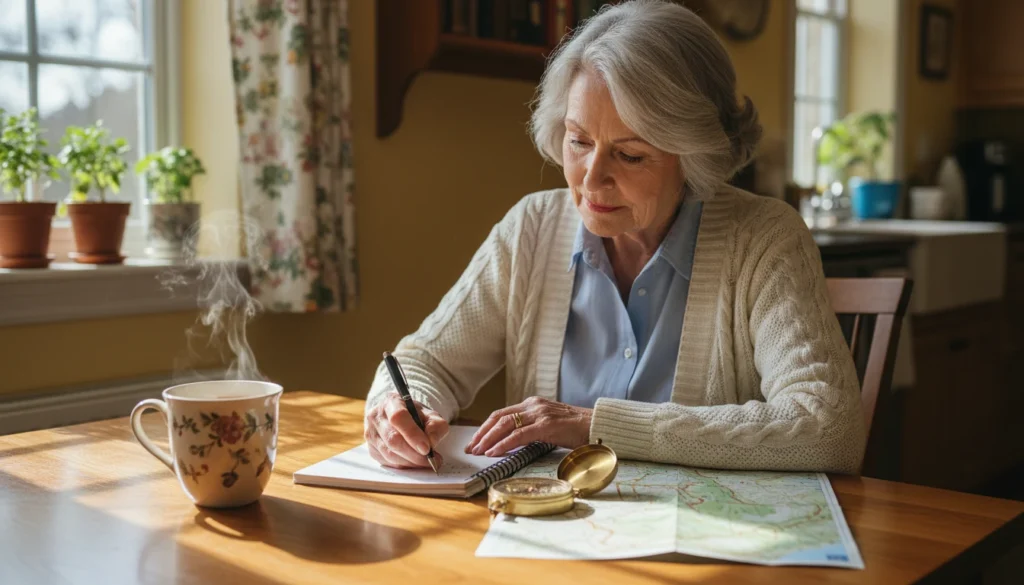
Once you know your risks, the next step — before any gear, before any food storage — is a simple household plan. Where would you go if you had to leave in 20 minutes? How would you reach family members if cell towers were jammed? Who’s your out-of-state contact that everyone checks in with?
I avoided this for almost two years. Kept telling myself I’d get to it. Then one Sunday afternoon I actually sat down and did it, and it took 45 minutes. Forty-five minutes. I’d been putting off something that took less time than a mediocre Netflix episode.
For retirees, this plan should also include a few additional considerations: who knows your medical needs and where your medications are stored? Do you have a neighbor or family member who checks on you regularly? Is there a community emergency network in your area you should be connected to? These additions take another ten minutes and make your plan significantly more complete.
Write it down. Share it with everyone in your household. Practice it at least once. A plan that only lives in your head isn’t really a plan — it’s a good intention that’ll evaporate the moment things get stressful.
Survival Gear Essentials Every Retiree Prepper Needs
Okay. Now we can talk gear. And I won’t pretend this isn’t the fun part, because it absolutely is.
Think of your core kit as a foundation, not a finish line. You’re not outfitting a special ops team. You’re making sure your household can function for at least a week without outside help — and that’s a completely achievable goal, even on a retirement budget.
Must-Have Tools and Equipment
A solid first aid kit is where you start, and I mean a real one. Not the sad little travel pouch with four bandages that’s been sitting in your bathroom cabinet since who knows when. Stock it with bandages in multiple sizes, antiseptic wipes, gauze, medical tape, pain relievers, tweezers, scissors, a thermometer, disposable gloves, and a printed first aid manual. That last one matters more than you’d think — stress has a way of erasing things you definitely knew five minutes ago.
For retirees, add a 30-day buffer of any prescription medications your doctor will work with you on, a list of all current medications and dosages, and any medical device backup supplies you rely on. Consider taking a certified first aid and CPR course through the American Red Cross — it’s available at all skill levels and genuinely worth the afternoon.
Navigation tools are next, and this is the one people most often skip because their phone feels like enough. It isn’t — not when the battery dies, the cell network goes down, or you’re driving an unfamiliar evacuation route under pressure. Keep detailed paper maps of your local area in a waterproof sleeve, a quality compass, and a GPS device with offline maps downloaded. I resisted paper maps for years. Then I got turned around on a camping trip with no signal and spent a genuinely embarrassing amount of time figuring out which direction was north. Paper maps live in my car permanently now.
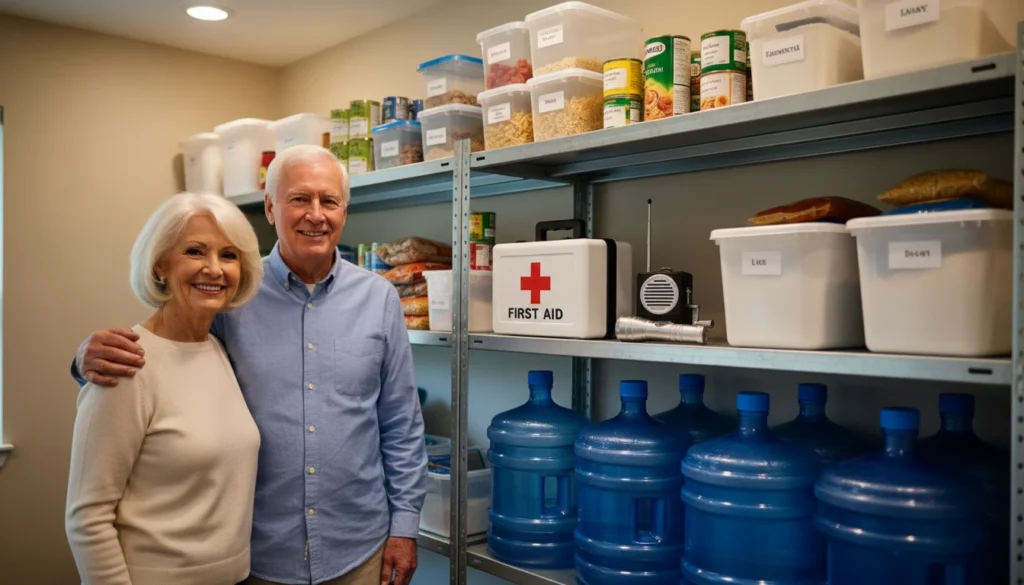
Hydration supplies might be the most critical piece of all. The human body can survive weeks without food. It can survive days — just days — without water. A portable water filter (LifeStraw and Sawyer are both solid, well-tested options), purification tablets as a backup, and sturdy BPA-free containers for storage and transport. The standard recommendation is one gallon per person per day, with a minimum three-day supply at home. I keep a week’s worth stored and a portable filter in my bag.
Beyond those three: a multi-tool, flashlights with backup batteries, a hand-crank emergency weather radio, fire-starting tools, paracord, and N95 respirators round out a solid kit. None of it is exotic. All of it earns its place.
How to Choose Reliable and Practical Gear
When you’re shopping, prioritize durability, multi-functionality, and brand reputation. Read reviews from actual preppers in forums and communities — not just the product descriptions written by the people selling the thing. For retirees, also consider ergonomics: can openers that are easy on arthritic hands, lightweight containers, and tools with comfortable grips all matter more than most gear guides acknowledge. Gear that fails when you need it is worse than no gear at all, because it gives you false confidence. And false confidence in an emergency is genuinely dangerous.
How to Create an Effective Emergency Preparedness Checklist
A checklist sounds about as exciting as a dental appointment. But it’s the thing that keeps you from standing in your kitchen during a blackout thinking, I know I have a flashlight somewhere. I’ve been that person. It’s not a great feeling.
Step-by-Step Guide to Building Your Checklist
Start by listing everything your household would need to survive 72 hours without outside help, then stretch that thinking to two weeks. Organize by category — water, food, medical, tools, documents, communication, clothing and shelter, and personal items.
That last category gets underestimated constantly. For retirees, personal items include things like reading glasses, hearing aid batteries, mobility aids, and comfort items that support routine and reduce stress during a disruption. Small comforts carry real weight in hard moments, and anyone who’s been through a prolonged emergency will tell you the same thing.
Keep the checklist somewhere accessible, share it with your household, and — this is the part everyone skips — actually maintain it. Set a calendar reminder every six months to check expiration dates, test batteries, update documents, and reassess your risks. Think of it like changing your smoke detector batteries. Slightly annoying, occasionally forgotten, but the kind of thing you’re really glad you did when it matters.
Common Items to Include in Your Bug Out Bag
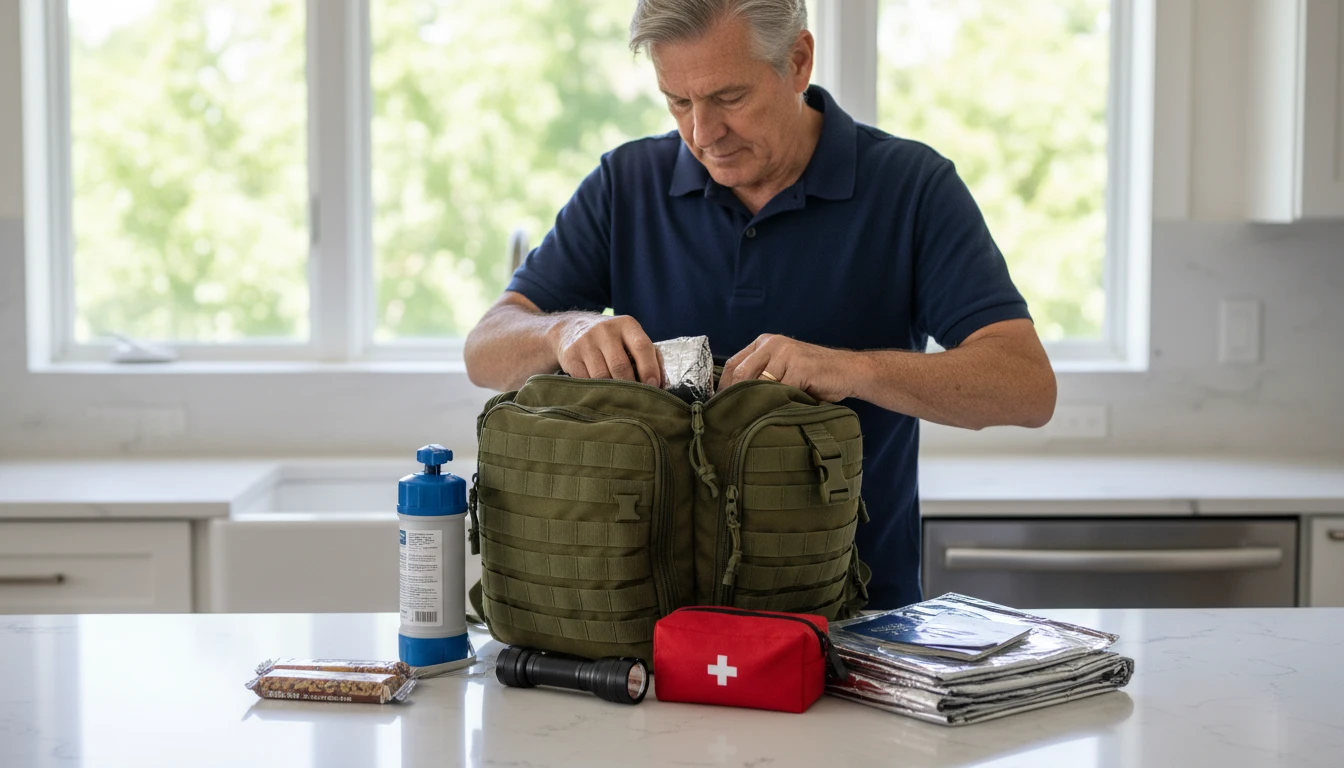
A bug out bag is your grab-and-go kit for when staying home isn’t an option. It should sustain you for at least 72 hours and be light enough to actually carry. For retirees, weight matters — aim for a bag you can comfortably manage, and consider a rolling bag or backpack with a frame if carrying weight is a concern.
For food, go compact and calorie-dense — energy bars, dried fruit, nuts, jerky, instant oatmeal, and freeze-dried meals. I’ll be honest: I was skeptical about freeze-dried meals until I tried a few on a camping trip. Some of them are genuinely good. That still surprises me a little, but it’s true.
For water, carry a portable filter and purification tablets. Throw in at least two Mylar emergency blankets — they’re the size of a deck of cards, weigh almost nothing, and retain up to 90% of your body heat.
Fill it out with a change of clothes and broken-in footwear (not new shoes — blisters are a real and miserable problem that nobody talks about enough), hygiene items, copies of important documents including medical records and insurance cards, cash in small bills, a compact first aid kit, a flashlight, a backup battery pack, and a whistle. Customize everything for your actual household. There’s no universally perfect bug out bag — there’s only the right one for you.
Practical Prepper Food Storage Ideas for Retirees
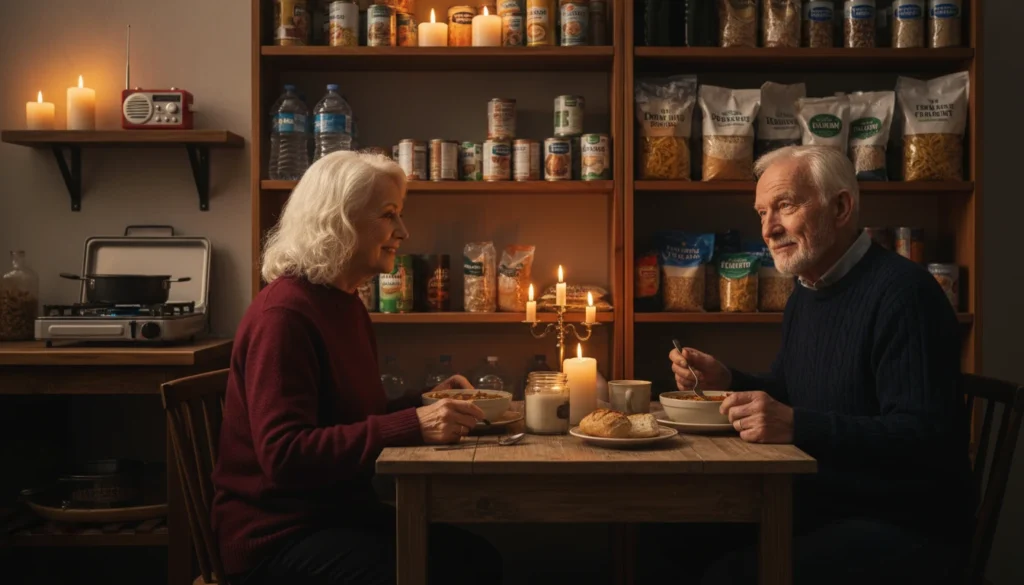
Food storage is where prepping gets genuinely strategic — and where I’ve seen the most well-intentioned people make the most avoidable mistakes. The goal isn’t to hoard. It’s to build a sustainable, rotating supply of nutritious food that you’d actually want to eat when you’re already stressed and tired and just want something that tastes like normal life.
Selecting Long-Lasting and Nutritious Food Supplies
Think about three things: nutritional value, shelf life, and variety. Emergencies are physically and mentally exhausting, and your body needs real fuel — not just calories, but protein, healthy fats, vitamins, and minerals. For retirees managing specific health conditions, this matters even more. A stockpile of nothing but white rice and crackers will leave you depleted and miserable within days.
Build in canned beans, lentils, and chickpeas for protein and fiber. Canned fish and meat. Nut butters for healthy fats and serious calorie density. Whole grain crackers and oats. Canned fruits and vegetables. Multivitamins as a safety net. For retirees watching sodium intake, seek out low-sodium canned options — they’re widely available and worth the small extra effort to find.
For shelf life: canned goods last 2–5 years, dried beans and rice up to 25–30 years when stored properly, and honey indefinitely — honey literally does not expire, which is one of my favorite facts to bring up at completely unrelated moments.
Don’t underestimate variety, either. Eating the same three foods for two weeks is a morale problem, not just a nutrition problem. Include comfort foods — instant coffee, hot cocoa, your favorite crackers, some chocolate. I keep a small stash of good dark chocolate in my kit. Strictly necessary for survival? No. Does it make a hard situation meaningfully better? Every single time.
Tips for Organizing and Rotating Your Food Storage
Store food in clear, labeled containers so you can actually see what you have and when it was purchased. Practice FIFO — First In, First Out — by placing newer items behind older ones so you always use the oldest stock first. It’s the same system grocery stores use, and it works just as well at home.
The smartest approach I’ve landed on is to stop thinking of food storage as a separate emergency stash and start thinking of it as a larger version of your normal pantry. You rotate through it regularly, replace what you use, and your stock stays fresh. It becomes part of your normal retirement life rather than a separate, intimidating project sitting in the corner of your basement quietly judging you.
Frequently Asked Questions
What types of emergencies should a retiree prepare for? Start with the most realistic risks in your region — natural disasters, extended power outages, health crises, and local supply disruptions. Add a layer of personal risk assessment around medications, mobility, and medical devices. Tailor your plan to where you actually live, not where the most dramatic disasters happen on TV.
How do I get my family involved in my preparedness plan? Share your plan with family members and close neighbors. Assign roles where appropriate, explain your reasoning, and make sure at least one trusted person knows where your supplies and medical information are stored. A plan that only you know about has a significant gap in it.
What mistakes should I avoid as a new retiree prepper? Buying gear without a plan, ignoring your specific local risks, skipping the medical and mobility considerations that matter in retirement, and overlooking the skills side of preparedness entirely. Start with essentials and build gradually. Slow and steady actually works here.
How do I maintain my supplies over time? Review everything every six months. Check expiration dates, test equipment, rotate food stock, and update your household plan as things change. Put it in your calendar right now — seriously.
What skills should I develop? First aid and CPR, water purification, navigation, fire starting, and basic food preservation. Skills make gear useful. Without them, you just have expensive stuff. Many community centers and libraries offer preparedness workshops specifically designed for older adults — worth checking what’s available in your area.
How do I stay informed about local emergencies? Sign up for your city or county’s emergency alert system, follow NOAA weather alerts, monitor local news during developing situations, and consider joining a community preparedness group or CERT program in your area.
You Don’t Have to Do This All at Once
So — how do I become a prepper as a retiree? You start exactly the way you started today. You show up, you take it seriously, and you build from there one layer at a time.
You don’t need to overhaul your life this weekend. Start with a three-day water supply and a real first aid kit. Build a checklist. Add food storage gradually over a few months. Learn one new skill every season. Before long, you’ll have a genuinely solid system — and more importantly, you’ll have that quiet, steady confidence that comes from knowing you’re actually ready for something instead of just hoping it doesn’t happen.
Preparedness isn’t about fear. It’s about freedom. The freedom to face uncertainty without panic, to protect the people you love, and to be the calm neighbor with the generator and the hand-crank radio when everyone else is scrambling. In retirement, that kind of quiet confidence is worth more than almost anything else you could put on a shelf.
That’s worth a few cans of beans and an afternoon with a compass.
Now go check your flashlight batteries. I’m completely serious — when did you last do that? I’ll wait.






2 Comments
Comments are closed.