Cognitive Activities for Seniors: Brain Exercises, Memory Games, and Daily Habits for Better Thinking
Cognitive Activities for Seniors made simple: quick games, gentle movement, and friendly chats to support memory, focus, and mood—start this week.
If you’ve ever felt oddly proud after finishing a crossword—like you just did something medically responsible—same. Crosswords are a solid choice. They’re just not the whole story.
When people talk about “brain health” for older adults, it can sound complicated (and a little intimidating). But the most helpful cognitive activities for seniors are often simple, pleasant, and repeatable—things that gently challenge memory, attention, and thinking without turning life into homework.
Quick takeaway
You don’t need a perfect routine. You need a doable one. Small, consistent cognitive activities for seniors—done most days—tend to beat the occasional big effort.
Table of contents
- Why cognitive activities for seniors matter
- What makes a brain activity “good” (without being miserable)
- Practical cognitive activities for seniors (easy to start)
- A simple 7-day starter plan
- How to keep it going (without burnout)
- FAQs
Why cognitive activities for seniors matter
The hopeful truth: the brain isn’t a fixed machine that “powers down” after a certain birthday. It adapts and rewires. That ability is often described as neuroplasticity.
You’ll also hear the term cognitive reserve—think of it like building extra routes on a map. The more routes you build over time, the easier it is to get where you want to go, even if one road gets bumpy.
The National Institute on Aging highlights that while we can’t control everything, many lifestyle factors that affect cognitive health are changeable—like staying mentally engaged, being physically active, staying socially connected, and managing health conditions.
What makes a brain activity “good” (without being miserable)
If we ignore marketing for a second, the best cognitive activities for seniors usually have three traits:
- Just-challenging-enough: it requires effort, but not so much you want to throw it across the room.
- Repeatable: you can do it again tomorrow (or three times this week) without needing a huge setup.
- Enjoyable: not optional. Enjoyment is what makes consistency possible.
A useful rule of thumb: pick activities that keep you out of autopilot. If your mind has to lean in, you’re training something real.
Practical cognitive activities for seniors (easy to start)
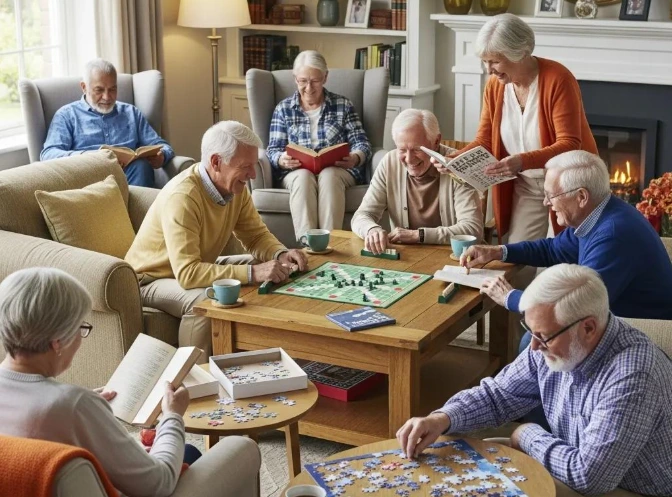
Below are simple, research-informed options. You can choose 2–4 and rotate them.
1) Retrieval-based memory games (great for recall)
These are classics for a reason. They train your brain to pull information up, not just recognize it.
Try:
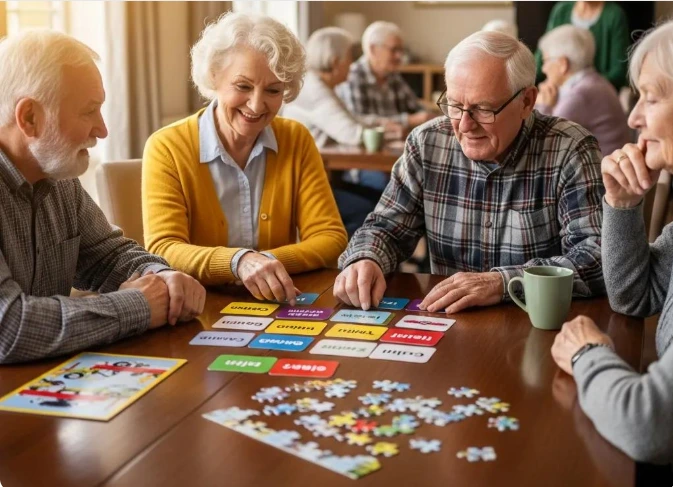
- Matching card pairs (store-bought or homemade)
- Crosswords
- Word searches
- Sudoku
Make it work better: gently increase difficulty over time (a slightly harder puzzle, a timer, fewer hints). According to UCLA Health, varying the types of games you play may be more beneficial than sticking to only one.
2) “Learn something new” mini-challenges (high impact, low drama)
Learning is special because it forces the brain to build fresh pathways.
Simple ways to start:
- Learn 5 new words in another language (10 minutes)
- Watch one short how-to video and practice the skill
- Try a beginner craft pattern (knitting, origami, watercolor)
The trick: keep it small. Consistency beats intensity.
3) Music activities (memory + attention + emotion)
Music is sneaky powerful. It combines listening, timing, memory, and emotion.
Options:
- Learn a simple song on a keyboard/ukulele
- Clap rhythms along to music
- Join a casual sing-along group
If you want your brain to work without feeling like it’s “working,” music is a great gateway.
4) Focus training in 2–5 minutes (attention practice that actually fits)
No incense required.
Try this:
- Sit comfortably.
- Breathe normally.
- Put your attention on the sensation of breathing.
- When your mind wanders (it will), gently return.
That “return” is the rep. It’s like a bicep curl for attention.
5) Strategy games (planning + flexibility)
These train executive function (planning, decision-making, adapting).
Try:
- Checkers or chess
- Bridge or other card games
- Simple logic games with a friend
Bonus: when strategy games are social, they tend to stick.
6) Conversation as brain training (high impact, low tech)
A real conversation uses memory, attention, language, emotion, and flexibility—in real time.
Ideas:
- Weekly coffee chat
- Call a friend and swap “three stories from the week”
- Join a small group (book club, hobby circle)
The NIA also points to social connection as a key piece of cognitive health (NIA).
7) Physical movement that supports brain health (especially mood + energy)

This isn’t “separate” from brain health—it’s part of it.
A 2025 narrative review in Sports Medicine Open reports evidence that both aerobic and resistance training can improve cognitive function and mental health in older adults, with moderate-intensity aerobic exercise linked to benefits for memory and mood regulation (PMC article).
Start simple:
- A brisk walk (safe route + comfortable shoes)
- Light strength training (bands, bodyweight)
- Dance class or tai chi (movement + memory)
A simple 7-day starter plan
Here’s a gentle, realistic week. Swap anything you don’t like.
Day 1 (15–25 min)
- 10 min walk
- 10 min crossword/word search
Day 2 (15–25 min)
- 5 min breathing focus
- 10–15 min matching cards or Sudoku
Day 3 (20–30 min)
- 10 min “learn something new” (language words, new recipe step, simple lesson)
- 10–20 min music (rhythm practice or singing)
Day 4 (15–30 min)
- Walk + “memory stroll”: notice 5 details, recall them later
Day 5 (20–40 min)
- Strategy game (in-person or online) or cards with a friend
Day 6 (15–30 min)
- Creative task: draw, knit, craft, or journaling (write 6 sentences about a memory)
Day 7 (20–40 min)
- Social + mental: read a short article and discuss it with someone
If you only do 3 days: still a win. The goal is a routine you’ll repeat.
How to keep it going (without burnout)
A few things that help people stick with cognitive activities for seniors:
- Use the “too easy / too hard” dial
- Too easy: add a small challenge (time limit, harder level, new topic)
- Too hard: reduce complexity or shorten the session
- Rotate categories (memory + learning + social + movement)
- Track effort, not perfection
- A simple checkmark calendar works.
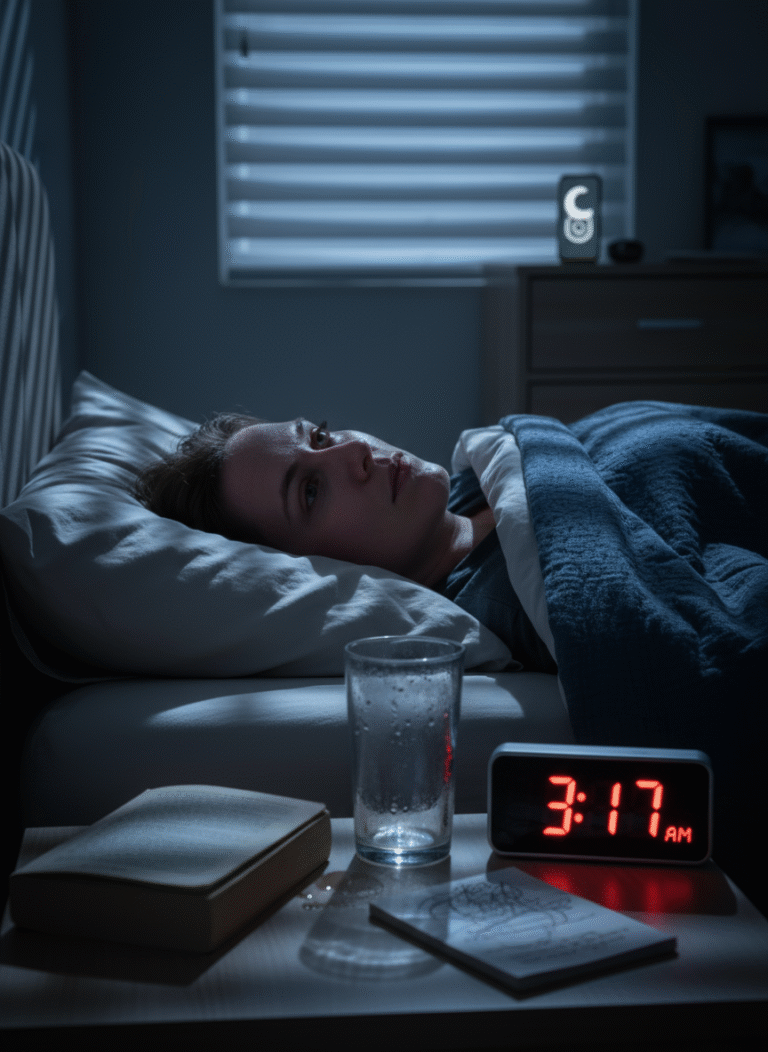
- Protect sleep
- Sleep problems can make everything feel harder the next day.
FAQs
What are fun cognitive activities for seniors that also include social interaction?
Group trivia, book clubs, card nights, craft classes, volunteering, and dance lessons. Social + mental challenge is a strong combination.
How often should I do cognitive activities for seniors to see benefits?
Consistency matters more than duration. Many people do best with 15–30 minutes most days, with variety across the week.
What if someone gets frustrated easily?
That’s a sign the challenge level needs adjusting—not that they “can’t do it.” Make it simpler, shorten the session, or switch to a different activity that feels more welcoming.
Do brain game apps matter?
They can help some people, especially if they’re easy to use and keep you practicing. But general guidance suggests mixing activities and not relying on one game type alone (UCLA Health).
Bottom line
If you’re building a brain-friendly routine, aim for a mix of:
- Memory and attention practice
- Learning something new
- Social connection
- Physical movement
Keep it simple. Keep it kind. Keep it consistent. That’s what makes cognitive activities for seniors work in real life.