
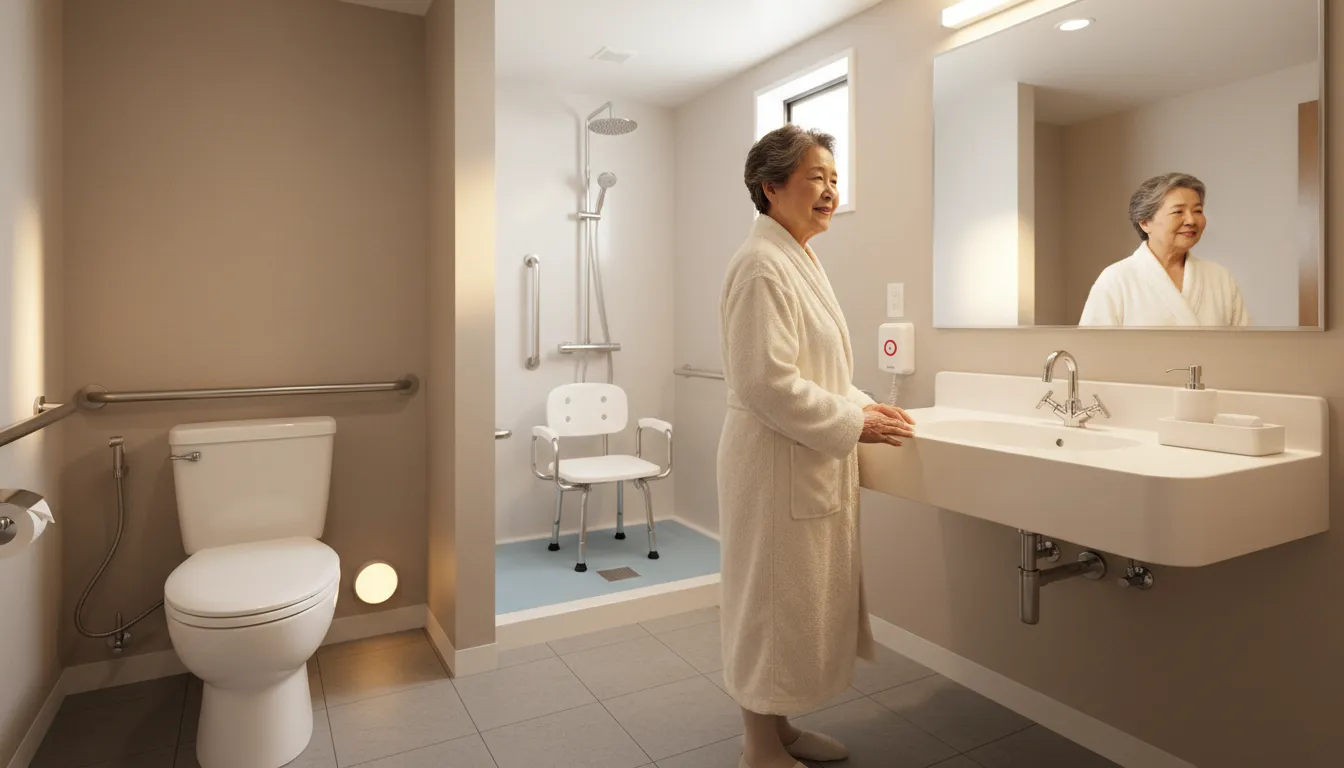
Bathroom Safety Equipment for Seniors: Practical Solutions That Actually Work
Discover the best bathroom safety equipment for seniors to prevent falls, improve accessibility, and support safe independence at home.
Let me start with something most families learn a little later than they’d like: the bathroom is often the most accident-prone room in the house for older adults. Not the stairs. Not the driveway. The bathroom. It’s full of slick floors, awkward turns, hard surfaces, and tiny everyday movements that suddenly ask a lot from aging knees, hips, balance, and eyesight. That’s a tough setup for anybody. For seniors, it can be a real problem.
I remember visiting my grandmother years ago and catching her steadying herself on the towel bar after a shower. A towel bar. Not a grab bar — a decorative rod pretending to have life skills it absolutely did not have. I can laugh about it now because nothing happened, but in the moment, it was one of those quiet wake-up calls. We replaced it with real support that weekend, and the whole bathroom felt different afterward — less risky, less tense, more usable.
That’s really the point of bathroom safety equipment for seniors. It’s not about making a home feel clinical. It’s about making everyday routines less stressful and a lot safer. The right equipment can reduce fall risk, improve confidence, and help older adults hold onto the independence that matters so much. And thankfully, you usually don’t need a full renovation to get there.
Why the Bathroom Is More Dangerous Than Anyone Admits
Bathroom falls are sneaky. They don’t announce themselves with drama. They happen when someone is stepping over the side of the tub, reaching for shampoo, turning too quickly on a wet floor, or getting up from the toilet after their legs have decided to negotiate. That’s what makes them dangerous. They’re built into normal life.
As people age, the body changes in very ordinary ways. Balance can become less steady. Vision may not be as sharp, especially in dim lighting. Muscles tire faster. Joints complain more. None of that means an older adult is fragile or incapable. It just means the room matters more than it used to.
A 2025 review on age-appropriate bathroom product design found that many bathroom products still don’t reflect the real physical needs of older adults, even though thoughtful design changes can reduce fall risk. Earlier work says something similar. In a 2015 systematic review on geriatric bathroom design, M. Afifi found that safer layouts, improved access, and better transitions can help reduce falls in older users. That’s worth paying attention to. It tells us safety isn’t just about “being careful.” A better setup really does change outcomes.
And if you pause and look at a standard bathroom honestly, it’s easy to see why. Wet tile. Hard corners. A raised tub edge. A toilet with nothing nearby to hold on to. Storage that somehow assumes everyone loves bending and twisting before coffee. It’s not malicious design. It’s just not senior-friendly by default.
The Core Types of Bathroom Safety Equipment for Seniors
When people first hear the phrase bathroom safety equipment for seniors, they sometimes picture a room that feels sterile or institutional. But most of the essentials are pretty practical and surprisingly unobtrusive. The goal isn’t to turn the bathroom into a hospital wing. It’s to remove the most common hazards and add support where it actually helps.
At the center of most safe bathroom setups are a few core tools: grab bars, non-slip bath mats, shower chairs, toilet safety frames, and emergency alert systems. Each one solves a specific problem. Grab bars help with balance and transitions. Mats deal with slippery surfaces. Shower chairs reduce fatigue and make bathing more controlled. Toilet frames make sitting and standing easier. Alert systems add peace of mind if help is needed fast.
None of this is flashy. That’s fine. Good safety equipment rarely has a big personality. It just works, and honestly, that’s exactly what you want.
Grab Bars: The Single Best Upgrade You Can Make

If someone asked me where to begin with bathroom safety equipment for seniors, I wouldn’t overthink it. I’d say grab bars.
They’re one of the simplest and most effective upgrades you can make because they help during the exact moments when people are most likely to lose balance — stepping into the shower, stepping out of the tub, lowering down to sit, or pushing up to stand. Those are ordinary actions, but they ask for coordination, strength, and stability all at once.
A good grab bar gives the user something secure to reach for before they start to wobble. That timing matters. Support has to be there in the natural path of movement, not a foot too far away where it looks helpful but isn’t. The most useful spots are usually inside the shower, along the shower wall, and next to the toilet.
Installation is where people sometimes get a little too confident. Grab bars should be mounted into studs or with hardware designed for the right load. Drywall alone doesn’t count as a plan. If a grab bar comes loose when someone leans on it, it doesn’t just fail — it creates a second hazard in the middle of the first one. If you’re handy and know what you’re doing, great. If not, this is a very reasonable time to call someone who does.
When choosing a model, durability matters more than style. Look for solid weight ratings, slip-resistant grip, and materials that hold up well in moisture. In most cases, boring and sturdy beats sleek and questionable.
Non-Slip Bath Mats: Small Fix, Big Difference
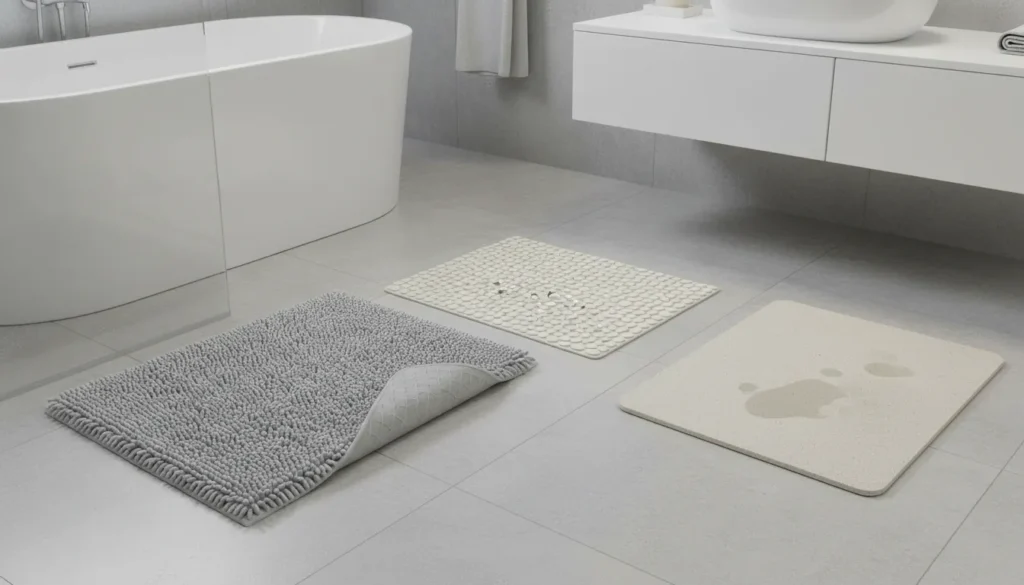
There’s something funny about how easy it is to underestimate bath mats. They’re not exciting. Nobody proudly texts a friend, “Guess who upgraded their floor traction today.” But when it comes to bathroom safety equipment for seniors, a good non-slip mat earns its place.
Wet floors are one of the biggest bathroom hazards, and they show up in all the predictable places — right outside the shower, beside the tub, near the sink, and somehow in the one spot you swore stayed dry five minutes ago. A mat with good grip adds traction where feet need it most.
The details matter. The mat should stay flat, grip the floor securely, and dry well enough that it doesn’t become a permanent science project. If the edges curl, the suction weakens, or the surface stays slick, it’s time to replace it. Cheap mats often look fine for a while and then quietly become part of the problem.
This is one of those upgrades that feels small until you imagine bare feet meeting wet tile at 6:30 in the morning. Suddenly it feels less small.
Shower Chairs: Sitting Down Isn’t Giving Up
Some people resist shower chairs because they feel symbolic, like using one means admitting something has changed. But bodies change. That’s not failure. That’s Tuesday.
A shower chair can make bathing safer and less tiring for seniors who deal with weakness, balance concerns, dizziness, arthritis, or recovery from surgery. Instead of standing on a wet surface for the entire shower, the person can sit comfortably and move at a steadier pace. That reduces fatigue and lowers the chance of slipping during those awkward reach-and-turn moments that tend to cause trouble.
I also think shower chairs get unfairly framed as a last resort, when really they’re just smart. Plenty of people use tools every day to make life easier. Reading glasses don’t cause an identity crisis. A chair in the shower shouldn’t either.
When comparing models, focus on stability, adjustability, weight capacity, and water-friendly materials. Aluminum tends to work well because it resists rust. Adjustable legs help create a better fit. A textured seat can reduce sliding, and sturdy arms can make sitting and standing easier.
Here’s a simple comparison of common options:
| Model Type | Weight Capacity | Material | Adjustable |
|---|---|---|---|
| Basic bench | 250 lbs | Plastic | No |
| Mid-range chair | 300 lbs | Aluminum | Yes |
| Heavy-duty chair | 350 lbs | Steel | Yes |
If you’re unsure which direction to go, a little extra adjustability is usually worth it.
Toilet Safety Frames: The Upgrade Nobody Talks About Enough
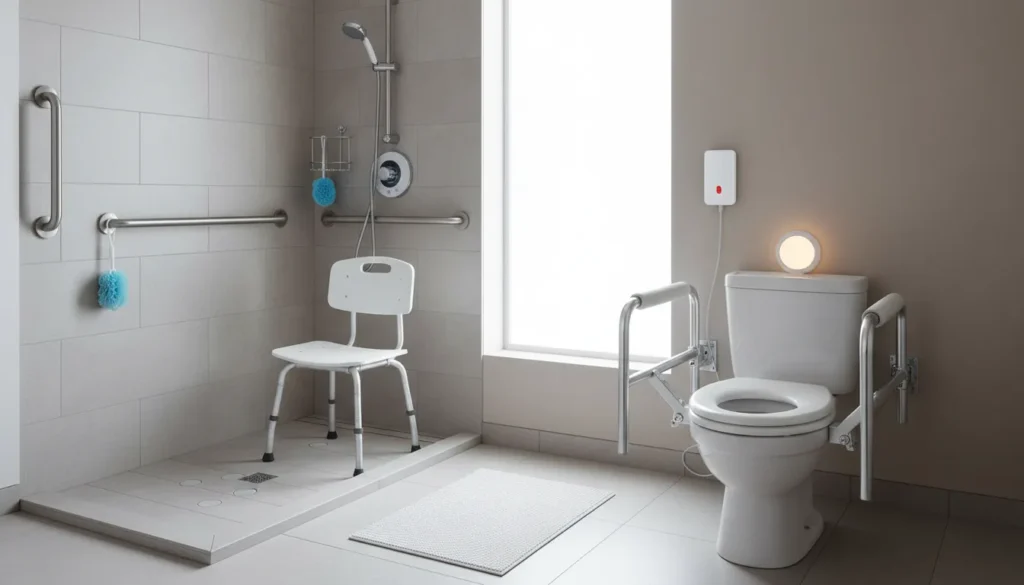
Getting on and off the toilet is one of those everyday movements that becomes a much bigger deal once strength, balance, or joint comfort changes. And because it’s such a routine task, people often don’t mention that it’s getting harder. They just start dreading it quietly.
That’s why toilet safety frames are such useful bathroom safety equipment for seniors. They provide steady arm support on either side of the toilet, making it easier to lower down and push back up without relying on unstable surfaces or awkward momentum. That can be a huge help for seniors with knee pain, muscle weakness, mobility limitations, or recent surgery.
They’re not glamorous. That’s okay. Neither are seat belts, and we’ve made our peace with those.
What matters is fit and stability. The frame should feel solid, the armrests should be at a comfortable height, and the overall setup should work with the toilet it’s being used around.
Here’s a quick comparison of common frame options:
| Frame Type | Support Features | Comfort | Price Range |
|---|---|---|---|
| Basic fixed frame | Fixed arms | Moderate | ~$35–$45 |
| Adjustable frame | Height-adjustable arms | Good | ~$45–$60 |
| Padded frame | Padded, adjustable arms | High | ~$55–$70 |
If the budget allows it, comfort upgrades are often worth it. Equipment people dislike tends not to get used consistently.
How to Choose the Right Equipment for Your Specific Situation
This is where things get personal, in the practical sense. The best bathroom safety equipment for seniors depends on the person, the space, and the actual moments that feel difficult.
A senior recovering from hip surgery may need very different support than someone managing Parkinson’s symptoms, arthritis, fatigue, or general balance issues. A large bathroom gives you more flexibility. A tiny one forces you to be selective. So instead of buying a bunch of products at random and hoping one feels right, it helps to step back and observe.
Walk through the bathroom and pay attention to the trouble spots. Where does the person reach for support? Where does the floor get slippery? Which movement looks tiring, hesitant, or awkward? Sometimes the answer shows up quickly. A person pauses before stepping into the tub. They brace on the vanity. They avoid showering unless someone else is home. Those little behaviors say a lot.
A few questions can help guide the choice:
- Where does the person feel most unsteady?
- Which daily task seems the hardest or most stressful?
- Is the room well lit, especially at night?
- Are everyday items easy to reach without bending, stretching, or twisting?
If bathing is the biggest problem, start there. If toilet transfers are the issue, prioritize support around the toilet. If the whole bathroom feels slippery, improve traction and lighting first. And if you want a more tailored recommendation, an occupational therapist can be incredibly helpful. They know how to match solutions to real-life movement, which is much better than guessing from product photos online.
Bathroom Modifications That Go Beyond Equipment
Sometimes equipment is enough. Sometimes the room itself needs a little help.
Walk-In Tubs and Curbless Showers
Traditional tubs ask a lot from older adults. Step up, step over, step down, keep balance, don’t slip, and maybe also remember the shampoo. That’s a lot of instructions for one wet moment.
Walk-in tubs reduce the height barrier with a door and a lower threshold. Curbless showers go a step further by removing the entry lip entirely, creating a smoother transition from floor to shower. These changes can be especially helpful for seniors who already feel nervous about bathing or who use mobility aids.
Yes, these upgrades can be expensive. But if the existing layout makes daily hygiene feel risky, uncomfortable, or exhausting, a structural change may be more than a luxury. It may be the thing that makes the space usable again.
Lighting: The Underrated Safety Feature
Lighting doesn’t get enough credit. Poor lighting makes every other problem worse. It becomes harder to see water on the floor, judge a step, spot the edge of the tub, or find the grab bar quickly. Good lighting won’t solve every risk, but it does make the whole room easier to navigate.
Brighter overhead lights, motion-activated night lights, and illuminated switches can all help, especially for those late-night bathroom trips when nobody is operating at their finest.
Flooring and Storage
Safer flooring and smarter storage can also make a big difference. Non-slip flooring or traction strips improve grip underfoot. Keeping soap, towels, and toiletries within easy reach reduces twisting and bending. And clearing the floor of clutter creates a more direct, safer path through the room.
It’s not glamorous work, but neither is a preventable fall.
Emergency Alert Systems: Because Preparation Isn’t Pessimism
No one likes planning for emergencies. But pretending they can’t happen has never been a terrific strategy.
Emergency alert systems add an extra layer of safety by giving seniors a fast way to call for help after a fall or other problem. Some people prefer wearable pendants or wristbands. Others do well with wall-mounted pull cords, smart home integrations, or voice-activated systems. The best choice depends on the person’s comfort with technology and whether they live alone.
The important part is ease. In an emergency, nobody wants to decode a complicated device. The system should be simple enough to use under stress and reliable enough that people trust it.
For many families, this isn’t just about the senior’s safety. It’s about peace of mind for everyone else too.
Maintenance: The Step Everyone Forgets
One of the easiest mistakes to make with bathroom safety equipment for seniors is assuming that once it’s installed, the job is done forever. It isn’t.
Grab bars can loosen. Mats lose grip. Shower chair legs wear down. Toilet frames start to wobble. None of these problems usually show up all at once, which is exactly why they get missed.
A simple maintenance habit goes a long way:
- Check grab bars every month or two to make sure they still feel secure.
- Inspect shower chairs and toilet frames for rust, cracks, or movement.
- Replace mats that curl, slide, or no longer grip well.
- Clean everything often enough that wear and tear doesn’t hide under buildup.
This doesn’t need to become a full spreadsheet situation. A quick regular check is usually enough.
Frequently Asked Questions
How do I know which products meet safety standards?
Look for products that follow recognized standards or clearly list tested weight limits, installation requirements, and material details. ADA- and ANSI-related guidance can be a useful benchmark when comparing options.
Can I install grab bars myself?
Yes, if you know how to secure them properly into studs or with the right mounting hardware. If you’re unsure, hire a professional. This is not the time for brave improvising.
What if the bathroom is too small for major changes?
A small bathroom can still become much safer. Compact grab bars, better lighting, improved floor traction, and smaller support devices can all help without requiring a full remodel.
How often should bathroom safety equipment be replaced?
There’s no perfect schedule. It depends on the product, how often it’s used, and how well it’s holding up. Regular inspection is the best way to catch problems before they become hazards.
What role do caregivers play in bathroom safety?
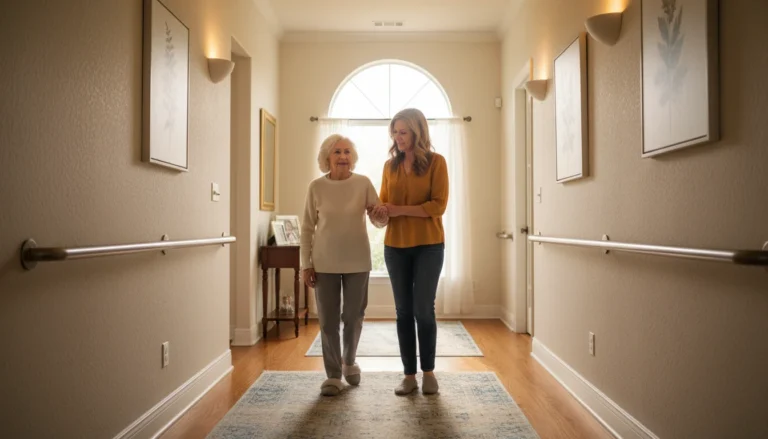
A big one. Caregivers often notice the subtle changes first — hesitation, fear, new difficulty standing, or small workarounds that suggest something no longer feels safe. Their attention can help guide the next right update.
The Bottom Line
A safer bathroom doesn’t have to look medical or feel depressing. It just has to work better. The right bathroom safety equipment for seniors can reduce falls, improve accessibility, and make everyday routines feel less stressful and more manageable.
And those little improvements matter. A shower that feels safe. A toilet setup that doesn’t strain the knees. A floor that doesn’t feel like a gamble. That’s the kind of everyday dignity people deserve.
If you’re not sure where to begin, start small. Look at the bathroom honestly. Notice the slippery spots, the awkward reaches, the places where someone is using furniture or fixtures for support when they shouldn’t be. Then fix one thing at a time.
And yes, if there’s a towel bar doing a grab bar’s job, that’s probably your sign.
Looking for reliable bathroom safety products? Browse trusted options for grab bars, shower chairs, non-slip mats, and toilet support equipment that fit your space, budget, and mobility needs.




2 Comments
Comments are closed.