

What Is the Nomadic Lifestyle for Retirees: A Real, Practical Guide to Living and Traveling from Anywhere
Wondering what is the nomadic lifestyle for retirees? This practical guide covers everything — from income sources and housing options to visa rules, daily rhythms, and how to make it genuinely work after 60.
The first time I seriously looked up what is the nomadic lifestyle for retirees, I wasn’t doing anything remotely inspiring. I was sitting at my kitchen table in yesterday’s coffee-stained shirt, staring at a calendar that had somehow filled itself with dentist appointments and HOA meeting reminders. Retirement was supposed to feel like freedom. Instead, it felt like a slightly quieter version of the life I’d just left — minus the paycheck and plus a lot more time to notice how loud the refrigerator hums.
That’s probably why this topic pulls so many retirees in. It promises freedom, yes — but it also raises a bigger question: what would life look like if you stopped organizing everything around one fixed address? What if the next chapter didn’t have to look like a quieter version of the last one? What if “settling down” didn’t have to mean settling?
That’s really the heart of it. The nomadic lifestyle for retirees is about mobility, flexibility, and building a life that isn’t anchored to a single city, routine, or living room you’ve stared at for thirty years. For some people, that means slow travel through Europe with a carry-on and a good book. For others, it means seasonal living, van life, or simply choosing short-term stays over a permanent lease. It can look adventurous from the outside — and sometimes it genuinely is — but it’s also surprisingly practical when done well.
And it’s not just a social media phase dressed up in linen and laptop stickers. Research has been tracking this shift for years. A 2021 review by researcher Sebastian Hensellek explored how location-independent living is reshaping the relationship between work, freedom, and personal identity. More recently, 2025 research on mobile lifestyles in the global labor market described it as a growing and transformative trend driven by remote work and technological change. In other words, this lifestyle isn’t fringe anymore. And for retirees with time, flexibility, and a genuine desire to see more of the world, it may be the most natural fit of all.
In this guide, I’ll break down what is the nomadic lifestyle for retirees in a way that feels more real than romanticized. We’ll look at what defines it, why retirees are choosing it, how to fund it, what housing options make sense, and which challenges tend to show up once the novelty wears off. Because the dream is great — but the practical details are what make it sustainable.
Key Takeaways
- The nomadic lifestyle for retirees means living with more mobility than permanence — and more intention than routine
- Retirement is actually one of the best life stages for this lifestyle — no office to report to, no school schedules to work around
- Location independence, minimalism, and flexibility are the three core pillars of nomadic living
- Retirees can fund nomadic living through pensions, Social Security, investment income, part-time remote work, or a combination
- Housing options range from short-term rentals and co-living spaces to van life and slow travel apartments
- Loneliness and loss of routine are the most common challenges — both are manageable with the right systems
- Digital nomad visas in countries like Portugal, Estonia, and Barbados offer legal pathways for longer stays abroad
- Community is not optional — it’s what makes the lifestyle sustainable and genuinely enjoyable long-term
- Solid travel insurance, an emergency fund, and good health planning are non-negotiables for retiree nomads
- The lifestyle doesn’t have to be all-or-nothing — many retirees start with slow travel before committing fully
What Is the Nomadic Lifestyle for Retirees? What Defines It and Its Core Concepts?

At its simplest, the nomadic lifestyle means living with more mobility than permanence. Instead of building life around one fixed home base, you create a lifestyle that can move with you. That movement can be constant or occasional, international or domestic, structured or spontaneous. The point isn’t to be in motion every second. The point is to have the freedom to choose where life happens — and to actually use that freedom instead of just daydreaming about it between HOA meetings.
That’s one reason the question what is the nomadic lifestyle for retirees doesn’t have a one-size-fits-all answer. Some retirees travel every month. Others stay three to six months in one place before moving on. Some live out of a single well-packed suitcase; others carry a solid retirement income, a favorite coffee mug they refuse to part with, and a very strong opinion about which European cities have the best morning markets. Frankly, that last group feels deeply relatable. I may or may not own an embarrassing number of travel mugs.
Still, most versions of this lifestyle revolve around three core ideas: location independence, mobility, and intentional simplicity.
How Does Nomadism Relate to Location Independence and Minimalism?
Location independence is what makes the lifestyle possible. If your income comes from a pension, Social Security, investments, or part-time remote work, you’re no longer tied to one city or office. That freedom changes a lot. It lets you choose your environment based on cost of living, climate, curiosity, or just a gut feeling that says, “I need a change of scenery before I become emotionally attached to my grocery store self-checkout machine.”
Minimalism often follows naturally. Not always the aesthetic kind with beige storage bins and exactly three shirts — but the practical kind. When you move often, every possession starts asking for justification. Do you need it enough to carry it, store it, ship it, or pay extra baggage fees for it? Suddenly “stuff” becomes less impressive. I once stood in front of a closet full of things I hadn’t touched in two years and thought, “Every single one of you is a liability.” The nomadic lifestyle has a way of clarifying that very quickly.
Together, location independence and minimalism make mobility easier. They reduce friction. And when there’s less friction, the nomadic lifestyle becomes less fantasy and more system — which is exactly where the magic actually lives.
Who Are Nomadic Retirees and What Does Their Daily Life Look Like?
Nomadic retirees are people who have stepped away from full-time work and chosen to spend their retirement years with a high degree of mobility. That includes former professionals, teachers, healthcare workers, entrepreneurs, and creatives — anyone whose income is now portable enough to follow them wherever they go.
The day-to-day rhythm varies a lot. One retiree might spend mornings at a local market and afternoons exploring a new neighborhood. Another might keep a part-time consulting schedule and use the rest of the week for slow travel. Someone else might live in one city for three months, settle into a routine, and quietly become a regular at the same café where the barista eventually stops judging their third iced coffee. (No judgment here. That barista doesn’t know what kind of morning it’s been.)
What many nomadic retirees share is a desire to combine living with experience. That might include:
- learning a bit of the local language — even badly, which locals often appreciate more than you’d expect
- joining community events or cultural activities
- volunteering with local organizations
- building slower, more immersive travel into everyday life
This is part of what makes the lifestyle so appealing in retirement specifically. You’re not rushing through places on a two-week vacation schedule, desperately trying to see everything before your flight home. You’re actually living in them — long enough to find the good bakery, the quiet park, the neighborhood that feels like yours for a little while. That’s a different kind of travel entirely.
What Are the Benefits and Challenges of the Nomadic Lifestyle for Retirees?
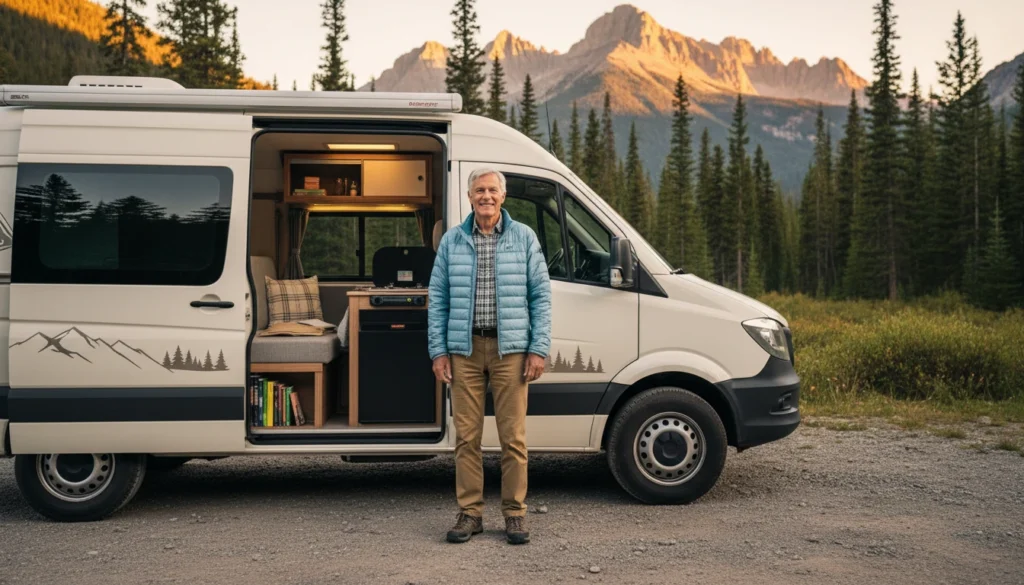
The most useful way to understand what is the nomadic lifestyle for retirees is to look at both sides of it honestly. The freedom is real. The friction is real too. That doesn’t make the lifestyle bad — it just makes it human. And honestly, anything worth doing tends to come with both.
Which Benefits Make Nomadic Living Especially Attractive for Retirees?
One of the biggest benefits is flexibility. Retirement already removes the 9-to-5 anchor. The nomadic lifestyle takes that freedom further, letting you shape your days around your energy, your interests, and your surroundings rather than someone else’s schedule. If you want to spend a Tuesday morning at a museum and a Wednesday afternoon doing absolutely nothing productive, nobody is sending you a calendar invite to stop you. That alone is worth something.
Then there’s the cultural richness. Living in a place, even briefly, changes how you experience it. You start noticing routines, flavors, neighborhood habits, little unglamorous details that never make it into travel brochures. I’ve always thought that staying somewhere long enough to know which bakery is best tells you more about a place than any sightseeing list ever could. That kind of knowledge feels earned in a way that a three-day trip never quite does — and it sticks with you long after you’ve moved on.
Cost can be another significant advantage. For retirees drawing income in stronger currencies, certain destinations make it possible to live well for considerably less than back home. That doesn’t mean nomadic living is automatically cheap — flights, insurance, visas, and gear can add up fast — but many retirees find they can stretch their income further by choosing locations strategically. Living well for less isn’t a compromise. Sometimes it’s just good math.
There’s also a less tangible benefit: perspective. Changing environments changes you. It pushes you out of autopilot. You notice your habits, your assumptions, your comfort zones. Sometimes that growth is inspiring. Sometimes it’s inconvenient. Usually it’s both — and that combination tends to keep life feeling genuinely alive in a way that’s hard to manufacture sitting in the same chair you’ve sat in for twenty years.
What Common Challenges Do Nomadic Retirees Face and How Can They Be Overcome?
The first challenge is loneliness. And not always the dramatic kind. Sometimes it’s subtle. You’re in a beautiful place, everything looks great on paper, and yet you’d give a surprising amount of money for a familiar dinner table and one friend who already knows your backstory. The kind of friend you don’t have to explain yourself to. The kind where the conversation picks up exactly where it left off, no matter how long it’s been. That kind of comfort takes time to build anywhere — and when you’re moving often, you have to build it more deliberately than you might expect.
This is why community matters so much. Co-living spaces, local meetups, online groups, and repeat visits to the same places can make a huge difference. Connection usually doesn’t happen by accident when you’re moving often. You have to build it on purpose — which, for retirees used to decades of built-in social structure through work and neighborhood, can take some real adjustment. It’s not impossible. It just requires more intention than most people plan for.
Another challenge is the loss of routine. Retirement already disrupts the rhythms that work provided. Add frequent location changes, and it’s easy to feel unmoored — like you’re floating through beautiful places without quite landing in any of them. A few practical fixes help:
- keep consistent daily rhythms even when your location changes
- choose accommodations with reliable amenities and a comfortable space for reading, relaxing, or working
- use small rituals to separate “exploring mode” from “rest mode” — even something as simple as a morning walk or an evening journal entry
Health management is another major reality for retiree nomads. Managing medications, finding reliable healthcare abroad, and maintaining health insurance coverage all require planning. The more seriously you take these details before you leave, the easier the lifestyle becomes once you’re actually on the road. Nobody wants to figure out how to refill a prescription in a country where they don’t speak the language and the pharmacy closes at noon on Thursdays for reasons nobody can fully explain.
How Do Retirees Fund the Nomadic Lifestyle?

The romantic version of this lifestyle tends to skip over one key fact: somebody still has to pay for the flights, the rent, the insurance, and the emergency phone charger you buy in an airport for the price of a small appliance. Income and financial planning are what make the whole thing work — not just the wanderlust. Wanderlust is free. Everything else has a line item.
What Income Sources Support Nomadic Retirement Living?
Most nomadic retirees draw from one or more of the following:
- Pension or retirement fund distributions
- Social Security or government retirement benefits
- Investment income from stocks, bonds, or real estate
- Part-time remote consulting or freelance work
- Rental income from a home base they’ve kept or leased out
The good news is that retirement income is often already location-independent. A pension doesn’t care where you cash it. Social Security follows you across borders. Investment accounts don’t require a fixed address. That makes retirement one of the most naturally suited life stages for nomadic living — even if it doesn’t always get framed that way. You’ve already done the hard part. The income is portable. Now you just have to decide where to take it — and maybe update your bank’s fraud alert settings before you do.
How Can Retirees Manage Finances Effectively While Living Nomadically?
Budgeting well is essential. That means tracking income and expenses, building an emergency fund, planning for irregular costs like flights and visa fees, and understanding tax obligations in both your home country and the places you stay.
A lifestyle built around flexibility still needs structure behind the scenes. Many nomadic retirees use online banking platforms with low international fees, keep digital copies of all financial documents, and work with a financial advisor familiar with expat or nomadic tax situations. Not thrilling, but necessary — and worth every minute of setup time before you leave. Think of it as the boring foundation that makes the exciting part possible.
What Housing Options Are Available for Nomadic Retirees?
Housing shapes the lifestyle more than people expect. The place you sleep, cook, and decompress affects not just your budget, but your mood, your health, and your sense of stability too. Get this part right and everything else gets easier. Get it wrong and even the most beautiful destination starts to feel like a problem you’re living inside.
How Does Van Life Fit Into Nomadic Retirement?
Van life is one of the clearest expressions of the nomadic mindset. Your home moves when you do. That creates a kind of freedom that’s hard to match — you can change scenery on a whim, follow weather patterns, and carry a sense of familiarity with you wherever you go. There’s something genuinely comforting about waking up in a new place and still being surrounded by your own things.
Of course, van life also asks a lot. Space is tight. Maintenance is real. Privacy can be limited. So can showers, which is a sentence no glamorous Instagram caption has ever wanted to admit. For retirees with mobility considerations or health needs, van life may require extra planning around accessibility and medical access. But for those drawn to autonomy and simplicity, it can be deeply rewarding — and surprisingly cozy once you figure out where everything goes and accept that the answer is “somewhere creative.”
What Are Other Popular Housing Choices for Nomadic Retirees?
Many retirees prefer more conventional short-term setups. Airbnb rentals offer privacy and convenience, particularly for people who need quiet and comfort. Co-living spaces blend housing with built-in community and often include amenities that make settling in easier — which matters more than it sounds when you’re arriving somewhere new and just want things to work without a three-hour troubleshooting session.
Slow travel rentals are especially popular among retirees — staying one to three months in a furnished apartment, booking directly with local landlords when possible, and settling into a temporary routine. That approach often creates the best balance between novelty and stability, which is exactly what most retirees are looking for. You get the adventure without the exhaustion of constant movement. You get to feel like a local without the thirty-year mortgage.
There’s no universal best option. Good housing depends on your budget, health needs, privacy preferences, and tolerance for surprise plumbing issues — which, in my experience, are more universal than any travel guide will ever admit.
What Legal and Visa Considerations Affect Nomadic Retirees?
This part may not be flashy, but it matters. A lot. Skipping it is how people end up overstaying visas, paying unexpected fines, or having a very awkward conversation at a border crossing with someone who is not impressed by your sense of adventure and has seen it all before.
What Are Digital Nomad Visas and How Do They Work for Retirees?
Digital nomad visas are special programs that allow people to stay in a country longer than a standard tourist visa permits while continuing to receive income from abroad. Countries such as Portugal, Estonia, and Barbados have introduced versions of these programs, and many are open to retirees — not just remote workers.
Requirements typically include proof of income, health insurance, and a clean legal record. Some countries set minimum income thresholds. These visas don’t solve every legal issue, but they do provide a clearer, more responsible path for retirees who want to stay somewhere longer without overstaying a tourist visa and quietly hoping nobody checks the dates.
How Do Legal Requirements Impact Sustainable Nomadic Living for Retirees?
Legal requirements affect where you can stay, how long you can remain, and whether your financial situation is properly structured for international living. Tax residency can become particularly complicated if you move often or spend significant time in multiple countries — and “I didn’t know” is not a defense that tends to go over well with tax authorities anywhere in the world.
That’s why sustainable nomadic retirement usually involves more admin than outsiders expect. Not thrilling, but necessary. The more seriously you take visas, taxes, insurance, and local regulations, the easier it becomes to maintain the lifestyle without constant stress. Think of the paperwork as the price of admission for a life that most people only dream about. Worth it.
Frequently Asked Questions
Is the nomadic lifestyle realistic for retirees with health considerations? Yes, with planning. Many retirees manage chronic conditions, medications, and regular medical appointments while living nomadically. The key is researching healthcare access before arriving in a new location, carrying comprehensive international health insurance, and building flexibility into your schedule for medical needs. The goal isn’t to ignore your health — it’s to manage it in more interesting places.
How can nomadic retirees stay connected with family and friends? Technology makes this easier than ever. Regular video calls, shared photo albums, and even planned visits where family joins you for part of a trip can maintain strong connections. Many nomadic retirees find that their relationships actually deepen because visits become more intentional and memorable — less routine, more occasion. There’s something about meeting someone in Lisbon that beats another dinner at the same restaurant you’ve been going to for fifteen years.
What are the best destinations for nomadic retirees? That depends on your priorities. Portugal offers affordability, safety, and a strong expat community. Thailand and Mexico provide warm climates and low costs. Spain and Italy appeal to retirees drawn to culture, food, and walkable cities. The best destination is usually the one that fits your budget, health needs, and lifestyle preferences — not the one that looks best in someone else’s Instagram feed.
How do nomadic retirees handle healthcare while traveling? Most rely on international health insurance and research healthcare access before arriving somewhere new. It also helps to carry basic medications, keep digital copies of important medical records, and know where nearby clinics or hospitals are located. Not exciting, but neither is trying to solve a medical issue in a place you barely know, in a language you definitely don’t.
What role does community play in nomadic retirement? A huge one. Community reduces isolation, creates friendships, and gives people practical support on the road. Without it, even the most beautiful destinations can start to feel strangely thin — like you’re watching life happen through a very scenic window. Many nomadic retirees deliberately seek out expat groups, slow travel communities, and co-living spaces specifically for this reason — and most will tell you it’s one of the best decisions they made.
Do retirees need to give up their home to live nomadically? Not necessarily. Some nomadic retirees keep a home base and travel for extended periods. Others rent out their home to fund their travels. Some sell and go fully mobile. The lifestyle doesn’t have to be all-or-nothing — many retirees start with slow travel before deciding how far they want to take it. There’s no rule that says you have to burn the whole thing down to try something new.
The Bottom Line on What Is the Nomadic Lifestyle for Retirees
So — what is the nomadic lifestyle for retirees in the clearest possible terms? It’s a way of spending retirement that trades fixed routine for mobility, location dependence for flexibility, and excess for intention. It can be exciting, stretching, freeing, inconvenient, energizing, and occasionally ridiculous — sometimes all before lunch. And somehow, that combination is exactly what makes it feel alive.
But that’s also why it appeals to so many retirees. It offers a different answer to the question of how retirement can look. Not easier, necessarily. Not always cheaper. Definitely not always glamorous. But more flexible, more intentional, and often more alive than a life organized entirely around one fixed address and a refrigerator that hums too loud.
If this path interests you, the smartest next step isn’t to romanticize it. It’s to test it. Research visa rules. Try a longer trip before a bigger leap. Join communities where people talk honestly about what works and what doesn’t. The nomadic lifestyle for retirees tends to reward curiosity, preparation, and a little humility — and punish overconfidence, under-packing, and the assumption that Wi-Fi will always be fine.
And if you end up discovering that you love having one home base and a very predictable grocery store? That’s useful information too. Not every dream has to become a full-time identity. Sometimes it just opens the door to a better, more intentional version of your retirement. And honestly — with or without the carry-on — that’s a pretty great outcome.