

Who Qualifies for Elderly Tax Credit — A Clear Guide to Eligibility and Applying
A guide as to who qualifies for elderly tax credit—income rules, and how to apply so you can claim every dollar you’re owed.
Tracking down the right tax credits can feel overwhelming—especially when you’re juggling retirement, medical bills, and the everyday mystery of “why is everything more expensive now?” The elderly tax credit exists to ease some of that pressure by lowering the taxes for certain older adults (and, in some cases, people under 65 who meet specific disability rules).
In this guide, I’ll walk you through who typically qualifies for the elderly tax credit, how age and income rules work, what documents you’ll want to grab before you file, and how federal and state programs can fit together.
Quick note before we dive in: when people say “elderly tax credit,” they’re often talking about the federal Credit for the Elderly or the Disabled, claimed on Schedule R. The IRS describes it as a credit for taxpayers who are age 65+ (or retired on permanent and total disability) and who have income under certain limits—so yes, it’s real, and yes, the rules are… very IRS-y. The most reliable starting point is the IRS overview page: Credit for the Elderly or the Disabled (IRS).
Who Qualifies for Elderly Tax Credit : Age Requirements for the Elderly Tax Credit
Age is usually the first qualification to check for the elderly tax credit. Most federal rules use 65 as the baseline, but states sometimes create their own senior tax credits and property tax breaks with different age cutoffs.
Minimum Age to Qualify as a Senior Citizen for Tax Credits
For the federal elderly tax credit, you generally must be at least 65 years old by the end of the tax year.
If you’re under 65, don’t stop reading yet: the IRS also allows the credit in certain disability situations (the credit is formally “for the elderly or the disabled”). The IRS summary spells this out clearly: you may qualify if you’re 65 or older, or if you’re retired on permanent and total disability and received taxable disability income for the year, and you meet income limits. See: Credit for the Elderly or the Disabled (IRS).
From a practical standpoint, here’s how I think about it when helping a family member: if the person is 65+, we check the elderly tax credit rules first. If they’re under 65 but on disability income, we still check—because the IRS built that second door on purpose.
How Age Requirements Differ Between Federal and State Elderly Tax Credits
Federal guidelines for the elderly tax credit typically use 65 as the cutoff. States, however, can be all over the map.
Some states don’t have a single “elderly tax credit” with one neat age rule. Instead, they offer a mix of senior-focused programs: property tax exemptions, renter credits, “senior homeowner” relief, or special filing statuses.
For example:
- California has a Senior Head of Household Credit that’s tied to being 65+ and other eligibility details (including having qualified as head of household previously and having a qualifying person die in the past 2 years). It also includes an income cap. Details here: Senior head of household credit (FTB.ca.gov).
- New York’s senior relief is often property-tax focused (like the Senior Citizens Exemption and STAR programs), typically tied to 65+ as well—more on those in the state section below. See: Senior citizens exemption (Tax.NY.gov) and Types of STAR (Tax.NY.gov).
So if you’re asking, “Do I qualify for the elderly tax credit where I live?” my suggestion is to treat federal and state as two separate checklists. You can qualify for one and not the other.
Income Thresholds That Determine Senior Tax Credit Eligibility
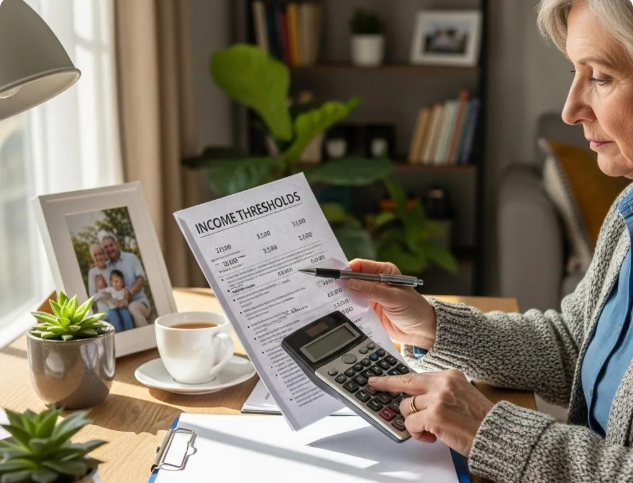
Income limits are a big deal for the elderly tax credit—and they’re also where people get discouraged because “income” in tax-land can mean a few different things.
The IRS puts it this way: your eligibility depends on having an adjusted gross income or the total of certain nontaxable income (like nontaxable Social Security) under specific limits. That’s straight from the source: Credit for the Elderly or the Disabled (IRS).
Income Limits for Elderly Tax Credit Eligibility in 2026
Let’s talk 2026 without pretending tax law is a single number you can tattoo on your forearm and call it a day.
For the elderly tax credit, the IRS doesn’t boil eligibility down to one universal “income limit for 2026” because it depends on filing status and the mix of taxable vs. nontaxable income. That said, the credit is intended for older adults with relatively modest incomes.
Here’s what is helpful and accurate for planning:
- The elderly tax credit uses Schedule R. That form (or your tax software) walks through the thresholds and the calculation.
- The credit is income-tested. If your income is above the IRS limits for your filing status, the elderly tax credit usually shrinks or disappears.
- The base amount used in the calculation ranges from $3,750 to $7,500, depending on your situation—again, directly from the IRS overview. See: Credit for the Elderly or the Disabled (IRS).
If you want one practical rule of thumb: if you’re living mostly on Social Security and a modest pension—and you’re not pulling large withdrawals from retirement accounts—you’re in the zone where the elderly tax credit is worth checking carefully.
Also, 2026 has another senior-friendly change that people confuse with the elderly tax credit: the IRS notes an enhanced deduction for seniors (an additional $6,000 deduction per eligible person, for certain years), which is a deduction, not the elderly tax credit. That’s outlined in IRS Tax Tip 2026-14: 2026 filing season updates and resources for seniors (IRS).
I’m mentioning it here because in real life, this is how these conversations go:
“Is that the elderly tax credit?”
“No, it’s a deduction.”
“So… it’s not a credit?”
“Correct.”
“Why do they name things like this?”
“Because the IRS enjoys suspense.”
How Retirement Income Affects Eligibility for Elderly Tax Benefits
Retirement income absolutely matters for the elderly tax credit, and it’s not just your pension.
Depending on your situation, the following can affect eligibility for the elderly tax credit:
- Social Security benefits (including the nontaxable portion, which the IRS specifically references in the eligibility test)
- Pensions and annuities
- IRA/401(k) withdrawals
- Taxable disability income (for those under 65 who qualify under disability rules)
- Interest, dividends, and part-time wages
What trips people up is that the elderly tax credit doesn’t only look at the income that shows up as “taxable.” The IRS explicitly includes the “total of nontaxable Social Security, pensions, annuities or disability income” in the eligibility concept. See: Credit for the Elderly or the Disabled (IRS).
My go-to suggestion: if you’re unsure, don’t guess—run the numbers in reputable tax software or with a qualified preparer. The elderly tax credit is one of those benefits where a small detail (like whether part of your Social Security became taxable because of other income) can change the outcome.
How to Apply for Elderly Tax Benefits: Step-by-Step

Applying for the elderly tax credit is straightforward once you stop thinking of it as a mysterious “application” and start thinking of it as: a credit you claim when you file your tax return.
In most cases, you’re not submitting a separate elderly tax credit application to the IRS. You’re claiming the elderly tax credit on your federal return using the right schedule.
Required Documents and Forms for an Elderly Tax Credit Application
Before you claim the elderly tax credit, collect these (it’ll save you from the classic “where did I put that paper?” spiral):
- Proof of age: A driver’s license, state-issued ID, or other document showing date of birth.
- Income documentation: Social Security statements, pension/annuity statements, IRA/401(k) distribution forms, and any wage or interest statements.
- Tax forms: Your Form 1040 or 1040-SR, plus Schedule R (Credit for the Elderly or the Disabled) if you’re claiming the federal elderly tax credit.
If you’re claiming the credit based on disability (under 65), you may need additional documentation that supports the IRS definition of “permanent and total disability.”
How to Submit Your Application to the IRS or State Tax Agencies
For the federal elderly tax credit, you claim it when you file your federal income tax return. You can file electronically or by mail.
If you want help filing (and many people do—no shame), the IRS highlights free preparation resources for seniors, including Tax Counseling for the Elderly (TCE) and VITA. The IRS calls these out in Tax Tip 2026-14: 2026 filing season updates and resources for seniors (IRS).
For state-level programs, the submission method depends on the benefit:
- Some state senior credits are claimed on the state income tax return.
- Some programs (especially property tax relief) are filed with a local assessor or county office.
My suggestion here is simple: don’t assume it’s “automatic.” If it’s property-tax related, it often requires a separate filing even if you already file an income tax return.
Federal vs. State Elderly Tax Credits — Key Differences
Federal credits provide a baseline, but the elderly tax credit conversation gets bigger once you look at your state.
Here’s the easiest way to keep your brain from overheating: federal elderly tax credit rules are about income tax and Schedule R. State “elderly tax credit” programs might be income tax credits—or they might be property tax reductions, exemptions, or rebates.
Which States Offer Additional Tax Relief Programs for Seniors?
Many states offer additional relief for seniors, but they don’t always label it “elderly tax credit.” Often, it’s tucked under property tax benefits, special exemptions, or senior-specific credits.
A couple of concrete examples from official state sources:
- California: The Franchise Tax Board describes the Senior Head of Household Credit (credit code 163). It requires being 65+ and includes an income cap and other eligibility rules. See: Senior head of household credit (FTB.ca.gov).
- New York: Local governments can offer a Senior Citizens Exemption that reduces the taxable assessment for property taxes. Eligibility generally uses 65+ and income limits that can vary by locality. See: Senior citizens exemption (Tax.NY.gov).
- New York (STAR): New York’s Enhanced STAR benefit is aimed at senior homeowners and has an income limit published by the state (for example, the site lists an income limit for the 2026–2027 school year). See: Types of STAR (Tax.NY.gov).
So yes—state programs can supplement the elderly tax credit. But they may live in a completely different part of the tax universe.
How Federal and State Credits Can Combine to Maximize Senior Tax Benefits
Here’s the good news: you can often claim the federal elderly tax credit and still pursue state senior relief.
The key is to treat them like puzzle pieces, not duplicates:
- The federal elderly tax credit (Schedule R) can reduce federal income tax.
- A state credit might reduce state income tax.
- A property tax exemption can reduce property tax bills.
If you’re working with a tax professional, this is the moment to ask the question I love (because it’s awkward in a productive way):
“What senior credits or exemptions am I not claiming yet?”
It’s a polite way to make sure nobody is speed-running your return and missing the elderly tax credit—or a state benefit that isn’t on the standard checklist.
Common FAQs About Elderly Tax Credit Eligibility
Below are the questions people ask most often about the elderly tax credit. If you’re reading this for a parent or grandparent, you may recognize the vibes.
Definition of Senior Citizen for Tax Credit Purposes
For most tax-credit programs, a senior citizen is someone who is 65 or older. That’s true for the federal elderly tax credit, and it’s a common standard for state programs too.
But—and this matters—some state programs define “senior” differently depending on the benefit. Property tax exemptions can have additional requirements like homeownership, residency, or local income calculations.
How Often Income Limits and Eligibility Criteria Are Updated
Eligibility rules for the elderly tax credit don’t always change every year, but income-related thresholds and tax forms can be updated.
If you want the most reliable sources (and the least internet chaos), stick with:
- The IRS overview of the credit: Credit for the Elderly or the Disabled (IRS)
- IRS senior filing updates (useful for changes that might affect older adults, even beyond the elderly tax credit): 2026 filing season updates and resources for seniors (IRS)
State
Minimum Age for Tax Credits
Income Limit for 2026
| State | Minimum Age for Tax Credits | Income Limit for 2026 |
|---|---|---|
| Federal (elderly tax credit via Schedule R) | 65 years | Income must be under IRS limits based on filing status and certain nontaxable income (see Credit for the Elderly or the Disabled (IRS)). |
| California (example: Senior Head of Household Credit) | 65 years | Income must be less than $98,652 for this specific credit (and other requirements apply). See Senior head of household credit (FTB.ca.gov). |
| New York (examples: Senior Citizens Exemption / Enhanced STAR) | 65 years | Income limits vary by locality/program. Senior Citizens Exemption income limits can vary locally; Enhanced STAR lists an income limit for the 2026–2027 school year. See Senior citizens exemption (Tax.NY.gov) and Types of STAR (Tax.NY.gov). |
This table is a quick reference to show how different the rules can be—which is exactly why the elderly tax credit is easiest when you treat federal and state programs separately.
Frequently Asked Questions
What Types of Expenses Can Be Covered by Elderly Tax Credits?
The federal elderly tax credit isn’t tied to specific expenses like “medical bills only.” It’s a credit that can reduce your federal tax liability if you qualify.
That said, in real life, people often use the tax savings from the elderly tax credit to cover common senior costs—medical co-pays, prescriptions, mobility aids, utility bills that somehow got promoted to luxury items, you name it.
If you’re looking for a tax break that’s directly tied to medical spending, that’s usually handled elsewhere in the tax code (for example, itemized medical deductions, if you itemize). Different tool, different drawer.
Can Seniors Claim Elderly Tax Credits if They Are Still Working?
Yes—working seniors can still claim the elderly tax credit if they meet the age and income rules.
The catch is simple: wages increase your income, and the elderly tax credit is income-tested. So it’s not “no working allowed,” it’s “working may change the math.”
Are There Penalties for Incorrectly Claiming Elderly Tax Credits?
Yes. Claiming the elderly tax credit when you don’t qualify can lead to extra tax owed, interest, and penalties.
This is why I’m a big fan of boring, grown-up habits like:
- keeping your income documents together,
- not rounding “because it’s close enough,” and
- letting tax software (or a pro) calculate Schedule R instead of doing it on a napkin.
How Can Seniors Stay Informed About Changes to Tax Credit Regulations?
If you want updates that don’t sound like they were written by someone trying to sell you gold bars, go straight to official sources.
The IRS publishes senior-focused updates (including changes that can affect older adults). For 2026 changes and reminders, see: 2026 filing season updates and resources for seniors (IRS).
And for the elderly tax credit rules specifically, the cleanest starting point is still: Credit for the Elderly or the Disabled (IRS).
Is There a Deadline for Applying for Elderly Tax Credits?
For the federal elderly tax credit, the deadline is typically the same as your tax filing deadline (unless you file an extension).
And here’s a helpful bonus suggestion: if you realize you qualified for the elderly tax credit in a prior year but didn’t claim it, you may be able to amend a return. That’s not always fun, but it can be worth it.
Can Family Members Assist Seniors in Applying for Tax Credits?
Absolutely. Family members can help gather documents, organize income statements, and walk through filing.
The best approach I’ve seen is “helpful but not hijacking.” You want the senior to understand what’s being filed and why—especially when the elderly tax credit is involved—because it’s their return, their information, and their signature.
Conclusion
Knowing the rules for the elderly tax credit can unlock meaningful relief—sometimes the difference between “this month is tight” and “okay, we can breathe.” The basics are straightforward: confirm age eligibility, double-check income rules, and claim the elderly tax credit correctly (usually via Schedule R) when you file.
Then, zoom out. Federal is only one layer. Many states offer senior tax relief that can stack on top of the elderly tax credit—often through property tax programs or state credits with their own rules.
If you want the clearest official starting points, I’d use these two IRS pages as your home base:
- Credit for the Elderly or the Disabled (IRS)
- 2026 filing season updates and resources for seniors (IRS)
And if your situation is even slightly complicated—multiple income sources, disability income, you’re still working, you’re helping a parent, you’ve got property tax programs involved—getting help from a qualified tax professional or a reputable free senior tax assistance program can be a very smart move.
Disclaimer: This article is for informational purposes only and is not tax advice. Tax rules can change, and eligibility depends on individual circumstances.