
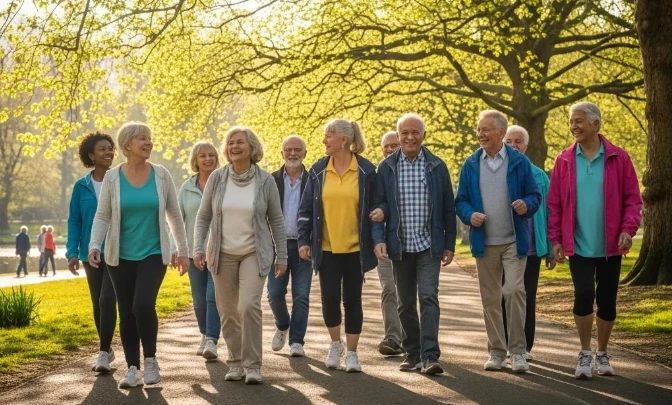
Walking Groups for Seniors: How to Join, Stay Safe, and Feel Better
Walking groups for seniors make it easier to get active, stay safe, and feel better. Learn how to join, start, and stick with it.
I’ve always believed the best exercise is the one that actually happens. Not the treadmill that turns into a very expensive coat rack. Not the workout plan you printed out and then politely ignored. Just regular movement that fits real life.
That’s why I like walking groups for seniors so much. They take a simple habit (walking) and make it easier to repeat. You show up, you chat a little, you move your body, you go home feeling like you did something good for yourself. And if you miss a week, someone notices in a kind way, not in a “where were you” way.
If you’re a senior who wants to feel steadier, stronger, and more upbeat, or you’re helping a parent find a routine that sticks, this is for you. In this guide to walking groups for seniors, I’ll walk you through the benefits, how to find (or start) a group, safety basics that keep things comfortable, what gear actually matters, and how simple tech can help without making it feel like homework.
Why Walking Groups for Seniors Are Worth Taking Seriously
Before we get into the how, let’s talk about the why. Walking sounds almost too simple, right? But simple does not mean small. For a lot of older adults, walking is the sweet spot: gentle on the joints, easy to scale up or down, and helpful in ways you can feel pretty quickly.
The Cardiovascular Case for Regular Walks
Walking is one of the most reliable “doable” exercises for older adults. It gets your blood moving, supports healthy blood pressure, and keeps your heart working without beating you up.
One reason walking groups for seniors are so popular is that they turn “I should walk more” into “I have a place to be.” And that consistency matters. In older populations, regular walking has been linked with roughly a 20 to 30 percent lower risk of cardiovascular events. That is not a magic trick, it is just repetition doing its thing.
It also helps upstairs, not just in the chest. A steady walk can lift mood, ease stress, and help you sleep better later. And yes, endorphins are part of that, but so is the fact that you got outside, changed scenery, and gave your brain something other than the same four walls.
You might also hear people talk about mindful walking. That is basically walking while paying attention on purpose: your breathing, your steps, the sound of birds, the fact that the neighbor’s dog is still convinced you are the main character. A 2022 systematic review by DW Davis looked at meditative and mindful movement (tai chi, qigong, yoga, and mindful walking). The evidence on mindful walking is still emerging, but the overall theme is encouraging: adding a little calm focus to movement can support both mental and cardiovascular health.
The Mental Health Angle Nobody Talks About Enough
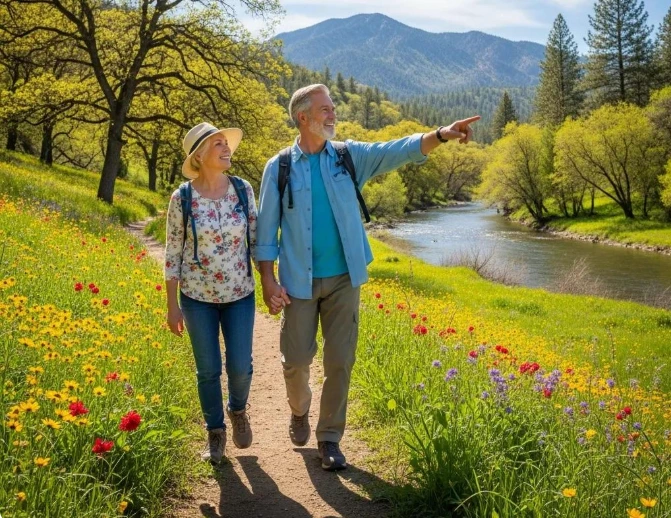
Here’s the part I wish more people talked about: walking groups for seniors are not only about steps. They are about people.
When you walk with the same faces each week, you start stacking small moments of connection. A quick “how was your weekend” turns into real friendship over time. That matters because loneliness and social isolation are not just sad, they are hard on health. Researchers at Brigham Young University have written about how social isolation can carry health risks on par with well known factors like smoking.
And this is not just feel good talk. In a 2019 qualitative study of older adults in a community exercise program, people described feeling less lonely and more like they belonged after taking part in group exercise and walking activities. Not every walk has to be deep and meaningful. Sometimes it is just a laugh about the weather. But those little check ins add up, and walking groups for seniors make them happen on purpose.
How to Find Walking Groups for Seniors Near You
So you’re sold on the idea. Now what? Finding walking groups for seniors can be surprisingly easy once you know where to poke around. And if you try one group and it is not your vibe, that is normal. You are not failing. You are just shopping.
Start With What’s Already Around You
Start with places that already serve older adults:
Your local senior center is usually the best first stop. Many run walking groups for seniors themselves, or they know which park group meets on Tuesdays, which mall walkers show up when it is raining, and who to call if you want something slower and steadier.
Next, check your city or county recreation department or public health listings. Community calendars often hide the good stuff in plain sight.
Hospitals and clinics sometimes sponsor walking programs too, especially those focused on heart health, diabetes prevention, or overall wellness. You can literally call and ask, “Do you have any walking groups for seniors or community walking programs?” It is a normal question, and they get it.
Also, do not underestimate the humble community bulletin board. Libraries, community centers, and coffee shops still post flyers. Low tech, high reward.
What to Look for in a Good Group
A good fit is everything. The best walking groups for seniors feel safe, welcoming, and realistic.
Before your first walk, it helps to ask a couple quick questions: How long do you usually walk? Do you take breaks? Is it a chatty group or more quiet? Are there different pace options? What happens if someone needs to turn back early?
Also pay attention to the unspoken stuff. Do people greet new walkers? Does anyone get left behind? Is the route comfortable for your knees and hips? A group can be lovely people and still not be the right match for your pace. The goal is to find a group that makes you want to come back next week.
How to Start a Senior Walking Club From Scratch
Can’t find a group that fits? You can start one. I know, that sounds like you need a clipboard and a whistle. You do not. Most walking groups for seniors start the same way: one person says, “Hey, want to walk with me?”
The Simple Three-Step Launch
Gather your people. Start small. Three or four walkers is plenty. Ask neighbors, friends, family members, people from a community center, or anyone who has ever said, “I really should get out more.” That is your target audience.
Pick a spot. Choose a place that feels safe and easy. Parks with paved loops are great. Wide sidewalks work. Some groups use indoor malls when it is hot, rainy, or icy outside. Pick somewhere with parking nearby and, ideally, a bathroom within a reasonable distance (this becomes important, quickly).
Set a schedule and stick to it. Consistency beats intensity. Pick one or two days a week at first. Choose a time that is realistic for energy levels and weather. Then keep it simple: meet, quick hello, walk, quick goodbye. You can add coffee later if you want.
One small suggestion that helps: decide on a “start time” and a “grace window” (like 5 minutes). That way nobody is stressed, and nobody is waiting forever. If you want to be extra organized, share a simple contact number in case someone is running late.
That is genuinely it. No formal structure required. Just a time, a place, and people who want the benefits of walking groups for seniors without making it complicated.
Safety Tips Every Senior Walker Should Know
Walking is one of the safer ways to exercise, but safe still means you pay attention. The goal is not to “tough it out.” The goal is to feel good and keep coming back.
Choosing Routes That Work for You
Pick routes that make walking feel easy on your brain.
Look for smooth, even surfaces, good lighting, and places with minimal traffic. Parks, school tracks (when open), and dedicated walking paths are usually great options. If you are walking in a neighborhood, aim for quieter streets and crossings you can handle without feeling rushed.
Also think about comfort logistics. Shade in the summer. Benches if you might need a breather. Bathrooms nearby. A route can be beautiful and still be a bad match if it makes you anxious.
If you walk early or later in the day, wear bright colors or something reflective. It is not a fashion statement. It is a “please see me” statement.
Warm Up, Pace Yourself, and Listen to Your Body
A quick warm up helps. I am not talking about an aerobics class. I mean a slow first few minutes, a couple ankle rolls, maybe a gentle calf stretch. Your joints will thank you.
In walking groups for seniors, the best pace is usually the one where you can talk in full sentences. If you are huffing and puffing, slow down. If you need a break, take it. Nobody gets extra points for suffering.
And if you feel sharp pain, dizziness, or chest pressure, stop and get help. For the everyday aches (a little knee grumble, a tight calf), slow down, shorten the walk, and check your shoes. Most problems get smaller when you respond early instead of trying to power through.
The Right Gear Makes a Real Difference
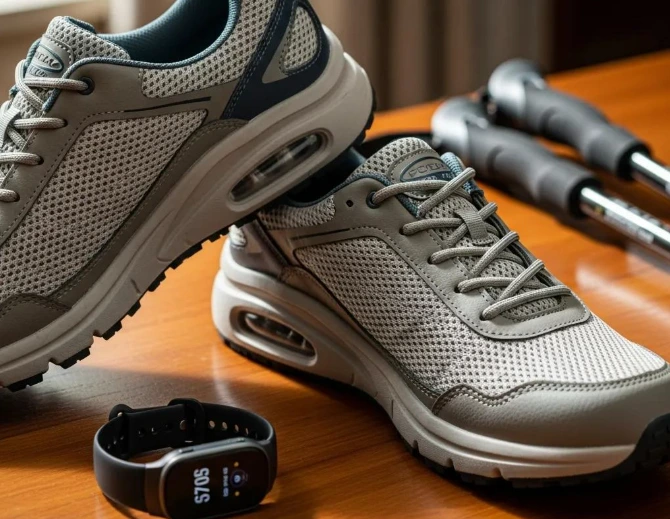
You do not need to spend a fortune to benefit from walking groups for seniors. But a couple smart choices can make walking more comfortable, and comfort is what keeps you consistent.
What to Look for in Senior Walking Shoes
Shoes are the big one. The wrong pair can turn a pleasant walk into a blister festival. The right pair makes you forget about your feet, which is exactly what you want.
Look for cushioning that feels supportive (not squishy like a mattress), steady arch support, and a sole with good grip. A roomy toe box matters more than people think, especially if your feet swell a little during longer walks. Breathable materials help, too.
Two very real tips that save a lot of misery:
First, try shoes on later in the day if you can, because feet tend to be a little bigger after you have been up and moving.
Second, wear the socks you plan to walk in. A thick sock in a snug shoe can change everything.
If you are able, a specialty walking or running store can fit you based on how you walk. That is not fancy, it is practical. A good fit helps with knees, hips, and balance.
Walking Poles and Wearables: Worth It?
Walking poles can be a game changer if you want extra stability or you like walking on trails. They give you more contact points with the ground, which can help you feel steadier and more confident. They also gently bring your upper body into the motion.
Wearables like fitness trackers and smartwatches are optional, but useful. Steps and heart rate can be motivating. Some devices also offer fall detection and the ability to alert a contact. If you or your family worry about safety, that feature alone can make walking groups for seniors feel even more reassuring.
If you do not want a wearable, keep it simple: carry a phone, keep an ID card in your pocket, and let someone know your route.
How Technology Can Support Senior Walking Groups
Technology should feel like a helper, not a bossy coworker. Used well, it can make walking groups for seniors easier to organize and a little more fun.
Apps That Actually Help
If you like apps, keep it simple:
MapMyWalk is great for planning and sharing routes. If someone is new, you can send the route ahead of time so they feel more comfortable.
MyFitnessPal can track activity and give you a bigger picture of how much you are moving overall, especially if you are also watching nutrition.
Strava adds a social layer. Some people love the little celebrations and milestones. Some people do not want to “compete” with anyone, including themselves. Both are fine.
And honestly, you might not need an app at all. A group text thread can handle most coordination: “We are meeting at 8:30. Same loop. Bring water.” That is plenty.
The Bigger Picture on Digital Walking Programs
There is real research here, too. A 2023 pilot study by J. Lee looked at the usability of a digital walking program for older adults and found that combining walking with simple technology can support activity and reduce isolation. The key point was not flashy features. It was usability. When the tech feels easy and respectful, people actually use it.
So if technology motivates you, great. If it annoys you, skip it. Walking groups for seniors worked long before smartphones showed up.
The Social Side of Walking Groups for Seniors
This is where walking groups for seniors really shine. You get movement and connection in the same package, and that is a pretty good deal.
Why Connection Matters as Much as Cardio
Loneliness is heavy. Not always loud or dramatic, just heavy. And it can sneak up on people, especially after retirement, losing a spouse, moving, or driving less.
Walking groups for seniors create a gentle routine that says, “Come as you are. We’ll do a lap together.” You do not have to be the life of the party. You can be the quiet person who smiles and listens. Over time, familiar faces become friends.
I also like the side by side nature of walking. Sitting face to face can feel intense, like an interview. Walking side by side feels easier. You can talk, pause, look at a tree, talk again. No pressure.
And again, there is evidence to back up what people feel. In that 2019 qualitative study on older adults in a community exercise program, participants described feeling less lonely and more like they belonged through group exercise and walking. That is a big win for something as simple as showing up and taking a few steps.
Where to Find Community Support
If you want social options along with walking groups for seniors, start with places that already build community: senior centers, community recreation programs, public health groups, faith based groups, and nonprofits focused on healthy aging. Even if they do not have a walking club, they usually know who does.
Frequently Asked Questions
What’s the best time of day for seniors to walk?
For many people, early morning or late afternoon feels best because it is cooler and there is less traffic. But the best time is the one you can repeat. If you are more energized mid morning, go then. If you sleep better after an evening stroll, do that. Walking groups for seniors often pick times based on weather and safety, so ask what the group prefers.
How do you stay motivated to walk regularly?
Make the goal small enough that you cannot talk yourself out of it. Ten minutes counts. A short loop counts. Motivation is nice, but a calendar appointment is nicer. This is another reason walking groups for seniors work: you are not relying on willpower alone.
What should you do if you feel pain while walking?
Stop and check in with your body. If it is sharp, sudden, or getting worse, do not push through. Rest, and talk with a healthcare professional if the pain does not settle. If it is mild soreness, shorten the walk, slow down, and look at simple fixes like different shoes or a flatter route.
How can family members help seniors join a walking group?
Be the bridge for the first step. Help find walking groups for seniors, offer a ride, or go along for the first meeting. After that, the group often does the rest. A quick reminder text and a little encouragement go a long way.
What should seniors consider when choosing a walking group?
Pace, safety, and vibe. Ask how long the walk usually is, whether there are breaks, and what the route looks like. You want a group that feels friendly and steady, not stressful.
Are there specific walking exercises that benefit seniors?
Yes. If you are cleared by your healthcare provider, gentle intervals can help: walk a little faster for a minute, then return to an easy pace. You can also add simple balance work by standing tall, relaxing your shoulders, and focusing on smooth steps. Some people enjoy mindful walking, where you pay attention to breathing and surroundings. Nothing fancy. Just present.
The Bottom Line
Walking groups for seniors are one of those rare things that are simple and genuinely powerful. They support heart health, mood, balance, and confidence. They also give you people. Not in an overwhelming way. In a steady, “see you next week” way.
If you are thinking about joining walking groups for seniors, try one. Give it two or three walks before you decide. The first day can feel awkward because you are new. That does not mean it is a bad group. It just means you are human.
And if you cannot find a group nearby, start small and build one. A short loop, a consistent time, one other person, and a good pair of shoes can change a week. Sometimes it really is that simple.



3 Comments
Comments are closed.