
Outdoor Night Games for Families: Your Guide to Safe, Memorable Evenings Outside
Outdoor night games for families turn any backyard into a safe, laugh-filled evening — here’s how retirees can host unforgettable nights with grandkids and guests.
Key Takeaways
- Retirees are uniquely positioned to host outdoor night games — you have the yard, the time, and the patience that busy parents rarely get.
- Classic games like flashlight tag, ghost in the graveyard, and sardines need minimal gear and work for all ages.
- Glow sticks, LED balls, and reflective tape make nighttime play safer and more exciting.
- Clear boundaries, soft even lighting, and a designated freeze word are the three most important safety moves.
- Tailor game rules to your group: shorter rounds for toddlers, more strategy for teens and adults.
- A slow evening — stargazing, campfire stories, an outdoor movie — counts as a great night too.
Retirement gives you something that busy parents would trade a lot for: time. Real, unhurried, nobody-is-rushing-anywhere time. And if you have a backyard, a few grandkids visiting, or a neighborhood full of families, that time becomes one of the most valuable things you can offer.
I did not fully appreciate this until the first summer after I retired. My grandkids came to visit and I realized — for the first time in years — that I did not have to cut the evening short. No early morning meeting. No work email pulling me back inside. We could stay out until the fireflies showed up and nobody had to apologize for it.
That was the summer I discovered outdoor night games for families. And I have not looked back since.
There is a moment right before it gets fully dark when something shifts in the backyard. The air cools off. The neighbors settle down. The yard feels bigger than it did at 3 p.m. And if you have got grandkids visiting, you can actually see the energy building in their faces — that unmistakable “something fun is about to happen” look.
This guide walks you through classic games, glow-in-the-dark ideas, slower family activities, and safety steps that actually work in a real backyard. It is written for retirees who want a night that feels memorable and ends with everyone going home in one piece. That is the best kind of night there is.
Why Retirees Are the Best Hosts for Outdoor Night Games
Here is something nobody talks about enough: retirees are perfectly positioned to host these evenings. You have the yard. You have the time. You are not rushing anyone out the door because you have a 6 a.m. meeting. You can actually be present for the whole thing — from the first glow stick to the last grandkid falling asleep on the drive home.
Research backs up what most of us already feel. Studies consistently show that grandparent involvement has a measurable positive effect on grandchildren’s emotional wellbeing. A review published in the Journal of Family Psychology found that close grandparent-grandchild relationships are associated with fewer emotional and behavioral problems in children. Playing together — even something as simple as flashlight tag in the backyard — is part of that equation.
And nighttime recreation? It is genuinely underused. Research published in the Journal of Outdoor Recreation and Tourism notes that nighttime outdoor activities expand when and how people enjoy outdoor time, and bring clear benefits to participants of all ages. Most of us just have not thought to try it yet.
So consider this your permission slip. You earned the yard. You earned the evenings. Use them.
Best Classic Night Games for Outdoor Fun
Classic outdoor night games for families are dependable: low on gear, high on excitement, and easy to adapt for different group sizes. The crowd favorites — flashlight tag, ghost in the graveyard, and sardines — have been entertaining mixed-age groups for generations. They are forgiving games. You can explain the rules while handing out glow bracelets and still be fine.
If you are new to hosting nighttime play, start here. Classics are the kind of games where even the grandkids who claim they are “too old for this” end up being the most competitive ones in the yard.
How to Play Flashlight Tag — Plus Fun Variations
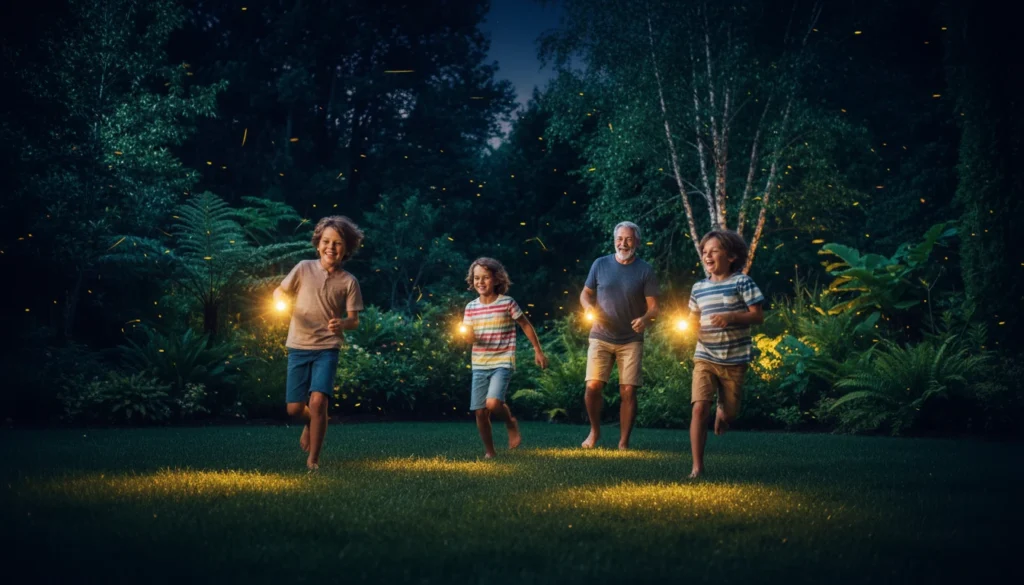
Flashlight tag is regular tag, but upgraded. It takes the “it” role and gives it a flashlight, which immediately makes kids feel like they have been hired for a very important mission. Grandparents secretly love it too. We just pretend we are supervising.
A rule set that keeps things fair:
- One player is “it” and holds a flashlight.
- Everyone else moves or hides inside the boundaries.
- “It” tags by shining the beam on someone and calling out their name or a clear identifier — like “red hoodie.”
- If “it” cannot identify the person, the tag does not count.
- When tagged, a player is either out or becomes the next “it.” Pick one and stick with it.
That name-or-identifier rule matters. A flashlight beam moves fast, and kids will absolutely claim they were not tagged. Not because they are lying. Because they are eight and they are committed to the cause.
Popular twists that work well in a backyard:
- Teams: split into two groups. One person on each team is “it.” Teams take turns hunting.
- Freeze rule: if the flashlight hits you, freeze for a three-count before you can run again.
- Safe zones: designate hiding spots behind trees or lawn furniture — nothing sharp, nothing breakable.
Host tip: Do a 60-second boundary walk before the game starts. Point at the edge of the yard. Point at the driveway. Point at the flower bed. Everyone nods like they understand. Then the game starts and they will still test it — but at least you can say, “We talked about this,” with full confidence.
Rules and Variations for Ghost in the Graveyard and Sardines
Ghost in the graveyard is hide-and-seek with a spooky sprint at the end. It is a great choice when you have grandkids who love drama — and grandparents who secretly love drama too.
A common way to play:
- Everyone starts at home base.
- One person is the ghost and hides.
- The group searches while calling out, “What time is it, Mr. Ghost?”
- When someone spots the ghost, they yell, “Ghost in the graveyard!” — loud enough for everyone to hear.
- Everyone races back to home base.
- The ghost chases and tries to tag one person before they reach base.
- The tagged person becomes the next ghost.
A quick reality note: families play this game differently in different places. Some versions have the ghost hiding again; some have everyone freeze; some have time limits. Pick the version you want and explain it before you let people scatter into the dark. It saves you from having to referee while holding a juice box.
Sardines flips hide-and-seek entirely:
- One person hides.
- When someone finds them, they quietly squeeze into the hiding spot.
- The hiding spot fills up as more people find it.
- The last person still searching becomes the next hider.
Sardines is hilarious because you will watch teenagers attempt to be silent while laughing. It is also surprisingly good for mixed ages — younger grandkids tend to find the spot by accident, which is basically their whole brand.
For both games, pick a familiar, hazard-free area. Remind players to move carefully and watch their feet. Outdoor night games for families should feel thrilling, not like a surprise ankle test.
Glow-in-the-Dark Games That Shine at Night
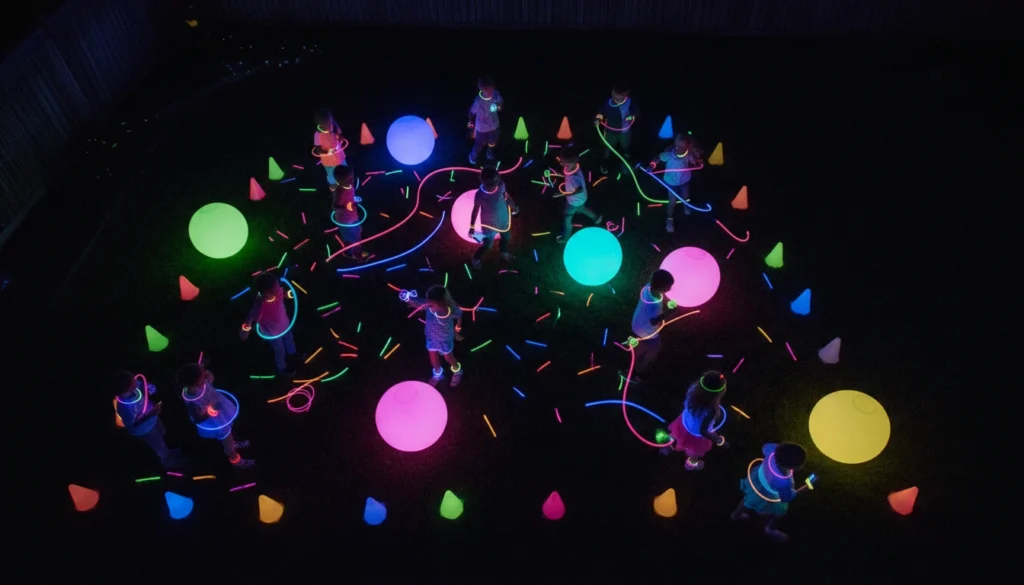
Glow games add visual flair and a little bit of magic. Using glow sticks, LEDs, or light-up gear makes games easier to see and harder to forget. If you have ever watched grandkids run around with glow bracelets, you already know the vibe. It is instant excitement — and it photographs beautifully, which is a bonus for the family album.
If classic outdoor night games for families feel like the backyard version of summer camp, glow games feel like you accidentally hosted a tiny neon party. Nobody is mad about it.
DIY Glow Stick Games for Backyard Play
DIY glow games start with glow sticks, tape, and a little creativity. Outline the play area with glowing markers. Hand out glow sticks or glow bracelets. Use cones with small LED lights as goals.
My simple setup:
- Explain the rules while it is still slightly light outside.
- Mark boundaries with glow sticks or reflective tape.
- Mark no-go zones clearly — steps, garden beds, sprinklers, uneven patches.
- Give every player at least one glow bracelet so you can see where they are.
- Do a quick walk-through for hazards before the game starts.
A few very real grandparent tips:
- Bring extras. Someone will snap a glow stick immediately and look devastated. It is not the end of the world, but it will feel like it.
- Tell kids not to chew glow sticks. Yes, you have to say it out loud.
- If you are doing teams, use matching colors. It helps with the game and looks great in photos.
- Use non-toxic glow sticks and remind everyone not to bite or open them.
Light-Up Equipment That Boosts Night Games
If you host outdoor night games for families more than once a season, light-up equipment is worth the small investment. LED frisbees, glow balls, and illuminated cones increase visibility and make play more fun. They also cut down on collisions — which matters, because excitement plus darkness equals someone forgetting that knees exist.
My low-cost night kit is simple: a couple of LED balls, a few cones, reflective tape, spare batteries, and a basic first-aid kit. It is not fancy, but it is the difference between “that was fun” and “that was fun, but also where is the bandage.”
Family-Friendly Night Activities That Create Memories
Not every version of outdoor night games for families has to involve sprinting. Some of the best evenings are slower: blankets, snacks, a little talking, and grandkids falling asleep on the way home. These low-pressure experiences are perfect for mixed-age groups — and honestly, they are often the nights everyone remembers longest.
One of the things retirement quietly gives you is the ability to slow down without guilt. You do not have to rush the evening. You can let it breathe. And that unhurried quality is exactly what makes these nights feel different from the ones busy parents try to squeeze in between school pickups and work deadlines.
How to Host an Outdoor Movie Night and Safe Campfire Games
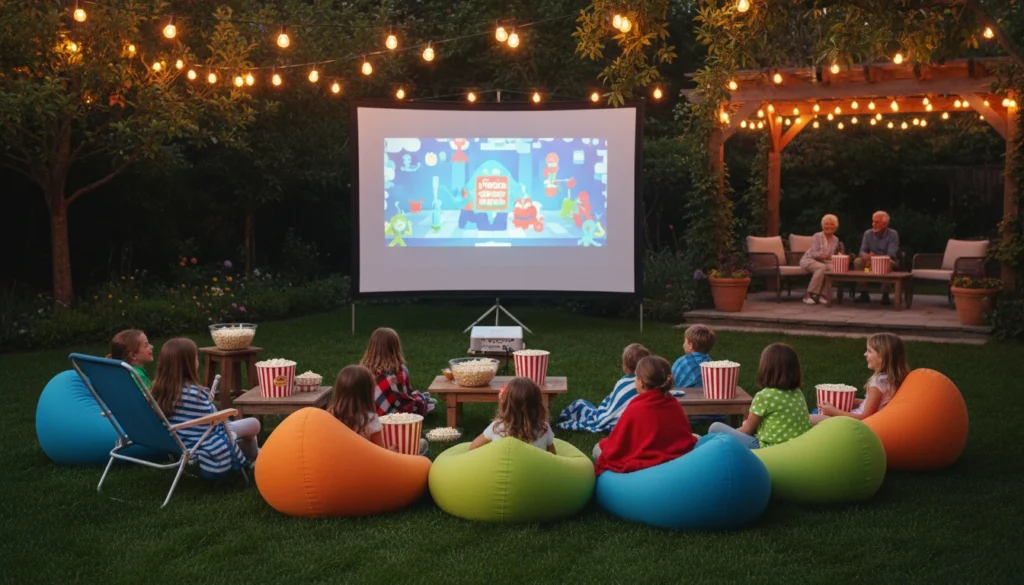
To run a successful outdoor movie night, choose a flat site, set up a projector and screen — or a white sheet works just fine — and arrange comfortable seating with blankets and cushions. Pack popcorn, plan one short pre-show game, and keep a list of simple campfire activities like riddles or sing-alongs ready for after.
What works in my yard: one short game first, then the movie. Kids need a transition. Grandparents need a transition too — we just pretend we do not.
Good Sam’s guide to fall activities for grandparents suggests setting up a projector outside for movie nights with grandkids and letting them help choose the film and make the snacks. That shared ownership makes the whole evening feel more special — and it gives grandkids a reason to brag to their friends about whose house is the most fun.
Fire safety: Keep a safe distance from any open flame, have water or a fire extinguisher on hand, and never leave flames unattended.
Night Nature Walks and Stargazing Tips for Kids
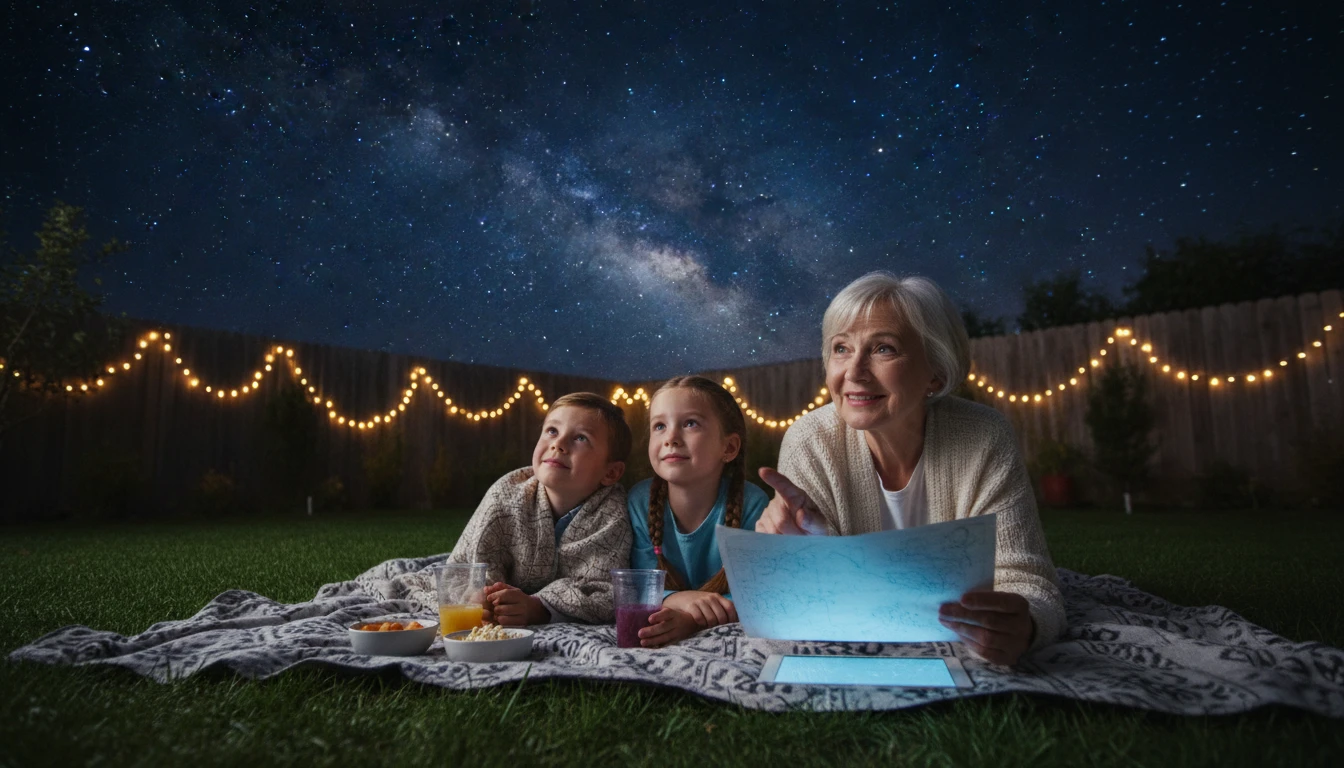
Night walks are a wonderful way to teach grandkids curiosity about local wildlife and the night sky. Use low-beam flashlights or a red-light setting to avoid startling animals. Listen for nocturnal sounds. Bring a simple star chart or a free stargazing app.
Keep walks short and slow for younger grandchildren, and remind everyone to stay close. Try this: everyone stops for one full minute and just listens. You hear more than you expect. You also hear at least one grandkid whisper, “I heard something,” and then everyone gets dramatic. It is part of the charm — and honestly, one of my favorite parts of the whole evening.
1+1 Cares notes that stargazing is a simple, serene activity that lets retirees and grandkids appreciate the night sky together — and you do not need anything fancy. Just clear skies and a willingness to look up.
Choosing Night Games by Age Group
Planning outdoor night games for families with mixed ages is not about finding the perfect game. It is about setting the game to the right difficulty level — shorter rounds, clearer roles, more adult eyes on the edges. The same core games can work for almost any group when you adjust the pace and complexity.
As a retiree host, you have a natural advantage here. You are not trying to win. You are trying to make sure everyone has a good time. That shift in perspective changes everything about how you run the evening.
Simple Night Games for Toddlers and Preschoolers
For the youngest grandkids, pick gentle activities they can enjoy without too much running. Try glow-in-the-dark scavenger hunts with large, easy-to-find markers, or calm games like “Follow the Leader” with glow bracelets.
Keep the area enclosed, remove tripping hazards, and maintain close adult supervision. If you can make boundaries physical — with cones, a rope line, or a row of chairs — do it. Toddlers do not respect invisible lines. They respect objects.
Higher-Energy Night Games for Teens, Youth Groups, and Adults
Older grandkids and adults usually want more strategy and movement. Capture the flag, more complex flashlight tag scenarios, or team-based challenges fit well here.
Make sure boundaries are clear, agree on safety rules up front, and consider using reflective vests or armbands. A simple rule I like: no full-speed sprinting in the darkest corner. You can play hard without turning the night into a slip-and-slide.
Essential Safety Steps Before You Play
Good planning makes outdoor night games for families fun rather than risky. A quick safety checklist changes the entire vibe: check the ground, set clear limits, provide adequate lighting, and assign supervisors.
Here is my honest take as a retiree host: the best nights are the ones where nobody gets hurt and nobody gets scared in the wrong way. A little preparation makes the whole evening feel calmer — even when the games are loud.
Choosing Lighting and Marking Clear Boundaries
Pick lighting that keeps the playing area visible without creating glare. String lights, lanterns, and low-level floodlights work well. Add reflective tape or glowing cones to mark edges.
Research published in Linking Nighttime Outdoor Lighting Attributes to Pedestrians’ Feeling of Safety (Portnov, 2020) found that not all lighting is equal — brightness, color temperature, uniformity, and glare all shape how safe people feel at night. The practical takeaway: even if your yard is objectively safe, it will not feel safe if the lighting is harsh, patchy, or blinding. Aim for soft, even light and clear edges. Think porch glow, not interrogation scene.
A related study on Feelings of Safety for Visitors Recreating Outdoors at Night (Himschoot, 2024) confirms that perceived safety — how safe people think they are — is shaped by how the environment looks and feels, not just by actual hazards. Good lighting is not just practical. It is psychological.
Adult Supervision: Practical Tips for Safer Night Play
Adults should stay visible and engaged. Position supervisors around the play area, run a quick safety briefing before games start, and keep a stocked first-aid kit within reach.
Designate a point person for emergencies and make sure at least one adult knows basic first aid and how to contact emergency services.
One tip I learned the hard way: pick a freeze word. If an adult calls it, everyone stops immediately. It is the fastest way to handle a twisted ankle, a missing grandkid, or the moment someone realizes they left their phone on the lawn chair. We use “FREEZE” — simple, loud, and impossible to misinterpret.
Quick Reference: Outdoor Night Games for Families by Type
| Game Type | Description | Best Age Group |
|---|---|---|
| Classic Night Games | Flashlight tag, ghost in the graveyard, sardines | All ages |
| Glow-in-the-Dark Games | Glow sticks, LED balls, illuminated cones | All ages |
| Family Activities | Outdoor movies, campfire games, nature walks | Families with children |
| Age-Specific Games | Adjusted rules for toddlers, teens, or adults | Varies by group |
Frequently Asked Questions
What safety precautions should I take for outdoor night games?
Prioritize visibility and boundaries. Add string lights, lanterns, or portable floodlights. Mark edges with reflective tape or glow markers. Keep an adult supervisor present, check the ground for holes or trip hazards before you begin, have a basic first-aid kit handy, and set clear rules so everyone knows where they can go — and how to stop play if someone gets hurt.
How do I keep grandkids engaged during nighttime games?
Use themes and props to spark imagination — a space explorer theme, a midnight treasure hunt, a glow party setup. Short rounds and frequent role changes help maintain attention, especially for younger grandkids. And remember: kids do not need complicated. They need momentum.
What are good ideas for family bonding at night?
Try a stargazing evening with a star map or app, an outdoor movie with cozy blankets, or a campfire circle for storytelling and simple games. Small collaborative projects — like building a glow fort or creating a family scavenger hunt — are also great for teamwork and conversation across generations.
How do I pick the right place for outdoor night games?
Choose a familiar, open area cleared of hazards and with enough space for your planned activities. Backyards, community fields, or parks with permission work well. Ensure access to restrooms and exits, check local rules about nighttime events, and run a quick site scan before guests arrive to note any risky spots.
How can I make classic night games more interesting?
Add new objectives or constraints. For flashlight tag, require players to freeze for a count before moving. In ghost in the graveyard, add a time limit or multiple ghosts. For sardines, add a treasure-hunt element. Small rule changes refresh familiar games without adding much complexity.
How do I keep outdoor night games inclusive for everyone?
Adapt rules and roles so people of different ages and abilities can join. Offer non-running roles like scorekeeper or light-bearer for those who prefer less activity. Mix teams by age, shorten rounds for younger players, and emphasize teamwork over competition. Clear communication helps everyone feel involved — and that is the whole point.
Conclusion
Outdoor night games for families are one of the easiest ways for retirees to turn an ordinary evening into something genuinely special. You have the yard, the time, and the perspective to make these nights feel unhurried and memorable. Mix classic favorites with glow-in-the-dark ideas, plan for safety, and choose activities that suit your group’s age and energy level.
If you are on the fence, try one small game night first. Keep it simple, keep it safe, and let the night do what it does best. With a little preparation — and maybe a bag of glow sticks — your next evening outside can be safe, playful, and full of the kind of memories that grandkids talk about for years.
And if someone asks you how you pulled it off? Just smile and say you planned ahead.