
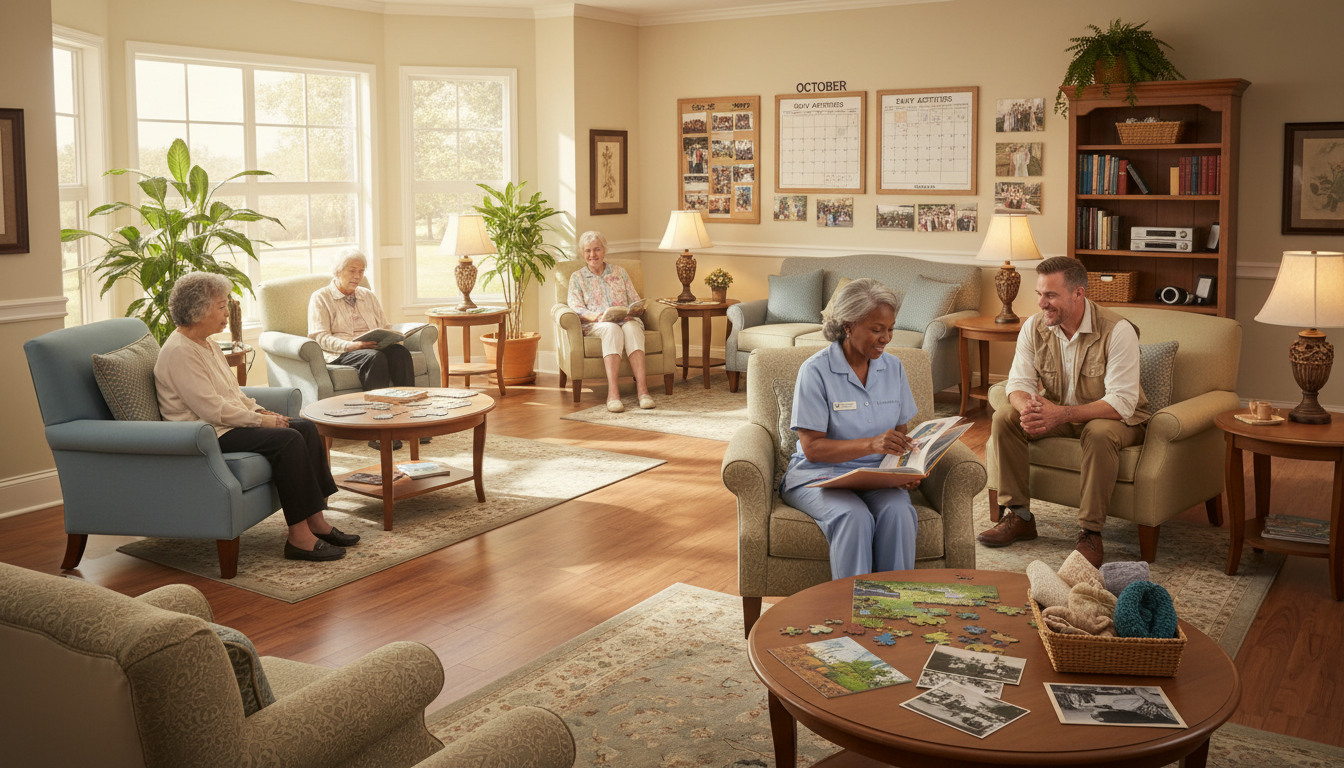
Senior Memory Care Guide: Find Support for Your Loved One
Senior memory care offers specialized support for people living with dementia and Alzheimer’s, providing safety, structure, and dignity when memory loss makes daily life challenging. This guide covers everything from costs to choosing the right facility — because navigating this journey shouldn’t feel like solving a Rubik’s cube blindfolded.
When my grandmother started forgetting our names, I thought we could handle it at home. We couldn’t. And that realization hit harder than I expected. If you’re reading this, you’re probably facing similar questions about senior memory care, and I want you to know: you’re not alone, and asking for help isn’t giving up. It’s actually one of the most loving things you can do.
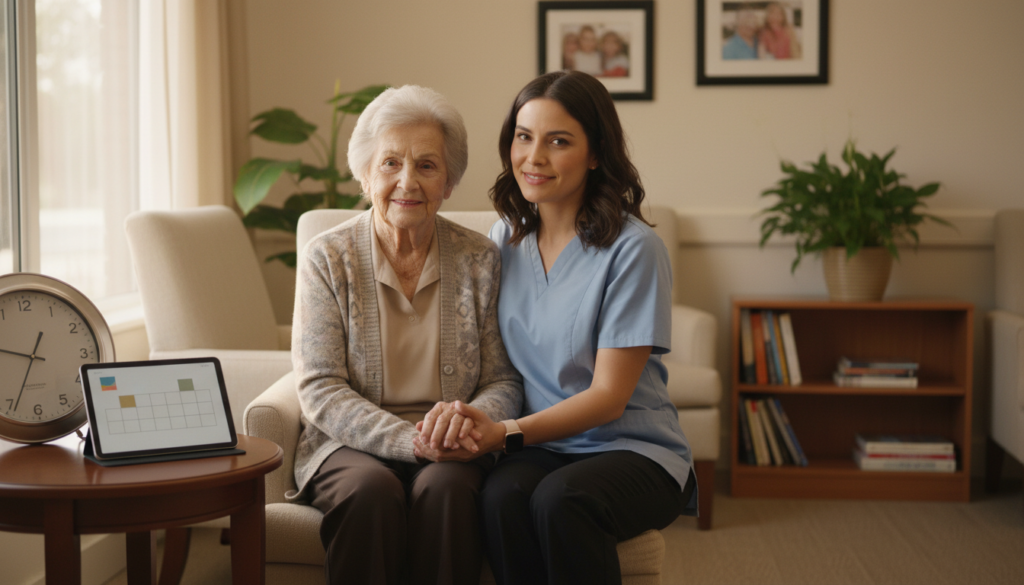
Understanding Senior Memory Care: More Than Just a Place to Stay
Here’s what I’ve learned after touring more memory care facilities than I care to count: senior memory care isn’t just assisted living with extra locks on the doors. It’s a completely different approach to care, designed specifically for people whose brains are playing tricks on them in ways that make regular assisted living inadequate or even unsafe.
What Makes Senior Memory Care Different?
Think of senior memory care as the difference between a general practitioner and a specialist. Sure, both are doctors, but when you’ve got a specific condition, you want someone who deals with it every single day.
Memory care facilities create environments where confusion doesn’t equal danger. The staff understands why your dad keeps trying to “go to work” at 3 AM (even though he retired fifteen years ago), and they know how to redirect him without making him feel foolish or frustrated. That’s not something you can fake or learn from a weekend training seminar.
These communities typically feature:
Secure environments that prevent wandering without feeling like a prison. I’ve seen facilities with beautiful enclosed gardens where residents can walk freely — they just can’t accidentally wander into traffic.
Specialized staff training in dementia care techniques. We’re talking about people who understand that when your mom insists she needs to pick up the kids from school (even though those “kids” are now in their fifties), arguing with her only makes things worse.
Structured daily routines that reduce anxiety. People with dementia often feel calmer when they know what’s coming next, even if they can’t remember what happened an hour ago.
Cognitive engagement activities designed specifically for memory-impaired individuals. No, it’s not just bingo — though there’s nothing wrong with bingo if that’s what brings joy.
The Real Benefits of Specialized Memory Care Services
I used to think memory care was just about keeping people safe. That’s like saying a smartphone is just for making calls — technically true, but missing about 90% of the picture.
Safety features go way beyond locked doors. Motion sensors can alert staff if someone gets up at night (fall prevention is huge). Color-coded hallways help residents find their rooms. Even the dining areas are designed to reduce confusion — you’d be amazed how overwhelming a buffet can be when your brain isn’t processing information correctly.
Personalized care plans mean your loved one isn’t just resident #47. When my friend’s father moved into memory care, the staff learned he’d been a jazz musician. Suddenly, music therapy became a central part of his day, and he’d light up in ways we hadn’t seen in months. That’s the power of individualized care.
Social engagement combats the isolation that often comes with dementia. According to research published in the Journal of Alzheimer’s Disease, social isolation can actually accelerate cognitive decline. Memory care communities create opportunities for meaningful interaction, even when traditional conversation becomes difficult.
Professional medical oversight means someone’s actually watching for the subtle changes that family members might miss or dismiss. Urinary tract infections, medication side effects, changes in mobility — these things get caught early in a good memory care setting.
Choosing the Right Memory Care Facility: A Detective’s Guide
Okay, let me channel my inner Sherlock Holmes here, because choosing a senior memory care facility requires some serious investigative skills. You can’t just pick the one with the nicest lobby (though that’s a nice bonus).
The Non-Negotiable Factors to Consider
Location matters more than you think. I know someone who chose a beautiful facility two hours away because it was more affordable. Six months later, they were drowning in guilt because they could only visit twice a month. Their mom didn’t remember the visits anyway, but they remembered missing them. Find the balance between quality and proximity that works for your family.
Staff-to-resident ratios tell you a lot about the quality of care. If one caregiver is responsible for fifteen residents during the overnight shift, something’s going to slip through the cracks. Look for ratios closer to 1:6 or better during the day, and 1:10 at night. Don’t be shy about asking — this is your loved one’s safety we’re talking about.
The physical environment should feel like a home, not a hospital. Are there personal touches? Can residents bring their own furniture? Is there natural light? These details matter enormously for people whose world is already shrinking.
Staff turnover rates are the secret indicator nobody talks about. High turnover means residents constantly have to adjust to new faces, which is incredibly disorienting for someone with dementia. It also suggests the facility might not treat its employees well — and unhappy employees rarely provide exceptional care.
Questions That Separate the Good from the Great
When you’re touring facilities, don’t just nod politely at the marketing spiel. Ask the hard questions:
“What’s your approach when a resident becomes agitated or aggressive?” The answer should involve de-escalation techniques, not just medication. Chemical restraints should be a last resort, not a first response.
“How do you handle residents with different stages of dementia?” Early-stage and late-stage dementia require different approaches. Some facilities separate residents by stage; others integrate them. Neither is inherently better, but they should have a clear philosophy.
“What happens if my loved one’s needs exceed what you can provide?” Nobody wants to think about this, but it’s crucial. Will they help you transition to a higher level of care, or will they just give you thirty days’ notice?
“Can I see the activities calendar and talk to the activities director?” If the activities consist of “TV time” and “more TV time,” keep looking. Quality memory care includes music therapy, art programs, reminiscence activities, and gentle exercise.
“What’s your policy on family involvement?” Some facilities welcome family participation in activities and care; others prefer families stay out of the way. Know which type you’re dealing with.
The Smell Test (Literally)
Here’s something nobody tells you: trust your nose. A good memory care facility should smell clean but not like a hospital. If you walk in and get hit with the overwhelming scent of urine or industrial cleaner trying to mask urine, that’s a red flag waving frantically in your face.
Also, visit at different times of day. The 10 AM tour with the director is going to look very different from the 7 PM reality when the day shift has gone home.
The Money Talk: What Senior Memory Care Actually Costs
Let’s rip off the Band-Aid: senior memory care is expensive. Like, “maybe I should have bought that lottery ticket” expensive. But understanding the costs upfront helps you plan instead of panic.
Breaking Down the Numbers
As of 2024, you’re looking at an average monthly cost between $4,500 and $7,500 for senior memory care. That’s $54,000 to $90,000 per year. In major metropolitan areas, you can easily hit $10,000 per month or more.
To put this in perspective, research published in JMIR Aging highlights that dementia care costs are becoming a massive burden globally. In the United States alone, we’re spending $355 billion annually on dementia care. That’s not a typo — billion with a B.
Why so expensive? You’re paying for:
- 24/7 specialized staffing
- Secure facilities with safety features
- Specialized programming and activities
- Higher staff-to-resident ratios than regular assisted living
- Ongoing staff training in dementia care
- Often, higher insurance and liability costs
Payment Options That Actually Exist
Medicare is basically useless for long-term memory care. I know, I was shocked too. Medicare will cover short-term skilled nursing or rehabilitation after a hospital stay, but it won’t pay for the ongoing custodial care that memory care provides. It’s frustrating, but it’s the reality.
Medicaid can be a lifesaver if your loved one qualifies. Eligibility varies by state, but generally requires that the person has limited income and assets. Some states have Medicaid waiver programs specifically for dementia care. The catch? Not all memory care facilities accept Medicaid, and those that do often have limited beds available.
Long-term care insurance is the golden ticket — if your loved one bought it years ago before they needed it. These policies can cover a significant portion of memory care costs. If you’re reading this and you’re in your fifties or sixties without memory issues, consider this your wake-up call to look into long-term care insurance.
Veterans benefits can help if your loved one or their spouse served in the military. The VA’s Aid and Attendance benefit can provide additional monthly income to help cover care costs. It’s not enough to cover everything, but every bit helps.
Private pay is how most people start, using savings, retirement funds, or proceeds from selling the family home. It’s not ideal, but it’s often the reality.
Financial Planning Strategies That Help
Start by getting a clear picture of all available assets and income sources. Then work backward from there. A financial advisor who specializes in elder care can be worth their weight in gold — they know strategies most of us would never think of.
Consider whether selling the family home makes sense. I know it’s emotional, but an empty house costs money to maintain while your loved one needs care now.
Look into whether your loved one qualifies for any state or local assistance programs. Many states have programs that aren’t well-publicized but can provide meaningful help.
Supporting the Supporters: Resources for Caregivers
Here’s something I wish someone had told me earlier: you can’t pour from an empty cup. If you’re caring for someone with dementia, or even just managing their care from a distance, you need support too.
Finding Your People
Local support groups are where you’ll find people who actually get it. When you say, “My mom accused me of stealing her purse for the third time today,” they won’t look at you like you’re crazy. They’ll nod knowingly and probably share their own purse-stealing story.
The Alzheimer’s Association offers support groups in most communities. Many memory care facilities also host groups for family members. Don’t underestimate the power of sitting in a room with people who understand that you can simultaneously love someone deeply and feel completely overwhelmed by caring for them.
Online communities provide support at 2 AM when you can’t sleep because you’re worried about your dad. Facebook groups, Reddit communities, and specialized forums connect you with caregivers worldwide. The anonymity can make it easier to share the hard stuff — the guilt, the frustration, the grief for the person your loved one used to be.
Educational resources help you understand what’s happening and what’s coming. The Alzheimer’s Association offers free online courses about dementia care. Understanding that your mom’s accusations aren’t personal — they’re a symptom of her disease — doesn’t make them hurt less, but it helps.
Preventing Caregiver Burnout (Because It’s Real)
Caregiver burnout isn’t just feeling tired. It’s a legitimate health concern. Research published in a 2017 medical text on caregiver burnout shows that caregivers face increased risk for physical health problems and even mortality. Taking care of yourself isn’t selfish — it’s necessary.
Schedule breaks like they’re doctor’s appointments, because they’re just as important. Use respite care services. Ask family members to commit to specific times they’ll help. Hire help if you can afford it. Your loved one needs you to be healthy and functional, which means you need time off.
Maintain your own health even when it feels impossible. I know you’re thinking, “I don’t have time to exercise or cook healthy meals.” But here’s the thing: you don’t have time not to. When you get sick from running yourself into the ground, who’s going to care for your loved one then?
Set boundaries without guilt. You don’t have to answer every phone call from the facility immediately if it’s not an emergency. You don’t have to visit every single day. You’re allowed to have a life outside of caregiving.
Accept help when it’s offered. When someone says, “Let me know if you need anything,” give them something specific: “Could you pick up groceries for me on Thursday?” Most people genuinely want to help but don’t know how.
Consider therapy for yourself. Watching someone you love disappear into dementia is traumatic. A therapist who specializes in caregiver issues can provide tools for managing the emotional rollercoaster.
Daily Life in Memory Care: What to Actually Expect
I think one of the scariest parts of considering senior memory care is not knowing what daily life looks like. Let me paint you a picture based on the good facilities I’ve seen.
A Day in the Life
Mornings typically start with gentle wake-up assistance. Staff members who understand that rushing someone with dementia is a recipe for disaster help residents get dressed, using techniques like offering two outfit choices instead of opening a whole closet (decision fatigue is real).
Breakfast happens in a communal dining room, but it’s not a free-for-all. Residents often have assigned seats — consistency reduces confusion. The menu might offer choices, but not so many that it becomes overwhelming.
Morning activities might include exercise classes adapted for various mobility levels, music therapy sessions, or reminiscence activities using old photos and objects. The goal isn’t to restore lost memories but to create moments of joy and engagement.
Mid-morning often includes personal care time — showers, grooming, medication administration. Good facilities build these necessities into the routine so they don’t feel disruptive.
Lunch followed by a rest period. Many people with dementia experience increased confusion and agitation in the late afternoon (it’s called “sundowning”), so a midday rest can help.
Afternoon activities might be more low-key: art projects, gardening in a secure outdoor space, pet therapy visits, or small group activities. The best facilities offer choices so residents can opt into activities that interest them.
Dinner is often the most social meal, sometimes with family members joining. Evening activities tend to be calming — music, movies, quiet games.
Bedtime routines are individualized because people with dementia often have disrupted sleep patterns. Some residents go to bed at 7 PM; others are night owls. Good facilities accommodate these differences rather than forcing everyone into the same schedule.
The Activities That Make a Difference
Cognitive stimulation doesn’t mean drilling residents with memory quizzes. It means engaging their minds in ways that feel natural and enjoyable. Sorting activities (like folding towels or organizing buttons by color) can be both calming and cognitively engaging.
Music therapy is practically magic. I’ve seen people who haven’t spoken in weeks suddenly sing along to songs from their youth. Music accesses parts of the brain that dementia hasn’t destroyed yet.
Physical activity adapted to abilities helps maintain mobility and reduces agitation. This might be chair exercises, walking groups, or even dancing.
Social interaction happens naturally when the environment is set up right. Communal spaces that aren’t too large or overwhelming encourage residents to interact. Staff members who know how to facilitate conversations between residents with limited communication skills make a huge difference.
The Role of Staff in Creating Quality of Life
Here’s what separates exceptional senior memory care from merely adequate: staff members who see residents as people, not tasks to be completed.
The best caregivers I’ve encountered know each resident’s history, preferences, and quirks. They know that Mr. Johnson was an engineer and loves anything mechanical. They know that Mrs. Chen gets anxious if she can’t see the door. They know that calling someone by their preferred name (even if it’s a childhood nickname) can prevent a meltdown.
Trained staff understand that behavior is communication. When a resident becomes agitated, they look for the cause: Are they in pain? Hungry? Overstimulated? Needing the bathroom? They don’t just medicate the behavior away.
Consistent staffing means residents see familiar faces, which reduces anxiety. High-quality facilities work hard to retain staff by paying them well and treating them with respect.
The Future of Senior Memory Care: What’s Coming Next
The field of senior memory care is evolving rapidly, and some of the innovations are genuinely exciting.
Technology That Actually Helps
Telehealth services mean residents can see specialists without the stress of leaving the facility. For someone with dementia, a trip to the doctor’s office can be traumatic. Video consultations solve this problem for many routine appointments.
Wearable devices can monitor vital signs, detect falls, and even track sleep patterns. Some facilities use GPS-enabled devices that alert staff if a resident wanders into an unsafe area.
Cognitive training apps designed specifically for people with dementia offer personalized brain exercises. Research in JMIR Aging explores how these apps can support cognitive health, though they’re not miracle cures.
Smart home technology in memory care settings can do things like automatically turn on lights when someone gets out of bed at night (reducing fall risk) or adjust room temperature based on individual preferences.
Personalized and Culturally Competent Care
One-size-fits-all senior memory care doesn’t work because people aren’t one-size-fits-all. The industry is slowly recognizing that cultural background, language, and personal history matter enormously in dementia care.
Research by R. Bartlett published in 2005 highlighted that culturally competent dementia care for diverse communities was lacking. Nearly twenty years later, we’re finally making progress, but there’s still work to do.
Culturally tailored approaches mean recognizing that someone who grew up in a different country or culture might have different comfort foods, different communication styles, and different expectations about family involvement in care.
Individualized care plans go beyond medical needs to include personal preferences, life history, and what brings each person joy. This might mean accommodating religious practices, dietary preferences, or daily routines that provide comfort.
Language-specific programs are emerging in areas with large immigrant populations. Caring for someone with dementia in their second language, when they’ve reverted to speaking only their native language, is incredibly challenging.
Making the Decision: When It’s Time for Senior Memory Care
I’m not going to sugarcoat this: deciding to move a loved one into senior memory care is one of the hardest decisions you’ll ever make. The guilt is real. The grief is real. And anyone who tells you it’s “the easy way out” has never actually been in your shoes.
Signs It Might Be Time
Safety concerns that you can’t manage at home. If your loved one is wandering outside at night, leaving the stove on, or becoming physically aggressive, their safety (and possibly yours) is at risk.
Caregiver burnout that’s affecting your health or other relationships. If you’re so exhausted that you’re snapping at your kids, missing work constantly, or developing your own health problems, something has to change.
Medical needs that exceed what you can provide at home. Some stages of dementia require professional medical oversight that family caregivers simply can’t provide.
Social isolation for your loved one. If they’re spending all day alone while you work, they’re missing out on the social engagement and cognitive stimulation that can slow decline.
Giving Yourself Permission
Here’s what I want you to hear: choosing senior memory care doesn’t mean you’re abandoning your loved one. It means you’re ensuring they get the specialized care they need from people trained to provide it.
You can still be deeply involved in their life. You can visit regularly, participate in activities, advocate for their needs, and love them fiercely. You’re just not trying to be a 24/7 professional caregiver anymore, because that’s not sustainable and it’s not what’s best for either of you.
Your Next Steps in the Senior Memory Care Journey
If you’ve made it this far, you’re probably feeling a mix of emotions — maybe some relief at having information, maybe some anxiety about the road ahead. That’s completely normal.
Start by researching senior memory care facilities in your area. Schedule tours at several places. Bring a list of questions. Trust your gut — if something feels off about a facility, it probably is.
Talk to your loved one if they’re still able to participate in the decision. Even if they can’t fully understand the situation, including them in the process respects their dignity.
Consult with their doctor about the level of care needed. Get recommendations for facilities that specialize in their specific type of dementia if applicable.
Connect with other families who’ve been through this. Their real-world experience is invaluable.
And remember: you’re doing the best you can in an impossibly difficult situation. Senior memory care exists because dementia is a disease that eventually exceeds what family caregivers can manage alone. Using these services isn’t failure — it’s wisdom.
The journey through dementia is long and painful, but you don’t have to walk it alone. Quality senior memory care provides professional support for your loved one and relief for you, allowing you to return to being a family member instead of a full-time caregiver. And sometimes, that shift is exactly what both of you need.
Quick Reference: Memory Care Payment Options
| Payment Option | What It Covers | Who Qualifies |
|---|---|---|
| Medicaid | Can cover long-term memory care in participating facilities | Low-income individuals who meet state-specific asset and income requirements |
| Medicare | Short-term skilled nursing or therapy only; not long-term memory care | People 65+ or those with qualifying disabilities |
| Long-term Care Insurance | Varies by policy; can cover significant portion of costs | Those who purchased policies before needing care |
| Veterans Benefits | Aid and Attendance benefit provides additional monthly income | Veterans and surviving spouses who meet service and financial requirements |
| Private Pay | Everything, until funds run out | Anyone with available assets or income |
The cost of senior memory care is daunting, but understanding your options helps you plan strategically rather than scrambling when crisis hits. Start these conversations early, explore all available resources, and don’t hesitate to consult with an elder law attorney or financial advisor who specializes in long-term care planning.
This journey isn’t easy, but you’re not alone. Thousands of families navigate senior memory care decisions every day, and resources exist to help you make the best choice for your unique situation. Take it one step at a time, be kind to yourself, and remember that seeking professional care for your loved one is an act of love, not an abandonment.



One Comment
Comments are closed.