The Real Deal on Active Adult Retirement Communities: What 55+ Living Actually Looks Like
An honest guide to active adult retirement communities, covering lifestyle, costs, amenities, and what daily life really feels like.
My aunt called me on a Tuesday afternoon, and I could hear music in the background. Not the TV. Actual live music. She was at a happy hour. On a Tuesday. At her retirement community.
I’d visited her place a few months earlier, half-expecting something quiet, beige, and a little sleepy. You know the mental image people tend to get when they hear the phrase “retirement community.” What I found instead was a lobby that smelled like fresh coffee, a group of women cheerfully roasting each other over a card game, and a man in a golf cart who nearly clipped me because he was too busy waving hello. He looked delighted with himself.
I remember standing there thinking, Wait… this is retirement?
That visit changed how I think about active adult retirement communities. These aren’t places people go to shrink their lives. They’re places people choose because they want less hassle, more connection, and a lifestyle that still feels open-ended. If you’re researching options for yourself, helping a parent compare communities, or just trying to understand what 55+ living actually looks like, this guide will walk you through it clearly. No brochure-speak. No stiff sales language. Just a grounded look at how active adult retirement communities work, what they cost, and why so many people end up wishing they’d moved sooner.
Key Takeaways
- Active adult retirement communities are age-restricted neighborhoods, usually for adults 55 and older, built for independent living and social connection.
- The best communities combine practical convenience with a strong lifestyle focus, including fitness, dining, recreation, and events.
- Many residents choose active adult retirement communities for freedom from maintenance, better community, and more ways to stay engaged.
- Housing options can include single-family homes, condos, townhomes, and apartments.
- Costs vary widely, so it’s important to understand monthly fees, entrance fees, and what services are or aren’t included.
- Visiting in person and talking to current residents is still one of the smartest ways to evaluate a community.
So What Exactly Are Active Adult Retirement Communities?
At the simplest level, active adult retirement communities are age-restricted neighborhoods designed for older adults who want an independent, socially connected lifestyle. Most are built for people 55 and up, though some use 62+ rules or other age thresholds depending on the community.
But that dry definition doesn’t really tell the story.
What makes active adult retirement communities different from a regular neighborhood is the intention behind them. They’re designed around the idea that this season of life can still be full — full of movement, friendships, hobbies, routines you enjoy, and maybe a slightly competitive pickleball rivalry you did not see coming. The homes, amenities, programming, and layout are all built with that in mind.
That’s also why these communities are different from assisted living. Active adult retirement communities are for people who are independent and want to stay that way. The draw isn’t medical care. It’s lifestyle. It’s waking up in a place where there’s something to do, someone to know, and a lot less yard work staring you down like an unpaid bill.
I’ve talked to people who moved reluctantly, convinced they were giving something up, only to realize they were getting back time, energy, and a social life they hadn’t had in years. One woman told me she made more close friends in six months than she had in the previous decade. That stuck with me. So did the way she said it — not like a sales pitch, just like someone still a little surprised by her own happiness.
The Amenities That Make You Wonder Why You Waited
Fitness Centers That Don’t Feel Intimidating
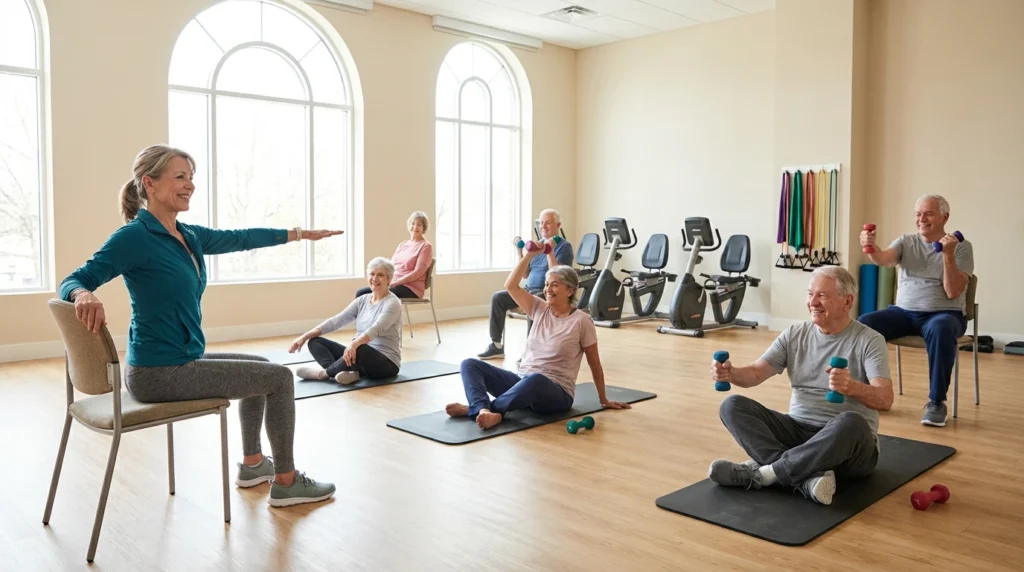
I’ve been in gyms where the whole place felt like a silent competition I never agreed to join. The fitness centers in active adult retirement communities usually have a completely different feel. They’re designed for accessibility, comfort, and actual daily use, which is a lot more helpful than a room full of equipment nobody touches.
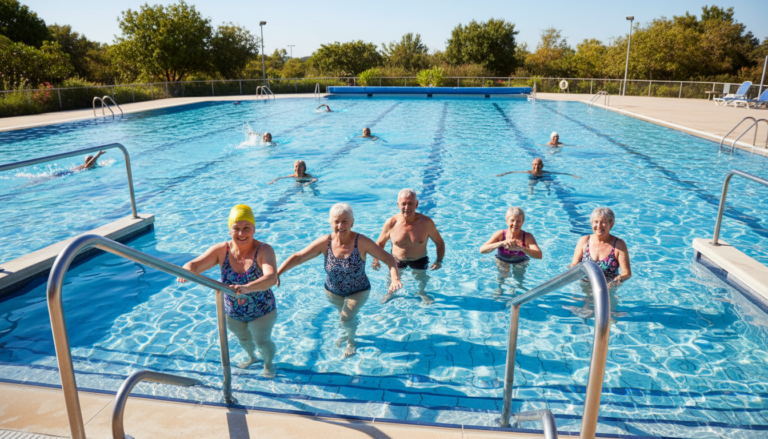
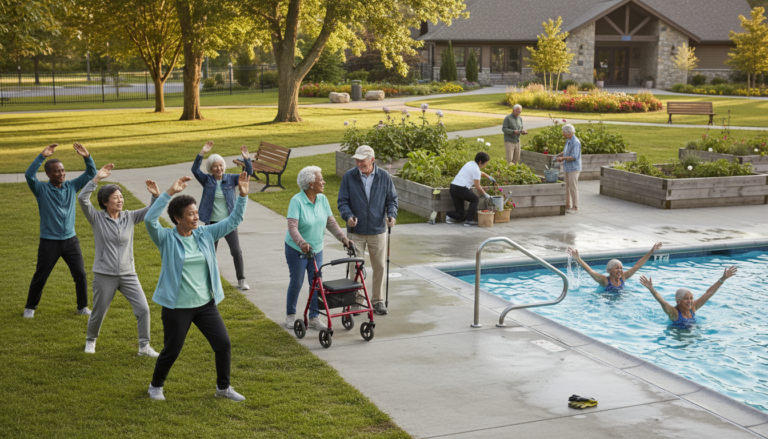
You’ll often find walking tracks, low-impact machines, strength equipment, yoga, water aerobics, Pilates, and classes built specifically for older adults. The point isn’t to train for a superhero movie. It’s to stay strong, flexible, steady, and confident in your own body.
That matters more than people sometimes realize. A 2012 population-based study by R.S. Reis and colleagues found that leisure-time physical activity was consistently linked with better quality of life across several domains in adults. That doesn’t mean every resident suddenly becomes a fitness fanatic. It means convenience changes behavior. If exercise is close by, welcoming, and built into the culture, people are far more likely to keep moving.
Dining That Feels Like a Night Out — Every Night
One of the biggest surprises for people touring active adult retirement communities is dining. Many expect bland cafeteria food and a tray line that feels emotionally tied to middle school. Thankfully, that picture is outdated in a lot of communities.
Many now offer chef-prepared meals, café-style casual spots, formal dining rooms, and menus that account for different dietary needs without making everything taste like punishment. Some even offer delivery to residents’ homes on quieter days. And honestly, there’s something deeply appealing about having a decent meal without planning it, shopping for it, cooking it, and then arguing with yourself about whether the pan really needs soaking.
It’s not just convenience. It changes the rhythm of life. Meals become social again. Dinner becomes a reason to leave the house instead of another task sitting on the to-do list.
A Social Calendar That Would Exhaust a 30-Year-Old
This is where active adult retirement communities often surprise people most.
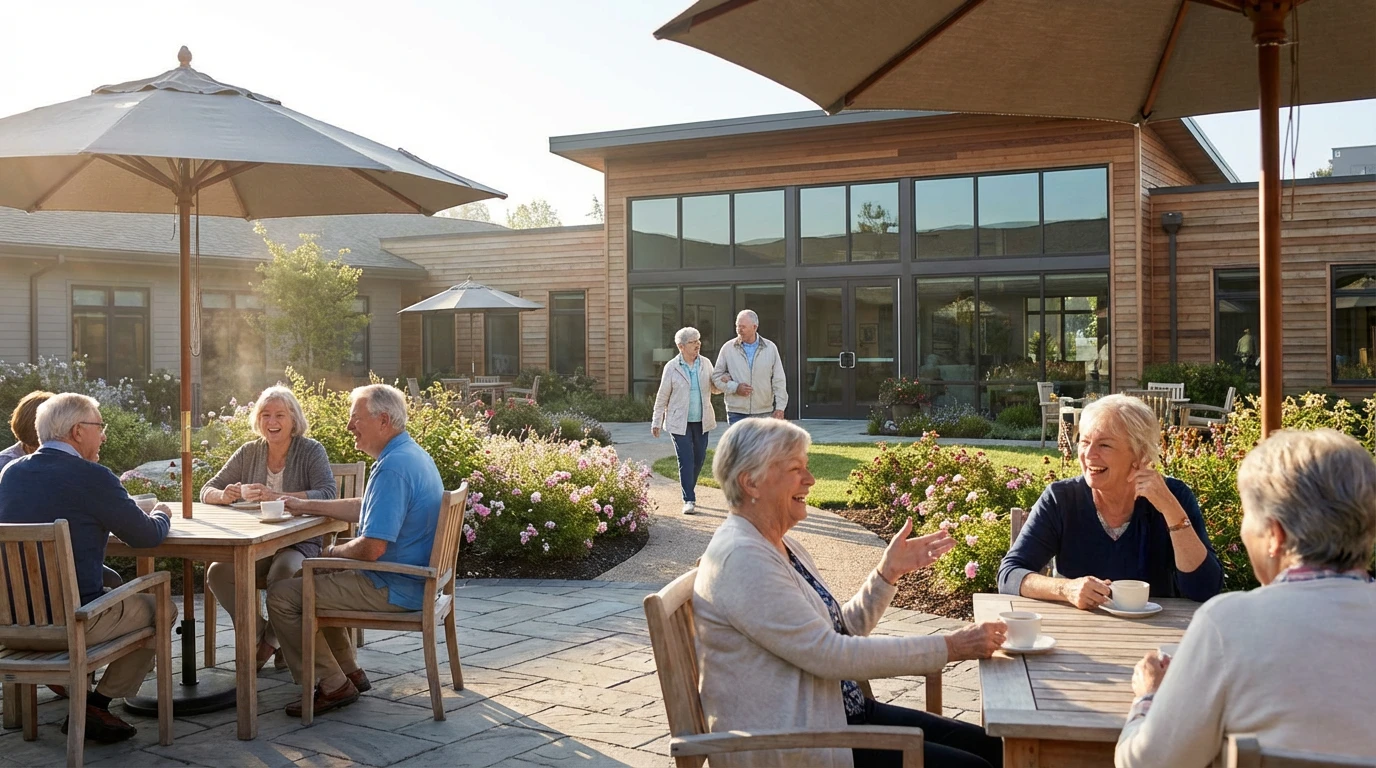
The event calendar can be packed: book clubs, card games, movie nights, volunteer projects, day trips, art classes, walking groups, seasonal parties, live music, continuing education, and more. Some residents join everything. Some join two or three things and call it perfect. Either way, the opportunity is there.
And that matters because connection rarely happens by accident. In a lot of traditional neighborhoods, people pull into the garage, close the door, and disappear. In active adult retirement communities, the design makes casual interaction much easier. You run into people. You start talking. Then suddenly you’re in a trivia group with Margaret, who turns out to be weirdly competitive about 1970s movie soundtracks.
I toured one Arizona community where the pickleball courts were full by 7 a.m. on a Wednesday. Full. Not “a few people are out there.” Full. These weren’t bored people trying to fill time. They had schedules. Friends. Rematches. One man told me he’d moved in for the low-maintenance house and accidentally ended up with a social life that was busier than his daughter’s.
Recreational Facilities for Every Kind of Active
The best active adult retirement communities usually recognize that “active” means different things to different people. For some residents, that means golf, tennis, swimming, biking, or pickleball. For others, it means gardening, woodworking, ceramics, painting, photography, or simply having a beautiful walking trail where they can clear their head before breakfast.
That range matters. Not everyone wants a high-energy calendar. Some people just want options. Good options. The kind that make life feel textured instead of repetitive.
One community I visited had a pottery studio, a woodworking room, and an art space with the kind of natural light that makes everyone look like they know what they’re doing. I met a resident there who started painting in her late sixties and now had several pieces hanging in the community gallery. She looked proud in the quietest, sweetest way. That’s the sort of thing people mean when they say a move like this can open up a new chapter.
Wellness Programs That Go Beyond the Gym
Many active adult retirement communities also offer broader wellness support through health screenings, nutrition workshops, mental wellness programs, or partnerships with local healthcare providers. Some communities have visiting specialists or easy access to wellness staff who can point residents in the right direction.
I think that balance is important. The goal isn’t to make daily life feel medical. It’s to make staying well feel easier and less fragmented. There’s a difference, and good communities understand it.
The Lifestyle Benefits Nobody Talks About Enough
The Loneliness Problem — and How These Communities Solve It
One of the strongest arguments for active adult retirement communities has nothing to do with pools, clubhouses, or even maintenance. It has to do with loneliness.
In 2023, the U.S. Surgeon General issued an advisory warning that social isolation and loneliness carry serious health risks. The report noted that lacking social connection can be as damaging as smoking 15 cigarettes a day. That’s not a throwaway statistic. It’s a flashing red light.
The Harvard Study of Adult Development, one of the longest-running studies on human well-being, has also shown that close relationships are one of the clearest predictors of health and happiness over time. Not achievement. Not status. Relationships.
That’s where active adult retirement communities can genuinely change daily life. When neighbors become walking partners, lunch friends, card-game rivals, and the people who notice if you’ve been gone a few days, it becomes harder for isolation to quietly take over. That kind of built-in community is hard to overstate. Especially later in life, when social circles often shrink for reasons nobody planned.
Maintenance-Free Living Is a Bigger Deal Than It Sounds
“Maintenance-free living” can sound like brochure language. I used to hear it and think, Sure, fine, whatever that means. Then I spoke with a woman named Carol who had spent decades taking care of a large house and yard.
She laughed when she told me, “I got my weekends back.”
That’s such a simple sentence, but it says a lot. No mowing. No chasing contractors. No climbing a ladder because something on the roof looks suspicious and suddenly you’ve made a series of very questionable decisions. No mental load from a house that keeps demanding your attention like a needy relative.
For many residents, active adult retirement communities don’t just remove chores. They remove background stress. And once that stress is gone, people often have more space for things that actually make life feel good.
Independence — More of It, Not Less
A lot of people assume moving into active adult retirement communities means giving up independence. In reality, many residents describe the opposite.
They feel more independent because they’re no longer spending so much time and energy managing a house, driving all over town for activities, or trying to create a social life from scratch. The support structure around them gives them more freedom, not less.
That distinction matters. These communities are not about shrinking someone’s world. At their best, they expand it. You still have your own schedule, your own space, your own routines. You just have better infrastructure around your life. Which, frankly, is something most of us would appreciate at any age.
Safety Without the Surveillance-State Vibe
Safety is another quiet benefit that deserves more attention. Many active adult retirement communities include gated access, well-lit common areas, emergency response systems, and staff or neighbors who notice when something seems off.
That can make a meaningful difference for residents living alone. It also tends to lower the worry level for adult children, which may not show up on a pricing sheet but absolutely counts in real life.
I’ve had enough conversations with friends caring for aging parents to know that peace of mind is not some fluffy bonus feature. It’s huge.
Community Features That Set These Places Apart

Housing Options for Every Kind of Life
One thing I appreciate about active adult retirement communities is that they’re not one-size-fits-all. Some offer single-family homes for people who still want privacy and a more traditional neighborhood feel. Others offer condos, townhomes, or apartments for residents who want a smaller footprint and less upkeep.
That variety makes a real difference. Some people want a guest room for family visits. Some want a lock-and-leave setup so they can travel easily. Some want to rent first before deciding whether they’re ready to buy. A good community gives people options instead of assuming everyone wants the same version of retirement.
Smart Technology That Actually Makes Life Easier
Technology in active adult retirement communities has gotten much smarter — and thankfully, in many cases, less annoying.
A 2018 scoping review by K. Oyibo and colleagues explored how smart home technologies can support physical activity and independent living in aging populations. In practical terms, that can mean emergency alert systems, smart lighting, resident portals, event apps, health-monitoring tools, or community communication systems that make everyday tasks simpler.
The best technology fades into the background. It doesn’t make life feel futuristic for the sake of it. It just makes life easier. Fewer barriers. Fewer hassles. More reassurance.
Transportation That Keeps You Mobile
Not everyone wants to drive forever, and not every errand should require calling family for backup. That’s why transportation can be such an underrated feature in active adult retirement communities.
Many communities offer shuttle services for shopping, appointments, local events, and group outings. That preserves independence in a very practical way. It also spares people from dealing with parking lots, traffic, and all the little annoyances that become more tiring over time.
One resident I spoke with told me she hadn’t driven in two years and felt more independent now than she had before. She just got on the shuttle, brought a book, and let someone else deal with the steering wheel. Hard to argue with that.
Professional Management That Actually Manages
This may not be the flashiest part of active adult retirement communities, but it matters a lot: management.
A beautiful clubhouse means very little if the community is poorly run. Strong management teams keep common spaces maintained, plan events, communicate clearly, respond to resident concerns, and keep the whole place from slowly slipping into avoidable frustration.
When touring communities, I’d always ask how long the management team has been there and how they handle resident feedback. Then I’d ask residents whether they feel heard. That second answer is usually the one that tells the truth.
Understanding Age Restrictions: What You Actually Need to Know
The 55+ Standard
Most active adult retirement communities operate under 55+ rules, usually meaning at least one person in the household must be 55 or older. Under the Housing for Older Persons Act, age-restricted communities generally need at least 80% of occupied units to include at least one resident who is 55+.
That’s the legal framework, but the lifestyle side matters too. These rules help shape a community where residents are generally in a similar season of life. Shared rhythms, shared priorities, shared references. People often underestimate how comforting that can be until they experience it.
When the Rules Get a Little More Flexible
Not every community uses the exact same policy. Some are 62+, some allow younger spouses, and some make room for caregivers or special family situations.
That’s why it’s important to ask directly instead of assuming. Falling in love with a place and then discovering a policy mismatch is a terrible way to spend an afternoon.
Fair Housing Compliance
Reputable active adult retirement communities should be clear about how their age restrictions work and how they comply with fair housing rules. If a community is vague, inconsistent, or oddly evasive when you ask, I’d take that seriously.
Clear answers are a good sign. Fuzzy ones usually aren’t.
What Does It Actually Cost? Let’s Talk Numbers
Monthly Fees and Rent
The cost of active adult retirement communities varies a lot based on location, housing type, amenities, and the services included. Some operate on a rental model. Others involve home purchases plus HOA fees. Some include more support and amenities than others.
Here’s a simple snapshot of common costs:
| Cost Type | Description | Typical Range |
|---|---|---|
| Monthly Rent / HOA Fees | Covers amenities, maintenance, and services | $2,000 – $4,000/month |
| Buy-in / Entrance Fee | One-time fee; may be partially refundable | $50,000 – $300,000 |
| Long-term Care Insurance | Covers future healthcare needs not in community fees | Varies by plan |
That range may feel broad, because it is. A community in a resort-style market will not price the same way as a more modest option in a lower-cost area. Which is why comparing communities line by line matters.
The Buy-In Question
Some active adult retirement communities — especially those connected to continuing care models — require a substantial entrance fee. That can be a little jarring when you first see the number. Understandably.
Still, the fee may come with benefits such as access to future care, stronger service packages, or partial refunds depending on the contract. This is one of those moments where reading the details matters more than reacting to the headline number. If possible, it’s wise to review the agreement with a financial advisor or attorney who understands retirement housing.
Budget for What’s Not Included
Even in strong communities, not everything is covered by monthly fees. Utilities, upgrades, healthcare, personal services, and optional activities may sit outside the base price.
That doesn’t mean the community is overpriced. It just means real budgeting matters. The more clearly you understand what is included, the easier it is to decide whether a community is truly a fit for your finances and lifestyle.
How to Actually Choose the Right Community
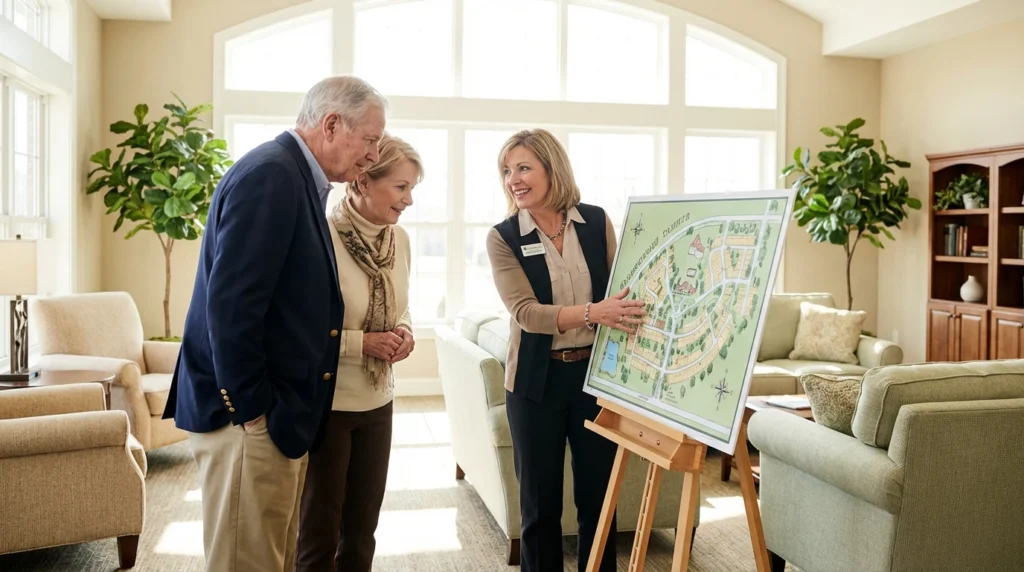
Visit in Person — More Than Once
If you do one thing, do this: visit in person.
Photos help. Brochures help. Virtual tours are fine. But none of them tell you what it feels like to walk the grounds, hear the noise level in the dining room, sit in the clubhouse, or notice whether residents seem genuinely comfortable there.
I’d visit more than once if possible — ideally at different times of day. A place can feel very different on a quiet weekday afternoon than it does during a busy event or weekend brunch.
Ask the Questions Nobody Thinks to Ask
Try not to stop at the polished tour-script questions. Ask what residents love. Ask what they wish were better. Ask how full the activity calendar really is. Ask about turnover. Ask what happens if your needs change later.
Those questions may feel slightly awkward, but awkward is underrated. Awkward questions usually get useful answers.
Think Hard About Location
Location affects almost everything: proximity to family, access to good healthcare, weather, local culture, airport access, walkability, and the cost of living around the community itself.
Some people want sun year-round. Some want to stay close to grandchildren. Some want a slower pace but still need a strong hospital system nearby. None of those priorities are wrong, but they do change the shortlist quickly.
I’ve learned that “looks great on paper” and “works well in real life” are not always the same thing. This is one of those decisions where that difference really matters.
Trust Your Gut About the Culture
Every community has a personality. Some active adult retirement communities are lively, extroverted, and packed with activities. Others are calmer, quieter, and more low-key.
Neither style is automatically better. But one may fit you much better than the other.
Pay attention to how people interact. Do residents seem warm with each other? Do staff members know names? Does the place feel welcoming or merely polished? I know “trust your gut” can sound vague, but sometimes your instincts pick up on the truth before your checklist does.
Frequently Asked Questions
Can family members visit or stay overnight?
Usually, yes. Most active adult retirement communities welcome visitors, and many encourage family involvement through events and shared spaces. Guest policies vary, though, especially for longer stays, so it’s smart to ask in advance.
Are pets allowed?
Many communities are pet-friendly, but the rules can differ on breed, size, number of pets, and fees. If a pet is part of the family, this should be one of the first questions you ask, not the tenth.
What’s the move-in process like?
In most cases, you’ll tour communities, compare options, complete an application, review financial terms, and then coordinate move-in timing. Some communities also offer orientation programs or resident ambassadors to help new neighbors settle in, which is a nice touch and, frankly, less awkward than wandering into the dining room alone on day one.
Do these communities offer healthcare services?
Most active adult retirement communities focus on independent living rather than direct medical care. However, many offer wellness programming or relationships with nearby healthcare providers. If long-term care access is a major concern, a continuing care retirement community may be worth exploring too.
The Bottom Line
After spending time around active adult retirement communities, talking to residents, and seeing how daily life actually works, I think the biggest misconception is that these places are about slowing down. For many people, they’re about removing friction.
Less maintenance. Less isolation. Less hassle. More room for friendship, movement, routine, and fun. Not flashy fun, necessarily. Just the kind that makes ordinary days feel fuller.
That’s really the appeal of active adult retirement communities. They can make life simpler without making it smaller.
They’re not right for everyone, and they shouldn’t be treated like a one-size-fits-all answer. But for people who want independence, community, convenience, and a setting built for this stage of life, they can be a remarkably smart option.
My aunt called me again recently. Same background noise. Same laughter. I asked what she was doing, and she said, “I can’t talk long — trivia starts in ten minutes, and Doris is convinced we’re finally going to win.”
She hung up before I could respond.
Honestly, that told me almost everything I needed to know.
That’s not just housing. That’s a life. And if you’re exploring active adult retirement communities, that’s probably what you’re really looking for.
For unbiased information on retirement living, it’s worth reviewing resources from AARP, the National Council on Aging, and the U.S. Department of Housing and Urban Development.