

Sleep Health by Habit: A Retiree’s Complete Guide to Better Rest Through Daily Routines
Discover how sleep health by habit can transform your retirement years — better rest, more energy, and daily routines that actually work for your body.
Let me tell you about the worst night of sleep I ever had in retirement.
It was a Tuesday. Or maybe a Wednesday — honestly, one of the strange gifts and curses of retirement is that the days start blurring together in a way that’s either peaceful or disorienting depending on the week. I’d had a big cup of coffee at 4 p.m. because I felt like it and I was retired and nobody could tell me otherwise. I ate a heavy dinner late. I watched the news, which — if you’ve watched the news lately — is not exactly a relaxation tool. I fell asleep in my recliner at 7:30 p.m., woke up at 9 feeling groggy and confused, shuffled to bed, and then lay there completely wide awake until 2 a.m. staring at the ceiling, mentally arguing with people I hadn’t spoken to in years.
At 2 a.m. I checked my phone. Bad idea. At 2:15 I checked it again. Worse idea. At 3 a.m. I was reading about whether my mattress was slowly killing me. At 4 a.m. I finally fell back asleep. At 6:30 a.m. I was up again, feeling like I’d been lightly run over, and I made a large pot of coffee and told myself this was just what getting older felt like.
It wasn’t. It was what bad habits felt like. And I’d been blaming aging for something that was entirely within my control.
That’s the thing about sleep health by habit that took me an embarrassingly long time to understand: most sleep problems aren’t mysterious. They’re not inevitable. They’re not just “part of getting older.” They’re the predictable result of doing the same unhelpful things every night and expecting different results — which is, as someone once pointed out, a reasonable definition of a certain kind of madness.
The CDC reports that over a third of American adults don’t get enough sleep (CDC, 2024). For retirees, the number is likely higher than that, because retirement removes the external structure that was quietly keeping a lot of us on track without us even realizing it. The alarm clock. The commute. The meeting at 9 a.m. that forced you out of bed whether you felt like it or not. Gone. All of it gone. And suddenly your body’s internal clock — which was running on the rhythm of your work schedule for thirty or forty years — has no idea what time it is or what it’s supposed to be doing.
I’m not telling you this to be discouraging. I’m telling you this because understanding why retirement can wreck your sleep is the first step toward fixing it. And it absolutely can be fixed. I’m living proof of that, and I’m someone who once read a mattress conspiracy theory at 3 a.m. and took it seriously.
What Sleep Health by Habit Actually Means — and Why Retirees Have the Advantage
Here’s the beautiful irony of all this: retirees are actually better positioned to build good sleep habits than almost anyone else.
You have time. You have flexibility. You don’t have a 6 a.m. flight to catch or a 7 a.m. meeting that overrides everything. You can actually design your days around what your body needs instead of cramming your body into whatever shape your schedule demands. That’s not a small thing. That’s a genuine advantage that most working people would give a lot for.
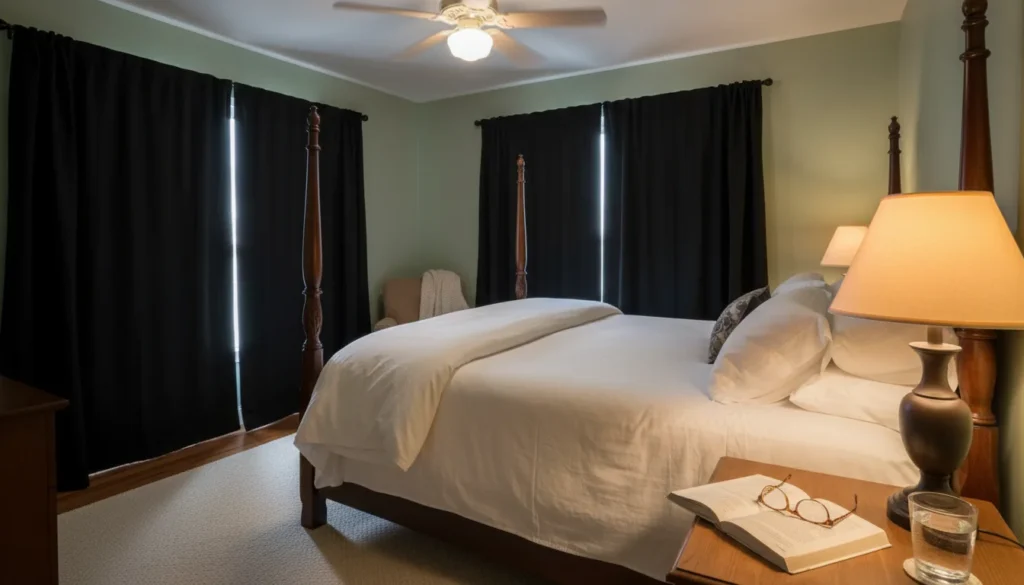
Sleep health by habit just means building routines that work with your body instead of against it. Your brain is a pattern-recognition machine — always cataloguing, always building shortcuts, always looking for signals about what comes next. When you do the same things before bed every night, your brain eventually connects the dots. “Oh, lights are dimming, the book is out, the fan is on. I know this one. Time to start making melatonin.”
It’s like training a dog. A really smart, deeply stubborn dog that lives in your head, has strong opinions about your schedule, and will absolutely ignore you if you’re inconsistent. But train it well — with patience and repetition and the occasional treat — and it works for you instead of against you. Every single night.
The National Sleep Foundation found that people with consistent sleep habits get measurably better quality sleep. Falling asleep stops being a nightly negotiation and starts feeling almost automatic. And in retirement, where you finally have the time and freedom to get this right, that’s not just a health benefit. It’s a quality-of-life transformation.
What Bad Sleep Actually Does to You — And Why You’ve Probably Been Blaming the Wrong Thing
I want to spend a minute here, because this is important and most people skip past it.
Chronic sleep deprivation doesn’t announce itself dramatically. It doesn’t knock on your door and say, “Hello, I’m here to ruin your retirement.” It sneaks in quietly, gradually, and then one day you realize you’ve been operating at 60% capacity for so long that you’ve forgotten what 100% felt like.
Your mood goes first. Everything feels more irritating when you’re running on empty — the slow driver in front of you, the neighbor’s leaf blower at 8 a.m., the fact that the TV remote is on the other side of the couch and that feels like a genuine inconvenience requiring a moment of silent resentment. That’s not you becoming a grumpy retiree. That’s your brain’s emotional regulation system running on fumes, turning small annoyances into big reactions because it simply doesn’t have the resources to do otherwise.
Your memory gets foggy in ways that are genuinely unsettling if you don’t know what’s causing them. You walk into rooms and forget why. You lose words mid-sentence — the word is right there, hovering just out of reach, and then it’s gone and you’re standing there saying “you know, the thing, the — thing” while the person you’re talking to waits politely. You put your glasses down and spend ten minutes looking for them. They’re on your face. I have done this. More than once. In the same afternoon.
Your immune system weakens. A study published in the journal Sleep found that people sleeping under seven hours are three times more likely to catch a cold. Your body needs sleep to fight off basic stuff — and that becomes more critical, not less, as we get older and our immune systems have less margin for error.
And here’s the part that really gets me: most of us chalk all of this up to aging. “I’m just a light sleeper now.” “Mornings have always been rough for me.” “This is just what 67 feels like.” Sometimes that’s true. But there’s a real, meaningful difference between normal aging and being chronically exhausted — and a lot of retirees are living in the second category while assuming it’s the first. You deserve to know which one you’re actually dealing with. Because one of them is fixable.
How Habits Actually Work — and Why Your Brain Is Already on Your Side

The habit loop has three parts: cue, routine, reward. Once you genuinely understand this, you can use it intentionally instead of accidentally training yourself to scroll your phone until 1 a.m. every night while wondering why you can’t sleep.
Here’s a simple example: Dim the lights at 9 p.m. (cue), read for 20 minutes (routine), feel drowsy (reward). Do this consistently and your brain builds a shortcut. Dim lights plus book equals sleepy time. You’re not fighting your body anymore. You’re working with it. That’s the whole secret. That’s genuinely the whole thing, and it took me an embarrassing number of years and one too many 3 a.m. mattress rabbit holes to understand it.
Your brain has a tiny region called the suprachiasmatic nucleus — your body’s master clock, completely obsessed with schedules and light cues. Consistent habits train this clock to work better. Inconsistent habits — bed at 10 p.m. Tuesday, 2 a.m. Friday, a three-hour nap Saturday afternoon, a 9 p.m. espresso because you felt like it — create chaos. Like an orchestra where everyone’s playing a different song in a different key at a different tempo. Technically music. Not restful.
You’ve probably heard it takes 21 days to form a habit. That’s not actually true — it came from a plastic surgeon in the 1960s who noticed patients took about 21 days to adjust to their new faces. Interesting observation. Not science. Real research from University College London found habit formation takes 21 to 66 days, with an average of 66 days for something to feel truly automatic.
The genuinely good news? Missing a day or two doesn’t ruin your progress. You need consistent repetition, not perfection. You don’t have to be a robot about this. You just have to keep showing up — which, after decades of showing up for everyone else, you are more than qualified to do for yourself.
Why Sleep Matters Even More After You Retire
Regular sleep schedules help control blood pressure — something most of us are already keeping a close eye on. Research published in Hypertension shows people with consistent bedtimes have significantly lower rates of high blood pressure. That’s not a minor footnote. That’s a meaningful health outcome that costs nothing but a reasonable bedtime and the willingness to stick to it.
Sleep also regulates leptin and ghrelin — the hormones that control hunger. When you’re sleep-deprived, ghrelin spikes and leptin drops. Your hunger signals get completely scrambled. That’s why you find yourself standing in front of the open refrigerator at 11 p.m. after a rough night, staring at last Tuesday’s leftovers like they personally wronged you and you’re considering eating them out of spite. It’s not weakness. It’s hormones doing exactly what they’re designed to do when your body is running on empty. Understanding this doesn’t make the midnight snacking disappear, but it does make it a lot less mysterious and a lot less something to feel guilty about.
Your Brain’s Nighttime Cleaning Crew
This is the one that genuinely stopped me cold when I first read about it, and I think about it almost every night now when I’m tempted to stay up too late.
Your brain has a waste-clearance system called the glymphatic system that operates almost exclusively during sleep. University of Rochester researchers discovered this relatively recently, and the implications are remarkable. While you’re asleep, your brain flushes out toxins and metabolic waste — including proteins associated with Alzheimer’s disease. It’s like a nighttime cleaning crew that only shows up after you’ve closed the doors, turned off the lights, and gone to bed. Skip sleep, and they don’t get to finish the job. Night after night of skipping sleep, and the backlog builds.
For retirees who want to protect their cognitive health long-term — and I think that’s most of us, because what’s the point of a long retirement if you can’t remember it — this isn’t a minor detail buried in a research paper. This is one of the most compelling reasons I know to take sleep seriously. Your brain is literally cleaning itself while you sleep. The least we can do is give it the time to finish.
Habits That Actually Work: Where to Start Without Overwhelming Yourself

Let’s get practical, because that’s where this actually matters. These are organized by category because trying to change everything at once is a reliable way to change absolutely nothing and feel terrible about yourself in the process.
Timing and Schedule: The One Thing That Changes Everything
The single most powerful thing you can do for your sleep health by habit is keep a consistent schedule — within 30 minutes, every day, including weekends.
I know. This is the part where people look at me like I’ve suggested something genuinely unreasonable, like giving up coffee or learning to enjoy kale. But same bedtime and wake time synchronizes your circadian rhythm and makes falling asleep feel natural instead of forced. Most adults need 7–8 hours, though quality matters more than just hitting a number. Sleep tracking can help — fitness watches, apps, whatever works for you. Just don’t get anxious about your sleep score. Use the data as a guide, not a report card. Your Fitbit is not your doctor, and a 74% sleep score is not a diagnosis of anything except possibly “you stayed up too late watching something you’d already seen.”
The weekend thing nobody wants to hear: Keep your sleep schedule on weekends too — within an hour of your weekday times. Sleeping in dramatically on days off creates what researchers call “social jet lag.” Your body gets confused and the rest of your week pays for it. I know sleeping in Saturday morning feels like one of retirement’s great pleasures, right up there with lunch at 11 a.m. and not explaining yourself to anyone. I’m not saying never. I’m saying the price is higher than it looks, and Monday will send you the bill with interest.
Make Your Bedroom Work for You
You don’t need a spa makeover or a mattress that costs more than your first car. You just need to dial in a few basics that make a surprisingly significant difference — the kind of difference that makes you wonder why you didn’t do this years ago.
- Temperature: Aim for 65–68°F (18–20°C). It might feel like a walk-in freezer at first, but your body sleeps best when it cools down — and a cooler room actively supports that process. My spouse thought I’d completely lost my mind when I started keeping the bedroom this cool. Now they’re the one adjusting the thermostat before bed every single night. I have said nothing. I am choosing peace and also sleeping very well.
- Darkness: Light is sneakier than you think. Even a thin sliver from a streetlamp can suppress melatonin production in ways that genuinely affect your sleep quality. Blackout curtains or a solid sleep mask are real game-changers. When I moved into my current place, a streetlight was parked directly outside my bedroom window. I woke up at 3 a.m. for weeks, convinced something was wrong with me. Blackout curtains fixed it immediately. I was this close to sending them a handwritten thank-you card with a small gift and a personal note.
- Noise: Your brain loves turning every creak, every distant car, every mysterious settling sound into a potential emergency at 1:47 a.m. Earplugs or white noise can shut down that spiral completely. I keep a fan running year-round — not for the breeze, but for the steady, completely unremarkable hum that tells my brain, “Nothing to see here. Absolutely nothing happening. Everyone go home. We’re done for the night.”
- Mattress and pillows: Mattresses last 7–10 years. Pillows need replacing every 1–2 years. And flipping to the “cool side” is not a sleep strategy — it’s a stalling tactic that buys you approximately four minutes before you’re back where you started. Your neck will eventually file a formal complaint, and it will be completely justified, and you will have no defense.
Your Wind-Down Routine: Landing the Plane Gently
Start easing off 60–90 minutes before bed. Think dimmer lights, fewer tabs open — in your browser and in your brain. The goal is to give your nervous system a long, gentle runway instead of asking it to go from full speed to completely stopped in thirty seconds, which is not how nervous systems work and is not something they appreciate being asked to do.
- Warm bath or shower: Low effort, genuinely high payoff. When you step out and your skin cools, it mimics your body’s natural pre-sleep temperature drop. You fall asleep faster — often 10–15 minutes faster. It’s like giving your nervous system a sneak preview of what’s coming, and your nervous system, it turns out, really appreciates the heads-up.
- Read a real book for 15–30 minutes: Paper, not a glowing rectangle. It’s calming, helps your brain process and file the day, and skips the blue light that suppresses melatonin. Pick something interesting but not gripping. I made the mistake of reading a thriller in bed once. Spent the entire night convinced my ficus was an intruder and that the sound of the refrigerator cycling on was deeply suspicious. Learn from my errors. Save the page-turners for daylight hours when you can handle the adrenaline.
- Breathe like you mean it: If stress follows you to bed — and retirement stress is real, even if it looks different than work stress, even if it’s just the low hum of “am I doing this right, is this enough, what comes next” — try slow breathing or a simple body scan. I used to roll my eyes at breathing exercises. Genuinely. Then I tried them during a particularly anxious stretch and discovered that your nervous system is remarkably coachable. Long, slow exhales are basically a direct message to your brain: “We’re safe. Nothing needs solving right now. The kitchen cabinets are fine. The news will still be there tomorrow. You can power down.”
Lifestyle Habits That Move the Needle

Exercise: Your Sleep’s Underrated Best Friend
Regular exercise dramatically improves sleep quality. Getting 150 minutes of moderate exercise weekly can improve sleep efficiency by up to 65%, according to research in Mental Health and Physical Activity. For retirees, this is one of the most powerful and accessible tools available — and it’s free, or close to it, and it has approximately a thousand other benefits besides sleep.
Timing matters though. Hard exercise within 4 hours of bedtime is too stimulating. Your temperature and heart rate go up when they should be coming down. Morning or afternoon workouts are your sleep’s best friend — they sync your body clock and build the good kind of tired, the kind that actually leads somewhere useful. At night, go easy. Gentle stretching or a mellow yoga flow is perfect. Just don’t attempt a personal record at 9 p.m. and then wonder why your brain is doing cartwheels at midnight. Your body is not confused. It’s doing exactly what you told it to do.
Even a 10-minute walk after dinner helps. Light movement aids digestion, gets you away from screens, and gives your body a gentle signal that the day is winding down and rest is coming. It’s also just a nice thing to do with an evening.
Caffeine: The 2 P.M. Rule That Changed Everything for Me
Caffeine has a 6-hour half-life. Coffee at 4 p.m. means half that caffeine is still circulating at 10 p.m., actively blocking the adenosine receptors that make you feel sleepy. You’re essentially telling your brain “not tired yet!” when your body is desperately trying to wind down and prepare for sleep. Your body is doing its job. The caffeine is interfering.
Cut caffeine after 2 p.m. I know this feels like a personal attack. I know it feels like one of the last remaining pleasures is being taken away. I went through all five stages of grief when I first tried it, and I lingered in anger for longer than I’d like to admit, and I may have said some things about decaf that I’m not proud of. But it makes a real, noticeable difference — especially for retirees, whose caffeine metabolism genuinely slows with age. That afternoon cup hits differently at 67 than it did at 40. Your body has been trying to tell you this for years. It might finally be time to listen.
Alcohol: The Nightcap Myth Worth Busting Once and for All
Alcohol makes you drowsy initially — which is exactly why a nightcap seems like such a civilized, reasonable idea. But it significantly reduces deep sleep and REM sleep. You might fall asleep faster, but the sleep is genuinely poor quality. You wake up feeling like you didn’t really rest, because you didn’t. If you drink, limit it to one drink at least 4–6 hours before bed. I know that’s not what anyone wants to hear. I’m telling you anyway because I actually want you to sleep well, and that matters more to me than being popular.
Light Exposure: The Free Tool Most People Completely Ignore
Get 15–30 minutes of morning sunlight within 2 hours of waking. This sets your circadian rhythm more powerfully than almost anything else you can do. Stanford neuroscientist Andrew Huberman has done extensive research on this — morning light is one of the most effective sleep interventions available, and it costs absolutely nothing.
In winter or with limited natural light, a 10,000-lux light therapy lamp for 20–30 minutes in the morning works remarkably well. I started using one during a particularly gray, relentless winter and the difference was almost embarrassing. Went from full hibernating-bear mode — don’t talk to me, don’t look at me, I’m going back to bed and I mean it — to actually having morning energy and something resembling a personality before 10 a.m. It felt almost unfair how well it worked, like I’d found a cheat code I should have known about years ago.
Dim your lights gradually starting about 2 hours before bed. Blue light from screens after 8 p.m. genuinely disrupts melatonin production in ways that matter. Use blue light glasses, adjust your device settings, or just put the phone down and do something else. I know that last one is asking a lot. But your sleep will thank you in ways that are hard to overstate, and the phone will still be there in the morning with all the same content and all the same problems.
Advanced Habits Worth Adding Over Time
Napping: Play by the Rules
Naps can be genuinely wonderful in retirement — one of the legitimate, underrated perks of having a flexible schedule and nowhere you absolutely have to be at 2 p.m. on a Tuesday. But they come with rules. Keep them short (20–30 minutes max) and avoid napping after 3 p.m. A well-timed nap boosts alertness and mood without touching your nighttime sleep. Think of it as a power-up, not a second bedtime.
Not talking about the three-hour Sunday couch collapse that leaves you wide awake at midnight wondering why you can’t sleep and feeling vaguely guilty about the whole afternoon. Not that I’ve done that. Multiple times. In the same month. While actively writing articles about the importance of good sleep habits. The irony was not lost on me.
Personalize Your Setup
Side sleepers need thicker pillows. Stomach sleepers need thinner ones. Back sleepers are somewhere in between. Mattress firmness should support your spine based on your body weight and sleep position. I woke up with neck pain for years before realizing I was using the completely wrong pillow height for side sleeping. Changed the pillow, problem solved in three nights. Felt like an absolute idiot. Don’t be me — check your pillow situation before assuming the problem is something complicated or expensive or age-related.
Seasonal Adjustments
Sleep needs shift with the seasons, and retirement gives you the flexibility to actually respond to those shifts instead of just powering through them because you have no choice. Winter might mean earlier light therapy and longer wind-down periods. Summer might mean earlier bedtimes and extra cooling. When traveling — something retirees tend to do more of, gloriously, because you finally can — keep your familiar bedtime rituals and gradually adjust your schedule before crossing time zones. Bringing your own pillow might seem excessive. If it helps you sleep in a strange bed in a strange city on the other side of the world, it’s not excessive. It’s wisdom dressed up as eccentricity, and there’s nothing wrong with that.
Common Mistakes That Quietly Wreck Your Sleep
Using your bedroom for everything. Your bedroom should be for sleep and rest. Not working on your laptop. Not eating dinner in bed. Not watching three episodes of something at full volume until 11:30 p.m. and then wondering why your brain won’t quiet down. Your brain makes associations — work in bed regularly and it starts connecting bed with deadline anxiety and unfinished tasks. Then when you try to sleep, your brain is genuinely confused. “Aren’t we supposed to be stressed about something right now? Didn’t we have a spreadsheet open here earlier? I feel like we had a spreadsheet.”
Checking the time at 3 a.m. Nothing good has ever come from checking the clock when you wake up at night. You’ll calculate exactly how much sleep you’re losing, spiral into anxiety about it, and make falling back asleep nearly impossible. Don’t look at clocks. Don’t look at your phone. Practice relaxation instead. The time will be whatever it is whether you check or not, and knowing it won’t help and will almost certainly hurt.
Sleeping in dramatically on weekends. You cannot catch up on sleep like catching up on a TV series. Sleeping in two or three hours on weekends disrupts your rhythm and makes the rest of your week harder than it needs to be. I know this is an unpopular opinion. I stand by it completely and without apology, even when people look at me like I’ve said something offensive.
Ignoring real problems. If you’ve followed good sleep habits consistently for 4–6 weeks and still struggle, talk to a doctor. Some problems need professional help, and there is genuinely no prize for toughing it out alone. No one is handing out medals for suffering through bad sleep when solutions exist and are available to you.
Making New Habits Stick Without Burning Out
You cannot reinvent your entire sleep life in a weekend. I’ve watched people try — new bedtime, new wake time, daily workouts, meditation, full bedroom makeover, new diet, all at once, with the energy of someone who just watched a very motivating documentary. It looks great for about three days. Then burnout. Then back to square one, but now with the added weight of having “failed” at something that was always going to be too much at once.
Real talk: pick one or two changes. Make them stick. Then layer on the next one. Small, steady wins beat the all-or-nothing sprint every single time. You didn’t build your best habits in a weekend. You won’t build these ones that way either. And that’s not a flaw in the plan — that’s just how humans actually work, and there’s no shame in working with that reality instead of against it.
Habit stacking is your friend here. Link new sleep habits to things you already do without thinking. Already brush your teeth every night? Add 5 minutes of reading right after. You’re building on something solid instead of starting from scratch on sheer willpower — which, as we all know by now, is not a renewable resource and should not be relied upon as a primary strategy for anything important.
And when life disrupts your routine — because it absolutely will, because that’s what life does, because your grandkids visit and stay up late and your schedule goes sideways for a week — just get back on track the next night. One bad night doesn’t erase your progress. It’s just one night. Tomorrow is another chance, and you’ll have it.
When to Get Help
Sleep health by habit fixes a lot of common issues. But sometimes you need more than habits, and recognizing that is its own kind of wisdom — not a failure, not a weakness, just an honest assessment of what’s actually going on.
If you’ve followed good sleep hygiene consistently for 4–6 weeks and still struggle, see a doctor. Sleep disorders like sleep apnea, restless leg syndrome, and chronic insomnia need specialized treatment. Sleep apnea signs include loud snoring, gasping during sleep, and feeling exhausted despite what should be adequate rest. When you see a doctor, bring specifics — a sleep diary covering 1–2 weeks is enormously helpful. “I sleep badly” gives them very little to work with. “I fall asleep fine but wake at 3 a.m. every night and can’t fall back asleep for 2 hours” gives them something real to investigate and act on.
Don’t hesitate to ask for help. Sleep disorders are common, they’re treatable, and getting help isn’t giving up — it’s being smart about your health. You wouldn’t feel bad about seeing a doctor for a broken arm. Your sleep is just as important, and it affects everything else in ways that are hard to overstate.
Questions Retirees Actually Ask
How long until I see results?
Most people notice something within 1–2 weeks — falling asleep a little faster, feeling slightly more rested in the morning, having a bit more energy in the afternoon. Meaningful improvements show up after 4–6 weeks as your body clock adjusts. Full habit formation usually takes 2–3 months. Think of it like going to the gym — you won’t feel transformed after one session, but you’ll feel something quickly. Real, lasting change comes with consistency, not intensity. Patience is part of the process.
I wake at 3 a.m. and can’t fall back asleep. Help?
Don’t check the time. Don’t grab your phone. Stay in bed and practice relaxation — slow breathing, progressive muscle relaxation — for up to 20 minutes. Still awake? Get up and do something quiet in dim light. Reading works. Folding laundry works. Staring at the ceiling while catastrophizing about everything that could go wrong does not work, in case you were wondering. Go back to bed only when you feel genuinely drowsy, not just tired of being awake.
Do supplements actually help?
Melatonin can help short-term, especially for schedule adjustments or jet lag. Magnesium and chamomile may support relaxation, though effects vary considerably from person to person. Prescription sleep aids should be temporary — they can create dependency and don’t address the underlying habits that caused the problem in the first place. Always talk to your doctor before starting anything new, especially if you’re already taking other medications. Which, at this stage of life, most of us are, and interactions matter.
How does age change things?
Adults over 65 often wake earlier and experience more fragmented sleep — which makes consistent routines even more valuable, not less. Menopause, chronic conditions, medications — all of these can affect sleep and may require adjustments. The core principles stay the same. The specific applications might need some fine-tuning based on where you are in life and what your body is dealing with right now. You know your body. Work with what you know.
The Bottom Line
Improving your sleep health by habit isn’t about perfection. It’s about consistency — working with your biology instead of fighting it, night after night, until the good habits become the default and the exhausting ones quietly fade away.
Retirement is supposed to be the chapter where you finally feel good. Where you have the energy to travel, to spend real time with the people you love, to pursue the hobbies you put off for decades, to wake up genuinely looking forward to what the day holds. Bad sleep quietly steals all of that — not dramatically, not all at once, but gradually, in the way that chronic exhaustion does. You stop signing up for things. You cancel plans. You sit out experiences you would have loved because you just don’t have the energy. Good sleep gives all of that back.
The changes you make today — same bedtime, morning sunlight, earlier caffeine cutoff, a simple wind-down routine — they compound. They build on each other. Over weeks and months, they create real, lasting improvements in how you sleep and how you feel and how you show up for the life you worked so hard to get to.
Start small. Pick one or two habits from this guide. Commit for a month. Track what happens. Adjust as needed. Be patient with yourself — you’re retraining a brain that’s had decades to build its current habits, and that takes time, and that’s okay. Every night is a new chance to practice and move a little closer to the restorative sleep your body needs and your retirement genuinely deserves.
Your future well-rested self will thank you for starting today.
Now if you’ll excuse me, it’s getting close to my bedtime and I have a routine to follow. Because I practice what I preach. Most of the time. Like 80% of the time — which, honestly, is pretty good for someone who used to think bedtime routines were for people with too much free time and not enough real problems.
Turns out, that’s exactly who I am now. And I wouldn’t trade it for anything in the world.
Key Takeaways:
- Sleep health by habit means building routines that work with your body’s natural rhythms — not against them
- Retirees have a unique advantage: the flexibility to actually design their days around what their body needs
- Your brain’s glymphatic system cleans out toxins — including Alzheimer’s-linked proteins — during sleep
- Cut caffeine after 2 p.m., dim lights 2 hours before bed, and keep your room cool and dark
- Morning sunlight within 2 hours of waking is one of the most effective (and free) sleep tools available
- Habit formation takes an average of 66 days — consistency beats perfection every single time
- If habits alone don’t fix your sleep after 4–6 weeks, see a doctor — sleep disorders are common and very treatable





One Comment
Comments are closed.