How to Ship Adventure Gear Overseas: The Complete International Shipping Guide
How to ship adventure gear overseas? International shipping, simplified: choose the right service, pack like a pro, nail the paperwork, and your gear shows up ready to play.
- Introduction
- How to Ship Adventure Gear Overseas: Overcoming Bureaucracy & Delays in International Gear Shipping
- What Are the Best Methods for International Shipping of Adventure Gear?
- Which Freight Forwarders Specialize in Expedition Logistics?
- How to Prepare and Pack Personal Effects and Expedition Gear for Overseas Shipping?
- How to Label and Document Adventure Gear for International Transport?
- What Customs Regulations and Documentation Are Required for Shipping Adventure Gear Abroad?
- How Do Temporary Import Procedures like ATA Carnet Facilitate Adventure Travel Shipping?
- How to Choose the Right International Shipping Service for Your Adventure Gear?
- What Factors Affect Cost, Speed, and Reliability in Overseas Shipping?
- How to Evaluate Insurance Options for High-Value Adventure Equipment?
- What Are Country-Specific Considerations When Shipping Adventure Gear Overseas?
- Which Customs and Import Restrictions Apply to Popular Adventure Destinations?
- How to Navigate Unique Logistics Challenges in Remote Adventure Locations?
- What Eco-Friendly Shipping Options Are Available for Adventure Travelers?
- How to Monitor and Track International Shipments of Expedition Equipment?
- Frequently Asked Questions
- Conclusion
Introduction
Shipping your adventure gear abroad doesn’t have to be stressful. I’ve always believed that the best adventures start before the airport—usually with a mug of coffee and a mildly dramatic conversation with myself like, “Do I really need to ship this, or can I just wear my hiking boots onto the plane like a proud, slightly sweaty peacock?”
This guide breaks down the best methods for international shipping, practical packing tips, customs paperwork, and service choices so your equipment arrives ready for the trip. We’ll tackle common problems—high costs, delays, and customs hold-ups—and I’ll share the little tricks that keep you calm when your tracking page stops updating (because it will… and you will stare at it anyway).
A lot of these headaches come from slow paperwork and administrative bottlenecks built into international shipping and cross-border logistics. The good news: most delays are preventable when your documents and labeling are clean, consistent, and boring—in the best way.
How to Ship Adventure Gear Overseas: Overcoming Bureaucracy & Delays in International Gear Shipping
In the import process, delays often stem from lengthy bureaucratic procedures and mistakes in document handling. Logistics providers can face slow document processing and inaccurate checks that force data changes, which in turn slow shipments and increase costs.
One internal 2022 distribution analysis (shared under the title Imported Goods Distribution Analysis Through the Expedition Service Company, 2022) points to document-processing delays as a major drag on shipment speed. That lines up with what I’ve seen in real life: your gear can travel thousands of miles in a few days, then sit for a week because one number on an invoice doesn’t match the packing list.
If you want a big-picture, widely recognized lens on this: the World Bank’s Logistics Performance Index has repeatedly highlighted customs efficiency and documentation quality as core drivers of reliable delivery performance. Translation: international shipping isn’t just trucks and planes—it’s also paperwork with consequences.
What Are the Best Methods for International Shipping of Adventure Gear?
Picking the right shipping method matters. Each option balances cost, speed, and convenience differently. Match the method to your timeline, budget, and the size or fragility of your equipment.
A quick mindset shift I swear by: don’t choose based on the cheapest quote—choose based on the cost of failure. If your expedition starts on a fixed date, the “cheap” option that arrives late is actually the most expensive one.
How Do Air, Sea, and Courier Services Compare for Overseas Adventure Shipping?
The three main choices are air freight, sea freight, and international couriers. In the international shipping world, these are basically your “fast, cheaper, convenient” triangle—pick two.
Air Freight: Fastest option — typically 1–7 days depending on route and customs. Best for urgent or valuable gear, but it’s usually the priciest, especially for heavy or bulky items.
If you’re shipping climbing ropes, camera bodies, or a small packraft—air freight can make sense. If you’re shipping a hard case the size of a small refrigerator (hello, bike box), air freight can feel like you’re buying that case its own business-class seat.
Sea Freight: Cost-effective for large or multiple items. Transit can take several weeks to over a month depending on ports. Use this when you can plan well ahead and prioritize cost over speed.
Sea freight is the slow-cooker of international shipping: it rewards patience. If you’re doing a long trip, moving for a season, or shipping a lot of gear at once, it can be a lifesaver.
Courier Services: A middle ground for speed and convenience. International courier deliveries usually take 3–10 days and are ideal for smaller packages; most include door-to-door tracking.
Couriers are often the easiest “set it and track it” option, especially when you’re shipping to a hotel, outfitter, or friend. They also tend to have clearer online paperwork flows—less mystery, fewer faxes (yes, some logistics still use fax; no, I don’t understand it either).
Choose based on how quickly you need the gear, how much you’re willing to spend, and how fragile or large the items are. Also: consider volumetric weight. In international shipping, you can get charged not just for how heavy your box is, but how much space it claims on the aircraft. Big, light boxes can be surprisingly pricey.
Which Freight Forwarders Specialize in Expedition Logistics?
Some forwarders focus on expedition and outdoor logistics and can simplify complex shipments. Examples include:
Expedition Logistics: Experienced handling oversized and fragile kit; offers end-to-end pickup and delivery services.
Freight Forwarders International: Provides tailored shipping plans and ensures compliance with cross-border rules.
Global Expedite: Known for fast, reliable options built for travelers and field teams.
Work with specialists when you have unusual items or need extra handling and documentation support.
One quick note, friend-to-friend: when a company name looks generic, don’t just trust the label—verify their experience. Ask, “Have you shipped bikes/kayaks/ski bags to this country recently?” and “Do you handle customs brokerage in-house or subcontract it?” The answers tell you whether you’re buying expertise or buying a nice website.
How to Prepare and Pack Personal Effects and Expedition Gear for Overseas Shipping?
Good packing lowers the risk of damage and can reduce handling delays. Spend time on packing—it’s often the difference between a safe arrival and a ruined piece of kit.
I learned this the hard way on a trip where a tent pole ended up doing interpretive dance through the side of a cardboard box. The gear survived, but my confidence didn’t.
The packing goal isn’t “looks tidy.” The goal is: nothing moves, corners are protected, and the outside can survive a minor apocalypse.
What Are the Best Packing Techniques for Fragile and Oversized Adventure Equipment?
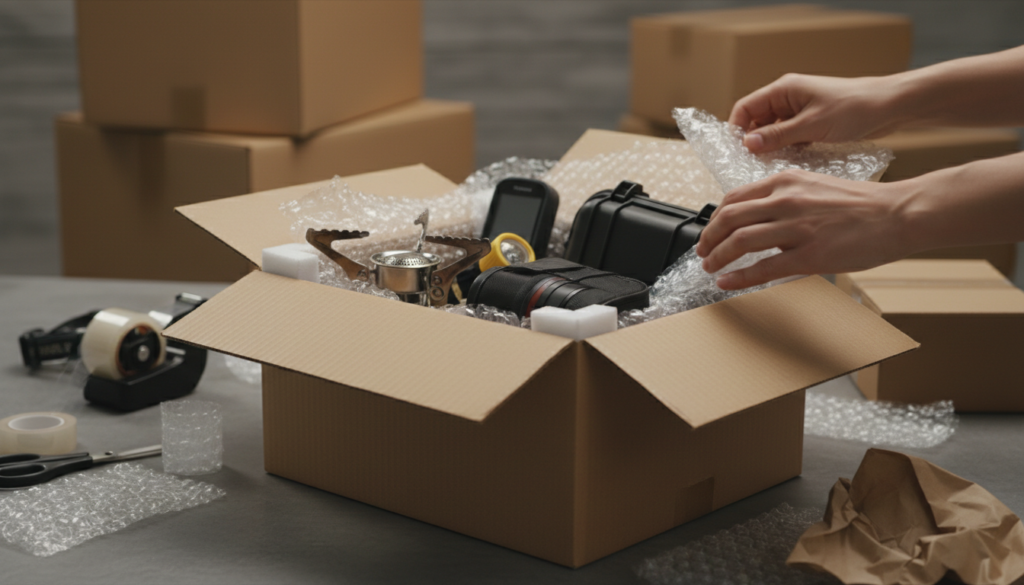
Follow these practical packing steps:
Use sturdy materials: Choose strong corrugated boxes, quality bubble wrap, and void-fill to prevent movement.
Disassemble when possible: Break down large items to protect vulnerable parts and fit them more securely in packaging.
Label for handlers: Mark boxes with destination details and labels like “Fragile” or “This Side Up” to reduce rough handling.
Packaging that prevents movement and protects corners goes a long way toward safe delivery.
Now for the “stuff people forget” part (which is exactly where international shipping loves to bite):
First, anything with fuel residue is a red-flag item. Camp stoves, fuel bottles, and even “empty” canisters can get delayed or rejected—especially by air. If you’re shipping a stove, clean it, air it out, and be honest about what it is.
Second, lithium batteries have rules. Lots of rules. The IATA Dangerous Goods Regulations are the global standard many couriers and airlines follow, and they distinguish between batteries installed in equipment versus spare batteries shipped separately. Translation: shipping a headlamp with batteries inside can be easier than shipping a bag of loose spares.
Third, add a tiny buffer kit to your carry-on if you can: essentials like a base layer, socks, and any mission-critical small item (GPS, prescription meds, boots if you must). It’s not a packing hack so much as emotional insurance.
If you want a quick pre-ship check without turning your living room into a warehouse, here’s the simple version: do a gentle shake test. If you hear movement, you’re not done.
How to Label and Document Adventure Gear for International Transport?
Clear labeling and correct paperwork keep customs from slowing you down. Key steps:
Create a packing list: Include every item and its value — this is essential for customs.
Use accurate shipping labels: Put the destination address and contact info on every box, plus any special handling notes.
Attach required documents: Include customs forms and invoices in a clear pouch to avoid delays at the border.
Complete and accurate documentation reduces the chance of holds and extra fees.
Here’s the nuance that saves headaches: keep your wording consistent across everything. If the packing list says “trekking poles,” don’t have the invoice say “sport sticks” and the label say “metal rods.” Customs officers aren’t trying to ruin your trip, but they are trying to match documents to physical items. Consistency speeds up international shipping.
Also, put a duplicate label inside the box. It feels paranoid until the outer label gets scuffed, wet, or half-peeled off somewhere between terminals.
What Customs Regulations and Documentation Are Required for Shipping Adventure Gear Abroad?
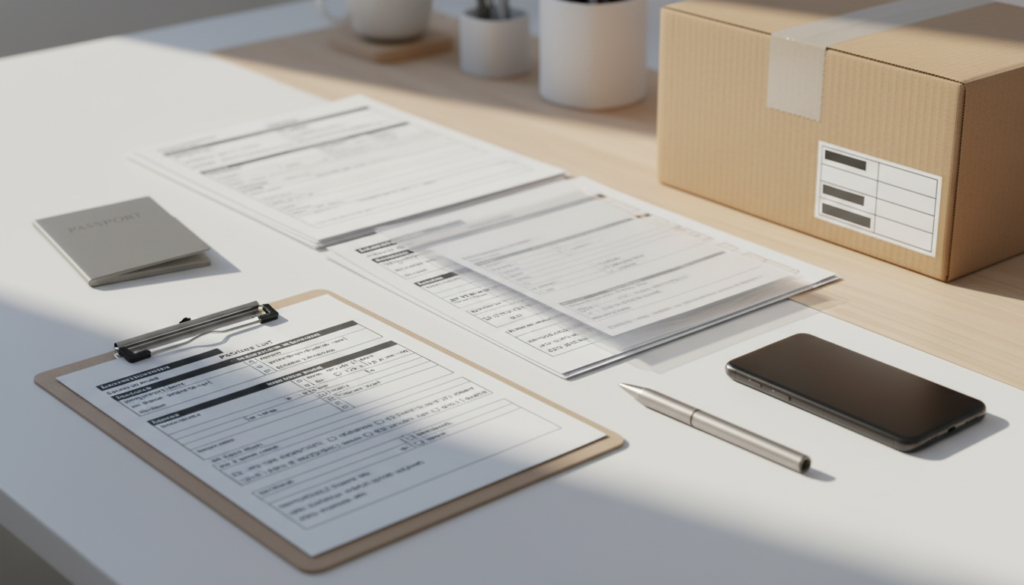
Customs rules vary by country. Know the paperwork and permits your destination requires so your shipment clears without surprise charges or seizures.
If this section makes you want to lie down for a moment, I get it. Customs is the broccoli of international shipping: good for you, not always fun, but skipping it leads to problems.
Which Documents Are Essential for Customs Clearance of Personal Effects and Expedition Gear?
These documents are commonly required:
Packing list: Detailed inventory of shipped items and quantities.
Commercial invoice: Shows item values for duty calculations.
Specific permits: Certain gear—drones, firearms, batteries, or biological samples—may require permits or certificates.
Prepare these documents ahead of time and check destination rules for any additional requirements.
Two “big wins” here:
- Decide whether your shipment is personal effects or a commercial shipment. Even if you’re not selling anything, the way you describe the shipment can change the process and taxes. Some countries offer simplified lanes for personal effects, but they often require proof (passport copy, visa, travel itinerary, sometimes an itemized statement).
- Don’t play games with declared value. Under-declaring can backfire if you need to claim insurance, and it can trigger extra scrutiny. Boring honesty is underrated in international shipping.
How Do Temporary Import Procedures like ATA Carnet Facilitate Adventure Travel Shipping?
An ATA Carnet lets you temporarily import gear without paying duties — ideal for travelers with expensive equipment used temporarily abroad.
What is ATA Carnet?: A passport-like customs document that covers temporary imports.
Benefits for adventure travelers: Avoid paying duties and simplify entry and exit procedures for your equipment.
How to obtain one: Apply through your national chamber of commerce or work with a customs broker to get the carnet.
When used correctly, an ATA Carnet can save time and money for temporary equipment shipments.
In practice, the ATA Carnet is widely cited for speeding up temporary import processes and reducing administrative delay. The International Chamber of Commerce (ICC), through the World Chambers Federation, is closely tied to the ATA Carnet system globally—so when you hear “ATA Carnet is the passport for goods,” that’s not just marketing.
Streamlining Temporary Import with ATA Carnet for Adventure Gear
Studies show the ATA Carnet reduces processing time for temporary imports compared with standard procedures. It’s an effective tool for simplifying the formalities around temporarily bringing equipment into another country.
An analysis of temporary import using ATA carnet system at Pt.
Krama Yudha Tiga Berlian Motors, A Setyawati, 2017
One practical tip I’ll add: a carnet works best when your gear list is tidy. If you’re tempted to include “miscellaneous stuff,” don’t. List the high-value and controlled items clearly (cameras, drones, specialized tools). The cleaner your carnet list, the smoother the re-export process tends to be—exactly what you want from international shipping.
How to Choose the Right International Shipping Service for Your Adventure Gear?
Choosing the right carrier affects cost, timing, and how your gear is handled. Evaluate options against your priorities before you book.
When I’m choosing a carrier, I ask myself one question: “If something goes sideways, will a real human help me fix it quickly?” Because international shipping rarely fails loudly. It fails quietly—like a package sitting in “processing” limbo while your departure date marches closer.
What Factors Affect Cost, Speed, and Reliability in Overseas Shipping?
Compare these factors when shopping for a carrier:
Cost: Get multiple quotes and check for fuel surcharges, handling fees, and customs brokerage charges.
Speed: Match the service level (air, sea, courier) to your required delivery window.
Reliability: Read reviews and ask about experience with similar shipments to judge a provider’s track record.
Balance price, timing, and trustworthiness to find the best fit for your shipment.
A few real-world cost levers worth knowing (without turning this into a spreadsheet seminar):
If your gear is bulky, ask about dimensional pricing and whether you can reduce volume by removing retail packaging, collapsing frames, or splitting into two smaller boxes. Sometimes two smaller boxes are cheaper and easier to clear than one giant one.
Also ask who does customs brokerage. Some quotes look cheap until you realize brokerage, storage, and “documentation correction” fees are separate. In international shipping, fine print is basically a hobby.
How to Evaluate Insurance Options for High-Value Adventure Equipment?
Insurance protects you if something goes wrong in transit. Look closely at coverages and exclusions:
Types of insurance: Cargo insurance can cover loss, theft, and damage during transit.
Policy details: Confirm the policy covers the full value, includes international transit, and specifies how claims are handled.
Watch for exclusions: Check for high deductibles or excluded causes (e.g., wear and tear) that could limit payouts.
A clear policy that matches your kit’s value gives real peace of mind.
If your gear is genuinely expensive (camera kits, drones, avalanche gear, specialty bikes), consider photographing everything before packing—serial numbers included. It feels a bit like you’re prepping evidence for a documentary called The Case of the Missing Tent Stakes, but that documentation makes claims and customs conversations dramatically easier.
What Are Country-Specific Considerations When Shipping Adventure Gear Overseas?
Each destination has its own customs rules and biosecurity concerns. Research country rules early to avoid surprises.
Country rules are where international shipping becomes very “choose your own adventure,” except the wrong choice can involve fines.
Which Customs and Import Restrictions Apply to Popular Adventure Destinations?
Australia: Strict biosecurity rules — clean and declare outdoor gear to prevent pests.
New Zealand: Detailed inspections for outdoor equipment; heavy penalties for non-compliance.
Canada: Rules vary by item type; firearms, food, and some electronics can have specific restrictions.
Check destination agency websites for the most up-to-date requirements.
On Australia and New Zealand: I’m not exaggerating when I say they can spot a single grain of dirt like it’s their job—because it is. Their biosecurity agencies (Australia’s Department of Agriculture, Fisheries and Forestry; New Zealand’s Ministry for Primary Industries) are famously strict about soil, seeds, and organic residue. Clean boots, tents, pegs, and anything that’s been in the backcountry. Declare it. This is one of those moments where honesty is faster.
How to Navigate Unique Logistics Challenges in Remote Adventure Locations?
Remote deliveries take extra planning. Use these strategies:
Plan ahead: Build buffer time into your schedule for slower transit and customs in remote regions.
Use local partners: Local carriers and freight forwarders know regional quirks and infrastructure limits.
Stay informed: Monitor local conditions and keep contact info for local handlers handy.
Extra planning and local expertise reduce the odds of costly delays.
Here’s a small but mighty tip: consider shipping to a stable hub (major city, outfitter, lodge, or logistics partner) and then moving your gear locally from there. Remote addresses can confuse carriers, and “door delivery” can quietly become “door-ish delivery.”
Also, build in time for the “last mile.” In international shipping, the last 50 miles can take longer than the first 5,000.
How Can Adventurers Ship Gear Sustainably and Track Their Shipments?
Sustainable choices are increasingly available. Pair them with reliable tracking so you know where your gear is at all times.
If you love wild places, it makes sense to treat shipping like part of responsible travel—not perfect, but thoughtful.
What Eco-Friendly Shipping Options Are Available for Adventure Travelers?
Carbon offsetting: Many carriers offer ways to offset shipping emissions.
Sustainable packaging: Opt for recyclable or biodegradable materials where possible.
Consolidated shipping: Combine shipments to reduce trips and overall emissions.
These options lower environmental impact and align with responsible travel values.
I’ll add one more sustainability win that also helps your wallet: ship fewer boxes. Consolidation reduces cost, reduces handling events (fewer chances for damage), and reduces emissions. It’s one of the rare “everybody wins” moves in international shipping.
How to Monitor and Track International Shipments of Expedition Equipment?
Use tracking tools and alerts to stay ahead of issues:
Use carrier tracking: Most providers give a tracking number you can use to follow progress online.
Set alerts: Enable updates for key milestones like customs clearance and delivery windows.
Contact customer service: If something looks off, reach out early — proactive communication speeds resolution.
Active tracking and timely communication are the best defenses against surprises.
If your tracking shows “Held in customs” or “Clearance delay,” don’t panic—do respond quickly. Most of the time, the carrier needs one of three things: a corrected invoice, proof of value, or clarification on item descriptions. Reply fast, clearly, and with the exact reference numbers they provide. Speed matters in international shipping because storage fees can kick in when delays drag out.
Frequently Asked Questions
What should I consider when choosing a shipping method for my adventure gear?
Decide by urgency, cost and item type. Air freight is fastest but costly; sea freight is cheapest for bulk but slow; courier services balance speed and convenience for smaller packages. Also verify the carrier’s experience with outdoor or oversized gear to avoid mishandling. If you’re on a fixed departure date, I’d bias toward reliability over theoretical savings.
How can I ensure my gear is protected during international shipping?
Pack with strong materials, disassemble or pad vulnerable parts, and secure loose items. Label boxes clearly and buy cargo insurance that covers the declared value for international transit. Good packing plus proper insurance greatly reduces risk. And yes—photos before sealing the box are a boring habit that pays off.
What are the potential customs issues I might face when shipping gear abroad?
Common problems include incomplete paperwork, incorrect valuations, or restricted items that require permits. These can cause delays, fines, or confiscation. Prepare accurate packing lists, invoices and check destination rules in advance. Also be careful with lithium batteries, stoves with fuel residue, drones, and anything that looks “tactical” on an X-ray.
How can I track my shipment once it’s been sent?
Use the carrier’s tracking number on their website or app and enable notifications. For complex shipments, keep your freight forwarder’s contact details handy so you can get updates on customs clearance or routing changes. If tracking stalls for more than a couple business days at a facility, that’s usually your cue to ask questions.
What are the benefits of using an ATA Carnet for shipping adventure gear?
An ATA Carnet allows temporary import without paying duties, simplifying border procedures for equipment that will return with you. It speeds processing, reduces costs and removes the need to file temporary import paperwork at each border. It’s especially useful for high-value gear on multi-country itineraries.
Are there eco-friendly shipping options available for adventure gear?
Yes. Look for carriers offering carbon offsets, choose recyclable packaging, or consolidate shipments to cut trips. These measures reduce your footprint while still getting your gear where it needs to go. The greenest shipment is usually the one with fewer boxes and fewer re-shipments.
Conclusion
Shipping adventure gear overseas is manageable with the right planning: pick the shipping method that matches your timeline and budget, pack to protect your equipment, prepare accurate documentation, and consider insurance and sustainable options. With a little preparation and the right partners, your gear will arrive ready for the next trip—so you can focus on the route, not the logistics.
If you take nothing else from this guide, take this: international shipping rewards people who are politely obsessive. Label clearly. List items consistently. Keep documents together. Respond fast when a carrier asks for clarification. And build in buffer time—because the world is big, customs offices are busy, and your adventure deserves a calmer start than a last-minute gear crisis.
Start planning now and use this guide to keep your next international shipping of adventure gear smooth and stress-free.