

How Do You Cope with Anxiety in Retirement: A Complete Guide to Managing Your Worries
Wondering how do you cope with anxiety in retirement? This practical, research-backed guide covers breathing techniques, daily habits, therapy options, and when to ask for help — explained like advice from a calm friend.
Nobody warns you about the anxiety that can come with retirement.
Not the work kind. The deadlines, the performance reviews, the inbox that never fully empties — that anxiety, most of us know how to manage. We’ve had decades of practice. We’ve built workarounds and rituals and coping mechanisms we didn’t even know were coping mechanisms until they were gone. The commute that gave us transition time between work-self and home-self — even the bad commutes, the ones we complained about constantly, the ones we swore we’d never miss. The lunch break that forced us to stop, even briefly, even if we ate at our desks half the time with one eye on the screen. The colleague who always knew exactly when to appear in the doorway with a terrible joke and somehow always got the timing right, who never once asked if you were okay but whose presence in that doorway was its own kind of answer.
We didn’t call any of that “mental health support.” We just called it Tuesday.
What catches people off guard is the quieter, stranger kind of anxiety that shows up after the farewell party. After the last day. After the calendar clears and the structure disappears and you’re standing in your kitchen on a Tuesday morning — a Tuesday that belongs entirely to you, which is what you wanted, which is what you planned for, which is what you told everyone you couldn’t wait for, which is what you meant — thinking: Now what?
And the silence answers back.
Not with anything dramatic. Not with a crisis or a breakdown or a moment you could point to and say, “There. That’s when it started.” Just a low hum. A restlessness. A vague sense of being slightly out of place in your own life, like furniture that’s been moved two inches and you can’t stop noticing it even though you can’t quite explain why it bothers you, even though nothing is technically wrong, even though you know you should just be grateful.
That “should” is doing a lot of heavy lifting. And it’s making everything harder.
I’ve talked to retirees who describe it exactly that way. Others call it “off.” Not depressed exactly, not panicked exactly, just unsettled in a way they didn’t expect and don’t quite have words for, which is its own particular kind of lonely — the loneliness of not being able to explain what’s wrong, even to yourself, even at 3 a.m. when you have nothing but time to try.
One woman told me she’d spent thirty years looking forward to retirement. Thirty years of “when I retire, I’ll finally…” And then she spent the first three months of it lying awake at 3 a.m. running through a mental checklist of everything that could go wrong. Health. Money. Purpose. Whether her kids called enough. Whether she called them too much. Whether the weird thing her doctor mentioned at her last checkup was something or nothing. Whether she was wasting the freedom she’d worked so hard for by spending it worrying about wasting it.
“I thought I’d finally be able to relax,” she said, laughing a little at herself. “Instead, my brain just found new things to worry about. It’s very creative, my brain. I really wish it would use its powers for good.”
That’s anxiety doing what anxiety does: filling the space. And in retirement, there’s suddenly a lot of space.
Here’s what I want you to know before we go any further: you are not broken. You are not failing at retirement. You are not the only one standing in your kitchen on a Tuesday morning wondering why this doesn’t feel the way you thought it would. An estimated 40 million adults in the U.S. deal with anxiety disorders every year — that’s a lot of us quietly doing box-breathing in grocery lines and pretending we’re just thinking about what to have for dinner. The anxiety makes sense. It just doesn’t have to run the show.
And the tools that help are more accessible, more evidence-backed, and more doable than most people realize. You don’t need a mountain cabin or a meditation retreat or a complete personality overhaul. You need a handful of reliable strategies and the willingness to practice them before you need them.
That’s what this guide is for.
What Anxiety Actually Is (And Why Retirement Can Trigger It)
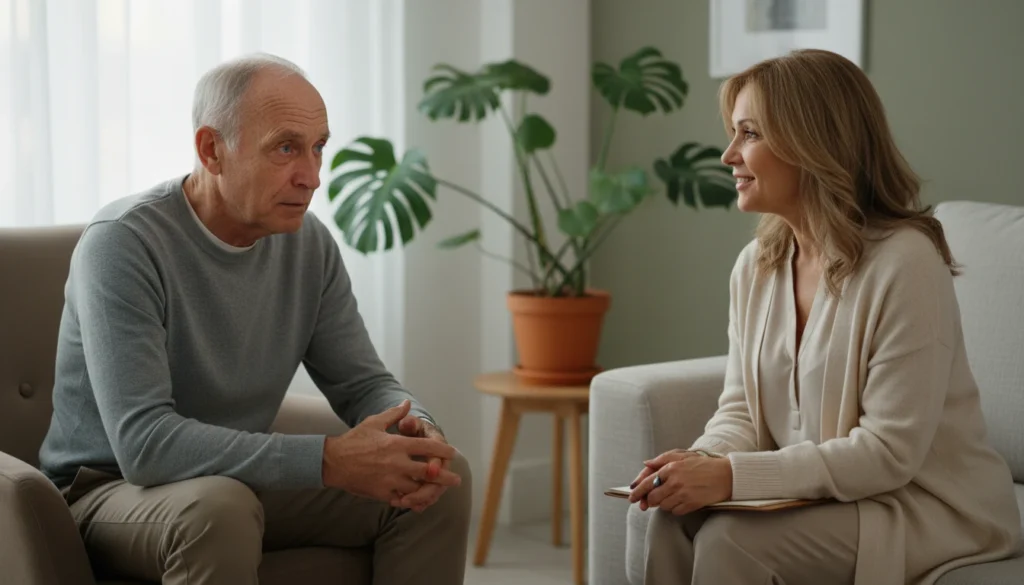
Think of your brain’s threat-detection system as a home security alarm with a very sensitive trigger. A surprising email? Sirens. An unfamiliar social situation? Floodlights. The neighbor’s cat walking across the porch at 2 a.m.? DEFCON 2. Full perimeter breach. All units respond. The cat is not impressed and will be back tomorrow night.
A certain amount of anxiety is functional — it keeps you alert, nudges you to prepare, helps you take things seriously. The trouble starts when ordinary moments get treated like emergencies. That’s when we cross from normal worry into anxiety disorder territory, and the distinction matters because the response is different.
Generalized anxiety disorder (GAD) is the “always-on” version — excessive worry across multiple areas of life, persisting for months at a time. It’s not dramatic. It doesn’t announce itself with a cinematic score and a slow-motion moment of realization. It just quietly colonizes your mornings and your 3 a.m. hours until you can’t remember what it felt like to not be braced for something. To just… be somewhere without scanning the room for what might go wrong. To sit in a quiet moment and let it be quiet instead of immediately filling it with what-ifs and contingency plans and the mental equivalent of checking all the locks twice.
Panic disorder brings sudden, intense spikes: racing heart, chest tightness, a wave of dread that feels terrifying even when nothing is objectively wrong. And the terrifying part is that your body is completely convinced something is wrong, which makes it very hard to argue with. You can know intellectually that you’re safe and still feel like you’re not. That gap between knowing and feeling is one of the cruelest things about anxiety — and one of the most important things to understand about it, because it means you can’t think your way out of a panic attack. You have to work with the body, not just the mind. The mind is not in charge in those moments, no matter how much it insists otherwise.
Retirement, specifically, creates conditions where anxiety can quietly take root. For many people, work provided not just income but structure, purpose, and social connection — three things the nervous system relies on more than we tend to admit out loud, especially to ourselves, especially in a culture that treats busyness as a virtue and rest as something you earn rather than something you need. When all three disappear at once, the alarm system gets confused. It starts scanning for threats that aren’t there, because scanning is what it knows how to do. It’s not malfunctioning. It’s doing exactly what it was built to do. It just hasn’t gotten the memo that the context has changed, that the emergency is over, that it’s allowed to rest now. Nobody sent that memo. That’s part of the problem. And sending it — really sending it, in a way your nervous system believes — takes time and practice and more patience than most of us were prepared for.
If you’ve been feeling this and wondering whether something is wrong with you: nothing is. You’re navigating one of the biggest identity transitions of your adult life. The anxiety makes sense. It just doesn’t have to run the show.
Symptoms show up in both body and mind: muscle tension, rapid heartbeat, sweaty palms, fatigue, restlessness — plus racing thoughts, difficulty concentrating, and those worry loops that replay like a song you didn’t ask for and genuinely cannot get out of your head no matter how many other songs you try. The body and mind are in constant conversation, and anxiety speaks both languages fluently. It’s bilingual in the worst possible way, and it never stops talking.
The genuinely hopeful part: brains can change. With practice, you can retrain your threat system to stop pulling the fire alarm every time the toaster pops. I’ve felt this shift myself. It’s not magic. It’s not instant. It’s not linear — there will be weeks where you feel like you’ve gone backward, and those weeks are part of it too, not evidence that you’re doing it wrong, not proof that it isn’t working, not a sign that you should give up and accept that this is just how things are now. But the shift is real, and it’s available to you. That’s not a sales pitch. That’s just what the research keeps finding, over and over again, in study after study, in population after population, in people who were convinced they were too far gone to change. They weren’t. You aren’t either.
Immediate Relief: What to Do When Anxiety Hits
When anxiety spikes, you don’t want a lecture. You don’t want a twelve-step framework or a reading list or someone telling you to “just breathe” in a tone that makes you want to do the opposite. You want something that works right now, in this moment, in this body, before you say something you’ll regret or cancel something you actually wanted to do or spend the next two hours in a spiral that started with one small worry and somehow ended at a worst-case scenario you couldn’t have predicted when you woke up this morning and that, if you’re honest, probably isn’t going to happen.
These tools aren’t cure-alls. But they reliably lower the volume — and the more you practice them when you’re calm, the faster they kick in when you actually need them. Think of it like a fire drill. You practice when nothing is burning so that when something is, your body already knows the way out. You don’t have to think. You don’t have to remember. You just go.
Breathing Techniques That Actually Work
Your breath is a built-in reset button, and unlike most things that help with anxiety, it’s always with you. It doesn’t require a prescription, a gym membership, a good Wi-Fi connection, or a personality type you don’t have. Anxiety shortens and speeds breathing, which signals your brain to keep the alarm going. Slow it down, lengthen the exhale, and your body gets the message: we’re safe. Nothing is on fire. We can stand down. The cat was just the cat.
Try 4–7–8 breathing: inhale through your nose for 4 counts, hold for 7, exhale through your mouth for 8. The long exhale is the hero here — it activates the parasympathetic nervous system via the vagus nerve, releasing calming neurotransmitters and dialing down the stress chemistry that’s been running hot. Do 3–4 rounds. If you feel lightheaded, shorten the counts and build up gradually. This isn’t a competition, and there’s no prize for holding your breath the longest. The goal is calm, not a personal record. The goal is always calm.
In public — a waiting room, a crowded family gathering, an elevator that feels three floors too long, a holiday dinner where someone has already said the thing and the table has gone very quiet and everyone is suddenly very interested in their food — box breathing is quieter and just as effective: inhale 4, hold 4, exhale 4, hold 4. Trace a mental square. It’s used by surgeons, athletes, and military personnel under genuine pressure. I’ve done it in parking lots before difficult conversations, in waiting rooms before medical appointments I was dreading, and once in a very long checkout line behind a man who was paying entirely in coins and did not seem to feel any urgency about this whatsoever and appeared to be counting them for the first time. Nobody knew. That’s the point. You can be doing the most useful thing for your nervous system and nobody around you has any idea.
The common pitfall is turning breathing into a performance — gripping it too hard, trying to do it perfectly, getting anxious about whether you’re doing the anxiety tool correctly. (Yes, that happens. Anxiety is nothing if not creative, and it will absolutely try to colonize the thing you’re using to manage it. It’s audacious that way. It has no shame.) Keep it gentle and repeatable, not a competition with yourself. Imperfect breathing done consistently beats perfect breathing done never.
Grounding Techniques for When Your Mind Won’t Slow Down
Anxiety pulls attention toward what-ifs and worst-case replays. It’s very good at this. It has had years of practice, and it knows exactly which fears to reach for and exactly when you’re most vulnerable to them — usually when you’re tired, or alone, or trying to fall asleep, or trying to enjoy something, or sitting in a quiet moment that should feel peaceful but somehow doesn’t. Grounding brings you back to right now — to the actual room you’re in, the actual chair you’re sitting in, the actual moment that is, in fact, fine. Not perfect. Not resolved. But fine. And fine is enough.
The 5–4–3–2–1 method: name 5 things you can see, 4 you can touch, 3 you can hear, 2 you can smell, 1 you can taste. Concrete sensory data gives your brain something real to work with instead of abstract catastrophe. It sounds almost too simple. It works anyway. The brain can’t fully catastrophize and fully observe at the same time — grounding exploits that gap, and it does it without requiring you to feel calm first, which is the part most people get wrong. You don’t have to feel calm to use the tool. You use the tool to get there. You don’t wait for the feeling. You create the conditions for it.
Physical grounding works fast too: hold a piece of ice, press your heels firmly into the floor, run your fingers across something textured. I keep a smooth stone in my pocket. It’s small, unglamorous, and genuinely effective. Nobody at the grocery store has ever asked about it, and if they did, I’d tell them the truth: it’s cheaper than therapy and fits in a jacket pocket. It’s also a good conversation starter if you want one, and a good reason to keep your hands busy if you don’t. Either way, it earns its place.
Mental grounding — counting backward from 100 by 7s, spotting five blue things in the room, quietly singing a chorus you know by heart — gives your mind just enough focus to break the spin cycle. The goal isn’t to stop thinking. It’s to give your brain a different track to run on for a minute, long enough for the wave to pass. And waves do pass. That’s the thing about anxiety that’s easy to forget when you’re in the middle of one: it always passes. It has never not passed. Your track record for surviving hard moments is, so far, 100%. That’s not nothing. That’s actually everything. That’s the whole case for hope, right there.
Building Long-Term Stability: Habits That Lower Your Baseline
Quick tools help in a pinch. Lasting steadiness comes from small habits layered over time — the compound interest of calm. None of these are dramatic. Most of them are almost boring. That’s exactly why they work. Boring and consistent beats exciting and occasional every single time, and your nervous system doesn’t care how impressive your wellness routine looks on paper or how many people you’ve told about it. It cares whether you actually do it. It cares about Tuesday, not the plan you made on Sunday when you were feeling motivated and optimistic and briefly convinced you were going to become a completely different person.
Movement: Your Built-In Anti-Anxiety Tool
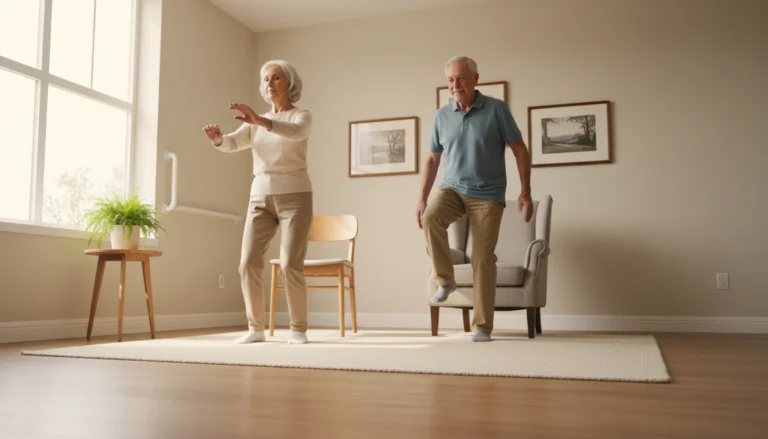
Exercise changes brain chemistry in ways that directly counter anxiety: more endorphins, better GABA signaling, lower cortisol. Your body remembers how to settle — it just needs the reminder, and it needs it regularly. Not perfectly. Not heroically. Not in a way that requires new shoes and a subscription and a complete overhaul of your identity. Regularly. That’s the whole ask.
The general target is 150 minutes of moderate activity per week, but honestly, ten minutes counts. A walk around the block counts. Stretching for two minutes on a hard day counts. Cardio — walking, cycling, swimming, dancing in your kitchen when nobody’s watching and sometimes when they are and you’ve decided you no longer care what it looks like because you’re retired and this is your kitchen and you’ve earned this — can shift mood quickly. Strength training builds a kind of grounded physical confidence that carries into the rest of your day in ways that are hard to explain but easy to feel, like you’re slightly more solid in your own body than you were before, like you take up space in a way that feels earned rather than apologized for. Yoga pairs breath, presence, and movement in a way that’s particularly useful for anxiety, because it asks you to be in your body rather than in your head, which is exactly where anxiety wants you to stay, forever, analyzing everything, never arriving anywhere.
Hate gyms? That’s fine. Neighborhood loops, YouTube workouts, a “walk and vent” with a friend who’s good at listening and bad at unsolicited advice — the format matters far less than the consistency. On the days when everything feels heavy and the couch is making a very compelling argument and you genuinely cannot imagine doing anything that requires shoes, I stretch for two minutes and call it a win. Because it is. Showing up in the smallest possible way is still showing up, and your nervous system notices even when your inner critic doesn’t give you credit for it. Your nervous system is keeping better records than your inner critic. It always has been.
Mindfulness and Meditation That Fit Real Life
Mindfulness is noticing without spiraling. Meditation is the practice time. You don’t need robes, a mountain, a special cushion, a personality transplant, or the ability to sit perfectly still while thinking about nothing. Nobody does that. That’s not what this is. If someone told you that’s what meditation is, they were either misinformed or trying to sell you something expensive, and either way you don’t have to believe them.
Start with 5–10 minutes. Use an app — Headspace, Calm, and Insight Timer are all solid starting points — or just set a timer and sit however you like. Your mind will wander. That’s not failure; that’s the rep. The wandering is the workout. Every time you catch yourself drifting — planning dinner, replaying a conversation from 2009, wondering if you left the stove on, suddenly remembering something you said at a party in 1987 that you’ve never fully forgiven yourself for and probably never will and that the other person has almost certainly forgotten entirely — and come back to the breath, you’ve done the thing. That’s literally the whole exercise. You’re building the muscle of noticing, and that muscle is exactly what anxiety tries to atrophy. Every return is a rep. Every rep counts. Even the ones that feel like they don’t.
A 2022 randomized trial published in JAMA Psychiatry found that Mindfulness-Based Stress Reduction performed as well as escitalopram — a commonly prescribed SSRI — for anxiety disorders. That’s a meaningful finding, and it comes with no side effects beyond occasionally falling asleep during the body scan, which honestly might be its own form of progress. Nobody has ever complained about falling asleep when they meant to meditate. That’s a win in two directions simultaneously, and you should feel good about it.
Micro-mindfulness counts too: actually tasting your lunch instead of eating it while scrolling, feeling your feet on the floor when you walk, noticing three sounds while you wait for the kettle, looking out the window for thirty seconds without reaching for your phone. I keep a small reminder on my phone that just says “look up.” Corny? Absolutely. Helpful? Also absolutely. The bar for mindfulness is lower than most people think, and that’s genuinely good news, because it means you can start today, with what you have, where you are, without buying anything or signing up for anything or becoming a different kind of person first. You can start in the next five minutes. You can start right after you finish reading this sentence.
If you’ve been curious about putting thoughts on paper as part of your mental health practice — and there’s good reason to be curious — this piece on journaling in retirement walks through how to start without it feeling like homework. It’s particularly useful for the kind of circular thinking that anxiety loves, the thoughts that go around and around and never quite resolve, the ones that feel urgent at 2 a.m. and slightly embarrassing by morning, the ones that have been living rent-free in your head for so long they’ve started rearranging the furniture. Writing them down doesn’t solve them, but it gets them out of the loop and onto a page where they’re a little easier to look at. A little less in charge. A little more like weather than like truth. And weather, you can dress for.
Rewiring Anxious Thought Patterns
Here’s one of the most useful things I’ve learned, and it took me longer than I’d like to admit to actually believe it, not just know it intellectually the way you know things you’ve read but haven’t yet felt in your body, in your actual lived experience, on a hard Tuesday when the knowing doesn’t seem to be doing anything: thoughts aren’t facts. They’re weather. You can notice them, check the forecast, and decide whether to pack an umbrella — without letting them dictate your entire day, cancel your plans, or convince you that the worst-case scenario is not just possible but inevitable and probably already in motion and definitely your fault and definitely something you should have seen coming.
Cognitive-behavioral therapy (CBT) is built on this insight. It helps you spot the thinking traps anxiety loves — and anxiety has a lot of them, it’s been collecting them for years, it has a whole filing system organized by category and cross-referenced by your specific vulnerabilities and annotated with your personal history and updated regularly with new material — and replace them with more accurate, kinder alternatives. You can start practicing the basics on your own; a therapist can accelerate the process considerably and help you catch the patterns you genuinely cannot see from the inside, because you’re too close to them, because they feel like reality rather than interpretation, because they’ve been there so long they feel like furniture, like the way things are, like just you.
They’re not just you. They’re a habit. And habits can change.
Anxiety’s greatest hits in the thought department: catastrophizing (the worst case is not just possible but guaranteed, and it’s probably already happening, and you should have seen it coming, and what does it say about you that you didn’t), all-or-nothing thinking (perfect or trash, nothing in between, no partial credit, no nuance allowed, no grace for being human on a hard day when you did your best and your best was imperfect and that’s actually fine), and mind reading (“they definitely think I’m a mess” — narrator: they were thinking about what to have for lunch and whether that noise their car makes is something or nothing and whether they remembered to pay the electric bill and whether they’ve been drinking enough water, which they haven’t, none of us have). When you feel the surge, try to catch the thought underneath it. Write it down if you can — seeing it on paper shrinks its apparent truth in a way that’s almost startling, almost embarrassing, like turning on the lights and discovering the monster was a coat on a chair. Anxiety is much louder in your head than it is on a page. On a page, it’s just words. And words can be questioned. Words don’t get to be in charge just because they’re loud and they’ve been there a long time.
Then get curious, the way you’d be curious about a friend’s problem rather than your own:
- What’s the actual evidence for and against this thought?
- What would I tell someone I love who believed it?
- Realistically, what are the odds?
- If the worst did happen, what would I actually do?
One practice that sounds almost too simple but genuinely works: a daily “worry window” of 15 minutes. When worries pop up at random — and they will, at the most inconvenient possible moments, usually right when you’re trying to enjoy something or fall asleep or have a conversation that requires your full attention or watch the movie you’ve been looking forward to all week — jot them down and save them for the window. Weirdly often, by the time the window arrives, the urgency has evaporated. The worry didn’t need solving. It needed a place to go. Giving it a designated slot takes away its power to ambush you at random, which is most of its power. Anxiety hates a schedule almost as much as it hates being written down. Both feel like exposure, and exposure is exactly what it’s trying to avoid. You’re essentially outsmarting it, which is satisfying in a way that’s hard to describe but easy to feel.
Harsh self-talk doesn’t prevent mistakes; it just adds fear to the equation and makes you less likely to try again. Self-compassion, on the other hand, lowers anxiety and makes it easier to get back up tomorrow. Use believable lines — not “I never get nervous,” which your brain will immediately reject with a detailed list of counterexamples going back decades, organized chronologically, with footnotes and supporting evidence and a few exhibits, but “I can do hard things even when I’m nervous,” or “Anxiety is uncomfortable, not dangerous,” or simply “This will pass. It always does.” With practice, your inner narrator softens. It takes time. It’s worth every repetition. And on the days when it doesn’t feel worth it, do it anyway and trust the data, because the data is more reliable than how you feel on a hard Tuesday when the couch won the argument and the inner critic is feeling particularly articulate and well-rested and has prepared remarks.
Sleep, Nutrition, and the Habits Nobody Talks About Enough
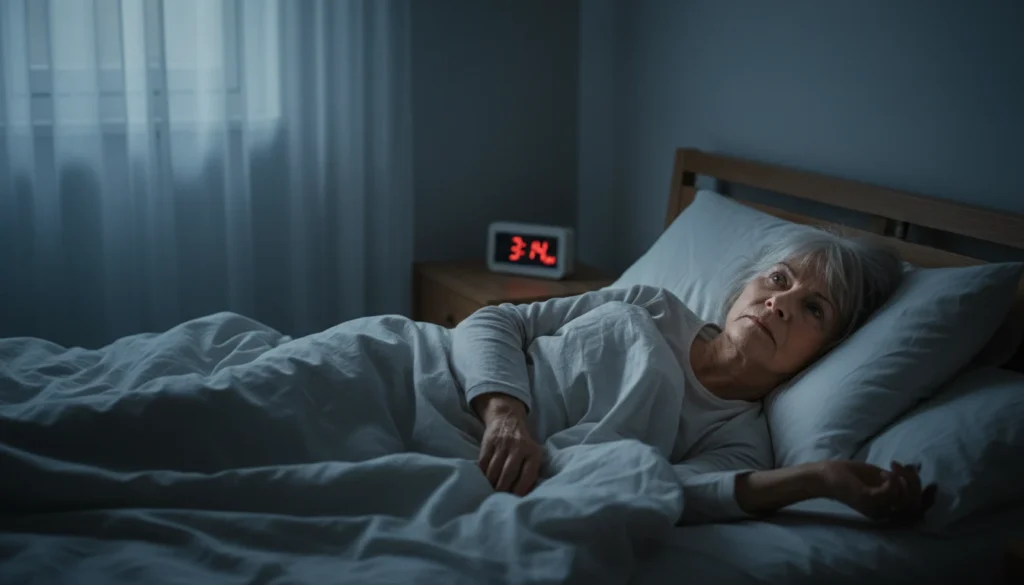
Breaking the Anxiety-Sleep Loop
Poor sleep raises next-day anxiety. Anxiety ruins sleep. It’s a loop, and once you’re in it, it can feel impossible to find the exit — like trying to calm down by thinking harder about calming down, which has never worked for anyone and yet remains the most common strategy, possibly because it’s the only one that feels like doing something, like at least you’re trying, like at least you’re not just lying there. A 2019 study in the Journal of Neuroscience found that even a single rough night increased next-day anxiety by up to 30%. One night. That’s how tightly these two are linked — and why sleep hygiene isn’t just a wellness buzzword but an actual anxiety intervention, one of the most underrated ones available, and one of the first things worth addressing when everything else feels too hard and you don’t know where to start.
Build a gentle wind-down: dim lights 60–90 minutes before bed, skip screens, try light stretching or a warm shower, then a few rounds of 4–7–8 breathing. Keep your bedroom cool, dark, and quiet. If you’re lying awake for more than 20 minutes, get up and do something low-stimulus until you feel sleepy again — reading something genuinely boring works well, and I say that as someone who has read the same three pages of a very dense history book approximately forty times and has never once made it to page four and has completely stopped feeling bad about this and has actually started to find it comforting, like visiting an old friend who never demands anything of you. Turn the clock away from you. The minute-math spiral (“if I fall asleep right now I’ll get exactly four hours and forty-two minutes and I have that thing tomorrow and I’ll be exhausted and then I’ll be anxious and then I definitely won’t sleep and then tomorrow will be terrible and then the whole week will unravel and then…”) has never once made sleep arrive faster. It has made many nights significantly, measurably, impressively, almost admirably longer.
Caffeine cutoff around 2 p.m. is a reasonable starting point for most people, though some are more sensitive and need to cut off earlier. Alcohol can feel like it helps you fall asleep but fragments sleep quality and tends to spike anxiety in the early morning hours — the 3 a.m. worry-festival has a chemical accomplice, and its name is the nightcap you had at 9. This is not a judgment. It’s just useful information, offered without a raised eyebrow, because you’re an adult and you get to make your own choices. You just also get to know what the choices cost. That’s not moralizing. That’s just the deal.
What You Eat Matters More Than You’d Think
Food won’t cure anxiety, but stable blood sugar helps your body feel safe. Big sugar swings can mimic anxiety symptoms — the shakiness, the racing heart, the vague sense that something is wrong and you can’t quite name it, the feeling that the floor is slightly less solid than it was a minute ago — and make everything feel more precarious than it actually is. Anchor meals with protein, fiber, and healthy fats. Eat regularly enough that your blood sugar isn’t doing its own version of a panic attack while you’re trying to have a calm afternoon. Your body is trying to help. Give it something to work with. It’s been carrying you for a long time. It deserves the good fuel.
Nutrients worth paying attention to: omega-3 fatty acids (fatty fish, walnuts, flaxseed), magnesium (leafy greens, beans, nuts — and also the supplement most commonly recommended for sleep and anxiety, for good reason, by people who know what they’re talking about and have looked at the research), and fermented foods that support the gut-brain connection, which is more significant than most people realize and more researched than it used to be and more relevant to how you feel on a daily basis than most nutrition conversations acknowledge. Hydration matters too — dehydration can look suspiciously like anxiety, and most of us don’t drink nearly enough water, especially in retirement when the rhythms that used to prompt drinking (the office water cooler, the commute coffee, the colleague who always had a full water bottle and made you feel vaguely guilty about your third cup of coffee and your complete inability to drink plain water like a normal person who has their life together) are gone.
Routines soothe the nervous system. Not rigid rules — friendly consistency. Similar wake times, familiar mealtimes, a small bedtime ritual that signals to your body that the day is winding down and it’s safe to let go now, it’s safe to stop scanning, nothing needs solving tonight, everything that needed to be handled today has been handled as well as it could be, and the rest can wait until morning when you’ll be better equipped for it anyway. The nervous system likes knowing what comes next. In retirement, when external structure disappears, building your own gentle rhythm is one of the most underrated things you can do for your mental health — and one of the simplest, which means it’s also one of the easiest to underestimate, to dismiss as too small to matter, to skip on the days when you feel fine and then miss desperately on the days when you don’t. It’s not too small. It’s exactly the right size. Small and consistent is how the nervous system heals. It’s how most things heal, actually.
The Role of Connection and Community

Anxiety wants you isolated. It tells you that you’re too much, that you’ll burden people, that everyone else is handling things fine and you’re the only one struggling, that if people really knew what was going on inside your head they’d be concerned or confused or quietly relieved when you left the room. It’s lying. All of that is the anxiety talking, and the anxiety is not a reliable narrator. It never has been. It’s been telling you stories for years, and most of them have not come true, and the ones that did were survivable, and you survived them, and here you are.
Connection pokes holes in that story — not dramatically, not all at once, but steadily and reliably, one honest conversation at a time. Social support consistently buffers stress and improves outcomes for people managing anxiety. And in retirement, when the built-in social structure of work disappears — the colleagues, the meetings, the casual hallway conversations that you didn’t realize were keeping you tethered until they were gone, the small daily moments of being seen and known by people who knew your name and your coffee order and the look on your face when a meeting could have been an email and the sound of your laugh and the particular way you got quiet when something was bothering you — maintaining connection takes more intentional effort than it used to. It doesn’t happen by accident anymore. It has to be chosen. Every time. It’s worth choosing. Every time.
A 2020 study in PLOS ONE found that social connectedness is one of the strongest predictors of wellbeing in older adults — stronger, in some analyses, than income or physical health alone. That’s not a small finding. That’s a reason to call the friend you’ve been meaning to call for three weeks. That’s a reason to say yes to the thing you almost talked yourself out of. That’s a reason to show up even when showing up feels hard, because the showing up is the medicine, and the medicine works even when you don’t feel like taking it.
Think of your support network as a menu: some people are good for practical help, some for quiet listening, some for the kind of conversation that makes you forget what you were worried about for an hour. Some people are good at showing up with food, which is its own love language and should be recognized as such. Some people are good at making you laugh until you can’t remember why you were tense, which is genuinely therapeutic and not just a nice bonus. Some people are good at sitting with you in the hard stuff without trying to fix it, without offering solutions, without making you feel like a problem to be solved — which is rarer and more valuable than most people realize, and worth identifying and protecting and telling them, occasionally, that you notice it and you’re grateful. You need different things at different times, and different people are good at different things. Knowing which friend is which is genuinely useful information, and it’s okay to be intentional about it.
When you share what you’re going through, keep it simple and specific: “I’ve been dealing with some anxiety since retiring — it’s more common than I realized. If I seem quieter than usual, that’s why. I’m working on it.” Ask for what actually helps: “Can we find a quieter spot?” or “Today I just need you to listen, not fix.” Boundaries make support sustainable — for both of you — and asking for what you need is a skill that gets easier with practice, even if it feels impossibly awkward the first few times, even if your voice shakes a little when you say it, even if you have to say it twice before it comes out right, even if the first version comes out sideways and you have to try again. The trying again is the point.
Peer groups are worth considering too. Local NAMI chapters, retirement community groups, or credible online communities can offer something that even the best friends can’t always provide: the specific, irreplaceable relief of hearing “me too” from someone who genuinely gets it, who isn’t trying to fix it or minimize it or tell you about their cousin who had anxiety and just started running and now everything is fine. There’s a particular kind of loneliness that comes from feeling like you’re the only one struggling with something everyone else seems to be handling fine. You’re not. You’re just the only one saying it out loud right now. And when you do say it out loud, you give someone else permission to say it too. That’s not a small thing. That’s how the isolation breaks — not all at once, but one “me too” at a time, one honest conversation at a time, one moment of being seen at a time.
The broader picture of how retirement affects mental health — including the social and structural factors that don’t get talked about nearly enough, the ones that never show up in the financial planning conversations, the ones that catch people off guard because nobody warned them — is something we’ve explored in depth in our guide to mental health in retirement. Worth a read if you want the fuller context behind what you might be feeling, and why you might be feeling it now, in this particular season of life, and why that makes complete sense.
Professional Support: When and How to Get It
Self-help is genuinely powerful. Professional help can be a multiplier — especially when anxiety is starting to shrink your life, when the avoidance is spreading, when the tools you’ve tried aren’t moving the needle the way you hoped, when you’ve read every article and tried every breathing technique and downloaded the app and done the journaling and you’re still lying awake at 3 a.m. running the checklist and you’re tired of being tired of it and you’re starting to wonder if this is just who you are now.
It’s not just who you are now. But you might need some help getting to the other side of it. And that’s not a character flaw. That’s just the situation. Some situations need more than self-help, and recognizing that is one of the more mature things a person can do.
That’s not failure. That’s information. And the information is: it’s time to bring in someone who does this for a living. That’s not giving up. That’s being smart about your resources. That’s the same instinct that makes you call a plumber instead of watching twelve YouTube videos and flooding your bathroom and then watching twelve more videos about how to fix a flooded bathroom.
Therapy Options Worth Knowing
CBT has the deepest evidence base for anxiety disorders. Exposure therapy — a CBT approach — helps your brain unlearn fear by safely, gradually facing the things it’s been avoiding. The principle sounds simple; the practice is harder and more nuanced than it looks, which is why having a good therapist matters. DBT teaches emotion regulation and distress tolerance — skills that are useful for anxiety and for life in general, for anyone who has ever had feelings, which is everyone, even the people who seem like they haven’t, especially those people. ACT (Acceptance and Commitment Therapy) helps you make room for discomfort while still moving toward what matters to you, which is a genuinely different approach from trying to eliminate the anxiety before you can live your life.
Spoiler: waiting until the anxiety is gone before you live your life means waiting a very long time. The anxiety doesn’t go first. The living does. You live your way into the calm, not the other way around. You don’t wait to feel ready. You go, and the readiness follows, slowly, imperfectly, but it follows.
Finding a therapist: check your insurance, ask your primary care provider for referrals, and use reputable directories to filter by specialty and approach. Fit matters more than impressive credentials or a fancy bio. If it’s not a match after a few sessions, keep looking. You’re hiring a teammate, not auditioning for their approval. The right therapist will feel like someone who’s genuinely in your corner — not someone you’re performing wellness for, not someone who makes you feel judged for struggling, not someone who makes you feel like you should have figured this out by now. You haven’t failed to figure it out. You’re figuring it out right now. That’s what this is. That’s what all of this is.
Medication can help significantly for moderate to severe anxiety — SSRIs, SNRIs, and sometimes beta-blockers for situational symptoms. A psychiatrist or well-informed primary care clinician can walk you through the options without judgment. Skills plus medication often outperforms either alone for more significant anxiety, and there’s no version of this where needing medication means you’ve failed at the other stuff. None. That’s not how any of this works, and anyone who implies otherwise is wrong and also probably hasn’t dealt with significant anxiety themselves and should maybe read more before offering opinions.
Online therapy is valid, convenient, and eliminates the parking lot pep talk you have to give yourself before walking in. For many retirees, it’s the format that actually gets used consistently — which matters more than the format that sounds most impressive or most committed or most like what therapy is supposed to look like.
Red Flags That Mean It’s Time to Call Someone
- Anxiety is consistently derailing relationships, daily routines, or basic self-care
- Persistent physical symptoms — chest pain, chronic headaches, ongoing GI issues that your doctor has cleared but that won’t resolve, a body that seems to be holding something it can’t put down
- Frequent or escalating panic attacks
- Leaning on alcohol or other substances to get through the day, or through the evening, or through the part of the afternoon that used to feel manageable
- Avoidance is shrinking your world — skipping people, places, or activities you used to enjoy, and the list keeps growing, quietly, one thing at a time, until you look up one day and realize how small it’s gotten and how long it’s been since you did the thing you used to love
- Thoughts of self-harm or suicide — this is an emergency; call or text 988 in the U.S.
Recognizing these signs and reaching out isn’t weakness. It’s the same instinct that makes you call a doctor when something physical isn’t resolving on its own. Anxiety that’s been running the show for a while rarely resolves without some outside help — and there’s no version of this where asking for support is the wrong move. None. Not one. Not ever. Not for any reason. Not even the ones anxiety is currently suggesting.
Anxiety in Retirement: The Bigger Picture
It’s worth saying plainly, because not enough people do, and the silence around it makes it lonelier than it needs to be: anxiety in retirement is more common than most people admit, and it’s almost never part of the retirement planning conversations that focus on portfolios and travel itineraries and whether to downsize and what to do with the guest room and whether the grandkids will visit enough and whether you’ve saved enough and whether you’ve done enough and whether you are enough.
That last one is the one that tends to surface when the work stops. When the title is gone and the calendar is clear and the external validation disappears and you’re left with the question you’ve been too busy to ask for thirty years: Who am I when I’m not doing anything?
That’s not a small question. And anxiety is one of the ways the nervous system responds to not having a ready answer.
The identity transition is real. For many people, work provided structure, purpose, social connection, and a clear answer to “who am I?” — an answer that came with a title and a business card and a reason to get up at a specific time on a specific day and somewhere to be and someone who needed you to be there. When all of that shifts at once, the nervous system responds. That’s not a character flaw. That’s not a sign that you didn’t plan well enough or want it badly enough or appreciate it sufficiently. That’s a predictable human response to a major life change — one that deserves acknowledgment, and real support, not just a suggestion to take up pickleball and see if that helps.
If you’re in the middle of that transition and finding it harder than you expected, you’re not alone and you’re not doing it wrong. The emotional side of retirement deserves as much preparation as the financial side — something we’ve written about in detail in our guide to preparing for retirement emotionally, if you want a companion piece that goes deeper into the identity piece specifically and what it actually looks like to navigate it without pretending it’s easy or that everyone else is doing it better than you or that the difficulty means something is wrong with you. It doesn’t. It means you’re human. That’s all.
And if what you’re dealing with feels less like anxiety and more like a general weight — a low-grade stress that’s hard to shake, a tension that doesn’t have a clear source, a tiredness that sleep doesn’t quite fix, a flatness that you can’t quite name, a sense that something is missing but you can’t figure out what — our guide to managing stress in retirement covers the overlap and the distinctions in a way that might help you figure out what you’re actually working with, and what to do about it, and that you’re not alone in working with it, and that working with it is exactly the right thing to be doing.
Frequently Asked Questions
Can anxiety go away completely?
Sometimes, yes. More often, it becomes highly manageable — background noise you can turn down rather than a siren you can’t escape. With the right combination of skills, habits, and sometimes medication, many people live full, rich lives where anxiety isn’t steering. That’s a realistic and genuinely achievable goal, not a consolation prize. The goal isn’t a life without discomfort. It’s a life where discomfort doesn’t make the decisions. That’s a life worth working toward. That’s a life that’s available to you.
How long until I feel better?
Breathing and grounding can help today — not perfectly, not permanently, but noticeably. Baseline shifts often show within 2–4 weeks of consistent practice — movement, sleep, mindfulness. Many therapy approaches show meaningful gains within 6–12 sessions. Progress zigzags. There will be good weeks and harder weeks, and the harder weeks don’t erase the good ones, even when it feels like they do, even when the inner critic insists they do. Zoom out and look at the trend, not the individual days, and be patient with yourself in a way you’d be patient with someone you love. You deserve the same grace you’d give them. You always have. You just haven’t always believed it.
Normal worry versus anxiety disorder — how do I tell the difference?
Normal worry is proportional and temporary. An anxiety disorder is excessive, persistent, hard to control, and it interferes with daily life in ways that are hard to ignore. Butterflies before a big moment? Normal. Weeks of dread and avoidance that keep you from doing things you want to do, that keep shrinking your world a little at a time, quietly, until you look up one day and realize how small it’s gotten and how long it’s been since you did the thing you used to love and how you’re not entirely sure when you stopped? Time to get some support. That’s not a judgment. That’s just the signal.
Do supplements help?
Some have reasonable evidence: magnesium, omega-3s, and L-theanine; herbs like chamomile and passionflower show promise in smaller studies. They can interact with medications, so loop in your healthcare provider before starting anything new. Supplements can support a broader strategy — they’re rarely sufficient on their own, and they work best when the fundamentals (sleep, movement, connection) are also in place. Think of them as a supporting cast, not the lead. The lead is you, doing the work, showing up, choosing the small things consistently. The supplements just help the conditions be a little more favorable.
How do I support someone I love who has anxiety?
Listen more than you fix. Ask what would actually help today rather than assuming you know. Learn enough about anxiety that their experience makes sense to you — it’s not weakness, it’s not a choice, and it’s not something they can just decide to stop. Encourage professional support for significant symptoms — gently, without pressure, more than once if needed, without making them feel like a project. And keep your own limits so that your support is sustainable over time, not just in the short term. You can’t pour from an empty cup, and you don’t have to. Taking care of yourself is part of taking care of them. That’s not selfish. That’s just true.
Key Takeaways
- Anxiety in retirement is more common than most people admit — and one of the most treatable conditions in mental health
- Breathing techniques (4–7–8, box breathing) and grounding exercises (5–4–3–2–1, physical anchoring) can lower anxiety in the moment
- Long-term stability comes from layered habits: consistent movement, mindfulness practice, sleep hygiene, and stable nutrition
- Thoughts aren’t facts — learning to notice and question anxious thinking is one of the most powerful long-term tools available
- Social connection is a genuine buffer against anxiety; maintaining it in retirement takes more intentional effort than it did during working years
- CBT, exposure therapy, ACT, and medication are all evidence-backed options when self-help isn’t enough
- Knowing when to ask for professional support is a strength, not a setback
One Kind Step at a Time
Learning how to cope with anxiety in retirement isn’t about becoming a different person. It’s not about achieving some permanent state of calm where nothing rattles you and you float through your days in a state of serene acceptance. That person doesn’t exist, and if they did, they’d be very boring at dinner parties and probably insufferable on road trips and definitely not someone you’d want to call when things got hard, because they’d have nothing useful to say. They’d just smile and suggest you breathe.
It’s about finding a steadier rhythm — one that fits the life you’re actually living now, not the one you had before, and not some idealized version of retirement that nobody actually lives but everyone seems to be performing on social media. It’s about having tools for the hard minutes. It’s about building daily choices that lower your baseline so the spikes aren’t as high and the recovery isn’t as long. It’s about having people you can lean on and the willingness to actually lean — not just stand near them and pretend you’re fine, not just say “I’m okay” when you’re not, but actually let someone in, actually let yourself be known, actually let the support land instead of deflecting it with a joke and a subject change. And it’s about knowing when to ask for help, which is not a sign that you’ve failed at retirement. It’s a sign that you’re taking your own wellbeing seriously, which is exactly what retirement is supposed to give you the space to do.
You’ve spent decades taking care of things. Taking care of work, taking care of people, taking care of responsibilities that needed you to show up even when you didn’t feel like it, even when you were running on empty, even when nobody asked how you were doing and you didn’t offer. This is the season where you get to take care of yourself with the same seriousness. Not as an afterthought. Not as a reward for finishing everything else. Not as something you’ll get to eventually, when things settle down, when you feel more ready, when the timing is better. As the thing itself. As the point.
Try one small thing today. Two rounds of box breathing. A ten-minute walk. Writing down one worry instead of chasing it around your head until midnight. Calling the friend you’ve been meaning to call. Saying “I’m not great, actually” to someone who asked. That’s how you cope with anxiety — one small, kind action at a time, repeated until it becomes the thing you do instead of the thing you’re trying to do, until it becomes just Tuesday, until it becomes just you.
And if your inner critic pipes up while you’re trying? Smile and say: “Thanks, but I’m on my own team today.”
Then take a breath. A long one. Let it out slowly.
There you go.





6 Comments
Comments are closed.