
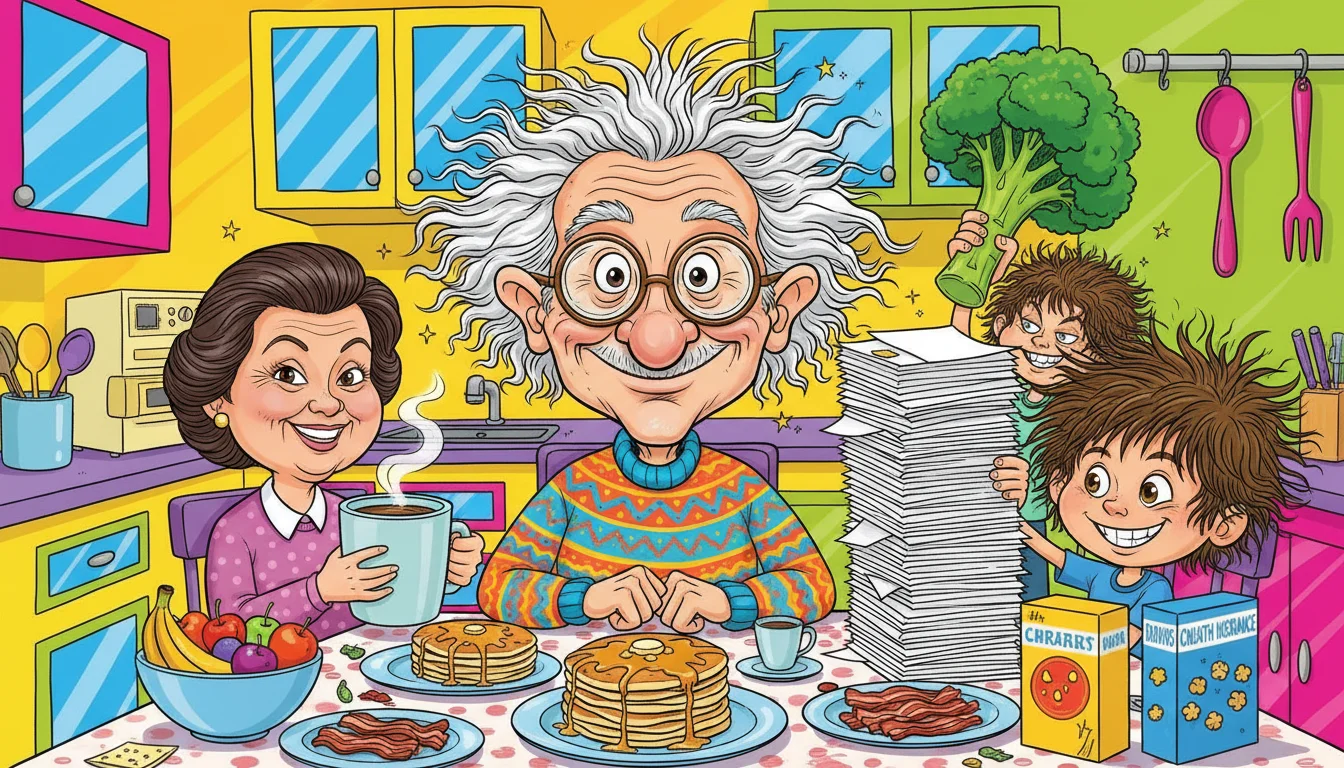
Family Health Care Guide: Wellness, Services & Strategies for Retirees Raising or Supporting Families
A practical family health care guide for retirees — covering doctors, insurance, preventive screenings, pediatric care, and wellness habits that fit real life.
Key Takeaways:
- A family physician is your “home base” — the person who knows your history, coordinates your care, and catches problems before they become expensive emergencies
- Affordable family health plans aren’t just about the lowest premium — total cost (deductible + copays + out-of-pocket max) is what actually matters
- Preventive screenings and regular wellness visits are the single most effective habit in family health care — for kids and adults alike
- Generic drugs, telehealth, and community health clinics can dramatically reduce out-of-pocket costs for families on fixed or limited incomes
- Healthy eating doesn’t have to be complicated — a few consistent habits beat a perfect plan you can’t maintain
- Childhood vaccinations protect your grandchildren and the broader community — staying on schedule matters more than staying perfect
- Chronic disease management works best when it’s collaborative, realistic, and built around your actual life — not a plan that sounds good in theory and falls apart by Wednesday
- You don’t have to do all of this at once — pick the next right thing and build from there
Nobody hands you a manual when you become the family health manager.
There’s no orientation. No laminated checklist. No HR department quietly handling the complicated parts while you go about your day. One season you’re focused on your own retirement health needs, and the next you’re somehow also tracking your grandkids’ vaccine schedules, helping an adult child navigate insurance options, and trying to remember whether that cough is “normal kid stuff” or “call the clinic right now.”
I’ve been there. And I’ll be honest with you the way I’d be honest with a good friend over coffee: family health care sounds simple until you’re actually living it. On paper, it’s “just” doctors, checkups, food choices, and insurance. In real life, it’s you trying to remember who’s due for a physical, why the insurance portal needs three passwords and what feels like a blood sample, and how to explain to a seven-year-old that vegetables are not, in fact, a personal attack.
What I’ve learned — sometimes the hard way, occasionally the very hard way — is that solid family health care isn’t about doing everything perfectly. It’s about building a system that’s flexible enough for real families. Busy schedules. Picky eaters. Surprise fevers at 2 a.m. That one grandchild who treats broccoli like it personally wronged them in a previous life. And yes, the particular joy of being the grandparent who is somehow also the most organized person in the family when it comes to medical appointments.
In this guide, I’ll walk you through the essential family health care services and wellness strategies that actually make a difference — without making it feel like you’re studying for a medical final you didn’t sign up for. We’ll cover family physician services, preventive health care, how to choose family health plans, preventive screenings for children, nutrition tips, and pediatric care. All of it grounded in real life, not a brochure.
The CDC consistently identifies preventive care and primary care access as two of the most powerful drivers of long-term health outcomes for families. That’s not a surprise. What is a surprise — a good one — is how manageable this all becomes once you have a clear picture of what to focus on and what to let go. Let’s build that picture together.
What Are Family Physician Services and Their Benefits?

Family physician services cover a wide range of health care needs for both individuals and entire households. In the world of family health care, a family physician is often the “home base” — the person who knows your history, tracks patterns over time, and helps you avoid the chaos of bouncing between providers who’ve never met you and are each working from a different piece of the puzzle.
These services typically include preventive care, chronic disease management, acute illness treatment, and health education. But the real advantage — the one that doesn’t show up on a benefits summary — is the relationship. Over time, your doctor learns what “normal” looks like for you and your family. So when something changes, it’s easier to catch, easier to address, and a lot less likely to turn into something bigger than it needed to be.
The benefits of using family physician services are substantial: improved health outcomes, continuity of care, more personalized treatment, and better coordination when you do need specialists. It’s like having a conductor for the orchestra — sure, the violinist is talented, but it helps when someone makes sure everybody’s playing the same song at the same time.
Research backs up this continuity advantage. In a 2009 paper, PJ Cunningham highlighted the value of keeping care coordinated through a primary care physician: facilitating visit continuity and encouraging the PCP as the referral source can enhance care coordination and meaningfully improve patient experiences. For retirees managing both their own health and a family’s, that coordination isn’t a luxury. It’s the difference between a system that works and one that quietly falls apart between appointments.
How Do Family Physicians Support Preventive Health for All Ages?
One of my favorite things about family health care — once I got over the fact that appointments are rarely actually “quick” — is how much preventive care can spare you future drama. Preventive health isn’t flashy. It doesn’t make for exciting dinner conversation. But it is powerful, and it’s the reason a small issue stays small instead of becoming an expensive, stressful, “why didn’t we catch this sooner” situation.
Family physicians support preventive health by conducting routine screenings, recommending age-appropriate vaccines, and offering health education that matches your life stage. For adults — including retirees — that can mean blood pressure checks, cholesterol testing, diabetes screening, bone density scans, and guidance on sleep, stress, and lifestyle. For kids, it often includes growth tracking, developmental screenings, vision checks, and immunizations.
Preventive screenings help identify potential health issues early — often before symptoms show up. And yes, that can feel a little anticlimactic when everyone seems fine. But catching problems early is the whole point. It’s a bit like putting the smoke detector battery in before it starts chirping at 3 a.m. — boring, responsible, and something you will absolutely thank yourself for later.
For retirees who are also supporting grandchildren or adult children, the preventive care conversation spans generations. You’re not just thinking about your own colonoscopy — you’re also thinking about whether the grandkids are up to date on vaccines and whether your adult child has seen a doctor since the last presidential election. That’s a lot to hold. A good family physician helps you hold it.
What Chronic Disease Management Services Do Family Doctors Provide?
Chronic disease management is a core part of family physician services — and for retirees, it’s often where the relationship with a family doctor becomes most valuable. Conditions like diabetes, hypertension, asthma, high cholesterol, and thyroid issues don’t respond well to “set it and forget it.” They respond to consistent, realistic care over time — the kind that family health care is built to deliver.
Family doctors help with:
- Regular monitoring — labs, vitals, symptom check-ins that track trends over time, not just snapshots
- Medication management — what to start, stop, or adjust based on how you’re actually doing, not just what the textbook says
- Lifestyle coaching — nutrition, movement, stress, sleep — without the lecture that makes you want to never come back
- Coordinating with specialists — so you’re not the one trying to relay information between providers who’ve never spoken to each other
The best chronic disease care feels collaborative, not judgmental. A good family physician doesn’t just hand you a plan and disappear — they help you tweak it until it actually fits your day-to-day life. Because a plan that works on paper but not in practice isn’t really a plan. It’s a wish with a clipboard.
For retirees managing their own chronic conditions while also supporting family members with theirs, having a family physician who understands the full picture — your stress load, your schedule, your history — makes a genuine difference. Not just medically. Emotionally. Because feeling like someone actually knows your situation is its own kind of medicine.
How to Choose Affordable Family Health Plans That Fit Your Needs?

Picking a family health plan is a little like buying a plane ticket: the cheapest option looks great until you realize it has three layovers, no carry-on, and your seat is basically a decorative suggestion. The sticker price is never the whole story.
Affordable family health plans aren’t just about the monthly premium. In family health care, affordability means balancing what you pay each month with what you’ll pay when someone actually needs care. And with families — especially multigenerational ones — “someone needs care” is less of an if and more of a when, usually at the least convenient possible moment.
When evaluating plans, look at:
- Coverage — preventive care, prescriptions, specialists, hospital care, mental health services
- Total costs — premium + deductible + copays/coinsurance + out-of-pocket maximum
- Provider networks — are your preferred doctors in-network? Is the grandkids’ pediatrician covered?
- Extra benefits — telehealth, mental health coverage, pediatric services, vision and dental
It also helps to remember: good family health care isn’t one-size-fits-all. A plan that’s perfect for a family with frequent specialist visits might be overkill for a family that mainly needs routine care and the occasional urgent visit. Run the numbers for a good year and a bad year. The bad year scenario is the one that matters most — because that’s the one you’re actually buying protection against.
When considering health insurance for children specifically, research has explored how different plan types perform. In Pediatrics, JE DeVoe (2011) compared public and private insurance options for children and found no statistical difference in parent-reported unmet needs between public and private plans. That doesn’t mean all plans are equal — it means you should focus on access, network, and benefits instead of assuming “private” automatically means “better.” Sometimes the public option is the smarter choice. Sometimes it’s the only realistic one. Either way, the goal is coverage that actually works when you need it.
What Types of Family Health Insurance Plans Are Available?
There are several common types of family health insurance plans, each with its own trade-offs. Understanding these basics makes family health care decisions significantly less stressful — and saves you from googling “what is an EPO” at midnight while trying to meet an enrollment deadline.
Health Maintenance Organization (HMO)
An HMO typically requires you to choose a primary care physician and get referrals for specialists. Costs are often lower, but you’ll have less flexibility and generally need to stay within the network for coverage. For families who have established relationships with in-network providers, this can be a very cost-effective choice.
Preferred Provider Organization (PPO)
A PPO offers more flexibility in choosing health care providers and usually does not require referrals. The trade-off is often higher premiums and higher out-of-pocket costs. For families who see multiple specialists or travel frequently — including retirees who split time between locations — the flexibility can be worth the extra cost.
Exclusive Provider Organization (EPO)
An EPO is similar to a PPO in that referrals are usually not required, but it generally won’t cover out-of-network care except in emergencies. So if you’re someone who loves spontaneity, this is the plan that gently asks you not to apply that personality trait to doctor selection. Stay in-network, and it can be a solid middle-ground option.
Understanding these options helps families make informed decisions and build a family health care setup that matches both medical needs and budget realities — without accidentally discovering the gaps at the worst possible time.
How to Compare Benefits and Costs of Family Health Plans?
When comparing family health plans, focus on the numbers that actually hit your wallet — not just the headline premium that looks great until you read the fine print.
| Plan Type | Premium | Deductible | Co-pay | Network Flexibility |
|---|---|---|---|---|
| HMO | Low | Low | Low | Limited |
| PPO | High | High | Medium | Flexible |
| EPO | Medium | Medium | Medium | Limited |
The sweet spot for most families — especially retirees on fixed incomes who are also supporting grandchildren or adult children — is the plan that minimizes total annual cost based on realistic usage. That means running the numbers on your deductible, copays, and out-of-pocket maximum alongside the premium. A plan with a $200/month lower premium but a $3,000 higher deductible isn’t cheaper. It’s just cheaper until it isn’t.
What Are Essential Preventive Health Screenings for Children?
Preventive health screenings help monitor children’s growth and development and can catch issues early — when they’re often easier to address and far less expensive to treat. In family health care, kids’ screenings are a big deal because children change fast. What wasn’t a concern six months ago can be a concern now, and the window for early intervention is often narrower than parents and grandparents realize.
Family physicians and pediatric providers recommend screenings based on age. These can include:
- Growth measurements and weight tracking
- Developmental milestone checks (motor skills, language, social engagement)
- Vision and hearing screening
- Dental guidance and oral health assessment
- Behavioral and mental health check-ins — increasingly important as kids get older
A quick note from the “real life” department: screenings can feel like a lot when you’re juggling school drop-offs, work, and the fact that everyone suddenly needs new shoes at the same time. But these visits also give you a rare chance to ask questions when you’re not in crisis mode — when nobody has a fever and you can actually think clearly. Use that time. Ask the questions you’ve been saving up. That’s what the appointment is for.
Which Childhood Vaccinations Are Recommended and When?
Childhood vaccinations are a cornerstone of preventive family health care. They protect children from serious diseases and help protect vulnerable community members — including older grandparents — through the broader effect of community immunity. For retirees who spend significant time with grandchildren, staying current on the recommended schedule isn’t just good for the kids. It’s good for everyone in the household.
The recommended vaccination schedule includes:
- Hepatitis B — at birth, 1–2 months, and 6–18 months
- DTaP (Diphtheria, Tetanus, Pertussis) — at 2, 4, 6, and 15–18 months, and again at 4–6 years
- MMR (Measles, Mumps, Rubella) — at 12–15 months and again at 4–6 years
- Varicella, Polio, Hib, PCV — on a schedule your provider will walk you through
Your family physician or pediatric provider will personalize timing based on your child’s health history and local guidelines. If you ever feel behind, don’t panic — clinics handle catch-up schedules all the time, and they’ve seen every variation of “we fell behind during a hard year.” The goal is progress, not perfection. Getting back on track is always the right move, no matter when you start.
How Do Regular Wellness Check-ups Promote Child Health?
Regular wellness check-ups are one of the most effective habits in family health care — and one of the easiest to let slide when life gets busy, which it always does. These visits help track growth, spot developmental concerns early, keep vaccines up to date, and give parents and grandparents practical guidance on nutrition, physical activity, sleep, and safety.
Children who receive consistent well visits are more likely to have better health outcomes overall. And beyond the big medical benefits, there’s a smaller one I genuinely appreciate: it’s reassuring to hear “this is completely normal” from someone who has seen thousands of kids do the exact weird thing yours is doing. That reassurance is worth the copay on its own.
Research also suggests that preventive care works best when it’s comprehensive, not one-note. A 2017 systematic review by B. Brijnath reported that care-targeted interventions combining multiple elements — developmental review, growth checks, vision screening, and psychosocial support — may be more effective than single-component approaches. That’s a research-backed way of saying: the “whole-child” checkup matters. Not just the height and weight. The whole picture.
How Can Healthy Eating Improve Family Wellness?

Healthy eating is one of those family health care topics that can accidentally turn into a guilt spiral faster than you’d expect. If you’ve ever tried to pack a “balanced lunch” while your grandchild negotiates for cookies like a tiny, surprisingly persuasive lawyer — welcome. You are among friends here.
But here’s the good news: healthy eating doesn’t have to be complicated, and it doesn’t have to be perfect. It’s a cornerstone of family wellness because nutrition affects energy, mood, immune function, growth in kids, and long-term chronic disease risk in adults. For retirees managing their own health while also influencing the eating habits of grandchildren, the stakes are real — and so is the opportunity. The habits kids build early tend to stick. You have more influence than you think.
Families who prioritize healthy eating habits often see real benefits: steadier energy, better digestion, improved sleep quality, and fewer “hangry” household emergencies. And if you can reduce the number of times someone melts down because dinner is taking too long — honestly, that’s priceless. That’s a quality-of-life improvement that doesn’t show up in any research paper but absolutely should.
What Are Practical Nutrition Tips for Families?
You don’t need a perfect pantry, a 47-step smoothie routine, or a subscription to three different meal kit services to support family health care through food. A few practical habits go a long way — and the simpler they are, the more likely they are to actually stick.
- Meal planning — planning meals in advance reduces stress, cuts down on last-minute fast food runs, and makes healthy choices the path of least resistance
- Fruits and vegetables at every meal — aim to fill half the plate when you can; frozen counts, canned counts, imperfect counts
- Limiting heavily processed foods — cutting back on ultra-processed options lowers sugar and sodium intake without requiring a complete overhaul of everything you eat
- Keeping healthy options visible and ready — washed fruit on the counter, cut vegetables in the fridge; if it’s easy to grab, it gets grabbed
If I can offer one personal tip from years of feeding both myself and grandchildren who have very strong opinions about food: start with the easy wins. Add fruit at breakfast. Keep washed veggies at eye level in the fridge. Swap one sugary drink for water. You’ll feel the momentum — and your family won’t feel like you’ve declared war on fun. Small, consistent changes beat dramatic overhauls every single time.
How to Plan Balanced Meals for Children and Adults?
Balanced meals work best when they’re simple enough to repeat without exhaustion, but flexible enough that nobody feels trapped in “chicken and broccoli forever” — which, I can tell you from experience, is not a sustainable family wellness strategy.
A balanced meal typically includes:
- Proteins — lean meats, beans, eggs, tofu, or legumes
- Whole grains — brown rice, quinoa, oats, or whole-grain bread
- Healthy fats — avocados, nuts, seeds, or olive oil
- Fruits and vegetables — as many colors as you can manage without turning dinner into a negotiation
In family health care terms, “balanced” also includes a realistic approach to portions and preferences. Kids might need smaller servings and more frequent snacks; adults — especially retirees — may need more protein and fiber to support muscle mass and digestive health. You can build one meal and let everyone adjust their plate. That’s not giving up on nutrition. That’s being smart about it.
What Does Comprehensive Pediatric Care Include?

Comprehensive pediatric care is a key part of family health care because it supports children through every stage — from infancy to adolescence, and through all the transitions in between that nobody fully prepares you for. It includes routine check-ups, vaccinations, developmental screening, and care for both acute illnesses and longer-term conditions.
Pediatric care also covers the stuff people forget about until it’s urgent: sleep habits, behavioral concerns, school struggles, mental health, and the particular adventure of puberty and adolescence. (Yes, those years. If you’re a grandparent helping navigate them, you have my deepest respect and my sincere sympathy in equal measure.)
For retirees who are primary caregivers for grandchildren, comprehensive pediatric care is especially important — because you’re often the one tracking everything, asking the questions, and making sure nothing falls through the cracks. That’s a significant responsibility, and having a good pediatric or family medicine provider in your corner makes it considerably more manageable.
How Is Infant Care and Development Monitored?
Infant care is monitored through regular visits where providers assess physical growth and developmental milestones. Pediatricians and family physicians track things like weight gain, feeding patterns, sleep, motor skills, language development, and social engagement — building a picture of how a child is growing over time, not just at a single moment.
Early intervention matters enormously if a concern comes up. The goal isn’t to label a baby — it’s to support them early, when small adjustments can have a big impact on long-term outcomes. If you’re a grandparent worried you’re “overreacting” about something you’ve noticed, I’ll say what a lot of good clinicians say: you’re allowed to ask. You’re encouraged to ask. Questions are part of the job, and the people who’ve been watching a child every day often notice things that a 20-minute appointment might miss.
What Are Common Childhood Illnesses and Their Management?
Common childhood illnesses include respiratory infections, allergies, ear infections, and gastrointestinal issues — the rotating cast of characters that every family health care veteran knows by name. Family physicians and pediatric providers guide management strategies such as hydration, rest, fever management, and (when appropriate) medication.
A big part of family health care is also learning the difference between “monitor at home” and “call the clinic” — and that line can feel genuinely unclear at 11 p.m. when a child has a fever and you’re trying to remember what the doctor said at the last appointment. Your provider can help you understand warning signs, create action plans for chronic conditions like asthma, and build the kind of confidence that means you’re not second-guessing every sniffle at midnight.
For retirees caring for grandchildren, this knowledge is especially valuable. You’ve raised children before — but guidelines change, and having a current, trusted provider relationship means you’re working with up-to-date information, not just memory and instinct. Both matter. But together, they’re better.
Putting Family Health Care Into Practice — Without Trying to Be Perfect
If there’s one thing I hope you take away from this guide, it’s this: family health care works best when it’s steady, not heroic. You don’t need to overhaul your life overnight. You don’t need a color-coded binder, a meal prep Sunday that takes six hours, or a spreadsheet tracking every family member’s health metrics in real time. (Although if you have that spreadsheet, I respect it deeply.)
You need a dependable primary care relationship. A health plan you actually understand. Consistent preventive visits. And a few realistic wellness habits you can maintain on a Tuesday when everything else is also happening.
Family health care is a long game. The little choices — booking the check-up, asking the question, planning a few meals, staying on top of vaccines, calling the billing office about that confusing statement — stack up over time in ways that matter enormously. And on the days when you feel like you’re barely holding it together (which is most of parenting, and a fair amount of grandparenting), remember: doing the next right thing is still a strategy. A good one.
If you want a simple next step, start by choosing — or reconnecting with — a family physician and scheduling the next wellness visit for each family member. It’s the kind of boring, responsible move that future-you will genuinely, sincerely thank you for. Probably while sitting in a waiting room, but still.