Gym Workouts for Retirees in 2026: What’s Actually Working (And What to Watch Out For)
Gym workouts for retirees have never been more exciting — or more confusing. Here’s a clear, research-backed guide to the 2026 fitness trends that actually matter for older adults.
Key Takeaways:
- Wearable tech is the #1 fitness trend for 2026 — but data without context can stress you out more than help you
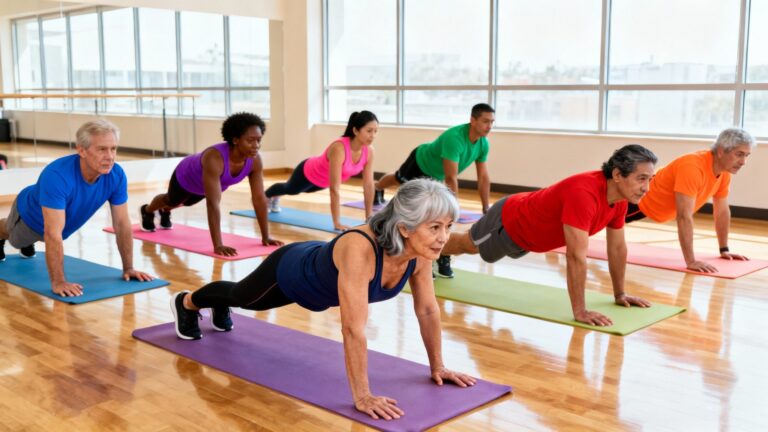
- Fitness programs for older adults are the #2 ACSM trend — gyms are finally designing spaces with retirees in mind
- Functional fitness (squat, hinge, push, pull, carry) builds real-life strength that keeps you independent longer
- Recovery isn’t optional — it’s where the actual gains happen, especially after 60
- Social fitness (pickleball, walking clubs, group classes) is surging — and it’s one of the best things you can do for your body and brain
- The best gym workout for retirees is the one you’ll still be doing next year
Introduction
When I first started paying attention to gym workouts for retirees, I expected to find a lot of chair exercises and gentle reminders to “listen to your body.” What I found instead was a full-on revolution.
Retirees are showing up to gyms more than any other age group. According to the American College of Sports Medicine’s 2026 Worldwide Fitness Trends report, “Fitness Programs for Older Adults” landed as the #2 fitness trend for 2026 — right behind wearable technology. Adults 65 and older now visit gyms and studios more frequently than any other demographic. Let that sink in for a second.
This isn’t your grandfather’s retirement. People aren’t slowing down — they’re squatting, walking, lifting, and yes, occasionally dominating the pickleball court with a competitive intensity that would make a 30-year-old nervous.
But here’s the honest truth: the gym world in 2026 is also noisier, more confusing, and more overwhelming than ever. There’s more tech, more content, more programs, and more opinions than any one person should have to sort through. So let’s cut through the noise together.
This is a guide to gym workouts for retirees in 2026 — what’s working, what’s worth your time, and what you can safely ignore.
The Tech Revolution of Gym Workouts for Retirees: When Your Gym Gets Smarter Than You
Let’s start with the shiny stuff. Fitness technology has moved fast — not “new treadmill model” fast, but more like “your dumbbells have opinions now” fast.
Smart strength systems, AI-powered coaching apps, and connected fitness platforms have made training more measurable than ever. Some machines now track range of motion, rep speed, tempo consistency, and even asymmetry between your left and right sides. That’s genuinely impressive.
Here’s the upside for gym workouts for retirees: tech can remove guesswork. It can help beginners learn proper form, keep people consistent, and make progression clearer. And consistency, boring as it sounds, is the superpower of fitness at any age.
Here’s the downside: data can turn training into a performance review.
A 2022 paper in Sports Medicine found that wearable technology can improve adherence and motivation — but also create pressure, anxiety, and obsessive behaviors in some users, especially those prone to perfectionism. It’s not that tracking is bad. It’s that tracking without context is like having a GPS that screams “RECALCULATING” every time you breathe.
I’ve lived this. I bought a fancy fitness watch, got obsessed for a month, and started judging my entire personality based on my “recovery score.” If the watch said I wasn’t recovered, I’d sulk. If it said I was ready, I’d train even when my body felt like wet cardboard. Eventually I remembered an old-fashioned truth: my body gives better feedback than my wrist.
The Wearables Dilemma
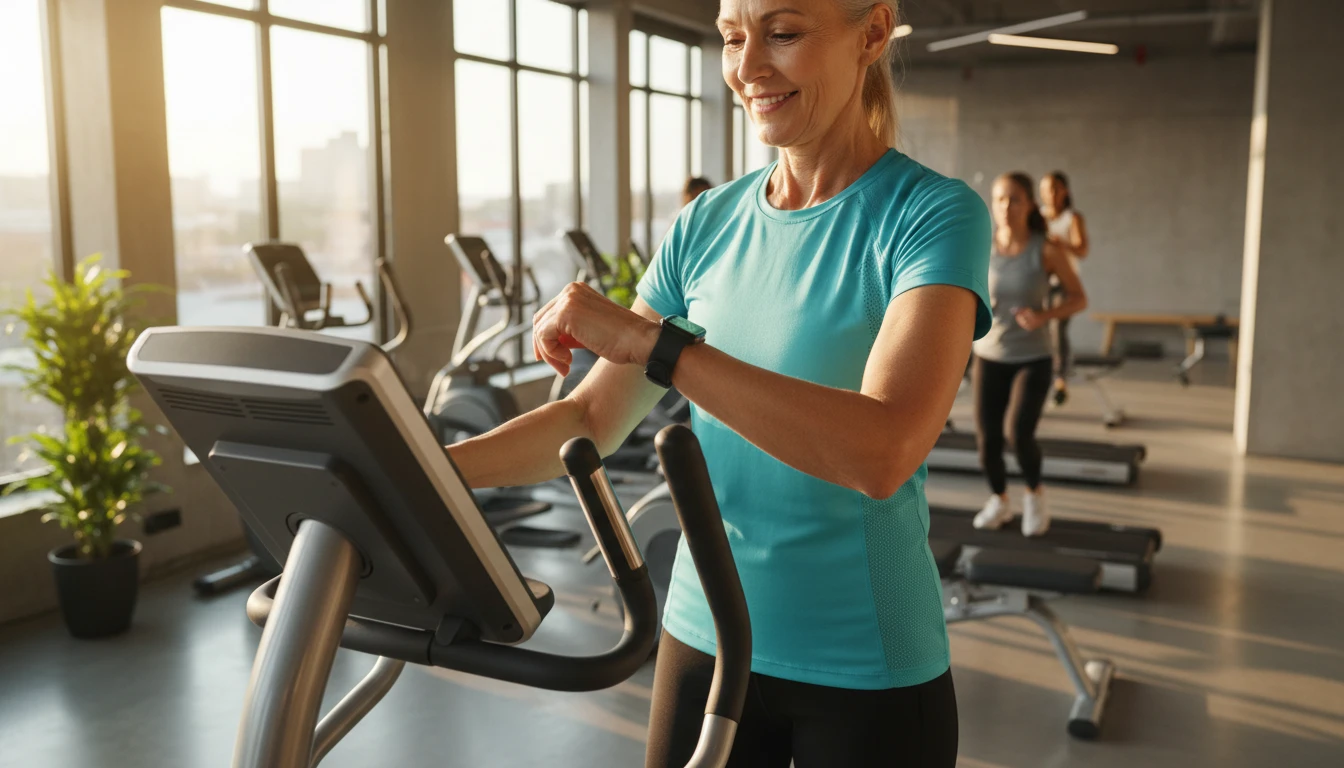
Wearables are everywhere — and that’s both exciting and complicated for gym workouts for retirees. They measure sleep, stress, heart rate variability (HRV), calories, steps, and a dozen other numbers that sound impressive at parties.
But most people aren’t taught what to do with the data.
If your HRV drops, does that mean you should rest? Maybe. Or maybe you slept weird, had a stressful day, or drank coffee like it was a personality trait.
The ACSM put it well: “The question is no longer whether people will use wearables. What matters now is teaching people how to use them in ways that best support their health and behavior change.”
A wearable should be your assistant, not your boss. Use it to spot patterns over time — not to make daily decisions based on a single number.
The Social Media Effect: When Every Workout Becomes Content
If tech changed what we can measure, social media changed what we care about.
Gym workouts for retirees — and really, for everyone — can’t be discussed without addressing the “phone tripod era.” You know the vibe: someone sets up a camera, puts their hoodie down as a marker, and suddenly you’re trying to walk behind them like a background actor who didn’t sign a release.
There are real benefits. Social platforms have democratized access to coaching cues, beginner routines, and training communities. I’ve learned great form tips from reputable coaches online.
But a huge portion of gym content is optimized for attention — not accuracy.
A 2021 study in Body Image (Tiggemann & Zaccardo’s work on “fitspiration”) found that exposure to fitspiration content can increase body dissatisfaction and negative mood in many viewers. That doesn’t mean fitness content is evil. It means the highlight reel effect is real — and it hits differently when you’re 65 and comparing yourself to a 28-year-old with a ring light and a supplement deal.
The Authenticity Crisis
One of the more uncomfortable realities in gym workouts for retirees — and fitness culture broadly — is the lack of transparency around performance-enhancing drugs, extreme dieting, and heavy photo editing.
When people sell “my results are your results” without mentioning pharmacology, genetics, lighting, and a minor miracle, it creates unrealistic expectations.
If your goal is to build a healthier, stronger body in retirement, the metric that matters most is not “Do I look like that influencer?” It’s “Can I keep doing this without hating my life?”
The Functional Fitness Movement: Finally, Workouts That Make Sense
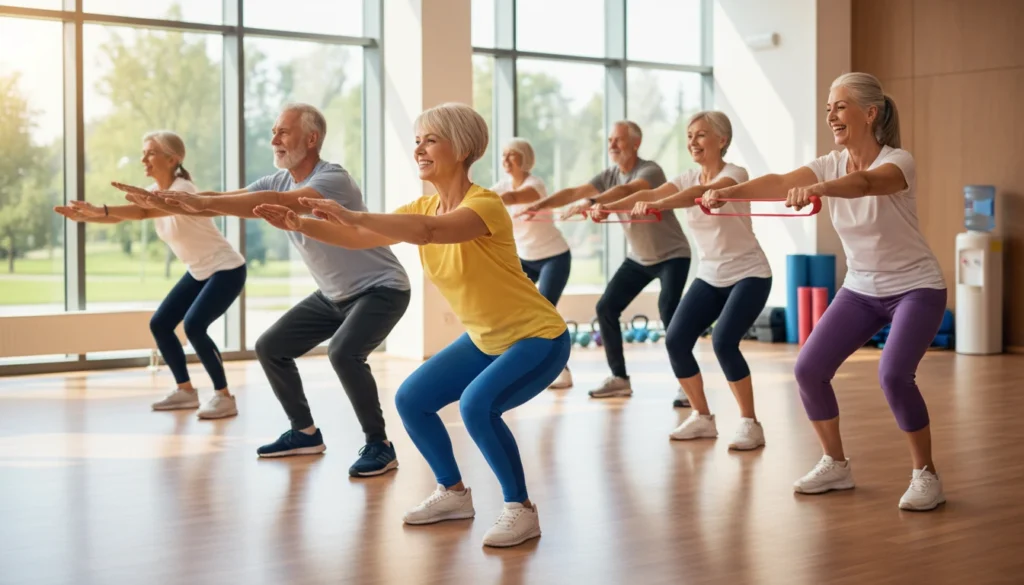
A genuine bright spot in gym workouts for retirees is the shift toward functional fitness.
For years, gym training got stuck in a muscle-by-muscle mindset: isolate this, pump that, repeat forever. Functional training brought back movement patterns — squat, hinge, push, pull, carry, rotate. Stuff that makes you better at real life.
And real life is the ultimate test. You don’t get bonus points for having strong quads if you can’t carry groceries without making a noise like a haunted door hinge.
The ACSM’s 2026 report specifically highlights functional fitness as a top trend, noting that exercises like squats, lunges, and loaded carries improve strength, mobility, and balance — keeping you primed for the demands of daily life. For gym workouts for retirees, this is the sweet spot.
But there’s a trade-off: functional training often gets paired with intensity that outpaces technique. A 2013 study in the Journal of Strength and Conditioning Research (Hak et al.) reported injury rates in high-intensity functional training comparable to other recreational sports, with shoulder and lower back issues commonly reported. Translation: it’s not automatically dangerous — but if you move fast with sloppy form, your body will eventually send a complaint letter.
Start with movement quality. Speed and intensity can come later.
The Recovery Revolution: Rest Days Are Finally Cool
If you’ve been around gyms long enough, you’ve heard the old slogan: “No days off.”
That phrase is one of the most persistent mindset problems in gym workouts for retirees — and honestly, for everyone. It sounds motivational until you realize it’s basically telling your body, “I know you’re tired, but have you considered… not being tired?”
Recovery has finally gotten the spotlight it deserves. Sleep, stress management, mobility work, and deload weeks are becoming mainstream. And thank goodness, because the “train harder” era needed an adult in the room.
The American College of Sports Medicine has long emphasized progressive overload plus adequate rest as part of effective training. Strength and muscle adaptations don’t happen while you’re lifting — they happen after, when your body repairs. After 60, that repair window matters even more.
I used to feel guilty on rest days. Now I treat them like part of the program. Because they are.
The Overtraining Epidemic
One of the sneakiest problems in gym workouts for retirees is under-recovering. You can train hard, eat decently, and still stall because your sleep is poor, your stress is high, and your “recovery plan” is scrolling until 1 a.m.
A 2020 review in Sports Medicine found that overtraining syndrome is often tied not just to training load but to total life stress — work, relationships, sleep, nutrition. Your body doesn’t separate stress into neat categories. It files everything under “STRESS” and reacts accordingly.
Warning signs: persistent fatigue, lower performance, irritability, nagging pain, and the weird feeling that every warm-up set weighs 900 pounds.
The Accessibility Problem: Who Gets to Be Fit?
A major part of the gym workouts for retirees conversation is access — and it’s more complicated than just gym membership costs.
Physical accessibility matters. Many gyms still aren’t designed with older or disabled lifters in mind — spacing, equipment options, staff education. And social accessibility is real too: intimidation is a genuine barrier.
The ACSM has noted that programs labeled “low intensity,” “functional,” or “active aging” consistently attract more older adult participants than those called “senior fitness.” The label matters. The environment matters. Feeling welcome matters.
I’ve watched people walk into a gym, scan the room like they’re entering a high school cafeteria, and leave. That’s not a motivation problem. That’s an environment problem.
The Home Workout Solution (and Its Limitations)
Home workouts are one of the most significant shifts in gym workouts for retirees over the last few years. They’re convenient, private, and you never have to wait for a squat rack.
But they require self-motivation — and some days, self-motivation is on vacation. They can also lack progression if you don’t have equipment, and they miss the social push that helps people stay consistent.
Still, the best workout setup is the one you’ll actually use. If home training keeps you consistent, it’s not “less than.” It’s smart.
The Programming Paradox: Too Much Information, Not Enough Wisdom
Here’s a truly modern problem in gym workouts for retirees: information overload.
You can find a program for anything. “Grow your glutes in 10 days.” “Build a V-taper using only kettlebells.” “Train like an ancient warrior.” Some of these are fine. Some are nonsense. All of them are confident.
The bigger issue is program-hopping. People switch plans every two weeks because they’re chasing novelty, not progress.
Progress is mostly boring. It’s repeating key movements, adding a little weight or a rep over time, and showing up when motivation is low. That’s not sexy. But it works.
Brad Schoenfeld’s 2016 meta-analysis in Sports Medicine supports that higher weekly training volume (within reason) generally promotes greater muscle growth — meaning you don’t need magic exercises so much as consistent, progressive work.
I’ve done the program-hopping thing. I’ve tried to outsmart my own biology. It turns out, biology is undefeated.
The Mental Health Connection: When Exercise Becomes the Problem
Exercise can be a mental health tool. It can also become a mental health trap. That’s one of the most important realities in gym workouts for retirees to acknowledge.
Regular activity is associated with reduced depressive symptoms and improved well-being. A landmark 2018 paper in The Lancet Psychiatry (Chekroud et al.) analyzed data from over a million people and found that those who exercised had significantly fewer “bad mental health days” than those who didn’t.
That’s the good news.
The complicated news is that exercise can become compulsive. Some people feel intense guilt when they miss a workout. Some use exercise to “earn” food. Some keep training through injury because stopping feels like failure.
I’ve had seasons where missing a workout made me edgy — like my brain was a browser with 37 tabs open and the workout was the only one playing music. That’s when I learned to ask a simple question: Am I using exercise, or is exercise using me?
The ACSM’s 2026 report notes that 78% of exercisers now cite mental or emotional well-being as their top reason for working out — ahead of physical fitness or appearance. That’s a healthy shift. Keep it that way.
The Sustainability Question: Can You Do This Forever?

A lot of fitness marketing is built on urgency. Transform fast. Grind harder. Don’t stop.
But sustainability is the real flex — and it’s central to gym workouts for retirees.
If your plan requires you to train six days a week, eat like a monk, and never attend social events, it’s not a plan. It’s a short-term experiment.
The best approach is one you can repeat during normal life: busy weeks, travel, family stress, random illnesses, and the occasional “I just can’t today” day.
I’ve gone all-in before. I’ve done the strict program, nailed it for weeks, then burned out and ate cereal at midnight like it was a coping strategy. Now I prefer a calmer strategy: strength training 3–4 days a week, some cardio I don’t hate, daily steps, and enough flexibility that I can still be a functioning human.
The All-or-Nothing Mentality
The all-or-nothing mindset is one of the most frustrating patterns in gym workouts for retirees. Miss one workout and people feel like the week is ruined. Eat one indulgent meal and suddenly it’s “might as well start over Monday.”
Your body doesn’t work like that. Fitness is a long game. What matters is your average behavior — not your worst day, and honestly, not your best day either.
The Future of Gym Workouts for Retirees: Where Do We Go From Here?
The gym workouts for retirees landscape is still evolving, but a few trends are already clear.
Personalization will keep growing. More programming will be tailored to goals, injury history, recovery capacity, and real-life constraints. AI coaching will assist — but the best results will still come from human coaches who understand the whole person.
Recovery and longevity will stay central. People are realizing that “fit at 25” and “capable at 75” are not the same target — and the second one is the better deal. Cold plunges, infrared saunas, mobility work, and sleep optimization are no longer fringe — they’re mainstream.
Community will matter more than ever. The ACSM’s 2026 report highlights “Adult Recreation and Sport Clubs” as a brand-new top-20 trend — driven by pickleball, walking clubs, and adult leagues. Gyms that feel welcoming, supportive, and less performative will win. And for retirees, the social side of fitness isn’t a bonus — it’s a core benefit.
Education will become the differentiator. The best coaches and platforms will teach people how to think about training, not just what to do.
Finding Your Path Through the Chaos
If you take one thing from this whole gym workouts for retirees conversation, let it be this: you don’t need the perfect program — you need a doable one.
Move your body in ways you enjoy (or at least don’t dread). Build basic strength. Add some cardio for your heart. Respect recovery. And keep the goal bigger than aesthetics.
The gym can be a Playground, a lab, a stress-relief valve, a confidence builder. It doesn’t have to be a punishment.
Conclusion
When you zoom out, gym workouts for retirees in 2026 come down to a simple tension: we have more tools than ever, but we still need wisdom.
Tech can help — but it can also stress you out. Social media can inspire — but it can also distort reality. Functional training can build real strength — but intensity without technique can backfire. Recovery is finally getting respect — but overtraining is still everywhere.
So here’s my coffee-chat advice: keep it simple, keep it consistent, and keep it human.
Because the best workout isn’t the one that looks cool online. It’s the one you’ll still be doing next month — and next year — because it makes your life better, stronger, and a whole lot more fun.